Best Wallets for XRP 2026: Staking, dApps & Top Security Feature

- When you click links on this page, we may earn an affiliate commission. By using this website you agree to our terms and conditions and privacy policy.
- Participation in online gambling may be illegal in your country and is subject to age restrictions (18, 19, or 21, depending on the jurisdiction). Verify legality and age requirements before participating. Learn more
According to a Messari XRP Ledger (XRPL) research report, the network handled an average of 1.8 million daily on-chain transactions throughout Q3 2025, likely due to its rock-bottom fees, fast settlement times, and technical versatility. As such, there is significant demand for XRP self-custody wallets.
Throughout this guide, we’ll examine the best wallets for XRP, picked based on their security measures, XRP staking support, and ecosystem access. We discuss the features they offer, which networks are supported, and whether trading or a fiat on-ramp is available.
Best XRP Crypto Wallet Summary
- Some of the best wallets for XRP in 2026 are Tangem, Bitget Wallet, and Safepal.
- It is important to know that XRP has no native staking, and all yield comes from off-chain exchange/DeFi programs that usually offer low returns and higher risk but flexible access.
- XRPL fees are extremely low and predictable. They use fixed ‘drop’-based costs (10 drops =0.00001XRP) instead of gas, making transactions fast and inexpensive.
- XRPL supports multiple token standards, including Trust Line IOUs, the newer MPT standard, which was activated in 2025, and XLS-20 NFTs, though wallet support varies.
- Security hinges on proper seed-phrase handling and hardware-wallet hygiene, including offline storage, address verification, and avoiding seed entry on compromised devices.
Comparing the Best XRP Wallets in 2026
| Brand Name | Wallet Type | Security Features | Supported Crypto | Backup and Recovery | Staking Support | Cost |
|---|---|---|---|---|---|---|
| Tangem Wallet | Cold | EAL6+ security chip, 25-year warranty, audited, no external connectivity, PIN system | 5,000+ | Cards come in multi-packs, providing redundancy, seedless | Yes | $54.90 to $160 |
| Bitget Wallet | Hot | Multi-Party Computation, $300 million protection fund, encryption | 1 million+ | Seed phrase | Yes | Free |
| SafePal S1 | Cold | EAL6+ chip, air-gapped, open-source, self-destruct mechanism, passphrase | Thousands of tokens on 200+ blockchains | Seed phrase | Yes | $49.99 |
| Uphold Wallet | Hot | Regulated, private key encryption, employee background checks, and regular audits | 325 | Username and password | Yes | Free |
| Zengo Wallet | Hot | MPC, seedless, create segregated wallets, Multi-Factor Authentication | 1000+ | Email authentication, recovery file, 3D FaceLock (optional) | Yes | Free ($9.99 monthly premium subscription) |
| Binance Wallet | Hot | MPC, self-custody, risk detection, technical audits | Thousands of assets on 34 networks | Quick Backup, recovery password | Yes | Free |
| Trezor Safe 3 | Cold | EAL6+ security chip, PIN/passphrase systems, TOR routing | 7,000+ | Seed phrase, multi-share backup (split seed into multiple shares) | Yes | $79 |
| Rockwallet | Hot | SOC 2 Type II/ISO27001 certification, 2FA, biometrics | 18 | Seed phrase | No | Free |
| Cypherock X1 | Cold | Audited by Keylabs, open-source, EAL6+ secure element | 18,000+ | Seed phrase, multi-sig (2 of 4 cards required for recovery) | Yes | $129 |
| Coinbase Wallet | Hot | End-to-end encryption, biometric/PIN locks, and Secure Enclave tech | 5000+ | Private Keys, 12-word recovery Phrase | Yes | Free |
Top Wallets for XRP in 2026
Don’t invest unless you’re prepared to lose all the money you invest.
Indepth Review of the Best XRP Wallets
Safepal
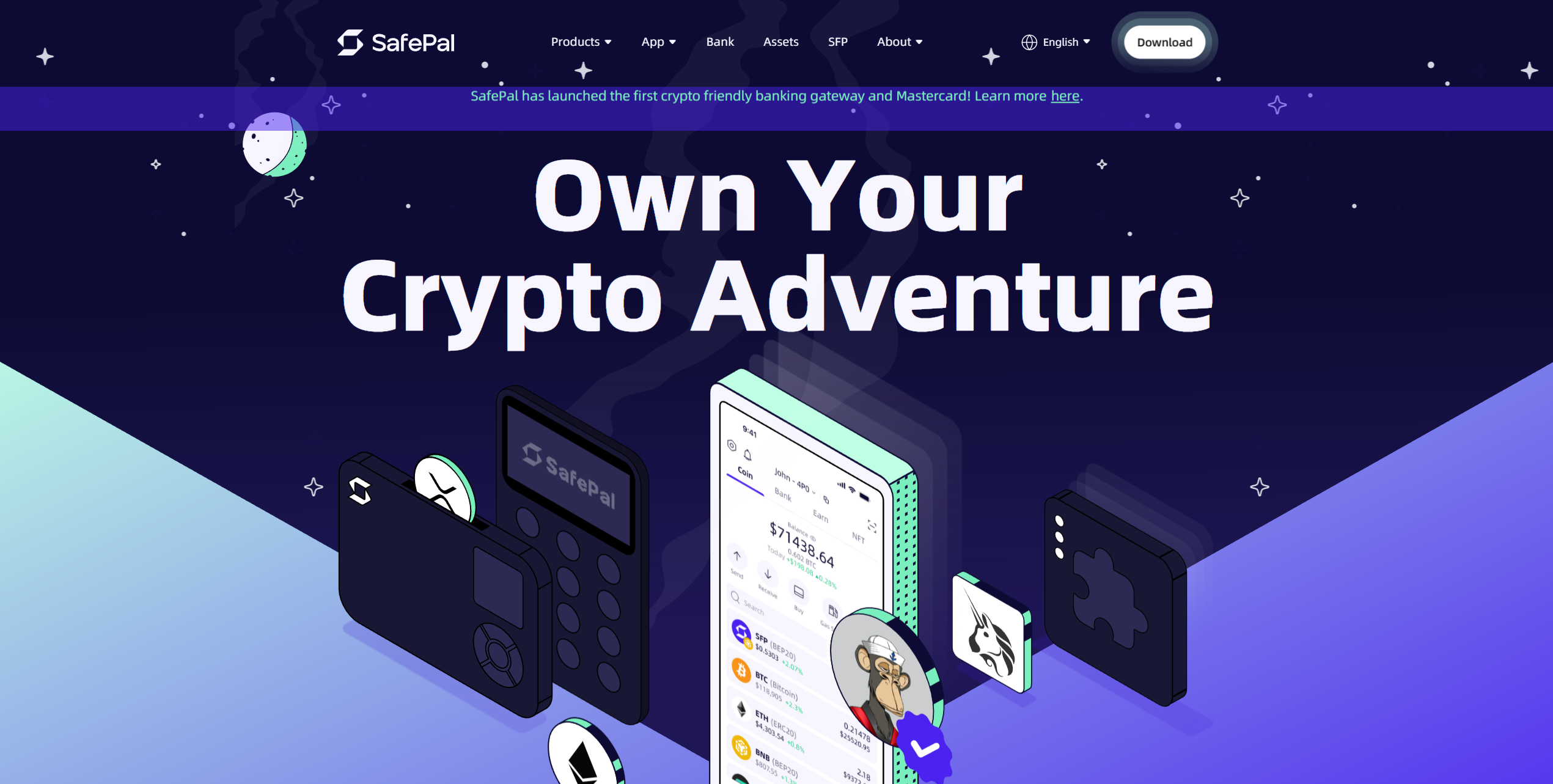
The SafePal S1 is an XRP cold storage solution that supports over 200 additional blockchains. The device is shaped like a thick bank card, making it highly portable. Users benefit from an EAL6+ security chip and the ability to buy/swap XRP directly in the SafePal app.
Users can manage their SafePal S1 via an Android/iOS mobile app or a desktop browser extension, so people aren’t locked to a particular device. It’s also 100% air-gapped, protecting against network attacks, with a self-destruct mechanism to combat malicious attempts to modify the wallet.
The SafePal S1 approves transactions by scanning a QR code, which is highly secure, protecting against accidental inputs or compromised wired connections. Users can also verify addresses via the on-device screen, kept safe by the anti-tamper system.
With robust security, some on-ramp/trading functionality, a 100% air-gapped design, open-source security architecture, dApp connectivity, support for 15 languages, and a $49.99 price tag, the SafePal S1 is an excellent hardware wallet and one of the best wallets for XRP overall.
Pros
-
EAL6+ security chip
-
Buy, store, or swap XRP
-
100% air-gapped
-
Highly affordable
-
Anti-tamper, self-destruct system
Cons
-
Cannot connect to XRPL dApps
-
Requires charging
- Bitcoin
- Ethereum
-
Tether
89
No result
- English
- German
-
Spanish
12
No result
Tangem
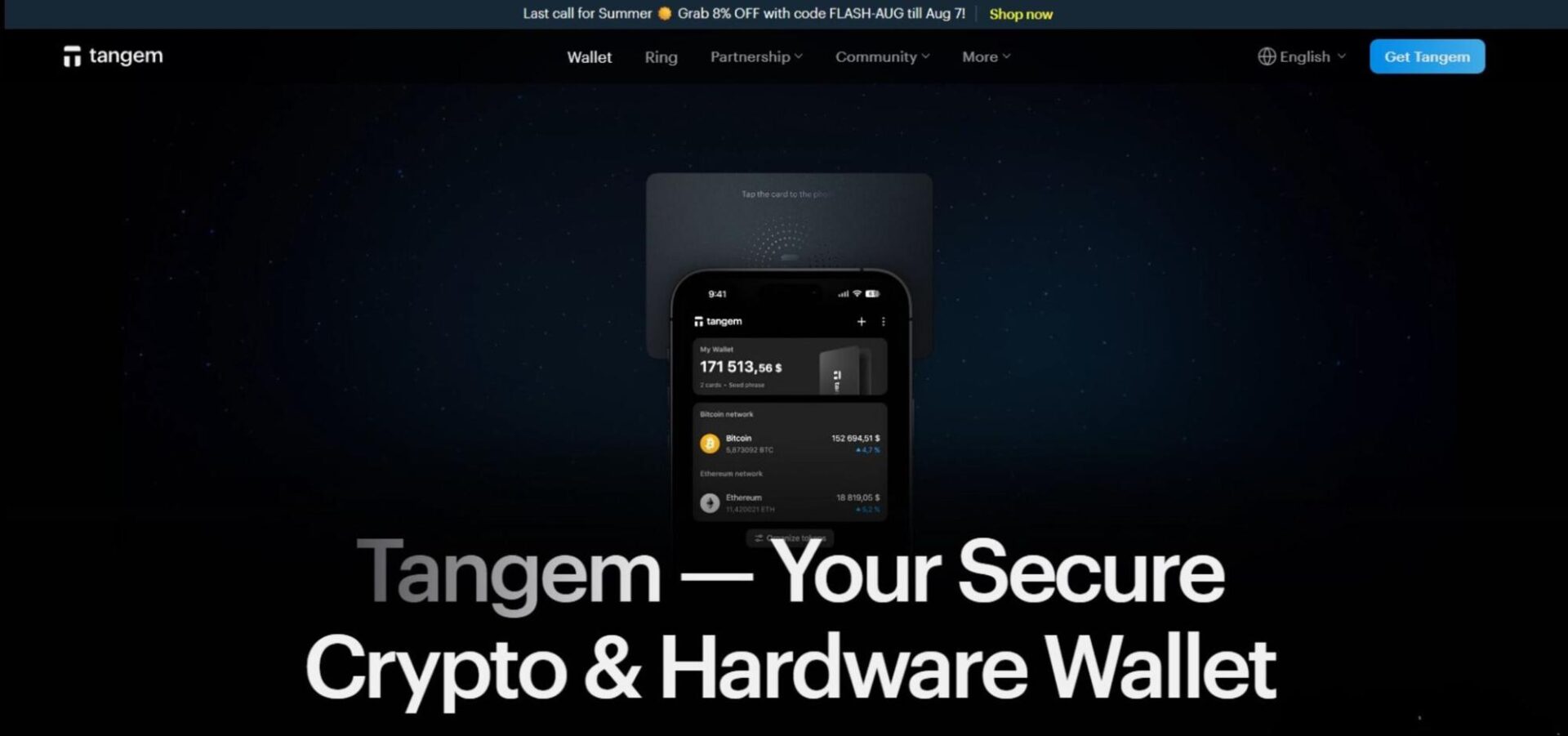
Tangem is a pocket-friendly hardware wallet that’s roughly the size and shape of a credit card, enabling easy transportation, which is convenient if you frequently travel for work or leisure. The device uses NFC for connectivity. There’s no Bluetooth or USB connection. Tangem doesn’t even feature a battery.
Due to its air-gapped nature and lack of a display, users must manage Tangem wallets via a mobile app. As NFC is required, Tangem doesn't support desktop computers. The device is secured by an EAL6+ chip, a 25-year warranty, and an in-app authenticity checker, providing robust protection.
Users can store XRP and thousands of additional assets, making it a solid choice for XRP investors looking to diversify their holdings. Users have access to in-app crypto staking, but there’s no XRP support.
While users can connect to dApps across various networks, the XRPL is not supported. However, Tangem has a partnership with the Xaman XRPL wallet, offering unique designs of its NFC-enabled hardware wallet cards for $15.99 (single card), which enables secure interaction with the broader XRP ecosystem.
Tangem wallets come in multi-packs, providing redundancy and ensuring users can access their funds even if one card is lost or damaged. The two-card set costs $54.90, while the three-card option costs $69.90. Users can also purchase the Tangem ring bundle ($160) to enhance convenience and portability further.
If you’re looking for an XRP hardware wallet with market-leading security, unparalleled convenience, and broad compatibility, a Tangem wallet is one of the best choices. With it available at various price points, it’s also one of the most attainable hardware wallets on the market.
Pros
-
Extensive asset support
-
EAL6+ security chip
-
Easy to recover Tangem wallets
-
Available at various price points
-
Some native staking/trading support
Cons
-
Doesn’t support XRPL connections
-
Cannot stake XRP natively
- Bitcoin
- Ethereum
-
Tether
70
No result
- English
- German
-
French
3
No result
RockWallet
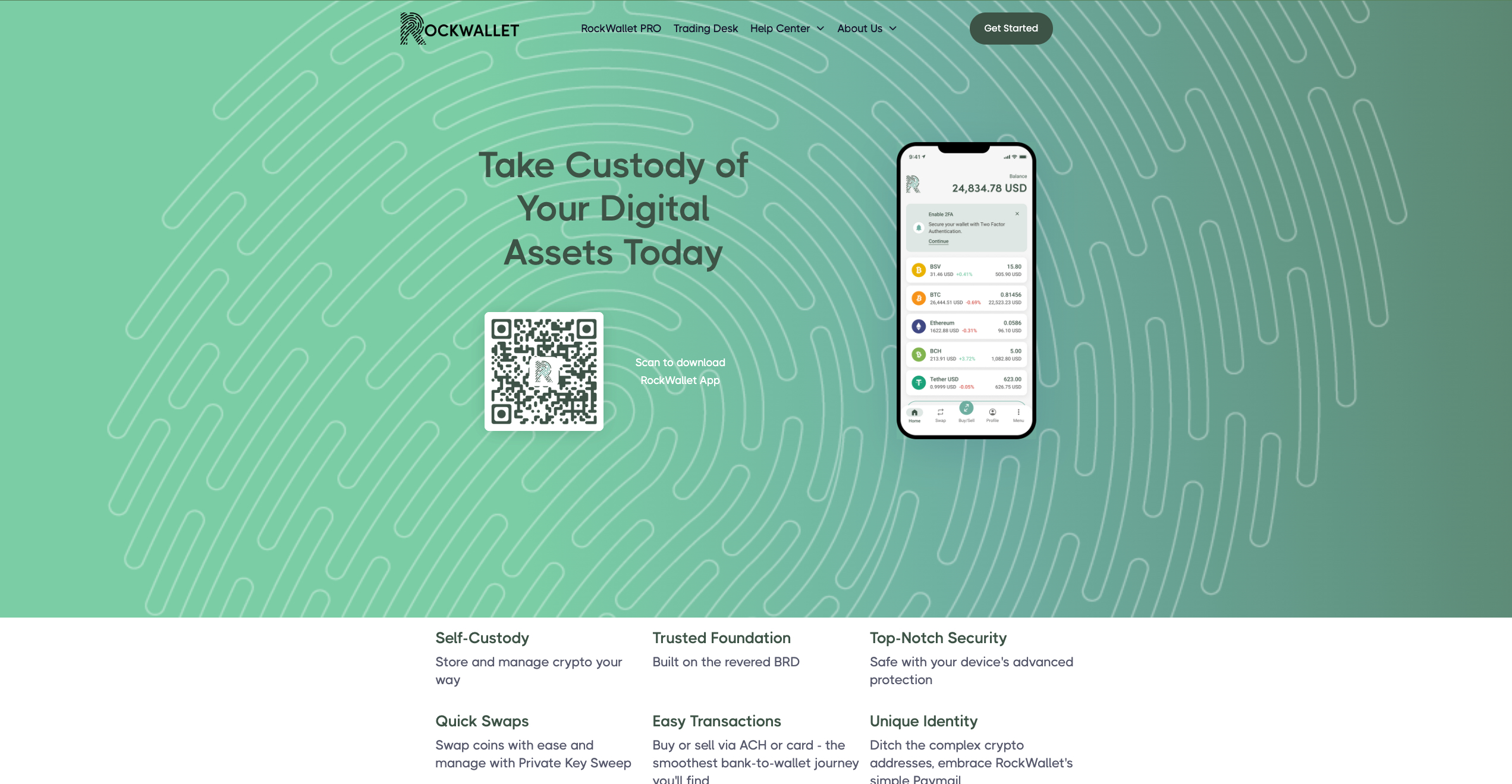
RockWallet focuses on providing straightforward crypto access for American users through a mobile-first platform with traditional banking integration. You can connect your bank account directly to buy, sell, and store popular cryptocurrencies without navigating complex exchange interfaces. The platform emphasizes regulatory compliance and user-friendly design over advanced trading features, making it suitable for people who want basic crypto functionality with familiar banking-style operations.
The wallet supports major cryptocurrencies including Bitcoin, Ethereum, and Litecoin with direct bank account linking for purchases. ACH transfers allow fee-free deposits from connected bank accounts. Built-in price tracking helps monitor portfolio performance, while the mobile app provides core wallet functions including sending, receiving, and storing coins.
Pros
-
Direct bank account integration simplifies funding
-
Fee-free ACH deposits reduce transaction costs
-
Regulated US operations provide legal compliance assurance
-
Simple interface suitable for crypto newcomers
-
Mobile-focused design offers convenient access
Cons
-
Limited crypto selection compared to major platforms
-
US-only availability restricts international users
-
Basic feature set may disappoint advanced traders
-
Higher spreads on crypto purchases than exchanges
-
Limited customer support options for problem resolution
- Bitcoin
- Ethereum
-
Tether
10
No result
- English
Kraken
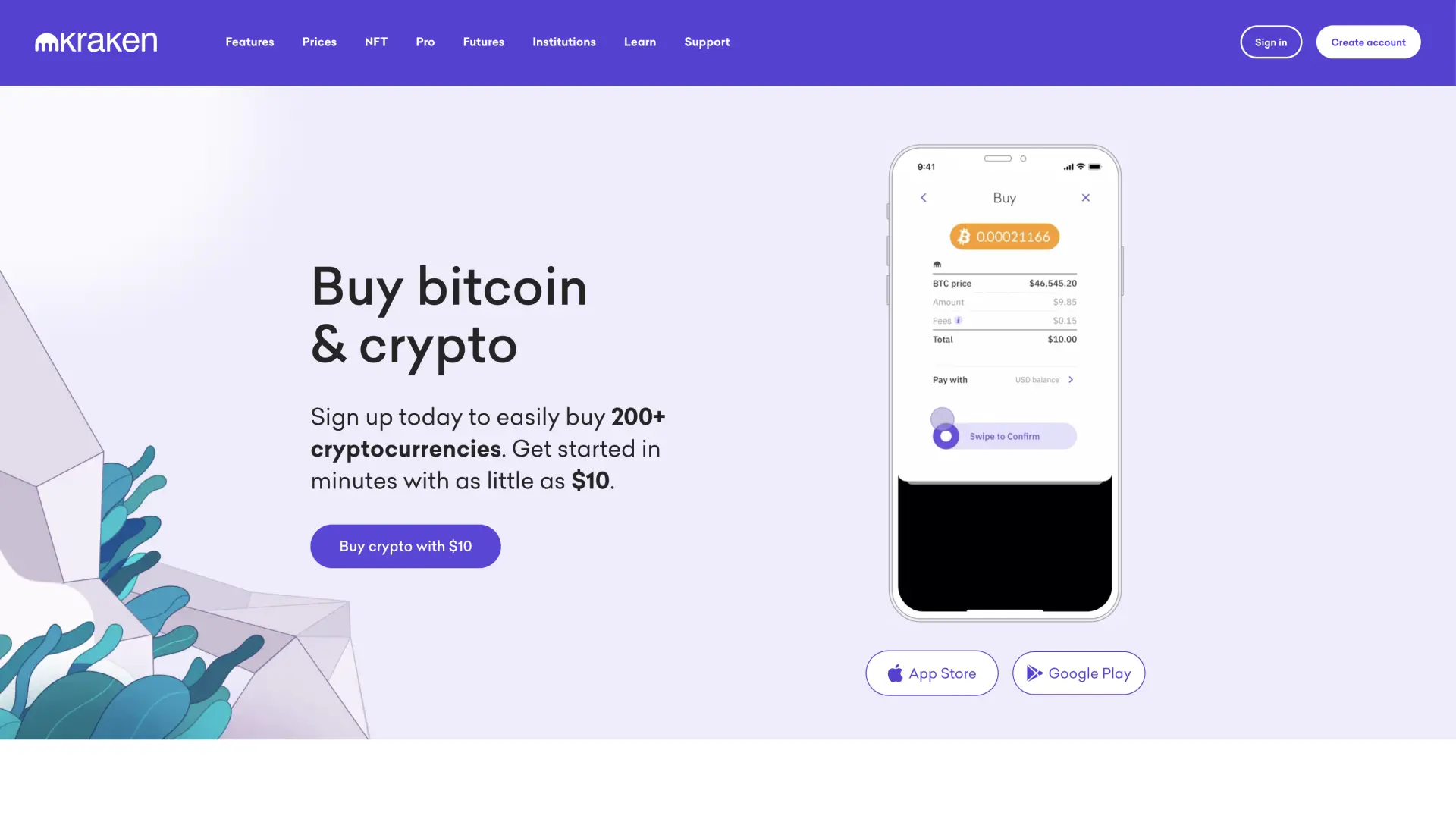
Kraken wallet is a non-custodial wallet for privacy-conscious users, a reputable exchange with strong security practices and DeFi integration.
Kraken Wallet operates as a self-custody solution separate from Kraken's main exchange platform, giving you complete control over your private keys while benefiting from the company's security expertise. You can interact with dApps and manage multiple cryptocurrencies without relying on centralized storage. The wallet targets users who understand the importance of self-custody but want the backing of an established crypto company.
It supports Bitcoin, Ethereum, and various ERC-20 tokens with full private key control. DeFi integration allows direct interaction with decentralized protocols for lending, borrowing, and yield farming. Multi-chain support includes popular networks beyond Ethereum, while hardware wallet compatibility works with Ledger and Trezor devices. Built-in portfolio tracking shows your holdings across different blockchains.
Pros
-
Self-custody design gives you complete fund control
-
Backed by Kraken's established security reputation
-
DeFi protocol integration for decentralized finance access
-
Multi-chain support covers popular blockchain networks
-
Hardware wallet compatibility enhances security options
Cons
-
Self-custody responsibility means no recovery assistance if keys are lost
-
Limited cryptocurrency selection compared to the main Kraken exchange
-
DeFi features may confuse users unfamiliar with decentralized protocols
-
No customer support for wallet recovery issues
-
Interface complexity exceeds basic storage needs
- Bitcoin
- Ethereum
-
Tether
83
No result
- Spanish
- English
-
French
4
No result
Uphold
Uphold functions as a financial platform that lets you store and exchange cryptocurrencies along with traditional fiat currencies, precious metals, and other alternative investments. You can instantly convert between different asset types without going through multiple platforms or exchanges. The service targets users who want flexibility in managing diverse portfolios that span both traditional and cryptocurrency markets.
The platform supports over 250 cryptocurrencies plus fiat currencies from multiple countries, allowing instant conversions between any supported assets. Real-time settlement means transactions are completed immediately without waiting periods. The transparency dashboard shows exactly how your funds are held and backed. Social trading features allow you to copy successful traders' strategies automatically.
Pros
-
Instant conversion between crypto and fiat currencies
-
Wide selection of both traditional and cryptocurrency options
-
Transparent fund backing builds user confidence
-
Social trading capabilities for strategy copying
-
Real-time settlement eliminates transaction delays
Cons
-
Higher spreads on conversions reduce value compared to dedicated exchanges
-
Limited advanced trading tools for experienced traders
-
Customer support responsiveness varies by region
-
Platform complexity may overwhelm simple storage needs
-
Regulatory restrictions affect availability in certain jurisdictions
- Tether
- TrueUSD
-
USD Coin
144
No result
- English
Don’t invest unless you’re prepared to lose all the money you invest.
Coinbase
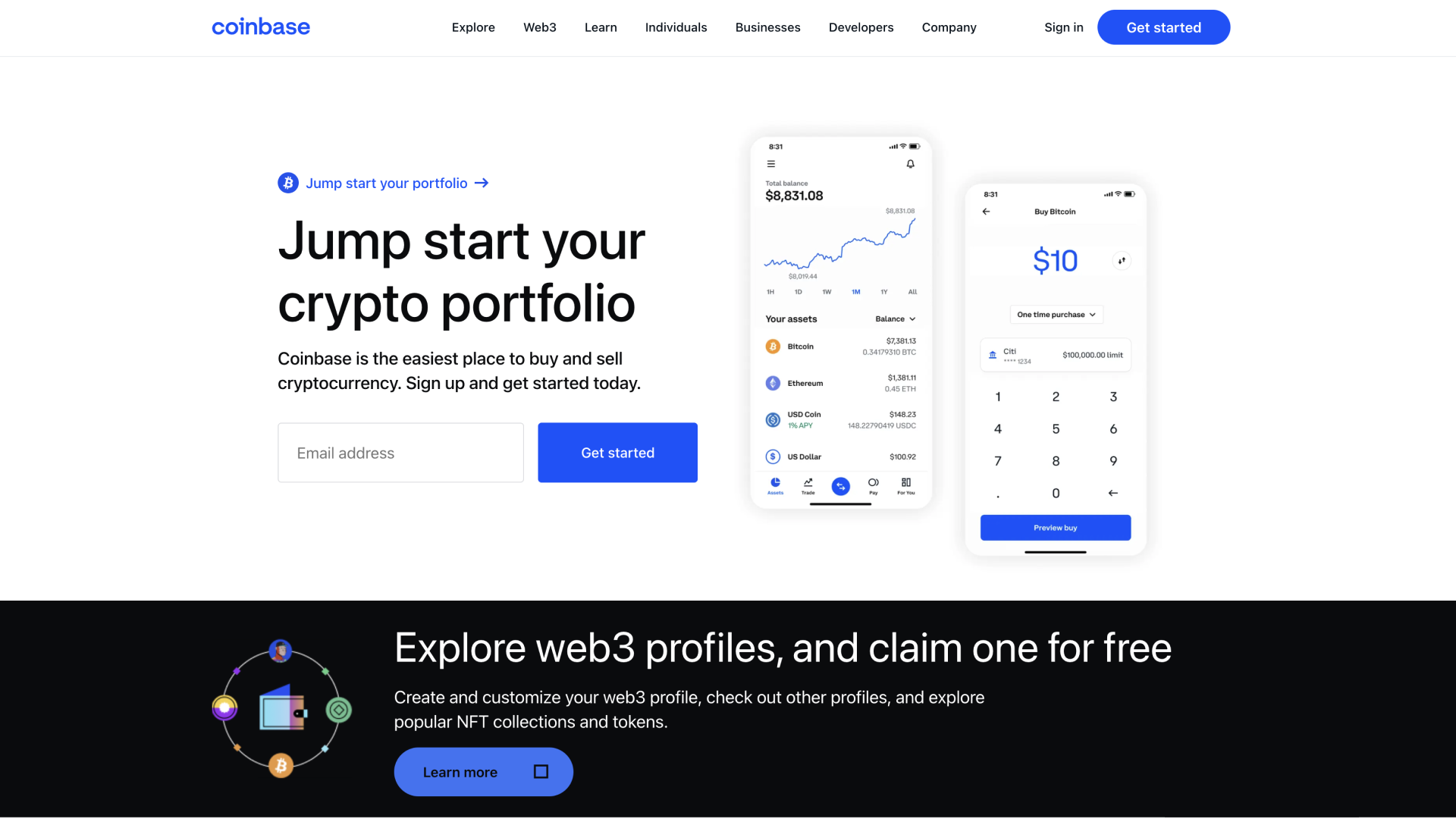
Coinbase is a widely known crypto exchange and storage solution that tens of millions of users trust. Tier-1 authorities, including the FCA and FinCEN, regulate Coinbase, thereby enhancing security and providing users with better recourse options.
Users can store XRP, Bitcoin, Ethereum, and 315 other cryptocurrencies on Coinbase. Moreover, a straightforward fiat on-ramp is available alongside a toggle between the standard and 'Advanced' modes, which boast TradingView charts and derivatives for users in eligible regions. Users can also stake their Ethereum to earn interest over time.
Coinbase also operates a standalone wallet with Web3 connectivity that supports major cryptocurrencies like Bitcoin, XRP, and Ethereum. As such, Coinbase can suit general traders and investors, but not those seeking advanced security features or a non-custodial option.
Pros
-
Regulated crypto platform
-
User-friendly Interface
-
Supports crypto staking
-
Trusted by millions of people globally
-
Standard and advanced modes
-
Supports a reasonable number of cryptocurrencies
Cons
-
KYC is required on Coinbase
- Bitcoin
- Ethereum
-
Tether
68
No result
- English
Trezor
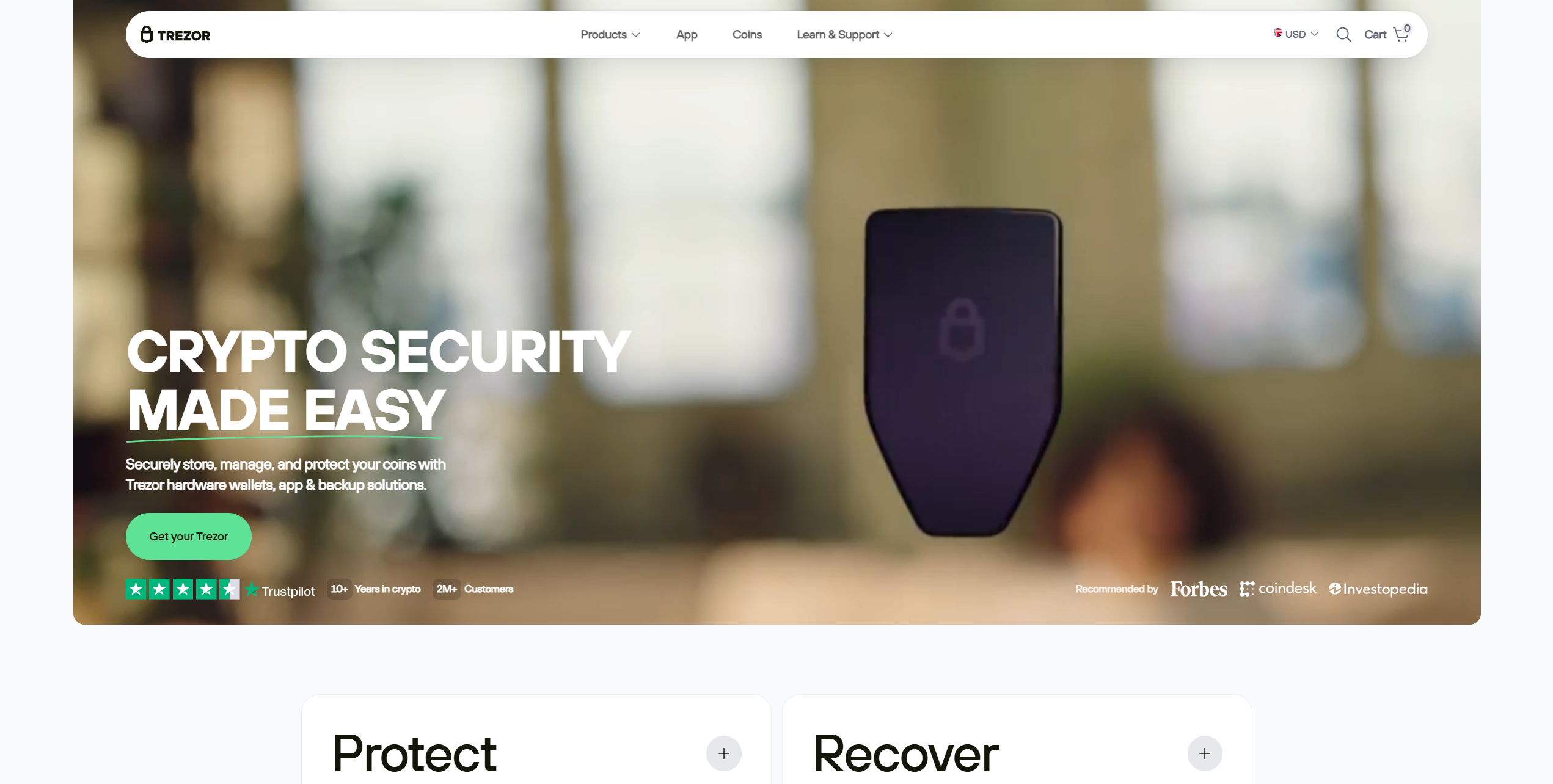
You're not restricted to Ledger devices if you want to benefit from the security a hardware wallet offers. Trezor offers a range of highly popular hardware wallets with open-source security, broad asset support, and a pocket-friendly design. However, they lack iOS support, which limits their usability for iPhone owners.
The Trezor Safe 3 is an affordable and powerful hardware wallet, priced at $79 and featuring an EAL6+ security chip. It features a small 0.96-inch screen with two navigation buttons. Users have USB-C connectivity, support for thousands of assets, and an optional PIN system to enhance security.
The Trezor Model T is a premium alternative. It features a 1.54-inch touchscreen but lacks an EAL-rated security chip, as it is an older model. Trezor devices come with a special system for splitting seed phrases into multiple 20-word shares for enhanced security.
Users manage Trezor devices via the Trezor Suite software. It's available for Android, Windows, macOS, and Linux. Moreover, it supports taking and trading, expanding Trezor's use cases. For general purposes, the Trezor Safe 3 is the best Trezor hardware wallet for Cardano, thanks to its EAL6+ security chip.
Pros
-
Options for multiple budgets
-
PIN system improves security
-
Supports splitting seed phrases into multiple shares
-
Open-source security
-
Can trade and stake ADA via Trezor Suite
Cons
-
Trezor Model T has worse security than the Safe 3
-
Extremely limited iOS support (view-only)
- Bitcoin
- Ethereum
-
Tether
204
No result
- English
- Czech
Zengo
- Bitcoin
- Ethereum
-
Tether
68
No result
- English
Technical Features Critical for XRP Holders

The reasons why people want to store XRP vary significantly. They may want to invest, utilize it for cross-border transactions, take advantage of the low transaction costs, or participate in the XRPL ecosystem. Regardless of the reasons, there are a few features that are critical for XRP holders.
Native Staking and Delegation
Wondering how to stake XRP with a wallet? First, it’s essential to understand that XRP is not a Proof-of-Stake (PoS) cryptocurrency. There’s no way to register as an XRP validator and stake tokens on-chain. However, there are still ways to earn rewards from your XRP holdings.
Most crypto exchanges offer staking or earn products. Some of these platforms will pay a yield on your XRP holdings. However, the rate is typically low (sub 0.5%). The platform usually generates yield by using the tokens as liquidity, participating in Decentralized Finance (DeFi), or lending funds to other users.
Although these unofficial ‘staking’ channels carry more risk than on-chain staking and do not contribute to the network’s operation, they typically have flexible terms with minimal to no unbonding periods. With XRP displaying substantial volatility, being able to quickly unstake your assets is a significant advantage.
Understanding XRP Network Fees (Gas/Rent)
XRP is famed for its extremely low and straightforward trading fees. XRP does not utilize a gas system, resulting in a fee structure that varies according to network congestion and demand. Instead, a fixed fee is charged for every transaction.
Instead of XRP gas fees, transaction costs are measured in ‘drops’. 10 drops equal 0.00001 XRP ($0.00002), which is the standard fee for most transactions. Using a fixed, predictable fee structure is a significant advantage for people who regularly transfer funds using XRP, as costs are easy to anticipate.
Now that XRP network fees are explained, you’re ready to start transacting and participating in the XRP ecosystem!
XRP Token Standards and NFT Support
There are two primary XRP token standards:
‘Trust Line’ tokens are the original. They’re fully integrated into the XRP, enabling people to trade them on Decentralized Exchanges (DEXs), such as the Sologenic DEX. Trust Line tokens are extremely popular, but have a few limits, such as requiring a 1 XRP reserve for each trust line a user adds.
Multiply-Purpose Tokens (MPTs) were first introduced to the XRPL on October 1, 2025. They’re specially designed for DeFi applications and have various unique properties. For example, anyone can issue MPTs, but people can only send them to users who’ve signed a transaction indicating they want to hold it, combating spam.
If you’re searching for an XRP NFT wallet, you must ensure it supports the XLS-20 standard, which is how native XRPL NFTs are issued. Support is relatively limited due to XRP NFTs being relatively unpopular. However, XRP-specific wallets, such as Xaman, tend to support the XLS-20 NFT standard.
Security Best Practices for Your XRP

The XRP wallets we’ve examined throughout this article are secure and trustworthy. However, there are a couple of techniques you can use to further enhance your protection.
The Critical Importance of Your Seed Phrase
A seed or recovery phrase is a sequence of words that a wallet provides during the setup process. It’s usually 12 or 24 words long. The seed phrase can be used to recover your assets using any compatible wallet, even if you lose access to the original wallet.
Because seed phrases are critically important, storing them appropriately is crucial. Avoid digital methods, like screenshots or text files, at all costs. They leave you vulnerable to network attacks or a virus, and could limit recoverability if your device becomes lost or damaged.
The best way to store a seed phrase is a metal storage solution. They require an investment of around $50, but provide permanence and robust protection even in the event of a fire. Alternatively, analog methods, such as pen and paper, are inexpensive, effective, and fully offline, making them strong options.
Securing Hardware Wallet Interaction
The way you interact with your hardware wallet has a substantial impact on your security. If you input your seed phrase in a public space where people could look over your shoulder or an open network where data could be intercepted, you’re drastically reducing your safety.
A common way bad actors hijack transactions when your device is compromised is by injecting fake wallet addresses when you send a transaction. To combat this, always verify the destination address on your hardware wallet. They have special anti-tamper mechanisms that alert you when compromised, heightening safety.
Accidentally exposing your seed phrase is another common way XRP and other cryptocurrencies are stolen. Where possible, avoid entering your seed on your computer or mobile. Verify it by using your hardware wallet’s screen instead. If you must enter a seed using a computer, ensure you’re using an official wallet.
Conclusion & Final Recommendation
Throughout this guide, we’ve examined some of the best XRP wallets available, discussing transaction fees, fiat on-ramps, XRPL connectivity, multi-chain support, usability, and pricing of each option, highlighting where they excel and areas that need improvement. All of the wallets we’ve mentioned are worth considering, but our overall top picks are:
If you’re a power user wishing to store, stake, and trade XRP with low fees, Binance is the best option. It offers advanced trading features, robust security measures, and a desktop app for people prioritizing convenience and speed.
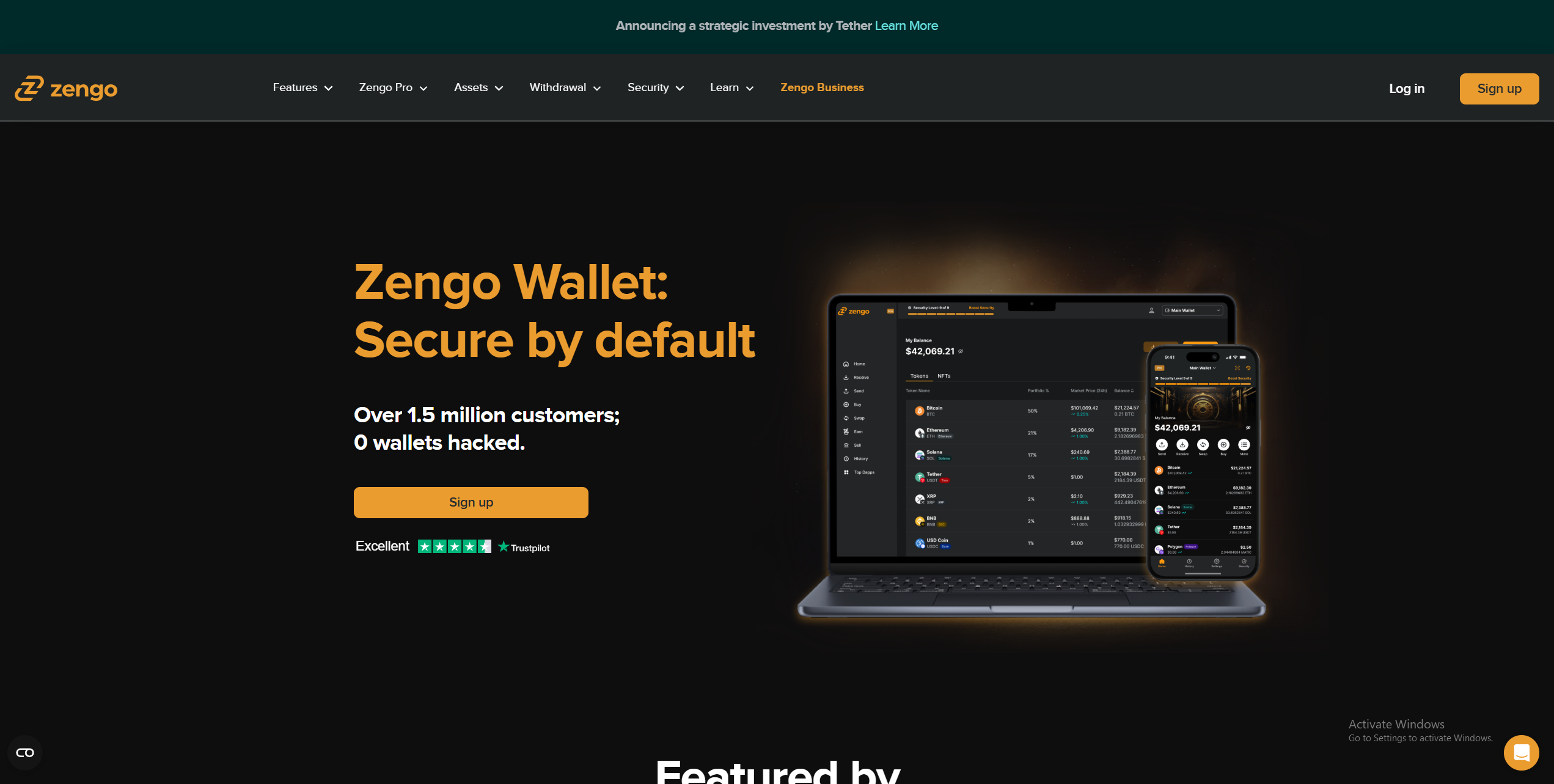
On the other hand, if you’re a dedicated mobile user or want a beginner-friendly wallet, Zengo is an excellent choice. It offers an intuitive interface, while the recovery system makes security simple, even for people who don’t fully understand the importance of keeping a seed phrase safe.
However, if you want to maximize your XRP security or ensure that your protection can handle the test of time, then a hardware wallet is a must. Tangem is the best option because it’s air-gapped, EAL6+ rated, versatile, and offers Xaman connectivity, enabling XRP Ledger (XRPL) connectivity.
FAQ Section
What is the difference between an XRP "account" and a "wallet"?
An XRP account is the representation of you as an XRP holder on the blockchain. It consists of an XRP balance (a 1 XRP reserve is required to open an account). An XRP wallet is the software or hardware used to manage and send transactions with your XRP account.
How much does it cost to send XRP from one wallet to another?
XRP is one of the most cost-effective cryptocurrencies for sending from wallet to wallet, which is why it’s popular for cross-border transactions and currency conversions. XRP charges a fixed fee of 10 drops, equivalent to 0.00001 XRP ($0.00002), which is significantly lower than the fees for Bitcoin or Ethereum.
If I lose my phone, can I recover my XRP on a different wallet?
Losing your phone is bad. Your photos and contacts are gone, while you have to shell out for a new device. Losing your XRP on top would be catastrophic. However, as long as you keep your seed phrase or recovery files safe, you can recover your XRP using any compatible wallet.
Can I use my Tangem/SafePal without using the official XRP desktop application?
There is no official XRP desktop application; however, dedicated XRP wallets are available. For example, Xaman. They support XRP Ledger (XRPL) tokens and NFTs. People can use a Tangem card with Xaman to enhance security. Xaman even offers a special line of branded Tangem cards.


