Best Hardware Wallets 2026


- When you click links on this page, we may earn an affiliate commission. By using this website you agree to our terms and conditions and privacy policy.
- Participation in online gambling may be illegal in your country and is subject to age restrictions (18, 19, or 21, depending on the jurisdiction). Verify legality and age requirements before participating. Learn more
While some people use their old phones as a hardware wallet, investing in a hardware wallet is always a good idea, but choosing the right one with the right features can be confusing, especially for newcomers. To help you find the best hardware wallet in 2026 for your specific needs, these are our top recommendations.
We will include a variety of options that excel in security, usability, and compatibility, so you can choose the one that best satisfies your criteria. In addition, we will show you how to set up and use your new hardware wallet and provide tips to maximize the security of your crypto holdings.
The Best Hardware Wallets for Crypto
To kick off our crypto hardware wallet comparison, here are all our top picks laid out neatly with their most essential features and specifications in an easy-to-read table. Feel free to browse and compare the options at a glance to find the one that best suits your needs.
Comparing the Best Hardware Wallets for Crypto
| Brand Name | Wallet Type | Security Features | Supported Crypto | Backup and Recovery | Staking Support | Cost |
|---|---|---|---|---|---|---|
| Tangem Wallet | Cold | EAL6+ security chip, 25-year warranty, audited, no external connectivity, PIN system | 5,000+ | Cards come in multi-packs, providing redundancy, seedless | Yes | $54.90 to $160 |
| SafePal S1 | Cold | EAL6+ chip, air-gapped, open-source, self-destruct mechanism, passphrase | Thousands of tokens on 200+ blockchains | Seed phrase | Yes | $49.99 |
| Trezor Safe 3 | Cold | EAL6+ security chip, PIN/passphrase systems, TOR routing | 7,000+ | Seed phrase, multi-share backup (split seed into multiple shares) | Yes | $79 |
| Cypherock X1 | Cold | Audited by Keylabs, open-source, EAL6+ secure element | 18,000+ | Seed phrase, multi-sig (2 of 4 cards required for recovery) | Yes | $129 |
| Bitboxo2 | Cold | Dual security chip, open-source, authenticity checker, external audits | 1500+ | Seed phrase, microSD card backup | Yes (when used with MyEtherWallet or Lido) | $175 |
| Bitkey | Cold | Seedless, fingerprint scanner for authentication, Open-source | Bitcoin | Recovery Contact, multi-sig recovery (phone, Bitkey device, Bitkey server) | No | $150 |
| Blockstream Jade | Cold | Virtual secure element, air-gapped QR codes, open-source | Bitcoin | Seed phrase | No | $79 |
More Detailed Reviews on the Top Hardware Wallets in 2026
Safepal
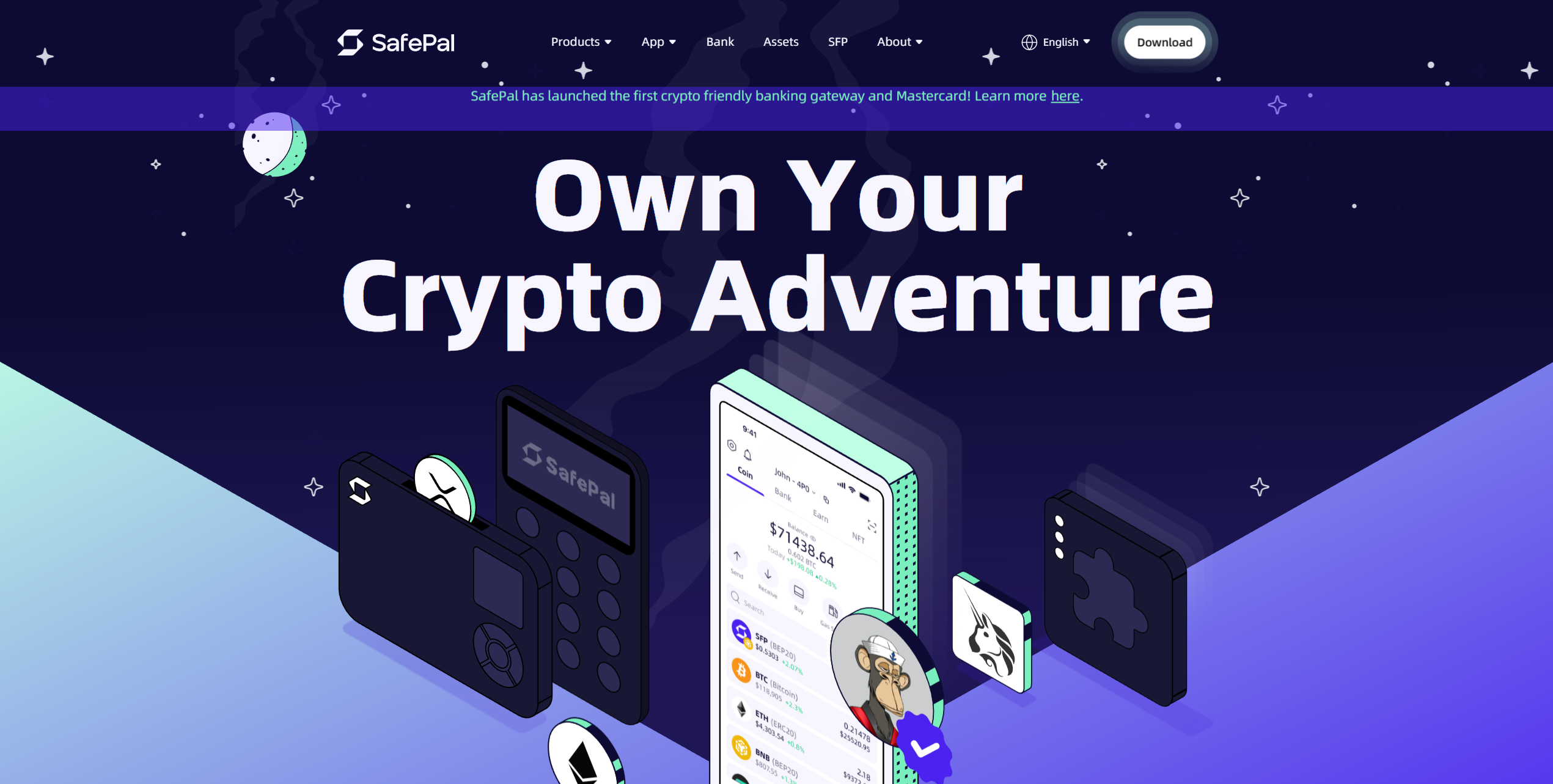
SafePal offers a unique dual approach by providing both hardware wallet devices and a mobile software wallet that work together seamlessly. You can store your cryptocurrencies offline on the hardware device while using the mobile app to interact with decentralized finance (DeFi) protocols and perform cross-chain transactions. The platform targets users who want maximum security without sacrificing convenience for daily crypto activities.
The hardware wallet operates completely air-gapped with no USB, Bluetooth, or WiFi connections, communicating through QR codes. The software wallet supports over 100 blockchains and thousands of tokens with built-in decentralized exchange (DEX) access. Cross-chain swap functionality allows you to trade between different blockchain networks, and the native SFP token provides fee discounts.
Pros
-
Air-gapped hardware design eliminates connection vulnerabilities
-
Supports multiple blockchain networks and token standards
-
Built-in DeFi access through the mobile application
-
Cross-chain trading without using multiple platforms
-
Affordable hardware wallet pricing compared to competitors
Cons
-
QR code communication can feel slow for frequent transactions
-
Software wallet security depends on mobile device protection
-
Limited customer support channels for troubleshooting
-
Hardware wallet screen is smaller than premium alternatives
-
Learning curve for users unfamiliar with QR-based transactions
- Bitcoin
- Ethereum
-
Tether
89
No result
- English
- German
-
Spanish
12
No result

Tangem
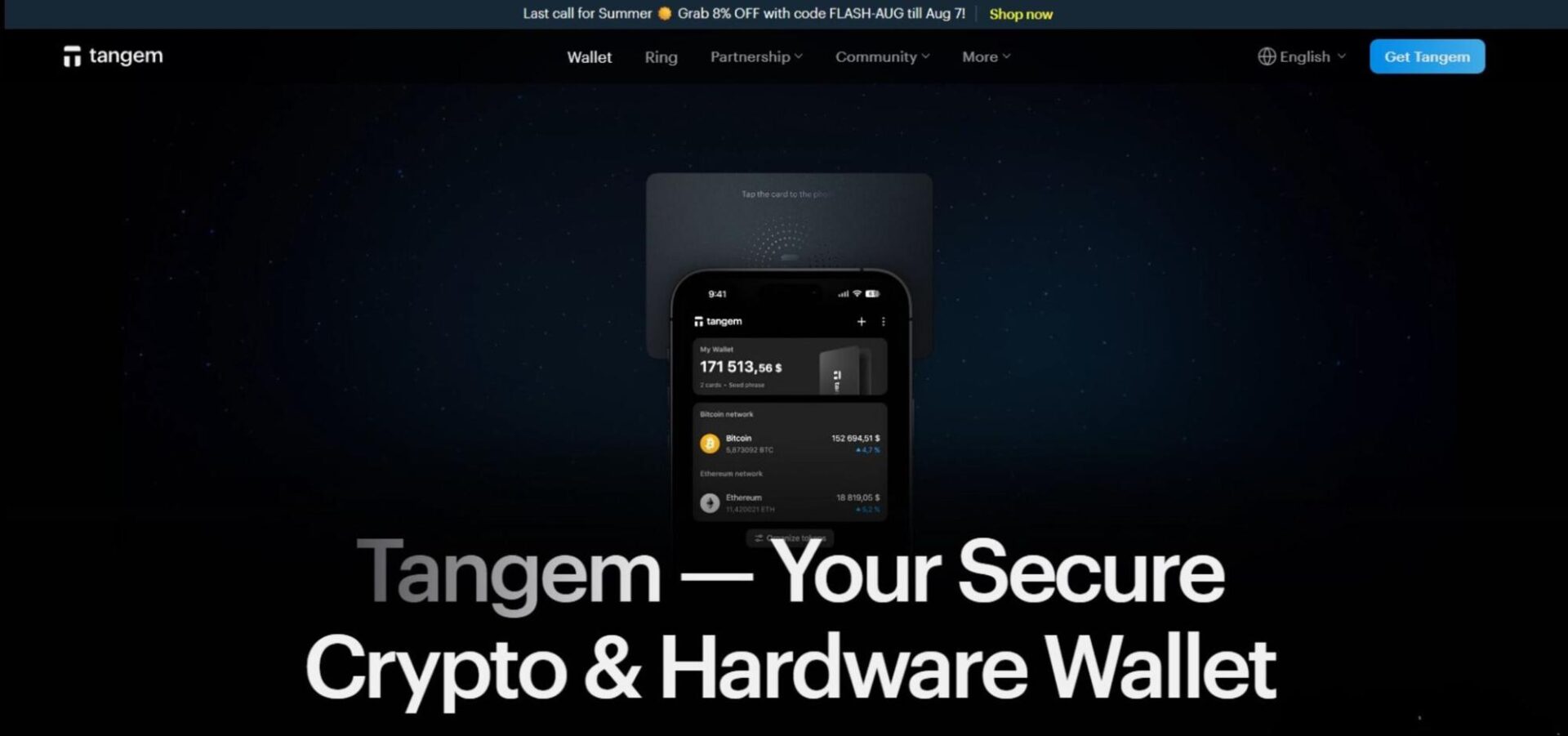
If you’re seeking a portable, truly offline cold wallet, Tangem could be perfect. The credit card-style cold storage solution can easily fit into a wallet for transport, but it doesn’t sacrifice security. Tangem’s most significant advantage is using NFC, which enables a 25+ year lifespan with no battery, enhancing security and portability.
Tangem’s core security is focused on the microcomputer chips embedded in each card. They’re EAL6+ rated, indicating top-level security and audited by two firms, including Kudelski Security. The chips generate a random private key entirely offline. As Tangem Wallets come in multi-packs, users have a backup even if they lose a card.
The two-card set costs $54.80, while the three-card option is $69.90. Users can also purchase a bundle containing two cards and a ring for $150. With support for over 13,000 cryptocurrencies and zero hacks between 6+ million devices across seven years, Tangem Wallet offers phenomenal cryptocurrency security.
Pros
-
Support for 13,000+ cryptocurrencies
-
25+ year life span
-
No battery or recharging system
-
EAL6+ certification
-
Seed phrase (optional) and card-based recovery options
-
Audited by multiple third-party firms
Cons
-
Must be connected to a phone to manage the wallet
-
Each wallet stores the whole seed, not keyshares like MPC wallets
- Bitcoin
- Ethereum
-
Tether
70
No result
- English
- German
-
French
3
No result

BitBox
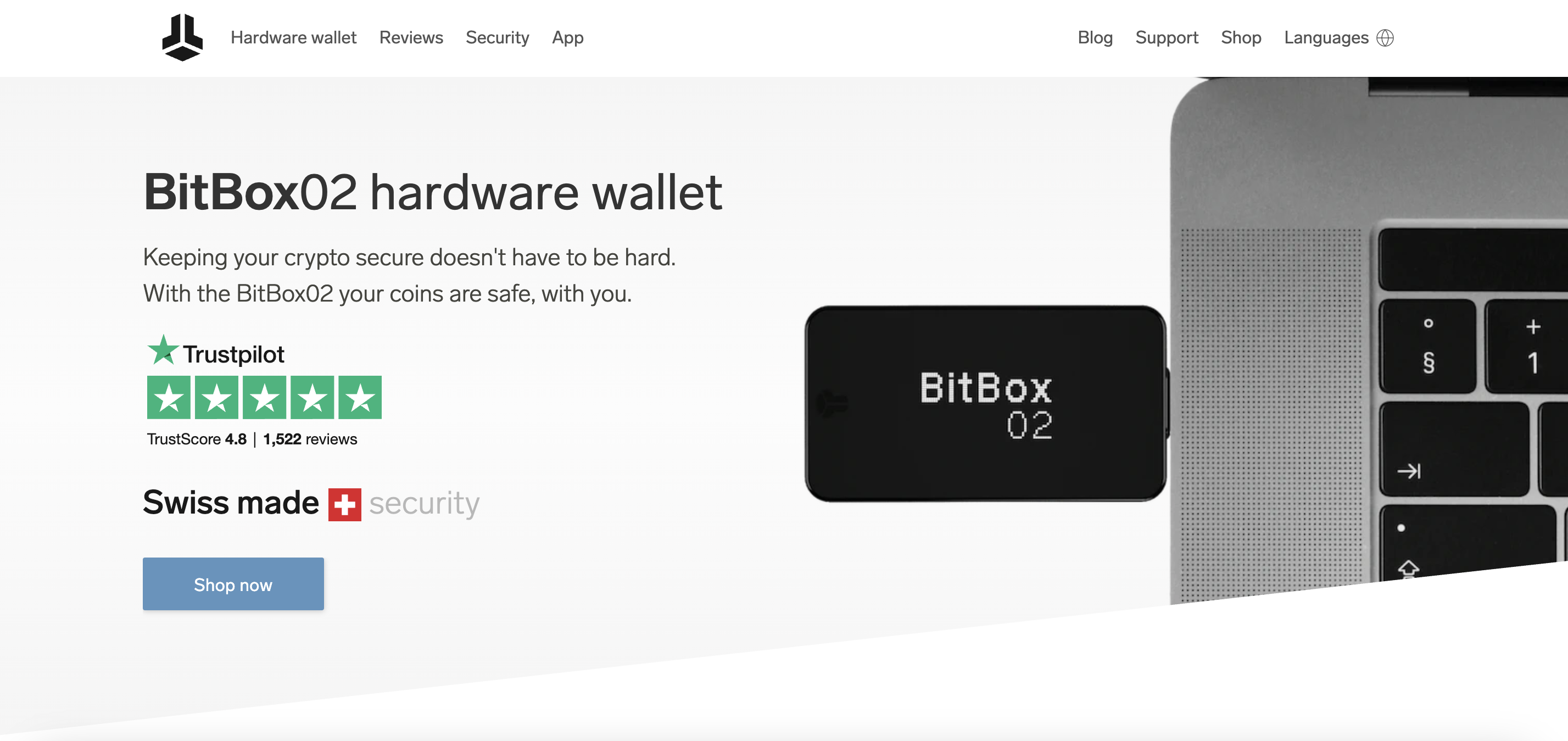
BitBox creates hardware wallets that emphasize transparency and privacy through completely open-source code. You can verify every aspect of the wallet's software and firmware, ensuring no hidden vulnerabilities or backdoors exist. The Swiss-made device focuses on essential security functions rather than bells and whistles, appealing to users who value substance over flashy features.
The hardware wallet runs entirely open-source firmware that you can audit and compile yourself. A secure chip provides tamper resistance, while the companion app offers Bitcoin-only and multi-coin versions. Tor integration protects your privacy during transactions, and the device supports both single-signature and multi-signature wallet setups.
Pros
-
Fully open-source design allows complete transparency
-
Swiss manufacturing ensures high build quality standards
-
Privacy-focused features, including Tor network support
-
Simple interface reduces potential user errors
-
Multi-signature capability enhances security options
Cons
-
Limited cryptocurrency support compared to mainstream wallets
-
Higher price point than some hardware wallet alternatives
-
Minimal screen size restricts transaction information display
-
Fewer third-party integrations than popular competitors
-
Learning curve for users new to open-source concepts

Blockstream
Blockstream Green provides a Bitcoin-focused wallet solution developed by one of Bitcoin's most influential development companies. You get access to cutting-edge Bitcoin technologies, including Lightning Network payments and liquid sidechain transactions. The platform targets users who understand Bitcoin's technical aspects and want access to the latest protocol improvements before they reach mainstream adoption.
The wallet implements 2FA security without requiring phone numbers, using hardware tokens or authenticator apps instead. Lightning Network integration enables instant, low-fee Bitcoin payments. Liquid Network support allows faster settlement times and confidential transactions. Hardware wallet compatibility is supported by most popular devices, including Ledger and Trezor.
Pros
-
Developed by Bitcoin protocol contributors with deep expertise
-
Lightning Network functionality for instant payments
-
Privacy-enhanced features through Liquid sidechain integration
-
Hardware wallet support across multiple device types
-
No phone number requirement for 2FA security
Cons
-
Bitcoin-only focus excludes other cryptocurrency options
-
Technical features may confuse less experienced users
-
Limited customer support compared to consumer-focused wallets
-
Interface design prioritizes function over user experience
-
Liquid Network adoption remains limited outside technical circles

Bitkey
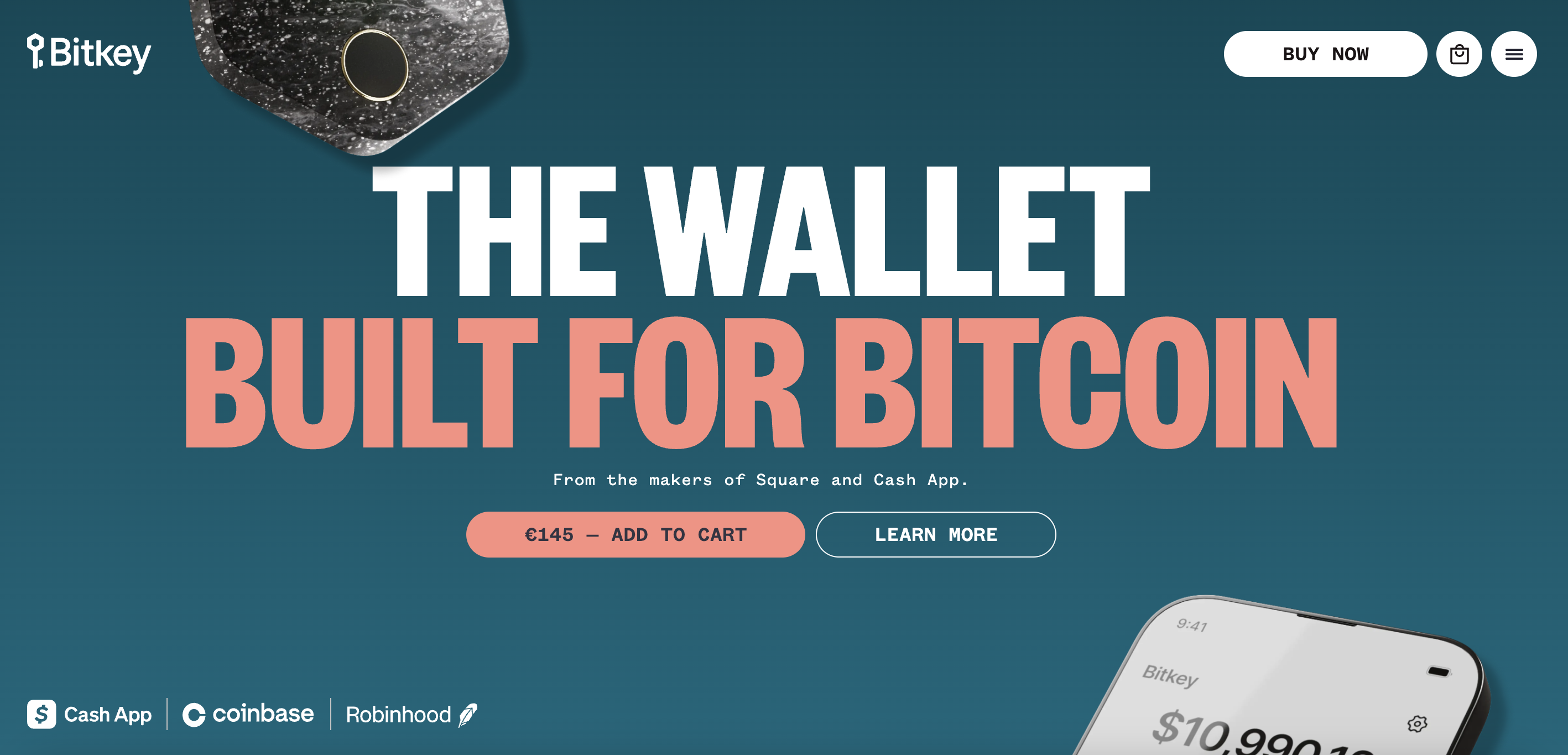
Bitkey represents Block's approach to making Bitcoin storage accessible to everyday users through a three-part system combining hardware, mobile app, and cloud-based recovery. You get the security of a hardware wallet without the complexity that often intimidates newcomers. The platform focuses exclusively on Bitcoin, streamlining the experience by avoiding the confusion of multiple crypto options.
The system uses a 2-of-3 multi-signature setup with keys split between the hardware device, mobile app, and Block's servers. Social recovery allows trusted contacts to help restore access if you lose your device. The hardware wallet connects via Near Field Communication (NFC) to your smartphone, eliminating cables and complicated setup procedures. Inheritance planning features help transfer Bitcoin to beneficiaries.
Pros
-
Simplified setup process removes technical barriers
-
Social recovery system prevents permanent fund loss
-
NFC connectivity eliminates connection hassles
-
Inheritance features address long-term planning needs
-
Block's reputation provides user confidence
Cons
-
Bitcoin-only support limits cryptocurrency diversification
-
Requires ongoing trust in Block's infrastructure
-
Social recovery depends on reliable, trusted contacts
-
Higher cost than basic software wallet alternatives
-
Limited availability in international markets initially
- Bitcoin
- English
Trezor
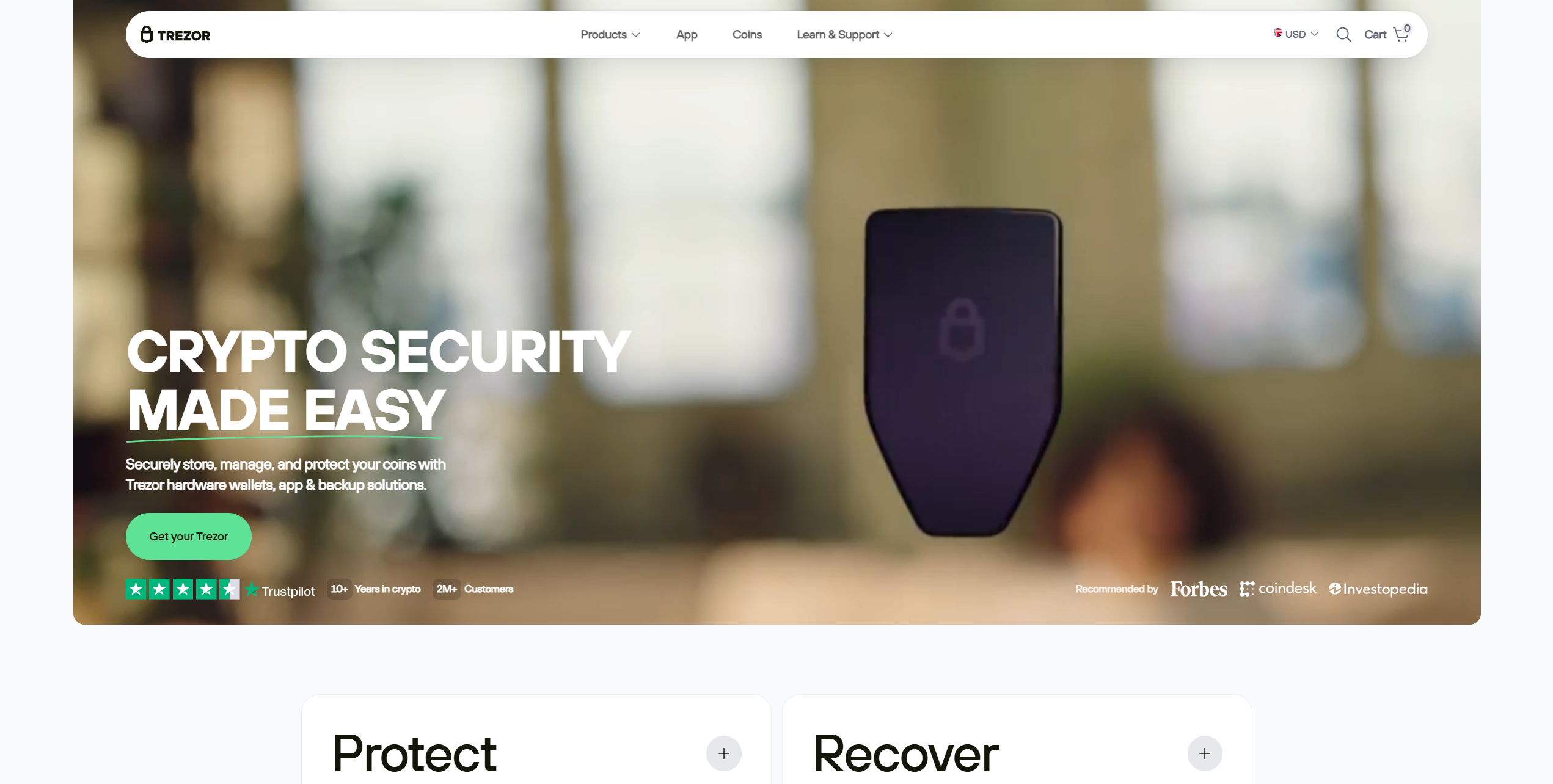
Trezor wallets are similar in function to Ledger wallets, boasting an open-source security architecture that enables users or researchers to audit the devices for bugs or vulnerabilities independently. If you're seeking a budget hardware wallet, the Trezor Model One doesn't get much better. Priced at $49, users get a small two-button device with an optional PIN system. It can store over 1,000 cryptocurrencies, but lacks some key assets, including XRP and Solana.
The Trezor Model T is a premium hardware wallet with a 1.54-inch touchscreen and USB-C connection. It offers the same seed phrase-splitting tool as the Safe 3, but is significantly more expensive at $129. Moreover, it can be used as a 2FA passkey device, enhancing flexibility. While all of Trezor's wallets are managed via Trezor Suite, which provides swap and purchase functionality, the Safe 3 is the best overall offering due to its EAL6+ security chip and seed-splitting tool. However, keep in mind that they're view-only on iOS. iPhone users cannot use Trezor wallets without another device.
Pros
-
Broad crypto asset support
-
Can connect to dApps and DeFi protocols
-
One of the most well-known hardware wallet brands
-
Products at multiple price points
-
EAL6+ security chips for Safe 3
-
Budget-friendly hardware wallet
Cons
-
No native iOS support for transactions
-
Absolute beginners might struggle with the interface at first
- Bitcoin
- Ethereum
-
Tether
204
No result
- English
- Czech
Hardware vs Software Wallets: Which Is Better?

Deciding between a software wallet and a hardware wallet is something many beginners want an easy answer to, but in reality, things are rarely that simple.
All types of wallets come with their own advantages and disadvantages and serve different purposes in crypto security and accessibility. Hardware and software wallets play different roles in managing crypto assets, and it is recommended that you utilize both types to balance security with convenience when accessing your crypto funds.
This is because hardware wallets are typically the more secure option for storing your crypto holdings offline, while software wallets like Binance Wallet are the more convenient option for accessing web3 platforms from anywhere at any time.
Here’s a detailed comparison table that can help you recognize their pros and cons:
| Type of Wallet | Hardware | Software |
| Security | High | Medium (Relies on advanced security measures like 2FA) |
| Risk of getting hacked | Minimal (Stores private keys offline) | Real (Stores private keys on the cloud) |
| Connectivity | Low (USB, Bluetooth) | High (Always connected to the internet) |
| Functionality | Low (Can store, send, and receive cryptocurrencies) | High (Can interact with all kinds of web3 platforms) |
| Convenience | Low (Relies on additional devices to access funds) | High (Can access funds from any internet-capable device) |
| Price | $50 and above, depending on model and make | Free |
| Best for | Long-term storage of assets, maximizing security | Short-term storage of assets, everyday transactions |
To sum it all up, all crypto traders must own a software wallet, as it is the only type of crypto wallet that can be used to trade, stake coins, and interact with decentralized applications (dApps). However, because this type of wallet is always online, it can, in theory, be hacked by a sophisticated hacker.
To ensure the maximum protection for your crypto holdings, it is advised to store the bulk of your crypto holdings in a hardware wallet offline and only keep a small portion of them on your software wallet for everyday trading.
How to Set Up and Use a Hardware Wallet

If the recommendations above helped you find the best crypto hardware wallet for your needs and you are eager to get started, we can help you set up your new wallet as well. Just follow the easy, but detailed instructions below, and you will be done in no time.
Step 1. Get Your Wallet and Check the Contents
The first step of setting up your new hardware wallet is making sure you have the right thing and that everything is in order. Confirm that the seal is still intact and shows no signs of tampering. Then, carefully unbox the wallet and verify that you, in fact, got the wallet you ordered.
Also, check if the additional contents, such as the instruction manual, the recovery sheet, and the USB cable (if applicable), are included and undamaged. If everything checks out, you can proceed to the next step.
Step 2. Download and Install the Wallet’s Software
Your hardware wallet will need a software application to function properly. This software can typically be downloaded directly from the manufacturer’s website. Some vendors may include a QR code on the packaging to take you directly to the download page. If your box doesn’t have one, you will need to find the website yourself.
Once the software is downloaded, run the installer and follow the on-screen instructions to install it on your device. This should be a simple and straightforward installation.
Step 3. Connect the Wallet to Your Device
If you’ve installed the app, you can now connect the hardware wallet to your device. Once you do, the software will detect the wallet and prompt the initial setup. Follow the on-screen instructions to complete the setup. If a firmware update is available, be sure to install it before you move on to the next step.
Step 4. Create a Secure PIN You Will Remember
During the initial setup, the wallet’s software will require you to create a PIN that you will use to unlock your device and access your wallet. Keep in mind, this is not a private key used for signing transactions, but rather, a security measure used to prevent unauthorized access.
Choose a secure PIN that will not be easy to guess, but also make sure it is one that you can always remember.
Step 5. Write Down Your Recovery Seed Phrase and Store It Securely
Another important step you need to complete during the initial setup is the creation of your recovery seed phrase. The recovery seed phrase is a 12 or 24-word phrase that can be used for recovering your wallet and funds in unfortunate scenarios, like losing your device or forgetting your PIN.
The wallet’s software will automatically generate this phrase while you set up the wallet, and this will be the only time you will get the chance to see it. So, be sure to write it down accurately and store it in a secure place.
Never share your seed phrase with anyone, and avoid storing your seed phrase digitally to keep it out of the reach of hackers.
Step 6. Configure Your Wallet to Your Liking
Now that the initial setup is done and you have your seed phrase securely written down, you can start configuring your wallet. As this is the first time you use it, you will likely need to download additional apps or firmware modules for the cryptocurrencies you want to store in your hardware wallet. These will allow you to generate wallet addresses and manage transactions.
Most hardware wallets include a built-in app store or manager that lets users easily select supported cryptocurrencies, and the necessary software is automatically downloaded and installed. Complete your configuration and move on to the last step.
Step 7. Test Your Wallet to Ensure Everything Works Properly
If you followed the steps above, your hardware wallet should be securely configured, set up, and ready for use. To ensure everything is working properly, we suggest testing it out.
If you hold cryptocurrency in a custodial wallet on an exchange, generate a public key on your hardware wallet. Then, initiate a withdrawal on the exchange and use the generated address to transfer the coins. Once the transaction is confirmed, the funds should appear in your wallet.
With that, your wallet setup is complete, and you’re ready to store and manage your crypto assets safely.
How to Secure a Hardware Wallet

Now that you know how to set up your hardware wallet, we can shift our focus to essential security practices. Every device, even the best hardware wallet for crypto assets, can benefit from proper maintenance and precautions.
To keep your wallet secure, here are some key protective measures that will help you strengthen security and ensure maximum protection for your holdings.
Backing up Hardware Wallets
As we mentioned earlier, the recovery seed phrase is your one and only lifeline when it comes to backup and recovery on a hardware wallet. These wallets are self-custodial, which means there is no customer support team that can help you in critical times.
Everything goes through the seed phrase, and if you lose it, lose your wallet, or forget your password, you may lose your funds permanently. For this reason, it is of the utmost importance that you keep that piece of paper safe and away from prying eyes.
Making multiple backups of your backup is a smart and proactive practice that can save you from complete loss in case something goes wrong. To avoid putting all your trust in a single copy, consider writing your phrase down on multiple pieces of paper and storing them in several safe locations.
Remember, paper is not immune to physical deterioration, so try to keep your backups where they won’t be easily damaged in an accident, such as a fire or a flood.
Firmware Updates
Like most electronic devices, hardware wallets also get firmware update releases to get the latest security patches and improvements. Keeping up to date with the latest firmware can protect you from vulnerabilities and ensure your wallet functions securely and efficiently.
With most wallets, the companion software should notify you when a new update is available, but it doesn’t hurt to check yourself manually. Firmware update installations are typically automated and easy to complete, so be sure to always get them on time.
Tips for Crypto Wallet Passphrases

In addition to the PIN we mentioned in step four of our guide, some of the best hardware wallets also offer the option to set up a passphrase to enhance the security of your funds further. Similar to a seed phrase, a passphrase is typically 12 words long and provides an additional layer of encryption for accessing your wallet.
If your wallet supports passphrases, we strongly recommend you enable this feature and follow the following tips to ensure maximum security:
- Make sure your passphrase is unique and hard to guess. Ideally, use a combination of letters, numbers, and symbols.
- Avoid using personal information or familiar catchphrases for your passphrase, as they are more likely to be guessed.
- Please don’t place the passphrase in the same locations as the seed phrase to avoid losing them together.
Remember, the seed phrase is used for backup and recovery, while the passphrase is like a strong password, providing extra protection for your crypto wallet. Don’t get these two mixed up.
Conclusion
Hardware wallets are an excellent storage solution for users who want to enhance the security of their crypto holdings. When properly managed, these wallets can keep your crypto assets safe from online threats and out of the reach of malicious attackers.
However, because these wallets place the responsibility for the custody of your private keys in your hands, you must take great care with your recovery seed phrase. Not even the best hardware wallet can compensate for reckless behavior, so be sure to handle your backups responsibly and follow the best security practices.
FAQ
What is the point of a hardware wallet?
Hardware wallets have the unique ability to store private keys offline, something that software wallets lack. By storing them offline, these wallets keep your holdings away from online threats.
Even though software wallets have advanced security measures that make them secure, skillful hackers can sometimes find ways to exploit software vulnerabilities. Placing your coins in a device that is not connected to the internet eliminates this risk completely.
Does my crypto still grow in a hardware wallet?
It depends on what you mean by grow. If the value of your crypto rises based on market performance, then yes, your crypto technically grows while tucked away safely in your hardware wallet device.
However, if you meant earning additional crypto by taking part in DeFi activities like staking, liquidity mining, and yield farming, then no. You might have to move your funds from your hardware wallet into a Web3 wallet from which you can interact with smart contracts and participate in these earning opportunities.