Best Crypto Exchanges in 2026

- When you click links on this page, we may earn an affiliate commission. By using this website you agree to our terms and conditions and privacy policy.
- Participation in online gambling may be illegal in your country and is subject to age restrictions (18, 19, or 21, depending on the jurisdiction). Verify legality and age requirements before participating. Learn more
Some of the best cryptocurrency exchanges in 2026 also offer crypto trading services. Still, the key differences lie in the quality of service provided and the overall safety of the platform. While variety is the spice of life, with so many options to choose from, separating the top crypto exchanges in 2026 from the sea of mediocre options can feel a bit like finding a needle in a haystack.
Unlike choosing a mining pool, picking a crypto exchange requires a more nuanced approach. Luckily, we asked around and gathered the community input to see which platforms real users trust and rely on. Then, we went a step further ourselves and tested the most popular exchanges hands-on to see how they perform in practice.
In a couple of minutes, we will share our results and help you understand what to look for when choosing a cryptocurrency exchange. We will also show you how to register and start using such a platform with a detailed, step-by-step guide and provide you with additional valuable insights.
Key Takeaways
- The best crypto exchanges in 2026 include Uphold, eToro, Gemini, Lbank, CEX.io, and Kraken, to name a few.
- Choosing a reliable crypto exchange is important for your trading experience
- Licensed exchanges that comply with the regulations are more trustworthy.
- Insurance is not a given with crypto exchanges, rendering the use of advanced security measures essential.
- It is best to trade on a highly liquid crypto exchange that supports a large number of coins and trading pairs.
- Trading fees can eat away at earnings, so traders need to evaluate, compare, and choose carefully.
- The mobile app of a crypto exchange can also enhance your experience.
Top Crypto Exchanges in 2026 Are…





The Best Crypto Exchanges in 2026 Explained
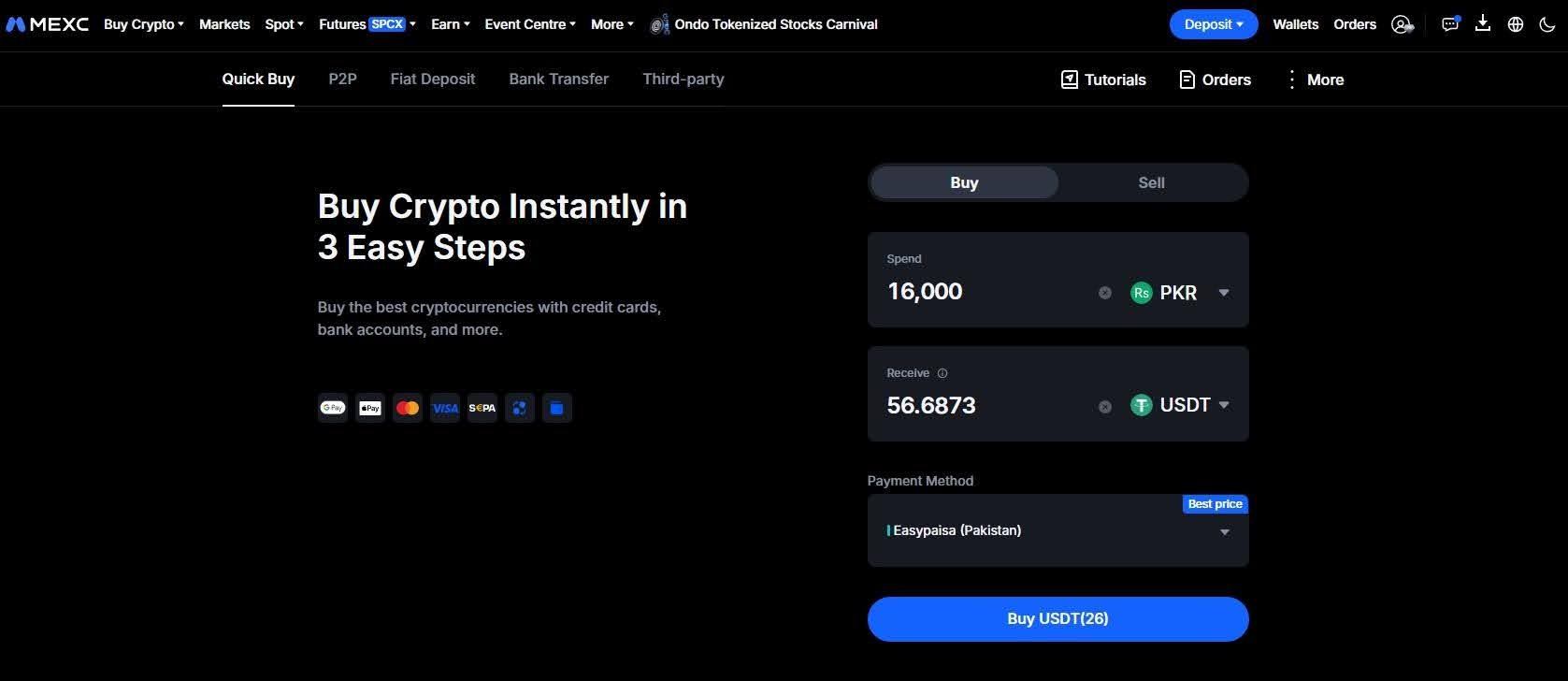
Since its establishment in 2018, MEXC has become one of the most popular cryptocurrency exchanges worldwide. While its services are expansive, it is unavailable to users in the United States and lacks detailed licensing disclosures.
The exchange supports over 2,500 cryptocurrencies and offers features like staking, spot trading, and high-leverage futures trading. Fiat deposits can be made via credit or debit cards. The platform’s fees are highly competitive, offering no maker fees and low taker fees.
Pros
-
An extensive selection of over 1,500 cryptocurrencies
-
Early listings of emerging projects
-
Competitive fee structure (0.2% standard)
-
No mandatory KYC for basic accounts
-
Multiple earning products (staking, Savings, etc.)
-
Futures trading with up to 200x leverage
Cons
-
Not available to US customers
-
Less established reputation than major exchanges
-
Lower liquidity for some trading pairs
-
Limited regulatory clarity
-
Complex interface for beginners
-
Customer service language barriers
- Shiba Inu
- Bitcoin
-
PAX Gold
72
No result
- English
- Turkish
-
Vietnamese
5
No result
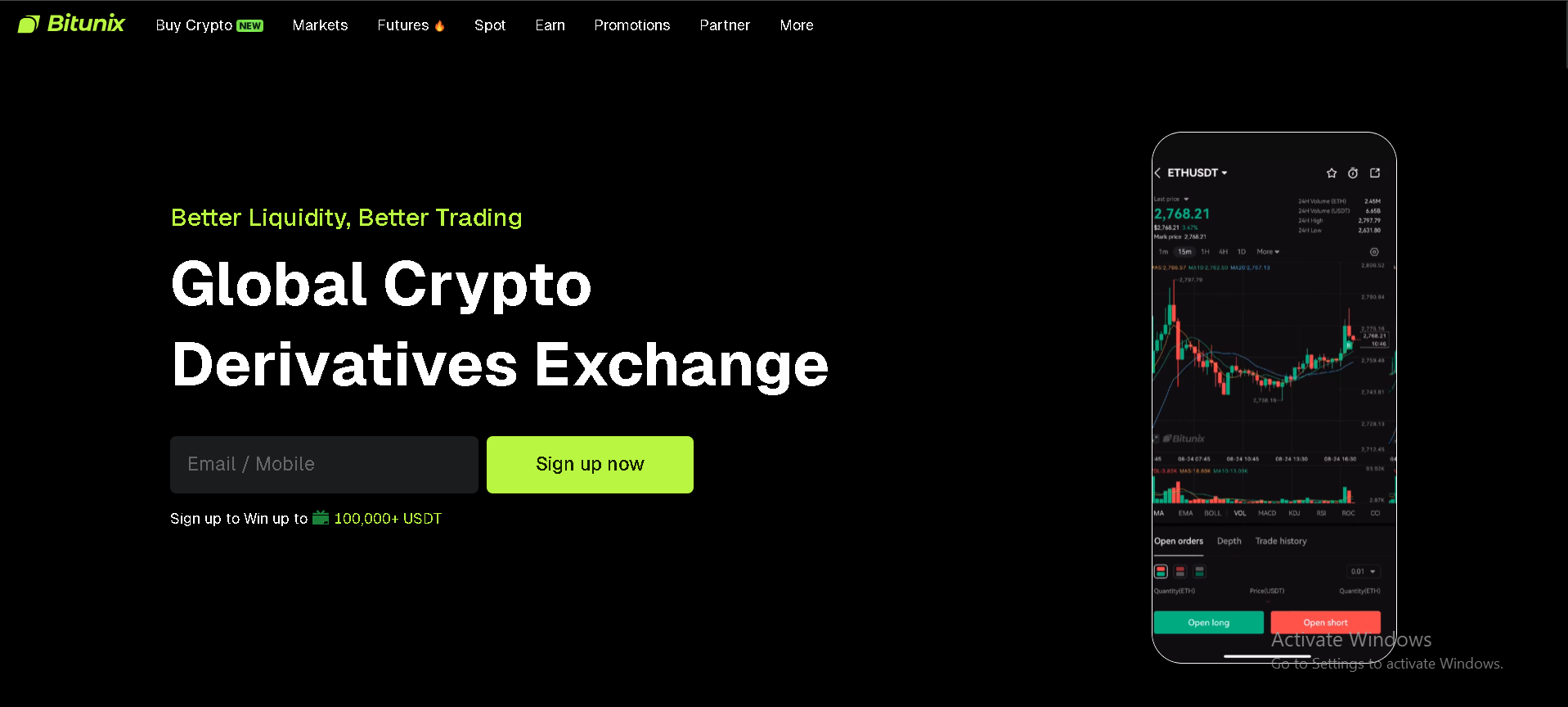
Bitunix is a crypto exchange specializing in derivatives trading. It was founded in 2022 by Aaron Lee with the goal of building a secure futures trading-focused platform suitable for novices and experienced traders. Headquartered in Saint Vincent, Bitunix is a regulated exchange with a Money Services Business (MSB) license with the US Financial Crimes Enforcement Network (FinCEN).
Users can purchase crypto directly with seven fiat currencies using a debit or credit card. Alternatively, Bitunix has integrated third-party service providers that support buys with more currencies and payment methods, such as bank transfer and Revolut. Users also have access to a Peer-to-Peer marketplace for decentralized trading.
Bitunix offers 414 futures contracts with up to 125x leverage and 501 spot assets. It provides flexible crypto staking, dual-investment products, and copy trading. It also offers a crypto conversion tool and a recurring buy system. Fees are 0.08% / 0.1% (spot) and 0.02% / 0.06% (futures), which is reasonable compared to other crypto exchanges.
Bitunix is a reasonably well-equipped exchange catering to derivatives and spot traders. It boasts competitive fees and a good range of assets, but it lacks certain advanced features like trading bots and crypto loans. Thus, it’s best suited to spot and derivatives traders seeking a cheap platform, while those seeking a general feature set will likely prefer an alternative.
Pros
-
Regulated exchange
-
Offers a good selection of assets
-
Spot and futures trading with high leverage
-
Competitive trading fees
Cons
-
Lacks specific advanced features
-
The fiat on-ramp is restricted in countries like the UK
- Bitcoin
- Ethereum
-
Tether
78
No result
- English
- Spanish
-
Farsi
3
No result
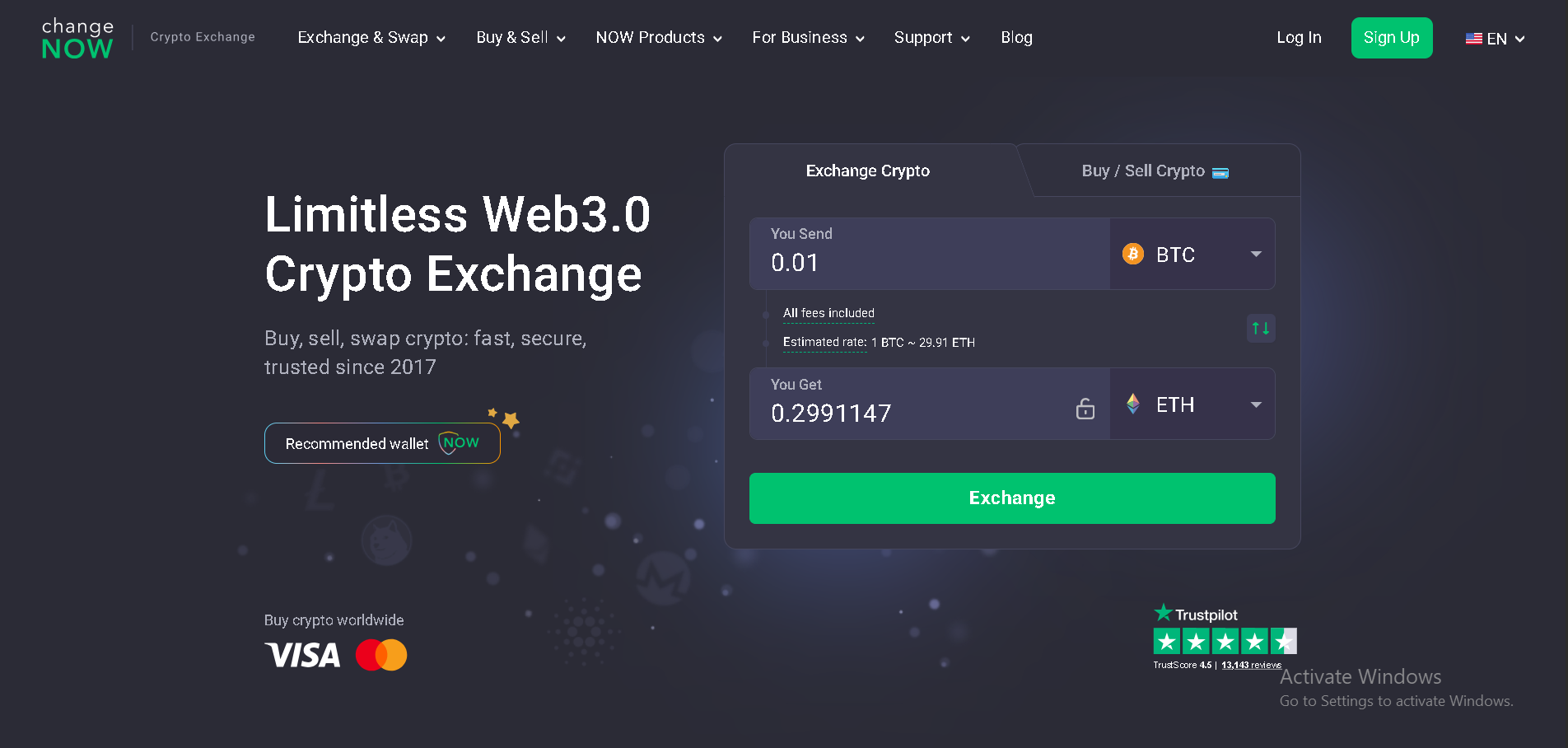
Some exchanges make buying and selling crypto more complex than it needs to be. However, ChangeNOW has taken the opposite approach. The platform makes cryptocurrency accessible to anyone, regardless of experience level, thanks to its straightforward crypto-to-crypto swaps tool and fiat on-ramp, which supports dozens of currencies.
Despite being simple, ChangeNOW is a highly capable exchange. Users can buy/sell 1,257 cryptocurrencies and access a variety of additional ChangeNOW products, including a mobile app exchange, instant crypto loans, and a special tool for sending private transfers. Additionally, users can access a selection of Decentralized Finance (DeFi) coins.
ChangeNOW also offers a range of tokenized stocks and enterprise tools. Businesses can integrate ChangeNOW onto their own platforms, enabling them to provide exchange services with no coding requirements.
ChangeNOW is a simple but powerful crypto trading platform. Unfortunately, some of its features are unavailable depending on the user's region, while fees are somewhat high (around 1%) and can vary by asset and amount. However, ChangeNOW is a solid option for anyone who values ease of use or convenience.
Pros
-
Beginner-friendly
-
Large selection of assets
-
Provides access to DeFi coins and Real-World Assets (RWAs)
-
Available on desktop and mobile
-
Caters to retail and enterprise clients
Cons
-
Features are regionally restricted
-
Relatively high trading fees
- Bitcoin
- Ethereum
-
Tether
219
No result
- English
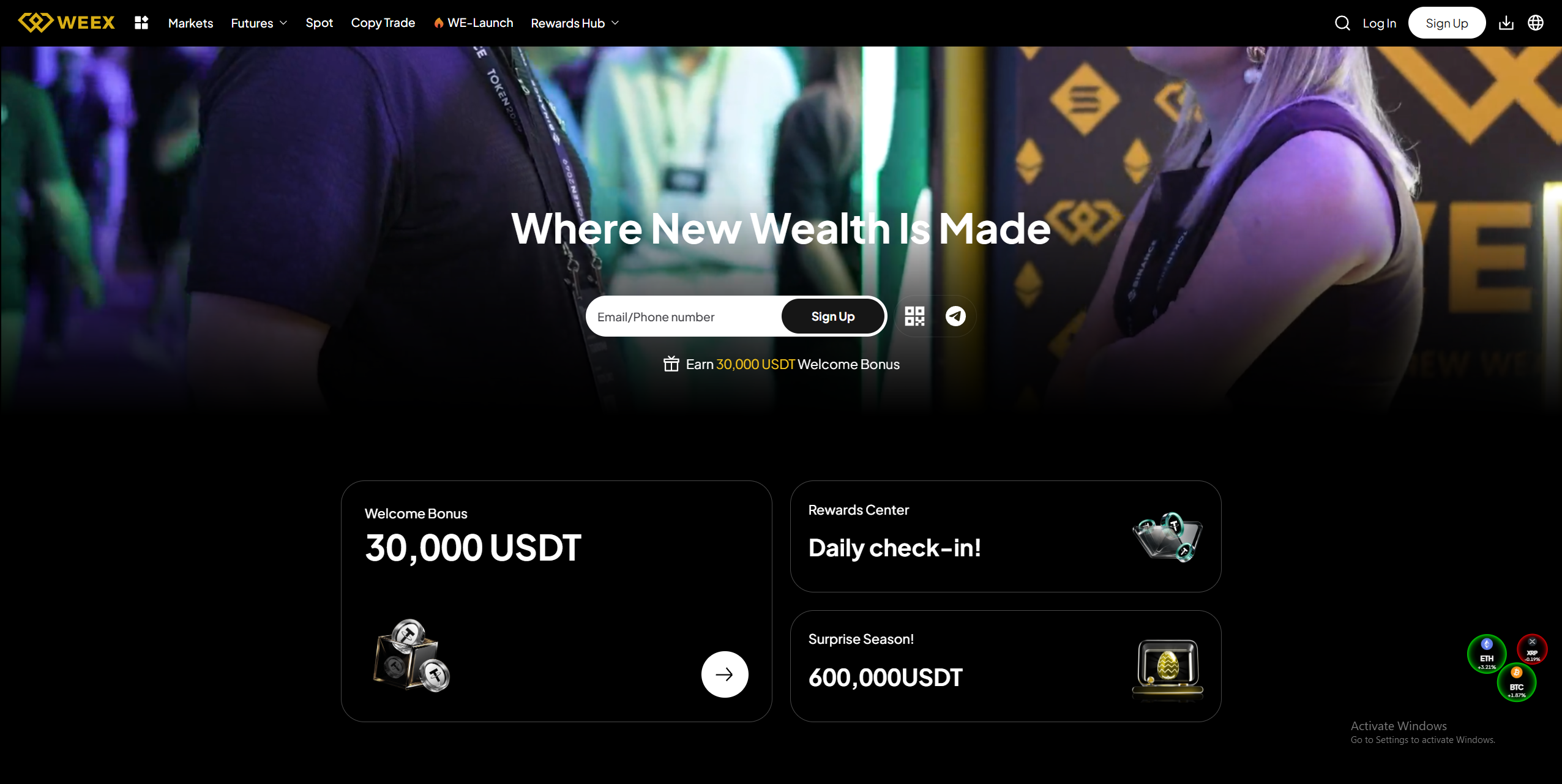
WEEX is a global crypto exchange founded in 2018 that serves more than 2 million users. It offers multiple trading options, including spot and futures markets. However, users are restricted to using crypto for payments and withdrawals, as they cannot buy with or deposit fiat currency. The exchange is registered as a Money Service Business in Canada and the US.
While WEEX is a relatively bare-bones exchange in terms of features, it hosts 971 cryptocurrencies and offers copy and demo trading functionality. It also has a rewards hub offering various trading and airdrop promotions. WEEX offers zero maker fees and 0.1% taker fees on most trading pairs. However, some are subject to a 0.1% maker order fee.
Pros
-
WEEX users can access up to 200x leverage on certain assets
-
Easy-to-navigate platform makes onboarding simpler
-
Free maker fees on many pairs (competitive fees otherwise)
-
Registered as a money service business
-
Copy and demo trading make WEEX suitable for beginners
Cons
-
No fiat currency support
-
Not many additional features outside of trading
- Bitcoin
- Ethereum
-
Tether
96
No result
- English
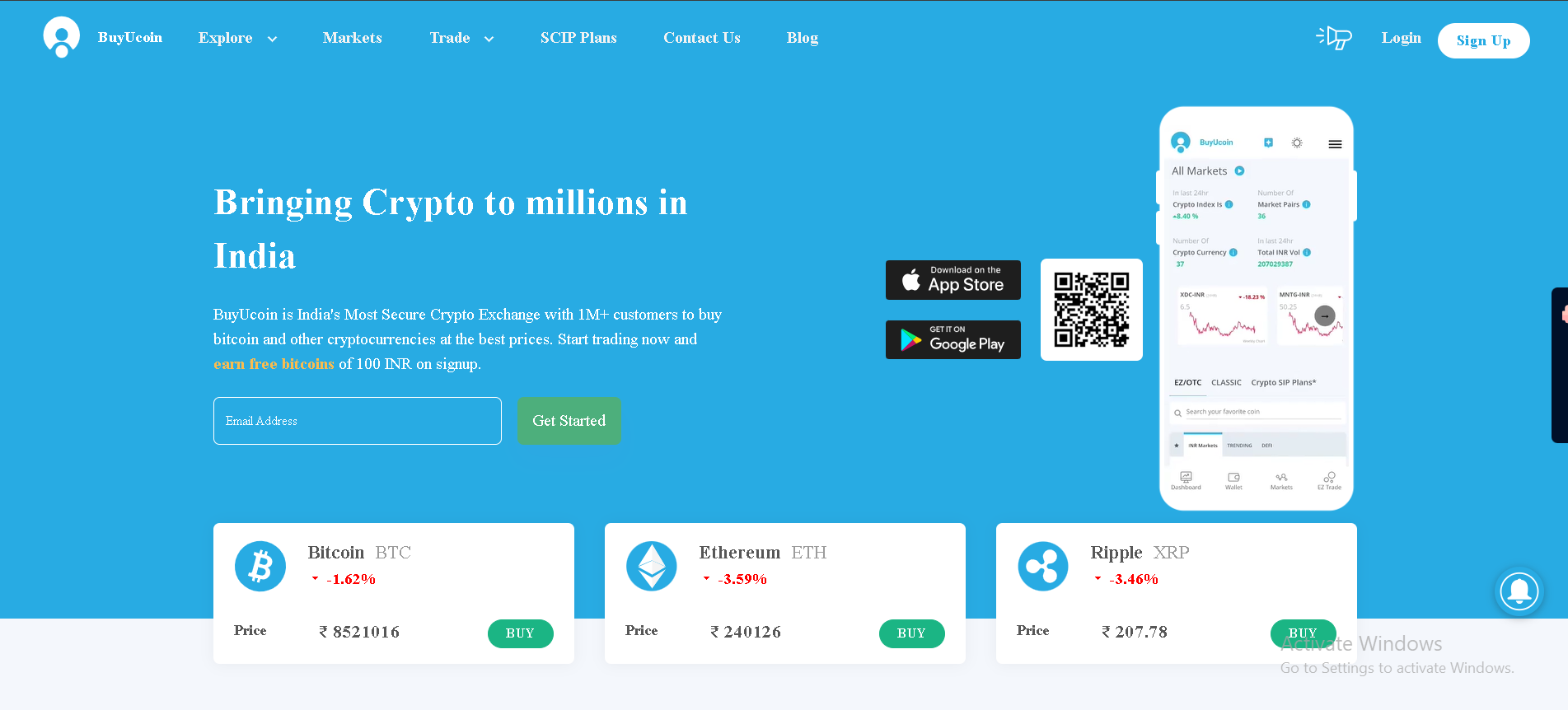
BuyUcoin is a leading Indian crypto exchange operating since 2016, serving over 1 million users. It was founded by Atulya Bhatt, Devesh Aggrawal, and Shivam Thakral to provide a convenient way for Indians to invest and trade crypto. It’s registered with the Financial Intelligence Unit - India (FIU-IND) and is based in Delhi.
While users may find BuyUcoin somewhat basic, as it lacks tools like futures trading, crypto loans, or bots, it offers a solid selection of 239 cryptocurrencies. However, some are not available to purchase on BuyUcoin. The exchange offers a basic line chart and a TradingView integration for advanced users. It offers an easy-trade tool and a spot exchange.
Outside of typical exchange features, BuyUcoin provides Systematic Crypto Investment Plans (SCIP) that involve buying regularly over extended periods. It also offers an NFT marketplace and Bitcoin rebates for trading.
BuyUcoin is a strong choice for Indian crypto investors as it’s registered with FIU-IND. Trading fees are reasonable at 0.24%, so it’s a top crypto exchange for local enthusiasts, but international investors can find more feature-rich exchanges.
Pros
-
Reasonable trading fees
-
Registered with FIU-IND
-
Good selection of assets
-
TradingView for advanced charting
-
Built-in NFT marketplace
Cons
-
Doesn’t have advanced features
-
Can only trade spot, not derivatives
- Bitcoin
- Ethereum
-
Tether
77
No result
- English

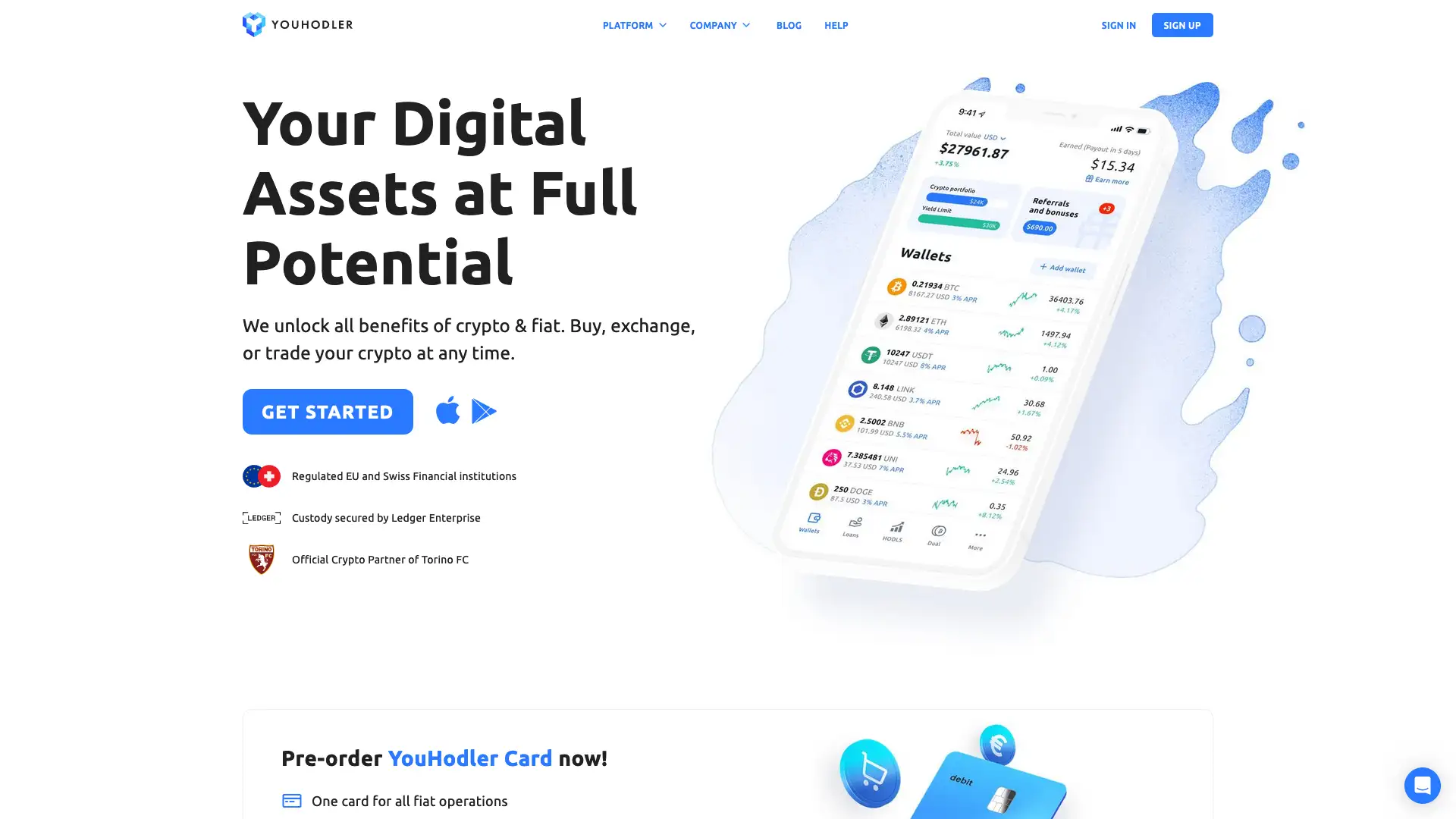
Launched in 2018, YouHolder is a crypto exchange and loans platform available worldwide, except in a few countries, such as the USA and Canada. The exchange lets people trade 110 cryptocurrencies after depositing via crypto or fiat (credit/debit card, wire, bank transfer, SEPA). It also supports many fiat currencies, including EUR, USD, GBP, and CHF.
While the exchange already offers up to 70x leverage, YouHolder’s Turbocharge tool lets people buy crypto with funds borrowed using their holdings as collateral. It also provides a crypto-loans feature, enabling users to borrow funds using their crypto without triggering a taxable event. MultiHODL trades charge an hourly rollover fee of 0.02%. No fee is listed for conversions.
Pros
-
Provides access to a reasonable amount of leverage
-
Users can borrow based on their crypto holdings
-
MultiHODL lets people boost profits and losses through a series of crypto loans
-
Available in many countries with local currency support
-
A good variety of large and small cryptocurrencies
Cons
-
Confusing fee structure, no listed costs for regular trades
-
Unavailable in the USA and Canada
- Bitcoin
- Ethereum
-
Tether
57
No result
- English
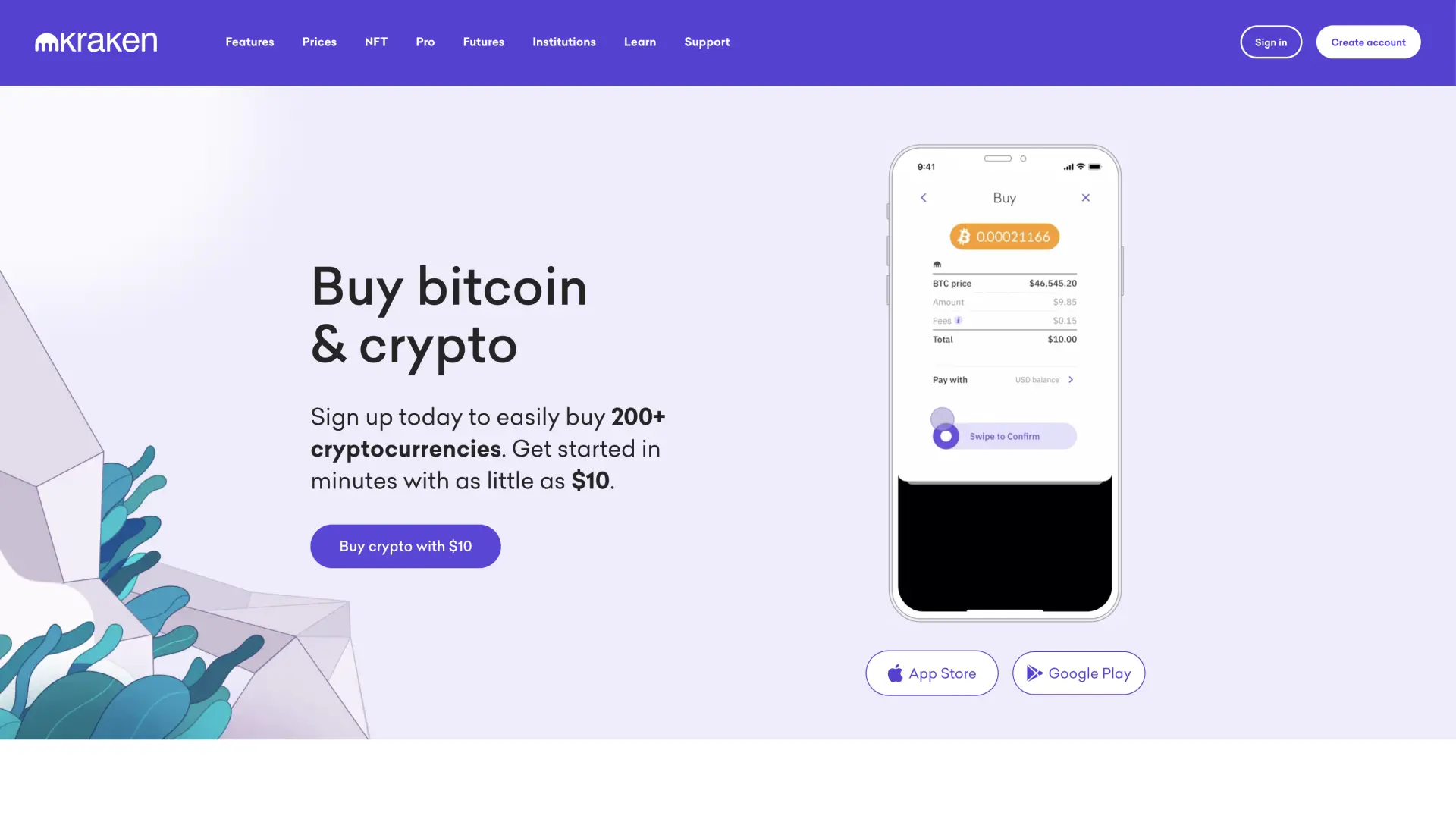
Launched in 2013, Kraken is a US-based crypto exchange known for its robust security measures and consistent performance. With billions in daily trading volumes, it’s a go-to choice for both novice and experienced traders worldwide.
Kraken supports a wide variety of cryptocurrencies—more than 300—and offers trading options like spot trading, margin trading with up to x5 leverage, and futures trading with leverage up to x50. The platform also provides staking opportunities for users looking to earn a passive income.
Deposits are supported in six major fiat currencies via multiple payment methods. Kraken’s transparent fee structure rewards high-volume traders with lower rates.
Pros
-
Strong security focus with no major breaches in its operating history
-
Competitive fee structure (maker 0.16%/taker 0.26%, decreasing with volume)
-
Over 200 cryptocurrencies available
-
Advanced trading features, including margin trading and futures
-
Excellent customer service reputation
-
Proof of reserves program for transparency
Cons
-
Interface not as beginner-friendly as competitors
-
Fiat deposit methods are more limited than some exchanges
-
The verification process can be lengthy
-
Mobile app functionality is not as robust as the desktop version
- Bitcoin
- Ethereum
-
Tether
83
No result
- Spanish
- English
-
French
4
No result
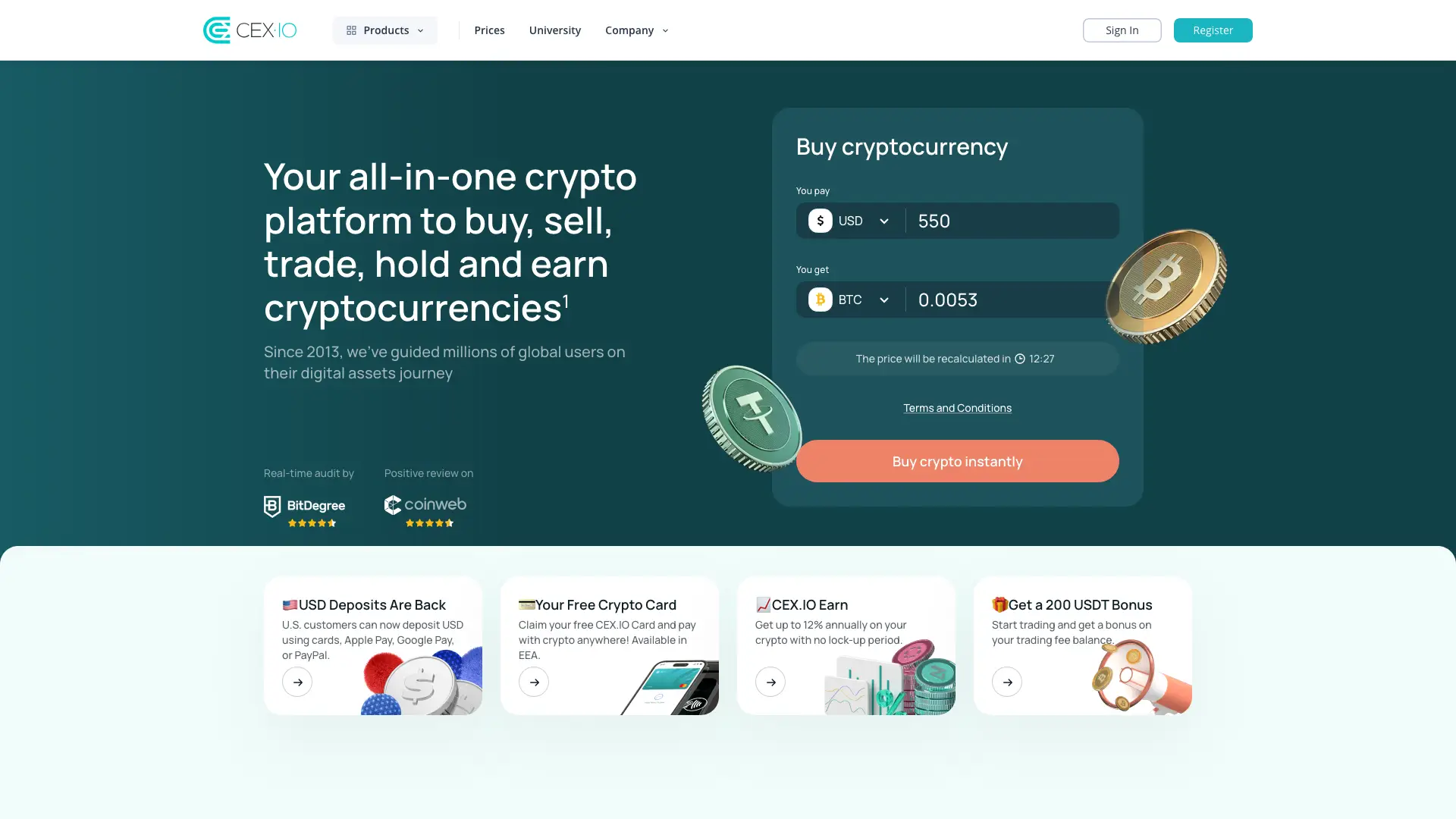
Founded in 2013 and based in London, CEX.IO is one of the earliest cryptocurrency exchanges. It operates globally, offering a secure platform for spot trading, margin trading, and staking.
The platform supports over 180 cryptocurrencies and allows users to deposit fiat in USD, EUR, and GBP. Payment methods include credit cards, bank transfers, PayPal, and Skrill. CEX.IO’s tiered fee system provides reduced fees for high-volume traders, making it a cost-effective choice for active users.
Pros
-
Operating since 2013 with a strong security record
-
Regulated in multiple jurisdictions
-
Competitive fees for high-volume traders
-
Margin trading and staking available
-
Multiple fiat currency support
-
Institutional services available
Cons
-
Higher fees for low-volume traders and card purchases
-
Geographic restrictions on certain features
-
Verification can be lengthy
-
Less competitive rates for staking than specialized platforms
- Bitcoin
- Ethereum
-
Tether
81
No result
- English
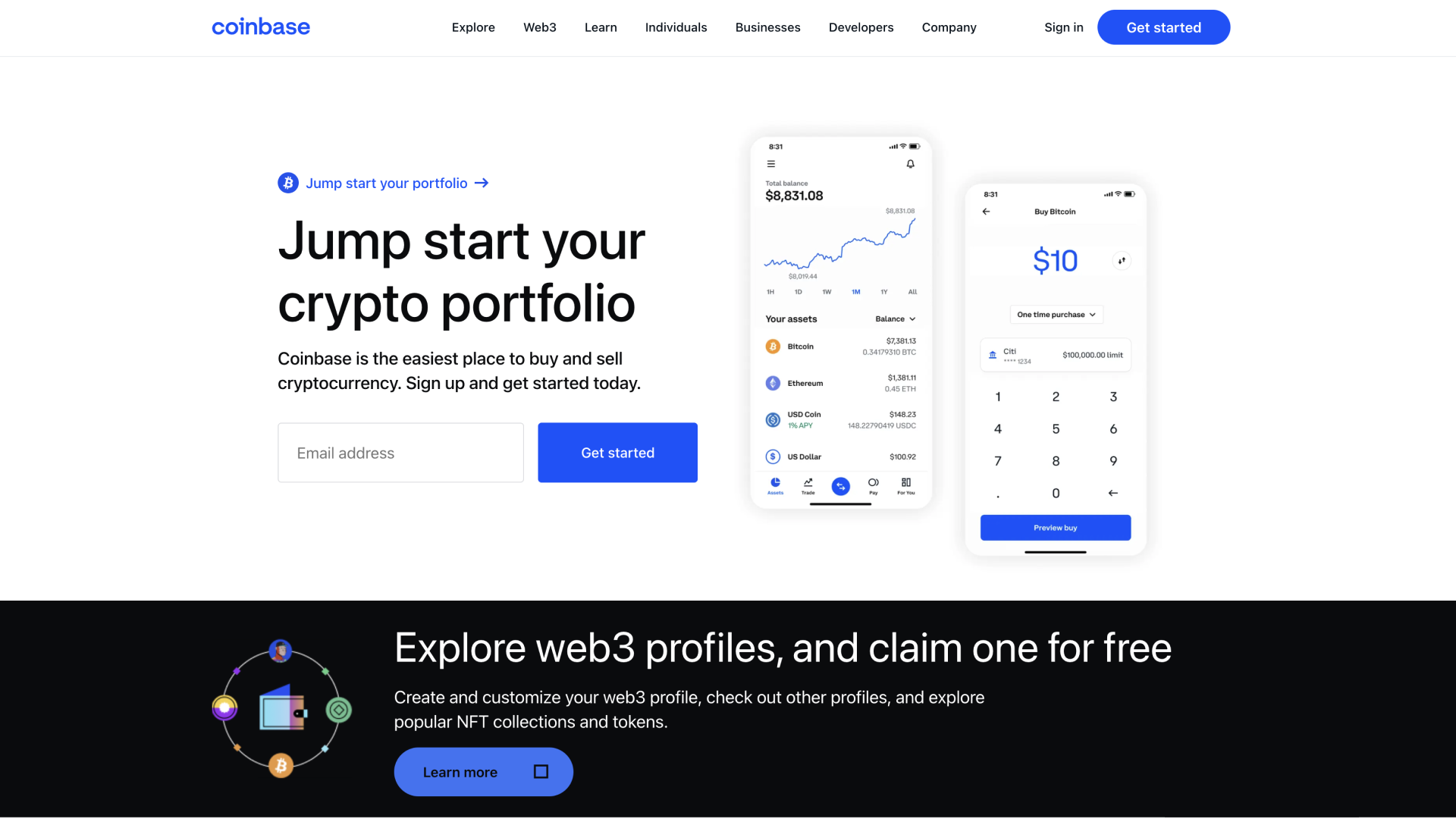
Founded in 2012, Coinbase has become one of the most trusted names in cryptocurrency, offering services to users in more than 100 countries. The platform operates in all 50 US states, adhering to strict regulatory standards, which makes it a preferred choice for many traders.
Coinbase supports over 240 cryptocurrencies and provides access to 300+ trading pairs. Key features include spot trading, staking, margin trading, and futures trading with leverage up to x20.
Fiat deposits are accepted in USD, EUR, and GBP, with payment options like PayPal, Apple Pay, and Google Pay. A tiered fee system allows high-volume traders to benefit from reduced rates.
Pros
-
Highly intuitive interface ideal for beginners
-
Strong security track record with 98% of assets stored in cold storage
-
Regulated in multiple jurisdictions, including the US
-
Wide selection of 250+ cryptocurrencies
-
Integrated staking options and learn-to-earn features
-
Enhanced account protection with 2FA, biometric authentication
Cons
-
Higher fees than many competitors (up to 0.6% maker/taker fees)
-
Customer service can be slow during high-volume periods
-
Has experienced occasional outages during market volatility
-
The basic Coinbase platform has fewer features than Coinbase Pro
- Bitcoin
- Ethereum
-
Tether
68
No result
- English
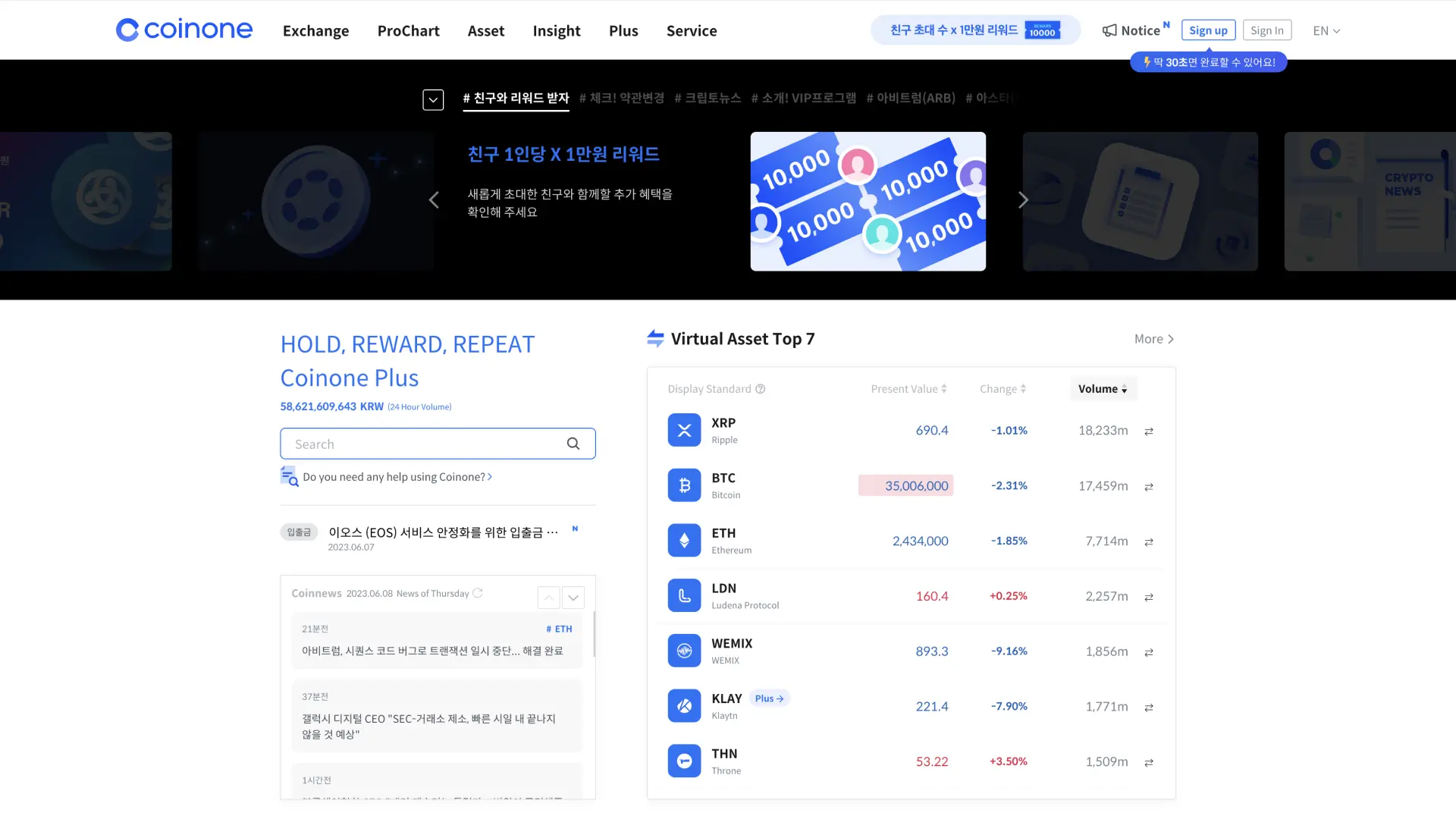
Coinone, founded in 2014, is one of South Korea’s leading cryptocurrency exchanges. It is praised for its intuitive interface, robust security (with no major hacks reported), and diverse offerings, including spot and margin trading, staking (Coinone Plus), and an advanced trading platform (Coinone Pro). Coinone charges a flat 0.20% trading fee and offers lower fees for new listings. Deposits are free, while withdrawal fees vary by coin.
Security is a notable strength, with the platform founded by a “white-hacker.” Yet, Coinone has faced some controversies, including legal issues involving executives accused of accepting bribes for coin listings. Some users also report dissatisfaction with customer service and fund management. Coinone is not regulated by a major international financial authority, which may be a concern for non-Korean users.
Pros
-
User-friendly interface and advanced trading features
-
Strong security record; no major hacks reported
-
Wide range of supported cryptocurrencies
-
Staking and margin trading are available
Cons
-
Past legal controversies involving management
-
Not regulated by strict international authorities
-
Some negative feedback on customer support
-
Primarily focused on the Korean market
- Bitcoin
- Ethereum
-
Tether
70
No result
- Korean
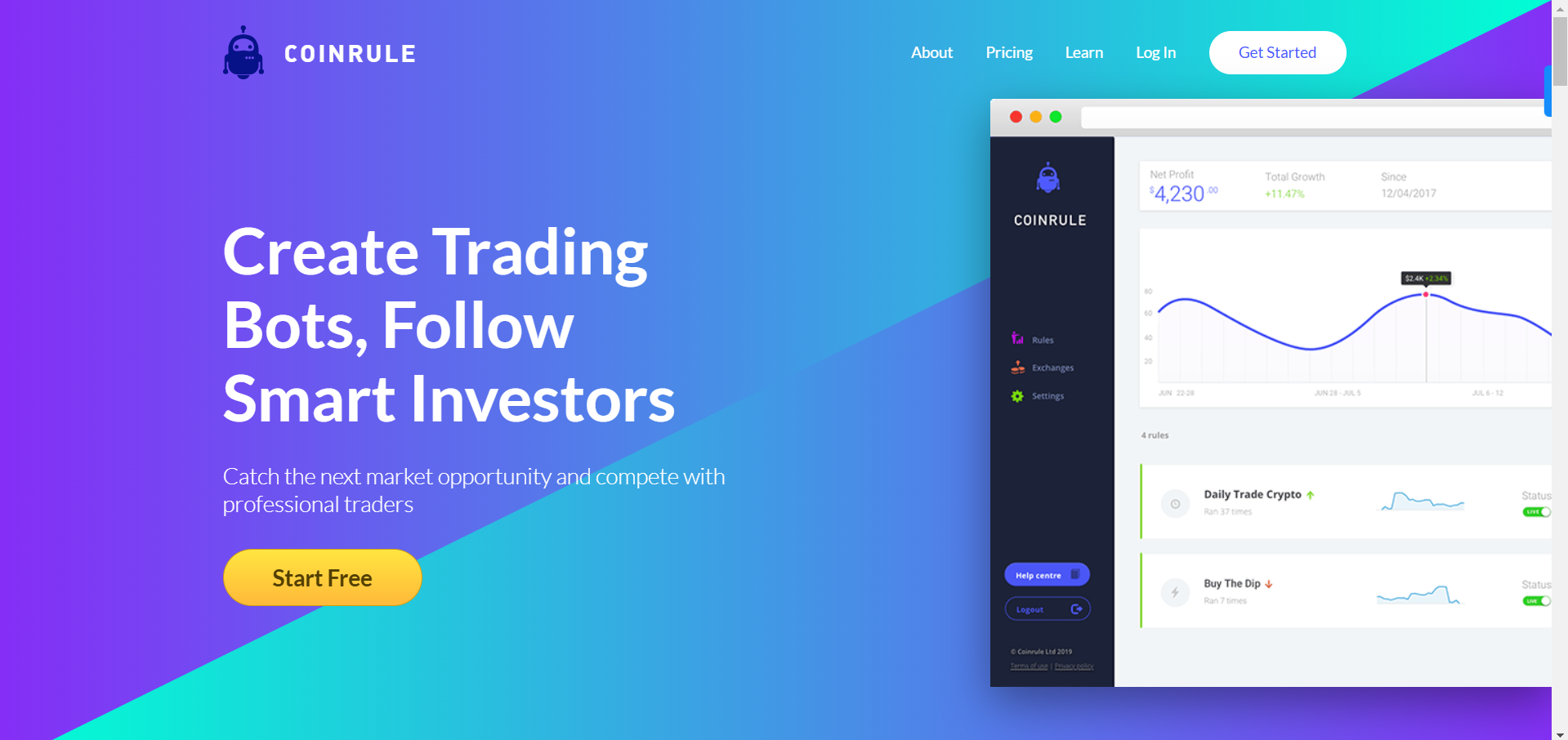
Coinrule, established in 2018, is an automated cryptocurrency trading platform designed to simplify trading for users without coding expertise. It operates on an "If-This-Then-That" framework, allowing traders to set up strategies based on specific market conditions. The platform integrates with major exchanges like Binance, Kraken, and Coinbase, offering tools such as backtesting, customizable trading rules, and pre-built templates.
While its user-friendly interface makes it ideal for beginners, Coinrule has some limitations, including restricted exchange support and higher pricing tiers. Users can experiment with strategies risk-free using its demo account feature.
Pros
-
Automated trading strategy platform rather than traditional exchange
-
Templates for different trading strategies
-
No coding knowledge is required
-
Connects to major exchanges via API
-
Demo mode for testing strategies
-
Regular strategy performance updates
Cons
-
Not an actual exchange (requires another exchange account)
-
Monthly subscription fees for advanced features
-
Learning curve for effective rule creation
-
Limited to exchanges with API support
-
Potential latency in trade execution
-
Relies on third-party exchange security
- Bitcoin
- Litecoin
-
1inch Network
1
No result
- English
BitMEX is a well-known crypto exchange specializing in derivatives trading, offering high leverage and advanced trading features. The platform is popular among experienced traders seeking sophisticated tools and deep liquidity. But, BitMEX does not support direct fiat deposits or withdrawals, meaning users cannot buy crypto with a credit card directly on the exchange.
To use BitMEX, traders must first purchase crypto elsewhere and transfer it to their BitMEX account. This extra step makes BitMEX less suitable for beginners or those looking for a simple way to buy crypto with a credit card. The platform’s interface is designed for advanced users, with complex order types and risk management tools.
Security is a strong point for BitMEX, with robust measures in place to protect user funds. The exchange also offers low trading fees and a wide range of derivatives products. However, its lack of fiat support and complex interface may deter casual investors.
Pros
-
Advanced trading features and high leverage
-
Deep liquidity and low trading fees
-
Strong security measures
Cons
-
No direct fiat deposits or credit card purchases
-
Complex interface, not beginner-friendly
-
Not suitable for simple crypto purchases
- Bitcoin
- Ethereum
-
Tether
30
No result
- Chinese (Mandarin)
- Russian
- English
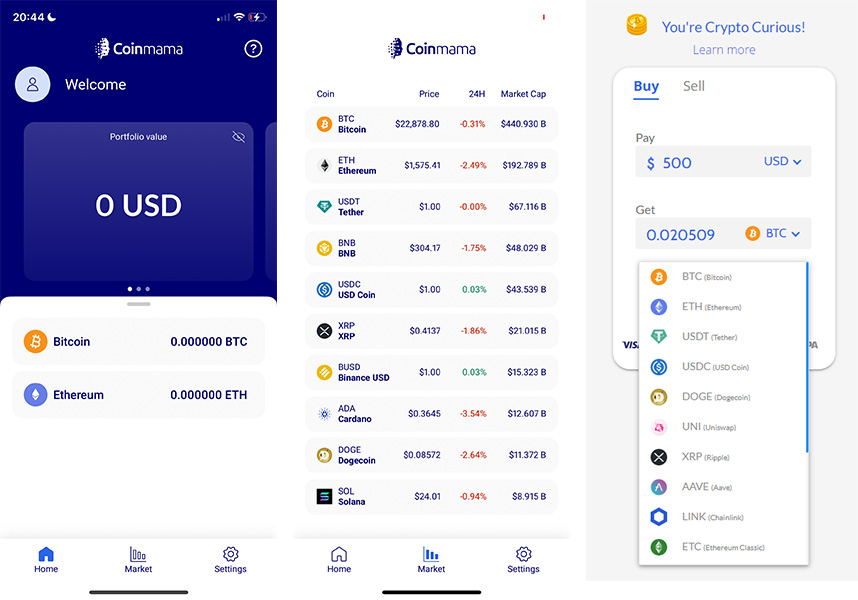
Coinmama got started in 2013 as one of the earlier cryptocurrency exchange platforms focused on making Bitcoin and other crypto purchases simple for regular people. The Israeli-based company built its reputation by allowing you to buy crypto with credit cards and bank transfers when most other platforms were still pretty complicated to use.
Over the years, Coinmama has maintained its focus on being a straightforward buying platform rather than a full trading exchange, which means it's particularly good for newcomers who just want to get their hands on some Bitcoin or Ethereum without dealing with order books and trading charts.
The platform has expanded to serve users in over 180 countries, though it's faced some regulatory hurdles in certain regions.
Pros
-
Simple buying process that's perfect if you're new to crypto and want to avoid complicated trading interfaces
-
Credit card purchases are available, making it easy to get crypto quickly without waiting for bank transfers
-
High purchase limits once you complete verification, allowing you to buy substantial amounts
-
Good selection of popular cryptocurrencies, including Bitcoin, Ethereum, and other major coins
-
Strong security measures, including two-factor authentication (2FA) and secure storage practices
-
Clear fee structure so you know upfront what you're paying for purchases
Cons
-
Higher fees than many other platforms, especially for credit card transactions
-
Limited to buying only; you can't sell crypto back through the platform
-
The verification process can take time and requires multiple documents
-
Not available in all US states due to regulatory requirements
-
No advanced features like limit orders or portfolio tracking tools
- Bitcoin
- Ethereum
-
Tether
29
No result
- English
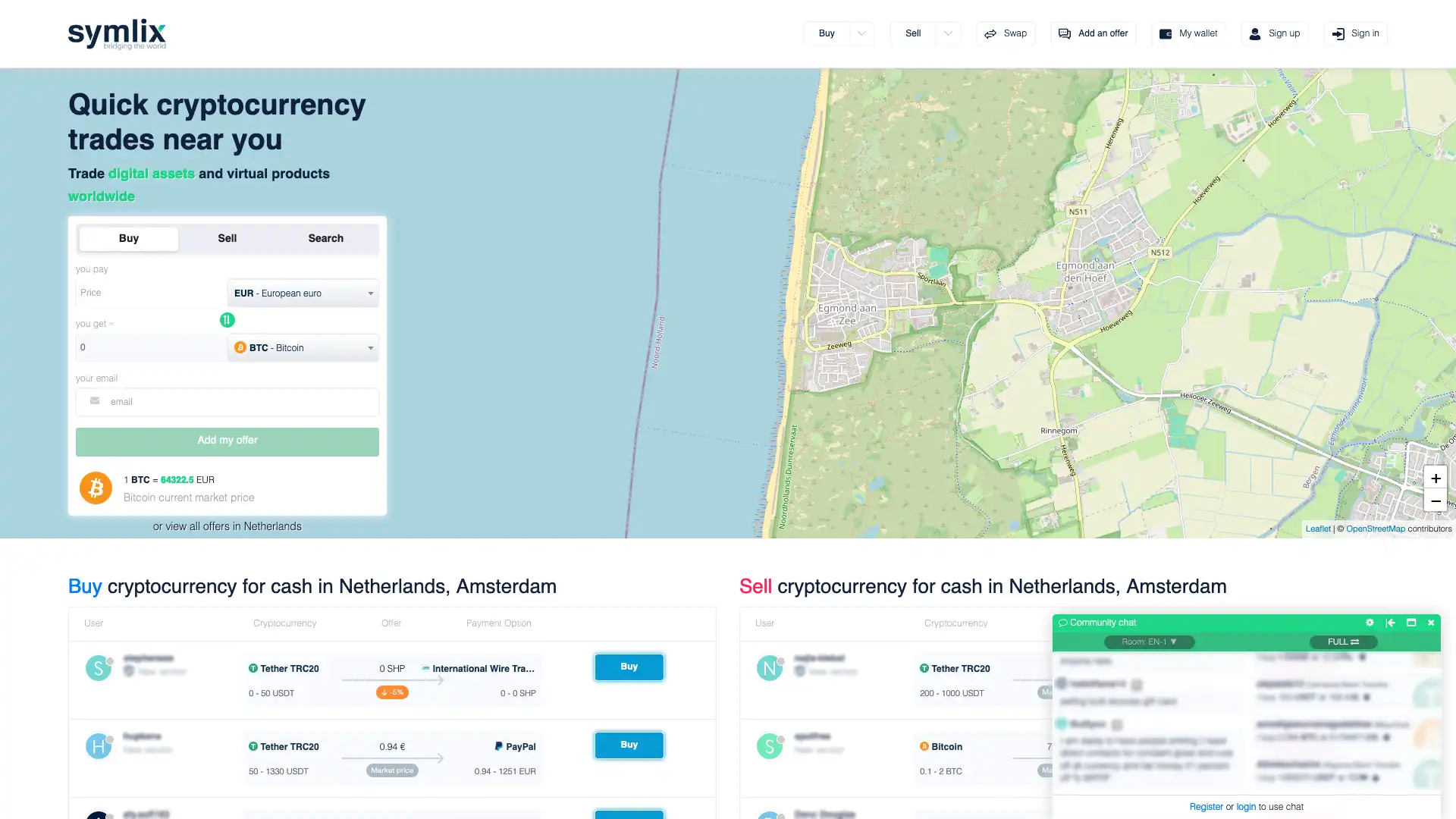
Symlix emerged as a non-custodial cryptocurrency exchange focused on providing anonymous crypto swaps without requiring user registration or Know Your Customer (KYC) verification. The platform positions itself as a privacy-centered solution in the crypto exchange market, allowing you to exchange various cryptocurrencies directly from your wallet to another without creating accounts or storing personal information.
Symlix operates by connecting users with liquidity providers to facilitate instant swaps at current market rates. The exchange has built its reputation around speed and discretion, appealing to users who prioritize privacy and want to avoid the lengthy verification processes that traditional exchanges require. Its streamlined approach makes it particularly attractive for quick cryptocurrency conversions.
Pros
-
No registration or KYC requirements, so you can start swapping immediately without providing personal details
-
Anonymous transactions that don't track or store your trading history or personal information
-
Fast processing times with most swaps completed within minutes of confirmation
-
Wide range of supported cryptocurrencies covering popular coins and various altcoins
-
Transparent pricing with exchange rates and fees displayed before you confirm transactions
-
Simple interface that makes crypto swapping straightforward for users at any experience level
Cons
-
Limited customer support compared to traditional exchanges with account-based systems
-
Higher transaction fees than some competitors due to the privacy and convenience premium
-
No advanced trading features like limit orders or technical analysis tools
-
Potential for rate fluctuations between quote and execution during volatile periods
-
Lack of educational resources for users who are new to crypto
- Bitcoin
- Ethereum
-
Tether
8
No result
- Welsh
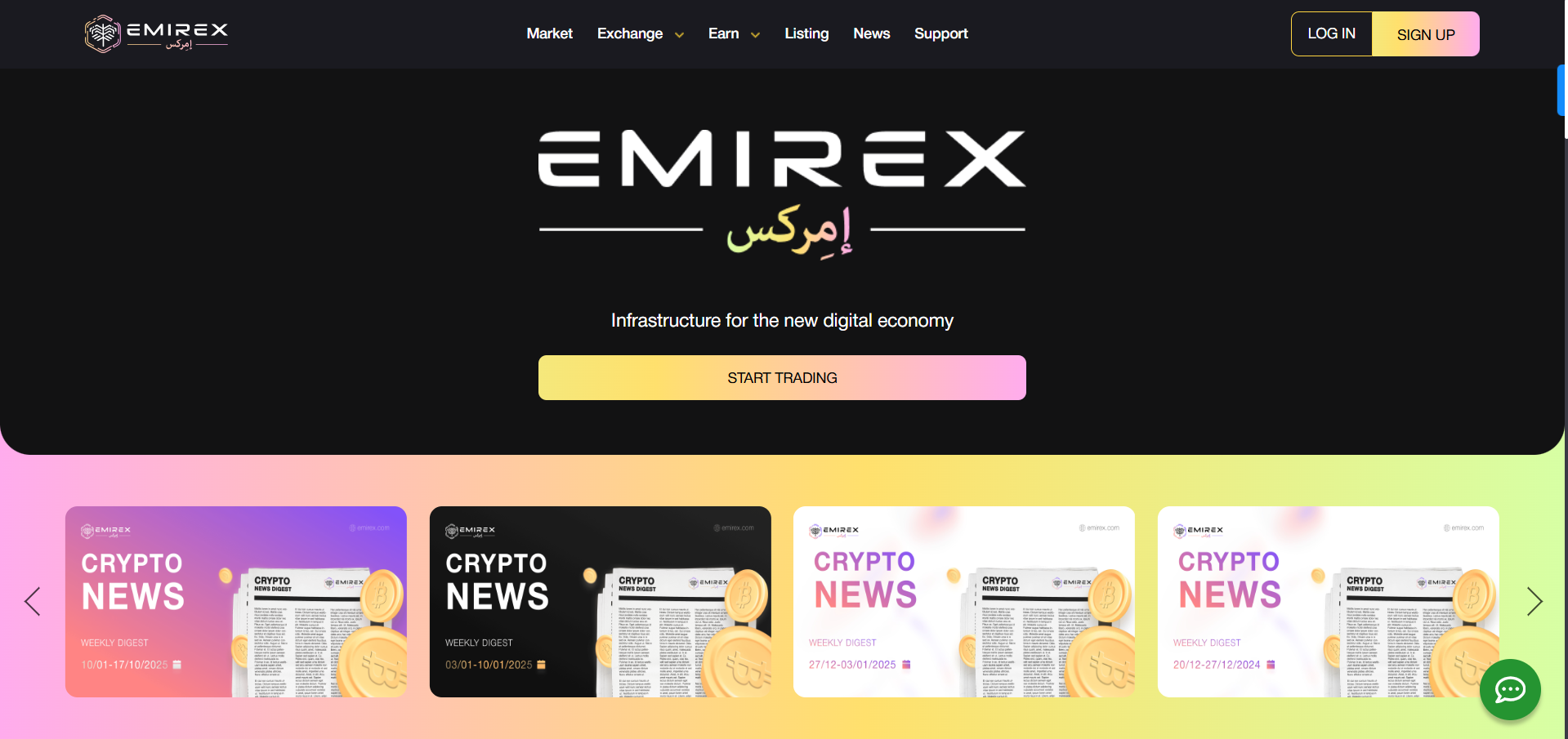
Emirex launched as a crypto exchange based in the UAE, aiming to serve the Middle Eastern market with a focus on regulatory compliance and institutional-grade trading infrastructure. The platform was designed to bridge traditional finance with crypto trading, offering both retail and institutional services in a region where crypto adoption has been growing steadily.
Emirex positioned itself as a regulated exchange that follows strict compliance standards, which was important for gaining trust in markets where regulatory clarity is crucial. The exchange offers spot trading, futures, and various other services while emphasizing security and transparency. It's built its reputation around serving both individual traders and larger institutional clients who need reliable execution and proper regulatory oversight.
Pros
-
Regulatory compliance in multiple jurisdictions provides extra security and legitimacy for your trades
-
Institutional-grade infrastructure designed to handle large trading volumes and professional requirements
-
Multiple trading options, including spot, futures, and margin trading, for different strategies
-
Strong security protocols with cold storage and multi-signature wallet protection
-
Professional trading interface with advanced charting tools and order types
-
Dedicated support for institutional clients with personalized service options
Cons
-
Limited geographic availability compared to global crypto exchange platforms
-
Higher minimum deposit requirements that might not suit smaller traders
-
The verification process can be lengthy due to strict compliance requirements
-
Fewer altcoin options compared to larger international exchanges
-
Trading fees may be higher than some competitors, especially for smaller volume traders
- Ripple
- Stellar
-
USD Coin
12
No result
- English
- Russian
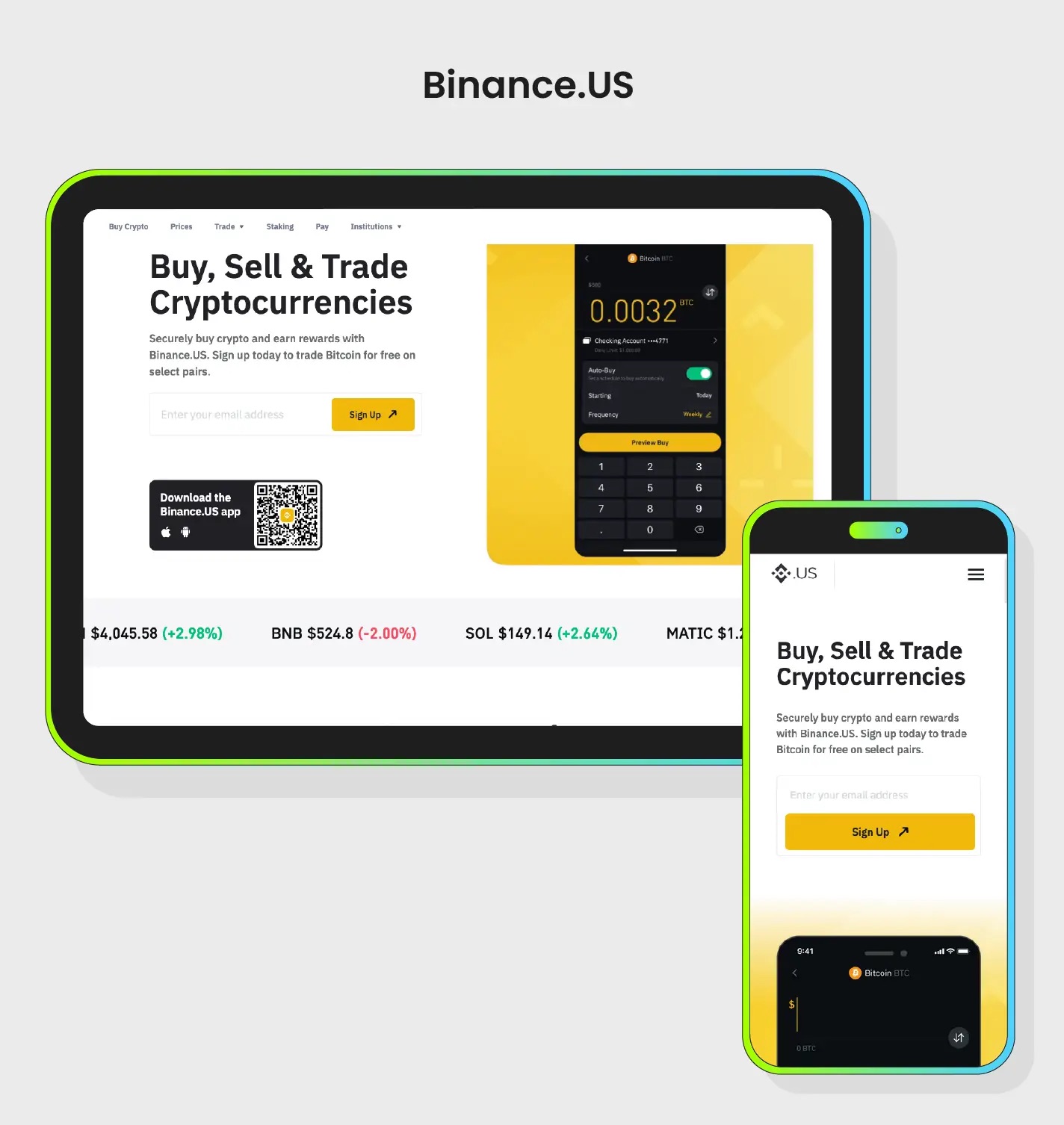

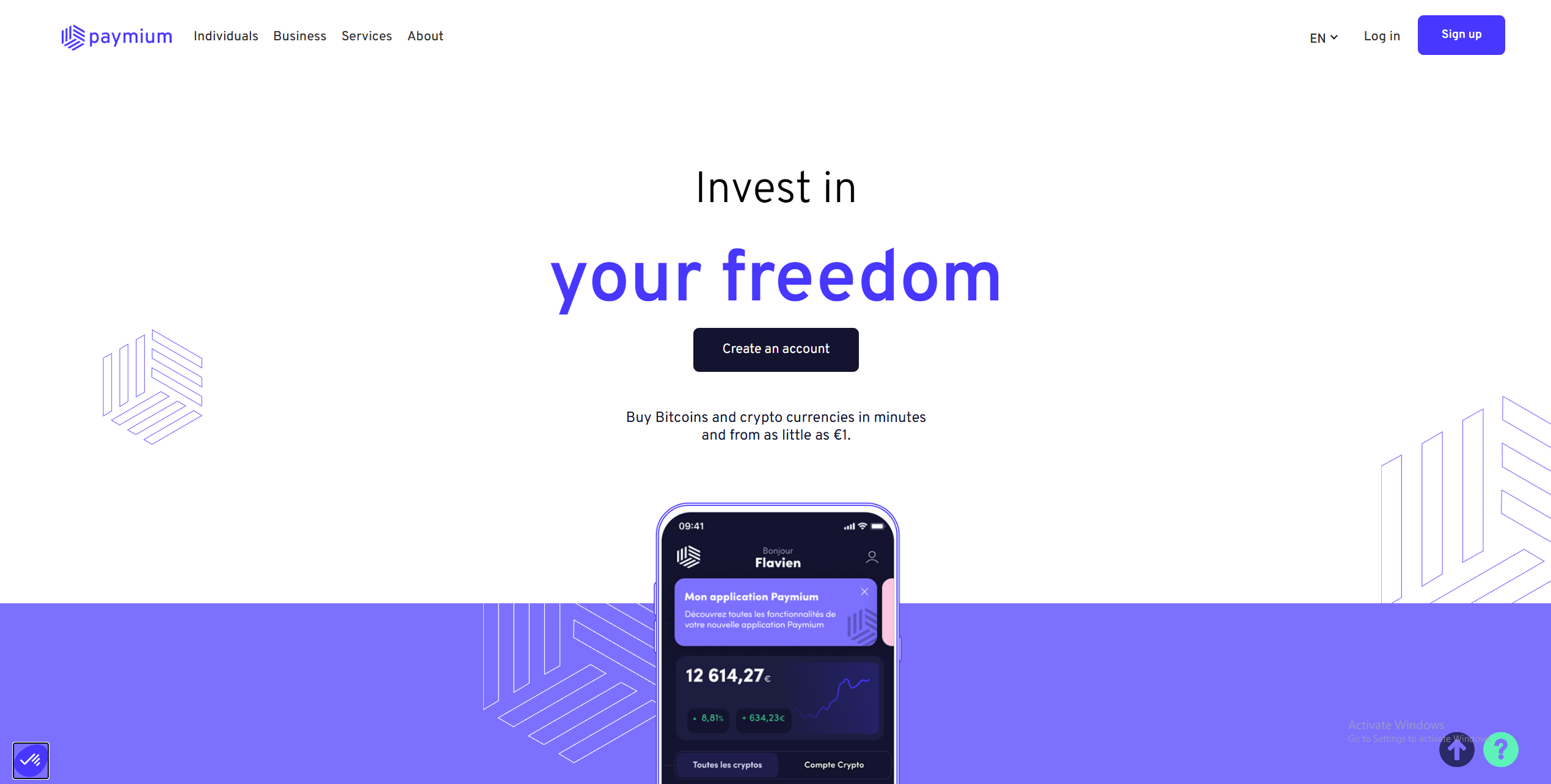
Paymium started back in 2011 as one of Europe's earliest Bitcoin exchanges, originally operating under the name Bitcoin-Central before rebranding. It has built its reputation around regulatory compliance, being registered with the French Financial Markets Authority (AMF). The French-based platform holds the distinction of being the first Bitcoin exchange to obtain proper banking licenses in Europe.
Paymium has always focused on the European market, particularly France, and built its reputation around regulatory compliance and traditional banking integration. The exchange primarily deals with Bitcoin trading against the Euro, keeping things simple rather than trying to support hundreds of different cryptocurrencies.
Over the years, it's maintained its position as a reliable, regulation-focused cryptocurrency exchange that appeals to users who want a straightforward Bitcoin trading experience with proper legal backing.
Pros
-
Regulated and licensed exchange with proper European banking credentials for added security
-
Strong focus on Euro trading pairs, making it convenient for European Bitcoin buyers
-
Long operational history since 2011 demonstrates stability and reliability in the market
-
Bank-level security standards with segregated customer funds and insurance coverage
-
Simple, clean interface that's easy to navigate without overwhelming features
-
Direct SEPA bank transfers for convenient Euro deposits and withdrawals
Cons
-
Limited to primarily Bitcoin trading with very few other cryptocurrency options
-
Higher fees compared to some modern exchanges due to the traditional banking approach
-
Lower trading volumes than major international platforms, which can affect liquidity
-
The geographic focus mainly on Europe limits accessibility for users in other regions
-
Fewer advanced trading features compared to more modern exchange platforms
- Bitcoin
- Bitcoin Cash
-
Ethereum
4
No result
- English
- French
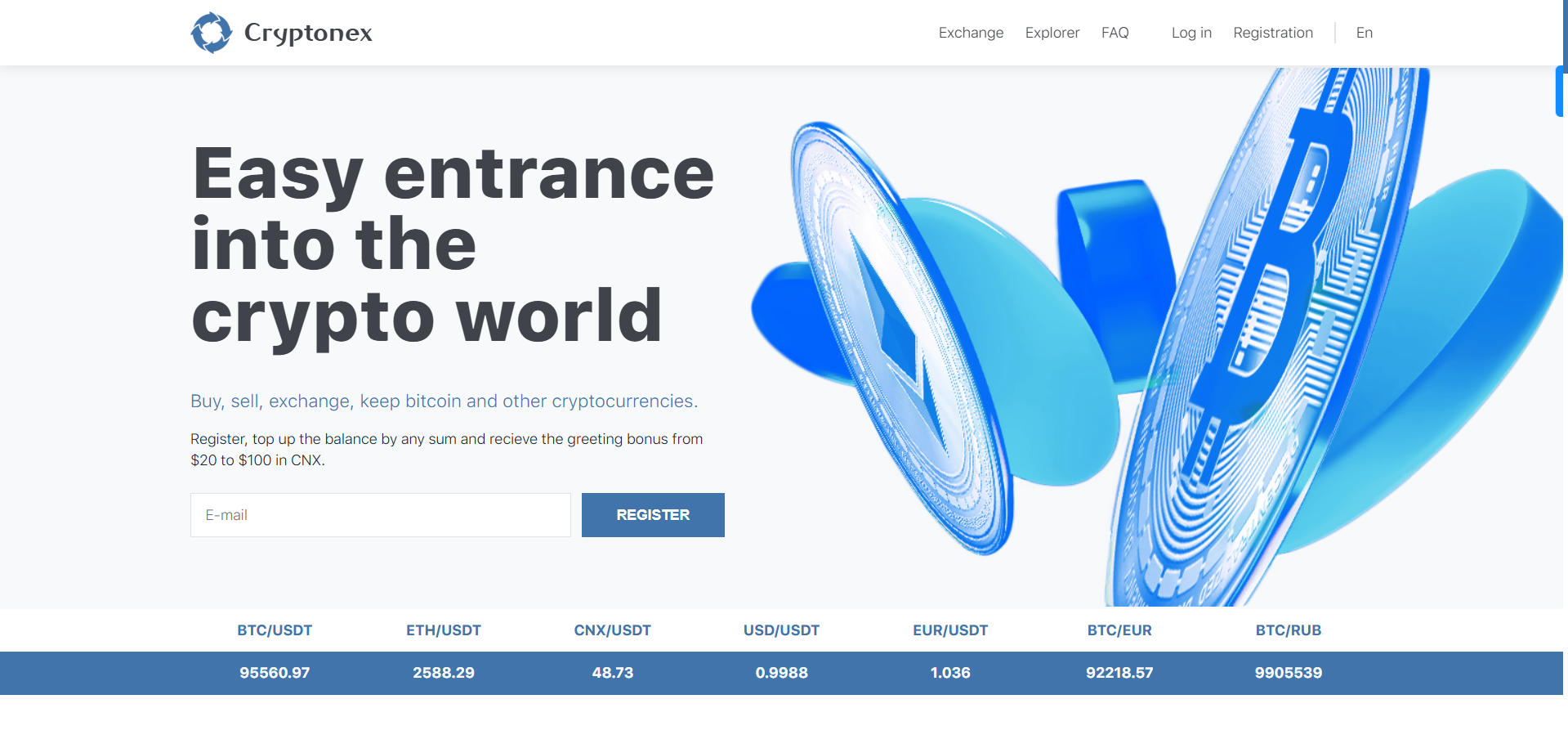
Cryptonex launched back in 2017 as a blockchain-based cryptocurrency exchange that aimed to bridge traditional banking with crypto trading. The platform built its own blockchain and native CNX token while offering exchange services for various cryptocurrencies.
What makes Cryptonex different is its focus on creating a full ecosystem that includes mining, mobile apps, and payment cards, trying to make crypto more accessible for everyday use. The exchange has positioned itself as a solution for both regular trading and broader crypto adoption, though it's faced some regulatory challenges in certain regions over the years.
You'll find it offers a mix of spot trading and additional services that go beyond just basic crypto swapping.
Pros
-
Native CNX token provides trading fee discounts and staking rewards for holders
-
Mobile app available for both iOS and Android with full trading functionality
-
Multiple deposit methods, including bank transfers and credit card purchases
-
Built-in mining features allow you to earn cryptocurrencies directly through the platform
-
Referral program offers commission sharing for bringing in new users
-
Payment card integration allows you to spend crypto in real-world transactions
Cons
-
Limited availability in some countries due to regulatory restrictions
-
Lower trading volumes compared to major crypto exchange platforms
-
Support team may struggle to keep up during busy trading times
-
Fewer trading pairs are available than in larger competitors
-
CNX token value fluctuations can affect the benefits of holding it
- Bitcoin
- Ethereum
-
Tether
12
No result
- English
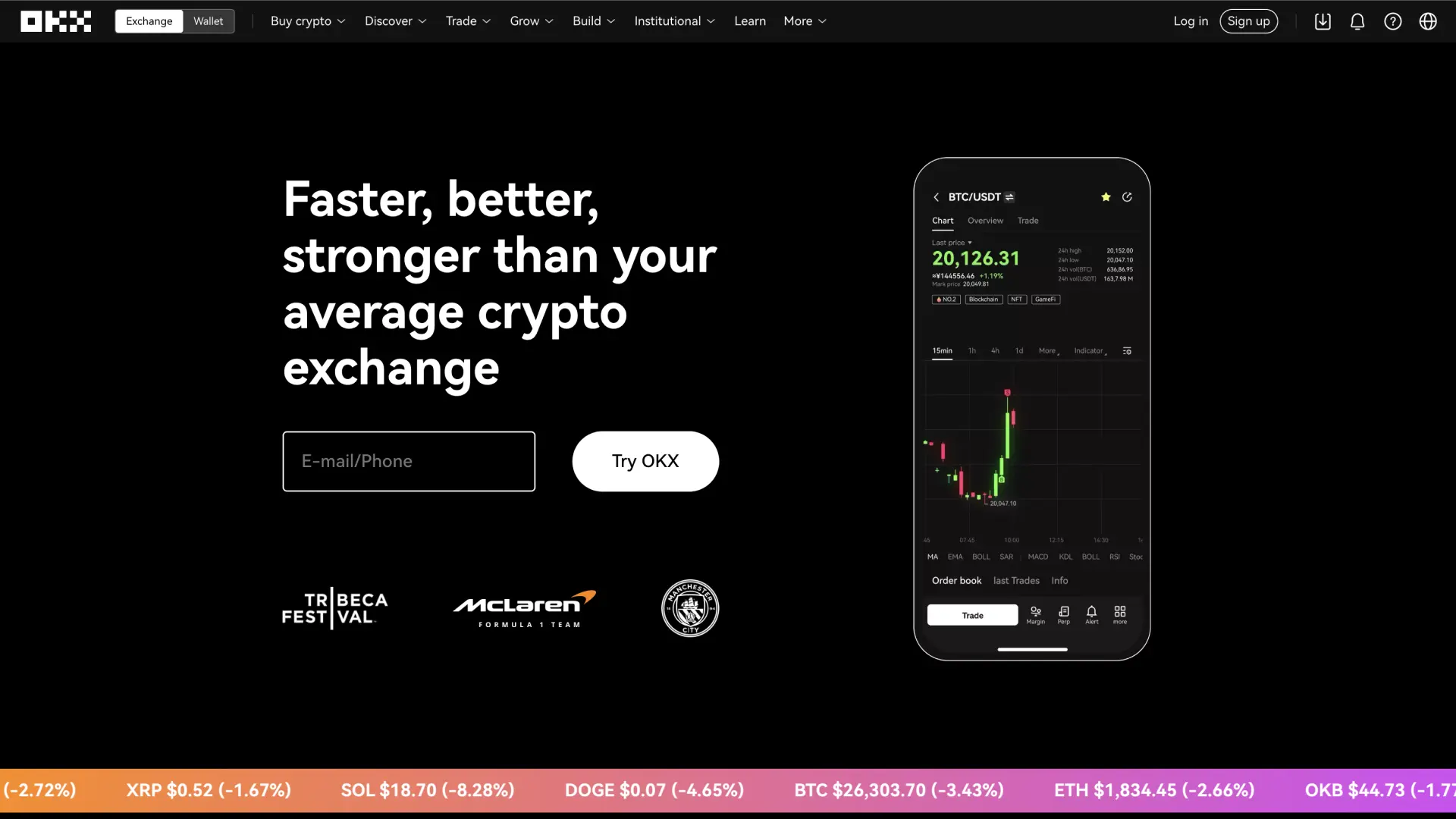
OKX, a leading name in cryptocurrency trading, was established in 2013. Known for its versatility, the platform offers access to over 350 cryptocurrencies and numerous trading features, although it is not available to US users.
Users can trade spot, futures, and options with leverage or engage in staking and bot trading. Fiat deposits are supported in various currencies through several payment options. OKX’s tiered fee structure provides discounts to high-volume traders.
Pros
-
Extensive product offering beyond spot trading (futures, options, DeFi)
-
Competitive fee structure (0.08% maker/0.1% taker for spot)
-
High liquidity for most trading pairs
-
Advanced trading features, including copy trading
-
Over 350 cryptocurrencies available
-
Strong mobile app functionality
Cons
-
Not available to US customers
-
Complex interface that can intimidate newcomers
-
Mixed reputation for customer service
-
Regulatory concerns in some jurisdictions
-
Withdrawal limits without full verification
- Bitcoin
- Ethereum
-
Tether
90
No result
- English

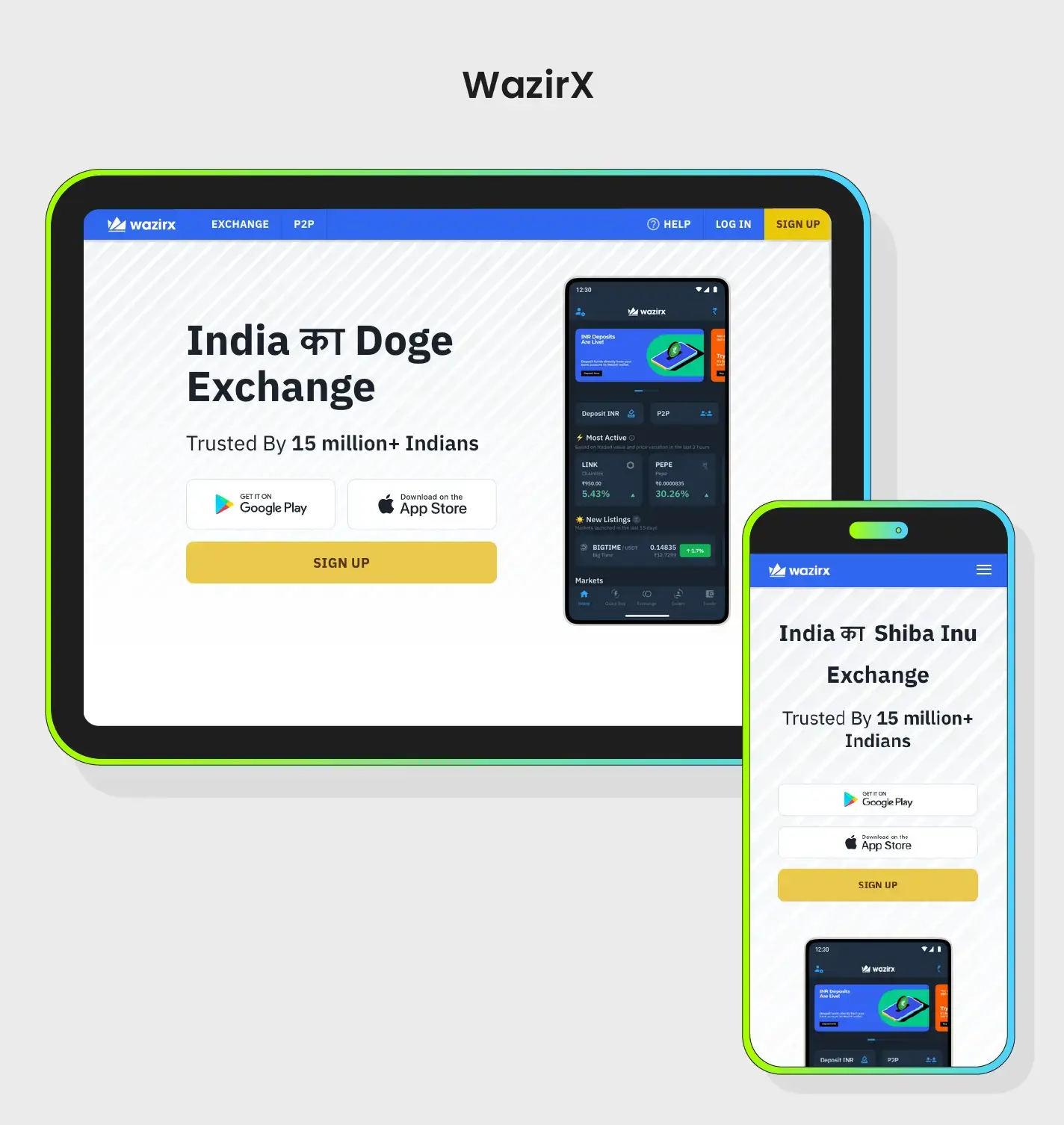
WazirX launched in 2018 as India's homegrown cryptocurrency exchange, quickly becoming one of the country's leading crypto trading platforms. The exchange was founded to serve the Indian market specifically, offering rupee trading pairs and catering to local payment methods that Indian users were familiar with.
In 2019, Binance acquired WazirX, which brought additional resources and global expertise while maintaining its focus on the Indian market. The platform represents India's growing crypto adoption and has played a significant role in making cryptocurrency trading accessible to millions of Indian users.
WazirX has navigated India's evolving crypto regulations while continuing to provide trading services, though it's faced various regulatory challenges that come with operating in a market where crypto rules keep changing.
Pros
-
Strong focus on the Indian market with rupee trading pairs and local payment method integration
-
Backed by Binance, providing additional security and technological resources
-
User-friendly interface designed specifically for Indian traders and newcomers to crypto
-
Wide selection of cryptocurrencies available for trading beyond just the major coins
-
Educational resources and community features to help Indian users learn about crypto
-
Mobile app with full trading functionality optimized for the Indian market
Cons
-
Regulatory uncertainty in India can affect platform operations and available features
-
Limited to primarily serving Indian users, restricting its global reach
-
Trading volumes can be lower than international exchanges during certain periods
-
Customer support may experience delays during high-demand periods
-
Banking integration challenges due to India's changing crypto banking policies
- 1inch Network
- Aave
-
Acala Token
151
No result
- English
- Hindi
Why Trust Webopedia?
Our recommendations are based on user feedback, as well as the research, analysis, and first-hand testing by our in-house experts. A lot of time and research went into creating this article to ensure you find everything you need to make the best decision on choosing crypto exchanges that suit your needs.
How to Choose a Good Crypto Exchange in 2026?

Choosing which crypto exchange to trade on is a major decision that can affect your overall trading experience (especially if you are located in the UAE). Substandard platforms can suffer from low liquidity, lack a diverse range of coins, or offer a limited set of trading tools and features that hold back your success.
What’s more, they can expose your funds to security risks or, in the worst-case scenario, steal your holdings and disappear without a trace.
For this reason, we make a point of only recommending crypto exchanges with SAFU that demonstrate:
- License & Regulation Compliance
- High Standard Security
- Minimal Trading Fees
- High Liquidity
- Modern Trading Software
- 24/7 Customer Support
- Large Choice of Crypto Assets
- Any Kind of Insurance
- Reputation and History
In the sections that follow, we will get into more detail and explain why each of these criteria is the most important factor when looking for the best crypto exchange to trade on.
License & Regulation Compliance
This is a very important feature that is heavily based on your location. For example, the best crypto exchange in New York differs from the best crypto exchange in India due to the varying regulations and financial legislation.
A crypto exchange license is not something that the financial authorities give out lightly. To qualify for licensing, exchange operators must meet the regulatory requirements and exhibit a genuine commitment to transparency and user protection. Therefore, holding a license is a good first indicator of a trustworthy trading platform.
What’s more, the platforms that operate without a license risk getting forcibly shut down by the authorities, and this is bad news for the traders who use them. In such cases in the past, traders have lost access to the assets they were holding on the platform, with little to no legal recourse.
For this reason, the best digital currency exchange, in our eyes, is a licensed platform that complies with the regulations and offers reliable services.
High Standard Security

Security is an important consideration whenever discussing any type of financial service, and crypto exchanges are no exception. These platforms have access to your sensitive data and hold your crypto assets under custody, so they must be safe and resilient.
For example, Crypto exchanges in the UK can only operate if they meet the stipulated requirements listed by the FCA (security is one of them). To help you protect your account from unauthorized access, the best crypto trading app should provide you with advanced security features such as:
- Two-Factor Authentication
- Biometric Verification
- End-to-End Encryption
- Security Key Integration
- Access to Cold Storage
- Withdrawal Whitelisting
- Suspicious Activity Notifications
- Anti-phishing Mechanisms
With the help of these measures, you can maximize the security of your funds and trade without worrying so much about cyber attacks, hacking attempts, and unauthorized transactions.
It is essential to note that hackers have successfully breached some crypto exchanges, including Binance, which are known to be formidable. This highlights the importance of diversifying where you store your crypto assets. Consider using some of the best crypto wallets in addition to having a crypto exchange account.
Minimal Trading Fees
While there are several different types of fee schedules that they rely on, all crypto exchanges charge trading fees to cover the cost of their operations. Some of the more popular trading fee structures they utilize include:
- Taker/Maker Models
- Flat Fees Structure
- Tiered Fee Structure
Because of this variation in pricing models, it can be very hard to pinpoint a single exchange and say this is the one that is the cheapest. Different traders utilize different methods, tactics, and strategies, so what’s cost-effective for one user might not be the best choice for another.
Having said that, finding a crypto exchange that offers the lowest trading fees for your style of trading should always be a priority. Even though these fees feel small and insignificant, they can quickly add up over time, and eat away at your earnings, so you should do your best to minimize their effect.
High Liquidity
In the simplest possible terms, liquidity is the difficulty, or ease, with which a crypto exchange can execute trades at the expected price. The concept of liquidity is relevant to all centralized exchanges simply because these platforms depend on an order-matching system to connect buyers and sellers in real time.
In other words, any time you place a buying order at a specific price point, the exchange has to pair it with a matching selling order to execute that trade. The biggest crypto exchanges that handle large volumes of trading activity are typically highly liquid and, therefore, able to quickly and easily match orders at stable prices.
Exchanges with low liquidity, on the other hand, may struggle to find matches for your orders and, as a result, delay their execution or fill them at a worse price than expected.
Modern Trading Software
Beyond the essential qualities, like reliability, security, and cost-effectiveness, top crypto exchanges must also offer advanced functionality to support your trading. A good trading software will be easy to use but also deliver powerful tools and features to help you identify favorable entry and exit points and manage your risk.
Some of the key features to look for in a crypto trading platform include:
- User-friendly interface and intuitive navigation
- Compatibility with both mobile devices and desktops
- Support for advanced crypto trading order types, like stop loss and take profit orders
- Real-time price charts, technical analysis tools, and indicators
- Customizable dashboards and personalization options
Having access to these features can enhance your experience and help you make better decisions when trading.
24/7 Customer Support
Another quality that defines the top crypto exchanges is reliable customer support. When dealing with digital systems, unexpected delays, bugs, and technical errors are practically unavoidable. And when it comes to your funds, such issues can be incredibly frustrating. Crypto exchanges like Youhodler offer some of the best support to new and existing users.
Having access to a responsive team of dedicated professionals to assist with your inquiries can make a stressful situation much easier to deal with. For this reason, we strongly encourage you to prioritize customer support during your research and find a crypto exchange that will be able to help you with all your questions clearly, promptly, and reliably.
Large Choice of Crypto Assets
With tens of thousands of cryptocurrencies in circulation, it is unrealistic to expect a single platform to support all the coins available on the market. But you can still try to evaluate the range and variety of listed coins and trading pairs when looking for the best crypto exchange for your trading needs.
In addition to supporting the coins you are interested in purchasing right now, a great trading platform will also regularly add the latest and most promising coins. This will allow you to explore and identify new opportunities for investment, as well as experiment with different strategies in line with emerging trends.
Any Kind of Insurance
Unlike traditional financial institutions, crypto exchanges are not legally bound to insure the user’s funds under their custody. Because of this, most exchanges offer no guarantee of reimbursement and simply encourage their users to use the security measures at their disposal to protect their own accounts.
Only the best and largest crypto exchanges maintain emergency funds, such as Secure Asset Funds For Users (SAFU), and offer insurance coverage to their users. Still, it has to be noted that these policies do not cover all types of losses and only apply to incidents caused by breaches or failures at the platform level.
Individual account compromises and credential mismanagement are typically not covered by crypto exchange insurance, emphasizing the importance of security for these platforms.
Reputation and History
The bad word gets around quickly. Especially in the crypto market, trust and credibility can be very hard to earn, but incredibly easy to lose. Crypto communities are very active and constantly discuss the reliability and behavior of crypto platforms on numerous forums, social media platforms, and dedicated review sites.
We strongly encourage you to spend some time reading the experiences of other users and learn from their feedback before you decide to commit your funds to a specific platform. It can be a very enlightening experience.
Additionally, we also advise you to research its background and see if you can find information on its owners, any past controversies, how it dealt with outages or cyber attacks in the past, etc. You may find important information that can change your perspective or confirm that the exchange you chose is indeed a trustworthy one.
The Importance of a Mobile App for Crypto Exchanges

Nowadays, virtually all crypto exchanges have dedicated mobile crypto apps designed to provide their users with the best experience on mobile devices. Yet, not all of these apps are created equal, and some of them perform significantly better than others.
If you are a trader who is not tied to a desktop and often trades on the go, you will also need to evaluate the quality and functionality of the mobile app when choosing the best crypto trading platform for your needs. A top-tier mobile crypto exchange app should allow you to:
- Log in securely using biometric verification
- Scan QR codes to make deposits and withdrawals quickly and securely
- Monitor market trends and price fluctuations remotely
- React quickly to market shifts with one-tap trading
- Set price alerts and notifications for real-time updates on important events
Overall, the best crypto app will not only allow you to trade remotely but also provide you with added value by enhancing the platform’s utility, connectivity, and security.
How To Register on a Top Crypto Exchange in 2026

Now that you know how to spot the top crypto exchanges and which features to focus on when making your choice, all that is left is to learn how to join such a platform. As it turns out, the registration process is not that complex, and we can break it down into five key steps:
Step 1 – Create an Account With the Exchange

- Go to the exchange’s official website or download its official app
- Tap or click on Register/Sign up
- Enter the necessary information to create an account
Step 2 – Verify Your Account and Log In
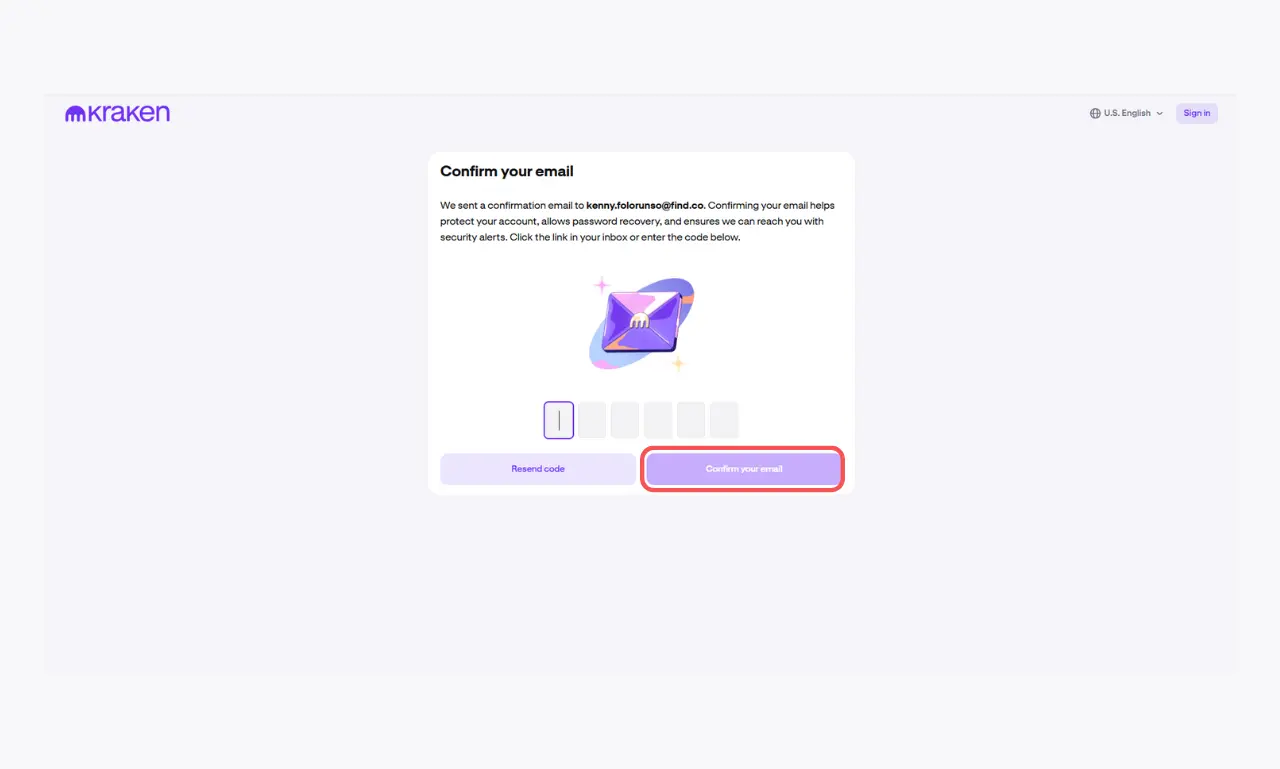
- Check your email inbox for a confirmation email
- Tap on the link to activate your account
- Log in to the exchange
Step 3 – Verify your Identity (KYC)

- Initiate the KYC identity verification process on the exchange
- Submit the documentation necessary for approval
- Once you’ve submitted, wait for the exchange to verify (between 10 minutes and 1 business day)
Step 4 – Maximize Your Security
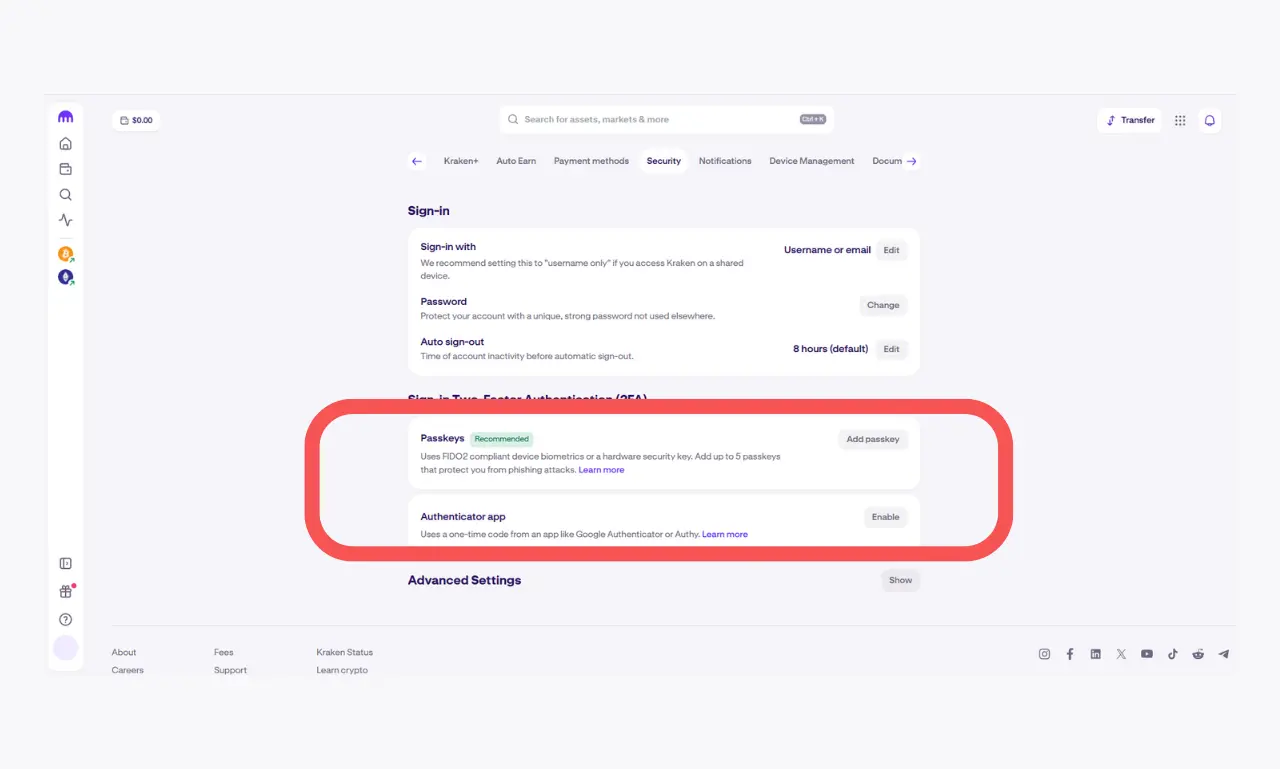
- Activate the security measures at your disposal
- Enable two factor-authentication
- Enable biometric verification (face scan or fingerprint scan)
Step 5 – Fund your Account

- Deposit either cryptocurrencies or fiat currencies into your account to start trading. If you don’t know how to:
You can also choose to buy crypto with a debit or credit card if you are new to cryptocurrencies. With that, you’ve successfully created and activated a crypto exchange account, verified your identity, maximized your protection, and funded your account’s balance. You are now ready to start trading cryptocurrencies.
Final Tips
As a final thought, you need to keep in mind that research and reading reviews can only get you so far, but nothing compares to hands-on experience. Luckily, registering with a crypto exchange is free of charge, and you can join as many exchanges as you want to get a feel of their interfaces, features, tools, and overall performance.
Additionally, we’d like to point out that many of the top crypto exchanges offer demo accounts that let you “trade” with virtual money. This can also be a valuable and educational experience, as your trades will actually be affected by the real-time market conditions, without having you risk a cent of your real funds. Consider trying it out.
Frequently Asked Questions
Can I register on a crypto exchange without KYC?
You can register on virtually any centralized crypto exchange without passing KYC verification, but your access and functionality may be severely limited. Additionally, many unregulated crypto exchanges allow users to trade without even creating an account, let alone passing KYC. However, these platforms come with their own sets of risks.
Can I buy crypto with my credit card on crypto exchanges?
Most crypto trading platforms, including the top crypto exchanges we covered in the article above, support a variety of fiat payment methods, including bank transfers, debit cards, and credit cards. You can certainly buy crypto using your credit card on these exchanges.
How old do I need to be to register on a crypto exchange?
Practically all crypto exchanges that we’ve looked into (and we’ve reviewed quite a few) require users to be at least 18 years old to be eligible to create an account and join them. We’d be quite surprised to see an exchange that doesn’t have this age requirement.
Is the security of my crypto assets guaranteed on crypto exchanges?
There is no crypto exchange that can guarantee the security of user assets. All crypto exchanges are digital platforms deployed on the internet, and since the internet itself is inherently vulnerable, these platforms are exposed to risks of hacks, breaches, and technical failures.
The best that exchanges can do to improve the safety of your assets is to implement strong security measures and offer limited insurance to help mitigate potential losses.
Can a crypto exchange not be available in my country?
It depends on what country you are living in. Given that every country has different crypto regulations, and some countries even ban crypto trading itself, it is very likely that multiple crypto exchanges are not available in your country.
While there are some questionable workarounds that will allow you to access any crypto exchange you want (VPN), we advise you to avoid bypassing regional restrictions. If the exchange finds out you are trading from a restricted region, it may delete your account, and you may lose access to your funds, without a chance for recourse.


