- Best Anonymous & No KYC Crypto Casinos Ranked
- Anonymous Crypto Casino Reviews
- Anonymous vs No KYC Casinos: What’s the Difference?
- The 3 Levels of Anonymity at Crypto Casinos
- How to Choose the Best Anonymous Crypto Casino
- What Is KYC in Crypto Casinos?
- What Triggers KYC at No KYC Casinos?
- Best Privacy Coins for Anonymous Crypto Casinos
- How to Maximize Your Anonymity at a Crypto Casino
- How to Sign Up and Play Anonymously at a Crypto Casino
- How to Withdraw Anonymously From a No KYC Casino
- Common Concerns and Red Flags at Anonymous Crypto Casinos
- Anonymous Crypto Casino vs Fiat Casino Compared
- Are Anonymous Crypto Casinos Legal?
- Play Responsibly at Anonymous Crypto Casinos
- Conclusion
- FAQs About Anonymous Crypto Casinos
Best Anonymous Crypto Casinos in 2026



 Cashback Partner
10% extra cashback at every partner casino
- 1 Sign up free
- 2 Pick your casino
- 3 Get crypto monthly
- When you click links on this page, we may earn an affiliate commission. By using this website you agree to our terms and conditions and privacy policy.
- Participation in online gambling may be illegal in your country and is subject to age restrictions (18, 19, or 21, depending on the jurisdiction). Verify legality and age requirements before participating. Learn more
Best Anonymous & No KYC Crypto Casinos Ranked
The anonymous crypto casinos below score highest in our latest testing for your region. We rate each site on how little personal data it collects, when KYC is triggered, the privacy of its accepted coins, payout speed, security record, and the quality of its games and bonuses. The order updates as operators change their terms and as availability shifts by country, so check the current list before you choose.
Anonymous Crypto Casino Reviews
Each review explains what a site actually requires from you and how it performs where privacy players care most. We focus on KYC and verification policies, accepted cryptocurrencies and privacy coin support, withdrawal limits and payout speed, bonus terms, licensing, and overall trustworthiness, so you can weigh the sites available in your country and pick the one that fits your play style.
Anon Casino

AnonCasino was launched in 2024 and operates without a license, offering players anonymous access while securing all communications via SSL encryption.
The gaming library contains over 7,000 titles from top providers such as NetEnt, Play'n GO, Pragmatic Play, and Evolution, among others. Players can access fan favorites, including Gargantoonz, Gonzo's Quest, Wolf Gold, Sweet Bonanza, Book of Dead, and Big Bass Bonanza.
While sports betting and eSports wagering aren't available at AnonCasino, the platform distinguishes itself by featuring provably fair gaming options and exclusive proprietary games, delivering a transparent and distinctive gaming environment.
For deposits and withdrawals, AnonCasino facilitates payments using Ethereum, TRON, USDT, Bitcoin, Litecoin, and Dogecoin, providing rapid and private cryptocurrency transfers.
- Bitcoin
- Ethereum
-
Tether
3
No result
- English
- N/A - Not disclosed
- English

Crypto Games

Crypto.Games, founded in 2014 and operated by MuchGaming B.V., holds a Curacao gaming license. Anonymous play is not allowed, ensuring a secure and transparent gaming environment.
The platform offers a unique collection of 10 games, including Blackjack, Dice, Roulette, and Slots. These are exclusively developed by Crypto.Games, creating a distinct user experience.
Crypto.Games lacks a traditional sportsbook but features sports-themed games like Minesweeper and Plinko. All games on the platform support provably fair technology, enhancing game fairness.
Cryptocurrency payment options include Bitcoin, Ethereum, Litecoin, among others, facilitating swift and secure transactions for a global audience.
- Tether
- Bitcoin
-
Ethereum
9
No result
- English
- Spanish
-
Arabic
9
No result
- Costa Rica
- English
Vave

Vave Casino has been online since 2022. It is a licensed operator that offers anonymous play. This is a huge advantage if you know that only a handful of crypto casinos actually offer anonymous gambling. Of course, you have to use cryptocurrencies to achieve that. Vave Casino has you covered. You can use all the popular options.
- Bitcoin
- Bitcoin Cash
-
Dogecoin
55
No result
- English
- German
-
Russian
14
No result
- Curaçao
- German
- Japanese
-
Italian
9
No result

BetPlay
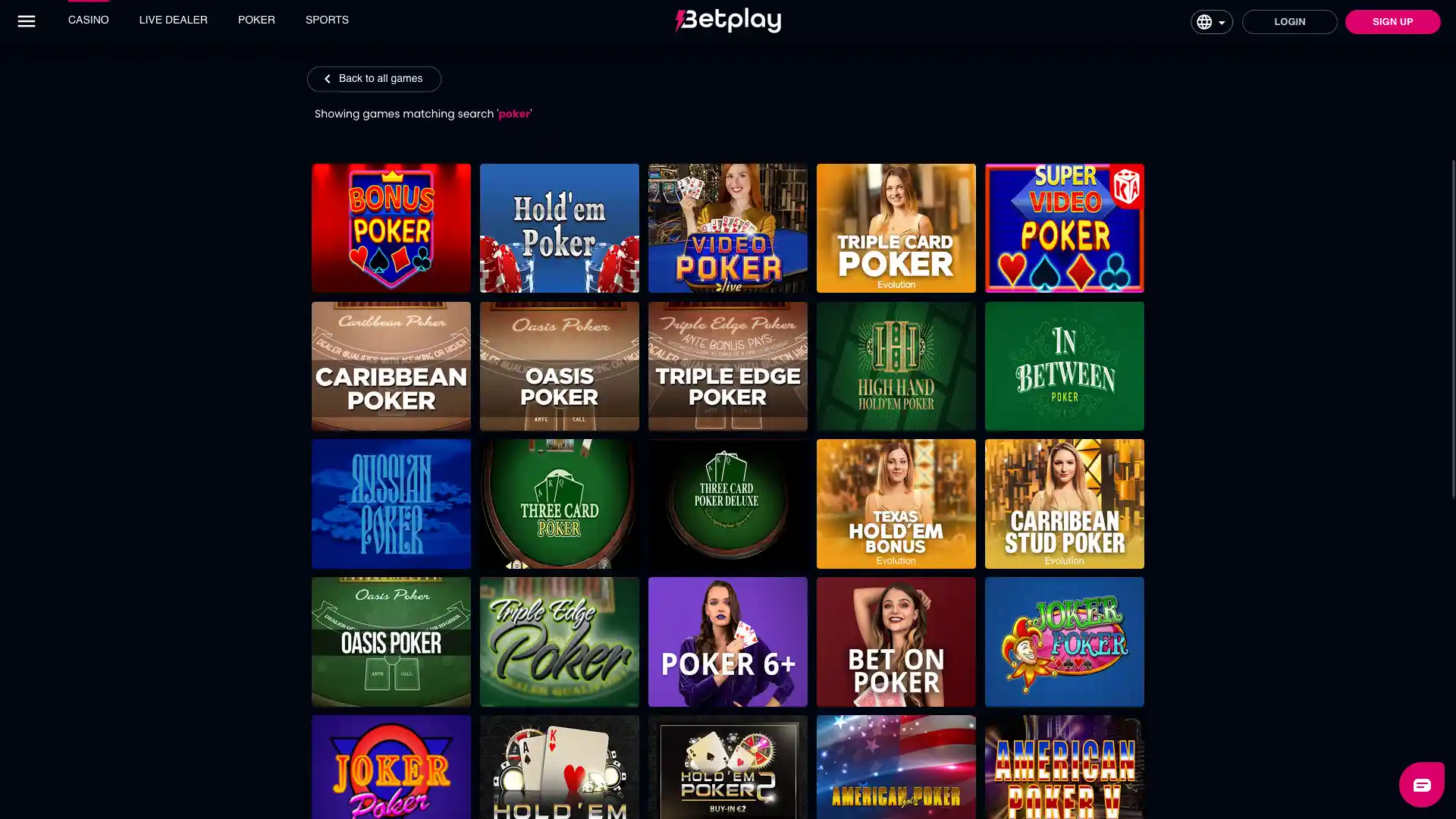
You should consider heading to Betplay.io if you want to use an anonymous casino with a stellar reputation. Countless bettors are moving away from fiat platforms as they want to enjoy their pastime without having to worry about interference from financial institutions. This site has been around since 2020 (and is overseen by Lama Tech, Limitada, and lets you bet using a host of cryptocurrencies. With little in the way of personal details requested during registration, you benefit from privacy while you gamble.
- TRON
- Dogecoin
-
Ripple
6
No result
- English
- German
-
Spanish
8
No result
- Costa Rica
- English
- Japanese

Sportbet.one
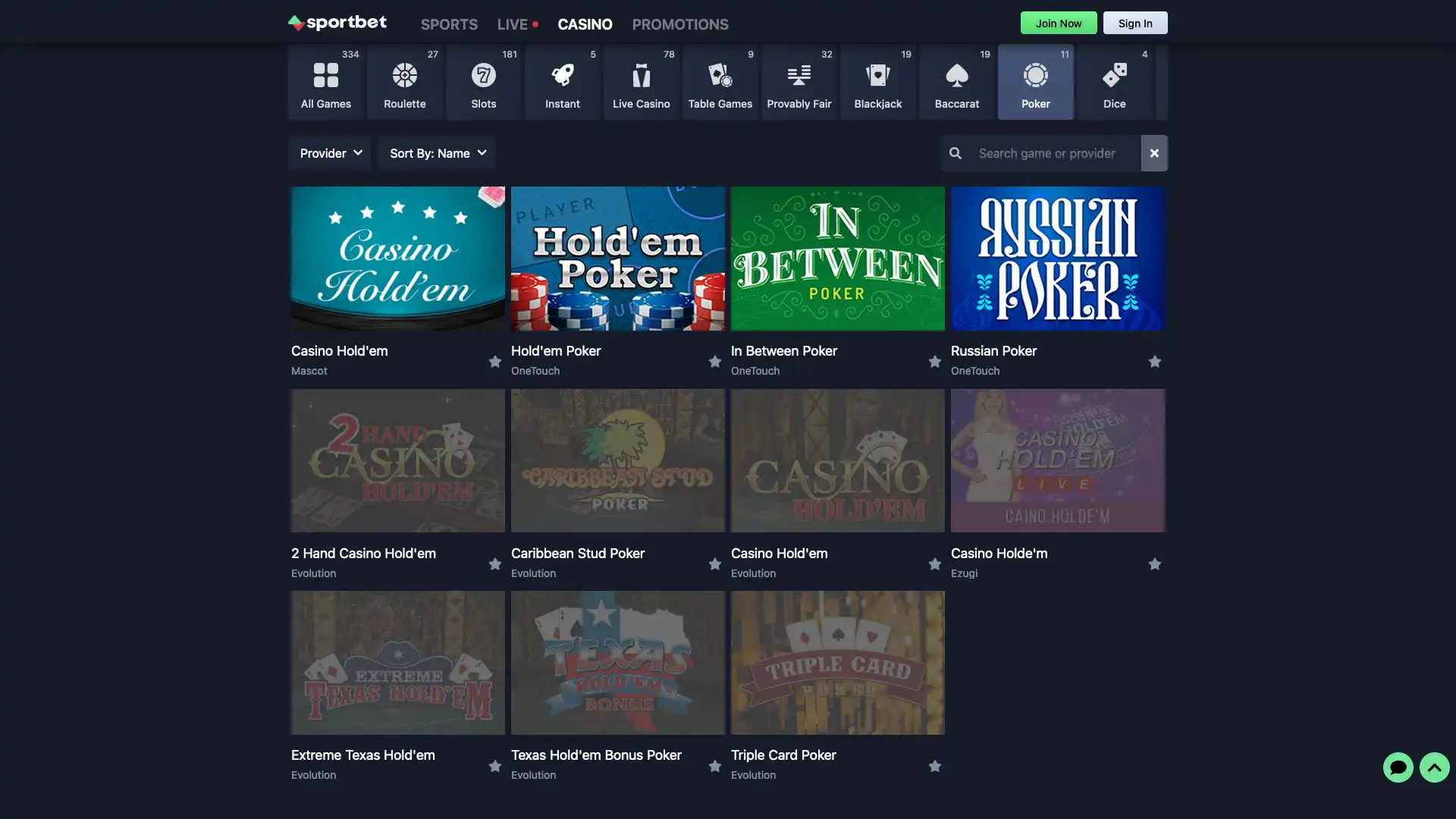
Sportbet.oneCasino was founded in 2018 and operates under a Mwali Gaming License, ensuring regulated gaming activities. The casino does not permit anonymous play and is managed by Reedll Limited.
The casino boasts over 2,500 games, featuring prominent providers like BGaming and Evolution. Players can enjoy a range of games from slots to live dealer experiences, including popular titles such as Crazy Time and Lightning Dice.
Sportbet.oneCasino offers a sportsbook with a wide variety of sports and eSports, including Football, Basketball, and Tennis. The sportsbook also covers niche markets like Valorant and Table Tennis, providing comprehensive betting options.
Payment methods focus on cryptocurrencies, accepting Bitcoin, Litecoin, Ethereum, EOS, and Tether (EOS version). Traditional payment options like VISA and Mastercard are also available, catering to a wide range of preferences.
- Bitcoin
- Solana
-
Tether
12
No result
- English
- Russian
-
Spanish
3
No result
- Comoros Gambling License Authority
- English
- Russian

Wild Casino

Wild Casino has been with us since 2022. The site is owned by Nonce Gaming B.V. and has a proper license, plenty of games and all the other things players need these days.
This site has been voted as the best online casino multiple times so we are talking about a special platform. There are some cool features as well. One is Wheel Of Fortune, which gets you various perks.
- Bitcoin
- Bitcoin Cash
-
Ethereum
13
No result
- English
- Panama
- English
- Spanish

SuperSlots

SuperSlots Casino, founded in 1991 and licensed in Panama, provides a secure gaming platform. No anonymous play is allowed, reinforcing its commitment to player safety.
The platform features over 400 games, including offerings from Betsoft Gaming, Dragon Gaming, and Nucleus Gaming. Players can enjoy from slots to live dealer games.
Though lacking a sportsbook, SuperSlots Casino offers an array of sports-themed casino games, ensuring fans of sports can enjoy related gaming action.
SuperSlots supports a multitude of payment options, with a strong focus on cryptocurrencies. Players can transact using Bitcoin, Ethereum, and many others, facilitating secure and flexible transactions.
- Bitcoin
- Avalanche
-
Build'N'Build
13
No result
- English
- N/A - Not disclosed
- English

Winna Casino

Winna Casino is an online gambling platform built around fast blockchain transactions, provably fair games, and a diverse collection of slots and live dealer titles. Players experience faster deposits, almost instant payouts, and an easy sign-up process. Overall, it appeals to new and experienced players who prefer speed and a user-friendly interface.
- Bitcoin
- Ethereum
-
Tether
9
No result
- English
- Turkish
-
Spanish
3
No result
- New Brunswick (TGC)
- English

- Best Anonymous Crypto & Bitcoin Casinos – Webopedia.com
Anonymous vs No KYC Casinos: What’s the Difference?
A KYC-free casino is one that does not require you to verify your identity, usually at sign-up. An anonymous casino is broader: it keeps your identity and activity private across everything you do, including when you skip KYC. Every no-KYC casino improves your privacy, but not all are fully anonymous.
“No KYC” describes paperwork. The site does not require proof of ID or address to open an account or play. That is the entire claim, and it usually applies only to routine play because most no-KYC casinos reserve the right to request verification later.
Anonymity depends on several layers working together:
- Payment method: Paying in crypto rather than by card or bank transfer removes the direct link to your legal identity. Fiat payments are tied to your bank’s own KYC.
- Choice of coin: Privacy coins like Monero (XMR) and Zcash (ZEC) hide transaction amounts and addresses. Bitcoin and Ethereum record every transaction on a public ledger.
- Wallet type: A non-custodial wallet keeps your funds out of a KYC-verified exchange account.
- Network privacy: A VPN or Tor masks your IP address and physical location.
- Account details: A burner email with no linked social accounts helps keep your casino profile separate from the real you.
- Registration model: On-chain and Web3 casinos let you connect a wallet and play without a registration form.
The practical takeaway: a site can be KYC-free only if it’s anonymous. If you deposit Bitcoin bought from a verified exchange while connected over your home IP, the casino collects no ID, but your activity is still traceable. True anonymity comes from combining a no verification casino with a privacy coin, a non-custodial wallet, a burner email, and a premium VPN. That is why we score anonymity and KYC separately.
The 3 Levels of Anonymity at Crypto Casinos
Crypto casinos fall into three levels of anonymity: full anonymity with no verification ever, no KYC until a trigger is met, and standard KYC required upfront. Knowing which level a site sits at tells you exactly how private your play will be before you deposit.
Level 1: Full Anonymity
These sites never ask you to verify your identity. You deposit, play, and withdraw without uploading any documents. Most only need an email and password, and on-chain or Web3 casinos skip registration entirely: you connect a wallet such as MetaMask or Phantom, play from your balance, and disconnect when you are done. The trade-off is that fully anonymous sites are often unlicensed or lightly regulated, with smaller game libraries and fewer bonuses. If you choose one, prioritize a strong reputation and provably fair games so you can verify each result yourself.
Level 2: No KYC Until Triggered
Most crypto casinos sit here. You register with basic details, deposit, and play with no ID checks, and you can often make smaller withdrawals unverified. Verification kicks in only if you cross a withdrawal threshold, request a large payout, or your account is flagged. These sites suit casual players who want privacy but also tighter regulation, a wider game range, and larger bonuses that Level 1 sites often lack. The privacy is real but conditional.
Level 3: Standard KYC
Some sites, including traditional fiat casinos that now accept crypto, require full verification before you can deposit or play. You provide your name, address, and date of birth at sign-up and upload proof of ID and address. These sites offer the least privacy, so always check a site’s KYC policy before assuming crypto payments alone make it anonymous.
How to Choose the Best Anonymous Crypto Casino
Choose an anonymous crypto casino by putting privacy first: check its verification policy for data anonymity, its supported coins for financial anonymity, and its withdrawal and VPN rules before you look at anything else. Only once a site clears those privacy checks should you weigh the usual factors, such as games, bonuses, and support.
The following criteria are ordered by their importance to a privacy-focused player.
Verification and KYC Policy
Start with how much identifying data the site demands and when. A strict no-KYC or no-verification casino that never asks for ID offers the highest level of data privacy. Read the KYC policy and terms in full: favor sites with a clear no-verification stance over vague wording that reserves the right to ask “at any time,” and check whether large or unusual withdrawals can trigger a check.
Accepted Cryptocurrencies and Privacy Coins
Confirm the site accepts a coin that matches your privacy needs. Bitcoin and Ethereum are pseudonymous and fully traceable on-chain, so if financial anonymity is the priority, look for a casino that supports a privacy coin like Monero (XMR) or Zcash (ZEC). Check deposit and withdrawal limits suit your budget, and confirm the site charges no transaction fees beyond standard network costs.
Withdrawal Policy and KYC Triggers
A no KYC casino is only useful if you can cash out privately. Check whether ID is ever required to withdraw, what withdrawal thresholds exist, and whether the site has a track record of paying winners without sudden verification demands. No verification withdrawals are one of the biggest draws of these sites, so treat this as a make-or-break factor.
VPN and Geo-restriction Policy
If you rely on a VPN, choose a VPN-friendly casino and confirm your country is not on its restricted list. Using a VPN to access a site that bans your region breaches its terms and can lead to voided winnings or a frozen account, so a genuinely VPN-friendly operator with clear rules matters more than a vague privacy pitch.
Licensing, Security, and Provably Fair Games
Decide how much regulation you are willing to trade for anonymity. Licensed sites demand stricter KYC but offer stronger recourse; lightly regulated ones offer more privacy but weaker protection. Whichever you pick, insist on 2FA, current SSL encryption, and provably fair games, which let you verify the fairness of each round without relying on a regulator.
Reputation and Player Reviews
Vet the site’s payout history before trusting it with real money. Search Trustpilot and Reddit for “surprise KYC” or “delayed-withdrawal” complaints; a pattern of such complaints is a clear signal to look elsewhere. A long, verifiable record of fast payouts is the strongest trust signal a lightly regulated site can have.
Bonuses, Games, Support, and Mobile
Once a site clears the privacy checks, weigh the usual quality factors. Look for a large welcome bonus with reasonable wagering requirements (30x or lower), a broad range of games from leading studios, 24/7 live chat, and a fast, reliable mobile experience. Note that some KYC-free sites offer no welcome bonus at all, because without personal data they cannot tell new players from returning ones.
What Is KYC in Crypto Casinos?
KYC (Know Your Customer) is the process of verifying a player’s identity, usually by requiring a government ID and proof of address. Casinos use it to prevent fraud, money laundering, and underage gambling. No KYC crypto casinos skip this step because they operate outside the traditional banking system and are not always bound by the same rules.
To pass KYC, you typically upload:
- Proof of identity: a passport, driver’s license, or national ID card.
- Proof of address: a recent utility bill, bank statement, or official letter.
Some sites also request proof of funding, such as a card or bank statement. Documents must be clear and up to date, since blurry or expired uploads are a common reason for verification failure.
The world’s strictest regulators require KYC. At sites licensed by the UK Gambling Commission or the New Jersey Division of Gaming Enforcement, for example, you cannot deposit until you have verified your identity. Crypto casinos, by contrast, settle payments on decentralized networks rather than through banks, so many can choose to skip verification. This is why KYC-free and verification-free casinos are especially popular with players in regions with few or no licensed local options.
Regulation is tightening, though. Curaçao overhauled its licensing framework in December 2024, and sites under the new Curaçao Gaming Authority must now apply risk-based verification, meaning they can request ID once you cross a withdrawal threshold or trigger an anti-money laundering check. As a result, some no-KYC operators have moved to jurisdictions such as Anjouan, while others continue to operate unlicensed.
What Triggers KYC at No KYC Casinos?
A no-KYC casino will usually ask for verification when you request a large withdrawal, cross a set payout threshold (often between $2,000 and $5,000), or trigger an anti-money-laundering or security flag. Routine play rarely prompts a check, but “no KYC” almost never means “never.”
These are the most common triggers:
- Hitting a withdrawal threshold: Cross the site’s cumulative limit, often $2,000 to $5,000, and you must verify before withdrawing again.
- Requesting a large single payout: A big cash-out on its own can prompt a check.
- Anti-money laundering velocity flags: Automated systems flag sudden jumps in transaction volume or sharp changes from your usual pattern.
- Bonus abuse flags: Suspected multi-accounting to farm welcome bonuses triggers verification.
- Logging in from an unapproved location: Access from a blacklisted VPN pool or restricted IP range can prompt a check.
- Mismatched payment details: Depositing from one wallet and withdrawing to another, or a name mismatch on a fiat method, are common flags.
- Random or periodic audits: Some operators run spot checks as a licensing condition.
- Responsible gambling triggers: Signs of problem play can prompt an intervention.
- A change to the site’s license: Switching jurisdictions can require retroactive verification of existing players.
You can reduce the risk of a surprise check with a few habits:
- Read the KYC policy before signing up: If a site reserves the right to verify, and most do, assume it can ask at any time, and favor clearly strict no-verification sites.
- Check user reviews: Search for complaints about “surprise KYC after winning” on Trustpilot and Reddit before you commit.
- Take geo-restrictions seriously: Playing from a banned country, including via VPN, breaches the terms and can void winnings.
- Test with a small withdrawal first: A modest early cash-out confirms payouts work and shows you the verification process before you risk more.
- Keep your own records: Note deposits, withdrawals, and accepted bonus terms in case of a dispute.
Best Privacy Coins for Anonymous Crypto Casinos
The best privacy coins for anonymous crypto casinos are Monero (XMR), Zcash (ZEC), Dash, and Litecoin (LTC). Monero is the strongest by a wide margin because privacy is on by default, while the others offer optional or partial privacy. Bitcoin and Ethereum are pseudonymous, not private, so they are the wrong choice if anonymity is your priority. Acceptance varies, so the most private coin is not always the one you can actually use.
Monero (XMR)
Monero is the most private coin you can use at a crypto casino, and the only one where anonymity is mandatory rather than optional. Three technologies are used for every transaction: ring signatures hide the sender, stealth addresses hide the recipient, and RingCT conceals the amount. No outside observer can see who paid, who received, or how much moved, so there is no public trail linking your deposits to your wallet when gambling at Monero casinos. XMR is the most widely supported privacy coin at crypto casinos, but acceptance remains hit-or-miss because some sites and exchanges have delisted it under regulatory pressure. Confirm a site accepts it before you commit.
Zcash (ZEC)
Zcash can rival Monero’s privacy, but only when used correctly. It offers transparent “t-addresses” that behave like Bitcoin and are fully traceable, as well as shielded “z-addresses” that use zk-SNARK cryptography to hide the sender, recipient, and amount. A shielded-to-shielded transaction is extremely private, but most users default to transparent addresses that offer no anonymity. Support at crypto casinos is also limited, so ZEC demands both the right setup and a site that accepts it.
Dash
Dash is a fast, low-fee coin with optional privacy via its PrivateSend feature, which mixes your coins with others’ on the masternode network to obscure their origin. It is less airtight than Monero because the ledger stays public and mixing is optional, but it adds a useful layer of obfuscation while keeping transactions quick and cheap. Its main limitation is availability, as relatively few crypto casinos accept it.
Litecoin (LTC)
Litecoin is the privacy-friendly coin you are most likely to find at a crypto casino, thanks to its speed, near-zero fees, and broad acceptance. It adds optional privacy through MWEB (MimbleWimble Extension Blocks), which conceals amounts and addresses on MWEB-enabled transactions. Standard LTC transactions stay transparent at Litecoin casinos, so the privacy applies only when you opt in. Treat Litecoin as a fast, cheap, widely accepted coin with a privacy option rather than a privacy-first coin.
How to Maximize Your Anonymity at a Crypto Casino
To maximize anonymity at a crypto casino, combine a no KYC site with a non-custodial wallet, a privacy coin, a burner email, and an always-on premium VPN. No single step makes you anonymous; the privacy comes from stacking them so no layer links your playback to your real identity.
- Use a non-custodial wallet: Keep your coins out of a KYC-verified exchange wallet. Non-custodial wallets like MetaMask and Phantom require no personal details and keep your private keys under your control. For extra privacy, choose one with Tor integration or CoinJoin support.
- Choose a privacy coin: Bitcoin is pseudonymous, not anonymous, because its entire history is recorded on a public ledger. Use XMR or ZEC where accepted, to break the on-chain link between your deposits and your wallet.
- Use a premium VPN: Turn on a no-logs VPN with a kill switch before you visit the casino to mask your IP. Avoid free VPNs, which are slow, weakly secured, and may sell your data.
- Keep your account detached: Sign up with a burner email and never link social accounts. Anonymous sites rarely verify the address, so a throwaway one is fine.
- Keep transactions small and consistent: Large or erratic deposits and withdrawals are the fastest way to trigger a KYC check. Steady, modest activity keeps you under the radar.
How to Sign Up and Play Anonymously at a Crypto Casino
You can sign up and play anonymously at a crypto casino in seven steps, from choosing a no KYC site to withdrawing your winnings to a private wallet. The whole process takes minutes and requires no ID at a genuinely anonymous casino.
- Choose a no-KYC casino – Pick a site from the toplist above and open it using the “Go To Site” button to qualify for the best available welcome bonus.
- Set up a non-custodial wallet – Create a wallet where you control the private keys, and choose a hardware wallet if you want maximum security.
- Buy your crypto – Purchase coins from a reputable exchange, and avoid funding directly from your bank if you want to keep the trail private; a privacy coin adds the most protection here.
- Register with the casino – Open the sign-up form and enter only the basics, usually an email address and a password, then accept the terms.
- Make a deposit – Select your cryptocurrency, copy the deposit address generated by the site, and send the funds from your wallet.
- Claim your bonus and play – Once your deposit is confirmed, claim any welcome offer and start playing your chosen games for real money.
- Withdraw your winnings – Return to the cashier, choose your coin, paste in your personal wallet address, and confirm the payout.
How to Withdraw Anonymously From a No KYC Casino
You withdraw anonymously from a no KYC casino by requesting a payout to your own crypto wallet, with no ID required as long as you stay below the site’s verification threshold. The best sites use automated payouts, so funds usually arrive within seconds to a few minutes.
To cash out, sign in, open the wallet or cashier, select the “Withdraw” tab, choose your cryptocurrency, enter the amount, paste your personal wallet address, and confirm. Sites with automated payout systems send the funds the moment you confirm, so fast coins like SOL or XRP arrive in seconds, while BTC or ETH can take a few minutes.
Some delays are legitimate, including network congestion on Bitcoin or Ethereum, routine security checks, manual approval of a first withdrawal, or hitting a KYC threshold. Others are red flags. Be wary of a payout stuck on “pending” with no explanation, vague support replies, an account suddenly reviewed after a big win, withdrawal limits changed without notice, or any request to pay a fee, tax, or extra deposit to release your funds. A legitimate casino never charges you to access your own winnings. Test a site with a small withdrawal before depositing more, and keep screenshots of the terms in case of a dispute.
Common Concerns and Red Flags at Anonymous Crypto Casinos
The biggest red flag at an anonymous crypto casino is the word “anonymous” itself. No KYC means no upfront ID check, not untraceable play, and the gap between those two things is where most problems start. The specific risks that matter for privacy are traceable coins, surprise ID checks the moment you cash out, VPN use that voids winnings, retained data that can leak in a breach, and tightening regulation that erodes anonymity at the exchange level. The rest of this section covers each, how to spot it, and what actually protects your privacy.
“No KYC” Is Not the Same as Anonymous
No KYC means the sign-up ID check is removed. It does not make you invisible, and treating it as if it does is the single most common mistake players make.
Cryptocurrency is pseudonymous, not anonymous. Every Bitcoin or Ethereum transaction is recorded permanently on a public ledger: wallet addresses, amounts, and timestamps are visible to anyone, and chain-analysis tools cluster related addresses to link activity back to a person. Separately, most casinos still log your IP address, device fingerprint, email, and full gameplay history even when they never ask for ID. The point where anonymity usually breaks is cash-out: the moment your winnings reach a KYC-verified exchange, that pseudonymous chain connects to your real name.
It helps to correct a few assumptions. Bitcoin is not anonymous because every transaction is permanent, public, and traceable using standard tools. The casino does not forget you just because it never asked for ID, because it still holds your IP, device data, email, and betting history. A fresh wallet does not reset your privacy, since the link returns the first time it is used on a known address. And mixers do not make you untraceable, because they usually raise compliance flags and are often identifiable in their own right.
Your Choice of Coin Decides How Private You Actually Are
Anonymity depends heavily on which cryptocurrency you play with, and most players pick the least private option by default.
Bitcoin and Ethereum are fully transparent, so anyone with your wallet address can see your gambling history. Litecoin and Bitcoin Cash are also transparent, but less commonly analyzed. Bitcoin Lightning payments occur off-chain and are harder to trace, though casino support remains limited. Monero is the most private option, hiding amounts and addresses by default, but far fewer sites accept it. In short, privacy improves as you move away from Bitcoin, usually at the cost of convenience and choice of site.
The other half of the problem is wallet reuse. Playing from a wallet you have already used on a KYC exchange, or one tied to your name anywhere, links your gambling straight back to you, no matter how private the site claims to be. Use a dedicated wallet you do not reuse elsewhere.
Surprise KYC Undoes the Anonymity You Signed Up For
The most frequent complaint is a site that lets you deposit and play freely, then demands ID the moment you try to withdraw a large win, often locking the account for 24 to 48 hours while it “reviews” the request.
This is usually legal under the terms and driven by anti-money-laundering obligations, but for anyone who chose the site specifically for privacy, it defeats the entire purpose. Verification requests also tend to cluster around withdrawal thresholds, so a small cashout clears while a big one triggers checks. Protect yourself by reading the KYC and withdrawal-limit policy before depositing, favoring sites with a clearly stated and consistent no-verification stance, and treating any account you can deposit to but not withdraw from as unverified until you have tested a payout.
Using a VPN Can Get Your Winnings Voided
Many players reach for a VPN to add a layer of privacy or to access a site from a restricted region. It can quietly become the reason a casino refuses to pay.
Offshore sites use geolocation and VPN-detection tools, and a large number of them include terms that void winnings if you mask or misrepresent your location. A VPN can also trigger enhanced verification, which pulls you straight back into the KYC problem above. Some sites are genuinely VPN-friendly and say so; many are not. Check the terms for location and VPN clauses before you deposit, and never assume a VPN is a safe way around a geo-block, because the site holds all the cards once your winnings are sitting in your account.
The Site Still Holds Data That Can Leak
Even a no-KYC casino is not a no-data casino. It stores your email, IP address, wallet addresses, and betting activity, and that record is only as private as the operator’s security.
Gambling platforms are a regular target for breaches. One incident in 2025 at a betting operator reportedly exposed tens of millions of users’ emails, IP addresses, and activity logs. You never handed over ID, but a leak like that can still tie your identity and location to your gambling. Favor established sites with a security track record, use a dedicated email rather than your main one, and assume anything you give a site could one day become public.
Regulation Is Quietly Eroding Anonymity
The privacy squeeze is increasingly happening above the casino, at the exchange and tax authority level, where you have no control.
As of 2026, frameworks such as the OECD’s CARF and the EU’s DAC8 require crypto exchanges to collect identity and transaction data and report it automatically to tax authorities. The offshore casino may never learn your name, but your exchange already knows it, and the on-chain record links your wallet to your gambling permanently. For most recreational players, the practical exposure is modest, but the direction of travel is clear: structural anonymity is narrowing, not widening.
Anonymity Also Removes Your Safety Nets
The same lack of ID that protects your privacy strips out the protections regulated gambling relies on, and this cuts both ways.
There is usually no cross-site self-exclusion (no GamStop-style scheme), pseudonymous wallets make deposit limits and cool-off periods hard to enforce, and some rogue sites deliberately market to players who have excluded themselves elsewhere. If you are actively managing your gambling, an anonymous site works against you, not for you. Set your own hard limits before you deposit, and if you feel you have lost control of your play, treat that as a reason to step away rather than to find a site with fewer checks. Support is available through services such as GamCare and the National Council on Problem Gambling.
Are No KYC Casinos Even Legit?
Many experienced players argue that “legit” and “no KYC” are in tension, because regulated operators are legally required to verify identity.
There is truth to this: a no-KYC site is, by definition, lightly regulated or unlicensed, so your recourse if something goes wrong is limited, and there is no regulator to force a payout. That does not make every no-KYC casino a scam, but it does mean your protection comes from the site’s reputation and payout history rather than a license. The same general crypto-casino risks still apply here, too, including slow or frozen withdrawals, advance-fee “release fee” demands, and predatory bonus terms. Stick to established sites with provably fair games, transparent terms, and a long record of paying winners, and you remove most of the risk that gives the category its bad name.
Anonymous Crypto Casino vs Fiat Casino Compared
Anonymous crypto casinos offer more privacy, faster payouts, and higher limits than fiat casinos, while fiat casinos offer stronger regulation and player protection. Crypto wins on privacy because it bypasses the banking system entirely, so no bank vets or records your play against your legal identity.
| Factor | Anonymous Crypto Casino | Fiat Casino |
|---|---|---|
| Deposit/withdrawal speed | Usually near-instant once the transaction confirms on-chain | Deposits can be instant, but withdrawals often take several business days |
| Fees | Usually, none beyond negligible ones on coins like XRP, TRX, or SOL | Card, bank, or eWallet fees plus possible currency conversion costs |
| Anonymity / KYC | Sign up, deposit, and often make small withdrawals with no ID | KYC is mandatory from the outset |
| Withdrawal limits | Often much higher, though crossing a threshold may prompt verification | Lower and strictly enforced |
| Bonuses | Often larger, though some no KYC sites offer none | Usually smaller with fewer ongoing promos |
| Volatility risk | Balance value can move with the market, unless you use a stablecoin like USDT | None when playing in local currency |
| Regulation/protection | Often lightly regulated, so safeguards can be weaker | Usually licensed with mandated player protections |
| Availability in restricted regions | More accessible where local options are limited | Tightly geo-restricted by banks and processors |
The privacy advantage is real but conditional. It falls apart if you forget your VPN or buy crypto through a bank-linked exchange account, so the payment habits around your play matter as much as the casino you choose.
Are Anonymous Crypto Casinos Legal?
Anonymous crypto casinos are not specifically banned for players in most countries, but they operate outside local regulation, so you have little official recourse if something goes wrong. Legality depends on your jurisdiction, and enforcement almost always targets operators rather than individual players.
United States: No federal law specifically bans Americans from playing at anonymous crypto casinos, but these sites are not regulated by US authorities, so there is no official body to complain to if a dispute arises. US players who choose to play should stick to established sites with a strong payout record.
India: India’s Promotion and Regulation of Online Gaming Act 2025 bans overseas casino sites from accepting Indian players, and the government is working to block access. Enforcement is aimed at operators, not individual players.
Gambling laws change often and vary by region, so always confirm the current rules and the legal age (18, 19, or 21, depending on jurisdiction) where you live before playing.
Play Responsibly at Anonymous Crypto Casinos
Responsible gambling is harder at anonymous crypto casinos because deposits are fast and frictionless, self-exclusion is difficult to enforce across anonymous accounts, and market swings can distort how you read a win or loss. Set firm limits before you play, and treat privacy as no substitute for control.
Set a budget and stick to it. The best no KYC sites let you set deposit, bet, loss, and time limits, so use them. Casino games are meant to be entertainment: if the fun stops, walk away, and never play when stressed, angry, or under the influence. If you need support, Gambling Therapy offers free, confidential advice.
Conclusion
The best anonymous crypto casinos let you deposit, play, and withdraw with minimal personal data and no ID checks at sign-up, but true anonymity is never fully guaranteed. “No KYC” almost always means no verification for routine play, not never, and most sites reserve the right to request ID once you cross a withdrawal threshold or trigger a security flag. Anonymity itself runs deeper than KYC: your payment method, choice of coin, wallet, network, and account details all decide how private your play really is.
Treat privacy as conditional and stack the layers in your favor. Read the KYC policy before you deposit, favor sites with a clear no-verification stance and a long payout record, and pair a no-KYC casino with crypto best practices: a non-custodial wallet, a privacy coin like Monero, a burner email, and an always-on premium VPN. Test with a small withdrawal first, keep your own records, and walk away from any site that shows the red flags above, especially if it asks you to pay a fee to release your winnings. The toplist at the top of this page shows the sites currently scoring highest in your region for anonymity, KYC handling, payout speed, and overall safety.
FAQs About Anonymous Crypto Casinos
Here is additional information about anonymous crypto casinos.
What happens if a no-KYC casino suddenly asks for my ID?
If a no-KYC casino suddenly asks for your ID, it means you’ll need to verify your identity before you can make a withdrawal. If you refuse, your withdrawal request may be denied. Always read the site’s KYC terms before making a withdrawal to avoid a sudden verification request catching you off guard.
What's the difference between an anonymous casino and a no KYC casino?
A no KYC casino is one that doesn’t require identity verification, usually at sign-up. An anonymous casino is a broader concept that also depends on your payment method, coin choice, wallet, VPN use, and account details. A site can be no KYC without being fully anonymous, for example, if you deposit Bitcoin from a verified exchange over your home IP address.
Are anonymous crypto casinos legal in the US?
There are no specific federal laws banning Americans from playing at anonymous crypto casinos. However, these sites aren’t regulated by US authorities, so you can’t complain to the government if anything goes wrong. If you choose to play at an anonymous crypto casino in the US, make sure you stick to reputable platforms. Our top-rated no-KYC casinos have a long track record of treating players fairly and paying out on time.
Are anonymous crypto casinos legal in India?
India passed the Promotion and Regulation of Online Gaming Act in 2025. This law bans overseas casino sites from welcoming Indian players, and the government is trying to block access to these sites. However, the authorities aren’t targeting individual players; enforcement is aimed at casino operators instead.

- Best anonymous crypto casinos – webopedia.com


