Best Anonymous Crypto Wallets in 2026

- When you click links on this page, we may earn an affiliate commission. By using this website you agree to our terms and conditions and privacy policy.
- Participation in online gambling may be illegal in your country and is subject to age restrictions (18, 19, or 21, depending on the jurisdiction). Verify legality and age requirements before participating. Learn more
Despite what many people believe, cryptocurrency is not inherently anonymous. The blockchain is a public ledger of transaction information. Anyone can view the transactions associated with a crypto wallet and begin to build a profile on the owner. However, the best anonymous wallets utilize special technology to prevent such traceability.
Throughout this guide, we’ll share some of the most popular anonymous crypto wallets, explain how transactions are recorded on the blockchain, answer common questions, and break down crypto anonymity technology, including Coin Control, TOR routing, and CoinJoin.
TL;DR:
- The blockchain is a public ledger that transparently records every transaction, including the sending/receiving addresses, amounts, and timestamps.
- A cryptocurrency like Bitcoin or Ethereum is not inherently anonymous. People can track a wallet’s activity and potentially link it to a person’s identity.
- Some assets, such as Monero, have built-in anonymity features that conceal information, including the recipient's address and transaction size, for privacy reasons.
- Privacy is a spectrum. Higher levels of anonymity become exponentially more inconvenient for daily use. Consider whether you prefer privacy (TOR routing) or complete anonymity (using non-KYC crypto, CoinJoin/mixing services).
Top Anonymous Wallets of 2026
Finding the best anonymous wallets can be a challenging task. There are many options, most of which take different approaches to privacy. However, we’ve researched and tested the various technologies to determine some of the top options, which we share below.
Blocksteam Jade - Best for Bitcoin Maximal Privacy
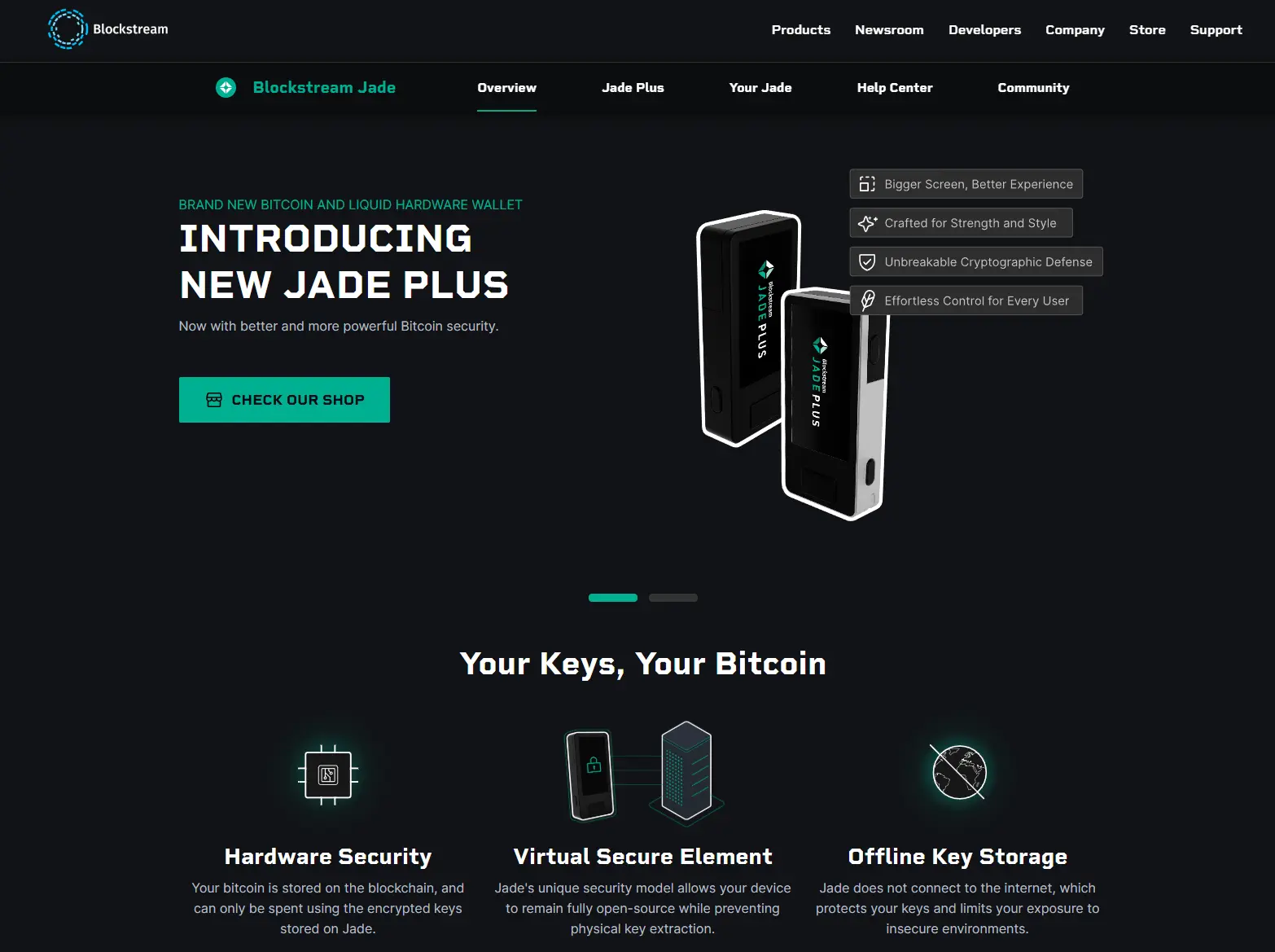
If you’re looking for a hardware wallet for anonymity during Bitcoin transactions, consider the Blockstream Jade ($79). It’s designed for the entire Bitcoin ecosystem, supporting Lightning transactions and Blockstream’s own Liquid Network, which enables users to store liquid USDT.
When paired with the Blocksteam App, it becomes a top hardware wallet for anonymity. Users benefit from Coin Control, which enables them to select specific outputs to use as inputs in a transaction, maintaining anonymity when sending money to various wallets.
Blockstream transactions can also be routed through TOR to hide your IP, location, and internet provider. However, the blockchain is a public ledger, so details such as wallet addresses and transaction history remain public. However, paired with Coin Control, Blockstream is one of the best options for hardaer wallet anonymity.
The Blocksteam software is 100% open source and independently verifiable. While it lacks Decentralized Application (dApp) connectivity (as it's Bitcoin-only), users can purchase BTC in-app. No documents or personal information are required during setup, making Blocksteam Jade an excellent choice for privacy-focused investors.
Pros
- Users can route transactions through TOR
- Blocksteam supports Coin Control
- No personal information or documents required for setup
- Affordable hardware wallets
- Straightforward BTC purchases
Cons
- Only supports Bitcoin
- Limited documentation on Coin Control integration
BitBox02 - Premium Hardware Wallet with TOR Routing and Coin Control
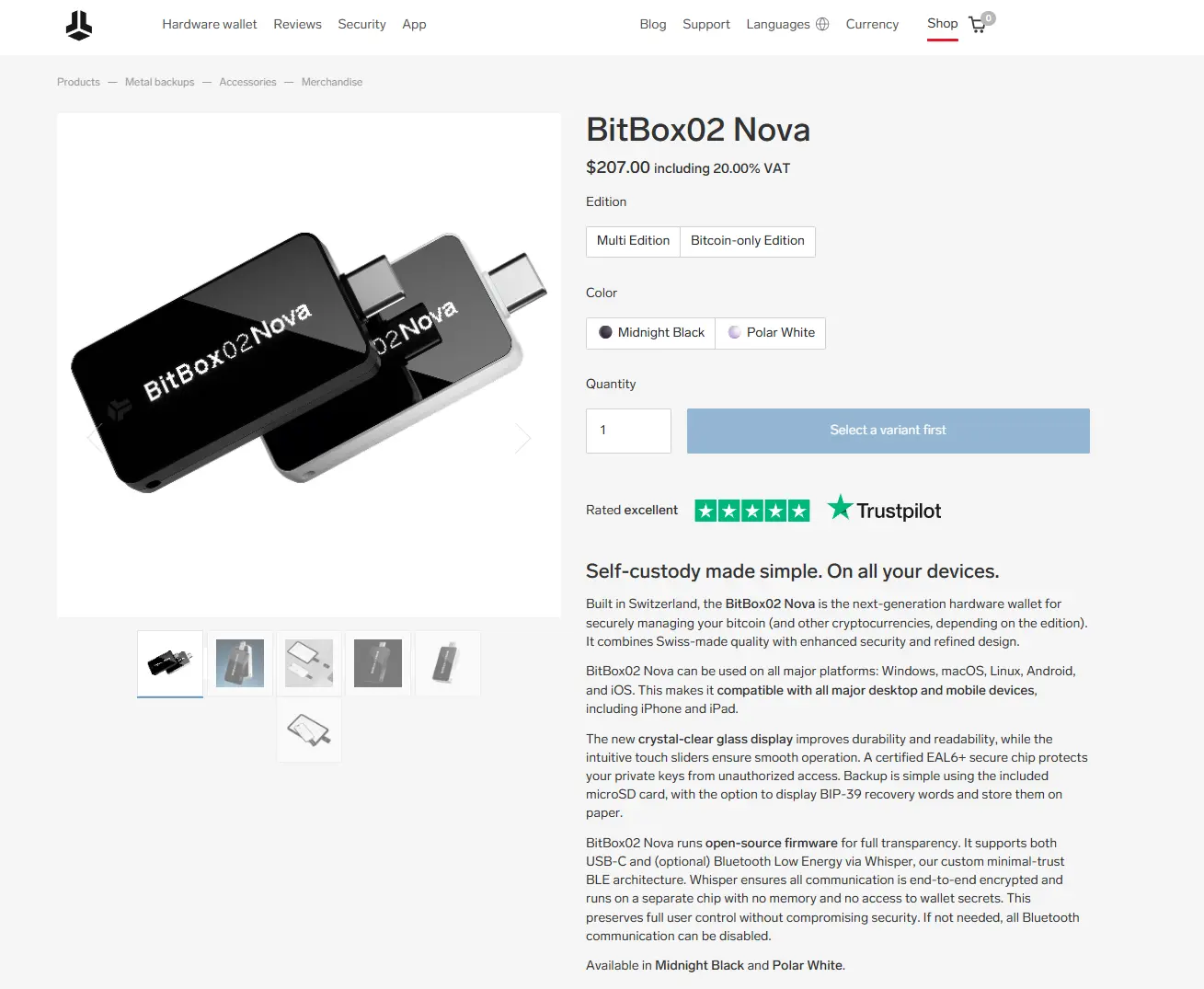
If you’re looking for the best anonymous wallet and prefer modern, user-oriented solutions, consider the BitBox02. It’s a Swiss-made hardware wallet with USB-C connectivity, powerful privacy features, and a price tag from $174 to $204, depending on whether you need the standard or Nova edition (EAL6+ chip, iOS support with Bluetooth).
Users can purchase their BitBox02 device using Bitcoin, which can be acquired without KYC, enabling anonymous purchases. The wallet supports TOR transaction routing, enabling users to hide their IP address, internet service provider, and location. It also offers manual Coin Control, letting users select which UTXOs are used for a transaction.
The device comes in two versions: Bitcoin-only and multi-asset, which supports 1,500+ assets across multiple networks. It utilizes a seed-phrase recovery system and can be managed via an app available for both mobile phones and computers. Moreover, users can buy, sell, or insure their holdings directly within the BitBox App.
With its broad asset support, TOR transaction routing, manual UTXO selection, and a robust set of security features, the BitBox02 is an excellent choice for investors concerned with privacy and seeking the best anonymous wallet, even if it means spending a little extra.
Pros
- Coin Control and TOR routing
- EAL6+ security chip (BitBox02 Nova)
- Available at two price points
- Built-in on/off-ramp system
- Straightforward dApp connectivity
Cons
- Relatively expensive compared to other hardware wallets
- Can only be purchased with fiat or Bitcoin
Zengo Pro - Best for Built-in Transaction Privacy
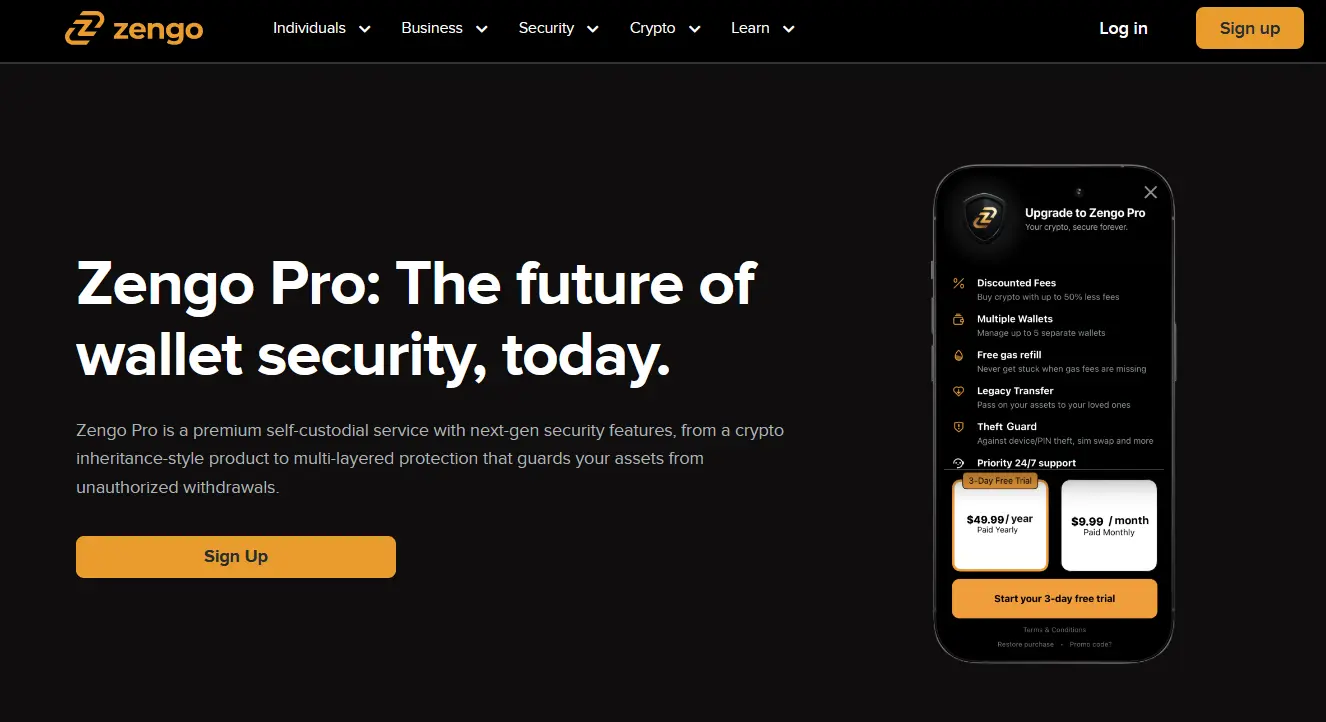
If you’re looking for a beginner-friendly, non-custodial privacy wallet that helps you maintain your privacy with ease, without complex setup processes, Zengo Pro could be ideal. It’s intuitive and features a Multi-Party-Computation (MPC) recovery system, which includes email authentication, a cloud-based recovery file, and an optional 3D FaceLock.
‘Private Transaction Mode’ is easy to enable as it’s directly built into the app. It generates a new wallet address for every Bitcoin or Dogecoin transaction, obscuring the transaction’s origin and making it much more difficult to track your transfers. However, it’s only available with a $9.99 Zengo Pro subscription.
Unfortunately, there’s no TOR or CoinControl support, which could be a problem for technical users desiring manual control. However, it’s convenient for beginners looking for anonymous crypto wallets because the setup process is simple, and crypto sent to old addresses is transferred to your wallet.
Zengo is available on mobile devices or as a web app, enabling users to store up to 524 assets. It uses. Users can buy, sell, swap, and stake cryptocurrency, making it highly versatile. While expensive over extended periods, no solution offers a simpler system for anonymous transactions.
Pros
- Private Transaction Mode to anonymize BTC/DOGE transactions
- Straightforward recovery system
- An anonymous transaction system that’s suitable for beginners
- Available on mobile devices and computers
- Fiat on-ramp and basic trading functionality
Cons
- Relatively expensive ($9.99 monthly or $49.99 yearly)
- Doesn’t support TOR or CoinControl
Tangem - Best for Anonymous Cold Storage
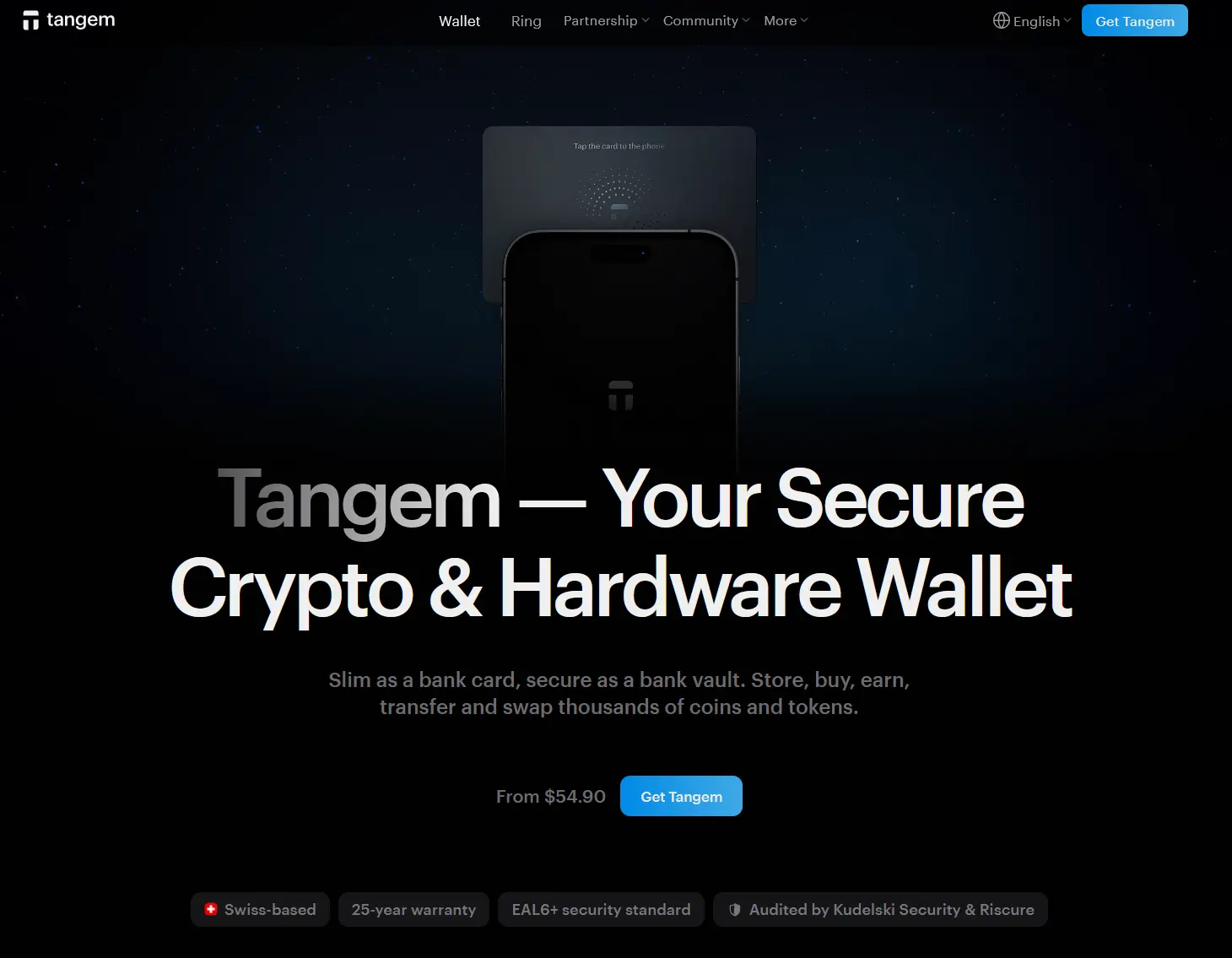
If you're looking for a secure and affordable hardware wallet, Tangem's line of credit card-style devices could be ideal. They do not require charging and lack a display. Instead, they're managed via mobile apps and connected using low-energy NFC, making the devices excellent for long-term storage, especially with their 25-year warranty.
It’s essential to understand that hardware wallets are not inherently anonymous. They keep your seed phrase private and offline, but transactions are not obscured and remain viewable on the blockchain. However, if you purchase and fund your Tangem using crypto bought without Know-Your-Customer (KYC) verification, it won’t be associated with you.
Tangem wallets cost between $54.90 and $69.90 if you opt for a two or three-card pack. Multiple cards can be linked to a single wallet, providing redundancy in case one becomes lost. Despite its price, Tangem boasts excellent security, including an EAL6+ chip, PIN system, and counterfeit protection.
With an IP69K certification, X-ray protection, and two successful independent audits, Tangem is a durable and highly secure hardware wallet. Although it’s not truly anonymous, it can be used privately without revealing your identity, making it a strong choice for people seeking a safe and affordable multi-chain crypto wallet.
Pros
- EAL6+ security chip
- Extremely durable with minimal parts
- 25-year warranty
- Multi-card backup system
- Can be purchased with non-KYC crypto
Cons
- Not truly anonymous
- No display for address/seed verification
Understanding True Anonymity in Web3: Pseudonymity vs. Privacy
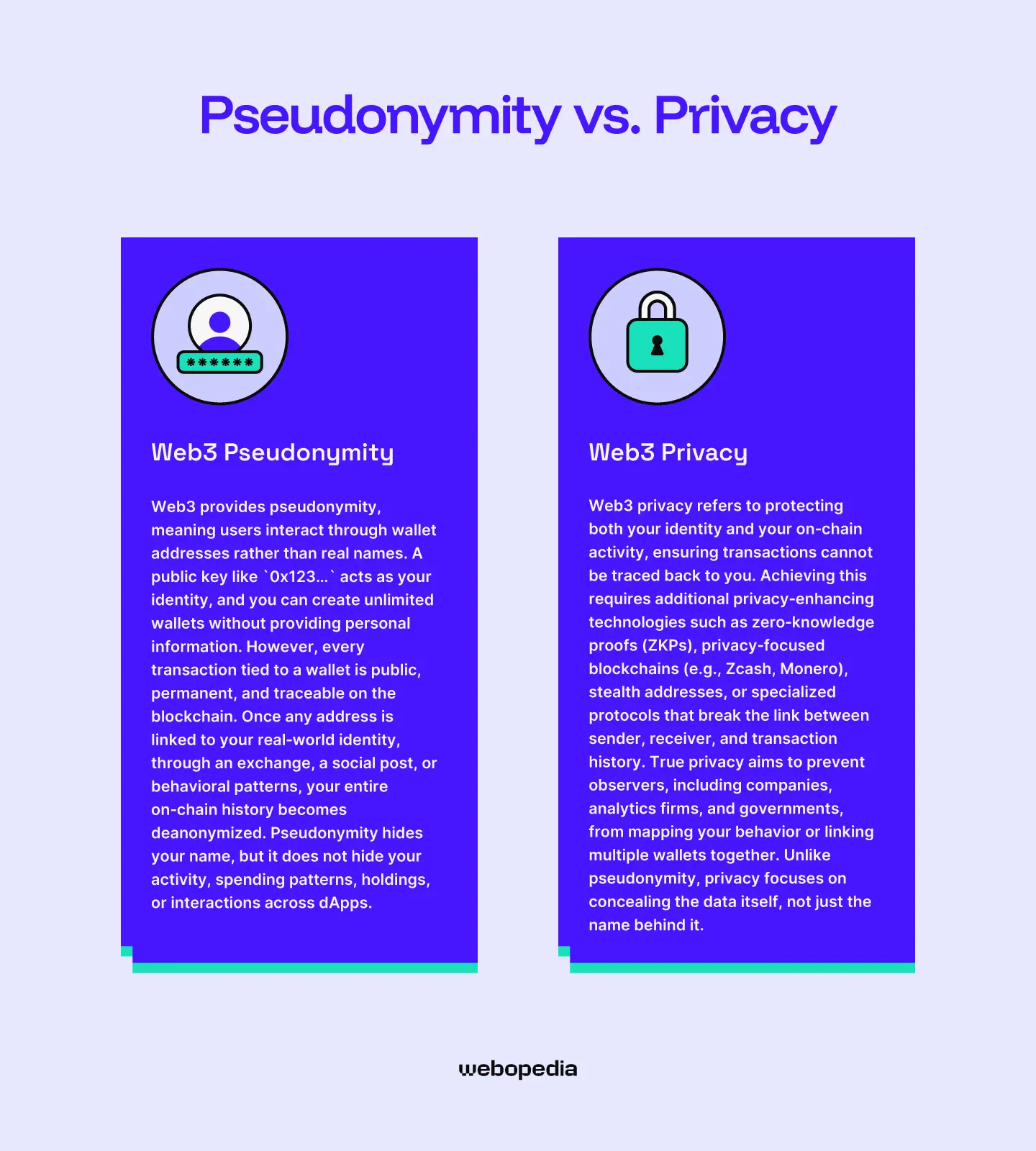
Despite what many people assume, cryptocurrencies like Bitcoin and Ethereum are not inherently anonymous. It’s true that wallets are not directly linked to personal information, but every transaction is permanently recorded on the blockchain and publicly viewable, so interested parties could piece together your activities by monitoring your wallet address.
Crypto’s pseudonymity can be visualized by viewing transactions on a network explorer, like Mempool.space for Bitcoin. These platforms show recent transactions. Anyone can view the origin and destination addresses, as well as the transaction fees and amount sent. However, you cannot see the sender's name, location, or personal information.
In a truly anonymous transaction, the public should not be able to trace the transaction to determine its origin or destination.
Monero, for example, is a truly anonymous cryptocurrency. It records transactions on the blockchain, but remains anonymous; users cannot view the amount transferred or sending/receiving addresses.
How Blockchain Transparency Works
The blockchain is a public ledger of information that is recorded permanently, linked together, and publicly viewable. Some of the details it saves include sending/receiving address, transfer amount, time, and the transaction ID (TXID).
The blockchain records every transaction, allowing users to locate specific ones by searching for the TXID provided after confirming a transfer or entering a wallet address. Anyone can view every transaction linked to a crypto wallet, including the amount and where it’s being sent.
Using this information, interested parties can employ ‘chain analysis’ techniques to identify clusters of addresses that may be linked to the same person or entity, create a transaction flow map to understand where funds originate and are being sent, and potentially link transactions with exchange accounts or IP addresses.
Although crypto transactions do not directly reveal sensitive information, chain analysis firms can analyze them to build a profile of users' financial activities. For the most part, these techniques are used to identify hackers or scammers; however, it may be off-putting for individuals who value their privacy.
Why Non-Custodial Wallets are Only the First Step
Non-custodial wallets are an excellent starting point for crypto wallet anonymity features. They're essential for privacy because they do not require KYC verification during setup, and the user has complete control over the associated private keys/seed phrase used for recovery.
However, standard non-custodial wallets are not entirely anonymous. If funded using a centralized exchange that requires KYC, your wallet and your exchange account will be permanently linked, so careful funding is essential for privacy.
Core Technologies that Deliver True Crypto Privacy
The best anonymous wallets will feature specialized tools designed to help people transact privately. Unfortunately, these tools are relatively rare. Coin Control is only available for Bitcoin and select cryptocurrencies that utilize the Unspent Transaction Outputs (UTXO) model, and Mainstream wallets typically cannot offer mixer services due to regulatory issues.
Below, we outline several technologies that can help users enhance their cryptocurrency security. You cannot use all of them in conjunction with each other, but even one can drastically improve your privacy.
CoinJoin, Transaction Mixing, and Coin Control
There are a few innovative tools that can obscure your Bitcoin transactions.
CoinJoin combines multiple users' Bitcoin transaction inputs into a single transaction, and the outputs are randomized and redistributed to recipients, effectively breaking the chain of custody between sender and receiver, making it essentially impossible to track who is sending cryptocurrency where.
This process is known as transaction mixing. It was highly popular throughout the early days of cryptocurrency, until around 2021, when the market rapidly grew in popularity, driving regulatory changes focused on preventing money laundering, which resulted in clampdowns on mixing services.
While CoinJoin can help anonymize transactions, it has some disadvantages. There are three CoinJoin transactions per hour, which form rounds. Tumbling your tokens for multiple rounds increases anonymity but also fees. Moreover, Centralized Exchanges (CEXs) typically view BTC associated with CoinJoin as high risk, and may flag/freeze deposits for verification.
Coin Control is an advanced crypto wallet feature that allows users to manually select which BTC UTXOs are used in a transaction, to control the transaction history that is exposed to a recipient. While it doesn’t provide anonymity like Coin Join, it enhances privacy without tainting your BTC.
Privacy Tokens
While most cryptocurrencies focus on transparency and openness, a group of privacy-focused tokens boasts inherent anonymity features. Examples include Monero and Zcash. However, the way these privacy tokens achieve anonymity differs from project to project.
Zcash utilizes a zk-SNARK zero-knowledge proof system, which enables transactions to be verified without revealing sensitive information, such as the destination and transfer amount. Transactions are transparent by default. Users must enable ‘Shielded Transactions’, but some people report that privacy is limited, as the majority of people do not opt in.
In contrast, Monero transactions are private by default. The sender, recipient, and amount are entirely private. There’s no way to opt out, but users can verify transactions by unlocking the data by providing the recipient's address and the transaction's private key. Monero is entirely private, but has drawn scrutiny from regulators.
Because the network is considerably more active, and it’s impossible to opt out of the privacy features, Monero is the best option for individuals who want to maximize their security without using a Bitcoin privacy wallet. It doesn’t require any technical knowledge or a special wallet, making it highly versatile.
Tor Integration and IP Masking
Some wallets, such as the BitBox02, allow users to enable a setting that routes transactions through The Onion Router (TOR). Doing so doesn’t make your transactions inherently anonymous, but it obscures certain personal information, including:
- The user’s location and internet provider
- The real IP addresses associated with a transaction
However, TOR routing does not anonymize transactions or alter how they’re linked/recorded on the blockchain. If your goal is truly anonymous crypto transactions, you’ll need to use TOR routing alongside a service like CoinJoin or a privacy-focused token like Monero or ZCash.
The Best Anonymous Crypto Wallets - Compared
This table makes it easy to quickly understand how some of the top anonymous crypto wallets stack up against one another:
| Criteria | Blockstream Jade | BitBox02 | Zengo Pro | Tangem |
|---|---|---|---|---|
| Type of Wallet | Hardware | Hardware | Software (MPC) | Hardware |
| Privacy Features | Coin Control + TOR routing | Coin Control + TOR routing | New address for every BTC or DOGE transaction | Air-gapped cold wallet |
| Asset Support | Bitcoin | 1,500+ | 524 | 10,000+ |
| Cost | $79 | $174 to $204 | $9.99 monthly | $54.90 to $69.90 |
| Best For | Dedicated Bitcoin investors | Multi-asset privacy | Beginners wanting to enhance privacy simply | Typical investors who want good security and convenience |
How to Set Up a Hardware Wallet Anonymously: Step-by-Step
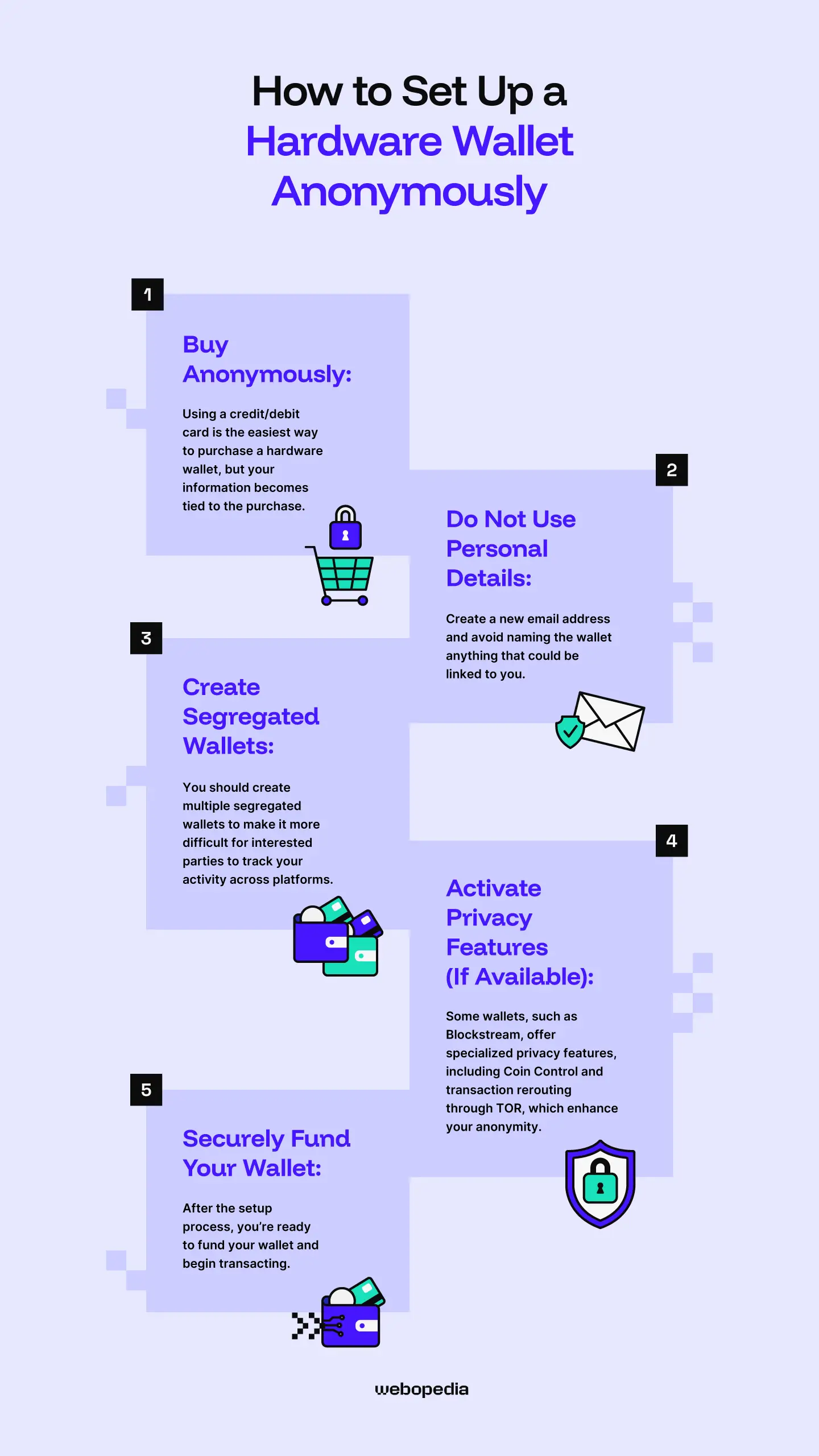
If you’re looking for a privacy-focused crypto wallet that offers multi-chain support and the ability to store a wide range of assets, then a hardware wallet is typically the best option. Unfortunately, they’re not inherently anonymous and normally lack features such as Coin Control or built-in mixing services.
However, there are some steps you can take to improve your privacy and enhance your anonymity. They’re not strictly required, but may be worth considering for individuals who wish to better protect their identity.
- Step 1: Buy Anonymously: Using a credit/debit card is the easiest way to purchase a hardware wallet, but your information becomes tied to the purchase. Instead, use privacy tokens like Monero (XMR) or cryptocurrencies acquired through a non-KYC exchange and stored in a no-KYC crypto wallet.
- Step 2: Do Not Use Personal Details: Create a new email address and avoid naming the wallet anything that could be linked to you (E.g., Tom’s cold wallet). It’s also advisable to use a privacy browser or VPN during the purchase process to conceal your IP address and location.
- Step 3: Create Segregated Wallets: You should create multiple segregated wallets to make it more difficult for interested parties to track your activity across platforms. A good approach is to have a wallet for long-term investments, another for trading funds, and one more for dApp interactions.
- Step 4: Activate Privacy Features (If Available): Some wallets, such as Blockstream, offer specialized privacy features, including Coin Control and transaction rerouting through TOR, which enhance your anonymity. Where available, it’s always worth utilizing these tools as they provide control while limiting your exposure.
- Step 5: Securely Fund Your Wallet: After the setup process, you’re ready to fund your wallet and begin transacting. However, you must be cautious about the origin of your assets. You should utilize a non-KYC exchange or purchase assets Peer-to-Peer (P2P) to avoid having your details linked to a purchase.
Key Takeaways
- It can be beneficial to purchase a hardware wallet using non-KYC crypto or cash in person if you want to maximize your privacy.
- Coin Control-enabled wallets let you select specific UTXO outputs to be used in Bitcoin transactions, so users can control what parts of their transaction history get exposed.
- Wallets with TOR transaction routing keep identifiable information, such as your location and IP address, private.
- CoinJoin crypto mixing services anonymize your Bitcoin for a fee, but exchanges often blacklist assets tied to mixing services to combat criminal financing and money laundering.
- The easiest way to maintain your anonymity without requiring a specialized wallet is to transact using a privacy token, such as Monero, which does not expose transaction details.
FAQ Section
Can a hardware wallet be truly anonymous?
Most hardware wallets are pseudonymous, enhancing your privacy and security but not obscuring transaction data. However, you can make a hardware wallet anonymous by purchasing it with non-KYC cryptocurrency and using it with a privacy token, such as Monero.
What is 'Coin Control' and why does it matter for privacy?
Coin Control is available in specific wallets, like Blockstream. It’s only available for assets like Bitcoin or Litecoin, which utilize the Unspent Transaction Output (UTXO) model. Users can pick which outputs they want included in a transaction. Each output has a unique transaction history, so Coin Control limits what’s exposed.
Is MetaMask an anonymous wallet?
Although MetaMask is a non-custodial wallet that doesn’t require purchasing or personal information during the setup process, it’s not anonymous. MetaMask is always connected to the internet and doesn’t anonymize transactions. That said, it’s a solid option for privacy-focused users who aren’t bothered about being completely anonymous.
Are anonymous crypto wallets legal?
Anonymous cryptocurrency wallets are typically legal. Most countries do not impose restrictions on using non-custodial wallets that enable transactions without requiring identification. However, privacy tokens like Monero and crypto mixing services have drawn scrutiny from regulators due to their potential for criminal usage.