Best TRC20 Wallets in 2026: Trusted Options Compared

- When you click links on this page, we may earn an affiliate commission. By using this website you agree to our terms and conditions and privacy policy.
- Participation in online gambling may be illegal in your country and is subject to age restrictions (18, 19, or 21, depending on the jurisdiction). Verify legality and age requirements before participating. Learn more
The best TRC-20 wallets make it easy to receive and send tokens on the Tron blockchain. Fortunately, top centralized exchanges offer wallets that are both easy to use and secure. According to data from DeFi Llama, there are over 3 million active Tron addresses, many of which are likely managed using insecure or limited wallets. Due to the network’s unique architecture, finding the best TRC-20 wallet in 2026 can be challenging.
Throughout this guide, we’ll explain what a TRC-20 wallet is, how it works, the bandwidth/energy system, popular wallets, wallet security best practices, and provide actionable advice on choosing the best wallet for your individual needs. Let’s get started.
TL;DR
- The Best Tron wallets in 2026 are Tangem Wallet, Bitget Wallet, and Zengo Wallet.
- The Tron network uses ‘Energy’ and ‘Bandwidth’ resources to power transactions. If a user lacks these resources, TRX is burned instead, as a fee.
- Every TRC-20 wallet address starts with ‘T’ for straightforward verification.
- Tron is a layer-1 blockchain, and TRC-20 assets are smart contract tokens built on it.
- TRX is the native token used to cover fees associated with TRC-20 transactions.
- Hot or software wallets are highly convenient, while hardware or cold wallets are highly secure.
Best TRC20 Wallets
Review of the Best TRC20 Wallets in 2026
Now that you understand what to look for when evaluating your options, it’s time we take a look at some of the best TRC-20 wallets on the market. Each provider we’re examining is solid and provides a great user experience, but the final decision should be a personal choice.
Hot wallets are free and convenient, making them ideal for storing trading funds securely, temporarily holding TRC-20 assets, and interacting with dApps (keep only necessary funds in your dApp wallet for added safety).
Cold wallets cost money, but they are recognized as the most secure way of storing your TRC-20 assets long term.
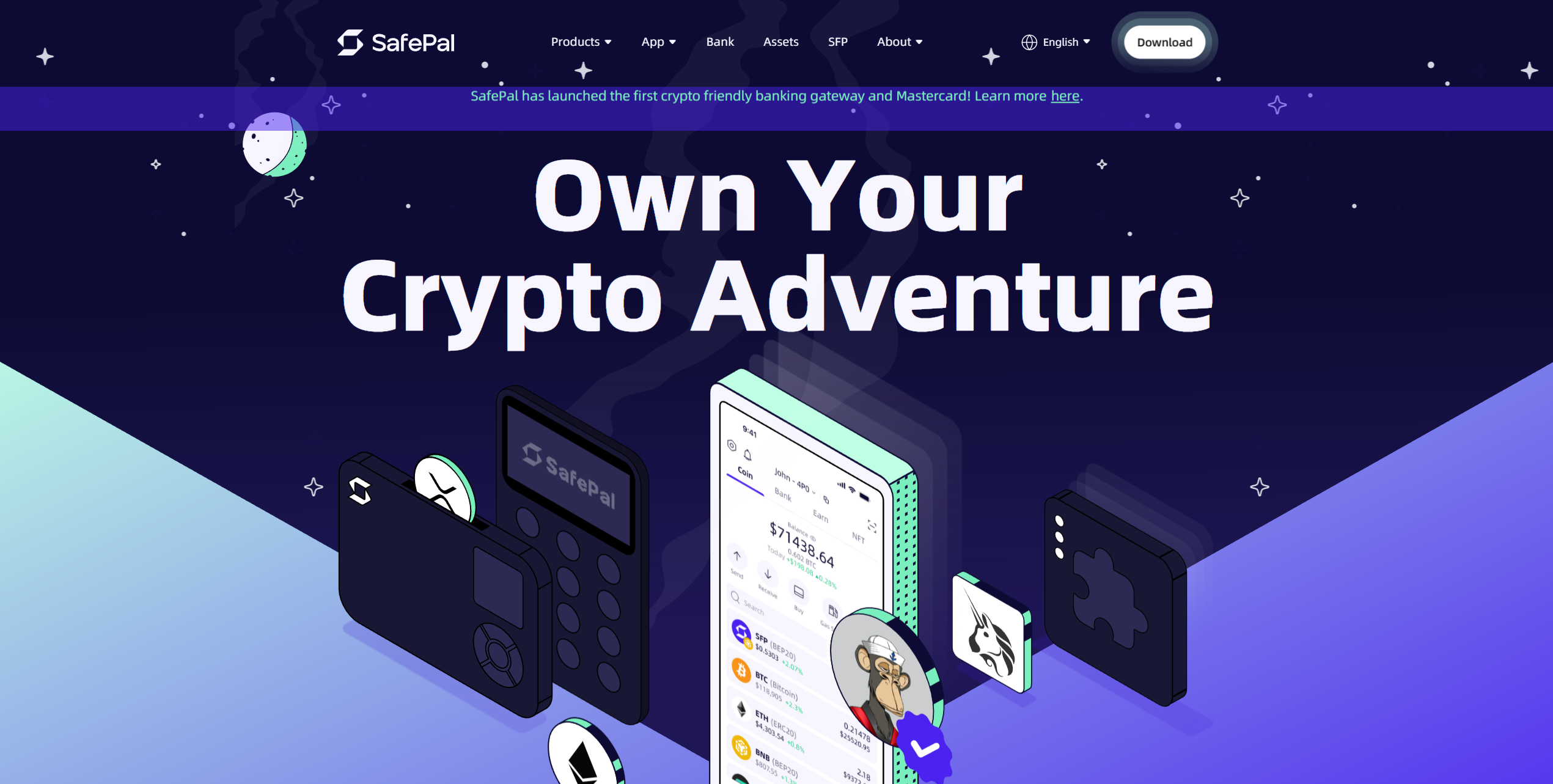
If you’re budget-conscious and desire a secure TRC-20 hardware wallet, the SafePal S1 fills the role perfectly. Priced at just $49.99, the S1 offers a robust security system, easy D-pad navigation, and a screen for address verification, all in a package that is only slightly larger than a credit card.
The SafePal S1 is a comprehensive TRC-20 storage solution. Any asset utilizing Tron’s token standard (and over 10,000 additional assets) can be stored, making it highly versatile. Users can buy/swap cryptocurrencies, as well as track price changes, on the SafePal app. Users can stake TRX for 6.73% APR.
Users can manage the SafePal S1 through a browser extension, mobile app, or Telegram mini-app, making it highly accessible. Moreover, the SafePal S1 is possibly the most comprehensive hardware wallet for the Tron network. Users can even earn bandwidth/energy through staking, making it a great overall TRC-20 wallet.
Pros
-
EAL6+ security chip
-
Offers Web3 connectivity
-
Supports many TRC-20 assets
-
Competitively priced
-
Users can stake TRX
Cons
-
Requires charging
-
Lengthy (10 to 21 days) delivery times
- Bitcoin
- Ethereum
-
Tether
89
No result
- English
- German
-
Spanish
12
No result
With a 25-year warranty, no-battery design, and a robust redundancy system, Tangem could be the best cold wallet for long-term storage. The credit card-style Tangem wallet is easy to store and is cost-effective, priced at just $54.90 for a two-card pack or $69.90 for three cards.
One of the main advantages of Tangem is its broad asset support. Users can store TRX, TRC-20 assets, and over 5,000 additional assets, making it a versatile storage solution for diverse portfolios. Users can also buy or swap crypto and track prices/portfolio value.
Kudelski Security has audited Tangem, which boasts an EAL6+ security chip, biometric security, and a PIN system to enhance user protection. Tangem comes exclusively in multi-packs, which complements its recovery system. Users can link multiple cards to a single wallet, ensuring they retain their assets if they lose a card.
While Tangem can only be used with mobile devices due to its NFC connectivity, the 25-year warranty and batteryless design ensure that a Tangem wallet will remain reliable over extended periods. With its competitive price tag and robust security, Tangem is an excellent choice for long-term storage.
Pros
-
EAL6+ security chip
-
Multi-card redundancy
-
Competitive pricing
-
Broad TRC-20 asset support
-
Designed for long-term security
Cons
-
Lacks a display for verifying sensitive information
-
Requires an initial purchase and a delivery period
- Bitcoin
- Ethereum
-
Tether
70
No result
- English
- German
-
French
3
No result
Kraken wallet is a non-custodial wallet for privacy-conscious users, a reputable exchange with strong security practices and DeFi integration.
Kraken Wallet operates as a self-custody solution separate from Kraken's main exchange platform, giving you complete control over your private keys while benefiting from the company's security expertise. You can interact with dApps and manage multiple cryptocurrencies without relying on centralized storage. The wallet targets users who understand the importance of self-custody but want the backing of an established crypto company.
It supports Bitcoin, Ethereum, and various ERC-20 tokens with full private key control. DeFi integration allows direct interaction with decentralized protocols for lending, borrowing, and yield farming. Multi-chain support includes popular networks beyond Ethereum, while hardware wallet compatibility works with Ledger and Trezor devices. Built-in portfolio tracking shows your holdings across different blockchains.
Pros
-
Self-custody design gives you complete fund control
-
Backed by Kraken's established security reputation
-
DeFi protocol integration for decentralized finance access
-
Multi-chain support covers popular blockchain networks
-
Hardware wallet compatibility enhances security options
Cons
-
Self-custody responsibility means no recovery assistance if keys are lost
-
Limited cryptocurrency selection compared to the main Kraken exchange
-
DeFi features may confuse users unfamiliar with decentralized protocols
-
No customer support for wallet recovery issues
-
Interface complexity exceeds basic storage needs
- Bitcoin
- Ethereum
-
Tether
83
No result
- Spanish
- English
-
French
4
No result
Uphold functions as a financial platform that lets you store and exchange cryptocurrencies along with traditional fiat currencies, precious metals, and other alternative investments. You can instantly convert between different asset types without going through multiple platforms or exchanges. The service targets users who want flexibility in managing diverse portfolios that span both traditional and cryptocurrency markets.
The platform supports over 250 cryptocurrencies plus fiat currencies from multiple countries, allowing instant conversions between any supported assets. Real-time settlement means transactions are completed immediately without waiting periods. The transparency dashboard shows exactly how your funds are held and backed. Social trading features allow you to copy successful traders' strategies automatically.
Pros
-
Instant conversion between crypto and fiat currencies
-
Wide selection of both traditional and cryptocurrency options
-
Transparent fund backing builds user confidence
-
Social trading capabilities for strategy copying
-
Real-time settlement eliminates transaction delays
Cons
-
Higher spreads on conversions reduce value compared to dedicated exchanges
-
Limited advanced trading tools for experienced traders
-
Customer support responsiveness varies by region
-
Platform complexity may overwhelm simple storage needs
-
Regulatory restrictions affect availability in certain jurisdictions
- Tether
- TrueUSD
-
USD Coin
144
No result
- English
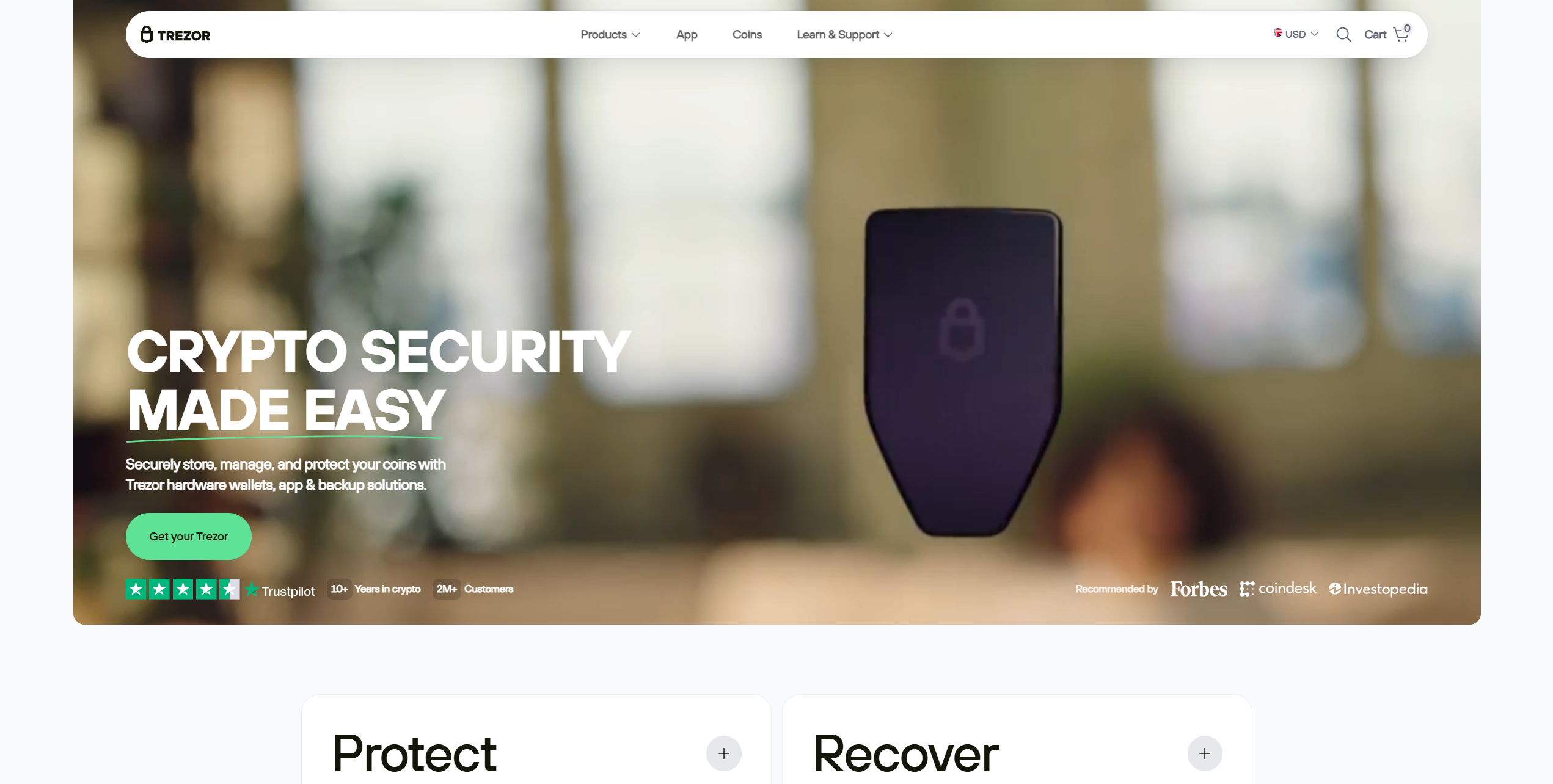
Trezor wallets are similar in function to Ledger wallets, boasting an open-source security architecture that enables users or researchers to audit the devices for bugs or vulnerabilities independently. If you're seeking a budget hardware wallet, the Trezor Model One doesn't get much better. Priced at $49, users get a small two-button device with an optional PIN system. It can store over 1,000 cryptocurrencies, but lacks some key assets, including XRP and Solana.
The Trezor Model T is a premium hardware wallet with a 1.54-inch touchscreen and USB-C connection. It offers the same seed phrase-splitting tool as the Safe 3, but is significantly more expensive at $129. Moreover, it can be used as a 2FA passkey device, enhancing flexibility. While all of Trezor's wallets are managed via Trezor Suite, which provides swap and purchase functionality, the Safe 3 is the best overall offering due to its EAL6+ security chip and seed-splitting tool. However, keep in mind that they're view-only on iOS. iPhone users cannot use Trezor wallets without another device.
Pros
-
Broad crypto asset support
-
Can connect to dApps and DeFi protocols
-
One of the most well-known hardware wallet brands
-
Products at multiple price points
-
EAL6+ security chips for Safe 3
-
Budget-friendly hardware wallet
Cons
-
No native iOS support for transactions
-
Absolute beginners might struggle with the interface at first
- Bitcoin
- Ethereum
-
Tether
204
No result
- English
- Czech
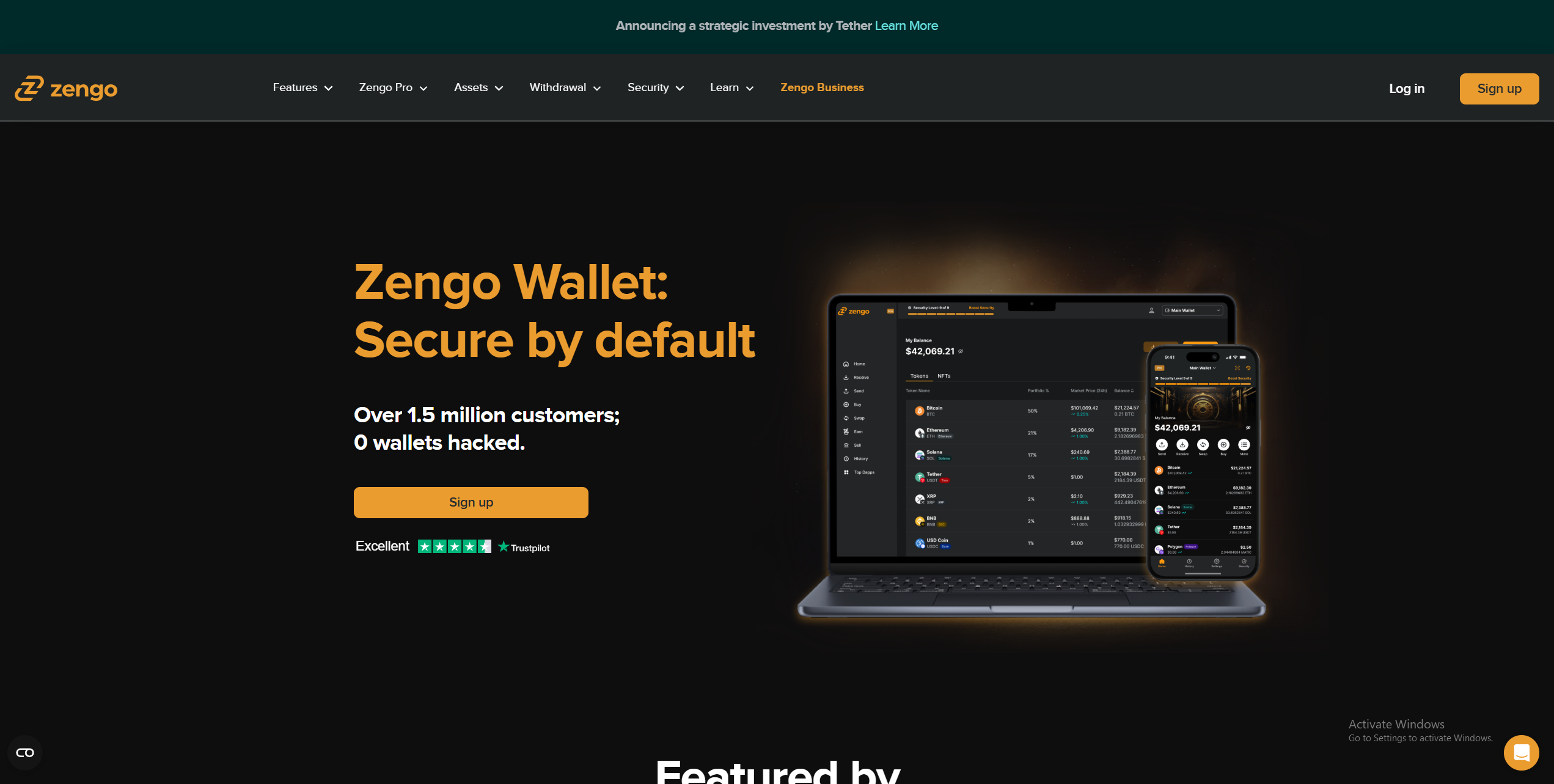
If you prefer managing your investments on a mobile device instead of a computer, Zengo could be a suitable option for you. While available on a web browser, Zengo offers a mobile-first experience that’s both convenient and powerful. Key features are easily accessible, and Zengo supports iOS and Android devices.
Users can store 525 assets on Zengo, including TRX and 15 additional TRC-20 assets, including stablecoins and wrapped tokens. Users can buy, sell, and swap assets on Zengo. A monthly $9.99 subscription provides Multi-Factor Authentication (MFA), an inheritance tool, priority support, and several other features.
In place of a seed phrase, Zengo uses a ‘Recovery Kit’ system that’s ideal for beginners. It involves email verification, a cloud-based recovery file, and a 3D FaceLock scan. There’s no additional 2FA or PIN system on a standard Zengo plan.
While Zengo boasts Web3 connectivity, it’s not as fully developed as other wallets, lacking a dApp browser. However, the mobile experience is excellent. The app is intuitive and boasts a 4.7/5 rating on the App Store, based on thousands of reviews, reinforcing its stellar mobile app reputation.
Pros
-
Robust recovery system
-
Intuitive mobile app
-
Beginner-friendly TRC-20 wallet
-
Available on mobile and desktop
-
The Zengo app is highly rated
Cons
-
Limited TRC-20 asset support
-
Some features require a premium subscription
- Bitcoin
- Ethereum
-
Tether
68
No result
- English
What is a TRC20 Wallet and Why Does it Matter?
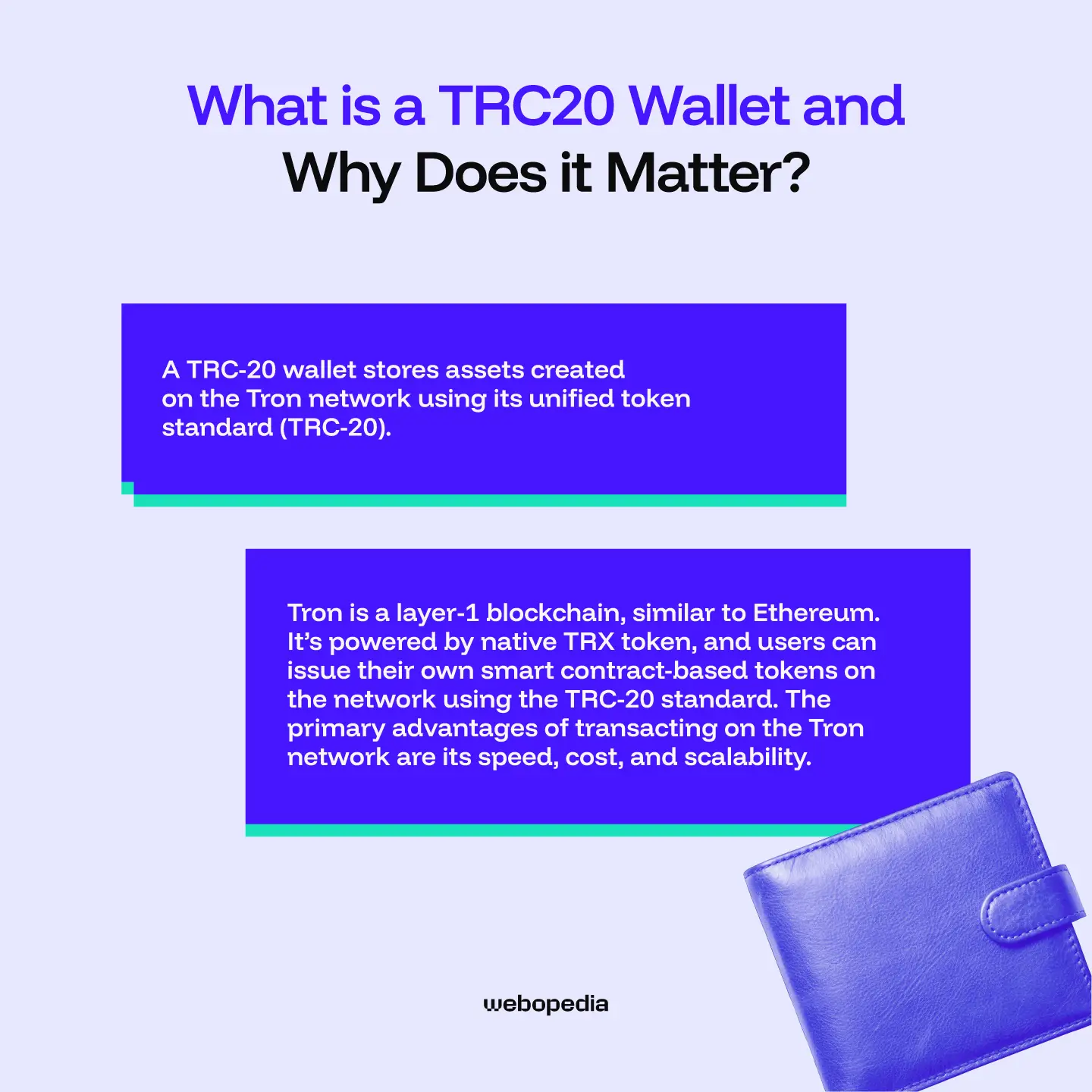
A TRC-20 wallet is used to store assets created on the Tron network using its unified token standard (TRC-20). They provide a few essential functions: storing/sending/receiving TRON (TRX) and TRC-20 assets; interacting with TRON wallet addresses; and managing ‘Bandwidth’ and ‘Energy’, which fuel transactions on the TRON network.
It is worth noting that all Tron wallets utilize the same TRC-20 address format, which begins with ‘T’. As such, users can quickly and easily determine whether they’re sending tokens on the correct network by confirming the recipient’s wallet address.
If you’ve spent time researching crypto, you’ll likely have heard about Ethereum and ERC-20 assets like Tether or Chainlink. The names are similar, but how do TRC-20 vs ERC-20 wallets actually compare? They’re independent but provide a similar function: storing cryptos created using their respective token standard.
A TRC-20 wallet stores assets created on the Tron network using the TRC-20 token standard. The primary advantages of transacting on Tron vs Ethereum are speed, cost, and scalability. Despite what many beginners assume, TRC-20, ERC-20, and BEP-20 tokens are not interchangeable, despite using a similar naming convention.
The TRC20 Standard Explained
So, what is TRC-20? Tron is a layer-1 blockchain, similar to Ethereum. It’s powered by native TRX token, and users can issue their own smart contract-based tokens on the network using the TRC-20 standard. The primary advantages of transacting on the Tron network are its speed, cost, and scalability.
The Tron blockchain features a specialized consensus mechanism, Delegated-Proof-of-Stake (DPoS), which is similar to the Proof-of-Stake (PoS) model used by Ethereum, but with a few key differences.
Most crucially, Tron’s DPoS system has 27 validators (called Super Representatives). Token holders vote on which validators they want to elect as super representatives every six hours. There is a 9,999 TRX fee for SR applications. As such, Tron is significantly more centralized than fully distributed networks, like Ethereum.
Two unique concepts are essential to the Tron ecosystem: bandwidth and energy, which are required for transacting and combine to enable the network’s efficiency. However, understanding these aspects is essential to reaping the benefits of the Tron network.
Bandwidth
Every TRX transaction uses bandwidth. For every one byte of data, one unit of bandwidth is required. All users receive a daily allocation of 600 bandwidth, but units are rewarded more in proportion to the amount of TRX they’re staking.
If you need extra bandwidth, you must burn TRX at a rate of 1 bandwidth per 1,000 sun, which is equal to 0.000001 TRX at the standard exchange rate of 1 TRX to 1 million sun. Your bandwidth slowly refills over time.
Your resources are consumed in the following order: staking bandwidth > free bandwidth > TRX burn bandwidth.
Energy
In addition to bandwidth, transferring assets that utilize the TRC-20 token standard requires energy to cover the additional computing resources needed to process transactions involving smart-contract-based tokens (every TRC-20 asset, not TRX).
The amount of energy required for a TRC-20 transaction can vary significantly based on its complexity. There is no daily allocation for energy. Instead, users must stake TRX to earn the resource. If you don’t have any energy, it can be purchased for 100 sun per unit.
According to Tronscan’s resource calculator, staking 1 TRX outputs around 9.5 energy units. A TRC-20 transaction can consume around 32,000 energy (doubled if the wallet doesn’t contain the token you’re sending).
Based on the above data, you would need to stake approximately 3,380 TRX ($950) to send one free TRC-20 transaction per day. As such, most people, especially those new to Tron, are likely to pay energy costs using TRX, resulting in a roughly 3.2 TRX ($0.90) charge.
TRC20 vs. ERC20: The Difference in Fees and Speed
As we mentioned earlier, the Tron network offers several efficiency benefits compared to the Ethereum network. However, there are a few caveats. Most new users to the Tron network will need to burn TRX to cover their TRC-20 transaction fees, as the $950 staking threshold for fee-free transactions is excessive.
Some key differences between TRC-20 and ERC-20 tokens include:
| Critera | Tron (TRC-20) | Ethereum (ERC-20) |
| Transaction fee | $0 to $0.90 | $0.02 |
| Consensus mechanism | Delegated-Proof-of-Stake | Proof of Stake |
| Transaction time | 3 seconds | 12 to 15 seconds |
| Centralization | More centralized | Heavily decentralized |
| Smart contract support | Yes | Yes |
While the networks have many differences, they share certain common risks. For example, higher fees due to network congestion, and accidentally losing assets by sending them using the wrong network. The latter is common on Tron, as assets like USDT exist on multiple networks but are associated with a particular one.
If you send TRC-20 assets to an ERC-20 (or any other network) wallet, your funds will be permanently lost. There is no way to recover tokens sent via the incorrect network, so always double-check the recipient’s address and network.
How to Confidently Evaluate Any TRC20 Wallet
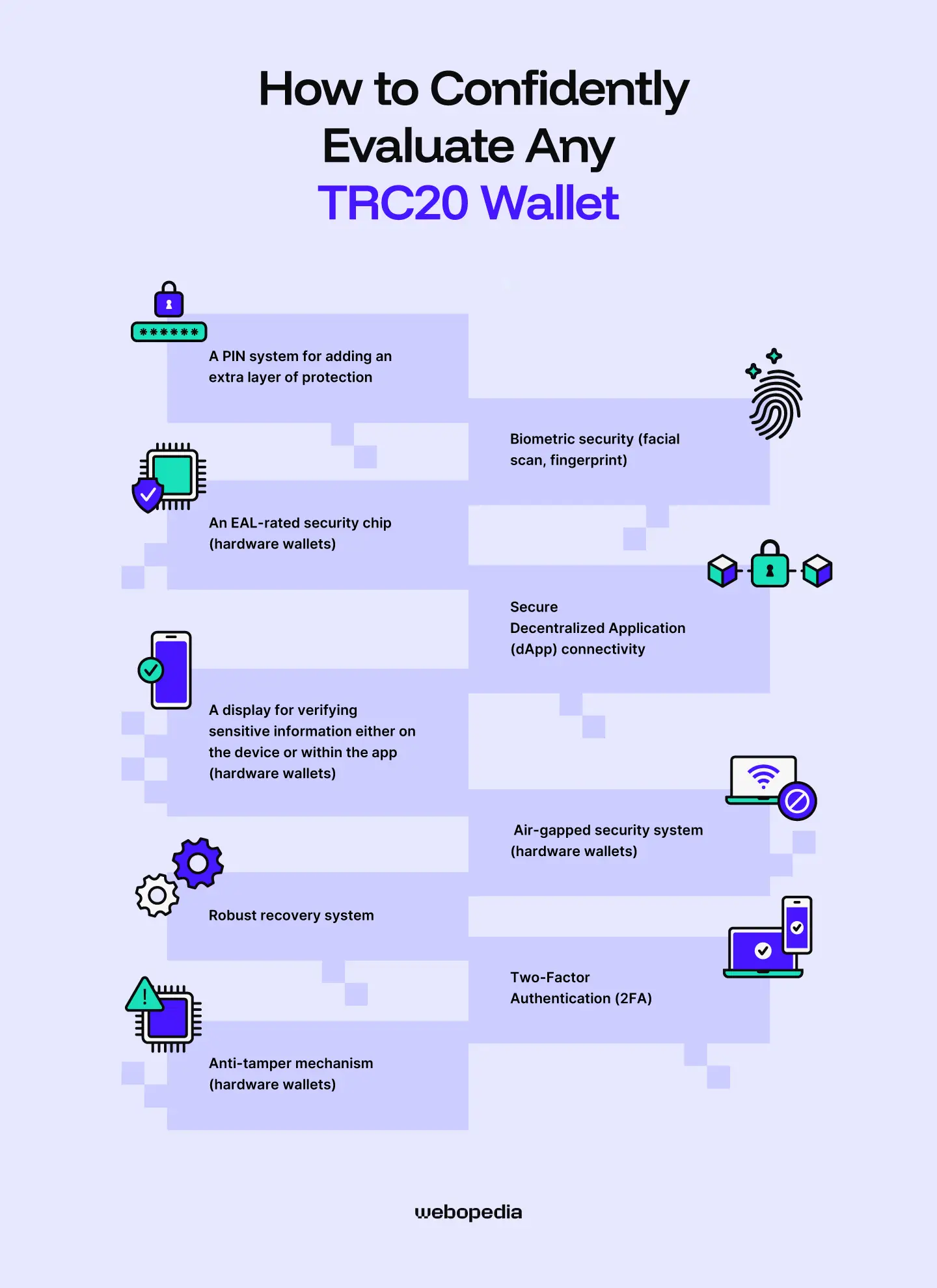
When deciding which Tron wallet to use, it’s essential to compare each provider with your specific needs and requirements. There are many contenders for the title of best TRC-20 wallet, which complicates the evaluation process. To make things clearer, we outline the key features to look for below.
Security and Control – Custodial vs. Non-Custodial
Above all else, it’s essential to select a secure TRC-20 wallet. But what should you check for?
There are two main types of wallets: custodial and non-custodial (sometimes called self-custody). We recommend non-custodial wallets for most users because they offer superior security, control, and support for Web3 applications.
Custodial TRC-20 wallets suit beginners, as users are not required to manage/store the seed phrase, which is a common way that novices accidentally compromise their wallets. They’re usually recovered via login credentials. The caveat to custodial wallets is that users do not have complete ownership of their assets because the issuer controls the private key.
Non-custodial TRC-20 wallets are superior choices for experienced investors and people prioritizing security. Users control the seed and can use it to recover their wallet using any compatible software. They offer dApp connectivity and unparalleled control, as no intermediary can manage or access a non-custodial wallet.
It’s essential to understand the concept of a seed phrase, otherwise known as a mnemonic or recovery phrase. It’s typically a 12 or 24-word sequence displayed during wallet setup. Anyone with a seed can access and control the associated wallet. Therefore, secure storage is a must.
Never store a seed phrase digitally. Doing so leaves you vulnerable to network attacks and increases the risk of losing your seed. Instead, use analog methods like pen and paper or a metal seed storage solution (roughly $50). Keep multiple backups in different, secure locations for easier recovery.
Here’s a quick checklist of some other security features you can easily reference:
- A PIN system for adding an extra layer of protection
- Biometric security (facial scan, fingerprint)
- An EAL-rated security chip (hardware wallets)
- Secure Decentralized Application (dApp) connectivity
- A display for verifying sensitive information, either on the device or within the app (hardware wallets)
- Air-gapped security system (hardware wallets)
- Robust recovery system
- Two-Factor Authentication (2FA)
- Anti-tamper mechanism (hardware wallets)
Platform and Usability: Mobile, Desktop, or Hardware?
When you’re attempting to choose the best TRC-20 wallet, you’ll have to decide whether you prioritize convenience, Web3 connectivity, and security.
If you regularly travel or prefer to manage your TRC-20 holdings on the go without needing a desk, a non-custodial TRC-20 mobile wallet for Android or iOS could be ideal. They’re specially designed for mobile usage, providing unparalleled convenience, straightforward crypto management, and a dependable recovery system, in case the device becomes lost.
Individuals seeking advanced features, multi-platform support, and Web3 connectivity to easily interact with dApps and Decentralized Finance (DeFi) products should consider a desktop wallet. They’re easy to manage, have intuitive user interfaces (UI), and strong security. As they have larger screens, they’re great for conducting detailed analysis for potential investments.
If you’re seeking to maximize safety over extended periods, there’s no substitute for a hardware wallet. They’re physical devices, and management requires tangible access. They typically boast displays to verify sensitive information, special security chips, and anti-tamper mechanisms. An initial purchase (around $50 to $150) is required, but security is best-in-class.
Each type of non-custodial TRC-20 wallet has pros and cons. Ultimately, the best option will be specific to your requirements. Consider what you need from a wallet, then decide whether a mobile, desktop, or hardware wallet best suits your situation.
TRON Ecosystem Features (Beyond Storing Tokens)
While sending, receiving, and storing crypto are essential, the best TRC-20 wallets offer a range of additional features that enhance convenience and help users get more from their investments. These tools include:
- Staking support for TRX and TRC-20 tokens: Look for wallets that offer simple crypto staking or earn features. They enable users to earn rewards while storing their TRC-20 tokens, enhancing long-term returns.
- dApp browser: Certain wallets will provide a native dApp browser that makes finding and connecting to genuine decentralized applications easier and safer.
- Portfolio tracking tools: Always consider how detailed a wallet’s portfolio management system is. You should prioritize options with a clear portfolio history and ideally some analytical/charting tools.
- In-wallet swaps: Sometimes you want to quickly swap one token for another, usually to capitalize on a potential move or to reduce exposure to a particular token. Wallets offering an in-app swaps tool significantly streamline this process and prevent people from having to use an external exchange.
- Fiat on-ramp: Having access to a fiat on-ramp drastically simplifies the process of adding to your TRC-20 holdings by allowing users to purchase crypto with local currencies, such as the US dollar.
Comparing The Best TRC-20 Wallets (2026)
Here’s how each wallet stacks up:
| Brand Name | Wallet Type | Security Features | Supported Crypto | Backup and Recovery | Staking Support | Cost |
|---|---|---|---|---|---|---|
| Tangem Wallet | Cold | EAL6+ security chip, 25-year warranty, audited, no external connectivity, PIN system | 5,000+ | Cards come in multi-packs, providing redundancy, seedless | Yes | $54.90 to $160 |
| Bitget Wallet | Hot | Multi-Party Computation, $300 million protection fund, encryption | 1 million+ | Seed phrase | Yes | Free |
| SafePal S1 | Cold | EAL6+ chip, air-gapped, open-source, self-destruct mechanism, passphrase | Thousands of tokens on 200+ blockchains | Seed phrase | Yes | $49.99 |
| Uphold Wallet | Hot | Regulated, private key encryption, employee background checks, and regular audits | 325 | Username and password | Yes | Free |
| Zengo Wallet | Hot | MPC, seedless, create segregated wallets, Multi-Factor Authentication | 1000+ | Email authentication, recovery file, 3D FaceLock (optional) | Yes | Free ($9.99 monthly premium subscription) |
| Binance Wallet | Hot | MPC, self-custody, risk detection, technical audits | Thousands of assets on 34 networks | Quick Backup, recovery password | Yes | Free |
| Trezor Safe 3 | Cold | EAL6+ security chip, PIN/passphrase systems, TOR routing | 7,000+ | Seed phrase, multi-share backup (split seed into multiple shares) | Yes | $79 |
| eToro | Hot | Encryption, client/customer fund segregation, threat detection system, 2FA, multi-sig wallet | 39 | Username/Password | Yes | Free |
| Cypherock X1 | Cold | Audited by Keylabs, open-source, EAL6+ secure element | 18,000+ | Seed phrase, multi-sig (2 of 4 cards required for recovery) | Yes | $129 |
| Coinbase Wallet | Hot | End-to-end encryption, biometric/PIN locks, and Secure Enclave tech | 5000+ | Private Keys, 12-word recovery Phrase | Yes | Free |
Conclusion
Before making a decision, compare multiple wallets to determine which best suits your goals. It’s advisable to maintain a software wallet like Bitget or Zengo for storing trading funds and a hardware wallet like Tangem or Trezor for long-term investments.
While they’re designed similarly, Ethereum and Tron are entirely separate blockchains using different consensus mechanisms. Never send TRC-20 assets to an Ethereum address.
FAQ Section
How do I identify a TRC20 wallet address?
If you send tokens to an incorrect address or on the wrong network, they will be lost. To simplify address verification, Tron has created a unified wallet address format. Every TRC-20 wallet address starts with a ‘T’, making it easy to verify the network is correct.
Is a software (hot) wallet safe for TRC20 tokens?
As long as it’s issued by a reputable company and is downloaded from a genuine source, hot wallets are perfectly safe for storing TRC-20 tokens. However, internet-connected wallets are inherently riskier than hardware or cold wallets, which are typically air-gapped and require physical access for management, making them superior for long-term storage.
Are TRC20 transaction fees really that much cheaper?
People often claim that TRC-20 transactions on the Tron network are significantly cheaper than those on Ethereum. The reality is different. Users must stake TRX to earn energy for free TRC-20 transactions. Most people will have to buy energy with TRX, incurring a fee of approximately $0.90.
What is the difference between a TRC20 wallet and a TRON wallet?
Tron (TRX) is the native asset used to power the network and pay transaction fees. TRC-20 tokens are smart-contract-enabled assets built on the Tron network. All TRC-20 wallets can store TRX tokens (to cover fees), but not all TRX or Tron wallets can store TRC-20 assets.