Best Wallets for Cardano in 2026

- When you click links on this page, we may earn an affiliate commission. By using this website you agree to our terms and conditions and privacy policy.
- Participation in online gambling may be illegal in your country and is subject to age restrictions (18, 19, or 21, depending on the jurisdiction). Verify legality and age requirements before participating. Learn more
The best Cardano wallets offer high security and low fees because the Cardano ecosystem is unique and diverse. Many custodial wallets do not support Cardano staking or offer Decentralized Application (dApp) connectivity, sharply increasing the need for self-custody wallets that are secure, beginner-friendly, and well-equipped.
Throughout this article, we’ll examine the best wallets for Cardano, including a mixture of custodial, self-custody, and hardware wallets. We’ll discuss key technical features to look out for and provide tips for keeping your funds secure. Let’s get started.
Summary
- Some of the best Cardano wallets are Tangem Wallet, Bitget Wallets, Binance Wallets, and Zengo Wallet.
- Hardware wallets like Tangem ($54.90-$69.90) and Trezor provide superior protection against network attacks with EAL6+ security chips, while hot wallets like eToro and Coinbase are better suited for active trading and temporary storage.
- Cardano allows staking without minimum lockup periods or unbonding delays, with options ranging from simple exchange-based staking (1-1.59% APY) to on-chain delegation that provides voting rights and eliminates commission fees.
- Cardano uses a fixed formula resulting in average fees of approximately 0.165 ADA per transaction, though exchange withdrawal fees (0.3-1 ADA) are typically higher than direct on-chain transfers.
- Cardano’s unique EUTXO model (not EVM-compatible) means you need specialized wallets like Yoroi for NFT support and dApp connectivity, as general multi-chain wallets cannot handle Cardano’s native token structure.
- Never store seed phrases digitally; use analog methods like paper backups or metal storage solutions, and always verify wallet addresses on hardware wallet screens before confirming transactions to prevent fund loss.
- Beginners should consider regulated platforms like Coinbase for ease of use, active traders benefit from hot wallets with exchange integration, while long-term holders require hardware wallets like Tangem or Trezor Safe 3 for maximum security.
Comparing the Best Wallets for Cardano in 2026
| Brand Name | Wallet Type | Security Features | Supported Crypto | Backup and Recovery | Staking Support | Cost |
|---|---|---|---|---|---|---|
| Tangem Wallet | Cold | EAL6+ security chip, 25-year warranty, audited, no external connectivity, PIN system | 5,000+ | Cards come in multi-packs, providing redundancy, seedless | Yes | $54.90 to $160 |
| Bitget Wallet | Hot | Multi-Party Computation, $300 million protection fund, encryption | 1 million+ | Seed phrase | Yes | Free |
| SafePal S1 | Cold | EAL6+ chip, air-gapped, open-source, self-destruct mechanism, passphrase | Thousands of tokens on 200+ blockchains | Seed phrase | Yes | $49.99 |
| Uphold Wallet | Hot | Regulated, private key encryption, employee background checks, and regular audits | 325 | Username and password | Yes | Free |
| Zengo Wallet | Hot | MPC, seedless, create segregated wallets, Multi-Factor Authentication | 1000+ | Email authentication, recovery file, 3D FaceLock (optional) | Yes | Free ($9.99 monthly premium subscription) |
| Binance Wallet | Hot | MPC, self-custody, risk detection, technical audits | Thousands of assets on 34 networks | Quick Backup, recovery password | Yes | Free |
| Trezor Safe 3 | Cold | EAL6+ security chip, PIN/passphrase systems, TOR routing | 7,000+ | Seed phrase, multi-share backup (split seed into multiple shares) | Yes | $79 |
| Rockwallet | Hot | SOC 2 Type II/ISO27001 certification, 2FA, biometrics | 18 | Seed phrase | No | Free |
| Cypherock X1 | Cold | Audited by Keylabs, open-source, EAL6+ secure element | 18,000+ | Seed phrase, multi-sig (2 of 4 cards required for recovery) | Yes | $129 |
| Coinbase Wallet | Hot | End-to-end encryption, biometric/PIN locks, and Secure Enclave tech | 5000+ | Private Keys, 12-word recovery Phrase | Yes | Free |
Best Wallets for Cardano in 2026
Don’t invest unless you’re prepared to lose all the money you invest.
Top Wallets for Cardano in 2026 Detailed Review
Safepal
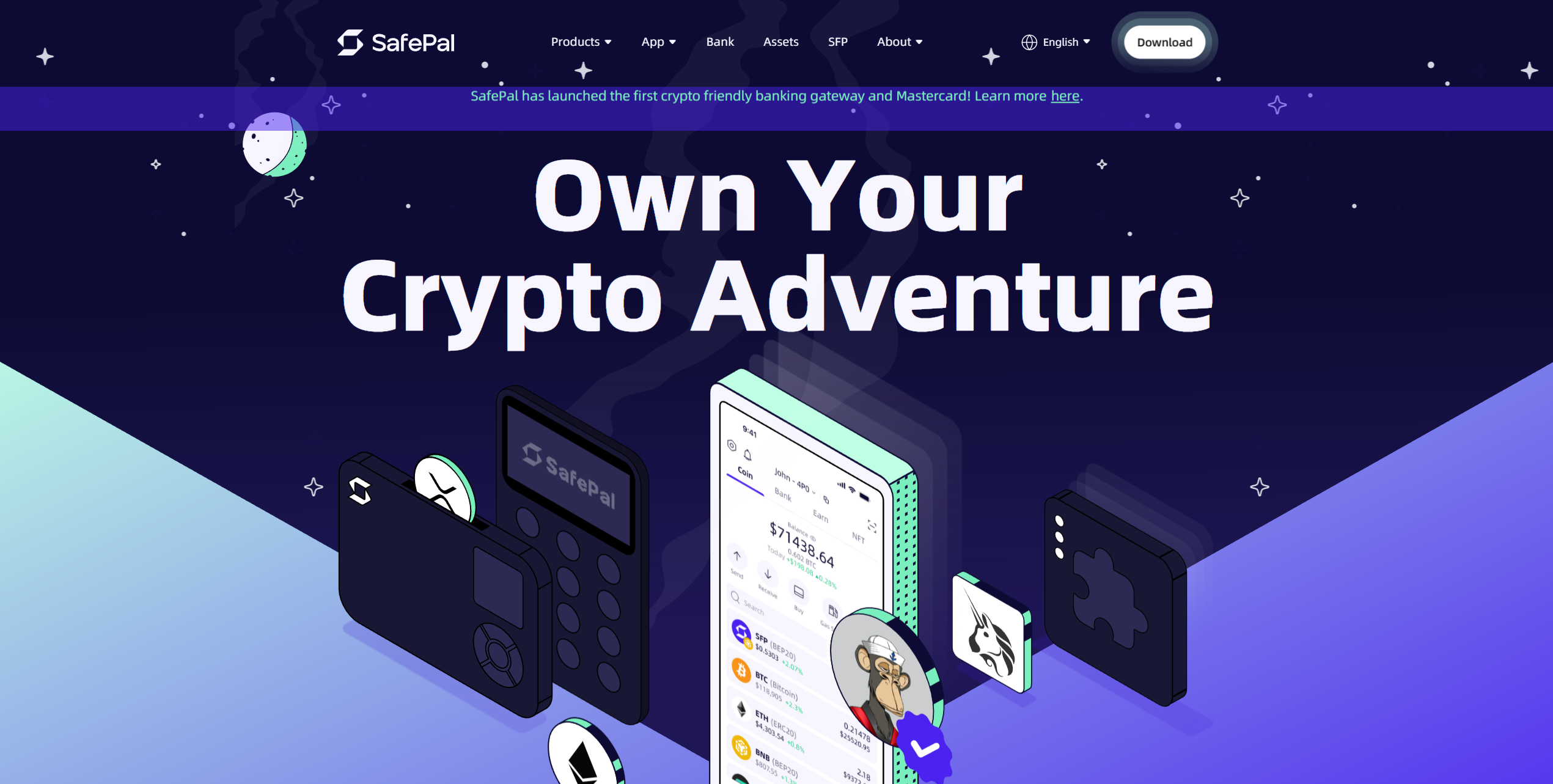
The SafePal S1 is a budget-friendly ($49.99) hardware wallet equipped with an EAL6+ security chip and 100% air-gapped, open-source security architecture, yielding a highly secure crypto storage environment. Users can store Cardano and thousands of other assets across over 200 blockchains, making the SafePal S1 great for altcoin investors.
The SafePal S1 lacks Bluetooth, WiFi, USB, and NFC connectivity. Instead, it connects to an Android or iOS app and scans QR codes to sign transactions, protecting users from misinputting key details. The device features various security sensors and an anti-tamper self-destruct mechanism for safekeeping, even if the device is compromised.
The SafePal app comes with built-in tools for swapping assets, crypto staking, and purchasing ADA. If you're looking for a portable (roughly the size of a credit card) hardware wallet with excellent security and some analysis capabilities, the SafePal S1 could be among the best wallets for Cardano.
Pros
-
Budget-friendly hardware wallet
-
Supports many assets
-
Offers dApp and DeFi connectivity
-
Fully air-gapped
-
EAL6+ security chip
Cons
-
Shipping can take 2 to 3 weeks
-
0.2% fee for crypto-to-crypto swaps
- Bitcoin
- Ethereum
-
Tether
89
No result
- English
- German
-
Spanish
12
No result
Tangem
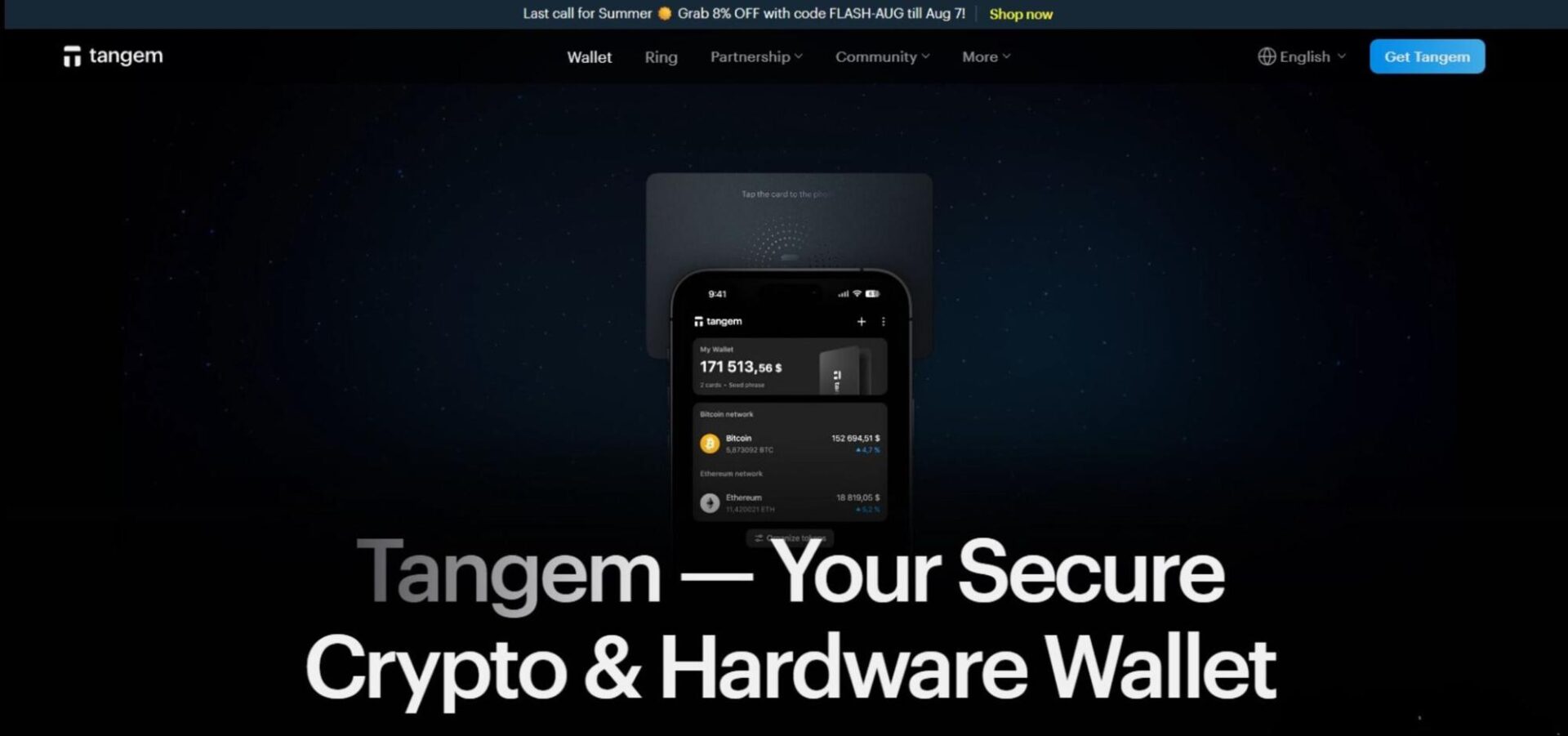
Tangem is one of the most secure wallets for Cardano. It takes the shape of a credit card, allowing it to easily fit into a wallet, making it highly portable and convenient to transport. Instead of USB or Bluetooth connectivity, Tangem wallets utilize low-energy NFC, eliminating the need for batteries.
The non-custodial wallet is available in two options: a 2-card set ($54.90) and a 3-card set ($69.90). Additionally, a Tangem Ring bundle is available, which comes with two cards and a ring. Using multiple cards provides a wallet backup, even if one is lost.
Because Tangem has opted for NFC, a phone and a mobile app are required to manage it. The app enables users to buy/sell cryptocurrency, including Cardano. The wallet supports thousands of assets and connects to Web3 products, such as Decentralized Finance (DeFi) platforms, enabling investors to generate yield from their holdings.
Tangem wallets utilize a traditional seed phrase-based security system, but benefit from an EAL6+ security chip, a 25-year warranty, and a Kudelski Security audit. Overall, Tangem is one of the best wallets for Cardano, thanks to its versatility and impressive security measures, making it equally suitable for traders and investors.
Pros
-
EAL6+ security chip
-
Supports buying and selling Cardano
-
Can store thousands of assets
-
Web3 and DeFi connectivity
-
Highly portable with no battery
Cons
-
Requires a mobile phone
-
Some initial investment needed (purchase price)
- Bitcoin
- Ethereum
-
Tether
70
No result
- English
- German
-
French
3
No result
Kraken
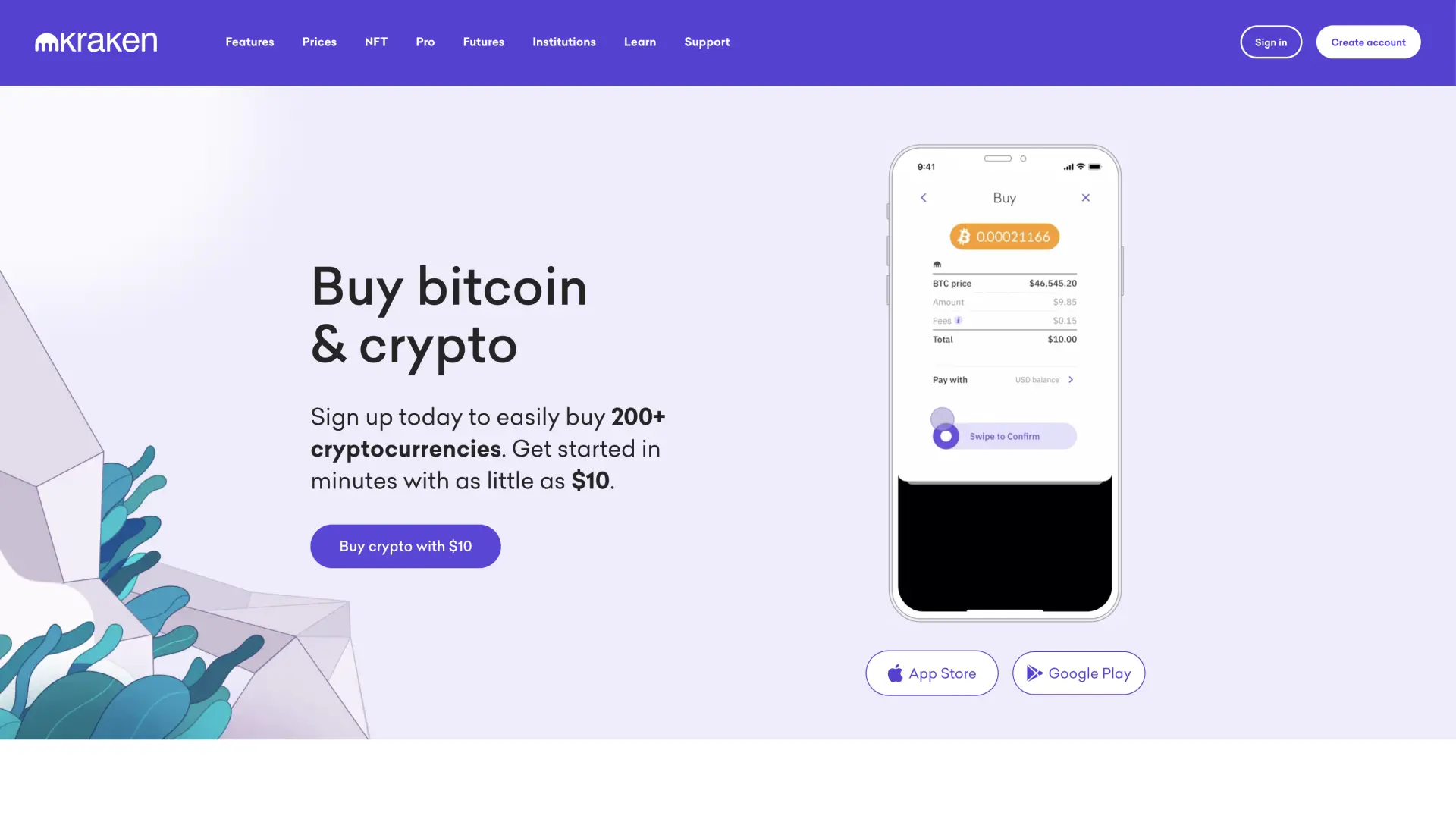
Kraken wallet is a non-custodial wallet for privacy-conscious users, a reputable exchange with strong security practices and DeFi integration.
Kraken Wallet operates as a self-custody solution separate from Kraken's main exchange platform, giving you complete control over your private keys while benefiting from the company's security expertise. You can interact with dApps and manage multiple cryptocurrencies without relying on centralized storage. The wallet targets users who understand the importance of self-custody but want the backing of an established crypto company.
It supports Bitcoin, Ethereum, and various ERC-20 tokens with full private key control. DeFi integration allows direct interaction with decentralized protocols for lending, borrowing, and yield farming. Multi-chain support includes popular networks beyond Ethereum, while hardware wallet compatibility works with Ledger and Trezor devices. Built-in portfolio tracking shows your holdings across different blockchains.
Pros
-
Self-custody design gives you complete fund control
-
Backed by Kraken's established security reputation
-
DeFi protocol integration for decentralized finance access
-
Multi-chain support covers popular blockchain networks
-
Hardware wallet compatibility enhances security options
Cons
-
Self-custody responsibility means no recovery assistance if keys are lost
-
Limited cryptocurrency selection compared to the main Kraken exchange
-
DeFi features may confuse users unfamiliar with decentralized protocols
-
No customer support for wallet recovery issues
-
Interface complexity exceeds basic storage needs
- Bitcoin
- Ethereum
-
Tether
83
No result
- Spanish
- English
-
French
4
No result
Uphold
Uphold is a FinCEN, FCA, and FINTRAC-regulated trading platform that provides all users with a custodial wallet that can store Cardano and 328 other assets. There's no hardware wallet support or dApp connectivity. Nor are there many optional security features; only 2FA is available to users, limiting protection.
Users can seamlessly stake ADA and earn a 1.6% APR, which is beneficial but slightly lower than the offerings of other Cardano wallets. Yet, Uphold has integrations with various crypto tax software, including CoinTracker and Blockpit, which significantly simplify the crypto tax process.
Although Uphold has a relatively limited security system, it's free and can store a good variety of assets. Moreover, the trading system is suitable for general use, making Uphold a strong choice for users seeking a well-rounded, custodial crypto wallet.
Pros
-
Regulated by leading authorities
-
Offers a good range of cryptocurrencies
-
Straightforward fiat on-ramp
-
Supports ADA staking
-
Tax software integrations
Cons
-
Limited extra security features
-
No dApp or DeFi connectivity
- Tether
- TrueUSD
-
USD Coin
144
No result
- English
Don’t invest unless you’re prepared to lose all the money you invest.
Coinbase
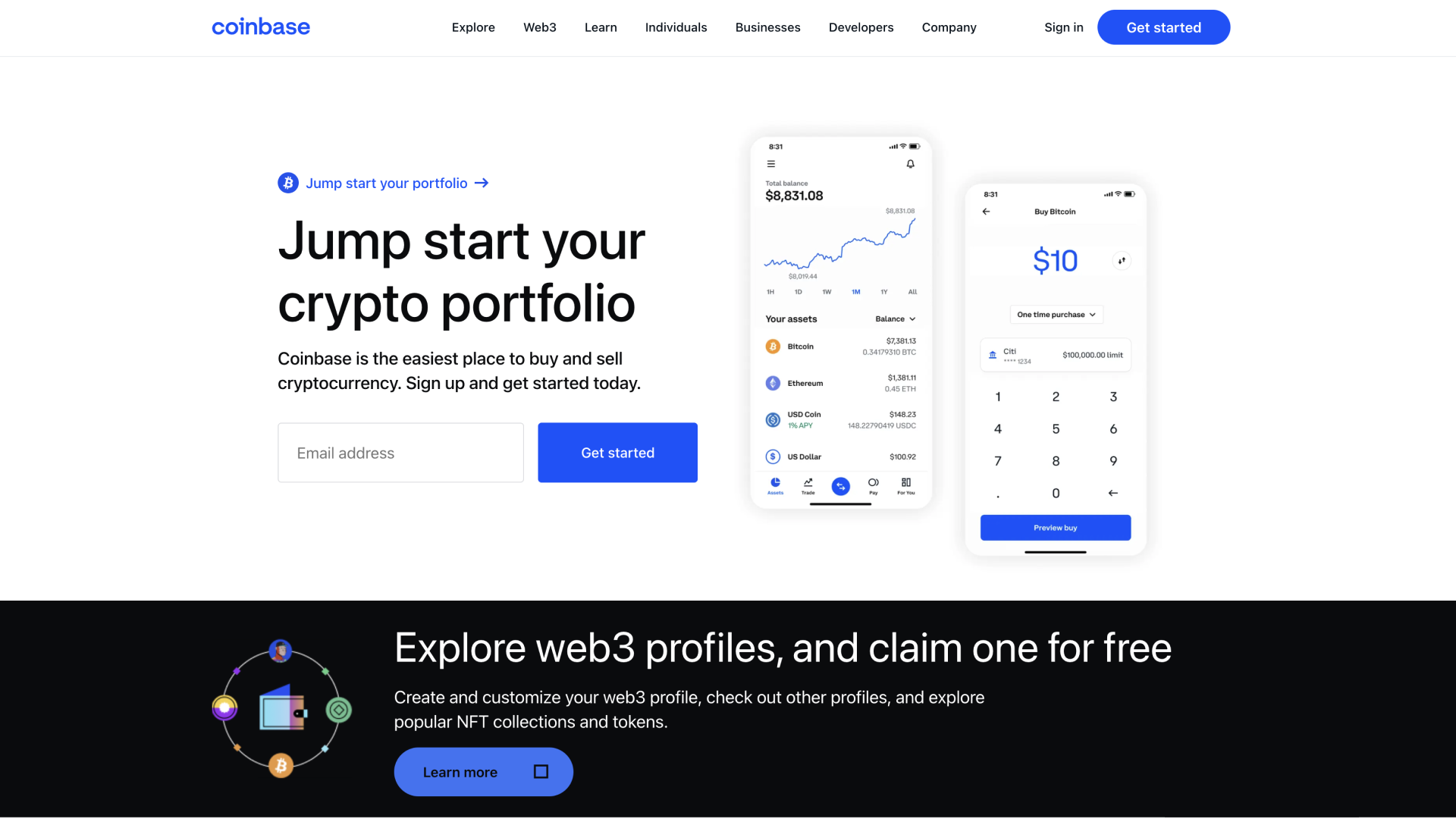
Coinbase is a widely known crypto exchange and storage solution that tens of millions of users trust. Tier-1 authorities, including the FCA and FinCEN, regulate Coinbase, which enhances security and provides users with better recourse options.
Users can store ADA and 315 other cryptocurrencies on Coinbase. Moreover, a straightforward fiat on-ramp is available alongside a toggle between the standard and 'Advanced' modes, which boast TradingView charts and derivatives for users in eligible regions. Users can also stake their Cardano to earn 1.59% APY.
Coinbase also operates a standalone wallet with Web3 connectivity. Unfortunately, it doesn't support ADA, so Cardano investors are limited to the exchange. As such, Coinbase can suit general traders and investors, but not those seeking advanced security features or a non-custodial option.
Pros
-
Regulated crypto platform
-
Supports Cardano staking
-
Trusted by millions of people globally
-
Standard and advanced modes
-
Supports a reasonable number of cryptocurrencies
Cons
-
Coinbase Wallet doesn't support ADA
-
KYC is required on Coinbase
- Bitcoin
- Ethereum
-
Tether
68
No result
- English
Trezor
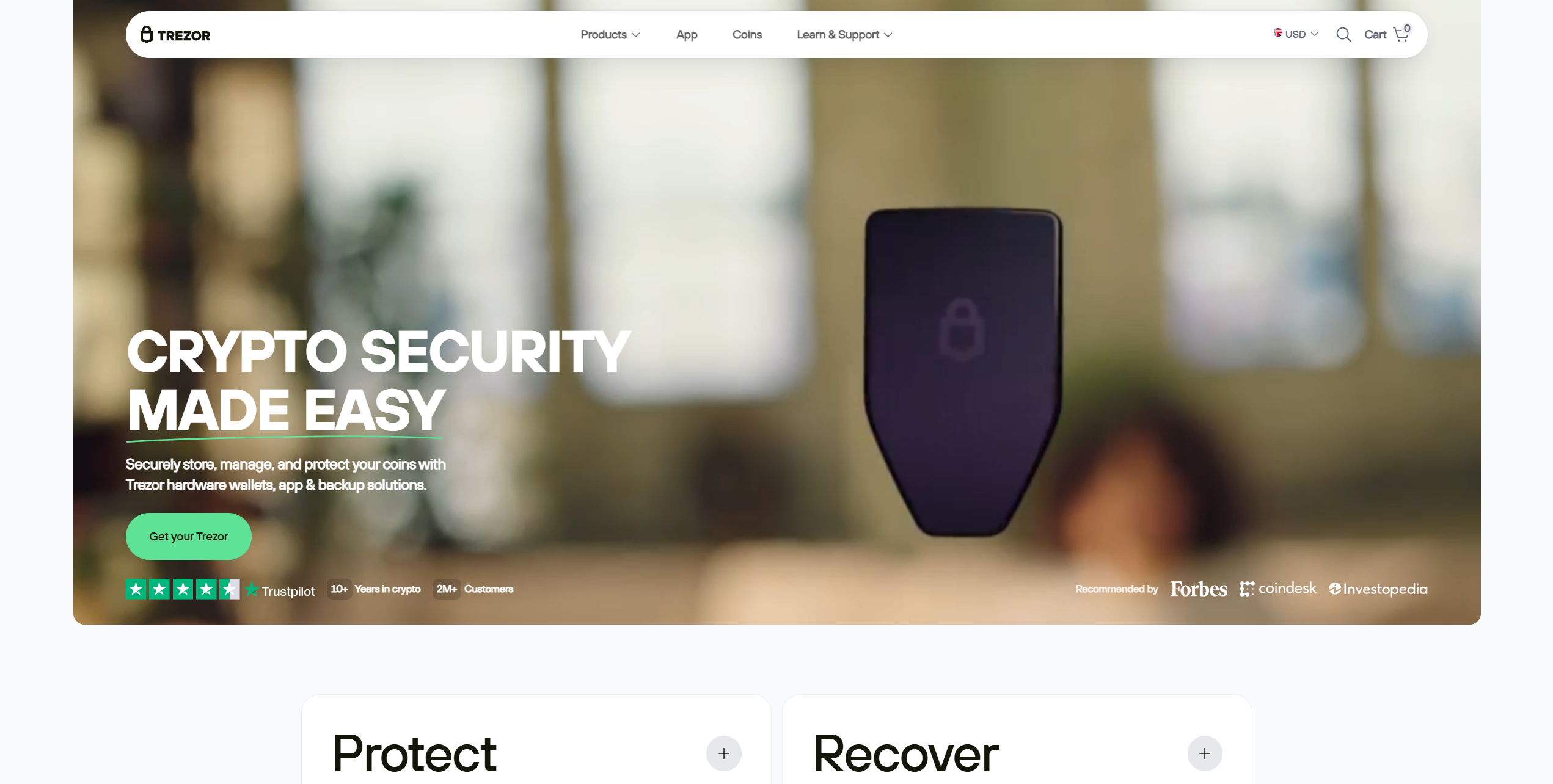
You're not restricted to Ledger devices if you want to benefit from the security a hardware wallet offers. Trezor offers a range of highly popular hardware wallets with open-source security, broad asset support, and a pocket-friendly design. However, they lack iOS support, which limits their usability for iPhone owners.
The Trezor Safe 3 is an affordable and powerful hardware wallet, priced at $79 and featuring an EAL6+ security chip. It features a small 0.96-inch screen with two navigation buttons. Users have USB-C connectivity, support for thousands of assets, and an optional PIN system to enhance security.
The Trezor Model T is a premium alternative. It features a 1.54-inch touchscreen but lacks an EAL-rated security chip, as it is an older model. Trezor devices come with a special system for splitting seed phrases into multiple 20-word shares for enhanced security.
Users manage Trezor devices via the Trezor Suite software. It's available for Android, Windows, macOS, and Linux. Moreover, it supports taking and trading, expanding Trezor's use cases. For general purposes, the Trezor Safe 3 is the best Trezor hardware wallet for Cardano, thanks to its EAL6+ security chip.
Pros
-
Options for multiple budgets
-
PIN system improves security
-
Supports splitting seed phrases into multiple shares
-
Open-source security
-
Can trade and stake ADA via Trezor Suite
Cons
-
Trezor Model T has worse security than the Safe 3
-
Extremely limited iOS support (view-only)
- Bitcoin
- Ethereum
-
Tether
204
No result
- English
- Czech
Technical Features Critical for Cardano Holders

If you’re a Cardano enthusiast, there are a few particular features that are indispensable. They include:
Native Staking and Delegation
Users have multiple options for staking Cardano. The first and easiest option is using an earn or staking tool on an exchange. They generally leverage your tokens via DeFi protocols or pool them with other users for on-chain staking, simplifying the process.
If, however, you’re seeking voting rights on upcoming proposals, want to select the pool in which you participate manually, or want to earn rewards without paying a commission, on-chain staking is the preferred option. Want to know how to stake Cardano? We explain the basics below.
You’ll need a Cardano wallet that supports staking, like Yoroi. You can connect a Ledger hardware wallet with Yoroi to enhance security. There is no minimum lockup or unbonding period for undelegating a Cardano stake; funds can be transferred immediately.
You can become a Cardano validator by running your own pool (a complex process with no minimum stake, requiring a 500 ADA deposit and the need to run a computer as a node) or become a delegator, pledging your assets to a specific pool (simple, and you retain full ownership)
Understanding Cardano Network Fees (Gas/Rent)
Transaction fees apply whenever you send Cardano from your wallet to another. Unlike some networks, Cardano fees are relatively easy to predict because they follow a fixed formula.
Ready to have Cardano network fees explained in full? The rate is calculated based on a constant network fee (currently 0.155381 ADA) and a fee based on the transaction size. Most transactions are approximately 200 bytes, which results in a total average Cardano gas fee of around 0.165 ADA.
It’s essential to note that exchange wallets, such as Uphold or Kraken, charge their own withdrawal fees for ADA. While Uphold charges 0.3 ADA, the fee on Kraken is 1 ADA. Checking the costs before using a particular exchange is advisable, as they’re almost always higher than on-chain transactions.
Cardano Token Standards and NFT Support
Instead of using the Ethereum Virtual Machine (EVM), which is prevalent in many popular blockchains, such as Ethereum, Polygon, and Fantom, Cardano employs a more complex Extended Unspent Transaction Output (EUTXO) model, which is challenging to integrate and lacks plug-and-play components for wallet creators.
While ERC-20 tokens are implemented as smart contracts, native Cardano tokens exist directly on the blockchain ledger. Examples include SNEK and World Mobile Token. Multi-chain Cardano NFT wallets don’t exist, and general-purpose wallets are unsuitable. You’ll need a speciality Cardano wallet, such as Yoroi.
Security Best Practices for Your Cardano Wallets in 2026

Using reputable Cardano wallets with an excellent track record is essential if you want to protect your investment. However, there are a few straightforward techniques you can use to enhance your security further.
Secure Your Seed Phrase
Storing your seed phrase correctly is among the most crucial and often overlooked ways to enhance your security. It can be used to recover your wallet with no additional information, so proper storage is a must.
You should never store your seed phrase digitally, such as in a text file or screenshot. Doing so leaves you vulnerable to digital attacks and limits your ability to recover if your device becomes lost or damaged.
Instead, opt for an analog option, like pen and paper or a metal seed phrase storage solution. While the former is great for creating multiple backups, which are easy to hide and cheap, the latter offers best-in-class safety and protection against general damage or fire.
Securing Hardware Wallet Interaction
Hardware wallets offer unbeatable security, but proper usage can further enhance the protection your device provides.
Always verify the wallet address to which you’re sending tokens. Hardware wallets will display the address you’re sending tokens to on the device’s screen. Take care to verify it matches the intended address, as otherwise you could lose your funds.
Never enter your seed phrase on a computer (unless you must during the setup process). Instead, view and manage it on your hardware wallet device. They’re air-gapped and have anti-tamper mechanisms, making it far harder for a bad actor to compromise.
Only use trusted Decentralized Applications (dApps). If you connect your wallet to a platform and sign transactions or give approval without paying attention, it could steal your data or funds. To prevent this, only use reputable platforms and double-check what you’re approving/signing before confirming.
Conclusion & Final Recommendation
Throughout this article, we’ve examined some of the best wallets for Cardano, evaluating each option and highlighting its strengths and areas for improvement. All the platforms we’ve examined are solid, but some wallets stand out above the rest, depending on your specific use case.
If you require a Cardano NFT wallet or Cardano dApp connectivity, then you’ll need to use a specialized wallet like Yoroi, which can handle the network’s unique structure. However, beginners or mobile users suit Coinbase, which is regulated, offers beginner/advanced modes, supports multiple blockchains, and provides trading functionality.
If you’re looking to maximize your Cardano security, there’s no substitute for a hardware wallet. The best options are the Trezor Safe 3 or Tangem, as both are budget-friendly, support Cardano wallets, and feature an EAL6+ chip. However, iOS users should opt for the Nano X.
FAQ Section
What is the difference between a Cardano "account" and a "wallet"?
There is no concept of an ‘account’ in relation to the Cardano blockchain. The network uses a UTXO model, keys, and addresses. A Cardano wallet is software or hardware used to store ADA, such as Yoroi. However, accounts apply to exchange wallets, like Binance, which are accessed via username/password.
How much does it cost to send Cardano from one wallet to another?
The Cardano network boasts a predictable fee structure. It involves a fixed charge and a variable fee that varies based on the transaction size. Most transactions are approximately 200 bytes in size and therefore incur a fee of roughly 0.165 ADA, or $0.08.
If I lose my phone, can I recover my Cardano on a different wallet?
Even if you lose or destroy your phone, a Cardano wallet is recoverable as long as you have the associated seed phrase to hand. Your investments are stored on the blockchain, so by inputting your seed into a compatible wallet, you can recover the wallet instantly.
Can I use my Ledger/Trezor without using the official Cardano desktop application?
If you want to interact with the broader Cardano ecosystem, consider using a wallet like Yoroi or Daedalus, which can be paired with Ledger and Trezor devices to enhance security while enabling dApp connectivity and on-chain staking/voting rights.


