Zero/No Fee Crypto Exchanges in 2026

- When you click links on this page, we may earn an affiliate commission. By using this website you agree to our terms and conditions and privacy policy.
- Participation in online gambling may be illegal in your country and is subject to age restrictions (18, 19, or 21, depending on the jurisdiction). Verify legality and age requirements before participating. Learn more
The main concept behind ‘zero fee’ or ‘no-fee’ crypto exchanges is that they allow users to trade cryptocurrencies without charging any fees. You can view crypto fees as a right of passage on any exchange. But the burning question is, ‘How do they make money?’
An exchange is a business. It must make money, and fees are the core way of doing so. Therefore, no-fee crypto exchanges typically add hidden costs or push people toward higher profit margin products to be profitable.
Throughout this article, we’ll explore the truth of platforms promoting free trading, discussing the extra fees they charge, how these platforms make money, and what to watch for. We’ll also highlight some top no-fee platforms and provide actionable advice on choosing the best option.
Zero Fee Crypto Exchanges Summary
| Core Revenue Model | Earning money through spread fees |
| Best for Beginners | Platforms with an easily understandable zero-commission model |
| Best for Professionals | Exchanges that have volume-based discounts and maker order rebates |
| Primary Trade-Off | Zero-fee platforms typically have larger spreads |
| Positives To Look Out For | Transparent pricing/fees, tight spreads, reasonable deposit/withdrawal costs |
The Best “Zero Fee” Crypto Exchanges


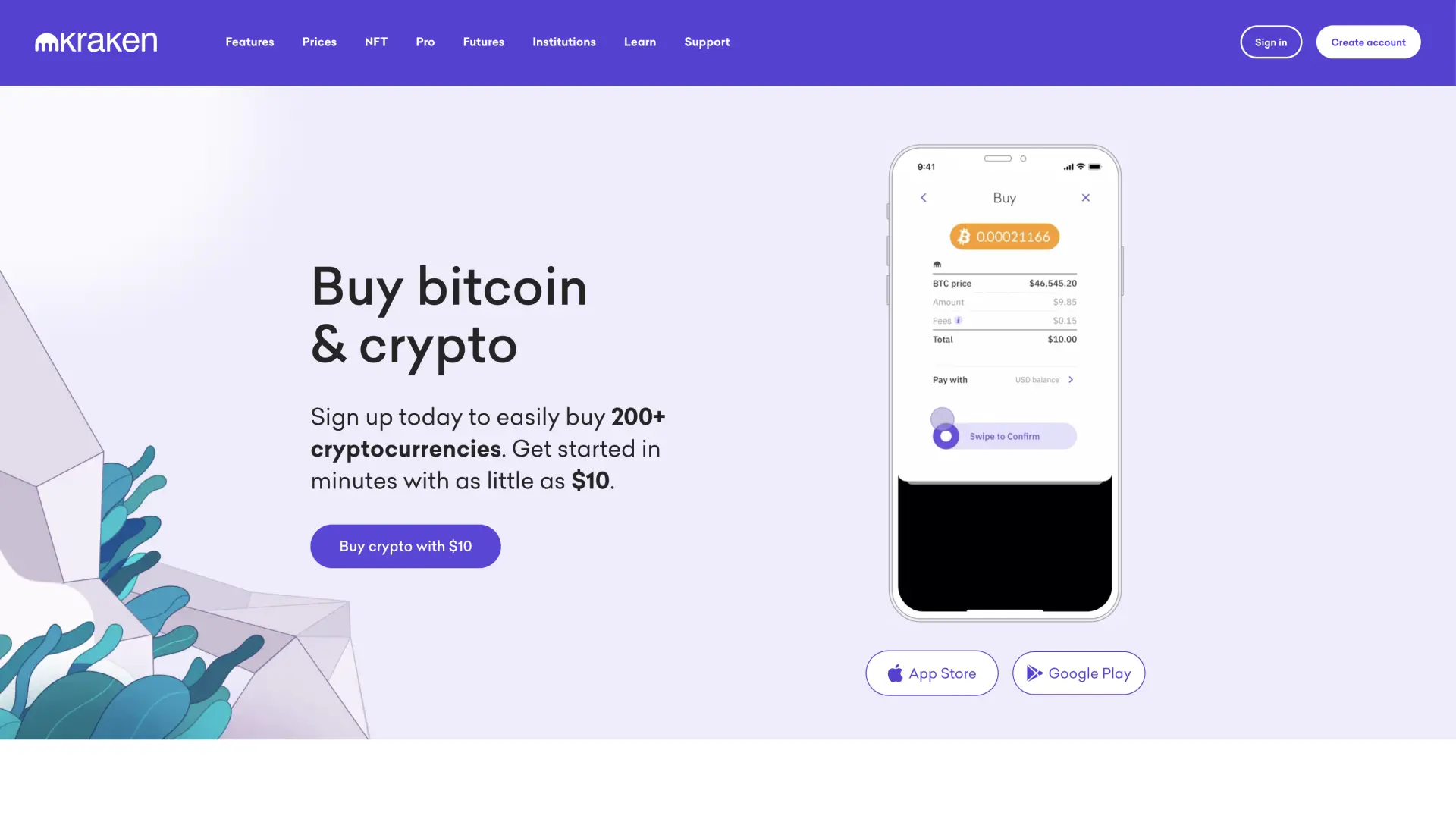
Launched in 2013, Kraken is a US-based crypto exchange known for its robust security measures and consistent performance. With billions in daily trading volumes, it’s a go-to choice for both novice and experienced traders worldwide.
Kraken supports a wide variety of cryptocurrencies—more than 300—and offers trading options like spot trading, margin trading with up to x5 leverage, and futures trading with leverage up to x50. The platform also provides staking opportunities for users looking to earn a passive income.
Deposits are supported in six major fiat currencies via multiple payment methods. Kraken’s transparent fee structure rewards high-volume traders with lower rates.
Pros
-
Strong security focus with no major breaches in its operating history
-
Competitive fee structure (maker 0.16%/taker 0.26%, decreasing with volume)
-
Over 200 cryptocurrencies available
-
Advanced trading features, including margin trading and futures
-
Excellent customer service reputation
-
Proof of reserves program for transparency
Cons
-
Interface not as beginner-friendly as competitors
-
Fiat deposit methods are more limited than some exchanges
-
The verification process can be lengthy
-
Mobile app functionality is not as robust as the desktop version
- Bitcoin
- Ethereum
-
Tether
83
No result
- Spanish
- English
-
French
4
No result
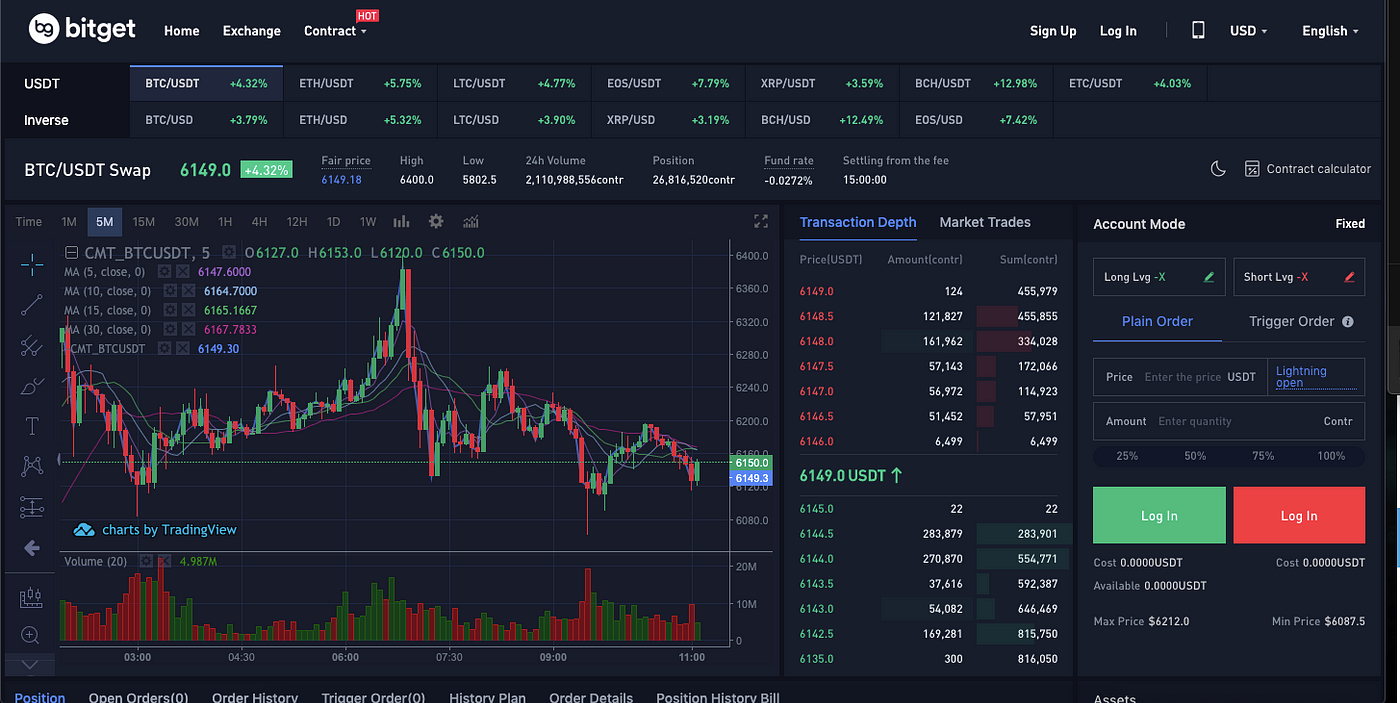
Bitget, founded in 2018 and headquartered in Seychelles, has grown into a comprehensive crypto ecosystem with over 45 million users globally. It supports over 800 trading pairs and offers diverse features such as spot, futures, margin trading, copy trading, and strategic tools.
Bitget's standout offerings include trading bots, a Web3 wallet, an NFT marketplace, and a protection fund of $300M USDT for user security. Known for low fees and robust security measures like cold storage and proof of reserves reports, Bitget caters to both novice and advanced traders with a user-friendly interface.
Pros
-
Focus on both spot and derivatives trading
-
Copy trading functionality
-
Over 500 cryptocurrencies available
-
Competitive fee structure (0.1% standard)
-
$300M protection fund for security
-
Advanced trading tools
Cons
-
Not available to US customers
-
Complex interface for beginners
-
Regulatory concerns in some jurisdictions
-
Mixed reputation in the community
-
Less established than industry leaders
-
Customer service response times during peak periods
- Bitcoin
- Ethereum
-
Tether
93
No result
- English
- Turkish
-
Spanish
1
No result
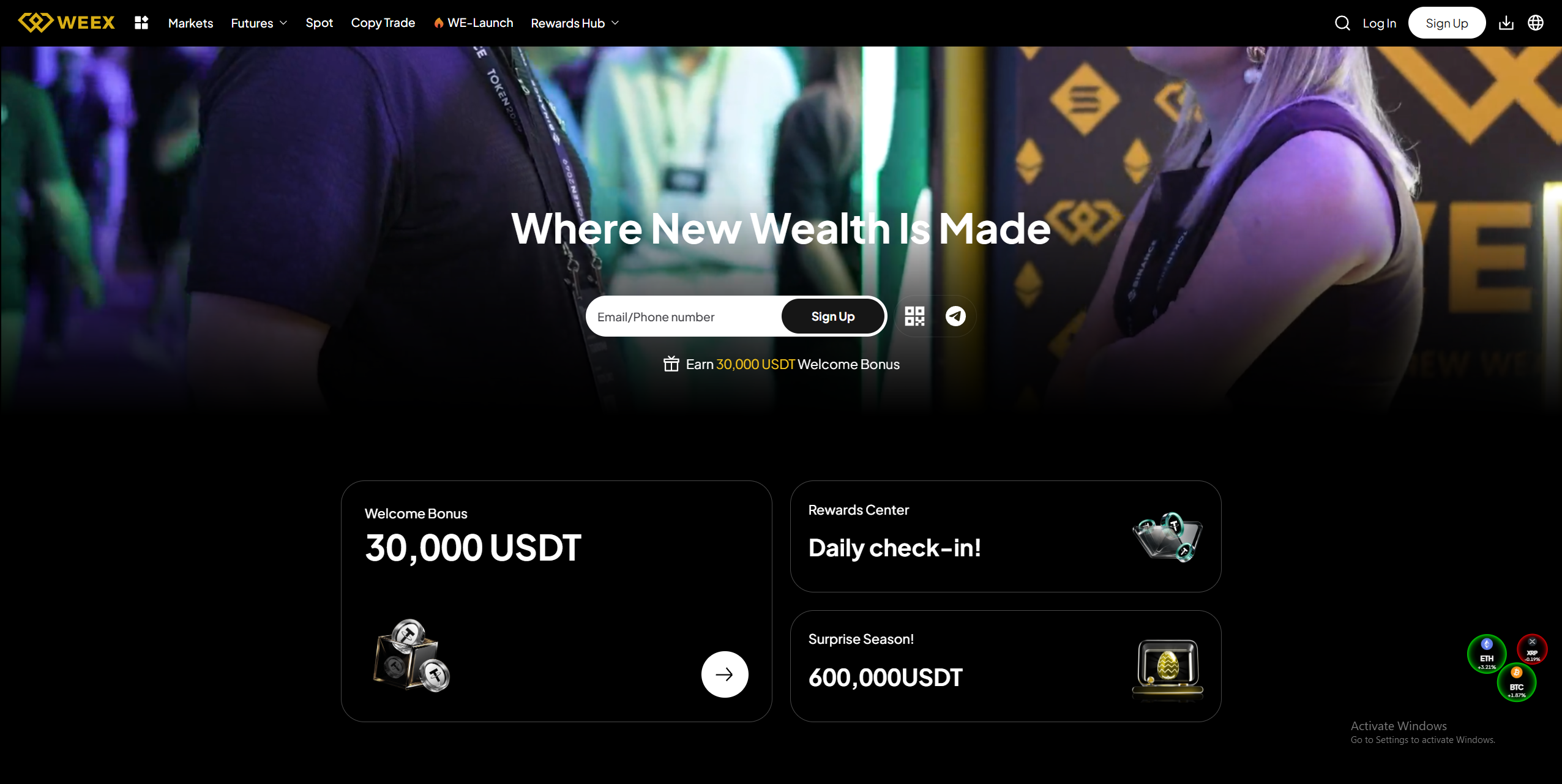
WEEX is a global crypto exchange founded in 2018 that serves more than 2 million users. It offers multiple trading options, including spot and futures markets. However, users are restricted to using crypto for payments and withdrawals, as they cannot buy with or deposit fiat currency. The exchange is registered as a Money Service Business in Canada and the US.
While WEEX is a relatively bare-bones exchange in terms of features, it hosts 971 cryptocurrencies and offers copy and demo trading functionality. It also has a rewards hub offering various trading and airdrop promotions. WEEX offers zero maker fees and 0.1% taker fees on most trading pairs. However, some are subject to a 0.1% maker order fee.
Pros
-
WEEX users can access up to 200x leverage on certain assets
-
Easy-to-navigate platform makes onboarding simpler
-
Free maker fees on many pairs (competitive fees otherwise)
-
Registered as a money service business
-
Copy and demo trading make WEEX suitable for beginners
Cons
-
No fiat currency support
-
Not many additional features outside of trading
- Bitcoin
- Ethereum
-
Tether
96
No result
- English
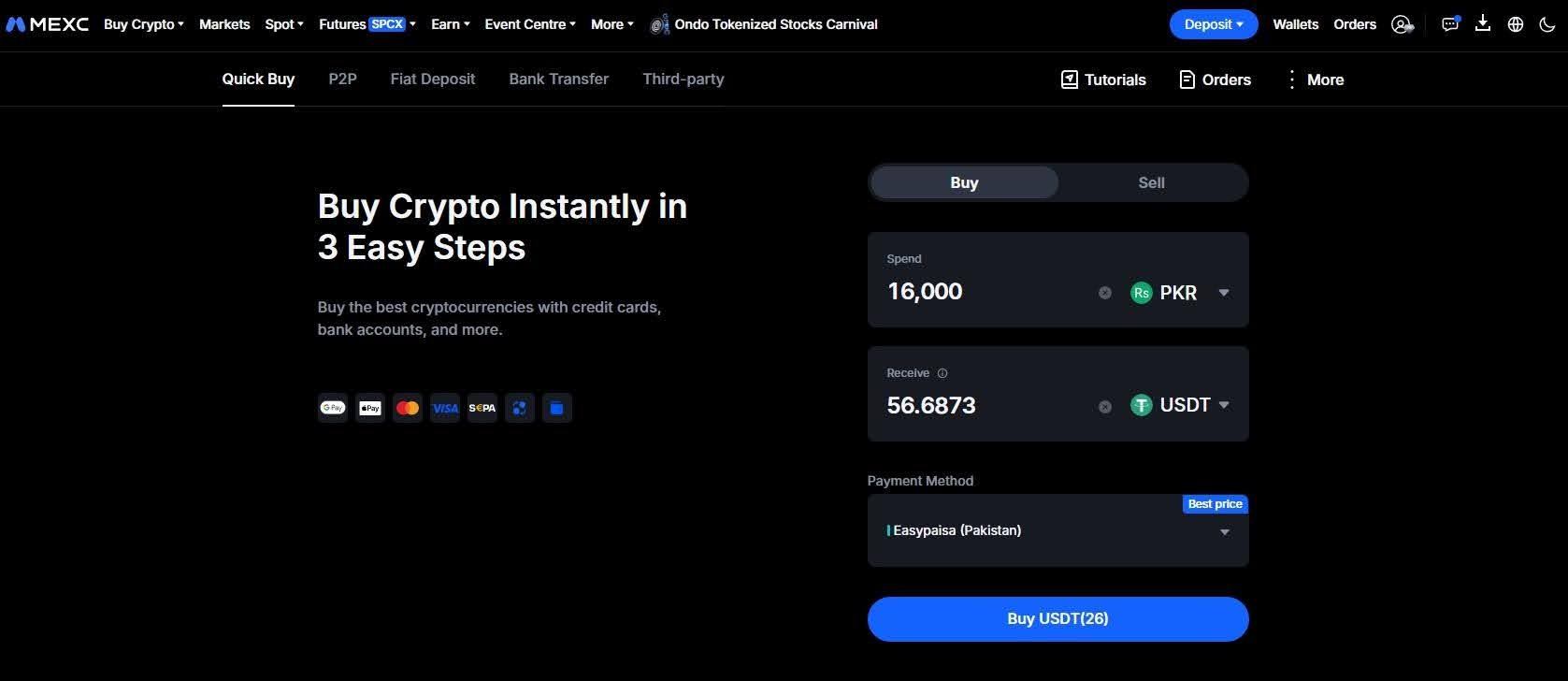
Since its establishment in 2018, MEXC has become one of the most popular cryptocurrency exchanges worldwide. While its services are expansive, it is unavailable to users in the United States and lacks detailed licensing disclosures.
The exchange supports over 2,500 cryptocurrencies and offers features like staking, spot trading, and high-leverage futures trading. Fiat deposits can be made via credit or debit cards. The platform’s fees are highly competitive, offering no maker fees and low taker fees.
Pros
-
An extensive selection of over 1,500 cryptocurrencies
-
Early listings of emerging projects
-
Competitive fee structure (0.2% standard)
-
No mandatory KYC for basic accounts
-
Multiple earning products (staking, Savings, etc.)
-
Futures trading with up to 200x leverage
Cons
-
Not available to US customers
-
Less established reputation than major exchanges
-
Lower liquidity for some trading pairs
-
Limited regulatory clarity
-
Complex interface for beginners
-
Customer service language barriers
- Shiba Inu
- Bitcoin
-
PAX Gold
72
No result
- English
- Turkish
-
Vietnamese
5
No result
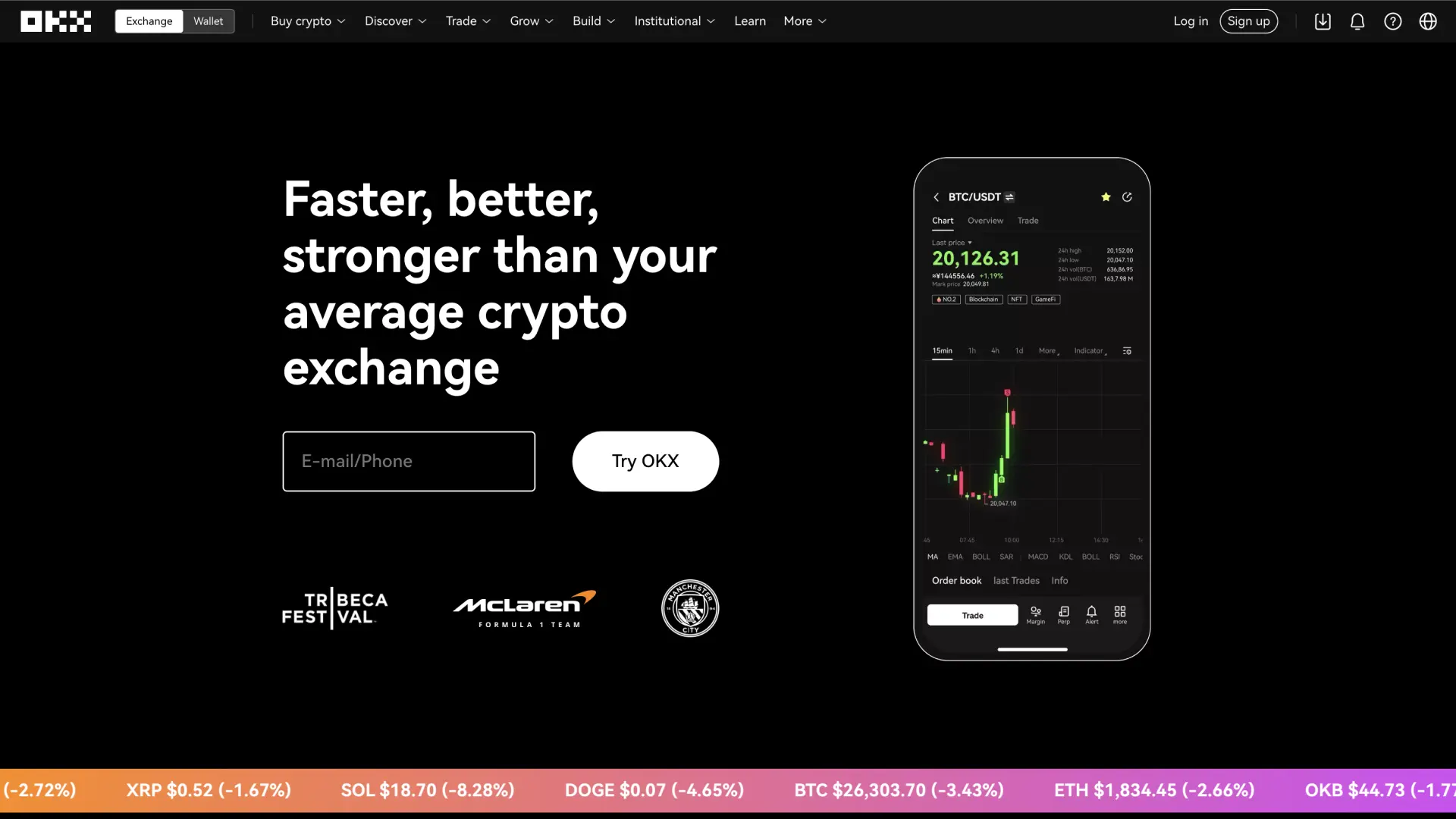
OKX, a leading name in cryptocurrency trading, was established in 2013. Known for its versatility, the platform offers access to over 350 cryptocurrencies and numerous trading features, although it is not available to US users.
Users can trade spot, futures, and options with leverage or engage in staking and bot trading. Fiat deposits are supported in various currencies through several payment options. OKX’s tiered fee structure provides discounts to high-volume traders.
Pros
-
Extensive product offering beyond spot trading (futures, options, DeFi)
-
Competitive fee structure (0.08% maker/0.1% taker for spot)
-
High liquidity for most trading pairs
-
Advanced trading features, including copy trading
-
Over 350 cryptocurrencies available
-
Strong mobile app functionality
Cons
-
Not available to US customers
-
Complex interface that can intimidate newcomers
-
Mixed reputation for customer service
-
Regulatory concerns in some jurisdictions
-
Withdrawal limits without full verification
- Bitcoin
- Ethereum
-
Tether
90
No result
- English

BTCC Crypto Exchange, originating in China in 2011, is one of the longest-standing platforms in the cryptocurrency industry, offering a diverse range of trading pairs and financial services. BTCC prioritizes privacy by implementing strict security measures, including advanced encryption protocols and secure storage solutions.
- Ethereum
- Tether
-
USD Coin
164
No result
- English
How “Zero Fee” Exchanges Make Money

An exchange is a business. It must make money to fund its marketing, development, and daily operations. This would be impossible with an entirely free crypto trading platform. So, even ‘no-fee’ crypto exchanges have hidden costs, but what are they?
1. Spread
If you’re wondering how exchanges make money, trading spreads are the primary avenue (after traditional maker/taker fees). Most exchanges charge a spread (sometimes called a bid-ask spread). This fee is the difference between the current buy (the highest amount a buyer will pay) and the sell prices (the lowest amount a seller will accept).
While many platforms charge a spread, a crypto exchange with no fees sometimes artificially widens the gap between buyers and sellers to increase earnings. As a result, users get a slightly worse price compared to the actual spot value whenever they place a trade.
To help users understand how crypto exchanges derive revenue from spread fees, we’ll include this example:
If Bitcoin’s market price is $110,000, a zero-fee crypto exchange might buy it from you for $109,000 and sell it to a buyer for $111,000, earning a $2,000 profit. This equals a 1.8% bid-ask spread, with buyers paying and sellers receiving roughly 0.9% above or below the market price.
2. Subscriptions or Premium Tiers
Other than crypto exchange spreads, trading platforms generate revenue through subscriptions and premium tiers. Programs like Coinbase One ($4.99 to $199.999 monthly) and Kraken+ ($4.99 monthly) offer lower fees or waive them entirely for a fixed monthly subscription.
While these subscriptions seem to provide immense value, particularly for high-volume traders, they come with key caveats. For example:
- Kraken+ only waives fees on trading volumes of up to $10,000 ($20,000 during a temporary promotion).
- Coinbase One offers zero fees on $500, $10,000, or unlimited volume, depending on subscription tier. Moreover, it doesn’t extend to Coinbase Advanced Trade, and a spread still applies.
While these premium subscriptions provide some value, their strict limits and terms ensure that the exchange can still profit significantly from user trades.
3. Higher-Margin Products
Another way that zero-commission crypto trading exchanges generate fee revenue is by promoting products like futures trading, crypto loans, or staking, where the platform earns more money than spot trading.
An exchange might draw users in by offering zero-commission spot trading, but push leverage trading via competitions or incentives, as this is where the platform makes its money. The same applies to staking, where exchanges commonly take a 30% commission of user earnings.
Other higher-fee products that exchanges offer include margin trading and crypto loans/lending. These products might not have large commissions, but they involve interest and extra charges for holding positions overnight, which can be challenging to account for if you’re not precise in your trades.
4. Payment for Order Flow (PFOF)
Alternatively, some exchanges utilize a Payment for Order Flow (PFOF) model. Popular among traditional brokers, this model involves selling user order data to specialized market makers, which execute trades on the exchange’s behalf. Often, the market maker charges low or no fees, but earns money via the spread.
The PFOF model has some disadvantages. Although it’s popular in traditional finance and enables brokers to offer zero-commission trades, it creates a conflict of interest: the exchange is incentivized to sell to the highest bidder, not to the firm offering users the best execution rates.
Know-Your-Customer (KYC) free crypto exchanges are less regulated and transparent than traditional brokers. This has contributed to accusations that certain no-fee crypto exchanges sell off user order flows without declaring it or to firms associated with the exchange, enabling counter-trading against users.
How Do The Best Zero-Fee Crypto Exchanges Compare?
Having a clear outline of how each no-fee crypto exchange compares makes it significantly easier to make an informed decision about which best suits your needs.
| Exchange | Zero-Fee Model | Trading Fees (Maker/Taker) | Spread Fees | Extra Costs | Main Catch |
|---|---|---|---|---|---|
| MEXC | Zero fees on 2,503 pairs | 0% / 0.05% | Minimal | No | Fees apply to USDT pairs, which are the most common |
| Binance | Fee-free express and standard P2P trades | 0.1% / 0.1% | Minimal | No | Fees for certain assets on the P2P zone (0.35% for USDT) |
| Cryptonex | N/A (almost zero fees) | 0.01% / 0.01% | Minimal | No | Limited assets and features |
| OKX | Zero P2P fees, five fee-free stablecoin pairs | 0.08% / 0.1% | Minimal | No | OKB fee reduction no longer available |
| Bybit | Zero fees on seven USDT and USDC pairs, zero P2P fees | 0.1% / 0.1% | Minimal | No | Only stablecoins can be traded for free on the spot market |
| Bitget | Zero P2P fees, zero maker fees at max volume discount | 0.1% / 0.1% | Minimal | No | Fees apply to all spot and futures trades |
| Phemex | Fee-free fiat deposits, zero P2P fees | 0.1% / 0.1% | Minimal | No | Fees apply to trades on the spot and futures markets |
| WEEX | Zero P2P trading fees | 0.1% / 0.1% | Minimal | No | VIP discounts require WXT holdings and 30-day spot volume |
| CoinSpot | Zero-commission swaps, fee-free AUD deposits | 0.1% / 0.1% | Minimal (swaps) | No | High fees for take profit, stop loss, or limit orders |
| P2B | Zero fees on crypto deposits | 0.2% / 0.2% | Minimal | No | Low volume on many assets |
How to Lower Your Trading Costs

Using a free crypto exchange app is ideal, but as we mentioned, they sometimes add additional charges. As a result, it can be more effective to use a slightly more expensive platform and utilize a few strategies to attain lower crypto fees. Some of the top techniques include:.
1. Maker/Taker Fees
When discussing low-cost exchanges, maker/taker fees must be explained. They’re one of the easiest ways to reduce or increase your trading fees, so familiarize yourself with them.
Maker positions (limit orders) add liquidity to the exchange’s order book (record of trades), enhancing the platform’s ability to execute trades with minimal slippage (the amount an asset’s price can change by during a trade) quickly.
Taker positions (market orders) remove liquidity from the order book, which is negative for the exchange as it impacts its ability to process trades (particularly large ones) efficiently and fairly.
Because maker orders benefit exchanges, they’re typically cheaper than taker orders, which are a detriment. The difference between the two order types can be significant. On Coinbase, maker orders cost 0.60%, while taker orders are double the cost at 1.20%.
Using maker orders instead of takers can be one of the simplest and most effective trading strategies for lowering crypto fees. Other than taking slightly longer to place, there is almost no disadvantage to using maker orders, and with them offering fee discounts as high as 50%, there’s no reason not to take advantage.
2. Network/Exchange Fees
It helps to understand the fees charged when depositing or withdrawing crypto to/from an exchange. Some charge for crypto deposits/withdrawals, others offer them for free. However, users must pay a blockchain network fee (gas fee) regardless.
The blockchain network fee is paid to miners/stakers who validate crypto transactions. The cost will vary by asset. It’s entirely independent of the exchange or trading fees, while network congestion and market conditions dictate it.
Some exchanges charge a flat withdrawal fee that accounts for the network cost, but adds a premium on top. If you’re looking for the cheapest fee crypto exchanges, select one with no additional withdrawal costs or a platform as close as possible to the standard network price.
Balancing Cost, Security, and Features
Choosing an exchange is a crucial decision. However, instead of getting carried away searching for zero-fee crypto platforms, you should balance cost, security, features, and the user experience. We have a few tips to help you select the right platform for your needs:
1. Trader Profile: Beginner vs. Pro
Before you rush to choose a particular platform because it’s cheap or offers fee-free withdrawals, you should pause to consider what you want from an exchange. Consider your experience level and identify which features would benefit you the most.
It can help you to make a list of your requirements because key features, such as futures trading, crypto bots, or advanced staking products, are not available on every exchange. When you understand what features you can’t live without, filtering out irrelevant or substandard platforms is easier.
Generally, if you’re a beginner aiming to make a few trades or investments, you should prioritize easy-to-use zero-commission exchanges. However, if you’re an experienced trader seeking advanced features, all-in-one platforms with tiered volume-based discounts and rebates for maker orders are likely the better option.
2. Your Funds Are Not Always Your Own
Balancing security vs. fees is key to a positive crypto experience. If an exchange has been hacked multiple times or lacks robust user protections, it should be avoided, even if it’s the cheapest fee crypto exchange on the market.
Whether using a zero-fee crypto exchange or a premium alternative, your funds are not fully secure on a Centralized Exchange (CEX). They use custodial wallets, so users can’t access the associated private keys or seed phrase to recover the wallet.
On the other hand, a Decentralized Exchange (DEX) can connect directly to your crypto wallet, allowing you to choose the most secure option. Non-custodial wallets like MetaMask or Trust Wallet provide complete ownership over crypto assets, so using one alongside a DEX is more secure than a centralized low-fee exchange.
Are there truly ‘Zero Fee’ Crypto Exchanges?
This guide to zero-fee crypto exchanges provides a fee summary for notable exchanges, covering key aspects like how low-fee exchanges make money, whether they can be truly ‘low-fee’, how users can reduce their expenses, and some techniques for selecting the best exchange.
Our low-fee crypto trading conclusion is that while many exchanges claim to have zero commission or zero fees, the savvy investor understands that this is just a marketing term, and the ‘savings’ are recouped through other avenues, such as spread or staking fees.
Selecting a crypto exchange is a time-consuming process that must be done correctly. Instead of opting for the cheapest option, you should use the information in this guide to find one that best matches your trading style and goals.
All the platforms we’ve discussed are solid, but MEXC was the most well-rounded, with the best blend of low fees, security, assets, ease of use, and trading capabilities. Check it out today.
FAQs
Are crypto withdrawal fees also zero?
Crypto withdrawal fees vary between different assets, networks, and exchanges. Zero-fee exchanges generally offer competitively priced withdrawals, but it’s best to double-check beforehand. Users must cover network fees when sending a crypto transaction, so withdrawals are rarely free.
Is "zero fee" better than a low-fee exchange with a clear maker/taker model?
Whether a zero-fee model outshines a regular low-fee exchange will depend on your preferences. Typically, low-fee platforms with volume-based discounts can be extremely cheap or provide rebates on maker orders if you transact high volumes. However, the simplicity of zero-fee models can provide greater value for beginners or people trading smaller positions.