- Lowest Fee Crypto Exchanges Summary
- The Top Crypto Exchanges with the Lowest Fees
- What are the Fees for Crypto Exchange?
- Are Decentralized Exchanges Cheaper?
- How to Lower Your Trading Fees
- Choosing the Right Low-Fee Exchange for You
- Crypto Fees & Taxes – How They Affect Each Other
- Crypto Exchange Fees – Compared
- Conclusion
- FAQs: Your Low-Fee Exchange Questions Answered
6 Lowest Fee Crypto Exchanges in 2026


- When you click links on this page, we may earn an affiliate commission. By using this website you agree to our terms and conditions and privacy policy.
- Participation in online gambling may be illegal in your country and is subject to age restrictions (18, 19, or 21, depending on the jurisdiction). Verify legality and age requirements before participating. Learn more
No one will judge you for choosing to go for a low fee crypto exchange, in fact, some of the best crypto exchanges use low fees as a way to keep users like you invested in their platform. Crypto fees are one of the most crucial aspects to consider when selecting an exchange.
High trading costs directly impact your earnings and can add up quickly if you’re an active trader or make high-value investments. Minimizing expenses is crucial, but shouldn’t be prioritized at the expense of other key aspects, like security.
Our guide will examine some of the market’s lowest-fee crypto exchanges, highlighting each’s pros and cons. We’ll discuss different types of trading fees, share strategies for lowering your expenses, and provide some assistance in choosing the best exchange for your purposes.
Lowest Fee Crypto Exchanges Summary
To understand our selection process for the lowest fee crypto exchanges, you need to know what it means for a crypto exchange to offer low fees. The table below is a summary.
| Criteria | Explainer |
| Most common fee type | The maker/taker structure |
| Average Fees | 0.1% is typical on advanced mainstream exchanges like Binance and Bybit |
| Best for high-volume traders | Exchanges that offer volume-based discounts and rebates for particularly high volumes |
| Best for beginners | Platforms that balance simplicity, fees, and the user experience |
| How to reduce trading costs | Use limit orders instead of makers, concentrate volume onto a single platform, and pay fees using an exchange’s native token |
The Top Crypto Exchanges with the Lowest Fees



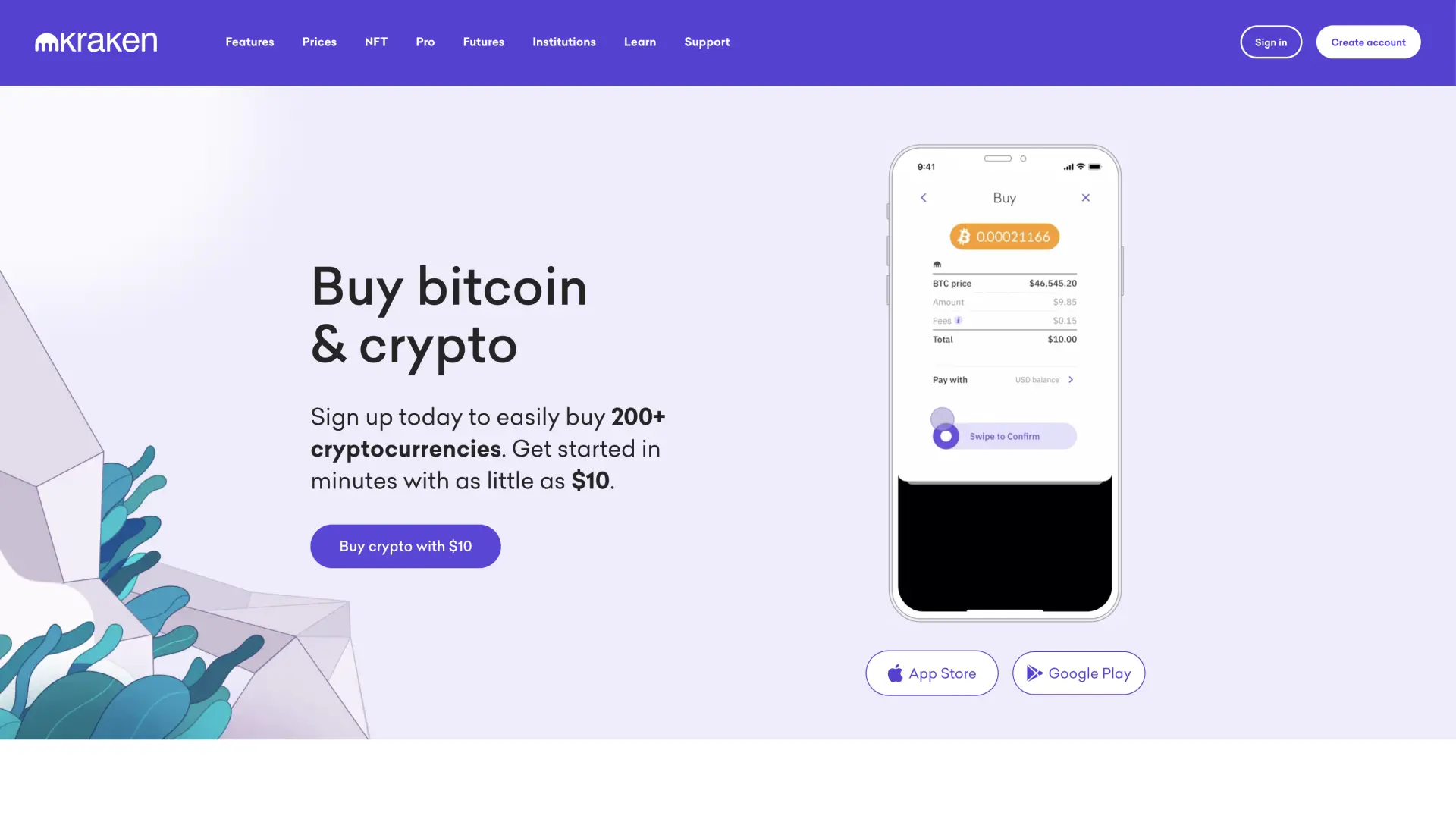
Launched in 2013, Kraken is a US-based crypto exchange known for its robust security measures and consistent performance. With billions in daily trading volumes, it’s a go-to choice for both novice and experienced traders worldwide.
Kraken supports a wide variety of cryptocurrencies—more than 300—and offers trading options like spot trading, margin trading with up to x5 leverage, and futures trading with leverage up to x50. The platform also provides staking opportunities for users looking to earn a passive income.
Deposits are supported in six major fiat currencies via multiple payment methods. Kraken’s transparent fee structure rewards high-volume traders with lower rates.
Pros
-
Strong security focus with no major breaches in its operating history
-
Competitive fee structure (maker 0.16%/taker 0.26%, decreasing with volume)
-
Over 200 cryptocurrencies available
-
Advanced trading features, including margin trading and futures
-
Excellent customer service reputation
-
Proof of reserves program for transparency
Cons
-
Interface not as beginner-friendly as competitors
-
Fiat deposit methods are more limited than some exchanges
-
The verification process can be lengthy
-
Mobile app functionality is not as robust as the desktop version
- Bitcoin
- Ethereum
-
Tether
83
No result
- Spanish
- English
-
French
4
No result
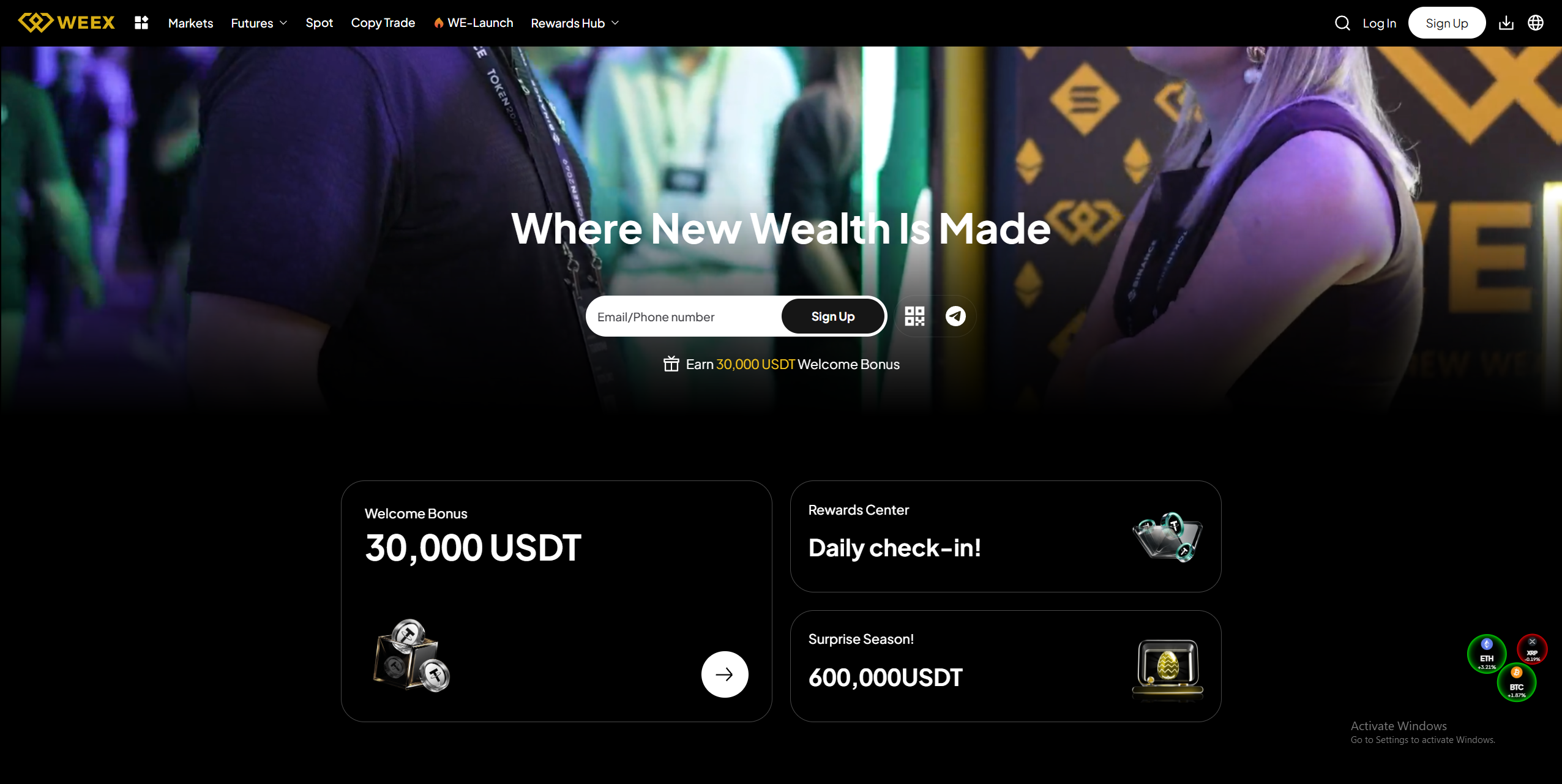
WEEX is a global crypto exchange founded in 2018 that serves more than 2 million users. It offers multiple trading options, including spot and futures markets. However, users are restricted to using crypto for payments and withdrawals, as they cannot buy with or deposit fiat currency. The exchange is registered as a Money Service Business in Canada and the US.
While WEEX is a relatively bare-bones exchange in terms of features, it hosts 971 cryptocurrencies and offers copy and demo trading functionality. It also has a rewards hub offering various trading and airdrop promotions. WEEX offers zero maker fees and 0.1% taker fees on most trading pairs. However, some are subject to a 0.1% maker order fee.
Pros
-
WEEX users can access up to 200x leverage on certain assets
-
Easy-to-navigate platform makes onboarding simpler
-
Free maker fees on many pairs (competitive fees otherwise)
-
Registered as a money service business
-
Copy and demo trading make WEEX suitable for beginners
Cons
-
No fiat currency support
-
Not many additional features outside of trading
- Bitcoin
- Ethereum
-
Tether
96
No result
- English
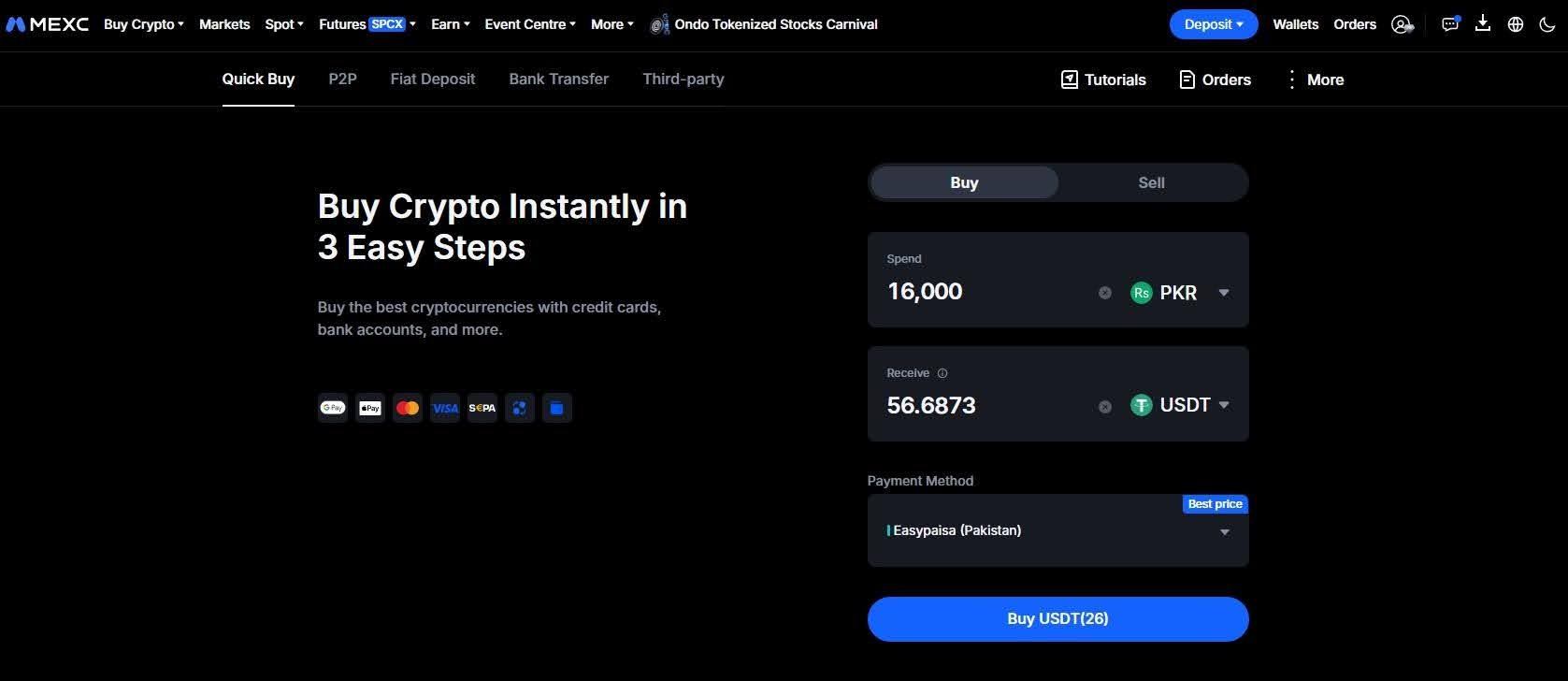
Since its establishment in 2018, MEXC has become one of the most popular cryptocurrency exchanges worldwide. While its services are expansive, it is unavailable to users in the United States and lacks detailed licensing disclosures.
The exchange supports over 2,500 cryptocurrencies and offers features like staking, spot trading, and high-leverage futures trading. Fiat deposits can be made via credit or debit cards. The platform’s fees are highly competitive, offering no maker fees and low taker fees.
Pros
-
An extensive selection of over 1,500 cryptocurrencies
-
Early listings of emerging projects
-
Competitive fee structure (0.2% standard)
-
No mandatory KYC for basic accounts
-
Multiple earning products (staking, Savings, etc.)
-
Futures trading with up to 200x leverage
Cons
-
Not available to US customers
-
Less established reputation than major exchanges
-
Lower liquidity for some trading pairs
-
Limited regulatory clarity
-
Complex interface for beginners
-
Customer service language barriers
- Shiba Inu
- Bitcoin
-
PAX Gold
72
No result
- English
- Turkish
-
Vietnamese
5
No result
Cryptonex launched back in 2017 as a blockchain-based cryptocurrency exchange that aimed to bridge traditional banking with crypto trading. The platform built its own blockchain and native CNX token while offering exchange services for various cryptocurrencies.
What makes Cryptonex different is its focus on creating a full ecosystem that includes mining, mobile apps, and payment cards, trying to make crypto more accessible for everyday use. The exchange has positioned itself as a solution for both regular trading and broader crypto adoption, though it's faced some regulatory challenges in certain regions over the years.
You'll find it offers a mix of spot trading and additional services that go beyond just basic crypto swapping.
Pros
-
Native CNX token provides trading fee discounts and staking rewards for holders
-
Mobile app available for both iOS and Android with full trading functionality
-
Multiple deposit methods, including bank transfers and credit card purchases
-
Built-in mining features allow you to earn cryptocurrencies directly through the platform
-
Referral program offers commission sharing for bringing in new users
-
Payment card integration allows you to spend crypto in real-world transactions
Cons
-
Limited availability in some countries due to regulatory restrictions
-
Lower trading volumes compared to major crypto exchange platforms
-
Support team may struggle to keep up during busy trading times
-
Fewer trading pairs are available than in larger competitors
-
CNX token value fluctuations can affect the benefits of holding it
- Bitcoin
- Ethereum
-
Tether
12
No result
- English
OKX, a leading name in cryptocurrency trading, was established in 2013. Known for its versatility, the platform offers access to over 350 cryptocurrencies and numerous trading features, although it is not available to US users.
Users can trade spot, futures, and options with leverage or engage in staking and bot trading. Fiat deposits are supported in various currencies through several payment options. OKX’s tiered fee structure provides discounts to high-volume traders.
Pros
-
Extensive product offering beyond spot trading (futures, options, DeFi)
-
Competitive fee structure (0.08% maker/0.1% taker for spot)
-
High liquidity for most trading pairs
-
Advanced trading features, including copy trading
-
Over 350 cryptocurrencies available
-
Strong mobile app functionality
Cons
-
Not available to US customers
-
Complex interface that can intimidate newcomers
-
Mixed reputation for customer service
-
Regulatory concerns in some jurisdictions
-
Withdrawal limits without full verification
- Bitcoin
- Ethereum
-
Tether
90
No result
- English

BTCC Crypto Exchange, originating in China in 2011, is one of the longest-standing platforms in the cryptocurrency industry, offering a diverse range of trading pairs and financial services. BTCC prioritizes privacy by implementing strict security measures, including advanced encryption protocols and secure storage solutions.
- Ethereum
- Tether
-
USD Coin
164
No result
- English
What are the Fees for Crypto Exchange?

Crypto exchange fees take many forms, so it can be challenging to determine precisely how much a trade costs. In addition to direct trading fees, many platforms set different prices for buy and sell orders, forming a crypto spread fee. We explain the key fee types below.
1. Maker/Taker Fees
Looking to have maker/taker fees explained? They are the most common type of charge that crypto exchanges use. They’re typically percentage-based and offer crypto trading volume discounts based on your total trade volume across the past 30 days.
To better understand this type of trading fee structure, you should learn the difference between maker and taker orders. It can sound confusing, but it’s straightforward.
A maker (limit) order involves adding liquidity to the order book (record of open trades on an exchange). Certain order types, such as limit orders, contribute liquidity as you add a certain amount of crypto at a set price to the order book.
On the other hand, a taker (market) order removes crypto from the order book. Market orders execute the current price, taking liquidity away from the order book.
Even though maker and taker orders are similar, maker fees are almost always lower than takers. This is because exchanges want to maintain liquidity to offer faster execution and less slippage (the difference between the expected trade price and the actual price it executes at).
Every exchange charges different rates, but around 0.1% is standard for maker orders and 0.1% to 0.25% is typical for taker orders. On high-fee exchanges like Coinbase (0.60% / 1.20%), the difference between maker/taker prices is more apparent.
2. Spreads and Price Slippage
Even if a crypto exchange boasts zero trading fees, it likely charges a hidden fee called a spread (the difference between buy and sell prices). Unlike maker/taker fees, spreads are usually variable and rarely transparently displayed, making them more challenging to account for.
Spread fees are often higher in volatile markets, as prices move rapidly, increasing the exchange/market maker’s need for a substantial risk buffer. Spread fees can significantly eat into profits, particularly in short-term day trades, as the asset must rise more than the volume of the spread gap before you enter a profit.
3. Deposit, Withdrawal, and Other Fees
Trading fees are only one side of the coin. Users must be aware of a number of other charges when picking the best low-fee crypto exchange.
- Deposit Fees: Exchanges charge a fee for deposits. Crypto is usually free, but fiat often incurs a charge ranging from 1% to 3.99%. Bank transfers are the cheapest payment method, while credit/debit cards are the most expensive.
- Withdrawal Fees: Exchanges typically charge a fee for withdrawing your assets. Some waive fiat withdrawal fees if you use a preferred method, but wire or SWIFT transfers can cost around $10 to $30. Crypto withdrawal costs vary by asset to cover gas fees (although they’re usually priced at a premium above the gas price).
- Network Fees: Whenever you send a crypto transaction, you must cover network fees. These fees reward miners or stakers who validate crypto transactions and keep the network running smoothly.
- Fiat Conversion Fees: Some exchanges, like eToro, use a specific account currency, like the dollar. If you deposit a different fiat currency, the exchange will convert your money to their preferred currency. During this process, you’ll likely pay a premium on the current exchange rate.
Are Decentralized Exchanges Cheaper?
Although a DEX may allow you to swap directly from your wallet without having to use the platform itself, there are other fees that may apply besides the deposit and withdrawal ones. These fees are usually:
- Swap fees: A percentage of each trade that goes to the liquidity providers. Usually between 0.01% to 1%. Stablecoins have typically lower fees, while more volatile coins have higher ones.
- Gas fee: The typical few dollars paid to the network you’re using. Most often seen with Ethereum or Solana chain swaps.
Let’s look at an example for a $1,000 swap. On average that’s a 0.3% swap fee + around $10 in gas fees, so overall you’re paying around $13-$15 for such a swap on a DEX.
They tend to be a bit more expensive than CEX fees, but DEX transactions make sense when the coin you want is not listed on a CEX.
How to Lower Your Trading Fees

Even if you make an effort to choose the lowest fee crypto exchange, you can employ specific trading strategies for crypto fee discounts. These techniques work on most exchanges, so they’re handy to remember.
1. Use Limit Orders to Become a “Maker”
Exchanges with trading fees typically have different rates for maker and taker orders. This is because maker orders add liquidity to the order book (benefiting the exchange), while taker orders remove it (a detriment to the platform).
Exchanges offer significantly lower crypto fees for maker orders to incentivize people providing liquidity. On Coinbase, the standard difference is 0.6%, meaning you lose $60 from every $1,000 just by using taker (market) orders.
Instead of solely using ‘market’ orders, which execute at the current price (so costs can be higher than they first appear), you can utilize limit orders. They execute at a fixed price, so costs are predictable, and you’re rewarded with lower fees for providing liquidity. Over time, utilizing maker orders can yield substantial savings, particularly for leverage or high-volume traders.
2. Leverage Native Tokens and Volume Tiers
If you’re looking for a cheap crypto trading platform, you must check whether native token discounts are available.
Many high-profile exchanges, including OKX (OKB), Binance (BNB), and Crypto.com (CRO), have created native tokens to raise funds, enhance the platform, or reward supporters. These tokens have several benefits, but the most notable is a trading fee discount of roughly 25% to 50% for paying fees using the token..
Another method of significantly reducing fees is to concentrate your trades on a single platform to achieve higher VIP or volume discount tiers, which provide lower crypto fees. Many platforms offer spot and derivatives discounts to users who achieve trading volumes above a certain threshold.
In extreme circumstances, where users hit high 30-day spot volume ($500,000 to $1 million+), maker fees can be waived entirely. Some platforms even offer fee rebates, paying you for placing a trade. For the average trader, discounts will be lower, around 10% to 30%.
While other fee reduction methods help, the crypto exchange with the lowest trading fees will offer discounts for native token usage and high volume. Look out for platforms operating similar schemes to minimize your trading expenses.
3. Withdrawals and Deposits
You must fund an account to trade, so withdrawal and deposit fees are inevitable. However, they’re commonly overlooked as a result. Certain cryptocurrencies, networks, and payment methods can be expensive. For example, wire transfers often cost between $10 and $30, which could seriously eat into smaller investors’ earnings.
Deposit or withdraw crypto via low-cost assets like XRP or Litecoin to reduce costs. The lowest withdrawal fee crypto exchanges can be surprising. Always check withdrawal costs beforehand to ensure the platform is reasonably priced. Moreover, reviewing how the fees vary by network can help you find cheaper alternatives.
For fiat, avoid credit/debit cards when possible. They’re the most expensive deposit method, costing up to 3.99%. Instead, opt for cost-effective payment methods such as direct bank transfers, FPS (UK), SEPA (Europe), and ACH payments (USA).
Avoid Inactivity Fees
Many exchanges charge an inactivity fee if you haven’t made a trade for more than 6 or 12 months. It’s usually a cost to maintain your account without taking the spread from your active trading as a substitute.
The exchanges usually take this fee until your account is fully empty, so make sure you either log-in to your accounts every now and then to make a trade, or move your assets out of your dormant accounts.
Choosing the Right Low-Fee Exchange for You
Choosing an exchange can be challenging. You must balance security vs. fees and aim for a well-rounded, cost-effective, safe platform. It can be easy to get caught up prioritizing low costs, but selecting the right exchange means considering your individual needs, not just seeking the lowest fee crypto exchanges.
1. Trader Profile: Beginner vs. Pro
Your experience with trading and desired features directly impact which platforms are well-suited to your needs. Generally, advanced trading platforms have lower fees than those catering mostly to beginners.
Take Bybit and Coinbase as examples. They’re two of the best-known and most widely used crypto trading platforms. However, Bybit offers advanced features designed for experienced users and boasts fees of 0.1. On the other hand, Coinbase is tailored primarily for beginners, but charges 0.60% / 1.20%.
For most people, simplicity, features, and low costs should be balanced. Some of the lowest trading fee crypto exchanges are the most advanced, but a complex interface and unusual tools could confuse novices. Similarly, the easiest-to-use exchanges often charge excessive rates or lack key features.
Some platforms, like Binance and Kraken, blend advanced features, competitive prices, and beginner-focused modes to cater to a wide range of users. Both platforms let users switch between advanced and basic features, ensuring a solid user experience regardless of user knowledge levels.
2. Balancing Cost with Security and Features
The cheapest exchanges must cut costs somewhere to pass on the savings to users. Often, this means the lowest fee crypto exchanges sacrifice developing security features, such as anti-phishing codes and withdrawal address allowlists. Avoid platforms that lure you in with low costs but lack typical security features, as they can be unsafe.
Some exchanges have low fees, good security features, and a solid user experience. However, they can cause more problems than they are worth if they lack robust customer support channels or only offer a handful of cryptos. There’s no point using an exchange if you cannot get help or trade your desired assets.
Balance is essential in life and the crypto exchange selection process. As such, consider your personal requirements, prioritize them, and choose a platform that best suits you.
Crypto Fees & Taxes – How They Affect Each Other
In the US and many other countries, fees are part of every crypto transaction. This means that no matter if you’re buying or selling, your bottom line is not the same with fees involved, so the taxes are different too. For example, when you buy, the fees are attributed to costs, and when you sell they’re attributed to proceeds.
This affects your taxable gain and deductible loss.
For example, let’s say you buy 0.1 BTC at $6,000 with a debit card and pay a 1.5% fee. Then you sell it for $8,000 and pay a 0.5% fee.
That means that your taxable gain is $1,870 due to the fees instead of $2,000 without the fees.
But rates apply here as well. At a 24% short term rate it saves around $31, while at a 15% long term rate, it saves around $20. Even though this may all seem insignificant, if you’re trading hundreds of times a year, it can all add up significantly.
Crypto-to-Crypto Swaps are Also Taxable
In the US, the UK and many other countries, crypto swaps are also considered as selling or trading. Which means that any monetary gain you get from swapping is also considered in your overall taxes. This, naturally includes any trading fees or gas fees you pay in the process.
Make sure you keep record of every fee though, especially the ones you’re charged by networks for moving your coins around in wallets, as those can be considered as small disposals, and therefore ignored in your tax filings.
Crypto Exchange Fees – Compared
| Exchange Name | Maker Fees | Taker Fees | Volume Discount | Native Token Discount | Notes |
|---|---|---|---|---|---|
| MEXC | 0% | 0% to 0.05% | No | Yes (up to 50%) | Extremely low trading fees |
| Cryptonex | 0.01% | 0.01% | Yes | No | Limited features and assets |
| OKX | 0.08% | 0.1% | Yes | No (previously offered up to 40% discount) | Region-specific fees |
| Bitget | 0.1% | 0.1% | Yes | Yes (0.08% / 0.08%) | GEO-restricted features |
| Binance | 0.1% | 0.1% | Yes | Yes (up to 25%) | World’s most popular exchange |
| Phemex | 0.1% | 0.1% | Yes | Yes (20% for spot, 10% for futures) | Zero-fee fiat deposits |
| WEEX | 0.1% | 0.1% | Yes | WEEX holdings contribute to user VIP levels | High minimum withdrawal limits |
| Bybit | 0.1% | 0.1% | Yes | 25% discount for paying in MNT | Offers spot, margin, and derivatives |
| CoinSpot | 0.1% | 1% | No | No | High fees for take profit / stop loss orders |
| P2B | 0.2% | 0.2% | Yes | No | Limited selection of assets |
Conclusion
Exchanges charge various fees for trading. These include maker/taker fees, a form of commission applied when placing a trade, and spread fees, which are the difference between buy and sell prices on an exchange. Most exchanges charge both, so they’re equally essential to understand for responsible investing.
Our crypto trading conclusion is that while seeking out the lowest-fee crypto exchanges can be tempting, this is usually not the best method of choosing a crypto platform. Instead, you should balance fees, features, security, customer support, and ease of use to ensure you have and can maintain a solid user experience.
For a crypto trading fees summary, we recommend platforms that combine the above aspects. Bitget is ideal for high-volume traders, is excellent for beginners and offers zero-fee trading, and MEXC excels in security. Check them out today.
FAQs: Your Low-Fee Exchange Questions Answered
How do I know if I'm a maker or a taker?
Determining whether maker or taker fees apply to your order can be challenging, particularly if you’re not a regular crypto trader. An easy way of remembering is whether you’re adding (maker) or removing (taker) liquidity from the order book. Limit orders add liquidity, while market orders remove it.
Which cryptocurrency has the cheapest withdrawal fees?
Crypto withdrawal fees vary by asset, platform, and network. However, cryptos with lower gas fees tend to be cheaper to withdraw. For example, withdrawing XRP usually costs around $0.15. Some zero-fee crypto exchanges offer free BTC withdrawals via the Lightning Network, making BTC the cheapest option (as long as the Lightning Network is supported).
Do decentralized exchanges (DEXs) have lower fees?
There’s no easy answer to whether DEXs are cheaper than Centralized Exchanges (CEXs). Generally, a DEX has lower trading fees and no withdrawal costs. However, users must cover transaction fees (gas) for swaps or purchases, which can add up. Slippage and spreads on low-liquidity assets can also be high on DEXs, adding another cost.