- Key Takeaways
- Best Decentralized Exchanges in 2026
- 1. Changelly — Best for Simple Instant Swaps
- 2. NoOnes — Best for Peer-to-Peer Trading
- 3. ChangeNow — Best for Fast, No-Account Swaps
- 4. Cryptonex — Best for an All-in-One Platform
- 5. Exolix — Best for Registration-Free Swaps
- 6. dYdX — Best for Decentralized Derivatives
- 7. BitValve — Best for P2P Payment Flexibility
- 8. Blockchain.com — Best for a Regulated, Established Platform
- Why Trust Webopedia?
- What Is a Decentralized Exchange?
- How to Choose a Decentralized Exchange
- Pros and Cons of Decentralized Exchanges
- DEX vs CEX: Which Is Better?
- AMM DEXs vs DEX Aggregators
- How to Use a DEX: Step by Step
- Which DEX Is Right for You?
- Safety Tips Before Using a DEX
- Final Thoughts on the Best DEX Platforms
- Frequently Asked Questions
Best Decentralized Exchanges (DEXs) in 2026

- When you click links on this page, we may earn an affiliate commission. By using this website you agree to our terms and conditions and privacy policy.
- Participation in online gambling may be illegal in your country and is subject to age restrictions (18, 19, or 21, depending on the jurisdiction). Verify legality and age requirements before participating. Learn more
A decentralized exchange (DEX) lets you swap tokens straight from your own wallet, without handing your funds to a company first. Instead of opening an account, passing KYC, depositing crypto, and waiting on withdrawals, you connect a wallet and trade through smart contracts. That shifts control to you and, with it, responsibility.
Chain coverage, liquidity depth, routing quality, and smart contract risk vary widely from one platform to the next, and the wrong choice can mean worse prices, failed transactions, or real losses. The experts at Webopedia tested and compared DEX platforms across Ethereum, Solana, BNB Chain, Base, Arbitrum, Optimism, and other active networks to identify those that actually deliver on the fundamentals: slippage, gas costs, wallet support, aggregation, and security track record. This guide covers automated market makers (AMMs), order book DEXs, and DEX aggregators, so you can match the platform to how and where you trade.
Whether you’re swapping blue-chip DeFi assets on Ethereum or hunting early liquidity on a newer chain, the right DEX depends on where you trade, what you’re trading, and how much risk you’re willing to carry. Here’s what the data shows.
Key Takeaways
- DEXs let you trade directly from a wallet, giving you self-custody and broad DeFi access.
- The factors that matter most are liquidity, slippage, chain support, fees, routing, and security.
- AMMs use liquidity pools; aggregators scan multiple DEXs to find the best price.
- DEXs offer privacy and early token access, but they carry smart contract and scam risks.
- The best DEX for you depends on your trading needs, risk tolerance, wallet setup, and preferred chains.
Best Decentralized Exchanges in 2026










1. Changelly — Best for Simple Instant Swaps
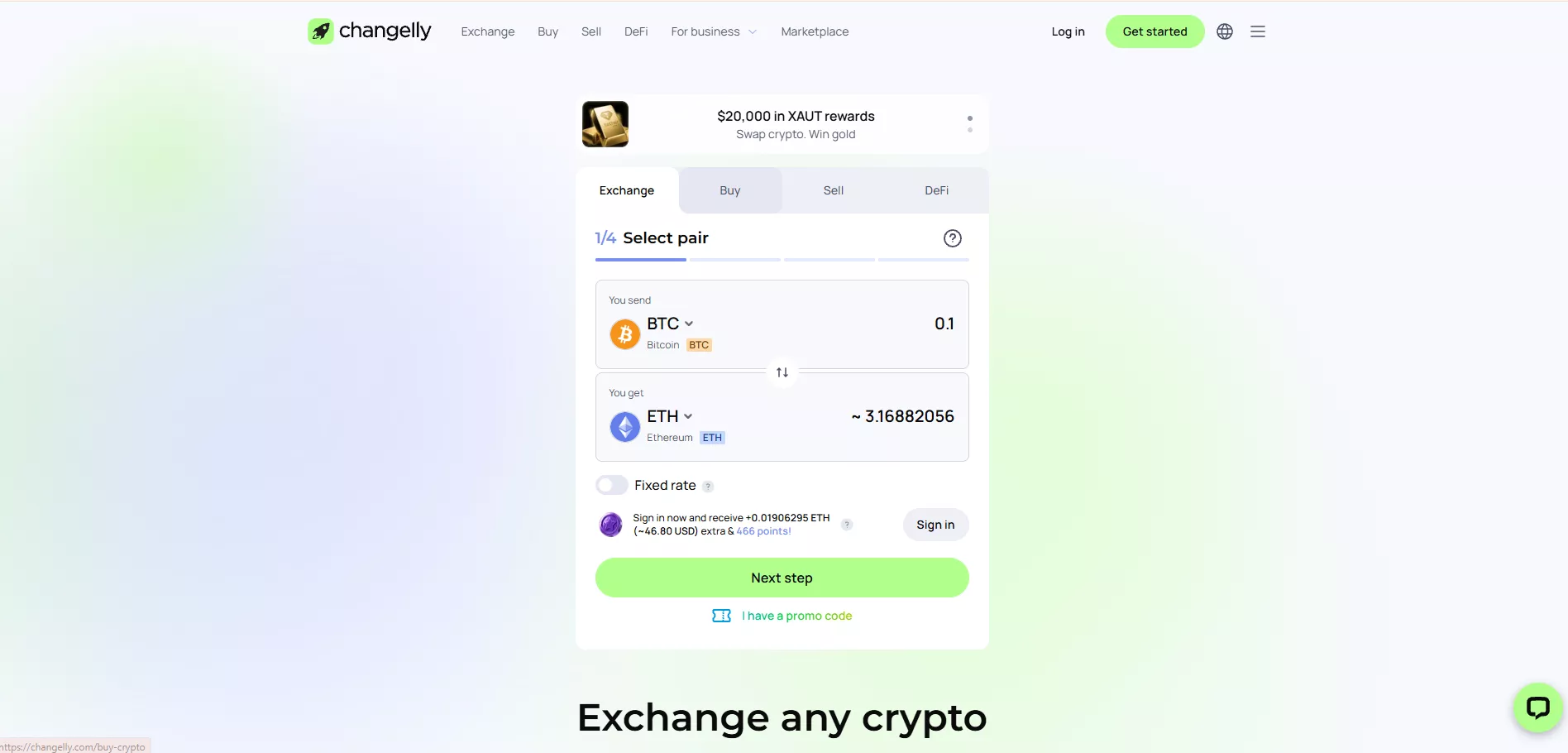
Changelly is a Czech Republic-based hybrid crypto trading platform launched in 2015. It’s built around instant swaps rather than an on-chain order book, and it layers on custodial wallet and card payment services, so you can move between fiat and crypto without touching a DeFi interface. It supports more than 20 fiat payment methods and currencies across the hundreds of coins it lists, and offers spot, OTC, and day trading. Security covers 256-bit SSL encryption and 2FA via Google Authenticator, with KYC required to raise limits.
Its strength is approachability: the swap flow is fast, the fiat rails are broad, and beginners aren’t asked to manage gas or slippage settings manually. The trade-off is that Changelly is not a true non-custodial, on-chain DEX. Rates on swaps float, a centralized company sits between you and the trade, and KYC comes into play at higher limits. It suits newcomers who want an easy way to swap and buy crypto with a card, rather than DeFi-native users chasing on-chain liquidity or early token listings.
| Field | Details |
|---|---|
| Our rating | 4.6 / 5 |
| Promotion | Special 0% service fee on all exchange transactions for one full week when you sign up with a referral link and complete a transaction |
| Fees (maker/taker) | Crypto exchange fee (floating rate), crypto selling fee, fiat-to-crypto transactions |
| Products | Spot trading, day trading, OTC trading (+2 more) |
| Cryptocurrencies | Bitcoin, Ethereum, Tether (+84 more) |
| Payment methods | Bank transfer, SEPA, Revolut (+99 more) |
| Interface languages | English, Spanish, Korean (+5 more) |
| Licenses | USA (Certified Public Accountants / CPAs) |
| Security | 256-bit SSL encryption, 2FA (Google Authenticator) |
| KYC / AML | Required to increase limits |
| Support languages | English |
| Educational resources | Blog, videos, academy (+7 more) |
2. NoOnes — Best for Peer-to-Peer Trading
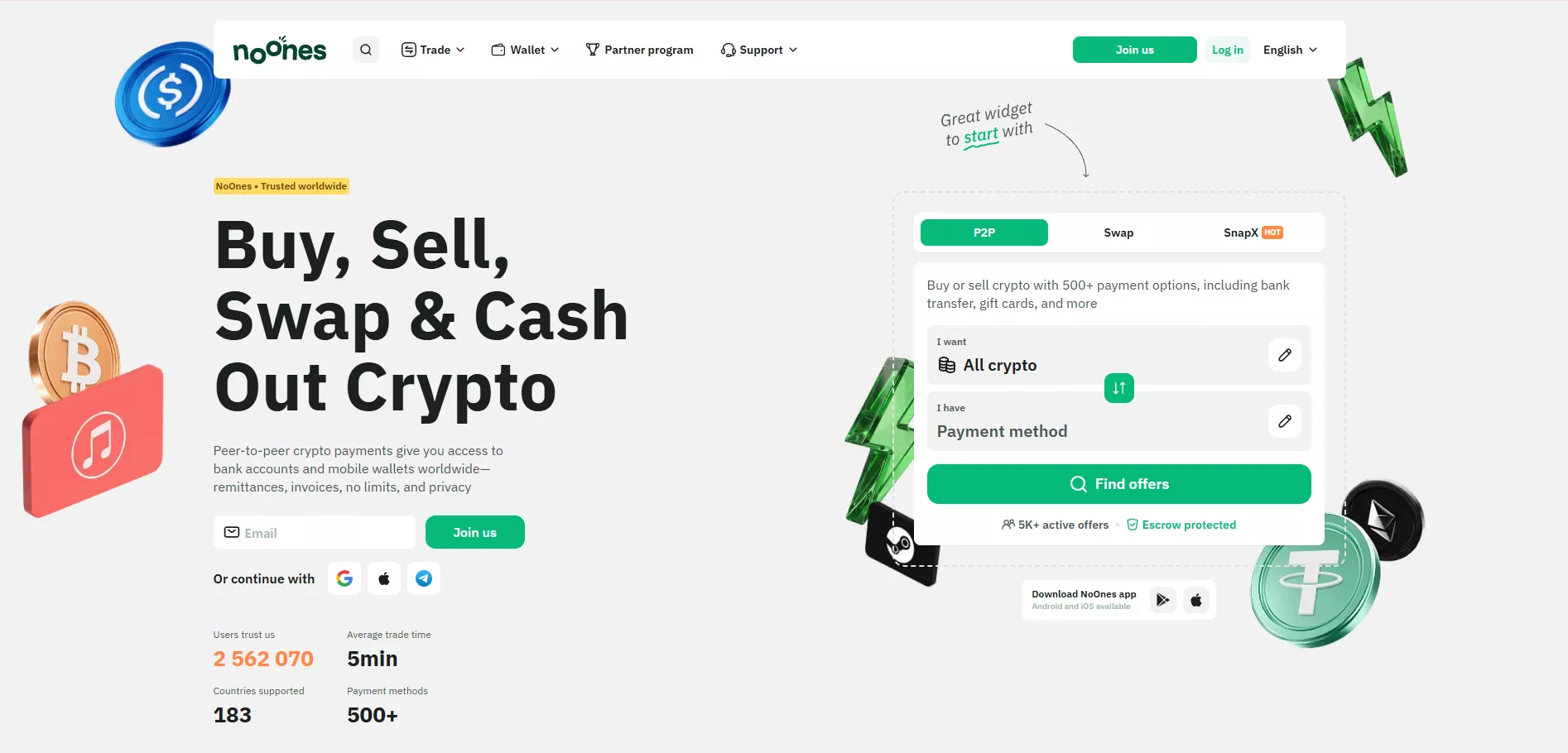
NoOnes was founded in Panama in 2023 to offer a custodial wallet, spot trading, and peer-to-peer (P2P) trading, with a stated mission to connect people across the Global South to the wider financial system. Its standout feature is its reach: more than 200 payment methods and 100 fiat currencies, making it practical for users in markets where mainstream exchanges don’t support local rails. It offers 256-bit SSL encryption, multiple 2FA options, and requires KYC to deposit crypto and increase trading limits.
For buyers who need to fund trades using local payment methods or trade directly with others, NoOnes fills a real gap. But it’s a custodial, KYC-based platform rather than a wallet-native DEX, its licensing is undisclosed, and its 3.67 rating is the lowest in this list, reflecting a thinner track record than the more established names here. It’s best suited to P2P traders and emerging-market users who value payment flexibility over self-custody or DeFi access.
| Field | Details |
|---|---|
| Our rating | 3.67 / 5 |
| Promotion | Earn 100 sats for signing up and submitting your personal info |
| Fees (maker/taker) | Trading fees, trading fees for Nigeria, deposit and withdrawal fees for external wallet (+3 more) |
| Products | Spot trading, OTC trading, peer-to-peer (+3 more) |
| Cryptocurrencies | Bitcoin, Tether, USD Coin (+8 more) |
| Payment methods | Bank transfer, SEPA, bank wire transfer (+36 more) |
| Interface languages | English, Chinese (Mandarin), Japanese (+67 more) |
| Licenses | N/A – not disclosed |
| Security | 256-bit SSL encryption, 2FA (SMS), 2FA (Google Authenticator) (+1 more) |
| KYC / AML | Required to deposit crypto and increase trading limits |
| Support languages | English, Spanish |
| Educational resources | Blog, academy, videos (+6 more) |
3. ChangeNow — Best for Fast, No-Account Swaps
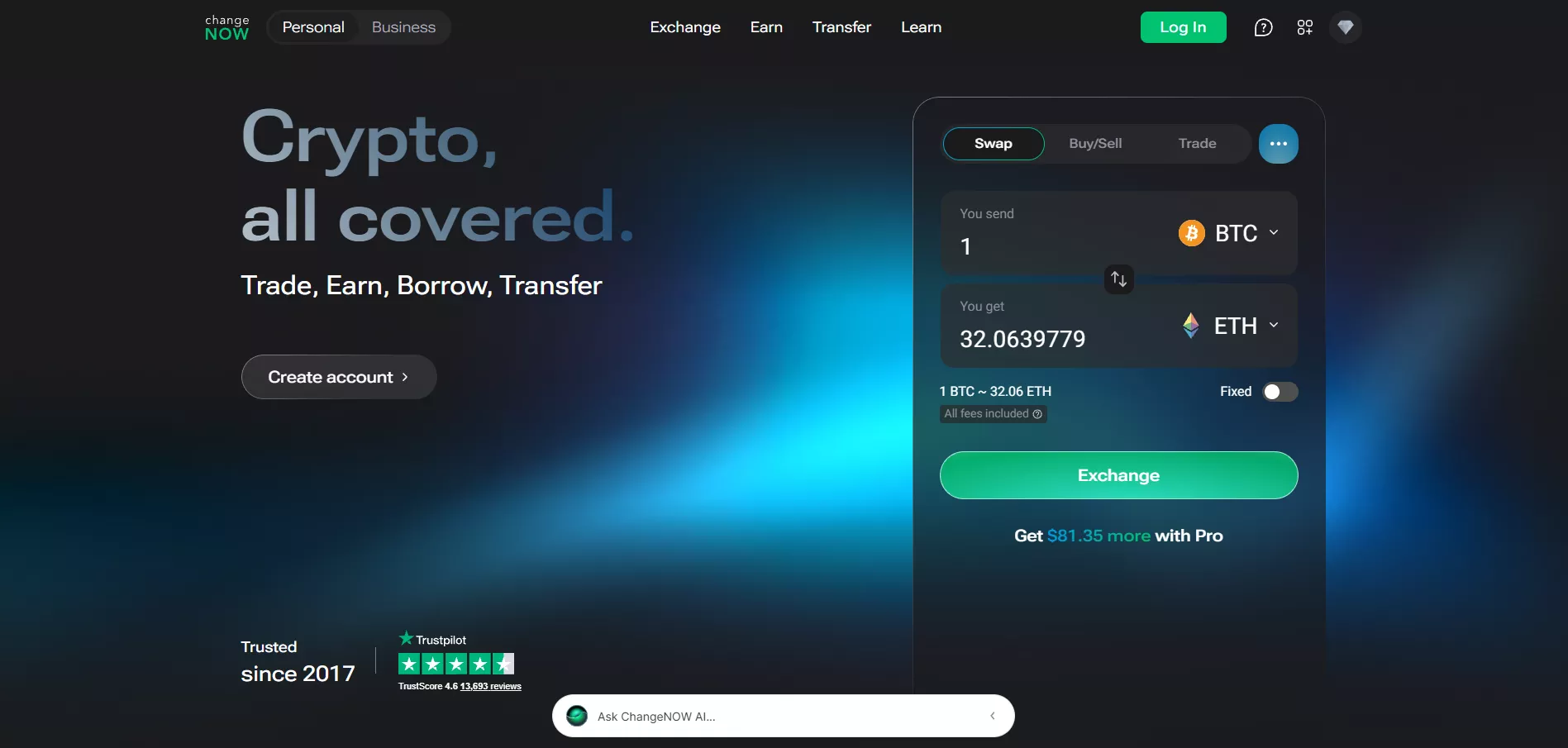
ChangeNow is one of the better-known hybrid exchanges, pairing custodial services with decentralized features like dApp integration. You can swap, buy, and sell across 220+ cryptocurrencies without creating an account, and it advertises one-minute non-custodial swaps. Around that core sits a wider toolkit: NowPayments, NowNodes, a white-label wallet that lets you launch your own non-custodial wallet, a Telegram bot, a widget, a tracker, and a native token. Fees are tiered at $0, $15, or $100 per month, and it lists no KYC requirement for standard swaps.
The appeal is speed and breadth without sign-up friction, which makes it a strong utility exchange for moving between a large range of assets. The caveat is that ChangeNow is a hybrid, not a pure AMM or order book DEX, so you’re relying on its routing rather than trading directly against on-chain liquidity pools. It suits users who want quick, private swaps across many coins and don’t need advanced DeFi trading tools.
| Field | Details |
|---|---|
| Our rating | 4 / 5 |
| Promotion | Experience a 1-minute swap on a non-custodial platform |
| Fees (maker/taker) | Subscription tiers: $0 per month, $15 per month, $100 per month |
| Products | Trade, spot trading, OTC trading (+7 more) |
| Cryptocurrencies | Bitcoin, Ethereum, Tether (+219 more) |
| Payment methods | Bank transfer, bank wire transfer, SEPA (+230 more) |
| Interface languages | Azerbaijani, Catalan, Czech (+55 more) |
| Licenses | N/A |
| Security | 256-bit SSL encryption, 2FA (Google Authenticator), 2FA (Authy) |
| KYC / AML | N/A – not required for standard swaps |
| Support languages | English |
| Educational resources | Blog, How It Works, glossary (+2 more) |
4. Cryptonex — Best for an All-in-One Platform
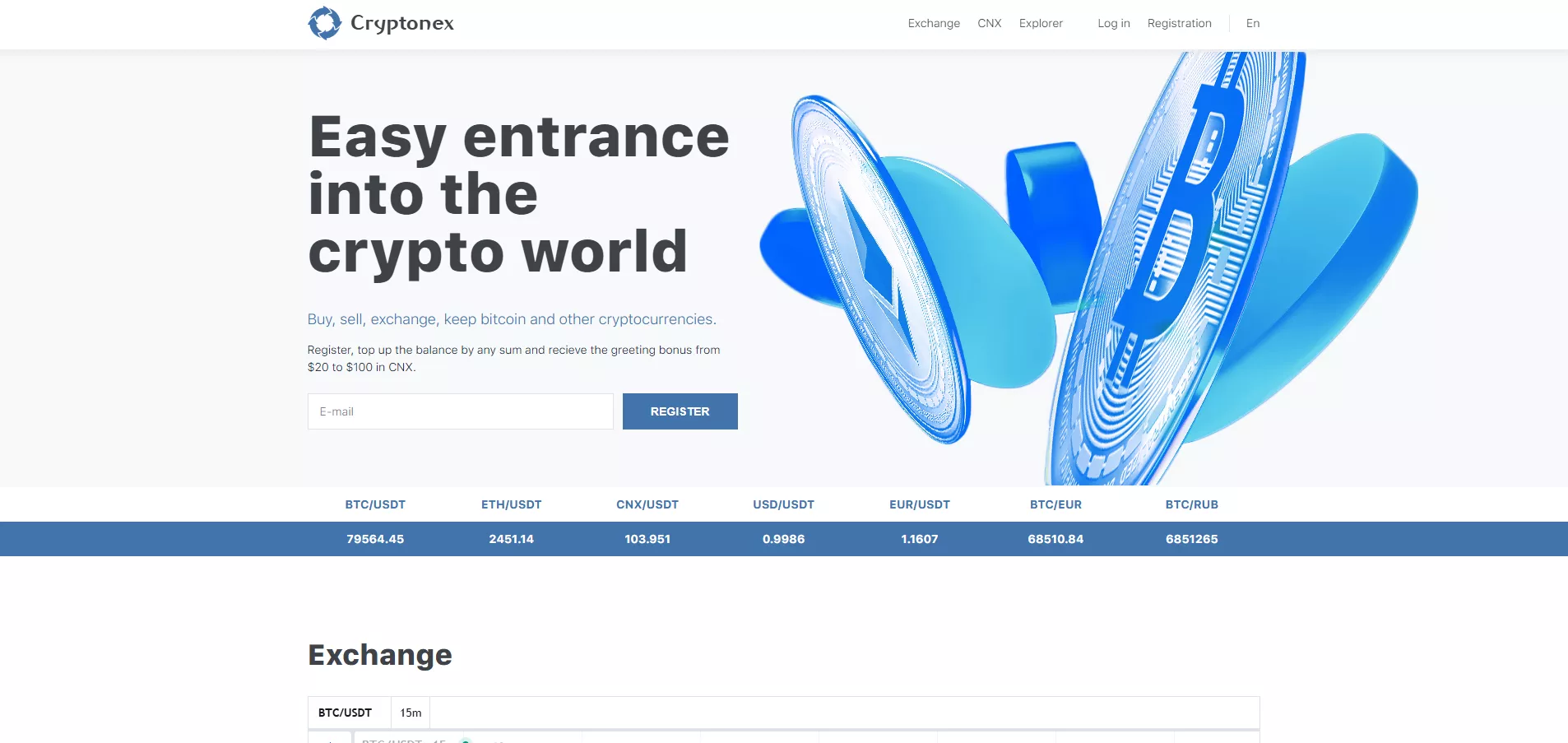
Founded in 2017 in Belize, Cryptonex positions itself as a comprehensive platform for trading digital assets, spanning spot, OTC, and P2P trading, as well as earn/stake, pay, and mining features, and a native CNX token. New users are offered a greeting bonus of $20 to $100 in CNX after registering and topping up. It supports around 15 cryptocurrencies and 22 payment methods, including Bitcoin, AdvCash, QIWI, Visa, and Mastercard.
Cryptonex is worth approaching with more caution than the higher-transparency options here. Its licensing is not disclosed, KYC/AML policy is unstated, and security disclosure extends only to SSL encryption, with no 2FA listed. Its coin selection is also comparatively small. It may suit users who specifically want a bundled trading, payments, and mining ecosystem tied to the CNX token, but the thin licensing and security disclosure make it a weaker fit for anyone prioritizing self-custody, transparency, or regulatory clarity.
| Field | Details |
|---|---|
| Our rating | 4.2 / 5 |
| Promotion | Register and top up your balance to receive a greeting bonus of $20 to $100 in CNX |
| Fees (maker/taker) | Trading fees, BTC deposit fee, BTC withdrawal fee |
| Products | Spot trading, OTC trading, P2P trading (+5 more) |
| Cryptocurrencies | Bitcoin, Ethereum, Tether (+12 more) |
| Payment methods | Bitcoin, AdvCash, QIWI (+19 more) |
| Interface languages | Russian, Portuguese, German (+12 more) |
| Licenses | N/A – not disclosed |
| Security | SSL encryption |
| KYC / AML | N/A |
| Support languages | English |
| Educational resources | N/A – not disclosed |
5. Exolix — Best for Registration-Free Swaps
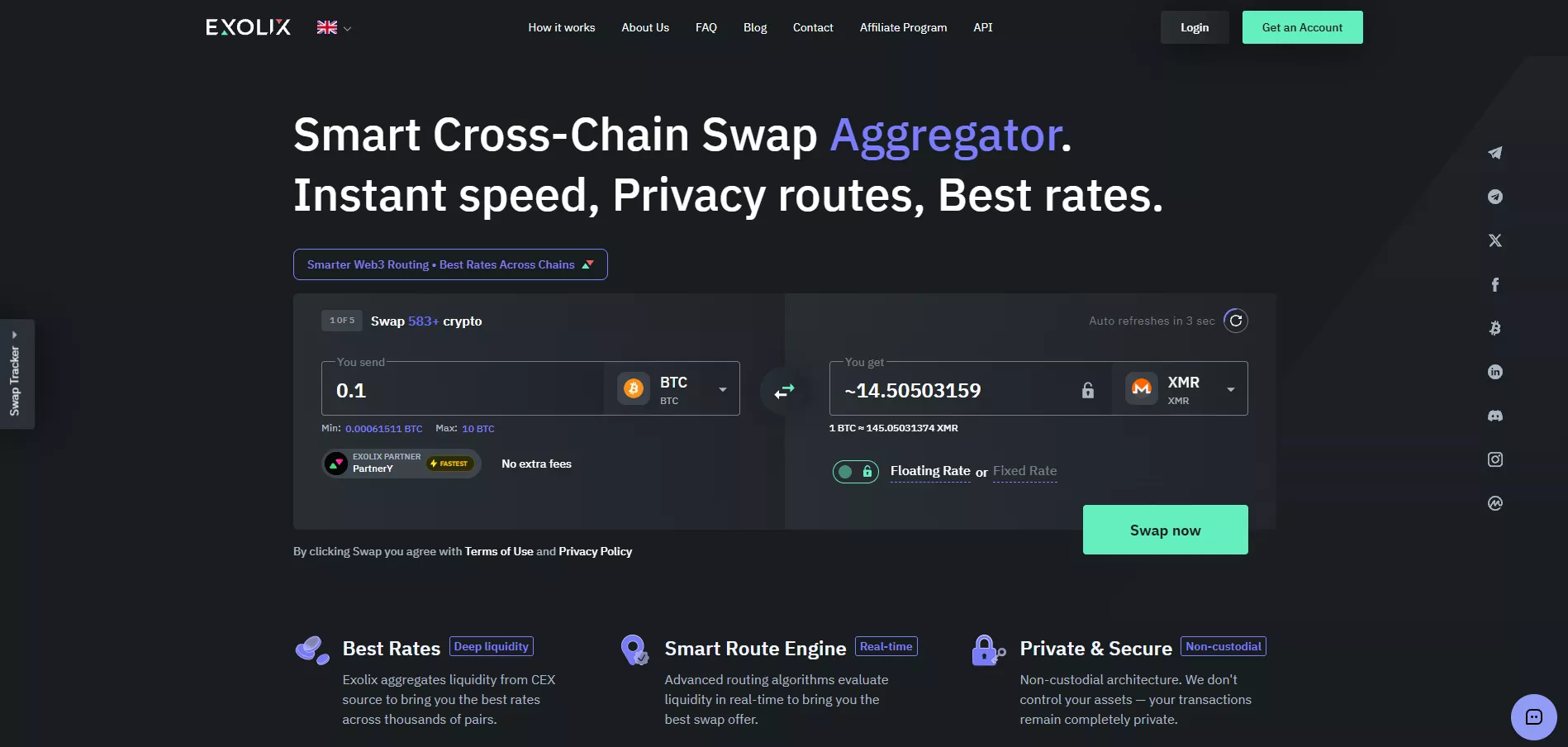
Exolix is a straightforward, non-custodial exchange built for quick and secure asset swaps. It focuses on doing one thing simply: letting you swap across 30+ cryptocurrencies without creating an account, and it advertises no fee on swaps. KYC is only triggered when a transaction is flagged as suspicious, which keeps the standard flow fast and low-friction.
That simplicity is the draw for privacy-minded users who want to swap without signing up or managing an ongoing account. The limitations are transparency-related: security details and licensing are undisclosed, and the platform offers a narrower feature set and support footprint than larger exchanges. Exolix suits users who want a fast, no-frills swap tool and are comfortable doing their own due diligence, rather than those who want deep liquidity, advanced tools, or a documented security posture.
| Field | Details |
|---|---|
| Our rating | 4 / 5 |
| Promotion | “Trusted, secure & crypto friendly” |
| Fees (maker/taker) | No fee |
| Products | Spot trading, day trading, wallet |
| Cryptocurrencies | Bitcoin, Ethereum, Tether (+34 more) |
| Payment methods | Bitcoin, Ethereum, Tether (+42 more) |
| Interface languages | English, German, French (+10 more) |
| Licenses | N/A – not disclosed |
| Security | N/A – not disclosed |
| KYC / AML | Required when the exchange detects a suspicious transaction |
| Support languages | English, German, French (+10 more) |
| Educational resources | Blog |
6. dYdX — Best for Decentralized Derivatives
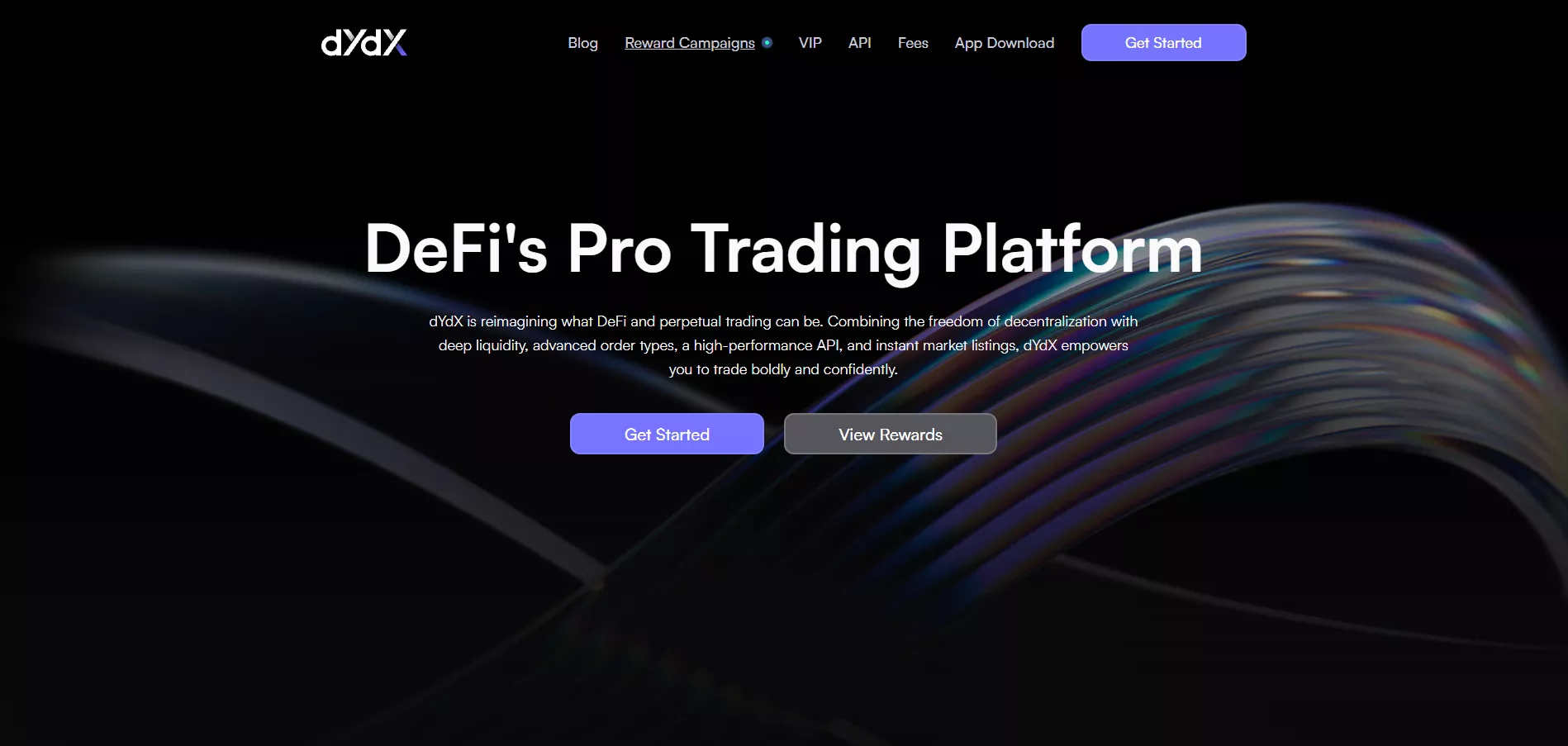
dYdX is the closest platform on this list to a true, on-chain decentralized exchange. It’s an order-book DEX focused on derivatives, offering spot and margin trading, and staking across 31+ assets, with wallet-based access via MetaMask, Trust Wallet, Coinbase Wallet, and others. There’s no KYC, you trade from your own wallet, and it runs promotions such as a 50% fee rebate, loss rebates, and free deposits over $100. Security includes 256-bit SSL encryption on its interfaces.
For experienced traders who want decentralized perpetuals and margin with self-custody, dYdX delivers a genuinely non-custodial experience that most platforms here don’t. The flip side is complexity and risk: leverage brings liquidation exposure, the interface assumes trading knowledge, and its 3.5 rating reflects a steeper learning curve rather than a weak product. It’s best for advanced DeFi traders, and a poor starting point for beginners making their first swap.
| Field | Details |
|---|---|
| Our rating | 3.5 / 5 |
| Promotion | Traders can get a 50% fee rebate, $1M in loss rebates, and free deposits over $100 |
| Fees (maker/taker) | Trading fees |
| Products | Spot trading, margin trading, staking (+1 more) |
| Cryptocurrencies | Ethereum, Bitcoin, Solana (+31 more) |
| Supported wallets | MetaMask, Trust Wallet, Coinbase (+45 more) |
| Interface languages | English, Japanese, Chinese (Mandarin) (+6 more) |
| Licenses | Not listed |
| Security | 256-bit SSL encryption |
| KYC / AML | N/A |
| Support languages | English |
| Educational resources | Forum, introduction, guides (+3 more) |
7. BitValve — Best for P2P Payment Flexibility
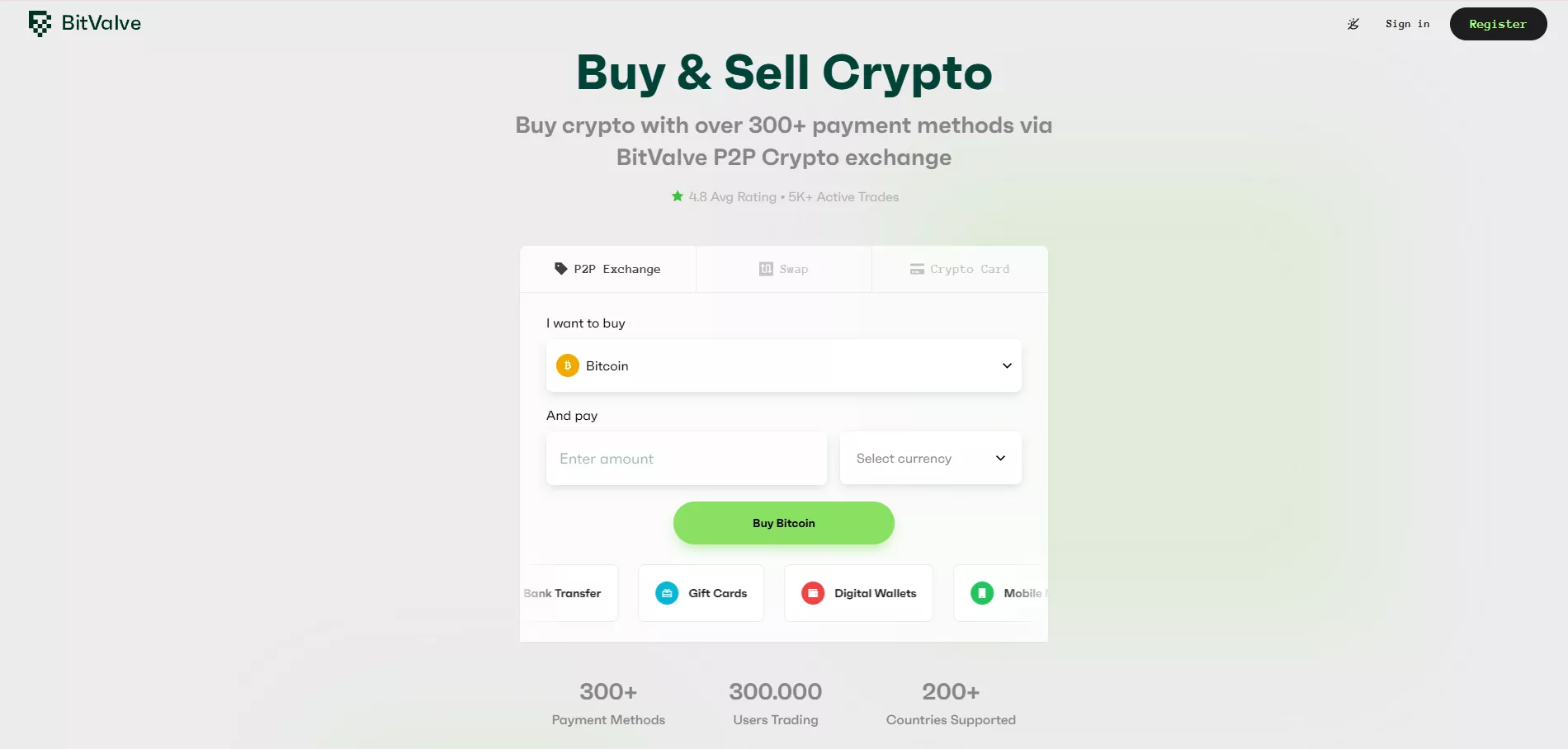
BitValve is a peer-to-peer crypto exchange licensed in Greece that combines P2P trading with a custodial wallet. Its headline strength is payment coverage, with more than 170 methods supported, from AdvCash to gift cards and mobile money, alongside 13 cryptocurrencies. Fees are competitive on the maker/taker split, with maker fees of 0.4%–0.8% (or 0.2%–0.35% on an alternative tier) and free taker trades, and it runs a 15% referral commission. Security is a strong point, with 256-bit SSL encryption and multiple 2FA options, including Microsoft and Google Authenticator, Authy, and LastPass. KYC applies to fully use the custodial wallet and raise limits.
BitValve suits traders who value payment flexibility and P2P trading, as well as users who want to earn through referrals. As with the other custodial names here, it isn’t a wallet-native AMM DEX; KYC is required for full functionality, and its interface is English-only, which limits its reach for non-English speakers. It’s a practical option for P2P trading with broad payment support, less so for DeFi-native, self-custody trading.
| Field | Details |
|---|---|
| Our rating | 4 / 5 |
| Promotion | Earn 15% commission when you invite friends, and they register and trade |
| Fees (maker/taker) | Maker 0.4%–0.8%, taker free; alternative tier maker 0.2%–0.35% (+1 more) |
| Products | Spot trading, day trading, wallet |
| Cryptocurrencies | Bitcoin, Litecoin, Ethereum (+10 more) |
| Payment methods | AdvCash, Airbnb gift card, Airtel Money (+169 more) |
| Interface languages | English |
| Licenses | Greece |
| Security | 256-bit SSL encryption, 2FA (Microsoft Authenticator), 2FA (Google Authenticator) (+2 more) |
| KYC / AML | Required to fully use the custodial wallet service and increase limits |
| Support languages | English |
| Educational resources | Not listed |
8. Blockchain.com — Best for a Regulated, Established Platform
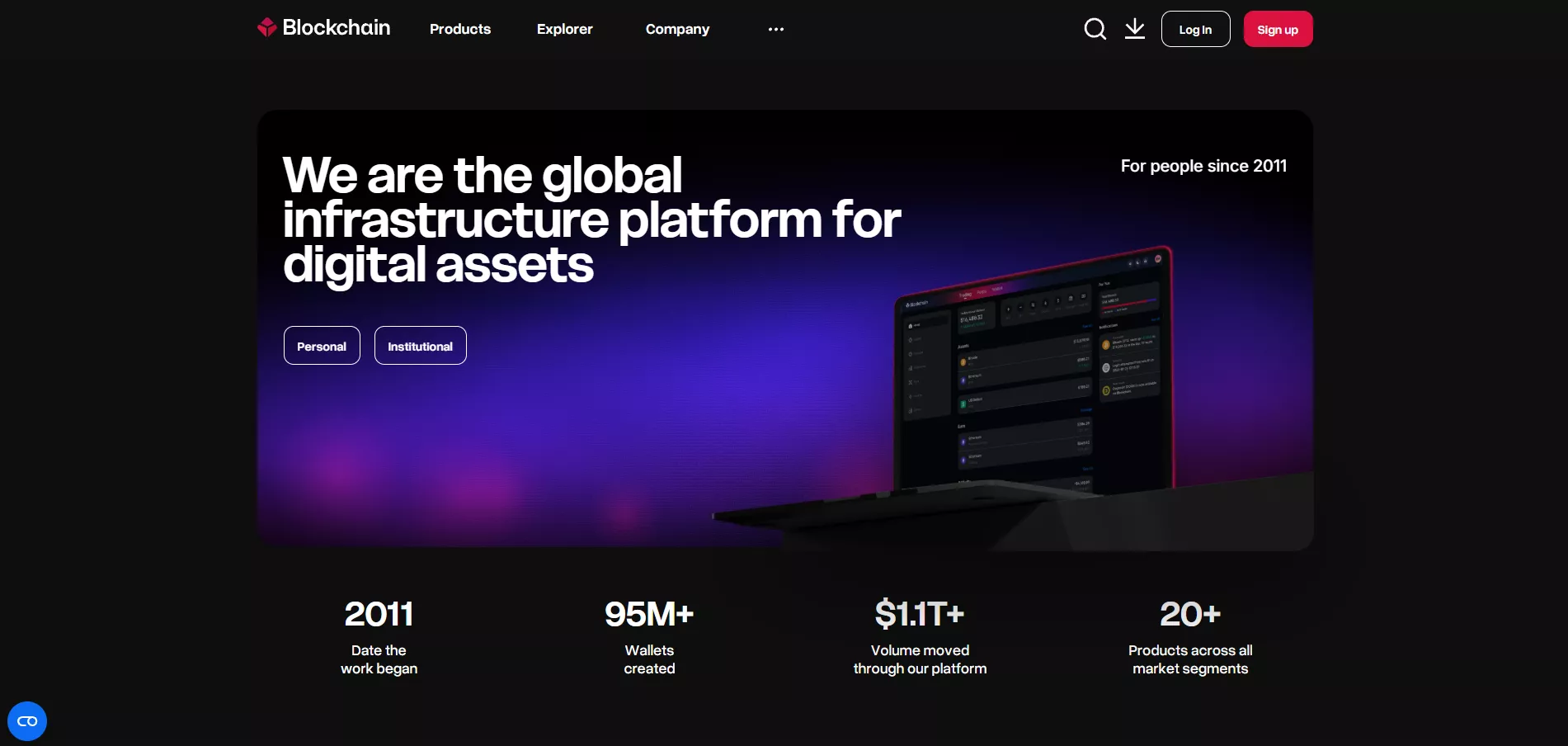
Blockchain.com earns the highest rating in this list at 4.83, reflecting its scale, longevity, and regulatory footprint. It holds licenses in Singapore and Puerto Rico and offers spot trading, margin trading, staking, NFTs, and pay features across 27 cryptocurrencies, with 52+ payment methods including bank transfer, SEPA, Faster Payments, and wire transfer. It’s best known for its widely used self-custody DeFi Wallet, which sits alongside its custodial exchange. KYC is required for buying, selling, swapping, and rewards accounts.
The appeal is trust and structure: a long-established brand, real licensing, and a self-custody wallet option for users who want on-chain control without leaving the ecosystem. The caveat is that the exchange side is centralized and KYC-based, and its 27-coin lineup is narrower than the long-tail selection you’ll find on pure on-chain DEXs. Blockchain.com suits mainstream users who prioritize regulation, reliability, and a familiar interface, and pairs a custodial exchange with a genuine self-custody wallet for those who want both.
| Field | Details |
|---|---|
| Our rating | 4.83 / 5 |
| Promotion | None listed |
| Fees (maker/taker) | Exchange trading fees, Bitcoin deposit fee, Bitcoin withdrawal fee (+2 more) |
| Products | Spot trading, margin trading, staking (+3 more) |
| Cryptocurrencies | Bitcoin, Ethereum, Bitcoin Cash (+24 more) |
| Payment methods | Bank transfer, SEPA, Faster Payments (+49 more) |
| Interface languages | English, Spanish, Portuguese (+2 more) |
| Licenses | Singapore, Puerto Rico |
| Security | Not listed |
| KYC / AML | Required for buying, selling, swapping, and rewards accounts |
| Support languages | English |
| Educational resources | Learn and Earn, podcasts, research, and analysis |
Why Trust Webopedia?
DEX coverage is easy to get wrong. Platforms change constantly. Liquidity shifts, chains fall out of favor, and smart contract vulnerabilities emerge, so a guide written six months ago may already be pointing readers toward the wrong platforms.
Webopedia’s crypto team has reviewed exchanges, wallets, DeFi tools, and Web3 security products across multiple market cycles. For this guide, we focused on real trading usability: how platforms actually perform on live swaps, not just how they present themselves in documentation or marketing. We also weighed how these platforms are used in practice by active DeFi traders, liquidity providers, and wallet users. A platform that looks strong on paper but consistently produces worse routing, higher slippage, or opaque fees doesn’t earn a recommendation.
What Is a Decentralized Exchange?
A decentralized exchange, or DEX, is a crypto trading platform that lets you swap tokens directly from a self-custody wallet. Unlike a centralized exchange, a DEX usually doesn’t hold customer funds, create exchange accounts, or process withdrawals. Trades are executed through smart contracts on blockchain networks.
Most DEXs use an automated market maker (AMM) model. AMMs rely on liquidity pools rather than matching individual buyers and sellers through orders. Other DEXs use order books that resemble a centralized trading interface but still settle trades on-chain or via decentralized infrastructure.
The upside is control, privacy, and wallet-level access to DeFi. The trade-off is that you need to understand gas fees, wallet safety, slippage, smart contract risk, and network congestion, because no support desk will fix a mistake for you.
How to Choose a Decentralized Exchange
The best DEX depends on your chain, trade size, wallet, token pair, and tolerance for fees. Here’s what to weigh before you connect a wallet.
Chain Coverage
Chain coverage is the first thing to check. Some platforms are built for a single ecosystem, such as Solana, Ethereum, or BNB Chain. Others span multiple EVM networks, including Base, Arbitrum, Optimism, Polygon, Avalanche, and Linea.
A good DEX supports the chains you actually use. Ethereum offers deep liquidity for blue-chip DeFi assets, but gas can be expensive. Solana and many Layer 2 networks offer faster, cheaper swaps, though token coverage and risk profiles differ.
AMM vs Order Book Model
Most DEXs use AMMs, where you trade against liquidity pools, and prices are set by pool balances and pricing formulas. AMMs are simple, permissionless, and widely used for spot swaps.
Order-book DEXs match buyers and sellers through bids and asks, offering a more centralized trading experience. That’s better for limit orders, derivatives, and advanced trading, but it can require more complex infrastructure. For casual swaps, AMMs are usually easier; for active trading, an order book or hybrid DEX can offer more control.
Liquidity Depth and Slippage
Liquidity depth determines how much your trade moves the price. Deep liquidity lets large swaps execute with lower slippage. Thin liquidity means even a modest trade can produce a worse final price than expected.
Slippage matters most on volatile tokens, small-cap coins, new launches, and memecoins. A DEX may list thousands of tokens, but that doesn’t mean every pair is safe or efficient to trade. Before swapping, check the quoted output, price impact, minimum received, and route details. The best DEX for one pair may not be the best for another.
Gas Fees and Transaction Costs
Gas fees are network transaction costs. On the Ethereum mainnet, gas can spike during congestion. On Solana, BNB Chain, and many Layer 2s, costs are often much lower, though conditions vary.
A cheap DEX fee doesn’t always mean a cheap trade. Total cost includes protocol fees, liquidity provider fees, network gas, bridge costs, and price impact. For small trades, gas can matter more than slippage; for large trades, liquidity depth and routing usually matter more. Good DEXs show all fees clearly before you approve a transaction.
Aggregation and Best-Price Routing
A DEX aggregator searches multiple exchanges to find a better route for your swap. Instead of trading through a single pool, it may split the trade across several liquidity sources to reduce slippage and improve the outcome.
That’s useful for large swaps, less liquid pairs, or networks with fragmented liquidity. The trade-off is added complexity, so you should still check token approvals, route details, estimated gas, and minimum received before confirming.
Smart Contract Audits
DEXs run on smart contracts. If those contracts contain bugs or are exploited, users can lose funds. Audits aren’t a guarantee of safety, but they’re an important signal.
A reliable DEX publishes audit information, bug bounty details, documentation, and contract addresses, and has a history of transparent incident reporting. Be more cautious with brand-new DEXs, unaudited forks, anonymous teams, and platforms offering unusually high yields. A slick interface doesn’t remove smart contract risk.
Supported Wallets
Wallet support shapes how easy a DEX is to use. Ethereum and EVM-based DEXs commonly support MetaMask, Rabby, Coinbase Wallet, WalletConnect, and Ledger-connected wallets. Solana DEXs typically support Phantom, Solflare, and Backpack.
Some multichain platforms support both EVM and non-EVM wallets, but the experience can vary by chain. The best DEX for beginners makes wallet connection, token approval, transaction review, and slippage settings clear and easy to follow.
Limit Orders and Advanced Features
Basic DEXs focus on simple swaps. More advanced platforms add limit orders, DCA tools, cross-chain swaps, perpetual futures, concentrated liquidity, liquidity farming, charts, and portfolio views.
Advanced tools improve execution but add risk. Limit orders may involve extra smart contract permissions, perpetual futures involve leverage and liquidation risk, and cross-chain swaps may rely on bridges. Choose features by experience level, and start with simple swaps before using advanced DeFi tools.
Pros and Cons of Decentralized Exchanges
DEXs are powerful, but they aren’t automatically better for every trader. They offer more control and direct on-chain access in exchange for more personal responsibility.
| Pros | Cons |
|---|---|
| Non-custodial trading | You’re responsible for wallet security |
| No standard account sign-up or KYC flow | Smart contract risk is always present |
| Access to DeFi tokens before CEX listings | Gas fees can be expensive on some chains |
| Transparent on-chain execution | Slippage can be high on illiquid pairs |
| Useful for self-custody users | Scam tokens and fake contracts are common |
| Available across many chains and wallets | Mistakes are hard or impossible to reverse |
You Keep Control of Your Crypto
The biggest advantage of a DEX is self-custody. You don’t deposit funds into an exchange account before trading. You connect your wallet, approve the transaction, and keep control of your assets. That matters if you don’t want to rely on exchange withdrawals, account freezes, or custody risk, but it also makes wallet security your responsibility.
DEXs Usually Don’t Require KYC
Most DEXs don’t require accounts or standard KYC checks. The platform simply interacts with your wallet and smart contracts, making DEXs more accessible to users who value privacy or a faster trading flow. You’re still responsible for following local laws and tax rules.
Access to More Tokens
Many tokens hit DEXs before they’re listed on centralized exchanges, giving early access to new DeFi assets, memecoins, and governance tokens. The downside is that early access also means higher risk, since fake tokens, low-liquidity pools, honeypots, and unaudited projects are common.
Transparent On-Chain Trading
DEX trades are recorded on public blockchains, so you can verify transactions, pool balances, contract activity, and liquidity changes through block explorers and analytics tools. That transparency lets traders and researchers inspect activity directly, rather than relying on exchange-reported data.
Better Integration With DeFi
DEXs connect naturally with wallets, lending protocols, yield farms, bridges, and staking platforms, which makes them more flexible than centralized platforms for active DeFi users. A DEX can be part of a broader self-custody strategy, especially across multiple chains.
Smart Contract Risk
Every DEX relies on code, and if the code fails, users can lose money. Even audited protocols can be exploited, suffer oracle issues, face governance attacks, or encounter liquidity pool problems. Avoid approving unlimited token permissions to unknown contracts, and review your wallet approvals regularly.
Slippage and Failed Transactions
DEX trading depends on pool liquidity and blockchain execution. In volatile markets, quoted prices can change before a transaction is confirmed. Set the slippage tolerance too low, and the transaction may fail; set it too high, and you may get a worse price. This is especially important on new or illiquid tokens.
Gas Fees Can Be High
On some networks, especially the Ethereum mainnet during busy periods, gas can make small trades uneconomical. A $20 swap fee barely registers on a large trade but can destroy value on a small one. Layer 2s and cheaper chains reduce costs, but add their own liquidity and bridging considerations.
Scam Tokens Are Common
DEXs are permissionless, so anyone can create a token and launch a pool. That openness is useful, but it also creates room for scams. Verify contract addresses, avoid random airdropped tokens, check liquidity locks where relevant, and be cautious with tokens pushed through paid hype.
DEX vs CEX: Which Is Better?
A DEX is usually better for users who prioritize self-custody, DeFi access, privacy, and direct wallet trading. A centralized exchange (CEX) may be better for users who want fiat deposits, customer support, simple tax reporting, account recovery, and a beginner-friendly interface.
For many people, the answer isn’t one or the other. Centralized exchanges are useful for fiat on-ramps and off-ramps, while DEXs are useful for on-chain swaps and DeFi opportunities. The key difference is responsibility. On a CEX, the platform manages much of the experience; on a DEX, you have to understand wallets, approvals, gas, slippage, and contract risk yourself.
For a fuller breakdown of the trade-offs, see our DEX vs CEX guide.
AMM DEXs vs DEX Aggregators
AMM DEXs and DEX aggregators are often grouped together, but they aren’t the same thing.
An AMM DEX is a venue where trades happen through liquidity pools. Examples include general-purpose AMMs, stablecoin-focused AMMs, concentrated liquidity platforms, and ecosystem-specific exchanges. A DEX aggregator is a routing tool. It searches various liquidity sources to find the best route for your trade, which may involve using a single DEX or splitting your order across several pools or venues.
For a simple trade on a highly liquid pair, a major AMM is often enough. For larger trades, long-tail tokens, or fragmented liquidity, a DEX aggregator can deliver better results.
How to Use a DEX: Step by Step
If you’ve never traded on a DEX before, the flow is more manageable than it looks once you’ve done it once, and our full step-by-step guide to using a DEX covers it in more depth.
- Set up a self-custody wallet: Install a reputable wallet such as MetaMask or Rabby for EVM chains, or Phantom for Solana, and securely back up your recovery phrase offline.
- Fund the wallet: Buy crypto on a centralized exchange or on-ramp, then withdraw it to your wallet address on the correct network. Sending funds on the wrong network is a common and costly mistake.
- Connect your wallet to the DEX: Always type or bookmark the official URL rather than clicking search ads or social links, then approve the connection request.
- Select your pair and review the quote: Choose the tokens you want to swap and check the expected output, price impact, minimum received, and route before approving.
- Set slippage and approve the token: Adjust slippage tolerance for volatile tokens, then approve the specific token spend (avoid unlimited approvals to unfamiliar contracts).
- Confirm the swap and verify on-chain: Approve the transaction in your wallet, pay the gas fee, and confirm the result through a block explorer. Test with a small amount first when using a new chain, wallet, or token.
Which DEX Is Right for You?
The best DEX depends on your situation, not on a single ranking.
- Beginners are usually better served by a simple swap interface or a hybrid platform with a clear flow before moving to advanced DeFi tools.
- Ethereum and EVM traders should prioritize liquidity depth and gas optimization, since routing quality determines whether a large swap is economical.
- Solana users should weigh speed, routing, and ecosystem coverage, where transaction costs are typically lower.
- Large-swap traders will often get a better price from a DEX aggregator than from a single venue.
- Advanced traders who need limit orders, perpetuals, or precise execution should consider order-book DEXs.
Safety Tips Before Using a DEX
Before using any DEX, take a few basic precautions.
First, verify the website URL. Fake DEX sites are common, especially for major brands, so bookmark the correct site instead of relying on search ads or social links. Second, verify token contracts, since many scam tokens use names and tickers that are almost identical to those of legitimate assets. Third, review wallet permissions because token approvals allow smart contracts to move specific tokens from your wallet; use approval management tools and avoid granting unlimited approvals to unknown protocols. Fourth, test with a small transaction before a larger swap, especially on a new chain, wallet, or token pair.
Finally, remember that on-chain mistakes are usually final. If you send funds to the wrong contract, approve a malicious transaction, or buy a fake token, no support team can recover your funds.
Final Thoughts on the Best DEX Platforms
The best decentralized exchanges in 2026 aren’t just the platforms with the biggest names or the highest reported volume. They’re the ones that hold up when it matters: during volatile markets, on less liquid pairs, and when routing quality determines whether a large swap is economical.
For Ethereum and EVM traders, liquidity depth and gas optimization matter most. For Solana users, speed, routing, and ecosystem coverage carry more weight. For large swaps, a DEX aggregator will often beat a single venue, and for advanced traders, order-book DEXs and limit-order tools offer more precise execution.
What separates the best platforms from the rest is transparency. The DEXs worth using show you fees before you commit, publish their audit history, and don’t obscure price impact or routing. In a space where mistakes are final, and support often doesn’t exist, that clarity is what protects you.
Frequently Asked Questions
How does a DEX differ from a centralized exchange?
On a centralized exchange, you create an account, deposit funds, and the platform holds your crypto and manages the trade. On a DEX, you connect your own wallet and trade on-chain, keeping custody of your assets the whole time. CEXs are easier for fiat and support; DEXs offer control, privacy, and DeFi access.
Do DEXs require KYC?
Most true DEXs don’t require KYC, because they interact with your wallet and smart contracts rather than a user account. Hybrid and custodial platforms often do require KYC to raise limits or use certain features. You remain responsible for following your local laws and tax rules regardless. If avoiding identity checks is a priority, our guide to the best no-KYC crypto exchanges covers the options.
Do you need a wallet to use a DEX?
Yes. A self-custody wallet such as MetaMask, Rabby, or Phantom is how you connect to a DEX and hold your funds. You fund the wallet first, then connect it to the exchange to trade. There’s no account to create or password to recover, so protecting your recovery phrase is essential.
Are DEXs safe?
DEXs can be safe to use, but the risks are different from those of a centralized exchange. You avoid custody and account-freeze risk, but you take on smart contract risk, scam tokens, and the finality of on-chain mistakes. Sticking to audited platforms, verifying URLs and contracts, and testing with small amounts significantly reduces the risk.
What are gas fees and how do they affect DEX trading?
Gas fees are the network cost of processing your transaction. They vary by chain and congestion, and can be high on Ethereum mainnet during busy periods but low on Solana and Layer 2 networks. On small trades, gas can outweigh slippage, so the network you trade on directly affects how economical a swap is.
Why did my swap fail?
Failed swaps are usually caused by slippage tolerance set too low for a volatile token, insufficient gas, or liquidity moving before the transaction confirmed. You typically still pay the gas for a failed transaction. Raising slippage slightly, ensuring enough native token for gas, and trading more liquid pairs reduces failures.
What is impermanent loss?
Impermanent loss is the value gap a liquidity provider can face when the prices of the two tokens in a pool diverge, compared with simply holding those tokens. It affects people who supply liquidity to AMM pools, not people making one-off swaps, and it only becomes a realized loss if you withdraw while prices are out of balance.
Which DEX has the deepest liquidity?
Liquidity varies by chain and token pair, rather than being fixed to a single platform. Major AMMs on Ethereum tend to offer the deepest liquidity for blue-chip pairs, while a DEX aggregator often provides the most effective liquidity for large or long-tail trades by routing across multiple venues. Always check the impact of the quoted price on your specific pair before trading.
Are DEXs legal, and do I pay tax on DEX trades?
DEXs are legal in most jurisdictions, though rules vary, and some regions restrict specific products, such as derivatives. In many countries, crypto-to-crypto swaps are taxable events even when no fiat is involved. This isn’t tax advice, so consult a qualified accountant or tax professional for your situation.


