Best Crypto Lending Platforms/Exchanges in 2026


- When you click links on this page, we may earn an affiliate commission. By using this website you agree to our terms and conditions and privacy policy.
- Participation in online gambling may be illegal in your country and is subject to age restrictions (18, 19, or 21, depending on the jurisdiction). Verify legality and age requirements before participating. Learn more
Some of the best crypto lending platforms are not crypto exchanges. According to research carried out by Galaxy, DeFi Lending application represented almost 50% of the crypto collateralized lending market at the end of Q1 2025, while CeFi represented almost 34%.
Crypto lending lets people earn passive income from their digital assets by providing liquidity for loans. It also lets borrowers use their crypto as collateral for a loan paid in cash or digital assets, like Bitcoin, without triggering a taxable event.
Crypto lending is a significant innovation. It enables people to utilize their crypto without selling it. They can generate revenue or access liquidity through loans without relying on traditional financial systems.
Throughout this article, we’ll explain how crypto lending platforms work, discuss the CeFi vs DeFi crypto loans debate, highlight some of the best crypto loan platforms, and explain the risks of crypto lending.
Crypto Lending Summary
To really understand how the best crypto lending platforms operate, it is crucial to know how crypto lending works. This is a brief summary of what crypto lending entails.
| Primary Purpose | To earn passive income by lending or access cash/crypto by borrowing |
| Key Concept | Loans are overcollateralized (you must delegate more crypto than the value of your loan) |
| Main Types | Centralized Finance, such as Nexo (easy, but custodial), and Decentralized Finance, like Aave (non-custodial, but higher risk) |
| Significant Advantages | Earn passive income and temporarily cash out without triggering a taxable event |
| Biggest Risks | Liquidation if your collateral drops in value and platform solvency risks |
| Tips and Tricks | Consider whether CeFi or DeFi is better for your needs, compare APY and LTV values, and see what other users say before choosing a platform |
Top Crypto Lending Platforms of 2026
These are the best crypto lending platforms in 2026. This list was careful curated through intense research and first-hand experiences.



- Bitcoin
- Holo
-
Litecoin
157
No result
- English
- Italian
-
French
5
No result
Coinbase is a publicly traded US exchange that has grown into one of the most recognized names in crypto. Founded in 2012, it supports over 200 cryptocurrencies for trading and has built a strong reputation around regulatory compliance and user-friendly design.
Beyond buying and selling, Coinbase doubles as a best crypto lending platform thanks to its integration with the Morpho protocol, a decentralized finance (DeFi) lending system built on Base, its own Ethereum Layer 2 network. This setup allows you to lend USDC directly through the Coinbase app while the protocol handles fund allocation across different lending pools behind the scenes.
For USDC holders, standard rewards sit at around 4.1% APY, with Coinbase One members getting up to 4.5%. If you want higher returns, USDC lending through Morpho can deliver variable yields up to 10.8% APY, though rates shift depending on borrower demand and liquidity. ETH staking currently returns roughly 1.91% APY, while SOL staking sits at about 4.12% APY. You can start earning on most staking options with as little as $1, and there are no lockup periods imposed by Coinbase itself.
Pros
-
The Morpho integration gives you access to DeFi-level yields without needing to leave the Coinbase app or manage smart contracts manually
-
Crypto-backed loans let you borrow around $100K-$1M for verified users only in USDC using your BTC as collateral, with rates starting as low as 5% and no repayment deadlines
-
No lockup periods on staked funds, and you can opt out at any time
-
Strong regulatory standing as a publicly listed company on the NASDAQ
-
Instant unstaking is available for a 1% fee, giving you quick access to your funds when needed
Cons
-
USDC lending is not available in all regions, with New York State excluded entirely
-
Lending yields are variable and not guaranteed, meaning the advertised rates can drop sharply
-
Coinbase takes a 15 to 25% commission on staking rewards, which eats into your actual returns
-
Funds deposited into lending vaults carry smart contract risk, and no FDIC or SIPC insurance applies
- Bitcoin
- Ethereum
-
Tether
68
No result
- English
OKX runs Simple Earn and Auto-earn programs that allow you to earn interest by lending crypto to margin traders, solidifying its position as one of the best crypto lending platforms for daily compounding. You can earn up to 18% APY on crypto and fiat currencies with daily compounding interest. The platform offers both Flexible and Fixed loan products, with Flexible loans supporting single or multi-collateral options and allowing partial or full repayment anytime without penalties.
OKX recently updated its lending logic for stablecoins, where your actual lending APR may differ from the borrowing interest rate based on supply and demand. Fixed loans only let you borrow USDT using BTC, ETH, USDT, or OKB as collateral, with terms of 7, 15, 30, 90, or 180 days. VIP5 members and above get access to exclusive lending pools with better terms.
Lending can earn up to 18% APY with daily compounding. Recent rates show 1% on Bitcoin, 1.88% on Ethereum, and 1% on Dogecoin. For stablecoins, if your minimum lending APR matches the borrowing interest rate, your funds may be partially lent or not at all, depending on pool availability.
Fixed loan interest rates are based on the amount borrowed, collateral provided, and loan duration, with early repayment penalties applied. If you're overdue by more than 3 calendar days, the system auto-liquidates to repay lenders.
Pros
-
Daily compounding accelerates your earnings compared to platforms with monthly or annual compounding
-
Flexible loan option allows repayment anytime without penalties, giving you maximum control
-
Multi-collateral loans let you combine different cryptocurrencies to reach higher borrowing power
-
Alert reminders notify you before liquidation occurs so you can add collateral in time
-
VIP tiers unlock exclusive lending pools with more favorable terms for high-volume traders
Cons
-
Fixed loans penalize early repayment, locking you into your chosen term
-
New stablecoin lending logic means your actual APR may be lower than advertised rates based on pool utilization
-
Limited collateral options for fixed loans restrict flexibility compared to competitors
-
Complex tier system and multiple product types can be complex for first-time users
- Bitcoin
- Ethereum
-
Tether
90
No result
- English
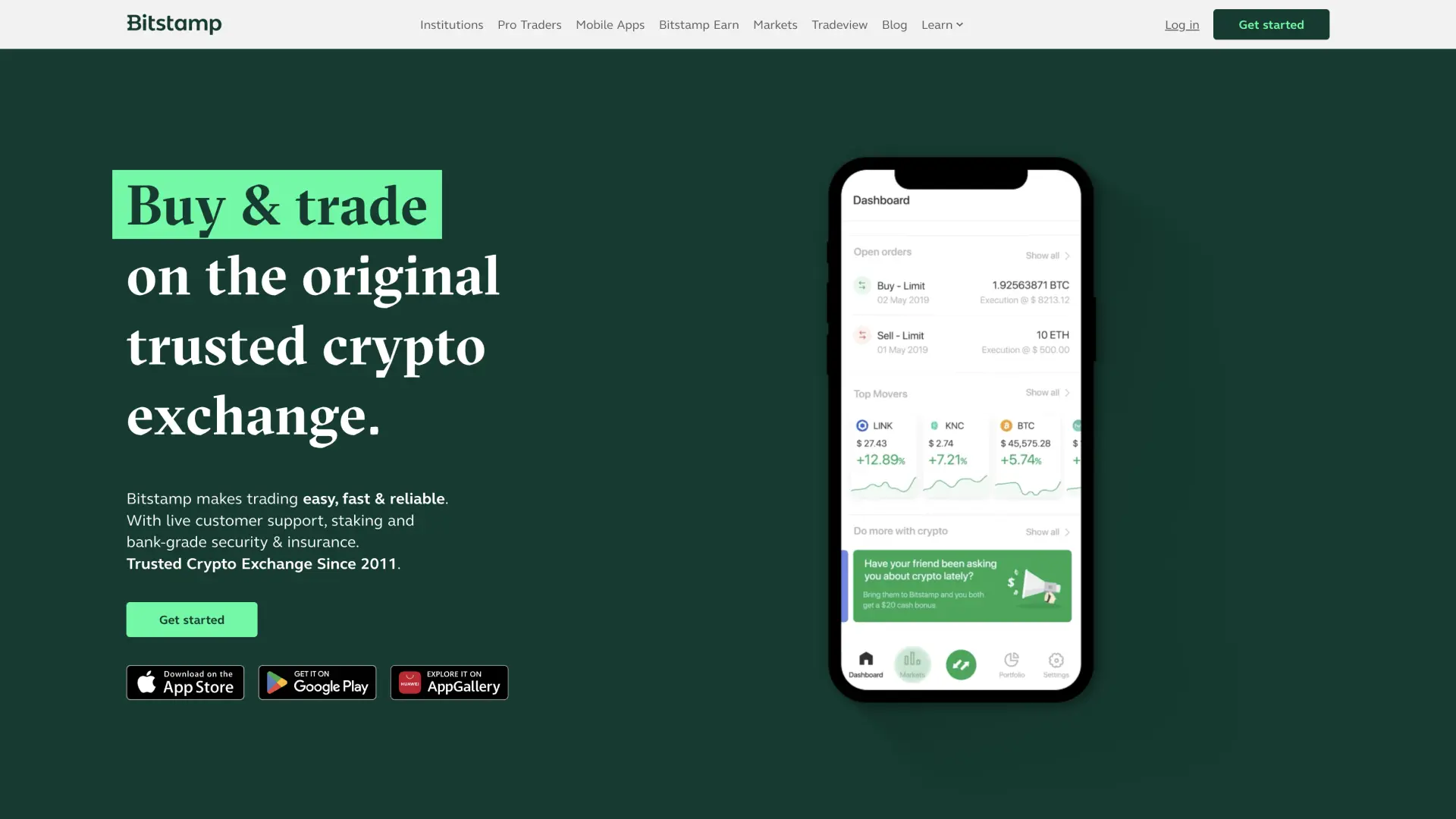
Bitstamp runs its Earn Lending program through a partnership with Tesseract, allowing you to lend digital currencies to vetted institutions. The platform never lends your funds without your explicit permission and doesn't convert your crypto before lending it out. You can withdraw anytime since all loans operate on open terms with no lock-in periods.
The exchange publishes monthly performance reports showing pool performance, borrower risk profiles, collateral levels, and portfolio concentration, which gives you visibility into how your funds are being used. Borrowers must provide at least 100% collateral for stablecoin loans, and only liquid, widely traded currencies are accepted.
Recent promotional rates offered up to 9% APY on certain tokens, including DOT, NEAR, SUI, ALGO, UNI, DOGE, and PEPE, with USDC earning 6.60% APY. Standard rates vary by currency, with offerings including BTC, ETH, USDC, USDT, XRP, BCH, LINK, LTC, and APE earning up to 4.4% APY. Rewards are paid daily, and rates fluctuate with market conditions.
Pros
-
Monthly transparency reports give you detailed insights into where your funds go and how they perform
-
Zero lock-in periods mean you maintain full control and can adjust your strategy anytime
-
Daily reward payouts let you see returns quickly without waiting for monthly distributions
-
Strong collateral requirements reduce risk since borrowers must overcollateralize their loans
-
No conversion of your crypto before lending preserves the exact currency you deposit
Cons
-
Unavailable in the US, UK, Japan, and Singapore, limiting access for many potential users
-
Variable rates mean your returns can drop suddenly based on market demand
-
Limited selection of supported currencies compared to some dedicated lending platforms
-
Requires trust in Tesseract as the intermediary lending partner
- Bitcoin
- Ethereum
-
Tether
52
No result
- English
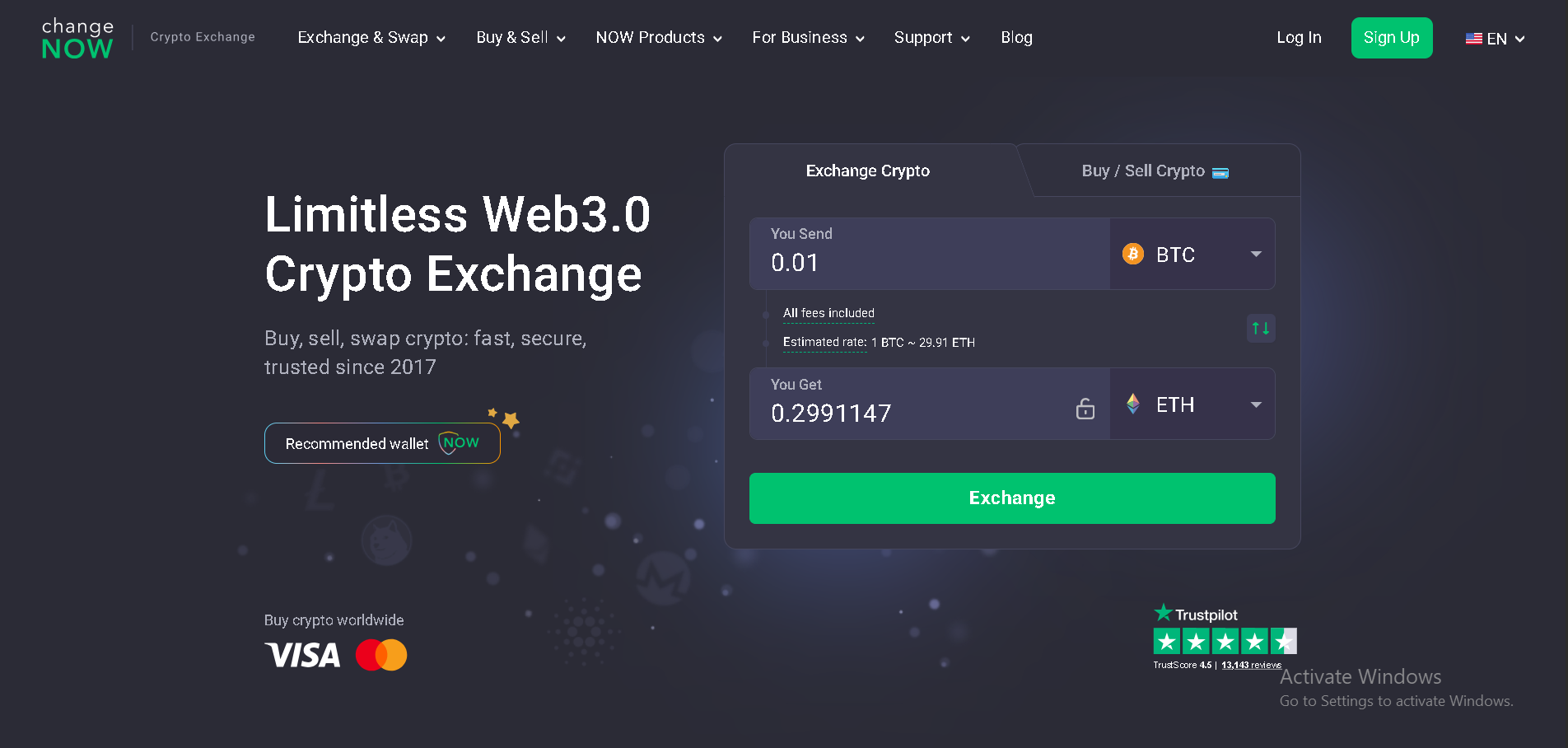
ChangeNOW started in 2017 as a non-custodial instant swap service and has since expanded into a full ecosystem covering swaps, staking, lending, and portfolio tracking. It supports over 1,400 cryptocurrencies across 110+ blockchains, and most transactions go through without requiring account creation or identity verification.
ChangeNOW offers NOWLoans, a built-in crypto lending service that allows you to borrow stablecoins or Bitcoin against your holdings without credit checks or paperwork. The platform also has its own utility token, NOW, which ties together staking rewards, cashback, and tiered membership perks.
For earning and borrowing, ChangeNOW keeps things straightforward. NOW token staking through the Pro account offers up to 6.25% APY, with rewards distributed weekly and compounded automatically. On-chain staking requires a minimum of 10 NOW tokens and is limited to ERC-20 tokens.
On the lending side, NOWLoans operates with a dynamic 40-60% loan-to-value (LTV) ratio, and the annual percentage rate (APR) of 8-14% varies by token and demand. There are no minimum or maximum loan terms, and interest is charged only when you close the loan. Collateral options include SOL, ADA, and 25+ more.
Pros
-
No account or KYC needed for standard swaps, which keeps the process fast and privacy-friendly
-
NOWLoans has no repayment schedule or deadlines, so you close your loan whenever it suits you
-
Collateral is stored in time-locked multi-sig smart contracts, adding an extra layer of protection
-
The NOW token's deflationary model with regular token burns helps support long-term token value
-
Three Pro membership tiers (VIP is free) give you cashback on swaps and access to AML address checks
Cons
-
Staking is limited to the NOW token only, so you cannot earn yield on major coins like ETH or SOL directly through the platform
-
The 50% LTV on loans is more conservative than what other lending services offer
-
Fiat purchases carry fees of around 2 to 4%, which can add up for frequent buyers
-
The platform is unavailable in the UK and several sanctioned jurisdictions, limiting global access
- Bitcoin
- Ethereum
-
Tether
219
No result
- English

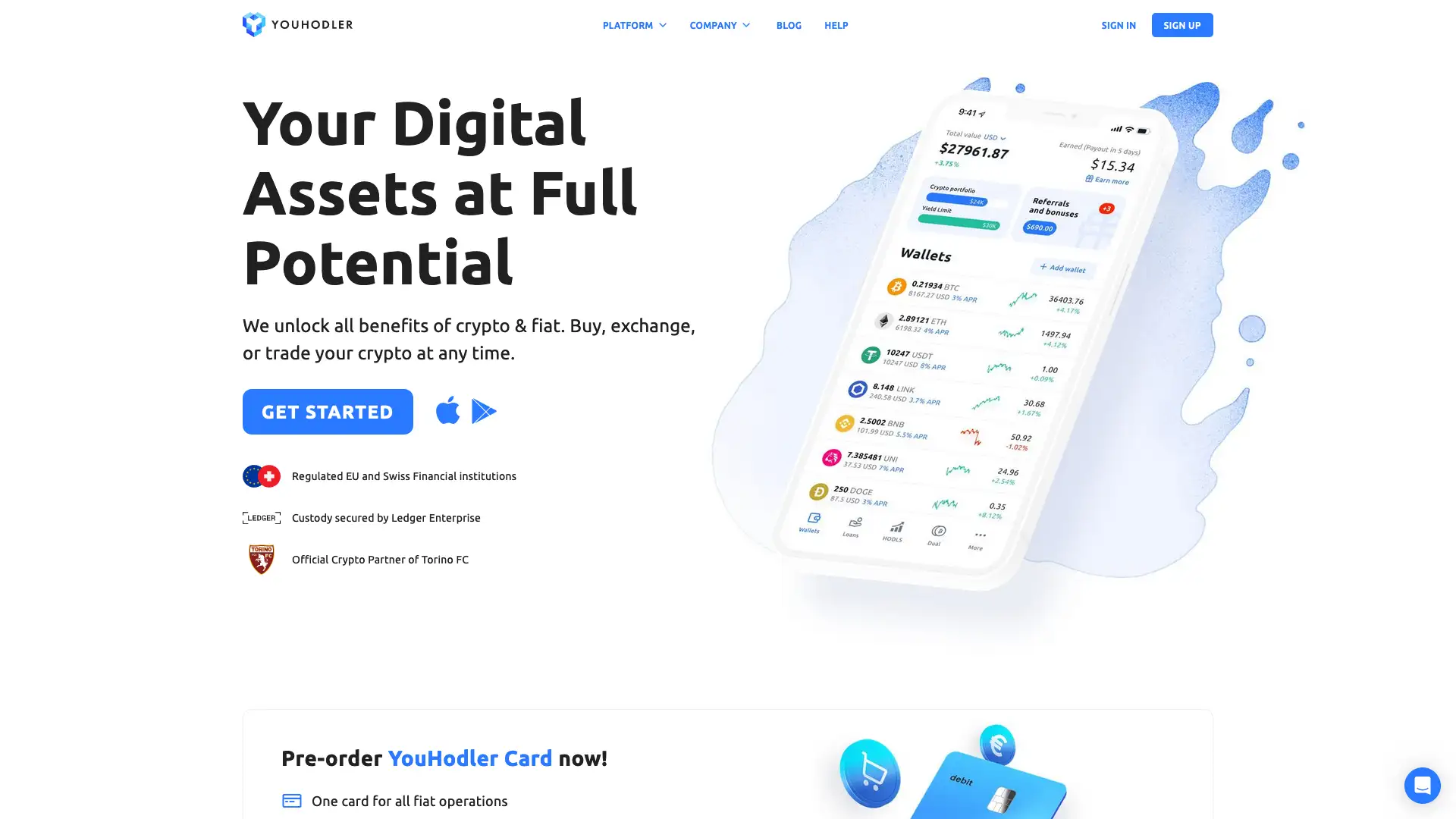
YouHodler is a Swiss-based platform that connects traditional finance with crypto through savings accounts, loans, and trading tools, positioning itself among the best crypto lending platforms for high LTV ratios. You can earn around 5% on altcoins and approximately 12% on stablecoins, with weekly compounding interest paid in the same token you deposit.
The platform offers high LTV ratios up to 80%, meaning you could borrow $1,200 against $1,500 worth of crypto. YouHodler now provides LTV up to 97%, the highest available in the industry. Your savings account is backed by $150 million pooled crime insurance through Ledger Vault, providing protection against hacks. The platform also features MultiHODL for margin trading with up to 30x multipliers and Turbocharge for cloning collateral up to 6.5 times.
Recently, YouHodler reduced borrowing rates on most cryptocurrencies from 20% to 11% to stimulate credit demand. Borrowing rates can go as low as 5.9% APR. Lending can earn up to 30% APY across around 190 supported cryptocurrencies.
Stablecoins like Tether and DAI earn up to 12% interest, while Bitcoin earns up to 8.6%. Interest compounds weekly and deposits automatically. Loan terms range up to 1 year, with instant approval.
Pros
-
LTV ratios up to 97% provide maximum borrowing power against your collateral
-
Weekly compound interest accelerates earnings compared to monthly or annual compounding
-
$150 million insurance coverage protects your funds in case of platform security breaches
-
MultiHODL feature lets you profit from both rising and falling markets with automated exits
-
Built-in exchange eliminates the need to transfer funds between platforms for trading
Cons
-
Not available to US residents due to regulatory restrictions
-
Daily loan fees make it harder to calculate true annual borrowing costs compared to fixed APR
-
MultiHODL positions automatically close after 10 days, limiting long-term position holding
-
Credit card crypto purchases through the Changelly partnership carry extremely high fees
- Bitcoin
- Ethereum
-
Tether
57
No result
- English

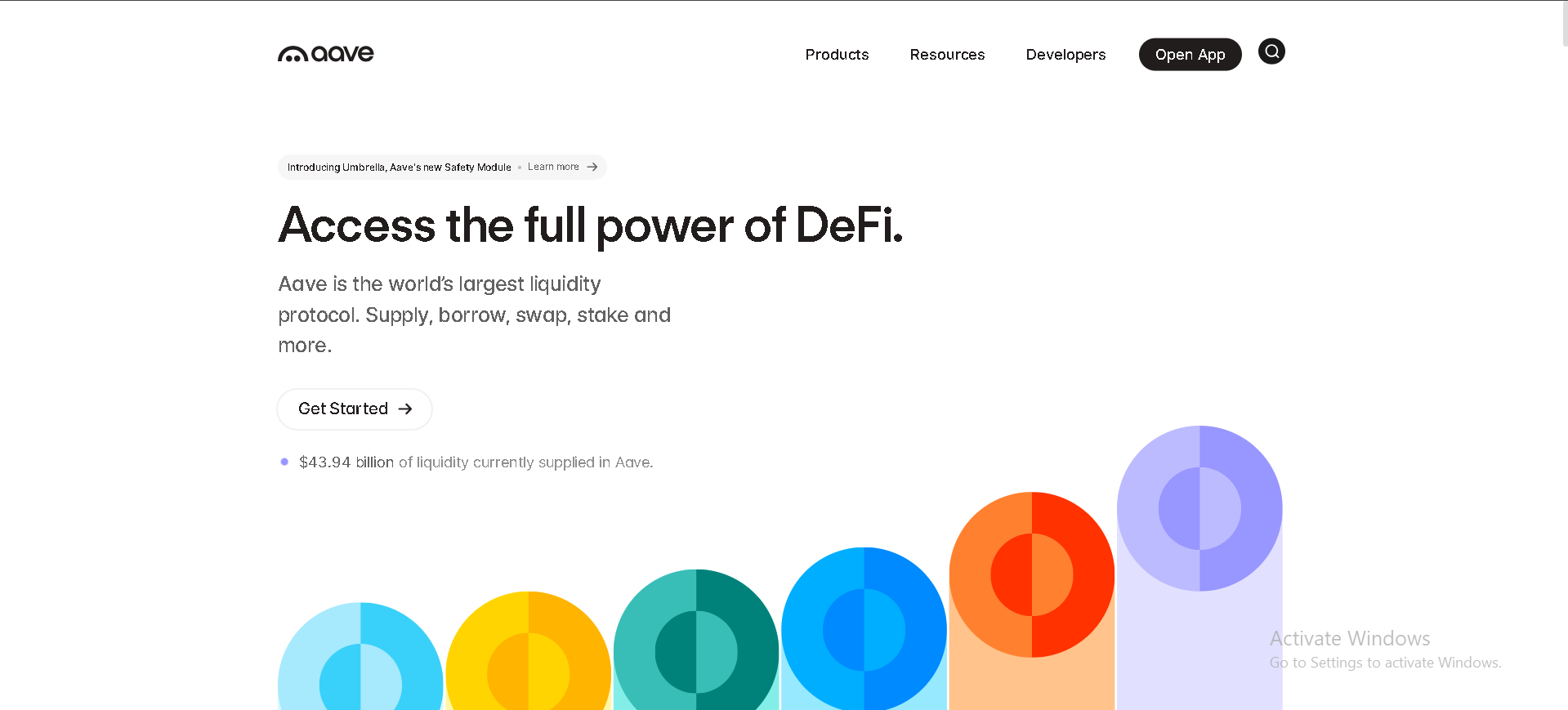
Aave is a decentralized finance (DeFi) protocol built on Ethereum and multiple Layer-2 networks that allows you to lend and borrow cryptocurrencies without intermediaries, establishing itself as one of the best crypto lending platforms in the DeFi space. The platform runs on 14+ blockchains and automatically adjusts interest rates based on supply and demand.
Aave's total value locked has more than doubled in 2026, rising from around $21 billion to $43.4 billion. What makes Aave unique is its flash loan feature, which allows uncollateralized borrowing as long as you repay within the same transaction block.
The platform is governed by AAVE token holders who can vote on proposals and stake in the Safety Module to earn around 5-7% APY plus additional rewards. Aave launched its own stablecoin called GHO, backed by assets from Aave V3.
Lending rates can reach up to 66.93% APY, depending on the crypto, with over 290 different tokens available to lend. Interest rates adjust algorithmically based on pool utilization, with the goal of maintaining 80-95% optimal usage.
Aave routes approximately 10-35% of borrower interest to the DAO treasury as a reserve factor, with the percentage varying by specific token. Variable and stable rate options are available to borrowers, and all rates change in real time based on market conditions.
Pros
-
Flash loans provide unique arbitrage opportunities unavailable on traditional lending platforms
-
Multi-chain support across 14+ networks gives you the flexibility to choose lower gas fees
-
No identity verification required maintains your privacy while accessing financial services
-
Token holders get governance rights to influence protocol development and parameters
-
Strong security track record with regular smart contract audits and bug bounty programs
Cons
-
No consumer protections or insurance like traditional financial institutions provide
-
Gas fees on Ethereum mainnet can be expensive during network congestion
-
Smart contract risks remain despite audits, as vulnerabilities can still exist in code
- Dai
- Frax
-
USD Coin
11
No result
- English
How Crypto Lending Platforms Work

Crypto lending platforms can be complex due to product-specific terms and concepts like interest and repayment deadlines. Crypto loans are excellent for accessing liquidity or temporarily cashing out without triggering a taxable event by selling. Below, we explain exactly how they work.
How to get Crypto-Backed Loan
If you’d like to borrow against crypto, you must understand how the process works and what factors will affect your maximum loan amount and repayment terms. Most platforms aim to enhance accessibility by making crypto lending suitable for both beginners and experienced users.
The core steps to getting a crypto loan are as follows:
1. Deposit Crypto as Collateral
The first step of the process is creating an account with one of the best crypto loans platforms. Choose a lending platform that has a good track record, reasonable fees, favorable repayment terms, and supports the assets you own.
One of the most essential concepts to grasp before starting the lending process is the crypto Loan-to-Value (LTV) ratio. It represents how large a loan you can receive based on the collateral you provide.
Say, for instance, that a lending platform offers a 50% LTV ratio on Bitcoin. You deposit $1,000 in BTC to use as collateral. The platform will provide up to $500 (50% of your collateral deposit).
Generally, larger, more established assets have better LTV ratios than smaller alternatives due to volatility risk. Less popular cryptocurrencies are more susceptible to price fluctuations. So, the loan platform must offer a smaller LTV to recoup losses if the loan isn’t repaid and prices fall significantly.
Here are some examples of popular assets and their LTV ratios on Nexo, a widely used lending platform:
| Asset Name | Loan-to-Value Ratio |
| Tether (USDT) | 90% |
| Bitcoin (BTC) | 50% |
| Ethereum (ETH) | 50% |
| Polygon | 33% |
| XRP | 30% |
2. Receive Loan Funds
Once you deposit collateral and accept the platform’s terms, you’ll receive your collateralized loan promptly. Smart contracts store your collateral, distribute the loan, and accept repayments.
The payment currency can vary, but most crypto lending services will let you choose between stablecoins and fiat, while some support payments in BTC or altcoins.
3. Repay the Loan and get Your Collateral Back
You’ll need to pay back your loan, including interest, sometime after receiving it. If you fail to repay or maintain collateral requirements, the platform will sell your collateral to cover the loan.
The premium you pay will differ depending on the terms of your loan. The platform or a lender can set the interest rate, but it will be disclosed before the loan.
Depending on the platform and the agreed terms, loans can be flexible with no set repayment date or have a fixed deadline, usually 3, 6, or 12 months. It’s crucial to note that you must repay your loan using the same asset you used for collateral, not the asset the provider used to distribute it.
Generally, the longer the loan period, the higher the interest rate. This is because the lender takes on a greater risk of asset prices changing adversely across long-term loans. However, Decentralized Finance (DeFi) lending platforms tend to have no fixed terms and base interest rates on supply and demand.
How to Lend Your Crypto to Gain Interest
Understanding crypto lending mechanics is necessary if you want to earn interest on crypto holdings by lending your assets out. The concept and terminology are similar to borrowing crypto, but the lending process is notably different.
There are two main types of lending. On platforms like CoinLoan, you can set terms like interest rate and duration and lend directly to users. Alternatively, you can use a DeFi protocol like Compound to delegate your assets to a liquidity pool, where the platform will automatically manage and distribute the crypto.
Regardless of the lending method, the platform will pay you a crypto lending APY, or Annual Percentage Yield, effectively interest, using the revenue it generates from borrowers. Before you delegate your assets to a specific program, you should consider the potential for market fluctuations and check expected returns.
CeFi vs. DeFi Lending: Centralized vs. Decentralized
As we’ve touched on, there are multiple methods of crypto lending. There are Centralized Finance (CeFi) lending platforms like Nexo and Decentralized Finance (DeFi) lending platforms, including Aave and MakerDAO. Each has its own advantages and disadvantages. But which is right for you?
1. Centralized Finance (CeFi) Lending Platforms
Centralized lending platforms are similar to traditional crypto exchanges. They act as intermediaries, enabling users to deposit crypto, which the platform stores and manages on their behalf. Some examples include Nexo, Binance Loans, and YouHodler.
CeFi lending platforms provide several benefits. They’re typically user-friendly, bundle additional features like on/off ramps, and boast high liquidity for larger loans. As such, they can be ideal for people who haven’t used a crypto loan service before, require a large loan, or want to use their loan for trading.
However, these platforms take custody of your assets, which can cause issues in case of solvency issues or restrictions related to regulations that limit platform access. Regarding CeFi vs. DeFi, centralized platforms typically provide less user control, so they’re better for people who value ease of use.
2. Decentralized Finance (DeFi) Lending Platforms
According to DeFiLlama lending statistics, $75.85 billion is locked in decentralized lending protocols. DeFi lending protocols utilize smart contracts to automate the lending process and eliminate the need for intermediaries. Users delegate their assets to liquidity pools, which others pull from when borrowing via a crypto loan.
One of the core benefits of DeFi lending platforms is better control and custody. A platform cannot access your funds as they’re locked in smart contracts connected to your wallet. They can also offer higher APY than CeFi because no intermediaries are involved, and the yield is based on market demand.
Due to the blockchain’s usage, decentralized lending platforms are typically more transparent than centralized options and come with fewer regulatory risks.
While DeFi lending platforms are robust options, they’re typically significantly less user-friendly and require some knowledge of wallets and connecting to Decentralized Applications (dApps). Moreover, they’re only as secure as their smart contracts, so these platforms can introduce additional risks via improper code or a lack of audits.
Decentralized crypto lending platforms are strong choices if you’re privacy-conscious or would rather trust your money to algorithms and smart contracts than central intermediaries.
CeFi and DeFi Lending Platforms Compared
| Feature | Centralized Finance (CeFi) | Decentralized Finance (DeFi) |
|---|---|---|
| Custody | Custodial | Non-custodial (user controls seed and keys) |
| Central Intermediary | The platform | No, controlled by smart contracts |
| User Experience | Beginner-friendly and intuitive | Requires some knowledge of wallets, dApps, and lending protocols |
| Main Advantage | Ease of use, regulated, built-in exchange functionality | Greater control, no central controlling authority |
| Main Risk | Mismanagement of funds, insolvency | Smart contract bugs, hacks |
| Typical APY | Lower (3% to 10%) | Higher (5% to 15%) |
| Regulatory Restrictions | Subject to regulations that could impact lending offerings | Generally not regulated or subject to regulation |
The Risks of Crypto Lending – What You Must Know

The crypto lending platform market is expected to grow by a Compound Average Growth Rate (CAGR) of 16.75%, making it an excellent option for earning passive income with crypto. It’s an easily understandable model that resembles traditional financial products. However, before getting involved, there are some crypto lending risks to be aware of.
1. Liquidation Risk
Cryptocurrency is a volatile asset class. Substantial moves are typical and can occur quickly, without notice. As a result, liquidation risk is the most significant danger people face when using crypto lending platforms.
If the asset you’ve used as collateral for a crypto loan drops in value too much, it could trigger an automatic liquidation. This occurs when a price decrease causes the LTV ratio of your collateral to fall below a certain threshold. For example:
- You borrowed $1,000 using Bitcoin as collateral. The loan has a 50% LTV ratio, so you put in BTC worth $2,000.
- The asset’s price fell by 60%, meaning your collateral is only worth $800, which isn’t enough to cover your loan.
- Before it becomes impossible to pay back, the platform will liquidate your collateral to pay the loan, canceling your obligation.
Liquidation shields the lender from losses, ensuring the loan is always overcollateralized and can be paid in full. Some platforms charge an additional fee to cover the liquidation service. Generally, users are alerted when their loan is nearing liquidation so they can add collateral or pay back their borrowing beforehand.
2. Platform & Smart Contract Risk
Market conditions are challenging to predict, making liquidations dangerous. However, platform or smart contract-related risks are also prevalent, so you shouldn’t overlook them.
The most common risk associated with lending platforms is the possibility of hacks. Bad actors target these service providers as they’re trusted to control large amounts of user funds. If a platform hasn’t been properly audited or has security weaknesses, it could result in a complete loss of funds.
The same issue is common in DeFi. While the platforms are attacked less frequently, smart contracts are common targets as they store customer funds, and bad actors can exploit them if they are not adequately secured. For example, Euler Finance lost $187 million through a flash loan attack that manipulated its liquidation system.
Centralized services might use client funds for other purposes. If a lending company can’t pay its debts, it could take users’ funds to cover its obligations. This concept is called rehypothecation. It’s a significant issue on CeFi platforms, so many providers store user funds in segregated accounts, but the risk remains.
Conclusion
Lending and borrowing via crypto loans is an important financial decision. You can lend assets to earn interest or receive a crypto loan without selling your holdings and triggering a taxable event, so it’s a powerful tool for temporarily cashing out or freeing up funds for purchases and expenses.
Yet, balancing risk vs reward is crucial when you borrow or lend crypto. You must understand the dangers of liquidation, platform insolvency, and rehypothecation. While CeFi lending platforms are ideal for large loans as they have deep liquidity, DeFi alternatives are excellent for reducing intermediary risks.
Due diligence is a must when choosing the best crypto loans platform. Always take time to understand the provider’s terms and how it handles liquidation or lending issues. While it can seem low risk, never lend more than you can afford to lose, as there is a chance you’ll lose your investment.
Our crypto lending conclusion is that while each platform we’ve examined is established, trustworthy, and well-featured, Binance is the best all-around crypto loans provider thanks to its high APYs, protective measures, and user experience.
FAQs
Can I use any crypto as collateral for a loan?
Crypto loans are a popular product with traders and investors. They’re available on popular exchanges and dedicated lending platforms. Users can deposit their crypto holdings as collateral and receive a loan for a percentage of the value.
What is a margin call in crypto lending?
If the value of your collateral assets drops too heavily, to the point where they may not be able to cover the loan’s value, the platform will issue a margin call. This warning prompts the borrower to deposit additional collateral or face liquidation (selling collateral to cover the loan).