- Key Takeaways
- Quick Comparison – Top Forex Brokers for Beginners
- Top Forex Brokers for Beginners – Detailed Reviews
- What Is a Forex Broker and How Does It Work?
- How We Chose the Top Forex Brokers for Beginners
- How to Choose the Best Forex Broker as a Beginner
- Key Risks of Forex and CFD Trading for Beginners
- Frequently Asked Questions
Top Forex Brokers for Beginners in 2026

- When you click links on this page, we may earn an affiliate commission. By using this website you agree to our terms and conditions and privacy policy.
- Participation in online gambling may be illegal in your country and is subject to age restrictions (18, 19, or 21, depending on the jurisdiction). Verify legality and age requirements before participating. Learn more
There’s no easy answer to which forex broker is best in 2026. There are hundreds of options, each offering different features, costs, terminology, and trading capabilities. As a result, it can be challenging for beginners to determine a platform’s quality and the effectiveness of its security measures.
Throughout this guide, we compare the top forex brokers for beginners, highlighting each’s features, range of forex instruments, security, and overall user experience. We explain what to look out for and how to choose the best option for your personal needs.
Although forex and Contract for Difference (CFD) trading present many potentially valuable opportunities, they’re high-risk activities that require significant knowledge and learning. The principal is not protected. You could lose your entire investment.
Key Takeaways
- Reputable forex brokers are regulated and able to legally serve your country. Unregulated brokers are insecure and should be avoided.
- Beginners should prioritize platforms offering demo trading and micro accounts with reduced lot sizes.
- The best forex brokers for beginners offer a blend of simplicity, low fees, affordable minimum deposit requirements, charting options, and educational resources.
- Leverage is commonly used in forex, but it amplifies both your losses and profits, so novices should approach it cautiously and start small.
- This guide is exclusively educational. It doesn’t recommend a specific broker. The final decision should be a personal choice based on your particular needs.
Quick Comparison – Top Forex Brokers for Beginners
| Broker Name | Best For | Regulations | Minimum Deposit | Leverage (Approximate) | Platforms | Demo Accounts | Major Beginner Features |
|---|---|---|---|---|---|---|---|
| XM.com | Best for MetaTrader users | CySEC, ASIC | From $5 | Up to 30:1 (EU/UK); up to 1000:1 offshore | MT4, MT5 | Yes | Extensive education & market research |
| eToro | Best for copy trading beginners | FCA, ASIC, CySEC | From $50 | Up to 30:1 (EU/UK) | Proprietary platform, web, mobile apps | Yes | Social trading & copy trading ecosystem |
| Uphold | Best for multi-asset trading | FinCEN (US), FCA | From $10 | Up to 1:50 | Proprietary platform, mobile app | Yes | One-step asset trading, easy wallet integration |
Top Forex Brokers for Beginners – Detailed Reviews
Below, we break down our top-rated forex brokers for beginners, covering all the essential considerations that are worth knowing before you decide which platform suits you best.
Uphold
Uphold is a regulated crypto trading platform that provides access to 20 currencies, enabling limited forex trading. There are no currency pairs; users can only buy/sell individual currencies, but people can still pit two currencies against each other by taking a loan in one currency and using Uphold to buy another.
Beginners will feel at home on Uphold due to its "Anything-to-Anything" trading system, which makes swapping between two assets simple enough for anyone, regardless of their experience. Uphold doesn’t offer leverage or a toggle for switching between simple and advanced modes, but it’s not necessary with the beginner-friendly interface.
The FCA, FinCEN, FINTRAC, and Lithuania’s FNTT license Uphold, enabling it to operate legally across the UK, USA, Canada, and Europe. Uphold is relatively limited. Neither a demo account nor MetaTrader connectivity is available. Analysis options are also restricted, with Uphold lacking TradingView integration; instead, it offers a basic line chart.
The minimum deposit on Uphold varies, but it’s $10 for most regions and payment methods. However, UK-based traders can fund Uphold with any amount, free of charge. The same applies to SEPA transfers within the European Economic Area.
Although it lacks many beginner-centric features or tools, Uphold remains a solid choice for those with little to no forex experience, as it only offers spot trading and boasts an intuitive trading system. There are no high-risk tools for advanced users, but Uphold integrates tax software.
The fee for major forex pairs is 0.3%, which is roughly equivalent to 3,000 pips, significantly more than specialized CFD or forex brokers. Despite its expensive fees and limited currency selection, Uphold is a top forex broker for beginners seeking a no-frills spot trading platform.
Pros
-
Regulated by multiple leading authorities
-
Intuitive trading system
-
No advanced or high-risk tools
-
Extremely straightforward platform
-
Low or no minimum deposit requirements
Cons
-
No currency pairs (spot currencies only)
-
Higher-than-average forex fees
- Tether
- TrueUSD
-
USD Coin
144
No result
- English
What Is a Forex Broker and How Does It Work?
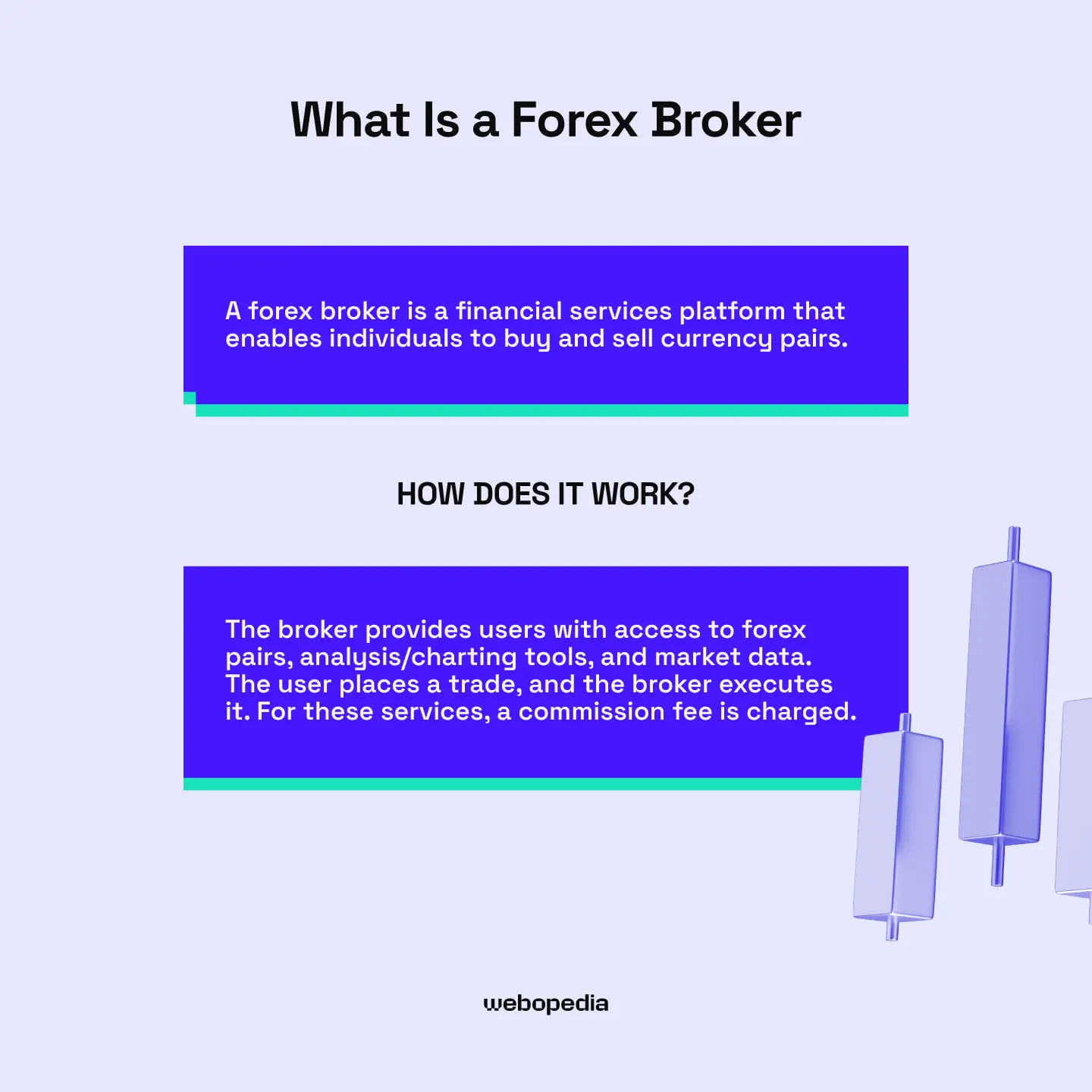
A forex broker is a financial services platform that enables individuals to buy and sell currency pairs. The broker provides users with access to forex pairs, analysis/charting tools, and market data. The user places a trade, and the broker executes it. For these services, a commission fee is charged.
Five of the most popular forex pairs are:
- USD/JPY
- EUR/USD
- USD/GBP
- USD/CAD
- AUD/USD
If you’ve spent much time seeking forex trading platforms for beginners, then you might have also heard about crypto exchanges. They’re highly popular trading platforms that offer cryptocurrencies, such as Bitcoin, instead of forex pairs. Some of them lack traditional financial instruments, such as stocks, and are subject to different regulatory requirements.
While the assets available are the most significant difference between forex brokers and crypto exchanges, there are numerous additional technical distinctions between the two:
- Order Matching: While forex brokers typically match orders themselves or send trades to liquidity providers, crypto exchanges pair buyers and sellers together directly.
- Leverage Availability: Forex brokers like XM typically offer up to 1:1000 leverage on currency trades, enabling users to capitalize on small movements. Because the crypto market is more volatile, leverage limits are lower, typically capped at around 1:125.
- Trading Hours: Although the forex market typically operates between Monday and Friday, 24 hours per day, the crypto market has no downtime and is active 24/7.
- Settlement Process: Forex brokers typically utilize Contracts for Difference (CFDs), allowing users to speculate on an asset’s performance without owning it. On the other hand, crypto exchanges usually require users to take custody of the tokens, which can be withdrawn to an external wallet.
- Customer Protection: The top forex brokers for beginners are heavily regulated, so they usually offer policies that protect customers. For example, the Financial Services Compensation Scheme (FSCS) protects UK traders and investors. Crypto exchanges may offer crime insurance, but are more susceptible to hacks or insolvency.
Before using a regulated forex broker, you should familiarize yourself with commonly used terminology, such as:
- Currency pairs: Two different currencies paired together for trading. For example, USD/CHF. Majors are defined as trading pairs denominated in USD.
- Spread: The difference between the buy and sell price of an asset. Often used by forex brokers as an alternative to commission fees.
- Pips: Short for ‘Percentage in Points’, a pip is the smallest and standard unit in which a price change is measured. For forex, one pip is equal to 0.0001%.
- Order types: Enable users to enter and exit a trade precisely, based on specific conditions, most commonly price. Some popular trading order types include limit (executes at a certain price), market (executes at the best current price), and take profit (closes part of the trade when a certain price is hit)
- Leverage and margin: Forex CFD trading with leverage lets users amplify their position size (and profits/losses), enabling them to trade minor price movements. For example, from our trading with leverage explanation guide: if you’re using 10x leverage and open a $10,000 position, you only need $1,000 in capital.
How We Chose the Top Forex Brokers for Beginners
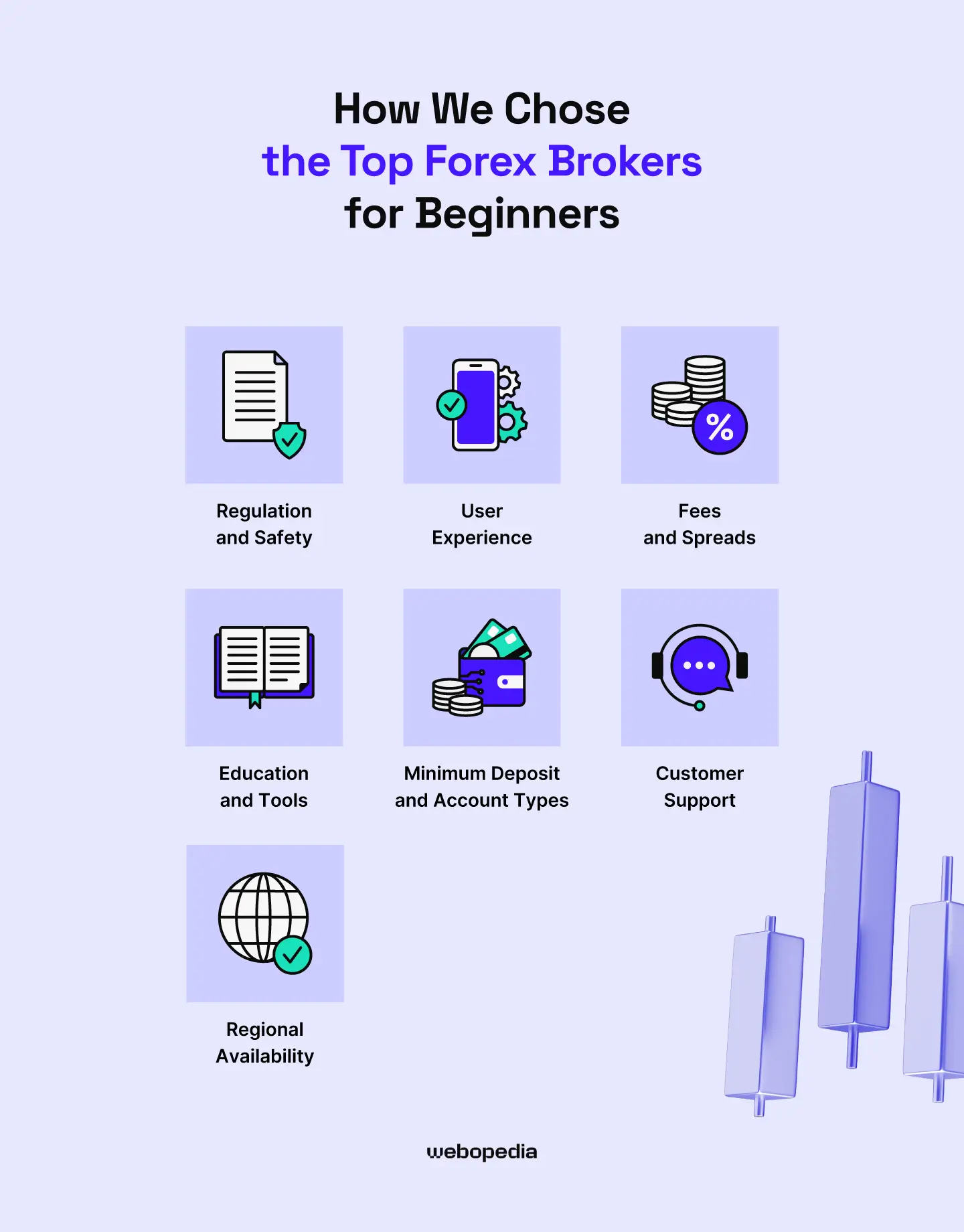
Selecting the best forex broker for beginners is an important task. As such, our picks must be based on fact and sound reasoning. Our ranking criteria and reasoning are explained in detail below.
Regulation and Safety
One of the most crucial aspects to consider when selecting a forex broker is its regulatory status. We prioritize platforms that hold licenses issued by leading authorities in multiple jurisdictions. For example, the FCA in the UK and FinCEN in the US.
General user safety is also an essential factor when selecting a forex broker. Therefore, we look into each platform’s track record and reputation. If a broker has been hacked or users regularly report poor experiences, it doesn’t make it through our selection process.
User Experience
To ensure that our picks are easy to use and accessible for novices, we only include brokers with a straightforward and intuitive interface, a convenient mobile app for on-the-go trading, and a simple account opening/verification process. This approach ensures that individuals with limited forex experience can still trade effectively.
Fees and Spreads
Fees apply whenever a user places a trade using a forex broker. These charges are unavoidable, so we focus on minimizing spread/commission costs, transparent pricing, and low overnight financing costs.
Nobody likes paying more than they have to, so we never include brokers that charge overly expensive or uncompetitive fees in our lists. This way, readers can easily find a solid platform without worrying about high costs.
Education and Tools
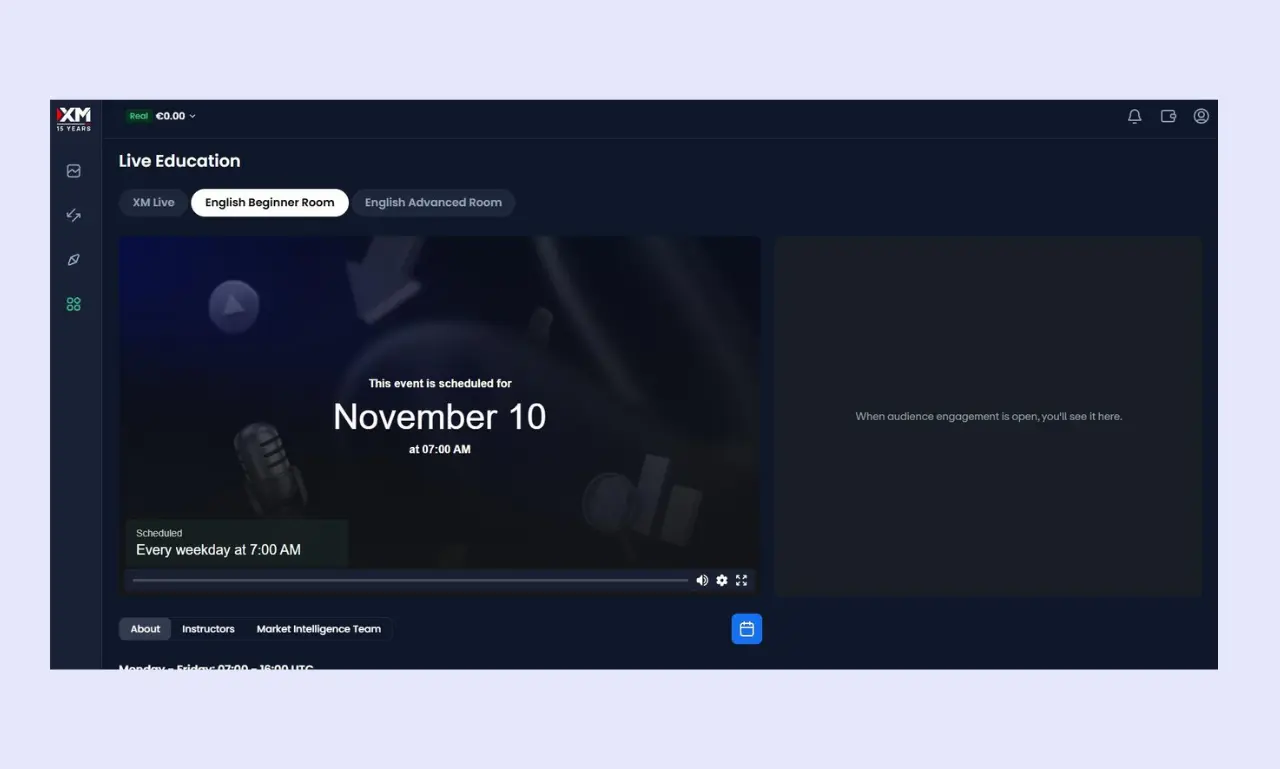
Educational resources are often overlooked, yet they have a significant impact on usability and the overall user experience. We look for platforms that cover the basics of forex trading, explain the features they offer, and provide guides on more advanced topics, like technical analysis techniques.
The best forex broker for beginners will offer a variety of educational resources. Typically, a help center covers troubleshooting and general platform tips, while webinars or tutorials with professional hosts provide in-depth trading knowledge.
Another significant factor we consider when providing our recommendations is whether the broker offers a forex demo account. Demo or paper trading accounts allow users to practice trading using a proper trading platform and live price data, without risking actual money.
Minimum Deposit and Account Types
High minimum deposit requirements have no benefit to users. They alienate beginners or traders with limited capital, make brokers less user-friendly, and complicate the funding process.
We recommend low minimum deposit forex brokers as they have minimal barriers to entry, ensuring that they’re easily accessible regardless of budget. We also check whether brokers offer special trading accounts. For example, micro or cent accounts that have smaller lot sizes, enabling lower-value trades.
Customer Support
Having multiple avenues of customer support ensures that users can get prompt assistance efficiently and effectively. The brokers we’ve examined and included in our selection provide a help center to explain features/address general issues, as well as a form of human-to-human support (live chat or phone) for more complex queries.
Regional Availability
As we’ve mentioned, forex brokers are subject to strict regulations that impact where they can operate and which features are available to users.
The brokers we recommend are accessible globally and are licensed to operate in these jurisdictions. Platforms that operate without proper approval offer inferior customer protection and are likely to face consequences, including the need to suspend operations, so we exclude these options.
How to Choose the Best Forex Broker as a Beginner
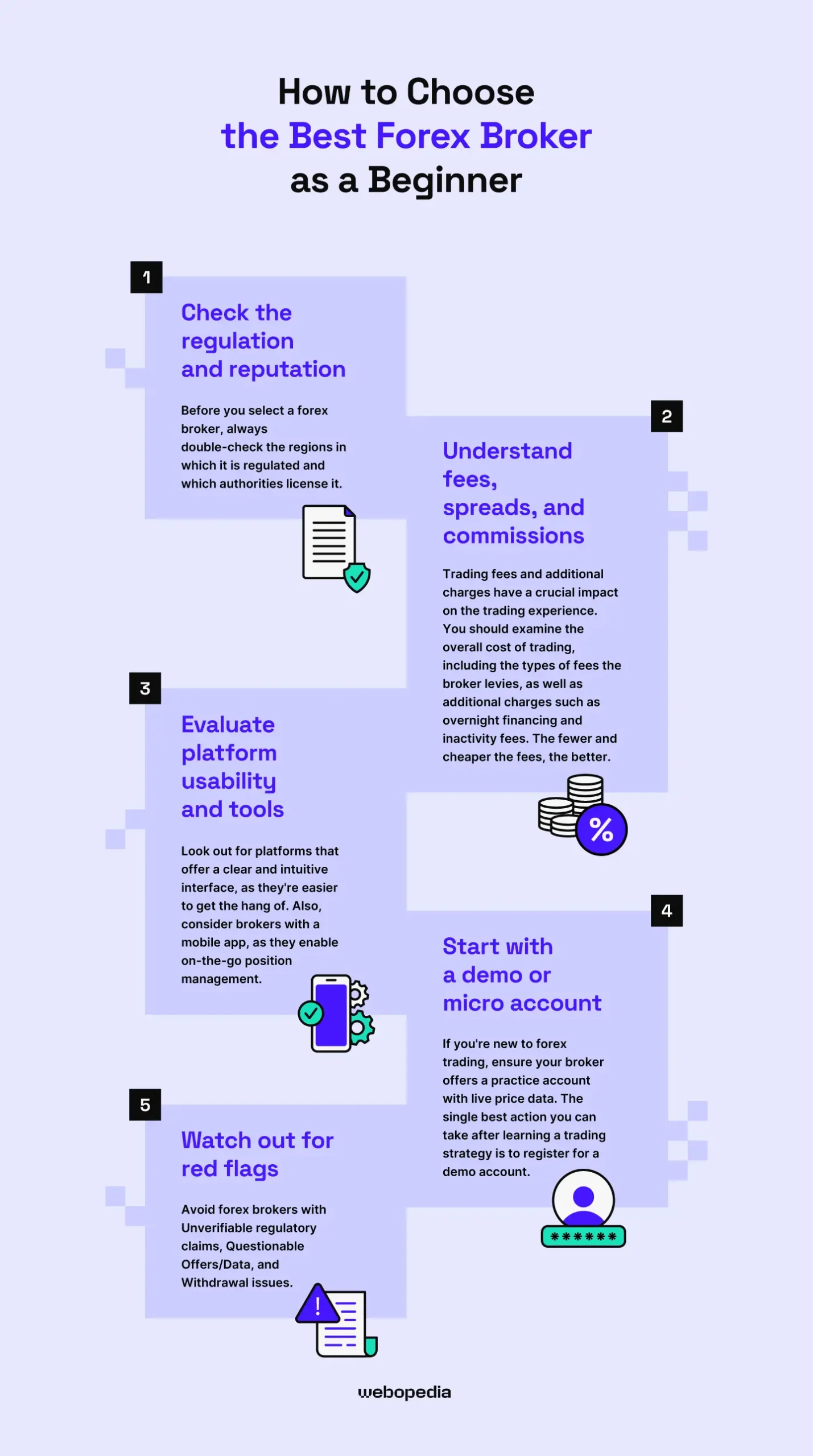
Struggling to determine how to choose a forex broker? Our checklist helps you identify the key factors to consider and the specific details to look for during the evaluation process.
Step 1: Check the Regulation and Reputation

Before you select a forex broker, always double-check the regions in which it is regulated and which authorities license it.
Prioritize platforms that are regulated in your country of residence or licensed by top-tier authorities, such as:
- The UK’s Financial Conduct Authority (FCA)
- The US’s Financial Crimes Enforcement Network (FinCEN)
- The Financial Transactions and Reports Analysis Centre of Canada (FINTRAC)
- Germany’s Federal Financial Supervisory Authority (BaFin).
Unfortunately, some brokers claim to be regulated but lack the proper approval or licenses. Thankfully, you can verify their authenticity by searching their names or registration numbers on official regulator registers.
You should avoid unregulated brokers. They lack customer protection and often trade against users to boost profits. Likewise, you shouldn’t consider platforms that operate offshore in unregulated jurisdictions. Some fraudulent brokers also operate Telegram scams, where they’ll contact users and attempt to coerce them into depositing to a fake platform.
Step 2: Understand Fees, Spreads, and Commissions

Trading fees and additional charges have a crucial impact on the trading experience. You should examine the overall cost of trading, including the types of fees the broker levies, as well as additional charges such as overnight financing and inactivity fees. The fewer and cheaper the fees, the better.
To illustrate the dangers of high trading fees:
Say you trade one standard lot size 100 times, earning 10 pips of profit from each.
A forex broker that charges a 1 pip fee yields a net profit of 900 pips, while a 3 pip fee results in 700 pips of profit. In fiat terms, that’s a $2,000 difference (1 pip for a standard forex lot is $10), representing 25% of your potential profits.
So, while a 2-pip difference may seem small on paper, it may not be so insignificant, considering it could erode a quarter of your profits before even accounting for overnight financing or commission fees.
There are four main types of fees:
- Spread: The difference between buying and selling prices.
- Commission: A flat fee that applies to forex trades. Usually measured in percentage, pips, or USD based on a $100,000 transaction size.
- Overnight Financing: A charge for holding an open position after the market closes or the trading day ends.
- Inactivity Fees: Brokers often charge $5 to $10 per month if an account remains inactive (i.e., no trading activity for 6 to 12 months).
With forex brokers charging an extensive range of fees and seemingly minor differences resulting in substantial profit changes, you should pick a broker with a transparent fee structure and as few/low trading costs as possible.
Step 3: Evaluate Platform Usability and Tools
A broker must be well-equipped and provide a strong overall user experience. If it doesn’t, it’s not worth using.
Look out for platforms that offer a clear and intuitive interface, as they’re easier to get the hang of. Also, consider brokers with a mobile app, as they enable on-the-go position management.
In terms of trading features, the top forex brokers for beginners typically provide basic educational materials, demo accounts, and risk management tools, including stop-loss orders, negative balance protection, margin call or liquidation warnings, and position size calculators.
Other tools that sharply enhance the user experience include economic calendars, which display upcoming events with significant market impact, access to a variety of order types, and fast order (trade) execution.
Step 4: Start with a Demo or Micro Account
If you’re new to forex trading, ensure your broker offers a practice account with live price data. The single best action you can take after learning a trading strategy is to register for a demo account. They let you test and develop your techniques without risking real money.
Most reputable forex brokers offer a demo account that users can access with their standard login information. Platforms that provide easy switching between demo and live trading should be prioritized.
Once you’ve graduated from demo trading and are confident in your skills, it’s advisable to start with small position sizes and lower leverage to get a feel for live trading and its psychological effects.
To make small trades easier, you should look for brokers offering micro accounts, which have smaller lot sizes, resulting in lower minimum position requirements, enabling lower-value (and subsequently lower risk) trades.
Step 5: Scan for Red Flags
Now you know how to choose a solid forex broker, but how do you avoid fake platforms? There are several red flags to be aware of. If any of these apply to a broker you’re considering, avoid it at all costs:
- Unverifiable regulatory claims: Some brokers claim to be licensed by leading regulators, such as the FCA, in the hope that users won’t verify the information. If you’re unsure about a platform, search for it in the regulator’s database. If the details don’t match, do not use that broker.
- Questionable Offers/Data: Common techniques employed by fraudulent platforms to lure users into depositing include displaying highly valuable offers with minimal decision-making periods, promising substantial or guaranteed returns, or providing overly positive (fake) user testimonials that emphasize profits.
- Withdrawal issues: Check whether users on review sites like TrustPilot or forums like Reddit have experienced frozen withdrawals, excessive minimum withdrawal limits, or high fees. Platforms that intentionally obstruct the withdrawal process attempt to make it difficult, encouraging users to deposit more to reach withdrawal limits, prolonging the scam.
Key Risks of Forex and CFD Trading for Beginners
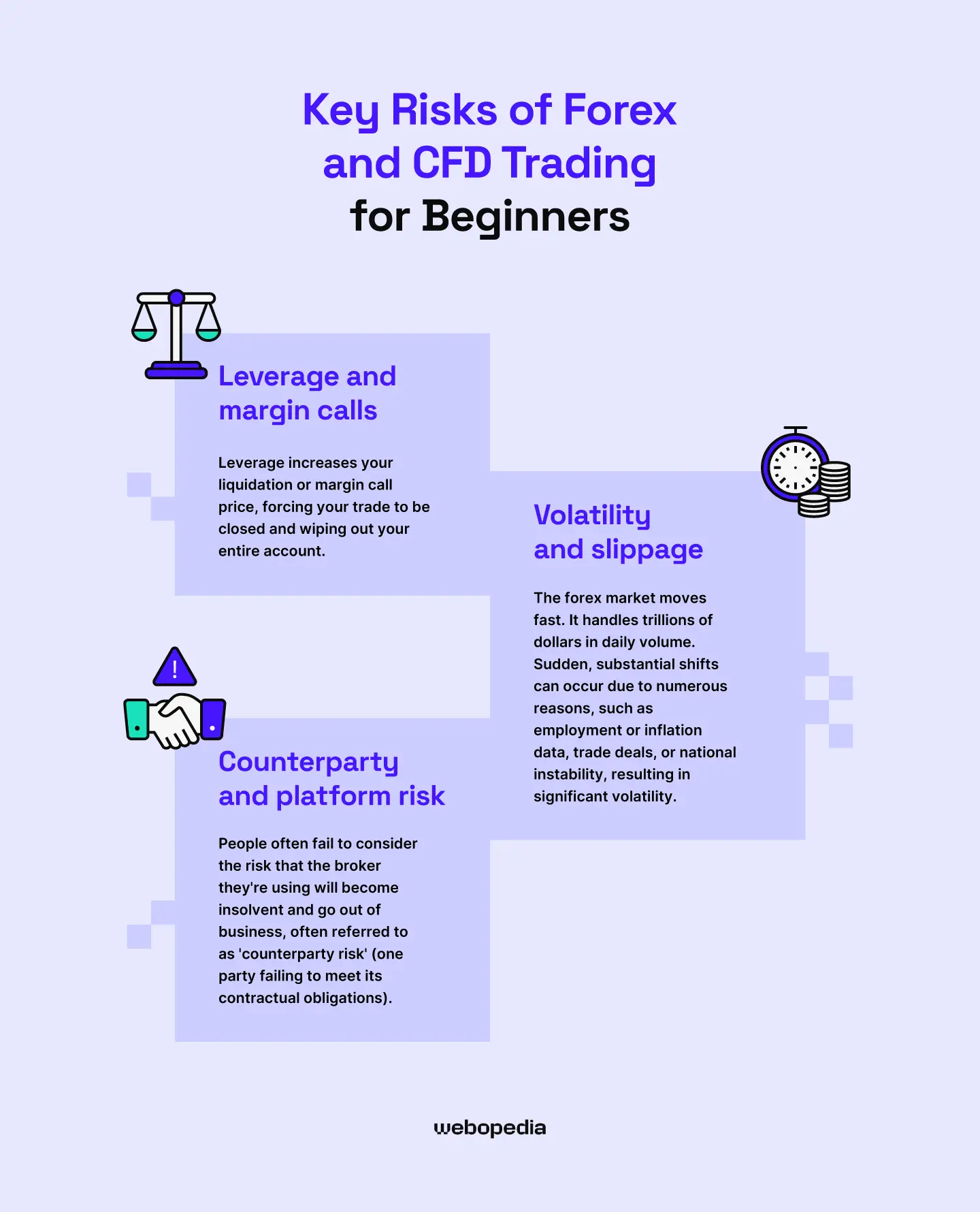
If you’re looking for a beginner-friendly forex broker, taking care to understand the market’s risks is essential. Trading is inherently risky; forex is particularly so, due to its high leverage limits and the impact of general macroeconomic events (events that affect the economy as a whole), such as war and inflation.
Leverage and Margin Calls
It can be tempting to jump into trades using lots of leverage. Doing so increases profits (and losses); therefore, many novice traders over-leverage when starting out. However, leverage increases your liquidation or margin call price, which forces your trade to be closed, wiping out your entire account.
Volatility and Slippage
The forex market moves fast. It handles trillions of dollars in daily volume. Sudden, substantial shifts can occur due to numerous reasons, such as employment or inflation data, trade deals, or national instability, resulting in significant volatility.
These difficult-to-predict moves can lead to excessive slippage (a trade executing at a different-than-expected price), impacting potential profits.
We’ve previously explained how to avoid slippage in crypto trading, but the same rules apply to forex. Use limit orders to enter trades at a precise price, avoid trading during high-volatility events, and trade highly liquid markets or break large trades into multiple smaller positions.
Counterparty and Platform Risk
People often fail to consider the risk that the broker they’re using will become insolvent and go out of business, often referred to as ‘counterparty risk’ (one party failing to meet its contractual obligations).
You can drastically reduce counterparty risks by:
- Using popular brokers: The more customers a broker has and the longer it’s been operating, the less chance of it going under unexpectedly.
- Trading on regulated platforms: Brokers that are licensed in your region will typically be subject to policies that protect users against losses due to bankruptcy.
- Segregated accounts: Reputable brokers will segregate company and customer funds, ensuring that users’ funds are always available for withdrawal, even in the event of insolvency.
Psychological Risk
Trading is hard. There’s no denying it; anyone who claims profits are guaranteed or easy to come by is lying. However, contrary to expectations, one of the significant risks is overcoming psychological hurdles.
Watching a trade go poorly often causes people to chase losses, placing new trades in the hope of recouping their losses or deviating from their original plan, invalidating the trade setup. Another common mistake people make is excessive trading or forcing trades when the opportunity isn’t fully developed.
Moreover, novices often make the mistake of copying popular strategies without fully understanding how they work or the associated risks. Brokers like XM offer copy trading tools for beginners, enabling users to automatically mirror traders in a secure, data-driven environment where key success metrics are transparently displayed.
Any form of trading carries high risk, and forex, in particular, is one of the riskiest markets. The majority of people lose money when trading forex. Therefore, you should only trade with money you can afford to lose and seek independent financial advice if you’re unsure whether forex is right for you.
Frequently Asked Questions
How much money do I need to start trading forex?
As long as you can cover the minimum deposit (often $5), there’s no minimum amount of money required to start trading forex. However, forex is high-risk, so you should consider your financial situation before deciding whether trading is right for you and only risk money you can afford to lose.
Is forex trading good for beginners?
The forex market is one of the riskiest financial markets. It involves using large amounts of leverage to amplify small price changes in an attempt to profit. Currency pairs are heavily affected by macroeconomic events, which can be challenging to predict. While forex trading is worth learning, it could overwhelm beginners.
Is high leverage good or bad for new traders?
Leverage is an essential tool for forex traders. It lets users capitalize on smaller moves, which are common in the foreign exchange market. It significantly increases risk and could cause substantial losses, which is particularly bad for beginners. However, access to leverage helps people learn to use it safely.
Can beginners use copy trading safely?
Copy trading is excellent for beginners to learn about viable forex strategies and observe how established traders respond to specific moves or setups. Reputable platforms provide ample data, so users aren’t forced to follow traders blindly. That said, beginners should be aware that copy trading isn’t without risk.
Are forex brokers or crypto exchanges better for currency trading?
Although some crypto exchanges offer traditional finance (TradFi) instruments or forex pairs, their primary purpose is trading cryptocurrency. Therefore, forex brokers are vastly superior for currency trading. They offer market-specific features, such as economic calendars and higher leverage. Brokers are also more strictly regulated, making them a safer option.