

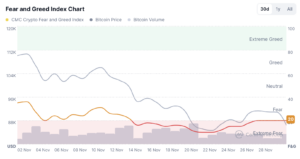
The crypto market recorded its weakest sentiment in more than two years in November, as a series of hacks, liquidations, and macro worries pushed the Fear and Greed Index into prolonged ‘Extreme Fear’. Investors faced the most sustained negative conditions since May 2022, raising questions about whether the downturn reflects a structural shift or a temporary reset.
Sentiment readings collapsed into the low 20s in mid-November after weeks of selling pressure. The shift followed October’s severe liquidation event, which erased billions in leveraged positions and disrupted market confidence heading into the new month.
Hacks and Security Failures Deepened Investor Anxiety
A string of high-profile security breaches set the tone for November. Yearn, Balancer, and Upbit each disclosed significant losses during the month. The incidents hit both DeFi and centralized platforms, reinforcing concerns about ongoing vulnerabilities across the sector.
Upbit’s Solana-network hot-wallet breach resulted in an estimated $36million loss and forced the platform to halt activity in several assets. Analysts said the event amplified existing caution among retail users already unsettled by recent price volatility.
Meanwhile, a cluster of major DeFi hacks, most notably Balancer and Yearn, cast doubt on the perception that security standards had strengthened since the major protocol failures of 2022.
October’s Liquidation Shock Continued to Influence Markets
Although the liquidation cascade occurred in October, its effects dominated sentiment throughout November. The event wiped out up to $20billion in leveraged positions in a single day and affected more than one million traders.
Analysts said the episode marked a clear break in investor psychology. Many traders had relied on repeated dip-buying strategies through earlier volatility. That confidence faded after the liquidation wave, which exposed the fragility of leveraged positions during periods of thin liquidity.
As a result, November saw lower appetite for risk and reduced use of derivatives among retail and professional traders. The shift removed a significant source of momentum that had supported earlier rallies.
Macro Pressure and ETF Outflows Added to Selling
Global recession fears intensified during November. Investors responded by reducing exposure to volatile assets and allocating more capital to cash and short-duration instruments. Crypto often moves with broader risk sentiment, and the shift produced another layer of selling.
Spot Bitcoin ETFs, which had driven strong inflows earlier in the year, recorded sustained outflows through the month. The withdrawal of institutional capital weakened price support and added downward pressure across major tokens.
At the same time, several miners increased selling to cover operational costs. The combined effect of outflows and miner distribution reduced the market’s ability to absorb new supply.
Sentiment Hit Its Lowest Point Since 2022
The Fear and Greed Index stayed firmly in “Extreme Fear” for much of November. The slide reflected the convergence of macro pressure, security breaches, and residual liquidation shock. Analysts noted that retail participation fell sharply as sentiment worsened.
Market depth also thinned, which made price swings sharper. Several exchanges reported lower spot volumes, and derivatives activity remained subdued after the October crash. Traders preferred to reduce exposure rather than position for a rebound.
Despite the negative backdrop, long-term holders continued to accumulate. On-chain data showed limited distribution from wallets with multi-year histories, suggesting that conviction remained strong among those with extended time horizons.
Analysts Split on Whether the Market Has Found a Floor
Several market strategists said the downturn reflects forced selling rather than fundamental weakness.
On-chain researchers argued that ETF outflows drove most of the pressure. They said any slowdown or reversal in outflows could support a rebound if liquidity improves in December.
Technical analysts also highlighted the recent ‘Death Cross’ signal on Bitcoin charts. One report argued that the pattern has marked local bottoms in earlier cycles, as long as support holds near key levels.
Others remained cautious but noted that long-term holders did not join the selloff. They said this behavior indicates confidence in the asset’s long-range outlook, even as short-term participants reduce risk.
What Could Drive a December Recovery
A December recovery will depend on several factors. ETF flows remain the most important signal for institutional sentiment. Even a modest shift from net outflows to neutral flows could stabilize prices.
Market watchers are also monitoring funding rates, open interest, and stablecoin supply. Any rise in stablecoin issuance would suggest returning demand from traders and retail groups.
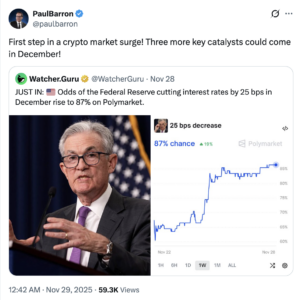
Macro data will influence conditions as well. Signs of easing inflation or improved economic expectations could support a shift back into risk assets, including crypto.
Analysts say security remains a priority after November’s breaches. Platforms that strengthen controls and communicate clearly on risk management may play a larger role in restoring confidence.
Outlook
November exposed several weak points in the crypto market, from security gaps to leverage-driven volatility. However, the month also highlighted a continued divide between short-term traders and long-term holders.
If ETF outflows slow and macro pressure eases, December could mark the start of a stabilization phase. Several analysts said the market appears closer to a floor than a new leg down, although they warned that sentiment will remain fragile.
Investors will watch flow data, liquidity conditions, and security developments as the month progresses. The market has yet to confirm a turn, but the conditions for a shift are emerging.