

Key Takeaways
- Slippage happens when a trade executes at a price different from the one expected, often due to market volatility, low liquidity, or large orders.
- In crypto trading, slippage is common because of rapid price movements and can significantly affect profitability.
- Traders can reduce slippage by using limit orders, trading in highly liquid markets, avoiding high-volatility periods, splitting large orders, and selecting reliable exchanges.
- While there’s no way to fully eliminate slippage, careful planning and execution strategies can minimize its impact.
Crypto traders of all levels, from beginners to seasoned professionals, can face unexpected losses due to slippage. This issue is not specific to crypto markets and can be found in the traditional stock market as well. However, the innate volatility of crypto exacerbates the problem.
Understanding what slippage is, why it happens, and how to reduce it is essential for improving your trading outcomes. In this article, we’ll explore what crypto slippage is and some steps to help you manage it.
What is Slippage?
Slippage is when the actual execution price of a trade differs from the price you expected. This gap results from the time delay between placing an order and its fulfillment, and even fractions of a second can matter in fast-moving markets. In volatile conditions, prices can shift multiple times within a second, so the final trade price may deviate significantly from the initial quote.
This can quickly erode profits or turn a winning trade into a loss. While slippage also affects stocks and forex, the extreme volatility of cryptocurrencies makes it a more frequent concern for traders.
Slippage in Crypto
In crypto trading, slippage refers to the difference between the expected order price and the actual execution price. It can be positive, in which case traders get a better price, or negative, where the final trade is less favourable than expected. It’s the negative slippage that reduces profitability and is a primary concern for most traders.
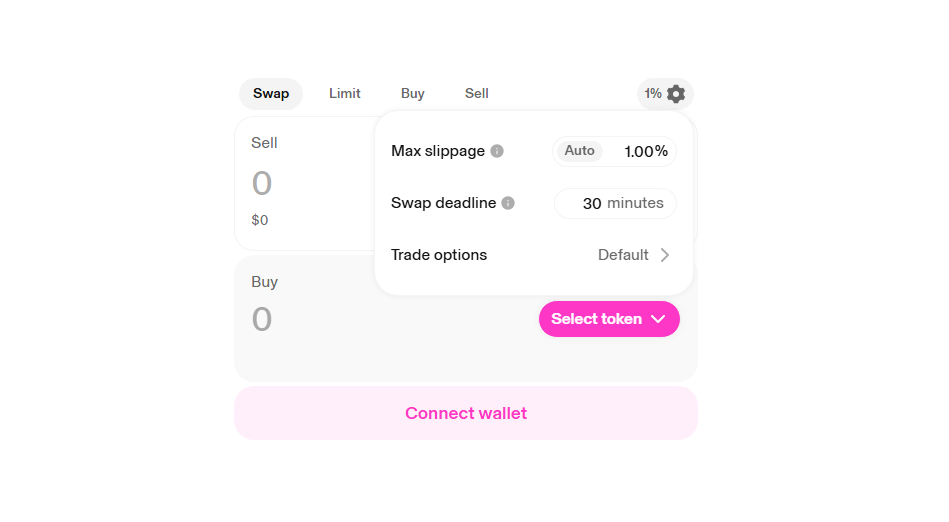
Since crypto markets operate 24/7 and move rapidly, this leads to an increased slippage risk. Market orders, which fill at the best available prices, are especially vulnerable. If liquidity is low, the exchange may need to fill your order at multiple price levels. Network congestion, sudden volatility spikes, and large order sizes can exacerbate the effect event further. News events, large trades by whales, or unexpected market moves often cause sharp price changes within seconds, making execution strategy crucial.
How to Avoid Slippage in Crypto Trading
While it’s not possible to eliminate slippage entirely, you can take steps to minimize your exposure to it.
Use Limit Orders Instead of Market Orders
A highly effective method for minimizing slippage is placing limit orders. With a limit order, you can set the exact price at which you want to buy or sell an asset. The trade will only execute if the market reaches that price, or one more favourable.
Although limit orders protect you from paying more or selling for less than intended, they do not guarantee immediate execution. For example, in fast-moving markets, the price might never reach your limit, so you could miss an opportunity.
Trade in Highly Liquid Markets
Liquidity refers to the ease with which an asset can be bought or sold without significantly affecting its price. Highly liquid markets, such as Bitcoin or Ethereum trading pairs on major exchanges, tend to have tighter bid-ask spreads and less slippage. You can check trading volume and liquidity score ratings on platforms like CoinMarketCap:
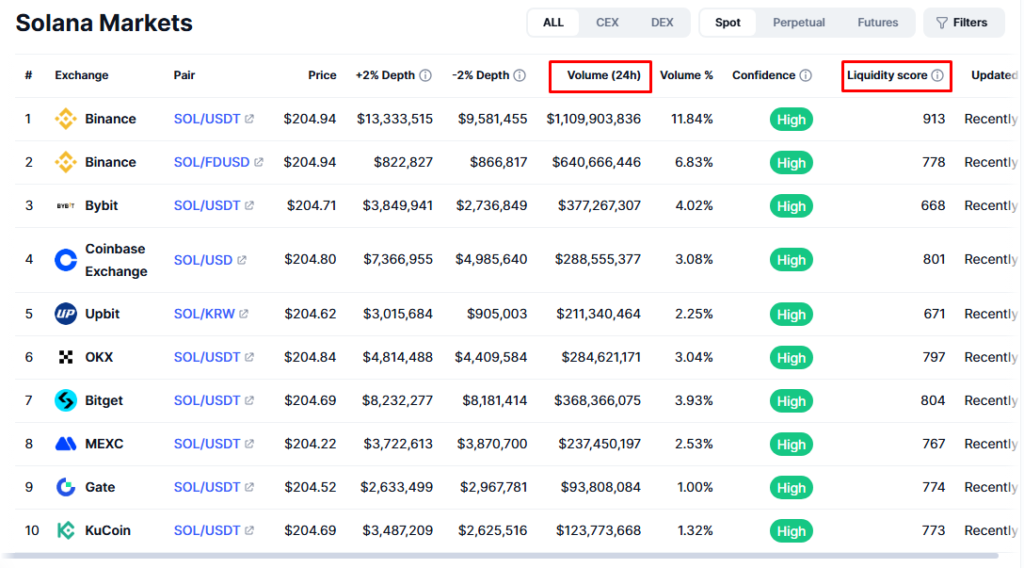
Choosing to trade assets with strong liquidity pools ensures your orders can be filled quickly and at prices closer to your expectations. You can check an asset’s liquidity by looking at its 24-hour trading volume and the depth of its order book.
Avoid Trading During High Volatility Events
Major news announcements, economic reports, and sudden market moves often trigger spikes in volatility. For example, when the U.S. Consumer Price Index (CPI) data is released, it frequently causes sharp price swings in Bitcoin and other cryptocurrencies. During these periods, crypto prices can change dramatically within seconds, making slippage more likely.
If your strategy allows it, avoid opening new positions during these high-volatility windows, since it can be hard to predict short term price movements. Instead, wait until the market stabilizes before executing trades.
Break Large Orders Into Smaller Trades
Large orders can move the market price of the asset you’re trading if liquidity is low. For example, if you’re buying $10,000 worth of a newly-launched memecoin, your trade order will likely push the price of the token. Consequently, this might lead to many traders selling to take profit, bringing the price back down and leaving you at a loss. Instead of placing one large order, break it into smaller trades executed over a longer period of time.
This method, known as order slicing, helps you get a better average price and reduces the risk of your order significantly impacting the market.
Choose the Right Exchange
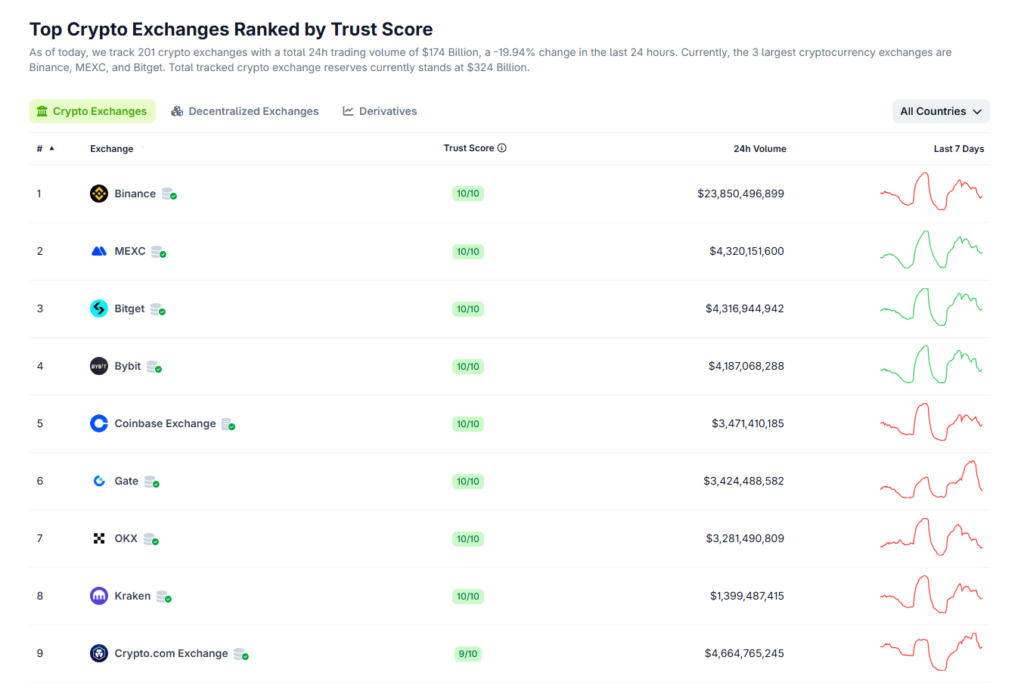
Not all crypto exchanges are equal when it comes to order execution. Some platforms offer faster trade matching engines, better liquidity, or advanced order types that help limit slippage. Research different exchanges, CEX or DEX, and choose one known for low latency, deep liquidity, and competitive spreads. In trading, the spread represents the difference between the buying price and the selling price of an asset. A tight spread indicates high liquidity and large trading volume, while a wide spread means low liquidity and a bigger difference between the two prices. Have a look at the trust scores of the biggest centralized exchanges on a platform like CoinGecko:
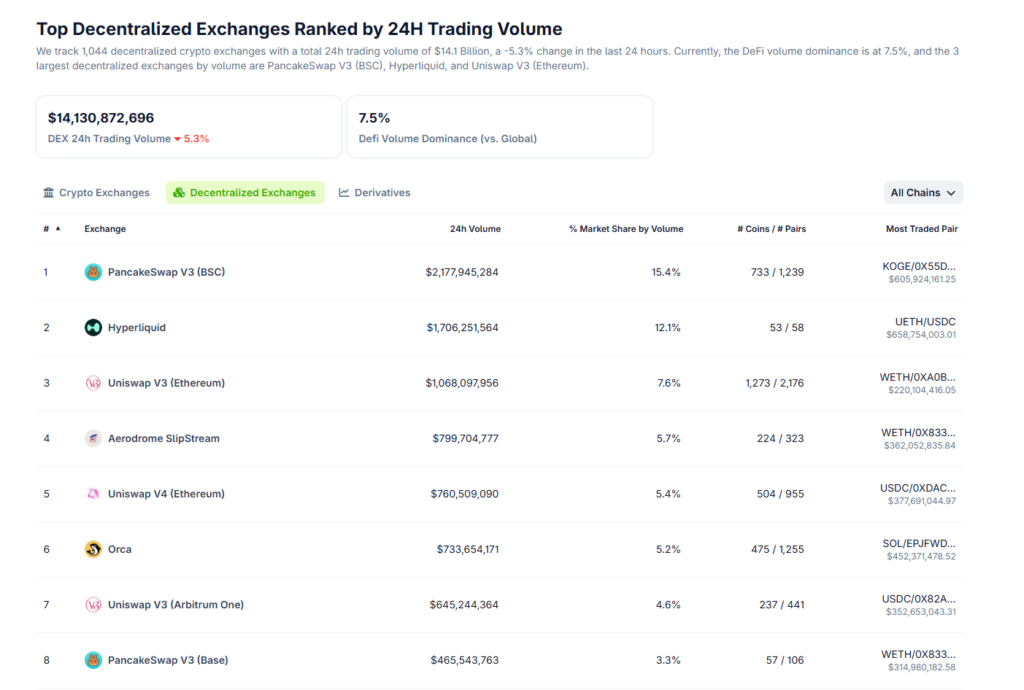
For DEXs, trading volume serves as a good indicator of the platform’s popularity.
This decision can have a significant impact on your trading results. By staying aware of market conditions and planning, you can reduce the frequency and severity of slippage.
Closing Thoughts
Slippage is an unavoidable part of trading, but it does not have to be a major obstacle to success. By using limit orders, trading in liquid markets, avoiding high-volatility events, breaking large trades into smaller ones, and choosing the right exchange, you can significantly reduce your exposure to this risk.
Ultimately, consistent attention to execution strategy and market conditions will help you protect your profits and trade with greater confidence.
Limit orders are the most effective because they set a maximum buy price or minimum sell price, ensuring you do not execute trades at worse prices than intended. No, slippage cannot be fully avoided, especially in volatile or low-liquidity markets. However, careful trade planning and execution can minimize its impact.2. Which type of order is best for avoiding slippage?
3. Can slippage be completely eliminated?