Where & How to Buy USDT in 2026 – Best Places & Exchanges to Buy

- When you click links on this page, we may earn an affiliate commission. By using this website you agree to our terms and conditions and privacy policy.
- Participation in online gambling may be illegal in your country and is subject to age restrictions (18, 19, or 21, depending on the jurisdiction). Verify legality and age requirements before participating. Learn more
How to Buy USDT in 2026
With a daily trading volume of over $70 billion, Tether is the most traded cryptocurrency in the world. Its stability and liquidity are unmatched and invaluable to any crypto investor’s strategy.
Read on to find out how to get Tether safely, securely, and at a competitive price. In the simplest possible terms, all you have to do to buy USDT is:
- Choose a reputable crypto exchange for your purchase
- Create an account and log in to the exchange
- Go through the KYC verification process and confirm your identity
- Deposit money into the account to fund your purchase
- Insert the amount of USDT you want to buy and place the order
- Complete the purchase and secure your Tether
However, if you need additional instructions on buying Tether from a centralized crypto exchange, we will also provide you with a detailed step-by-step walkthrough and additional guidance for the process.
We will also explore some alternative avenues for getting USDT and discuss the best and most practical uses of this valuable cryptocurrency.
Disclaimer: According to the Markets in Crypto-Assets (MiCA) regulations, as of March 31, 2025, Binance will no longer support popular stablecoins (e.g., USDT, DAI) for users in the European Economic Area (EEA), which includes the European Union (EU) plus Iceland, Liechtenstein, and Norway. Read to know more.

Where to Buy USDT – Best Exchanges
Tether is one of the most recognized stablecoins in the crypto space. This list would help save you time in looking for a reliable exchange to buy and keep USDT.




Don’t invest unless you’re prepared to lose all the money you invest.
Kraken
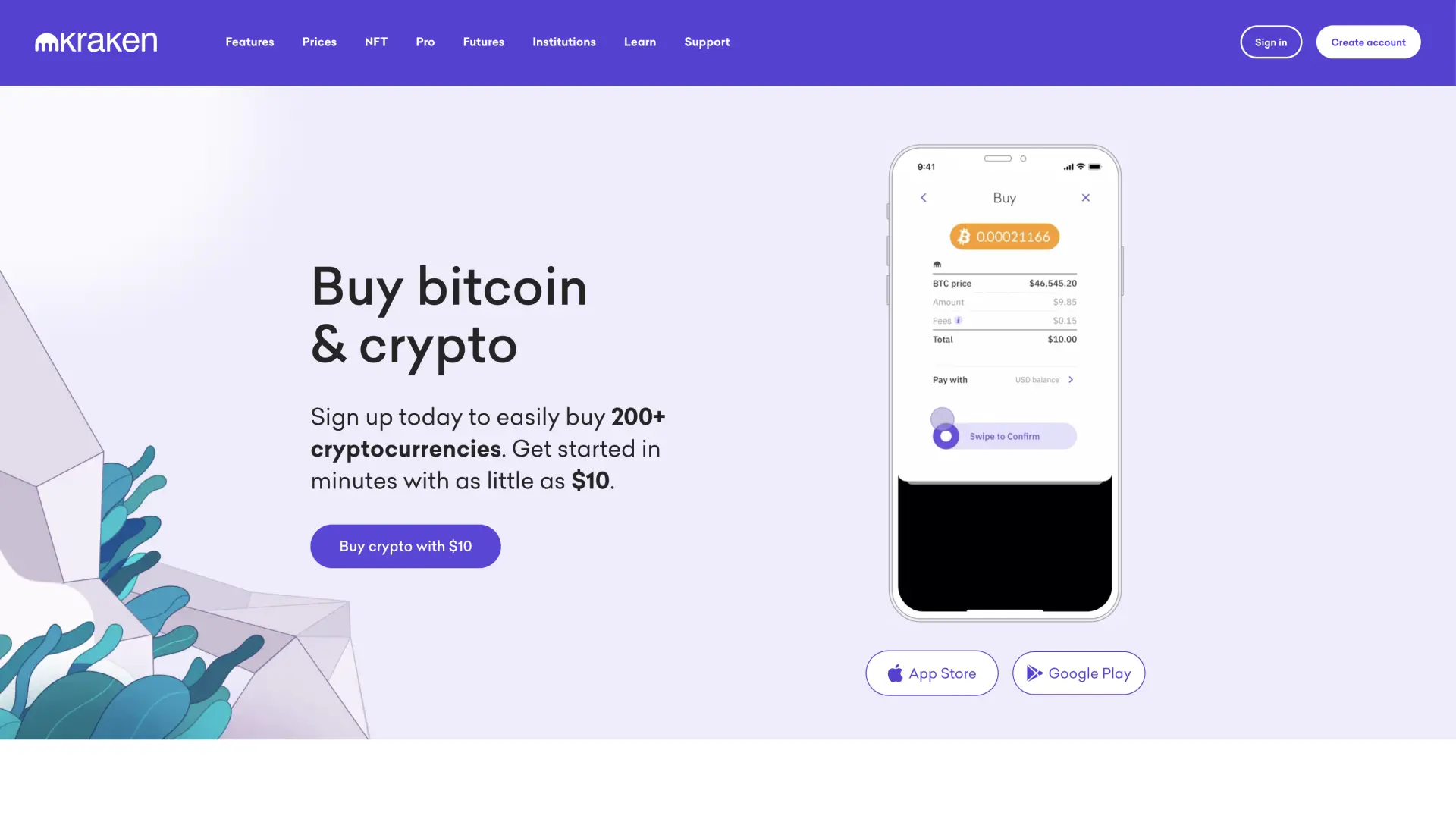
Launched in 2013, Kraken is a US-based crypto exchange known for its robust security measures and consistent performance. With billions in daily trading volumes, it’s a go-to choice for both novice and experienced traders worldwide.
Kraken supports a wide variety of cryptocurrencies—more than 300—and offers trading options like spot trading, margin trading with up to x5 leverage, and futures trading with leverage up to x50. The platform also provides staking opportunities for users looking to earn a passive income.
Deposits are supported in six major fiat currencies via multiple payment methods. Kraken’s transparent fee structure rewards high-volume traders with lower rates.
Pros
-
Strong security focus with no major breaches in its operating history
-
Competitive fee structure (maker 0.16%/taker 0.26%, decreasing with volume)
-
Over 200 cryptocurrencies available
-
Advanced trading features, including margin trading and futures
-
Excellent customer service reputation
-
Proof of reserves program for transparency
Cons
-
Interface not as beginner-friendly as competitors
-
Fiat deposit methods are more limited than some exchanges
-
The verification process can be lengthy
-
Mobile app functionality is not as robust as the desktop version
- Bitcoin
- Ethereum
-
Tether
83
No result
- Spanish
- English
-
French
4
No result
Bitunix
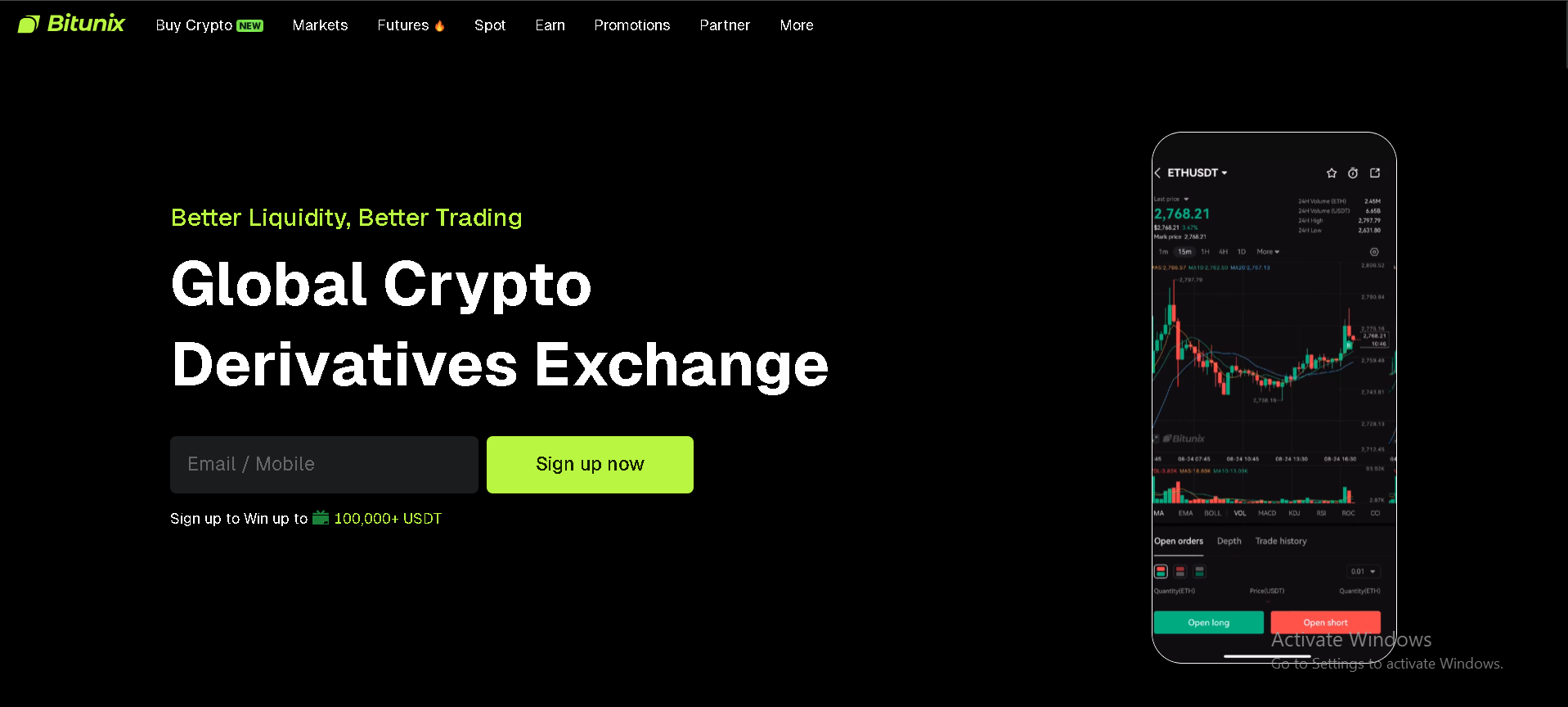
Bitunix is a crypto exchange specializing in derivatives trading. It was founded in 2022 by Aaron Lee with the goal of building a secure futures trading-focused platform suitable for novices and experienced traders. Headquartered in Saint Vincent, Bitunix is a regulated exchange with a Money Services Business (MSB) license with the US Financial Crimes Enforcement Network (FinCEN).
Users can purchase crypto directly with seven fiat currencies using a debit or credit card. Alternatively, Bitunix has integrated third-party service providers that support buys with more currencies and payment methods, such as bank transfer and Revolut. Users also have access to a Peer-to-Peer marketplace for decentralized trading.
Bitunix offers 414 futures contracts with up to 125x leverage and 501 spot assets. It provides flexible crypto staking, dual-investment products, and copy trading. It also offers a crypto conversion tool and a recurring buy system. Fees are 0.08% / 0.1% (spot) and 0.02% / 0.06% (futures), which is reasonable compared to other crypto exchanges.
Bitunix is a reasonably well-equipped exchange catering to derivatives and spot traders. It boasts competitive fees and a good range of assets, but it lacks certain advanced features like trading bots and crypto loans. Thus, it’s best suited to spot and derivatives traders seeking a cheap platform, while those seeking a general feature set will likely prefer an alternative.
Pros
-
Regulated exchange
-
Offers a good selection of assets
-
Spot and futures trading with high leverage
-
Competitive trading fees
Cons
-
Lacks specific advanced features
-
The fiat on-ramp is restricted in countries like the UK
- Bitcoin
- Ethereum
-
Tether
78
No result
- English
- Spanish
-
Farsi
3
No result
Crypto.com

Crypto.com, based in Singapore, has grown into a trusted name in cryptocurrency since its launch in 2016. It is widely accessible, serving most regions, including the US (except New York).
The platform supports more than 250 cryptocurrencies and offers features like spot trading, staking, and derivatives trading with leverage. Fiat deposits are accepted in 20 currencies, including USD and EUR, via methods like PayPal and credit cards. Its tiered fee structure benefits frequent traders.
Pros
-
An extensive variety of cryptocurrencies
-
Competitive trading fees
-
Provides access to multiple markets
-
Many useful features
-
Supports a good range of payment methods
-
TradingView integration for performing detailed analysis
Cons
-
No Fiat Deposit Support
-
Prohibited in many countries
- Bitcoin
- Holo
-
Litecoin
157
No result
- English
- Italian
-
French
5
No result
WEEX
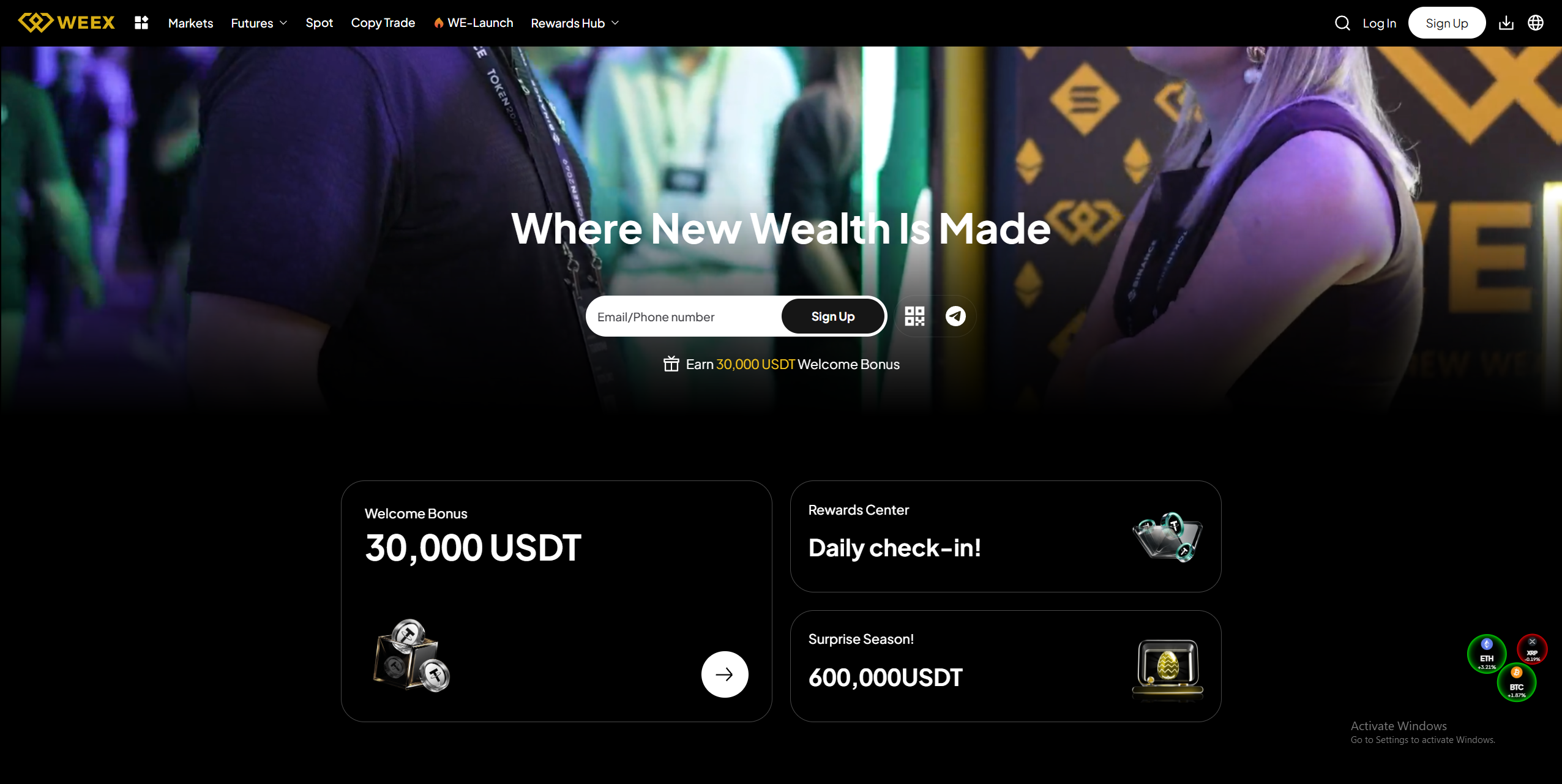
WEEX is a global crypto exchange founded in 2018 that serves more than 2 million users. It offers multiple trading options, including spot and futures markets. However, users are restricted to using crypto for payments and withdrawals, as they cannot buy with or deposit fiat currency. The exchange is registered as a Money Service Business in Canada and the US.
While WEEX is a relatively bare-bones exchange in terms of features, it hosts 971 cryptocurrencies and offers copy and demo trading functionality. It also has a rewards hub offering various trading and airdrop promotions. WEEX offers zero maker fees and 0.1% taker fees on most trading pairs. However, some are subject to a 0.1% maker order fee.
Pros
-
WEEX users can access up to 200x leverage on certain assets
-
Easy-to-navigate platform makes onboarding simpler
-
Free maker fees on many pairs (competitive fees otherwise)
-
Registered as a money service business
-
Copy and demo trading make WEEX suitable for beginners
Cons
-
No fiat currency support
-
Not many additional features outside of trading
- Bitcoin
- Ethereum
-
Tether
96
No result
- English
BuyUcoin
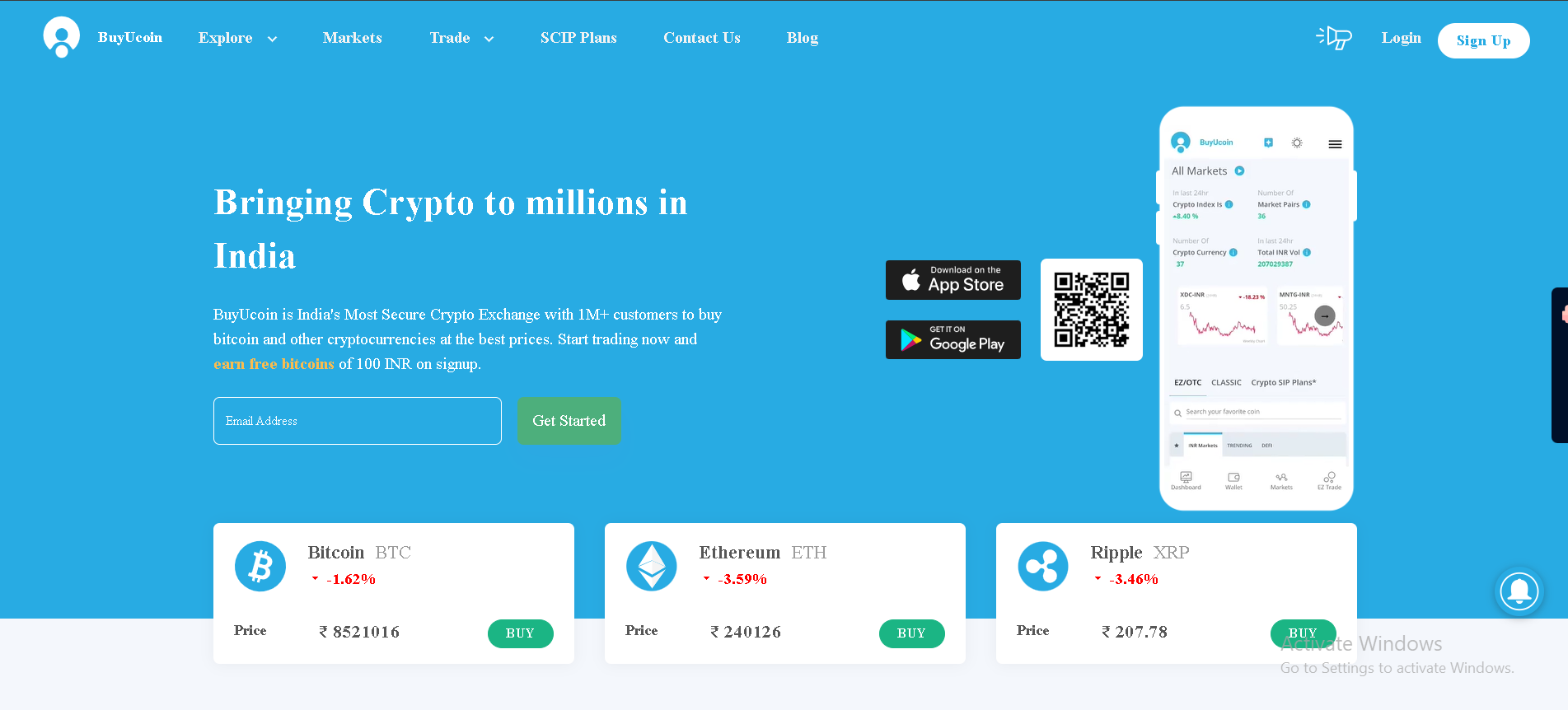
BuyUcoin is a leading Indian crypto exchange operating since 2016, serving over 1 million users. It was founded by Atulya Bhatt, Devesh Aggrawal, and Shivam Thakral to provide a convenient way for Indians to invest and trade crypto. It’s registered with the Financial Intelligence Unit - India (FIU-IND) and is based in Delhi.
While users may find BuyUcoin somewhat basic, as it lacks tools like futures trading, crypto loans, or bots, it offers a solid selection of 239 cryptocurrencies. However, some are not available to purchase on BuyUcoin. The exchange offers a basic line chart and a TradingView integration for advanced users. It offers an easy-trade tool and a spot exchange.
Outside of typical exchange features, BuyUcoin provides Systematic Crypto Investment Plans (SCIP) that involve buying regularly over extended periods. It also offers an NFT marketplace and Bitcoin rebates for trading.
BuyUcoin is a strong choice for Indian crypto investors as it’s registered with FIU-IND. Trading fees are reasonable at 0.24%, so it’s a top crypto exchange for local enthusiasts, but international investors can find more feature-rich exchanges.
Pros
-
Reasonable trading fees
-
Registered with FIU-IND
-
Good selection of assets
-
TradingView for advanced charting
-
Built-in NFT marketplace
Cons
-
Doesn’t have advanced features
-
Can only trade spot, not derivatives
- Bitcoin
- Ethereum
-
Tether
77
No result
- English

Youhodler
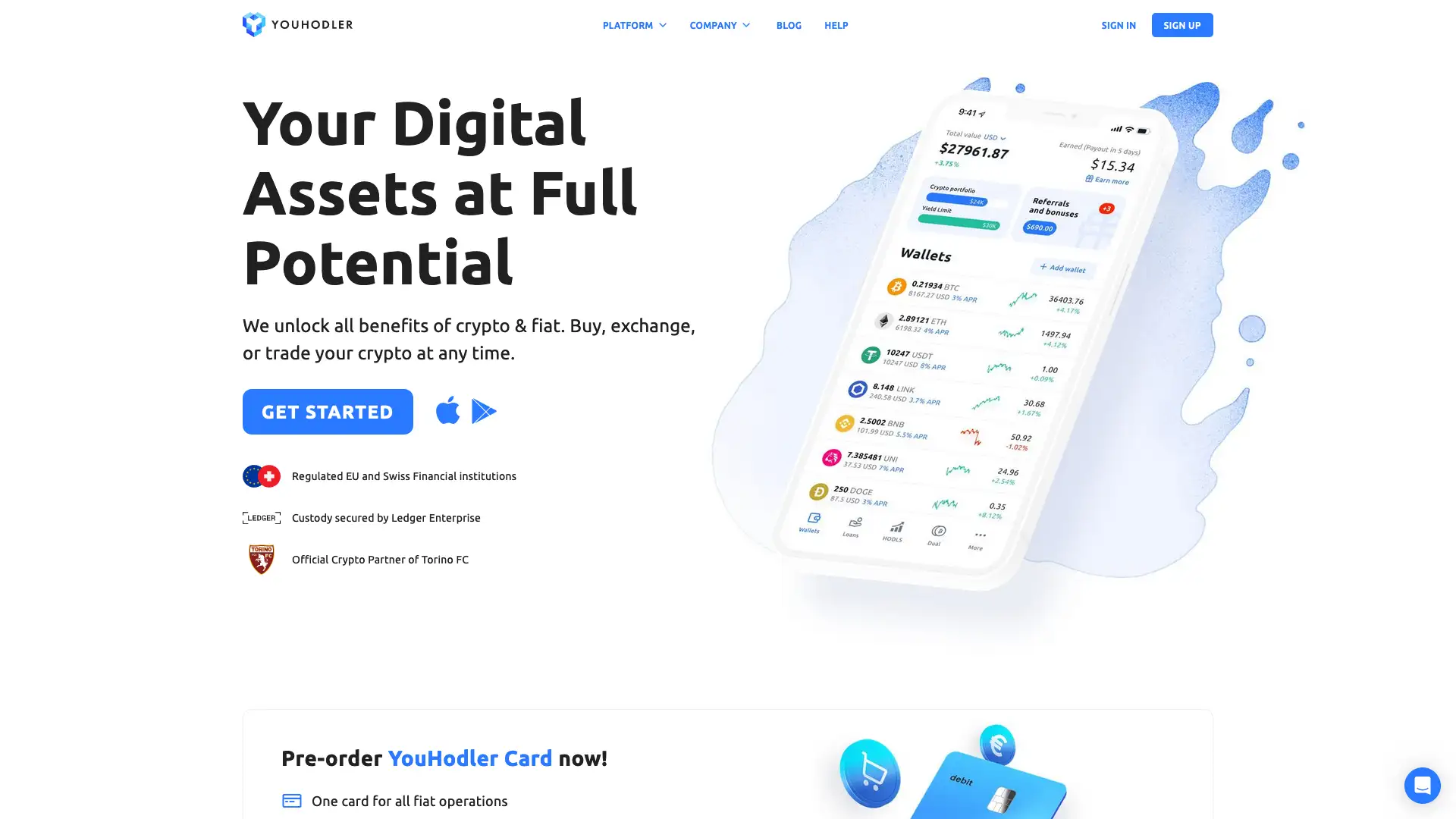
Launched in 2018, YouHolder is a crypto exchange and loans platform available worldwide, except in a few countries, such as the USA and Canada. The exchange lets people trade 110 cryptocurrencies after depositing via crypto or fiat (credit/debit card, wire, bank transfer, SEPA). It also supports many fiat currencies, including EUR, USD, GBP, and CHF.
While the exchange already offers up to 70x leverage, YouHolder’s Turbocharge tool lets people buy crypto with funds borrowed using their holdings as collateral. It also provides a crypto-loans feature, enabling users to borrow funds using their crypto without triggering a taxable event. MultiHODL trades charge an hourly rollover fee of 0.02%. No fee is listed for conversions.
Pros
-
Provides access to a reasonable amount of leverage
-
Users can borrow based on their crypto holdings
-
MultiHODL lets people boost profits and losses through a series of crypto loans
-
Available in many countries with local currency support
-
A good variety of large and small cryptocurrencies
Cons
-
Confusing fee structure, no listed costs for regular trades
-
Unavailable in the USA and Canada
- Bitcoin
- Ethereum
-
Tether
57
No result
- English
CEX.IO
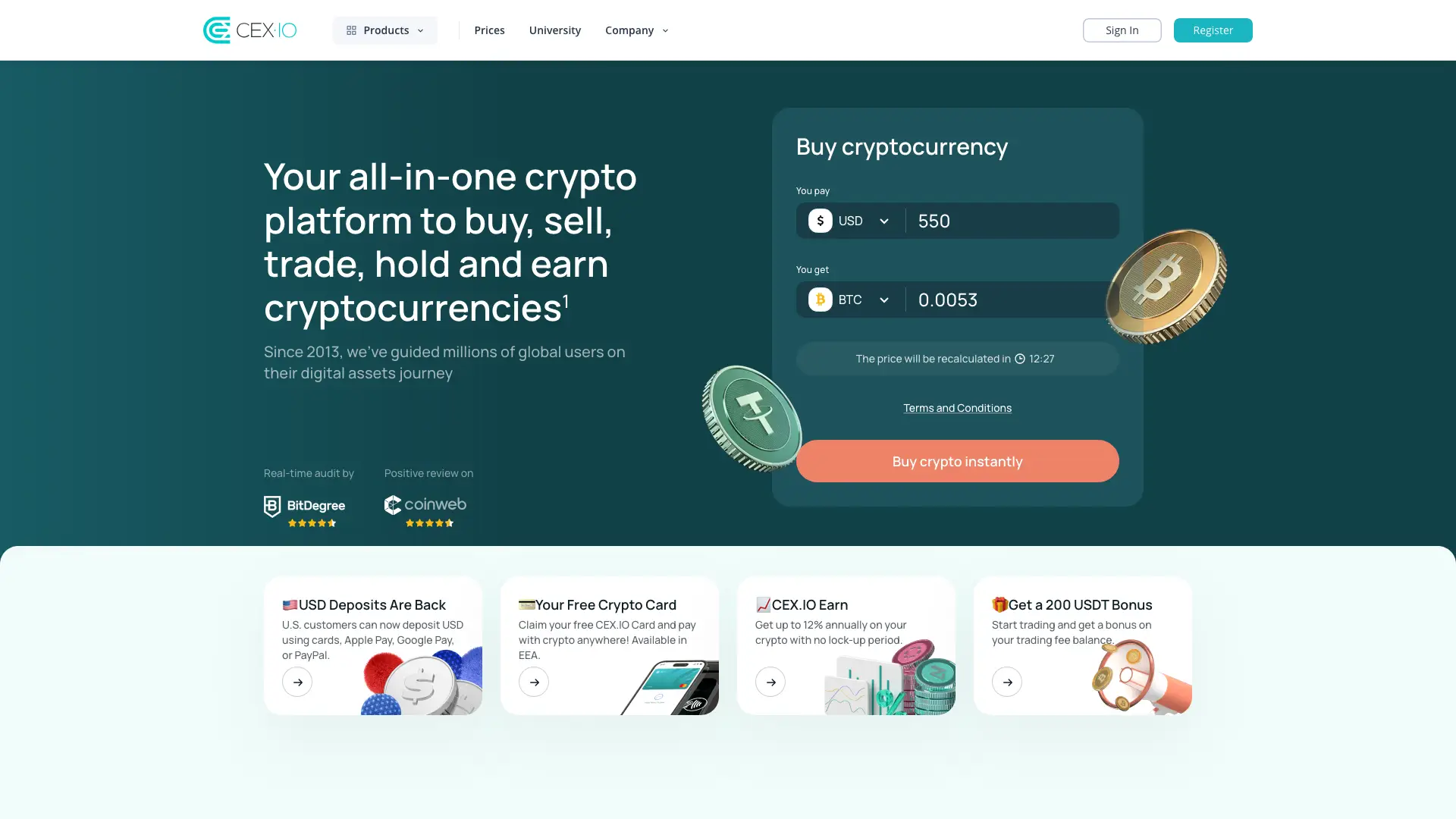
Founded in 2013 and based in London, CEX.IO is one of the earliest cryptocurrency exchanges. It operates globally, offering a secure platform for spot trading, margin trading, and staking.
The platform supports over 180 cryptocurrencies and allows users to deposit fiat in USD, EUR, and GBP. Payment methods include credit cards, bank transfers, PayPal, and Skrill. CEX.IO’s tiered fee system provides reduced fees for high-volume traders, making it a cost-effective choice for active users.
Pros
-
Operating since 2013 with a strong security record
-
Regulated in multiple jurisdictions
-
Competitive fees for high-volume traders
-
Margin trading and staking available
-
Multiple fiat currency support
-
Institutional services available
Cons
-
Higher fees for low-volume traders and card purchases
-
Geographic restrictions on certain features
-
Verification can be lengthy
-
Less competitive rates for staking than specialized platforms
- Bitcoin
- Ethereum
-
Tether
81
No result
- English
Coinbase
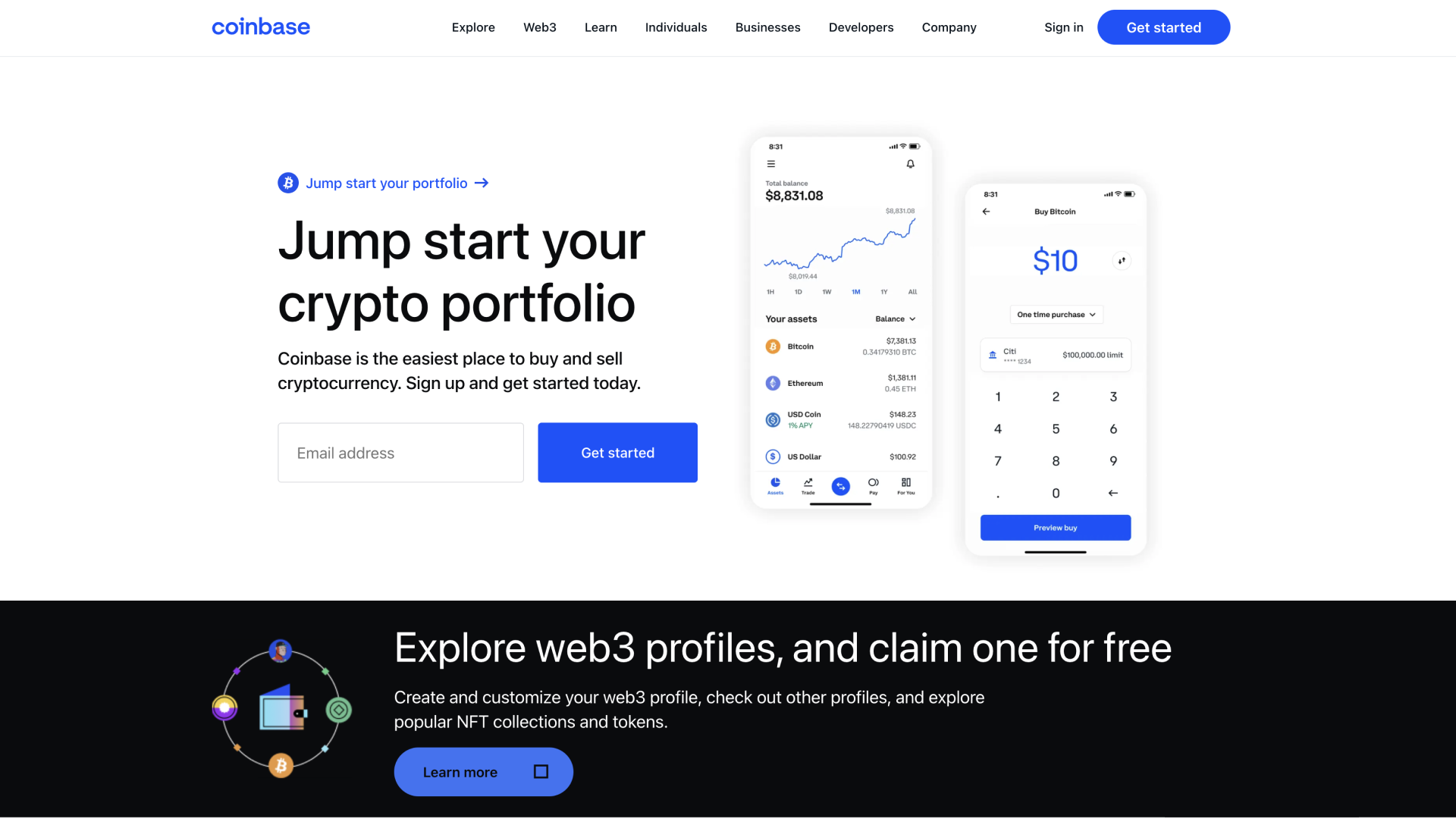
Founded in 2012, Coinbase has become one of the most trusted names in cryptocurrency, offering services to users in more than 100 countries. The platform operates in all 50 US states, adhering to strict regulatory standards, which makes it a preferred choice for many traders.
Coinbase supports over 240 cryptocurrencies and provides access to 300+ trading pairs. Key features include spot trading, staking, margin trading, and futures trading with leverage up to x20.
Fiat deposits are accepted in USD, EUR, and GBP, with payment options like PayPal, Apple Pay, and Google Pay. A tiered fee system allows high-volume traders to benefit from reduced rates.
Pros
-
Highly intuitive interface ideal for beginners
-
Strong security track record with 98% of assets stored in cold storage
-
Regulated in multiple jurisdictions, including the US
-
Wide selection of 250+ cryptocurrencies
-
Integrated staking options and learn-to-earn features
-
Enhanced account protection with 2FA, biometric authentication
Cons
-
Higher fees than many competitors (up to 0.6% maker/taker fees)
-
Customer service can be slow during high-volume periods
-
Has experienced occasional outages during market volatility
-
The basic Coinbase platform has fewer features than Coinbase Pro
- Bitcoin
- Ethereum
-
Tether
68
No result
- English
Coinone
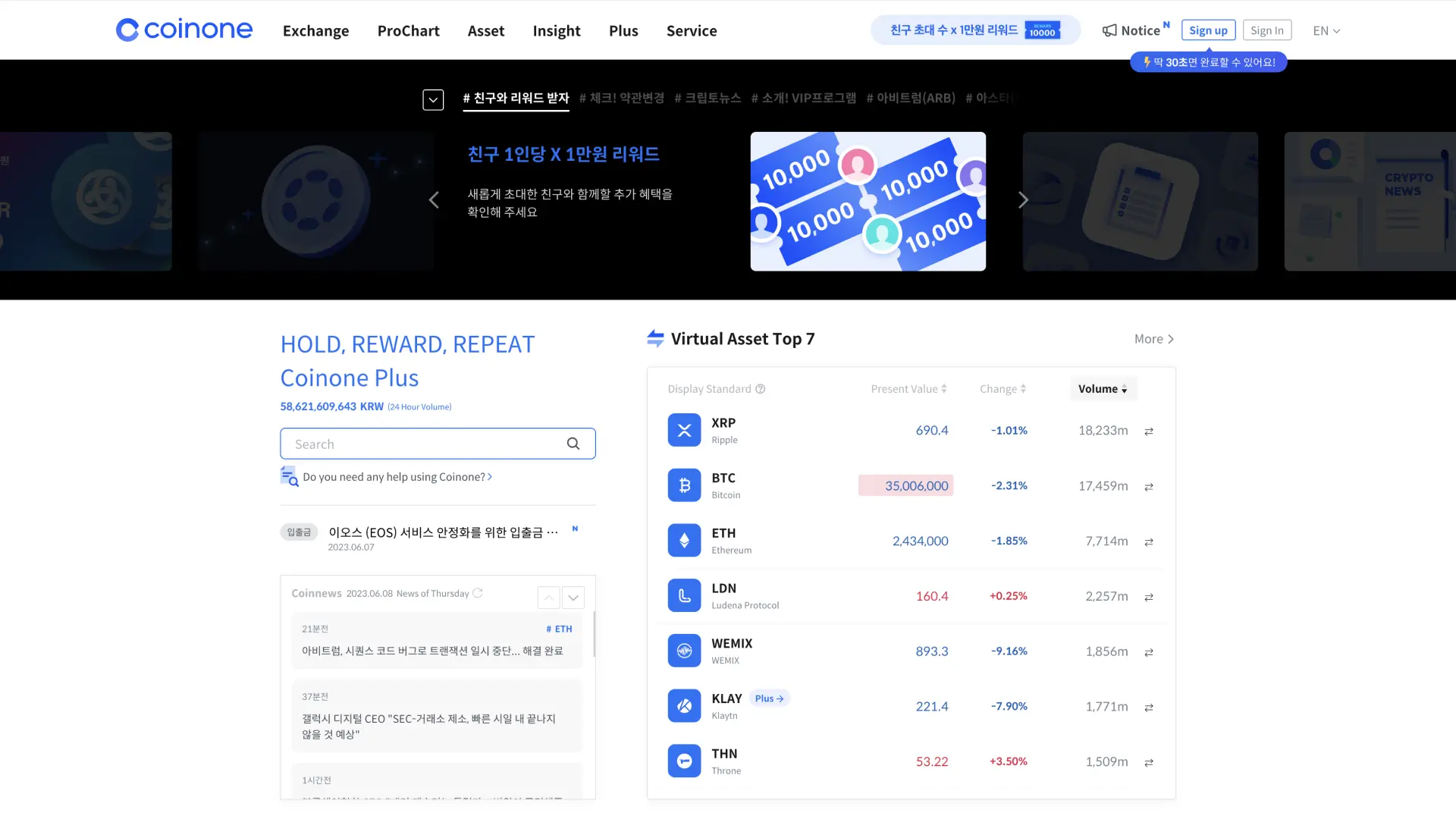
Coinone Crypto Exchange is a leading South Korean platform, offering a secure and user-friendly interface for trading various digital assets.
- Bitcoin
- Ethereum
-
Tether
70
No result
- Korean
BitMEX
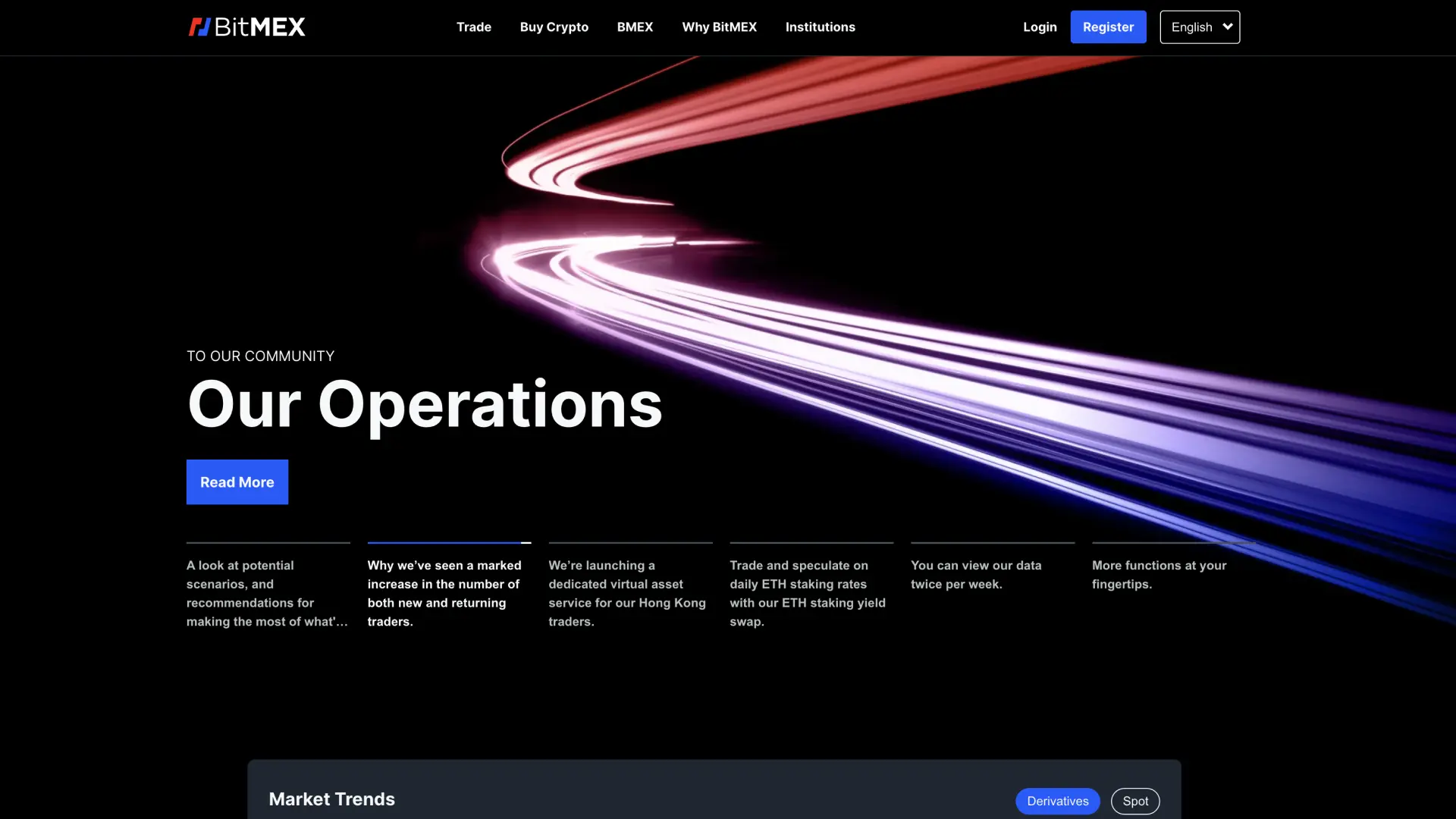
BitMEX is a crypto exchange designed for experienced traders who are interested in derivatives and high-leverage trading. The platform is well-known for its sophisticated trading tools and the ability to trade contracts with up to 100x leverage, making it a favorite among professional traders.
BitMEX only supports crypto-to-crypto trading, which means users cannot deposit or withdraw fiat currencies. The platform has a reputation for strong security, employing multi-signature wallets and rigorous security protocols. However, BitMEX has faced regulatory challenges and is not available to users in certain jurisdictions, including the United States.
The interface is tailored for advanced users, with a range of charting and analysis tools. However, this complexity can be intimidating for beginners. BitMEX’s customer support is responsive, but the platform’s lack of fiat support and regulatory issues may be concerning for some users.
Pros
-
Advanced derivatives trading tools
-
High leverage options (up to 100x)
-
Strong security measures
Cons
-
No fiat support (crypto-to-crypto only)
-
Not available to US users
-
Regulatory concerns
-
Not beginner-friendly
- Bitcoin
- Ethereum
-
Tether
30
No result
- Chinese (Mandarin)
- Russian
- English
Coinmama
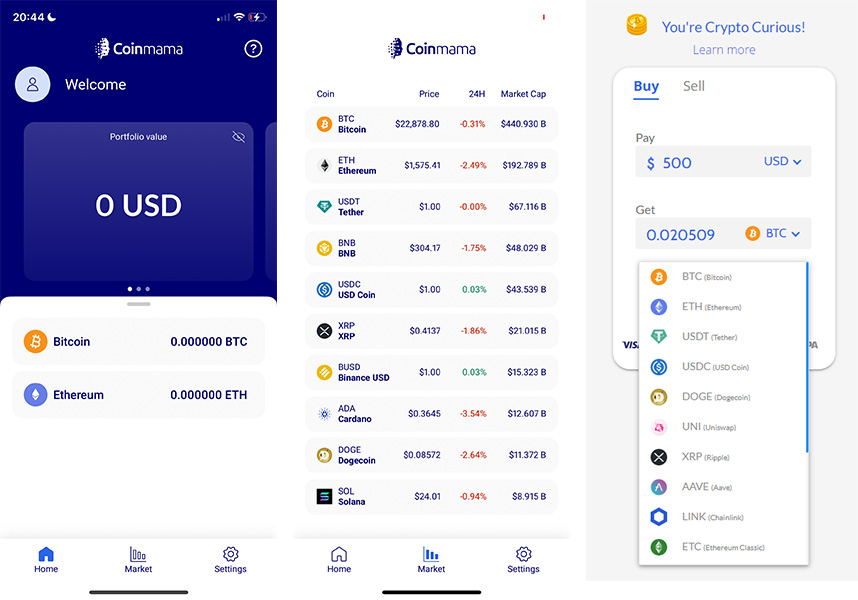
Coinmama, founded in Israel in 2013, is a reputable cryptocurrency exchange known for its user-friendly interface and global accessibility.
- Bitcoin
- Ethereum
-
Tether
29
No result
- English
Symlix
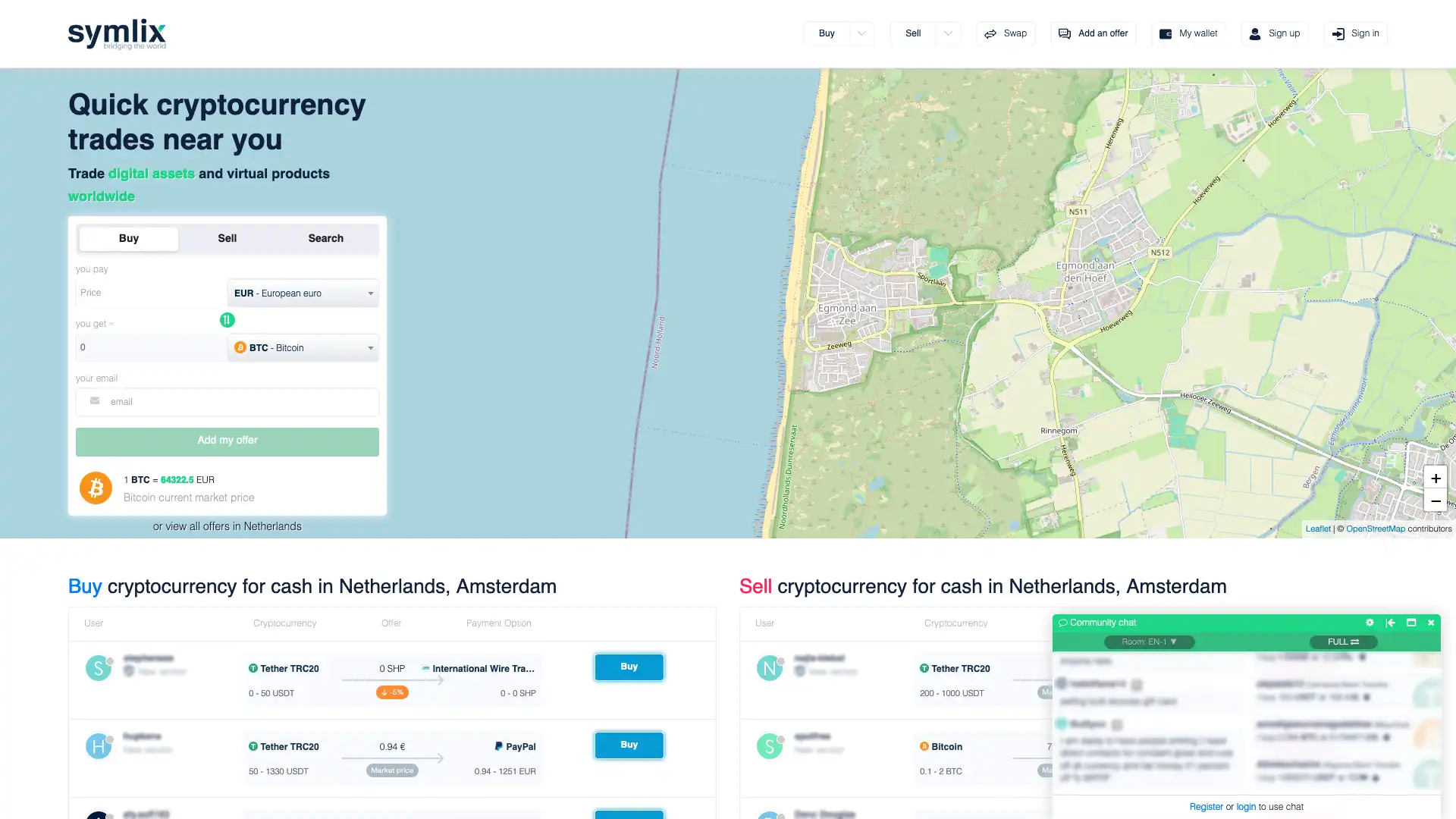
Symlix emerged as a non-custodial cryptocurrency exchange focused on providing anonymous crypto swaps without requiring user registration or Know Your Customer (KYC) verification. The platform positions itself as a privacy-centered solution in the crypto exchange market, allowing you to exchange various cryptocurrencies directly from your wallet to another without creating accounts or storing personal information.
Symlix operates by connecting users with liquidity providers to facilitate instant swaps at current market rates. The exchange has built its reputation around speed and discretion, appealing to users who prioritize privacy and want to avoid the lengthy verification processes that traditional exchanges require. Its streamlined approach makes it particularly attractive for quick cryptocurrency conversions.
Pros
-
No registration or KYC requirements, so you can start swapping immediately without providing personal details
-
Anonymous transactions that don't track or store your trading history or personal information
-
Fast processing times with most swaps completed within minutes of confirmation
-
Wide range of supported cryptocurrencies covering popular coins and various altcoins
-
Transparent pricing with exchange rates and fees displayed before you confirm transactions
-
Simple interface that makes crypto swapping straightforward for users at any experience level
Cons
-
Limited customer support compared to traditional exchanges with account-based systems
-
Higher transaction fees than some competitors due to the privacy and convenience premium
-
No advanced trading features like limit orders or technical analysis tools
-
Potential for rate fluctuations between quote and execution during volatile periods
-
Lack of educational resources for users who are new to crypto
- Bitcoin
- Ethereum
-
Tether
8
No result
- Welsh
Cryptonex
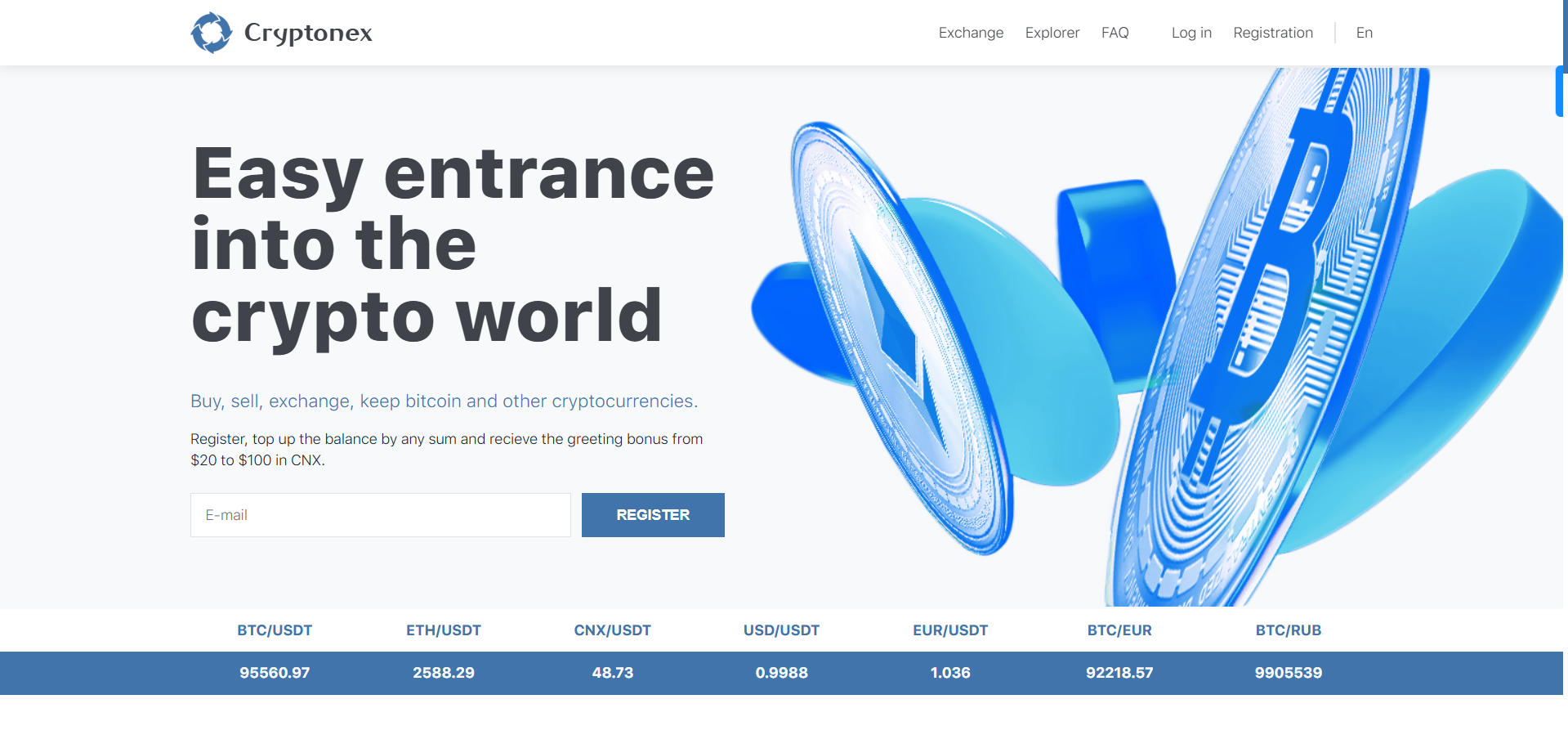
Cryptonex launched back in 2017 as a blockchain-based cryptocurrency exchange that aimed to bridge traditional banking with crypto trading. The platform built its own blockchain and native CNX token while offering exchange services for various cryptocurrencies.
What makes Cryptonex different is its focus on creating a full ecosystem that includes mining, mobile apps, and payment cards, trying to make crypto more accessible for everyday use. The exchange has positioned itself as a solution for both regular trading and broader crypto adoption, though it's faced some regulatory challenges in certain regions over the years.
You'll find it offers a mix of spot trading and additional services that go beyond just basic crypto swapping.
Pros
-
Native CNX token provides trading fee discounts and staking rewards for holders
-
Mobile app available for both iOS and Android with full trading functionality
-
Multiple deposit methods, including bank transfers and credit card purchases
-
Built-in mining features allow you to earn cryptocurrencies directly through the platform
-
Referral program offers commission sharing for bringing in new users
-
Payment card integration allows you to spend crypto in real-world transactions
Cons
-
Limited availability in some countries due to regulatory restrictions
-
Lower trading volumes compared to major crypto exchange platforms
-
Support team may struggle to keep up during busy trading times
-
Fewer trading pairs are available than in larger competitors
-
CNX token value fluctuations can affect the benefits of holding it
- Bitcoin
- Ethereum
-
Tether
12
No result
- English
OKX
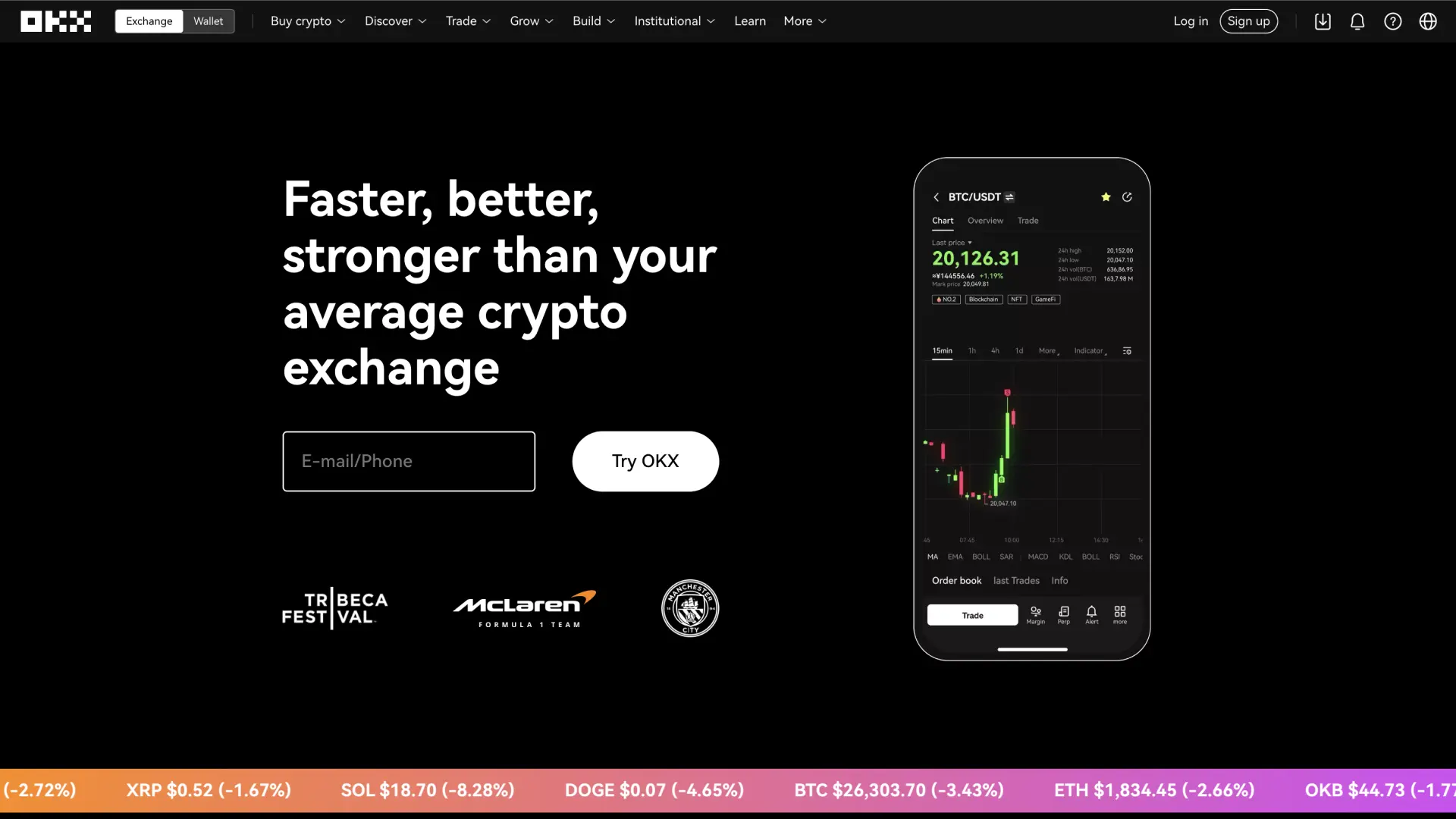
OKX, a leading name in cryptocurrency trading, was established in 2013. Known for its versatility, the platform offers access to over 350 cryptocurrencies and numerous trading features, although it is not available to US users.
Users can trade spot, futures, and options with leverage or engage in staking and bot trading. Fiat deposits are supported in various currencies through several payment options. OKX’s tiered fee structure provides discounts to high-volume traders.
Pros
-
Extensive product offering beyond spot trading (futures, options, DeFi)
-
Competitive fee structure (0.08% maker/0.1% taker for spot)
-
High liquidity for most trading pairs
-
Advanced trading features, including copy trading
-
Over 350 cryptocurrencies available
-
Strong mobile app functionality
Cons
-
Not available to US customers
-
Complex interface that can intimidate newcomers
-
Mixed reputation for customer service
-
Regulatory concerns in some jurisdictions
-
Withdrawal limits without full verification
- Bitcoin
- Ethereum
-
Tether
90
No result
- English
Bitstamp
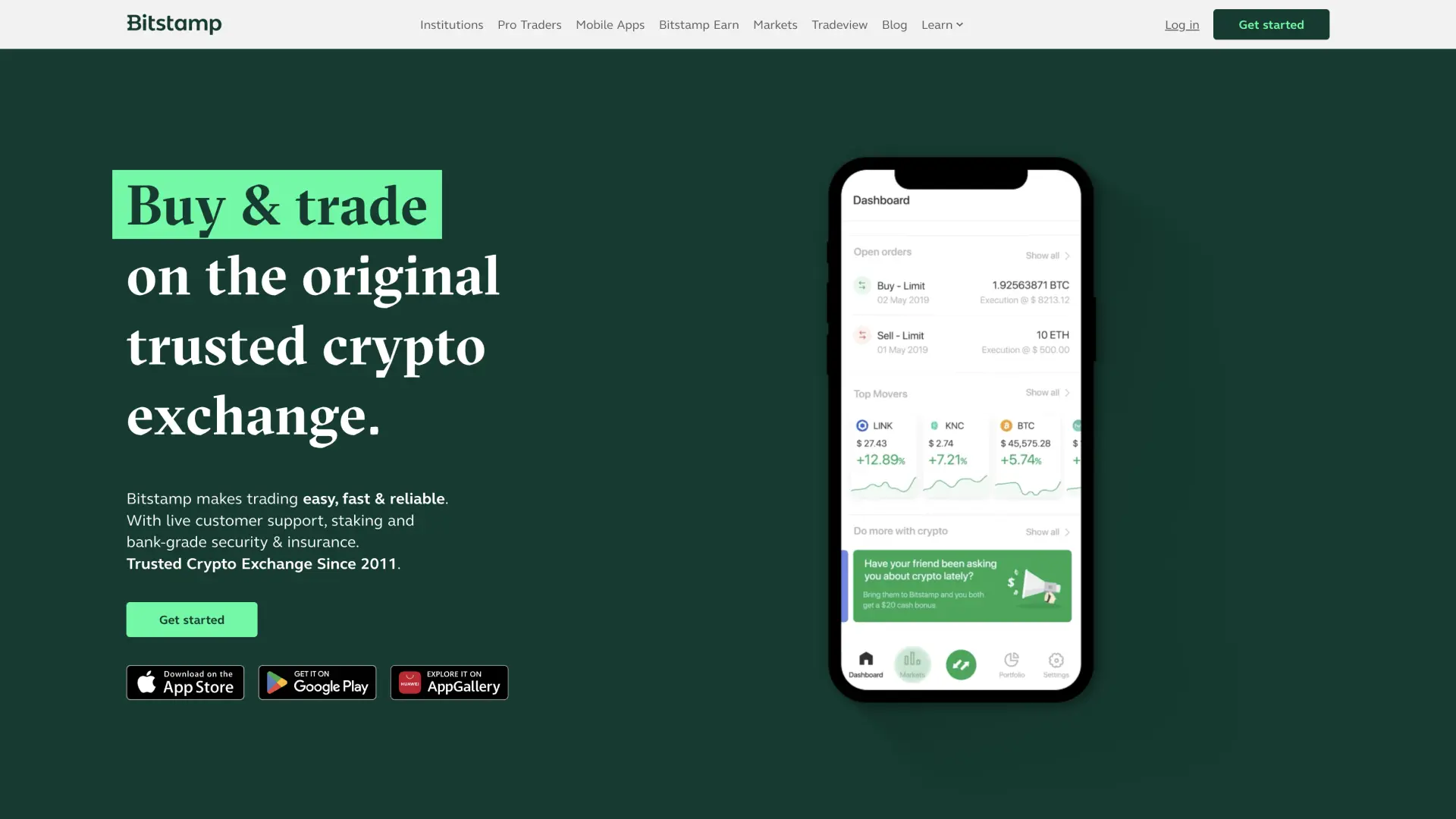
Bitstamp, launched in 2011, is one of the longest-running cryptocurrency exchanges in the market. It is headquartered in Luxembourg and provides services to users in numerous countries, including the US.
The platform supports 80 cryptocurrencies and offers basic trading options like spot trading and staking. Users can deposit fiat using USD, EUR, and GBP through bank transfers or credit cards. Bitstamp employs a tiered fee structure to provide discounts for high-volume trading.
Pros
-
Licensed in multiple countries, including the UK and the USA
-
Lengthy track record
-
Available on mobile or desktop
-
Accessible across most of the world
-
Caters to beginners and experienced users
-
Multiple ways to boost your portfolio (lending and staking)
Cons
-
High trading fees
-
Some features are restricted in certain countries
-
Fewer assets than some other exchanges
- Bitcoin
- Ethereum
-
Tether
52
No result
- English
BitValve
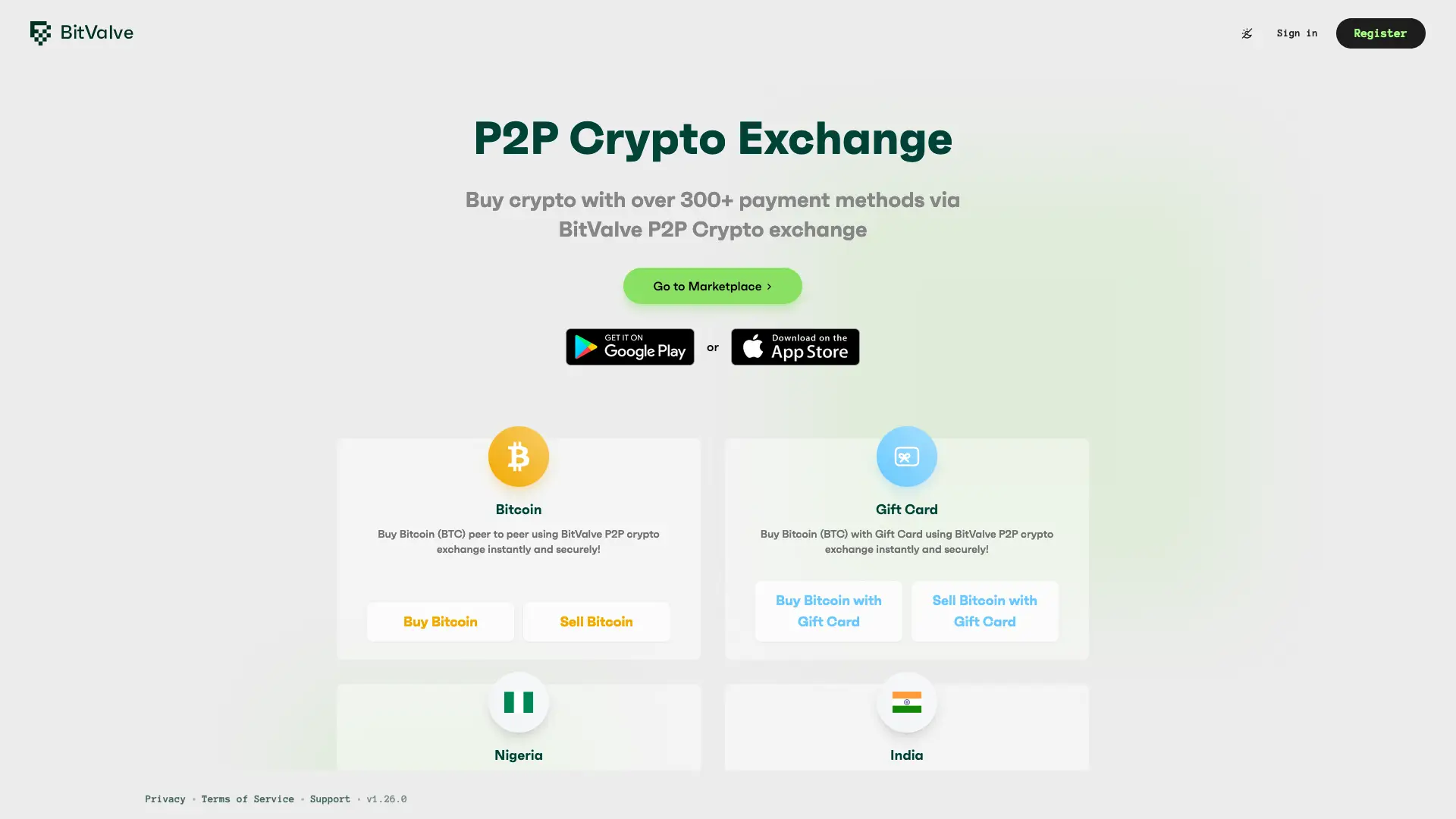
BitValve is a peer-to-peer (P2P) cryptocurrency exchange designed to make crypto trading accessible and flexible for users worldwide. The platform stands out for its support of over 300 payment methods, including bank transfers, PayPal, and gift cards, making it easy for users to buy and sell major cryptocurrencies like Bitcoin, Ethereum, and Litecoin. BitValve operates with an escrow system to secure trades and offers mobile apps for both iOS and Android, earning generally positive feedback for usability.
Security is a central focus, with funds stored in cold wallets and transactions protected by SSL encryption. The platform enforces KYC/AML compliance, requiring identification for higher trading limits and regulatory adherence. While BitValve promises low fees, especially for users of its BTV token, some users have experienced delays with KYC verification and customer support.
User feedback is mixed. Many appreciate the platform’s broad range of payment options, low fees, and user-friendly interface. Yet, others have reported issues such as slow verification, withdrawal problems, and disputes that are not always resolved promptly. Trustpilot and app store ratings reflect this divide, with some users enjoying smooth transactions and others warning of potential risks.
Pros
-
Wide range of payment methods (300+)
-
Multi-cryptocurrency support
-
Low transaction fees, discounts for BTV token holders
-
Secure escrow system and cold storage
-
User-friendly mobile apps
Cons
-
Mandatory KYC for higher limits can be slow
-
Mixed reviews on customer support and dispute resolution
-
Occasional withdrawal and verification delays
-
Some geographic and asset restrictions
- Bitcoin
- Litecoin
-
Ethereum
10
No result
- English
Uphold
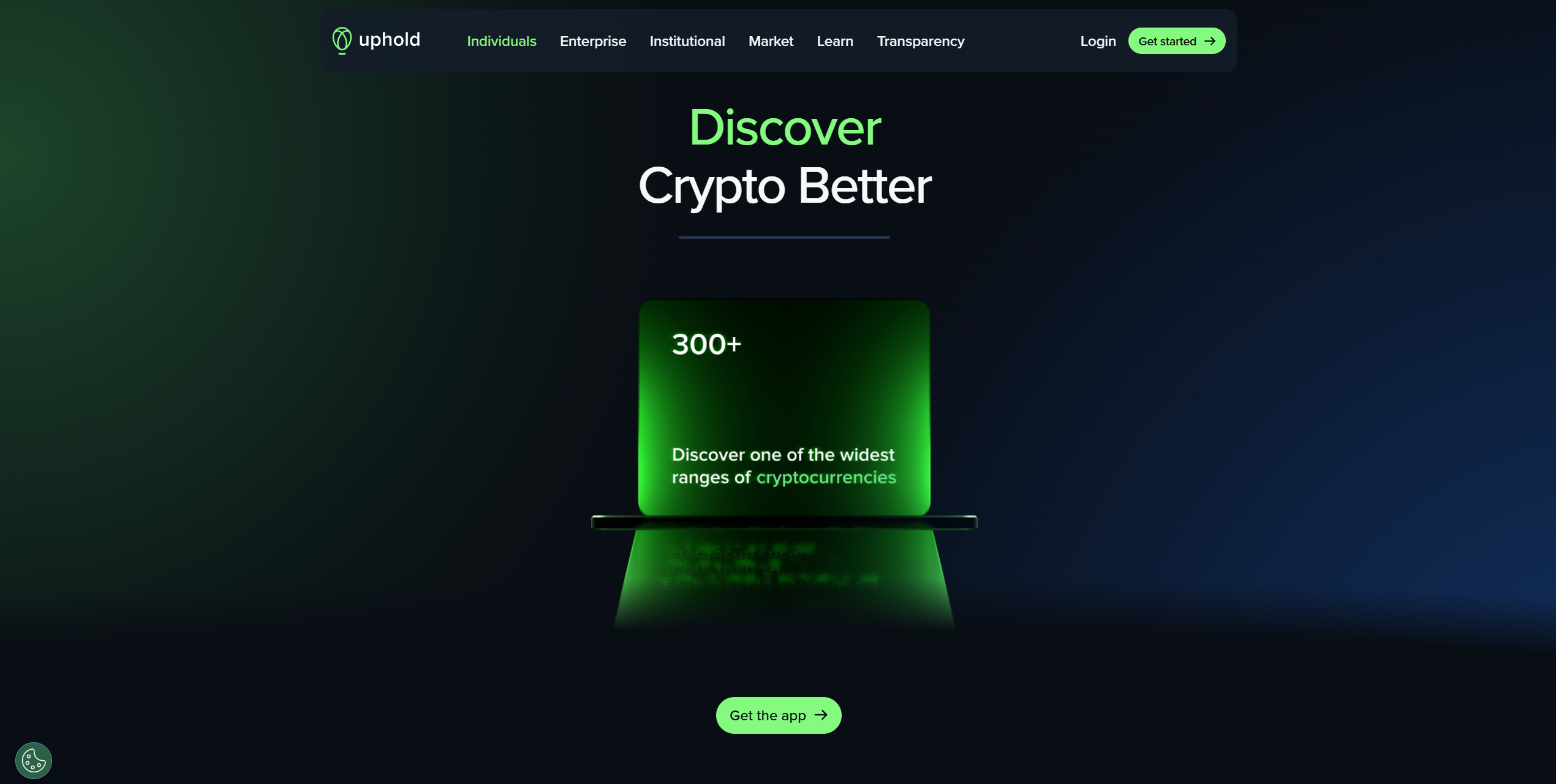
Launched in 2015, Uphold is a versatile financial platform supporting over 300 assets, including cryptocurrencies, fiat currencies, and commodities like gold. Its unique "Anything-to-Anything" trading feature allows users to swap between asset classes seamlessly.
Uphold offers staking rewards of up to 14%, interest accounts (available in the US), and self-custody wallets for BTC and XRP. With compliance certifications ensuring transparency and security, the platform has processed over $40 billion in transactions across 140+ countries.
Pros
-
Supports trading between multiple asset classes (crypto, stocks, metals)
-
Transparent fee structure with preview before trading
-
Available in 150+ countries
-
Mobile-friendly with intuitive app
-
Integrated debit card available
-
No withdrawal fees to external wallets
Cons
-
Higher spreads than dedicated crypto exchanges
-
Limited advanced trading features
-
Mixed customer service reviews
-
Holding periods on certain deposit methods
-
Geographic restrictions on certain features
- Tether
- TrueUSD
-
USD Coin
144
No result
- English
Don’t invest unless you’re prepared to lose all the money you invest.

Blockchain.com
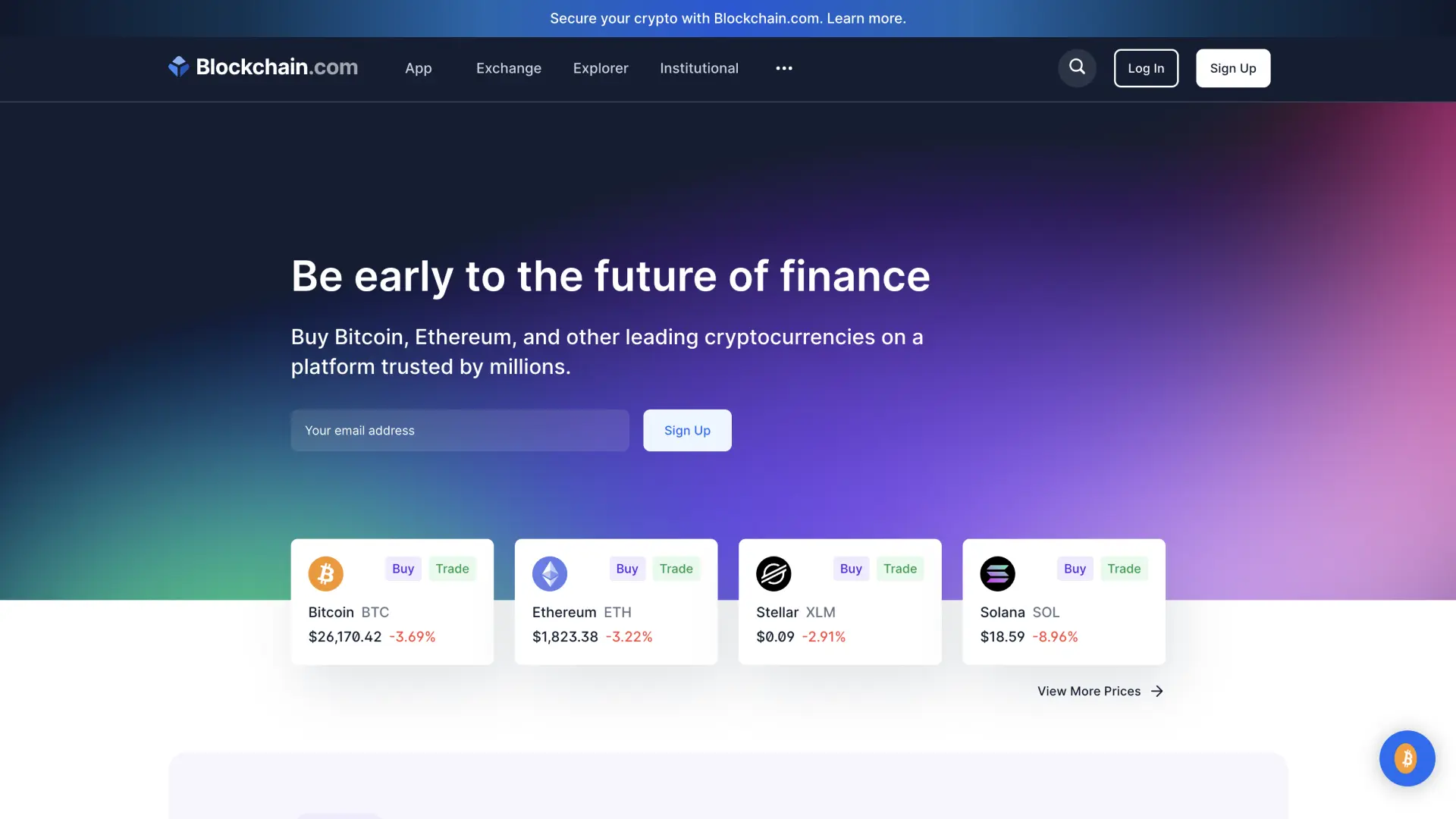
Blockchain.com is a well-established cryptocurrency platform offering trading, wallet, and blockchain explorer services to users worldwide. It's exchange is known for a user-friendly interface and supports spot and margin trading, with a focus on security through features like two-factor authentication and cold storage. The platform is accessible in over 150 countries and provides both custodial and non-custodial wallet options.
But user feedback is mixed. While some praise its ease of use and fast transactions, others report significant issues, including slow or unresponsive customer support, difficulties with withdrawals, and prolonged KYC verification times. The selection of cryptocurrencies is somewhat limited compared to larger competitors, and the platform has faced past security incidents. Lending services are not available, which may deter users seeking more advanced financial products.
Pros
-
Wide global availability
-
User-friendly interface suitable for beginners and experienced traders
-
Security features: two-factor authentication, cold storage, non-custodial wallet option
-
Fast registration and generally smooth transaction experience
Cons
-
Limited selection of cryptocurrencies and trading pairs
-
Reports of slow or ineffective customer support
-
Withdrawal difficulties and KYC delays for some users
-
No lending or borrowing services
-
Past security incidents and some user-reported loss of funds
- Bitcoin
- Ethereum
-
Bitcoin Cash
24
No result
- English
CoinJar
CoinJar, one of Australia's earliest cryptocurrency exchanges, was founded in 2013 and expanded to the UK in 2014. Today, it serves half a million users globally. The platform offers competitive fees (maker: 0.02–0.10%, taker: 0.06–0.10%) and supports over 58 cryptocurrencies.
Services include fiat-to-crypto conversions, instant card payments, OTC trading, staking options, and a built-in wallet for secure storage. CoinJar also features innovative products, such as the CoinJar Card, which enables crypto-linked payments.
PROS
-
Competitive trading fees
-
Platforms catering to novice and experienced traders
-
TradingView integration enables in-depth analysis
-
Good variety of supported payment methods
-
Regulated exchange offers greater user protection
CONS
-
No access to the futures market
-
Only available in the UK, Australia, and Ireland
- Bitcoin
- Ethereum
-
Ripple
41
No result
- English
How to Buy Tether – Step by Step
Like any investment decision, buying USDT begins with research. Before you start gathering information on how to trade Tether, you need to decide where to buy it. Our recommendation is to buy it from a reputable crypto exchange.
Finding the Right Exchange
Centralized crypto exchanges, or CEXs, are crypto trading platforms operated under the governance and regulatory oversight of a central authority. They facilitate the buying and selling of cryptocurrencies by matching buyers with sellers and providing an order book where users can place orders to execute their trades.
Because they are regulated and protected with advanced security measures, these platforms are generally considered safe, secure, and reliable. Because of these qualities, they are the crypto marketplace of choice for most crypto traders, which in turn makes them highly liquid and capable of executing trades quickly with minimal additional costs.
Having said that, there are hundreds of CEXs on which you can buy USDT available on the crypto market right now, and choosing the best exchange for your purchase can be tricky.
To save you time and effort, we did the necessary research and curated the top list of the best crypto exchanges for buying Tether in 2026. Check out our recommendations below and use our insights to make an informed decision for your investment strategy.
Creating the Account
Once you have landed on the crypto exchange you would like to purchase USDT from, you will need to create an account to be able to use the platform’s trading capabilities.
Creating an account on a crypto exchange is a relatively straightforward process, not unlike any other registration process for any other service online. The exchange will require you to fill out a form with some basic information, such as your name, address, date of birth, and email address.
The exchange will then likely want to verify your email address through a verification link sent to your email. Once you verify your email, your account will be activated, and you will be able to log in to the CEX and start exploring its platform.
Verifying Your Identity
Merely creating an account and logging in may not be enough for you to start trading on a centralized crypto exchange. In most cases, you will be required to verify your identity before you are granted full trading privileges.
This is because, like all other services that work with financial transactions, CEXs are required to adhere to strict regulatory standards. KYC verification is a compliance requirement that obligates CEXs to confirm the identity of their users to ensure that their operations are not used for illegal activities such as money laundering or terrorist financing.
To confirm your identity on the platform, you will need to upload pictures of government-issued documents like a passport or a driver’s license, as well as a picture of your face. Once the submitted information is verified and your identity is confirmed, you will be able to use the platform to its full capacity.
Funding the Purchase
With your account activated and your identity verified, the initial setup is now complete, and we can move on to the practical part of our guide on how to invest in USDT. The first step of the Tether purchasing process is to deposit the money you would like to exchange into USDT.
To do this, you will need to navigate to the funding section of the platform, which may be labeled as “Finances” or “Wallet,” depending on the exchange you are using and its terminology. Then, you will need to tap on “Add Money”, “Deposit”, or something similar to prompt the payment processing gateway.
On it, you will choose your preferred payment method from the options available on the CEX, insert the amount of money you would like to deposit, and confirm the payment to finalize the transaction. Be sure to closely examine the transaction details during this step and only accept it if you agree with all the charges and costs applied to your deposit.
Placing the Order
Now that your account is preloaded with funds, we can finally move on to the trading phase of our guide on how to buy Tether and initiate your USDT purchase.
First, navigate to the trading section of the platform, typically labeled “Exchange” or “Markets” or something similar. Then, find Tether (USDT) from the list of available cryptocurrencies and tap on it to open the trading interface.
Here you will enter the amount of USDT you want to buy, choose the money in your balance as the payment method, and place a market order for this trade. The exchange may offer additional options about the type of order, like limiting orders and setting recurring purchases, but you can ignore them to execute a simple purchase of USDT.
Once again, double-check all the transaction fees and additional costs applied to your purchase and only confirm the payment if you agree with them.
Securing Your Tether
Once you confirm your payment, the transaction will be completed, and the USDT you ordered will be credited to your crypto exchange account’s balance. From here, you have two options: you can either leave it there or move it to your own crypto wallet.
Keeping the USDT on the account can be convenient if you plan on using it for daily trading. But if you want to keep the cryptocurrency for a longer time and maximize its safety and protection, we suggest you move it to your wallet.
To do this, you will once again need to navigate to the “Wallet” section of the platform. This time, instead of “Deposit,” you will need to choose “Withdraw.” Then, you will enter the amount of USDT you want to transfer to your crypto wallet, insert its public key, and confirm the transaction to complete it.
During this step, be very careful to insert the right information and avoid sending the Tether to a wallet belonging to someone else.
Why Trust Us?
Webopedia is a free resource and a trusted authority in the crypto trading community. Our aim is to educate and provide reliable insights and expert tips on cryptocurrencies, crypto exchanges, and the crypto market in general to empower you to make informed decisions.
Rather than promoting specific platforms, we share our findings exactly as they are, with no bias. Our team of experts spent countless hours researching, analyzing, and personally testing hundreds of crypto exchanges and trading platforms to help you decide where and how to trade safely and effectively.
Whether we publish our objective reviews or informative guides on how to buy Tether, we always ensure accuracy and thoroughness in our reporting. You can trust us to deliver up-to-date information and objective insights that will enhance your investing strategy and help you trade with confidence.
Alternative Methods to Buy USDT in 2026
In addition to centralized crypto exchanges, USDT can also be bought from several alternative crypto marketplaces and trading platforms, such as:
- Peer-to-Peer Platforms: Decentralized trading platforms that connect buyers and sellers directly and allow them to make trades without third-party intermediation.
- Cryptocurrency ATMs: Physical machines connected to the internet that allow users to buy and sell cryptocurrencies with an immediate, in-person transaction.
- Crypto Wallets: Primarily used as storage solutions, some crypto wallets have integrated crypto exchange features that allow users to buy and sell cryptocurrencies.
- Online Brokerages: Centralized trading platforms, commonly used for trading and investing in traditional financial instruments. Some of them also offer crypto trading.
- Financial Service Platforms: These include digital banks, mobile payment services, e-wallets, and others. Users can buy USDT directly on some of these platforms.
Having already explained how to buy USDT from a CEX, let’s examine these alternative methods further to see how they work, whether they are reliable and safe, and who they are best suited for.
Peer-to-Peer Platforms
As decentralized crypto marketplaces, P2P platforms facilitate trades without the oversight of a central authority. Sellers list their offers on the platform, and buyers browse through the listings, looking for a deal that suits their needs.
Because they operate without intermediaries, P2P platforms can provide some unique benefits, like the ability to negotiate prices directly with the seller and arrange transactions using alternative payment methods that are not commonly available on centralized exchanges.
However, the lack of regulation and oversight on these platforms also has notable drawbacks and challenges. Since there is no central authority to mediate disputes, it is possible to run into a fraudulent seller and get scammed.
If you want to buy USDT from a P2P exchange, we strongly recommend that you thoroughly research the platform and the seller and use an escrow service to add an additional layer of security and ensure the transaction’s safety.
Cryptocurrency ATMs
Crypto ATMs present a unique opportunity to purchase Tether without ever creating an account with any platform, making them particularly appealing to privacy-concerned users who don’t want to share any information online.
Additionally, they are the only method that allows buying USDT using cash, so users who don’t have access to traditional banking services have no other choice but to use them.
That said, it is worth pointing out that not all crypto ATMs sell Tether, and many of them are limited to a few major cryptocurrencies or even solely BTC. Moreover, they typically charge higher transaction fees than those charged on centralized exchanges, which can significantly affect the efficacy of your trades.
As a final consideration, keep in mind that you have to be physically present to use them, and that may not always be convenient. Overall, we suggest you only consider buying USDT from a crypto ATM if you don’t have any other choice.
Crypto Wallets
Buying Tether directly from a crypto wallet is a safe and convenient way to acquire this cryptocurrency. It eliminates the need to create an account on a centralized exchange and transfer the USDT to your wallet after you purchase it.
That said, the trading conditions of this method of buying Tether may not be ideal, as integrated crypto exchanges commonly have lower liquidity compared to CEXs. This means that trading on them may be less efficient, potentially resulting in slower processing times, wider market spreads, and higher price slippages.
We would also like to point out that not all crypto wallets have built-in crypto exchanges, and if you have a wallet that doesn’t have this feature, you might have to create a new one to be able to buy USDT directly from it.
Online Brokerages
Although most online brokers specialize in trading stocks, shares, and other traditional assets, more and more are expanding their service offerings and adding crypto trading capabilities to their platforms.
If you are an investor who has dealt with such platforms in the past, they may be the ideal place for you to buy USDT, especially if you already have a portfolio you would like to diversify by adding cryptocurrencies to it.
However, if you only want to own USDT and have no interest in becoming an investor, there is little incentive to buy it from an online broker. Compared to CEXs, these platforms can be costlier, offer fewer trading pairs, and have limited liquidity, making them the suboptimal choice.
Financial Service Platforms
In addition to online brokerages, more and more mobile financial services, like e-wallets and payment processors, make it possible to buy USDT and other popular cryptocurrencies directly from within their interface.
Similar to crypto wallets, these platforms integrate crypto exchanges as features to offer safe and convenient crypto trading without using an actual CEX.
It is possible that you are already using a service with such a feature, so you can buy Tether from it and avoid the lengthy process we explained above. However, you should keep in mind that buying Tether with these platforms is usually more expensive than buying it from a CEX, as these platforms often have fixed transaction fees.
Additionally, they might not allow you to send your USDT to your crypto wallet after you buy it and may require you to use it only for payments and purchases through their app.
Where to Store USDT
Where you store your USDT really comes down to how often you plan to use it. Tether is one of the top stablecoins, so your storage choice should match your activity level.
For active traders and those who like to move quickly between positions, keeping USDT on an exchange like Binance, Bybit, eToro, Bitget, or Uphold makes the most sense. USDT is the go-to trading pair on most platforms, so having it ready on an exchange means you can jump into trades without waiting for transfers. Some of these platforms also offer savings products that allow you to earn a return on idle USDT balances.
When it comes to storing larger amounts you’re not actively using, hardware wallets like Trezor, SafePal, and Tangem give you that peace of mind. One important detail with Tether is that it exists on several different networks, including Ethereum, Tron, and BNB Chain, among others. Before sending USDT to any wallet, double-check that it supports the specific network you’re transferring to avoid losing funds.
A practical setup for most people is to keep a working balance on an exchange and move the bulk of your USDT to a wallet you control.
What Can You Do With Tether?
As a stablecoin, Tether has different qualities compared to other volatile cryptocurrencies and plays a different role in unique use case scenarios. While long-term investing and selling for profit may be an option with USDT, the crypto can be used to:
- Trade other cryptocurrencies quickly and with minimal loss
- Maintain stability, or “park your money” during volatile market conditions
- Make cheap and fast international transfers
- Buy goods and services, or make other payments online
- Pay for small amounts, like microtransactions, while avoiding fixed transaction fees
Put simply, USDT bridges the gap between fiat currencies and cryptocurrencies, enabling a variety of financial activities while providing stability between transactions. Let’s review each of these use cases and explain how cryptocurrency is beneficial in these scenarios.
Trading Cryptocurrencies Efficiently
When trading one cryptocurrency for another, users risk losing the value of their assets due to sudden market fluctuations. This can result in significant financial losses and missed opportunities. Tether can help mitigate this risk.
By buying USDT, traders can temporarily store their assets in a stablecoin and protect them from sudden price swings. Then, they can time their trades strategically and exchange the USDT for the cryptocurrency they want when market conditions are ideal for that trade.
Maintaining Stable Liquidity
If you expect the market to become volatile and devalue your crypto assets, you can ride out the storm by trading them for a stable crypto coin like USDT. Tether is pegged to the US dollar, which means its value remains relatively stable, even during market fluctuations.
This stability, unique to stablecoins, is a key benefit of USDT that allows investors to preserve the value of their assets during periods of market uncertainty.
Transferring Money Internationally
Like any other cryptocurrency, Tether can be used to send money quickly and affordably with minimal transaction fees. Whether you are sending remittances or making international business payments, transfers with USDT are incomparably faster than bank transfers and cost significantly less.
Paying for Goods and Services
While it may not be as popular as Bitcoin, Tether is still a respectably accepted and supported cryptocurrency among online vendors and merchants. What’s more, there is an ever-increasing number of e-commerce websites that work exclusively with crypto, and you can use USDT on virtually any one of them.
If you have privacy concerns and are not comfortable making online purchases using traditional financial services, Tether can be a great secure alternative.
Paying Small Amounts Efficiently
In addition to goods and services, cryptocurrency is often used to pay for small purchases, commonly known as microtransactions, at least with the services that accept them.
Paying for microtransactions, online tips, or donations for content creators with traditional payment services can be economically unreasonable because of the fixed transaction fees these services are used to charge. By using Tether, you will pay a significantly smaller transaction fee and make these payments more cost-effective and efficient.
Conclusion: Final Tips
In summary, USDT is one of the most popular cryptocurrencies, and finding a reputable platform to buy it won’t be a problem. However, you will still need to do your research and choose the crypto exchange that will give you the best conditions for your purchase and allow you to trade safely and efficiently.
In addition, merely knowing how to start investing in USDT will likely not be enough. You will need to continuously educate yourself to become a successful crypto trader. Staying informed about market trends, understanding the risks involved, and developing a clear trading strategy are essential steps to achieving success in the volatile world of cryptocurrency trading.
As a final note, remember that no strategy guarantees success, and you should only invest money that you can afford to lose.
FAQs on Where & How to Buy USDT
Are there any platforms that offer buying Tether with credit/debit cards?
Yes, there are numerous platforms that you can use to buy USDT using a credit or debit card, including CEXs like Kraken, Gemini, Coinmama, and ByBit; P2P platforms like Paxful; financial service providers like Uphold, and MoonPay, and a variety of cryptocurrency ATMs.
What are the fees associated with buying Tether?
The fees associated with buying any cryptocurrency, not just Tether, are transaction fees, market spreads, currency conversion fees if you are using fiat, and potentially deposit and withdrawal fees, depending on the platform you are using. Some platforms may charge additional fees on top of the ones we mentioned, though generally, those are the fees most commonly charged.
Are there any limits on purchasing Tether?
While there are no limits on purchasing Tether in particular, crypto trading platforms typically set their own minimum and maximum amount limits on purchasing cryptocurrencies. These limits vary significantly from one platform to another, so we suggest you take a closer look at the terms and conditions of the platform you want to use to make a purchase to get the most accurate answer.
Should I store my purchased Tether in a wallet or exchange account?
Both are viable options, and you should do what is more appropriate to your situation. If you plan on trading or selling your Tether in the short term, you can, by all means, keep it on the exchange account for extra convenience. However, if you plan on holding on to your USDT for a longer term, we recommend you move it to a personal, preferably cold, crypto wallet, for extra security.
What are some important factors to consider before buying Tether?
Tether is a stablecoin and, unlike most other cryptocurrencies, which can be HODL-ed for their speculative value, USDT should ideally be purchased for a very specific need and purpose. We recommend you only buy Tether if it is a piece of a larger strategy, where you need to hedge against the volatility of other cryptocurrencies, or use it as a stable intermediary for buying other cryptocurrencies at a minimal transaction cost.


