- Key Takeaways
- Best Platforms for Buying Bitcoin with Credit and Debit Cards
- Best Crypto Exchanges to Buy Crypto with Credit and Debit Cards
- Why Consider Buying Crypto with Credit or Debit Cards?
- Buying Crypto with a Credit Card
- Buying Crypto with a Debit Card
- Using a Credit Card vs. a Debit Card for Buying Crypto
- Conclusion
- FAQ
Where to Buy Crypto with Credit and Debit Cards in 2026


- When you click links on this page, we may earn an affiliate commission. By using this website you agree to our terms and conditions and privacy policy.
- Participation in online gambling may be illegal in your country and is subject to age restrictions (18, 19, or 21, depending on the jurisdiction). Verify legality and age requirements before participating. Learn more
Learning how to buy crypto with credit cards has several notable advantages because everyone wants to be able to purchase crypto instantly and safely. Some of these advantages include having access to a widely accepted purchase method, the convenience of card transactions, and the protections credit cards offer via chargeback rights. Yet, every crypto exchange credit card operation has unique fees and different levels of card support.
Just like having a P2p marketplace, not all crypto exchanges allow the use of credit and debit cards to buy Bitcoin for different reasons. Webopedia is a leading platform for all things crypto. We perform extensive research and testing to ensure our recommendations are accurate and actionable. Throughout this guide, we’ll examine some of the best platforms for buying crypto with a credit card, discuss the benefits of debit and credit cards, and explain how these two payment methods compare.
Key Takeaways
- Knowing how to buy crypto with credit cards in 2026 is simplified when you use exchanges like Bitget & Bitunix.
- Credit and debit cards offer speed and convenience for buying crypto, allowing for near-instant transactions and widespread acceptance across most exchanges.
- Credit cards provide additional protections such as fraud protection and chargeback rights, but often come with higher fees, including cash advance charges and interest.
- Debit cards generally have lower fees and no risk of debt, but lack some of the purchase protections offered by credit cards.
- Both card types are widely supported on major exchanges, but processing times may vary slightly, with most transactions completing within minutes.
- Choosing the Best Crypto Exchanges to Buy Crypto with Credit and Debit Cards depends on your priorities, such as cost, asset variety, and payment flexibility.
Best Platforms for Buying Bitcoin with Credit and Debit Cards






Best Crypto Exchanges to Buy Crypto with Credit and Debit Cards
Below, we’ll discuss each exchange in detail and explain how they handle debit or credit card purchases.
Kraken
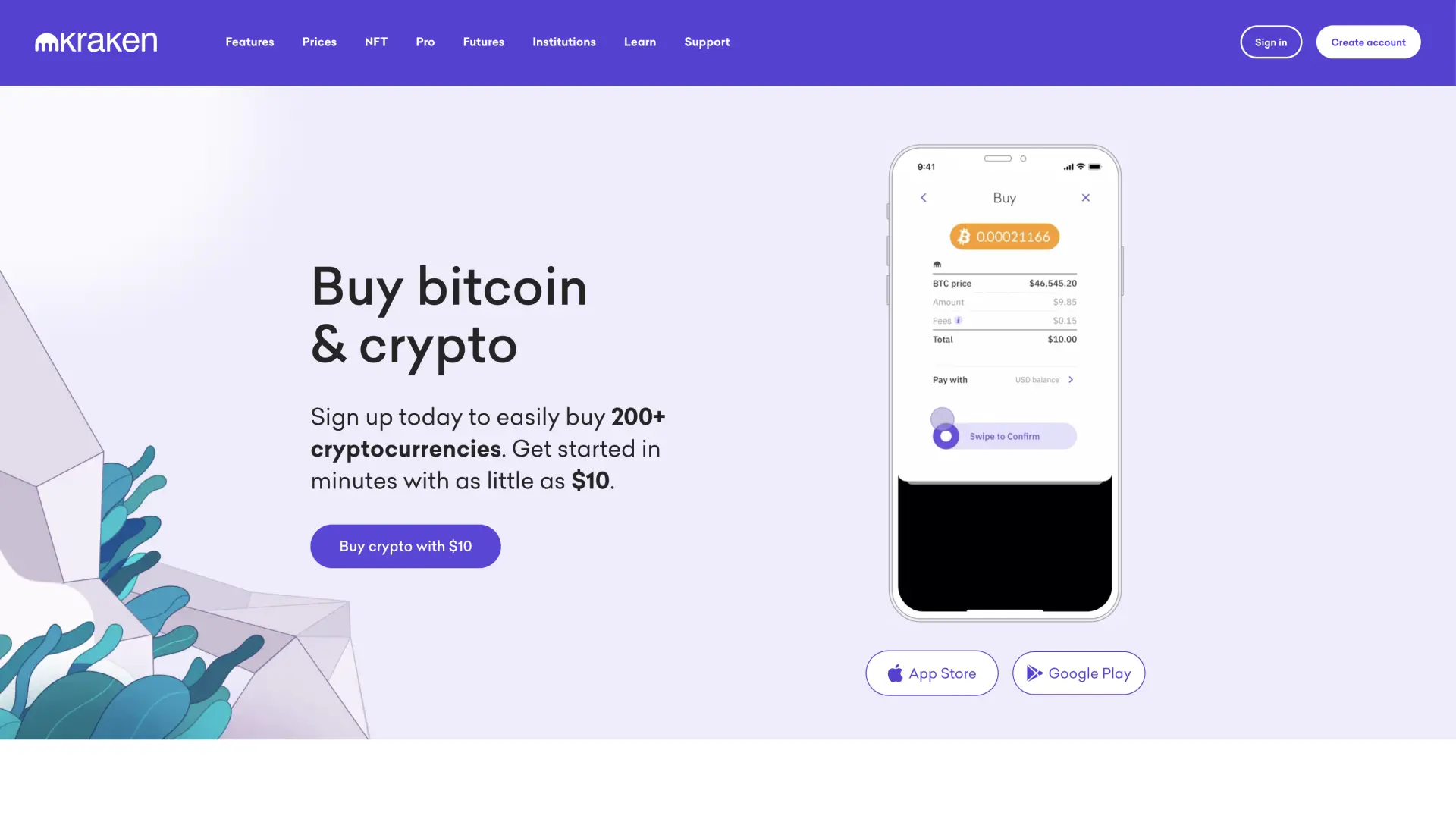
Launched in 2013, Kraken is a US-based crypto exchange known for its robust security measures and consistent performance. With billions in daily trading volumes, it’s a go-to choice for both novice and experienced traders worldwide.
Kraken supports a wide variety of cryptocurrencies—more than 300—and offers trading options like spot trading, margin trading with up to x5 leverage, and futures trading with leverage up to x50. The platform also provides staking opportunities for users looking to earn a passive income.
Deposits are supported in six major fiat currencies via multiple payment methods. Kraken’s transparent fee structure rewards high-volume traders with lower rates.
Pros
-
Strong security focus with no major breaches in its operating history
-
Competitive fee structure (maker 0.16%/taker 0.26%, decreasing with volume)
-
Over 200 cryptocurrencies available
-
Advanced trading features, including margin trading and futures
-
Excellent customer service reputation
-
Proof of reserves program for transparency
Cons
-
Interface not as beginner-friendly as competitors
-
Fiat deposit methods are more limited than some exchanges
-
The verification process can be lengthy
-
Mobile app functionality is not as robust as the desktop version
- Bitcoin
- Ethereum
-
Tether
83
No result
- Spanish
- English
-
French
4
No result
Bitunix
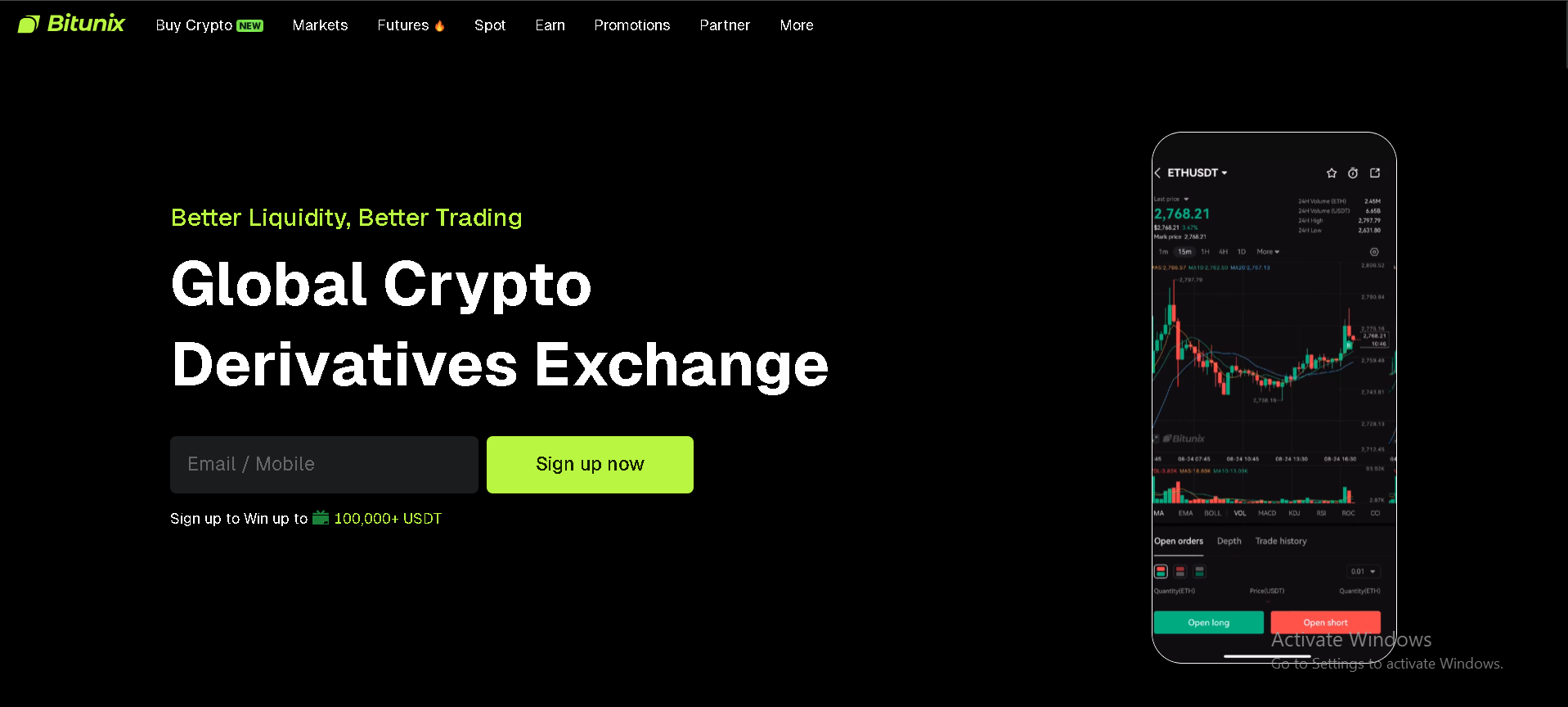
Bitunix is a crypto exchange specializing in derivatives trading. It was founded in 2022 by Aaron Lee with the goal of building a secure futures trading-focused platform suitable for novices and experienced traders. Headquartered in Saint Vincent, Bitunix is a regulated exchange with a Money Services Business (MSB) license with the US Financial Crimes Enforcement Network (FinCEN).
Users can purchase crypto directly with seven fiat currencies using a debit or credit card. Alternatively, Bitunix has integrated third-party service providers that support buys with more currencies and payment methods, such as bank transfer and Revolut. Users also have access to a Peer-to-Peer marketplace for decentralized trading.
Bitunix offers 414 futures contracts with up to 125x leverage and 501 spot assets. It provides flexible crypto staking, dual-investment products, and copy trading. It also offers a crypto conversion tool and a recurring buy system. Fees are 0.08% / 0.1% (spot) and 0.02% / 0.06% (futures), which is reasonable compared to other crypto exchanges.
Bitunix is a reasonably well-equipped exchange catering to derivatives and spot traders. It boasts competitive fees and a good range of assets, but it lacks certain advanced features like trading bots and crypto loans. Thus, it’s best suited to spot and derivatives traders seeking a cheap platform, while those seeking a general feature set will likely prefer an alternative.
Pros
-
Regulated exchange
-
Offers a good selection of assets
-
Spot and futures trading with high leverage
-
Competitive trading fees
Cons
-
Lacks specific advanced features
-
The fiat on-ramp is restricted in countries like the UK
- Bitcoin
- Ethereum
-
Tether
78
No result
- English
- Spanish
-
Farsi
3
No result
Crypto.com

- Bitcoin
- Holo
-
Litecoin
157
No result
- English
- Italian
-
French
5
No result
BuyUcoin
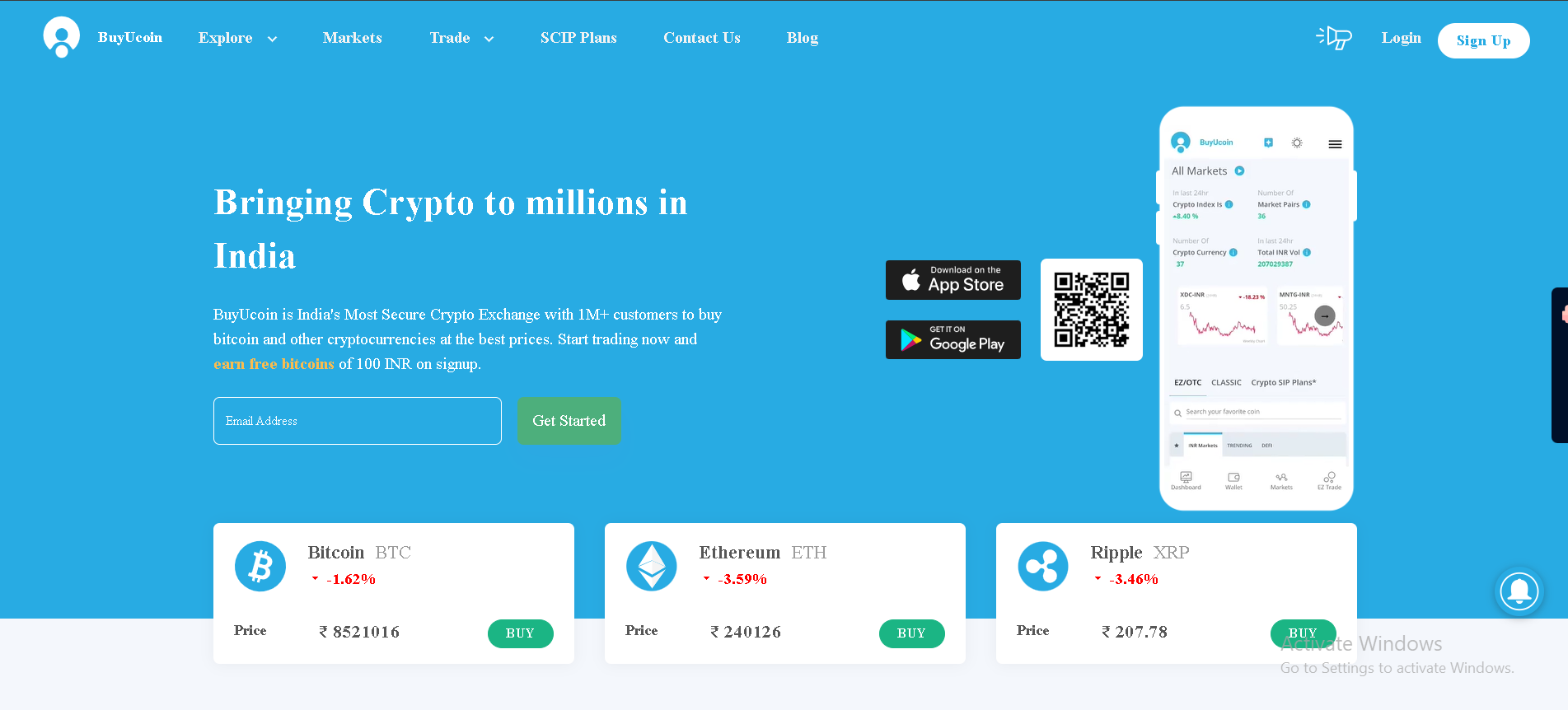
BuyUcoin is a leading Indian crypto exchange operating since 2016, serving over 1 million users. It was founded by Atulya Bhatt, Devesh Aggrawal, and Shivam Thakral to provide a convenient way for Indians to invest and trade crypto. It’s registered with the Financial Intelligence Unit - India (FIU-IND) and is based in Delhi.
While users may find BuyUcoin somewhat basic, as it lacks tools like futures trading, crypto loans, or bots, it offers a solid selection of 239 cryptocurrencies. However, some are not available to purchase on BuyUcoin. The exchange offers a basic line chart and a TradingView integration for advanced users. It offers an easy-trade tool and a spot exchange.
Outside of typical exchange features, BuyUcoin provides Systematic Crypto Investment Plans (SCIP) that involve buying regularly over extended periods. It also offers an NFT marketplace and Bitcoin rebates for trading.
BuyUcoin is a strong choice for Indian crypto investors as it’s registered with FIU-IND. Trading fees are reasonable at 0.24%, so it’s a top crypto exchange for local enthusiasts, but international investors can find more feature-rich exchanges.
Pros
-
Reasonable trading fees
-
Registered with FIU-IND
-
Good selection of assets
-
TradingView for advanced charting
-
Built-in NFT marketplace
Cons
-
Doesn’t have advanced features
-
Can only trade spot, not derivatives
- Bitcoin
- Ethereum
-
Tether
77
No result
- English
MEXC
- Shiba Inu
- Bitcoin
-
PAX Gold
72
No result
- English
- Turkish
-
Vietnamese
5
No result

Youhodler
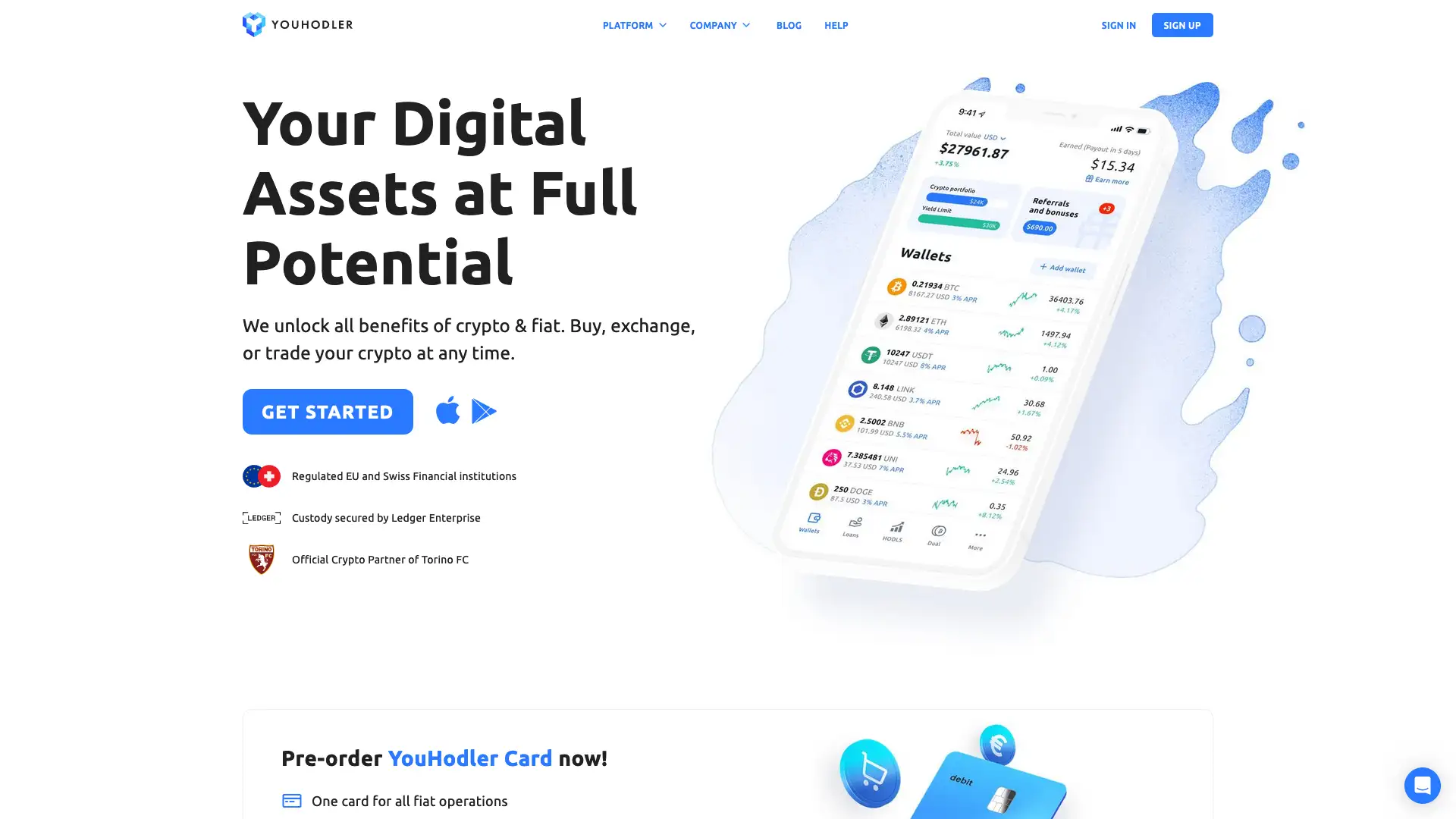
YouHodler Crypto Exchange, launched in Cyprus in 2018, stands as a versatile platform offering a plethora of crypto-fiat financial services including lending, trading, and savings accounts.
- Bitcoin
- Ethereum
-
Tether
57
No result
- English
CEX.IO
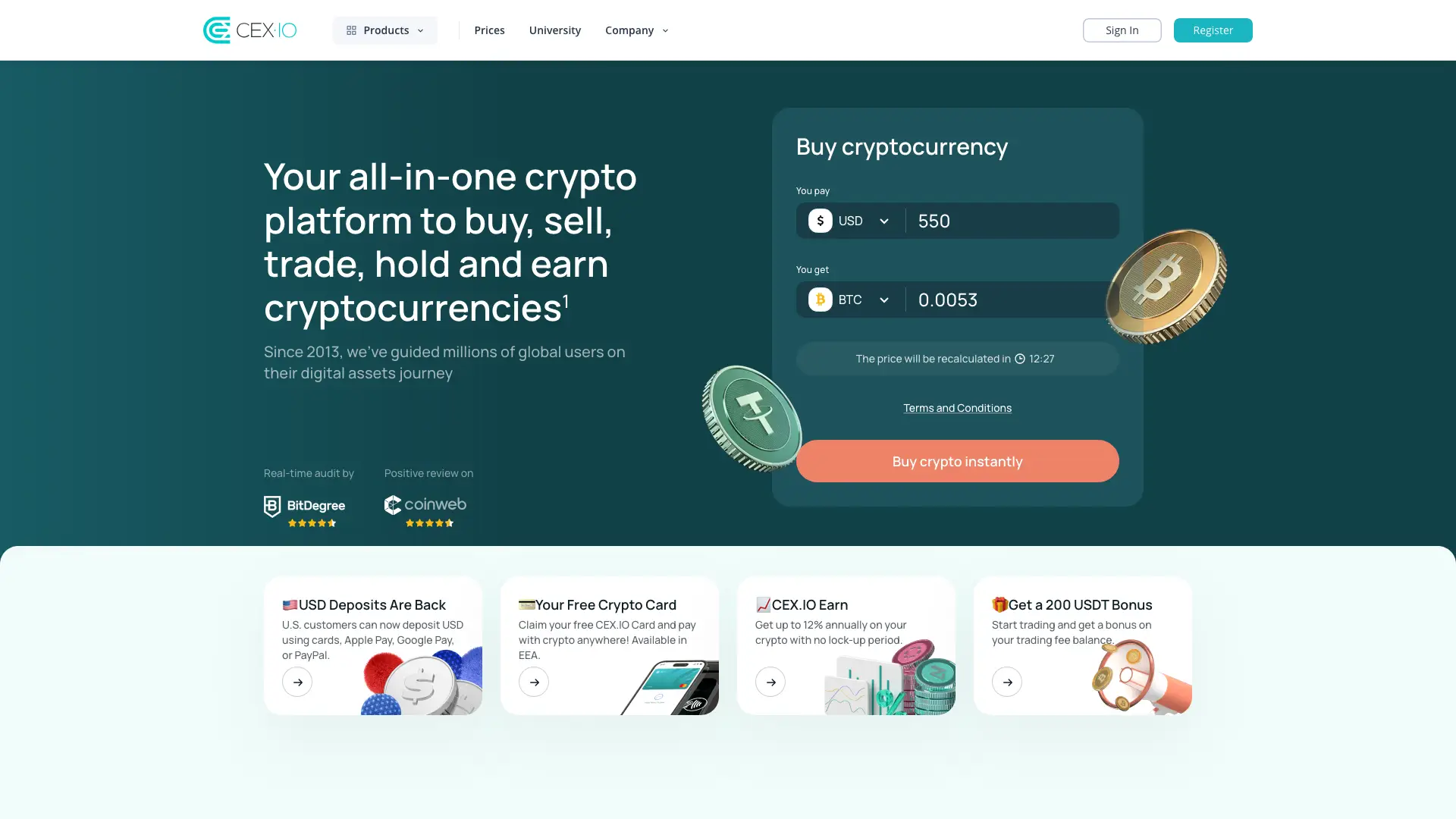
CEX.IO is a reputable cryptocurrency exchange known for its user-friendly interface and extensive range of supported cryptocurrencies.
- Bitcoin
- Ethereum
-
Tether
81
No result
- English
Coinbase
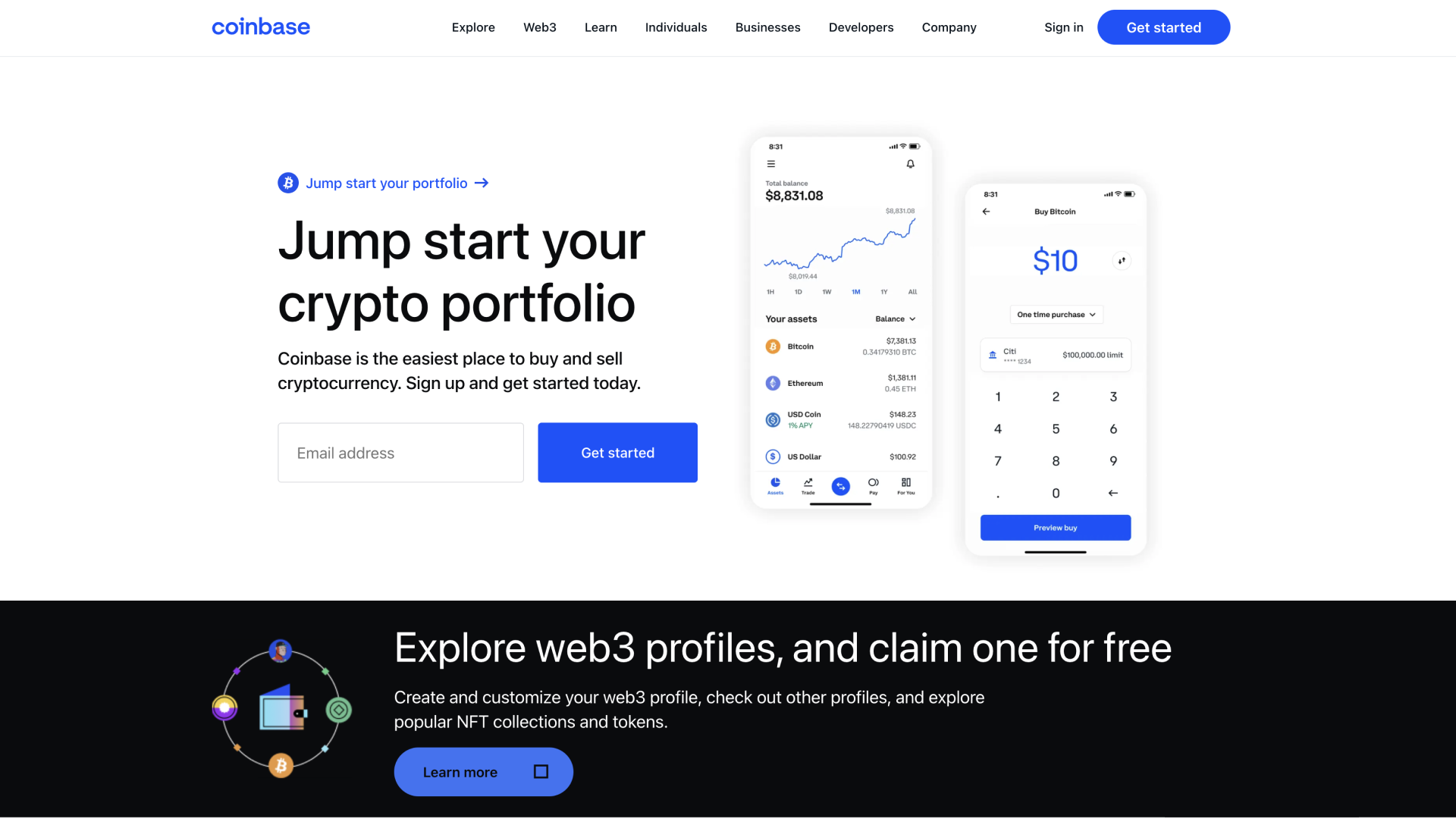
Coinbase, a major player since its inception in 2012, is a user-friendly cryptocurrency exchange offering a secure platform for buying, selling, and managing a variety of digital assets.
- Bitcoin
- Ethereum
-
Tether
68
No result
- English
Coinrule
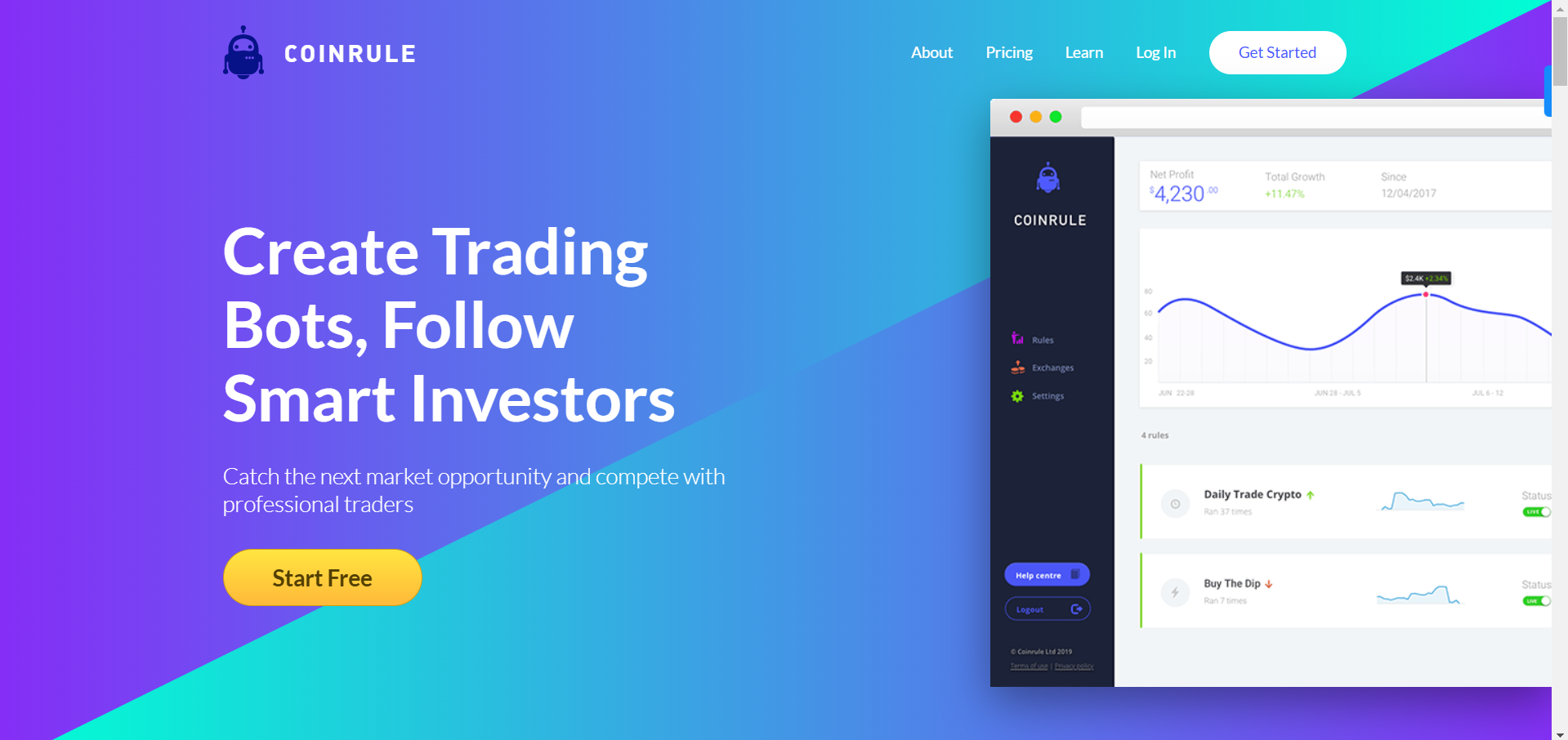
Coinrule, originating from the United Kingdom in 2018, is a user-friendly cryptocurrency trading platform that enables users to automate their trading strategies.
- Bitcoin
- Litecoin
-
1inch Network
1
No result
- English
BitMEX
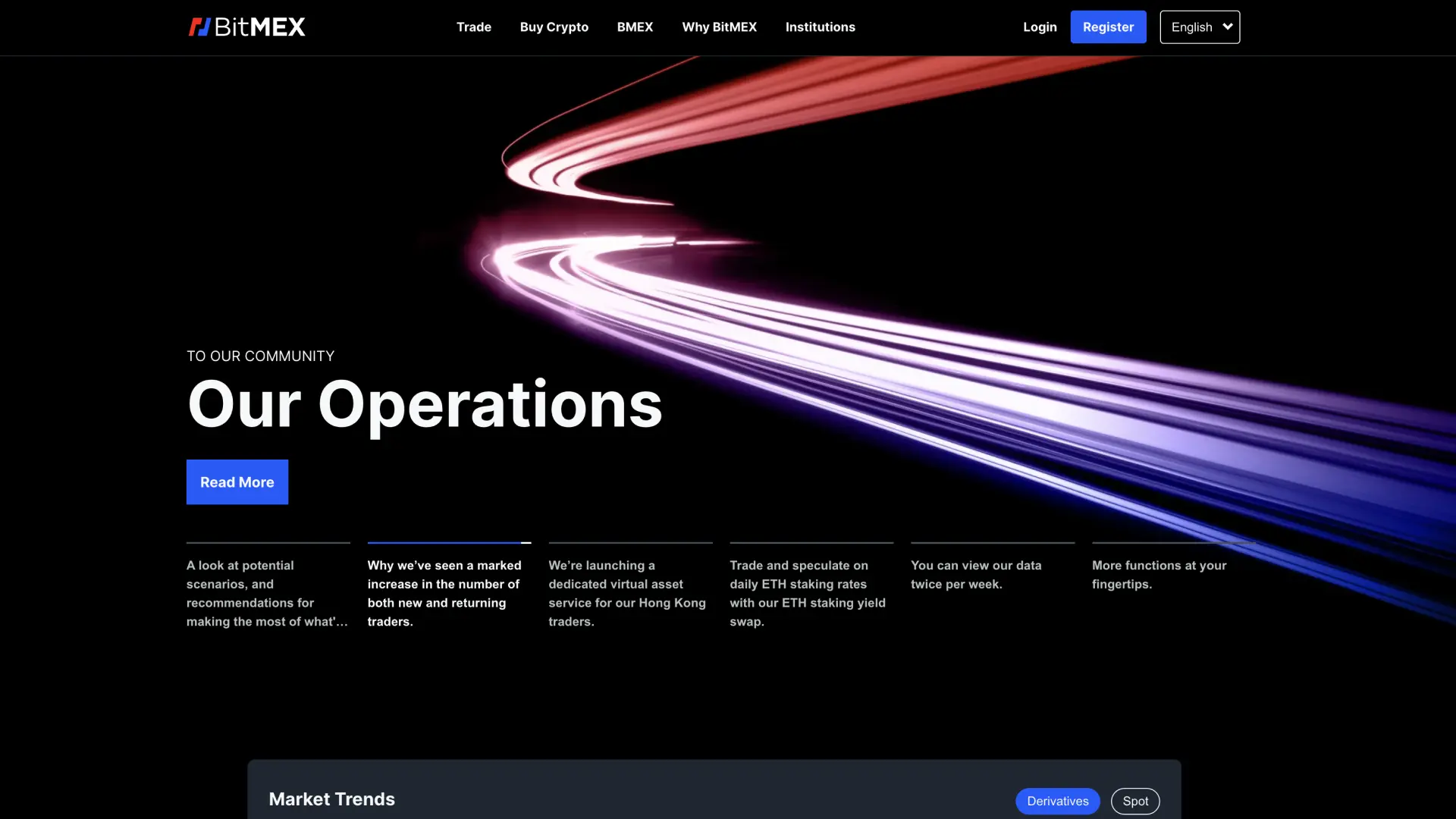
BitMEX is a crypto exchange designed for experienced traders who are interested in derivatives and high-leverage trading. The platform is well-known for its sophisticated trading tools and the ability to trade contracts with up to 100x leverage, making it a favorite among professional traders.
BitMEX only supports crypto-to-crypto trading, which means users cannot deposit or withdraw fiat currencies. The platform has a reputation for strong security, employing multi-signature wallets and rigorous security protocols. However, BitMEX has faced regulatory challenges and is not available to users in certain jurisdictions, including the United States.
The interface is tailored for advanced users, with a range of charting and analysis tools. However, this complexity can be intimidating for beginners. BitMEX’s customer support is responsive, but the platform’s lack of fiat support and regulatory issues may be concerning for some users.
Pros
-
Advanced derivatives trading tools
-
High leverage options (up to 100x)
-
Strong security measures
Cons
-
No fiat support (crypto-to-crypto only)
-
Not available to US users
-
Regulatory concerns
-
Not beginner-friendly
- Bitcoin
- Ethereum
-
Tether
30
No result
- Chinese (Mandarin)
- Russian
- English
Coinmama
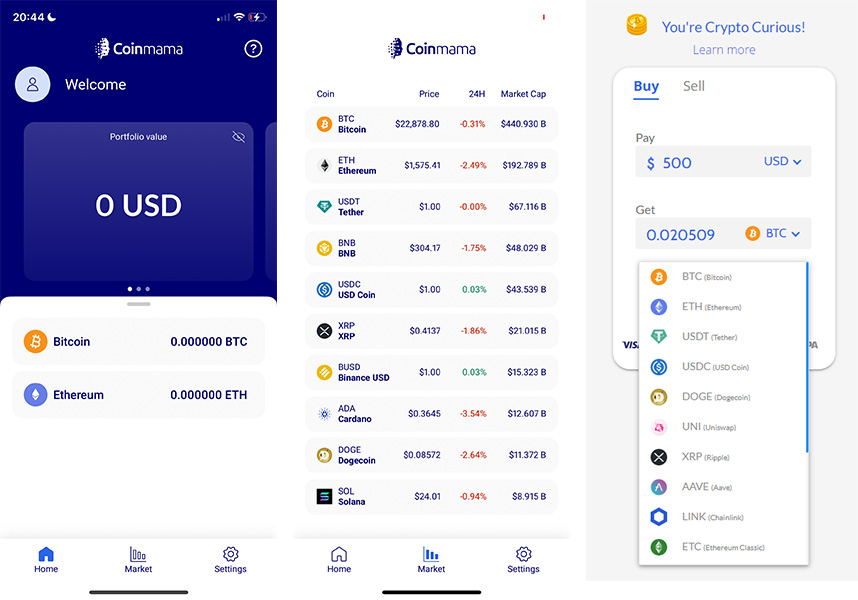
Coinmama got started in 2013 as one of the earlier cryptocurrency exchange platforms focused on making Bitcoin and other crypto purchases simple for regular people. The Israeli-based company built its reputation by allowing you to buy crypto with credit cards and bank transfers when most other platforms were still pretty complicated to use.
Over the years, Coinmama has maintained its focus on being a straightforward buying platform rather than a full trading exchange, which means it's particularly good for newcomers who just want to get their hands on some Bitcoin or Ethereum without dealing with order books and trading charts.
The platform has expanded to serve users in over 180 countries, though it's faced some regulatory hurdles in certain regions.
Pros
-
Simple buying process that's perfect if you're new to crypto and want to avoid complicated trading interfaces
-
Credit card purchases available, making it easy to get crypto quickly without waiting for bank transfers
-
High purchase limits once you complete verification, allowing you to buy substantial amounts
-
Good selection of popular cryptocurrencies including Bitcoin, Ethereum, and other major coins
-
Strong security measures including two-factor authentication (2FA) and secure storage practices
-
Clear fee structure so you know upfront what you're paying for purchases
Cons
-
Higher fees than many other platforms, especially for credit card transactions
-
Limited to buying only; you can't sell crypto back through the platform
-
Verification process can take time and requires multiple documents
-
Not available in all US states due to regulatory requirements
-
No advanced features like limit orders or portfolio tracking tools
- Bitcoin
- Ethereum
-
Tether
29
No result
- English

Symlix
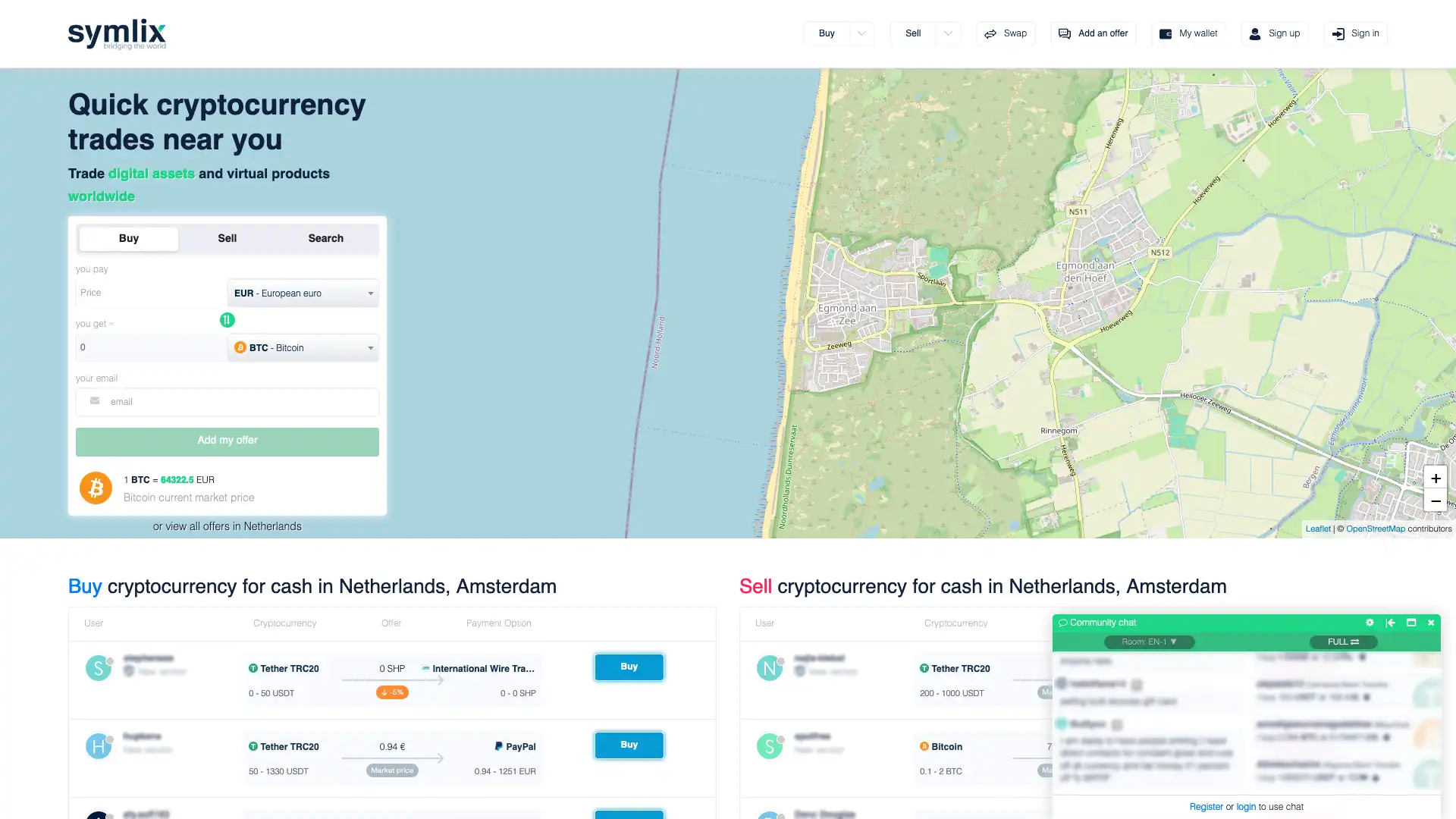
Symlix is a peer-to-peer (P2P) crypto exchange designed for users who value privacy and flexibility in their trading. The platform connects buyers and sellers directly, supporting a wide range of payment methods and cryptocurrencies.
One of Symlix’s main advantages is its focus on privacy, as users can trade without going through a centralized order book. The platform offers an escrow service to help protect both parties during transactions, reducing the risk of fraud. Symlix also supports multiple payment methods, making it accessible to users in regions where traditional exchanges may be limited.
But, as with most P2P platforms, users must be cautious of counterparty risk. The platform’s liquidity is generally lower than that of centralized exchanges, and there are fewer advanced trading features available. Symlix is best suited for users who prioritize privacy and are comfortable managing the risks associated with P2P trading.
Pros
-
Privacy-focused P2P trading
-
Supports multiple payment methods and cryptocurrencies
-
Escrow service for added security
Cons
-
Counterparty risk inherent in P2P trading
-
Lower liquidity than centralized exchanges
-
Limited advanced trading features
- Bitcoin
- Ethereum
-
Tether
8
No result
- Welsh
Emirex
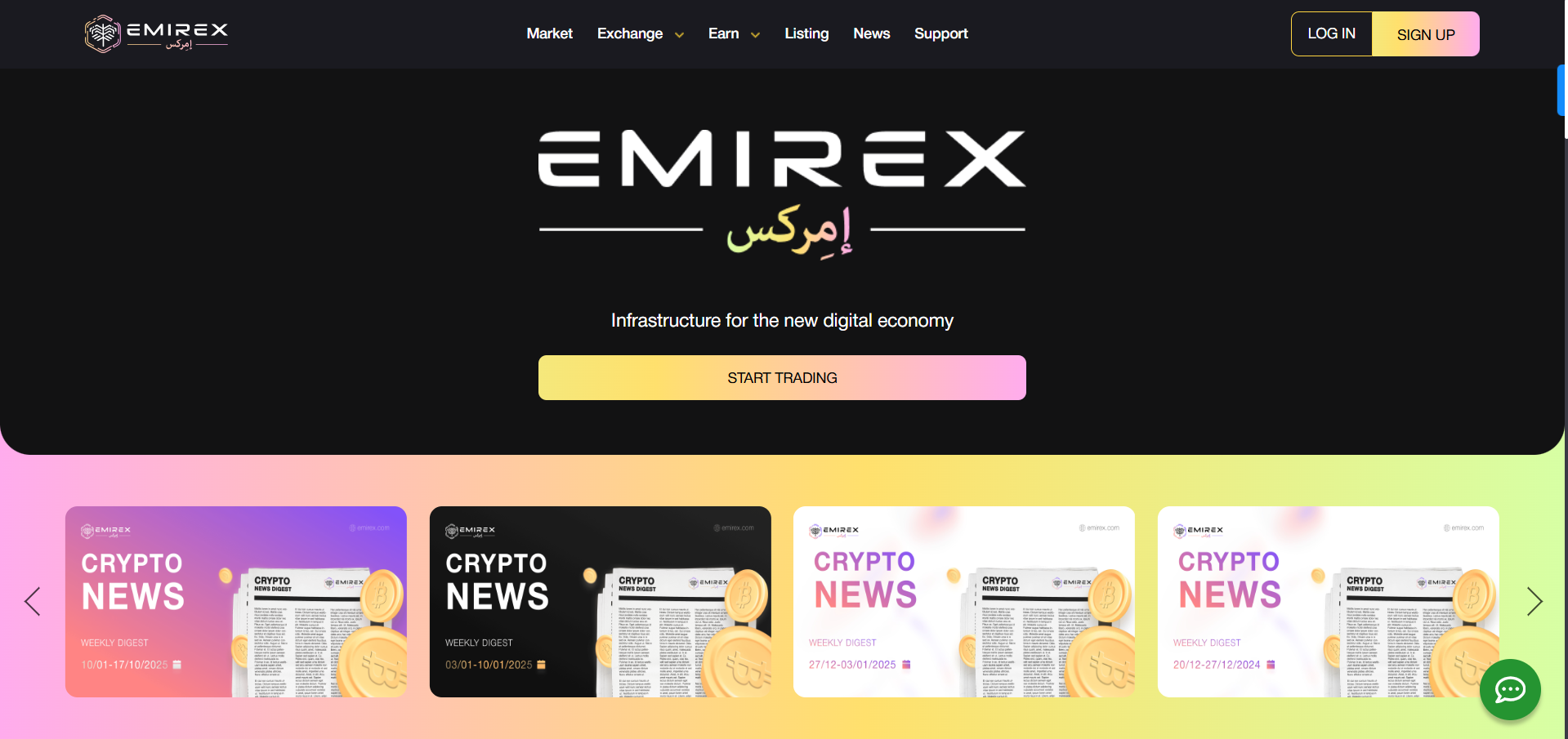
Emirex launched as a crypto exchange based in the UAE, aiming to serve the Middle Eastern market with a focus on regulatory compliance and institutional-grade trading infrastructure. The platform was designed to bridge traditional finance with crypto trading, offering both retail and institutional services in a region where crypto adoption has been growing steadily.
Emirex positioned itself as a regulated exchange that follows strict compliance standards, which was important for gaining trust in markets where regulatory clarity matters a lot. The exchange offers spot trading, futures, and various other services while emphasizing security and transparency. It's built its reputation around serving both individual traders and larger institutional clients who need reliable execution and proper regulatory oversight.
Pros
-
Regulatory compliance in multiple jurisdictions provides extra security and legitimacy for your trades
-
Institutional-grade infrastructure designed to handle large trading volumes and professional requirements
-
Multiple trading options including spot, futures, and margin trading for different strategies
-
Strong security protocols with cold storage and multi-signature wallet protection
-
Professional trading interface with advanced charting tools and order types
-
Dedicated support for institutional clients with personalized service options
Cons
-
Limited geographic availability compared to global crypto exchange platforms
-
Higher minimum deposit requirements that might not suit smaller traders
-
Verification process can be lengthy due to strict compliance requirements
-
Fewer altcoin options compared to larger international exchanges
-
Trading fees may be higher than some competitors, especially for smaller volume traders
- Ripple
- Stellar
-
USD Coin
12
No result
- English
- Russian
Cryptonex
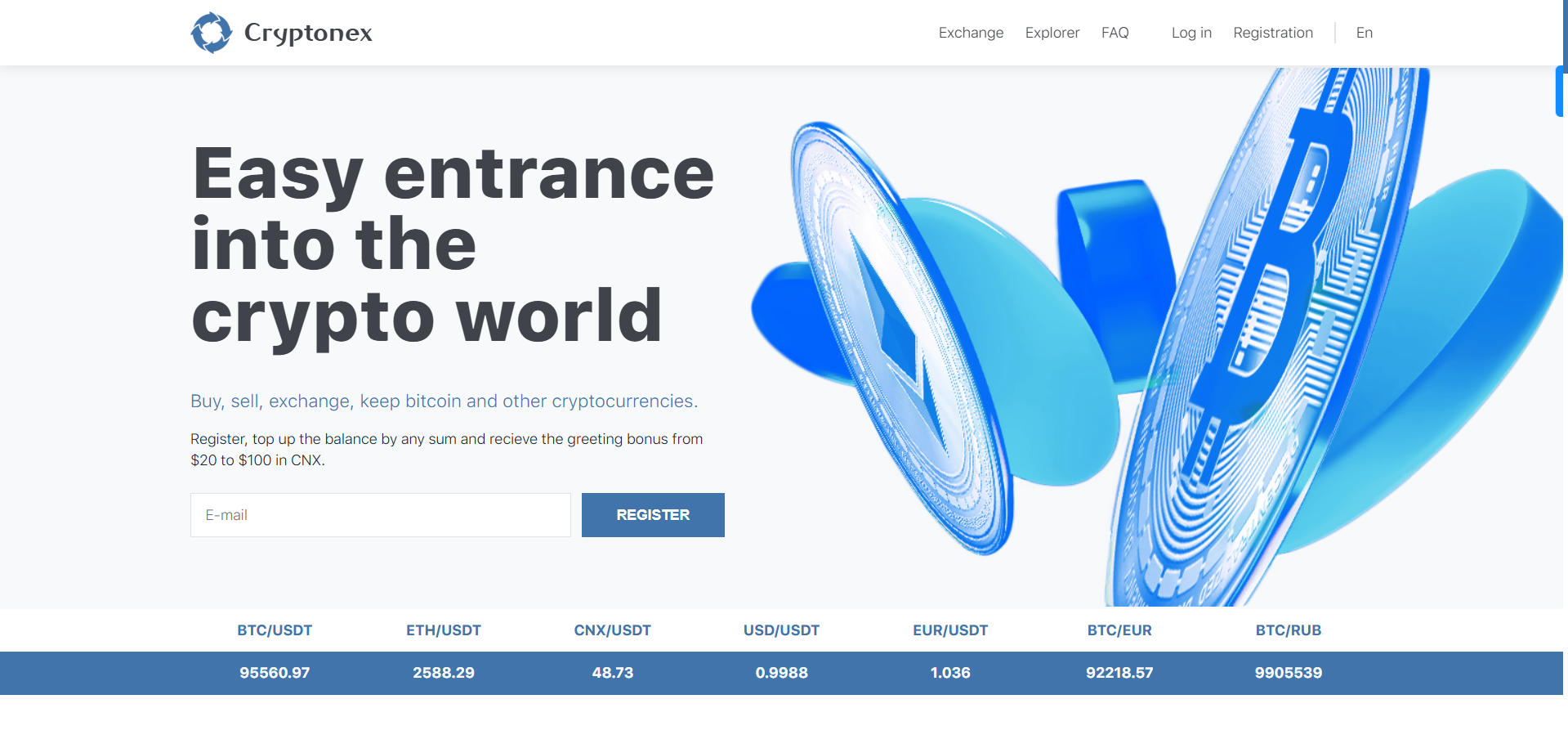
Cryptonex launched back in 2017 as a blockchain-based cryptocurrency exchange that aimed to bridge traditional banking with crypto trading. The platform built its own blockchain and native CNX token while offering exchange services for various cryptocurrencies.
What makes Cryptonex different is its focus on creating a full ecosystem that includes mining, mobile apps, and payment cards, trying to make crypto more accessible for everyday use. The exchange has positioned itself as a solution for both regular trading and broader crypto adoption, though it's faced some regulatory challenges in certain regions over the years.
You'll find it offers a mix of spot trading and additional services that go beyond just basic crypto swapping.
Pros
-
Native CNX token provides trading fee discounts and staking rewards for holders
-
Mobile app available for both iOS and Android with full trading functionality
-
Multiple deposit methods, including bank transfers and credit card purchases
-
Built-in mining features allow you to earn cryptocurrencies directly through the platform
-
Referral program offers commission sharing for bringing in new users
-
Payment card integration allows you to spend crypto in real-world transactions
Cons
-
Limited availability in some countries due to regulatory restrictions
-
Lower trading volumes compared to major crypto exchange platforms
-
Support team may struggle to keep up during busy trading times
-
Fewer trading pairs are available than in larger competitors
-
CNX token value fluctuations can affect the benefits of holding it
- Bitcoin
- Ethereum
-
Tether
12
No result
- English
OKX
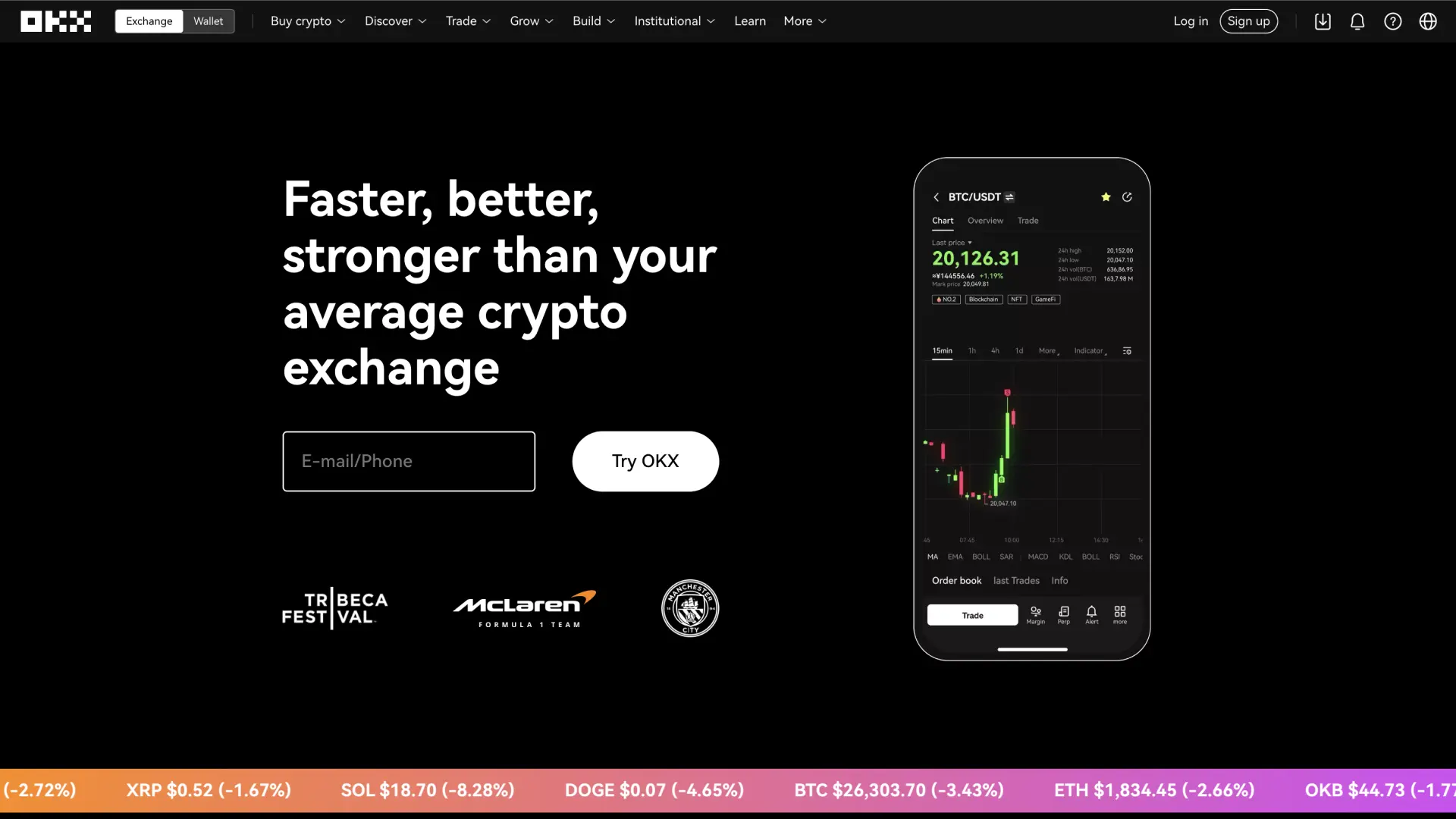
OKX Crypto Exchange is a global cryptocurrency trading platform offering a wide range of digital assets and financial services to users worldwide.
- Bitcoin
- Ethereum
-
Tether
90
No result
- English
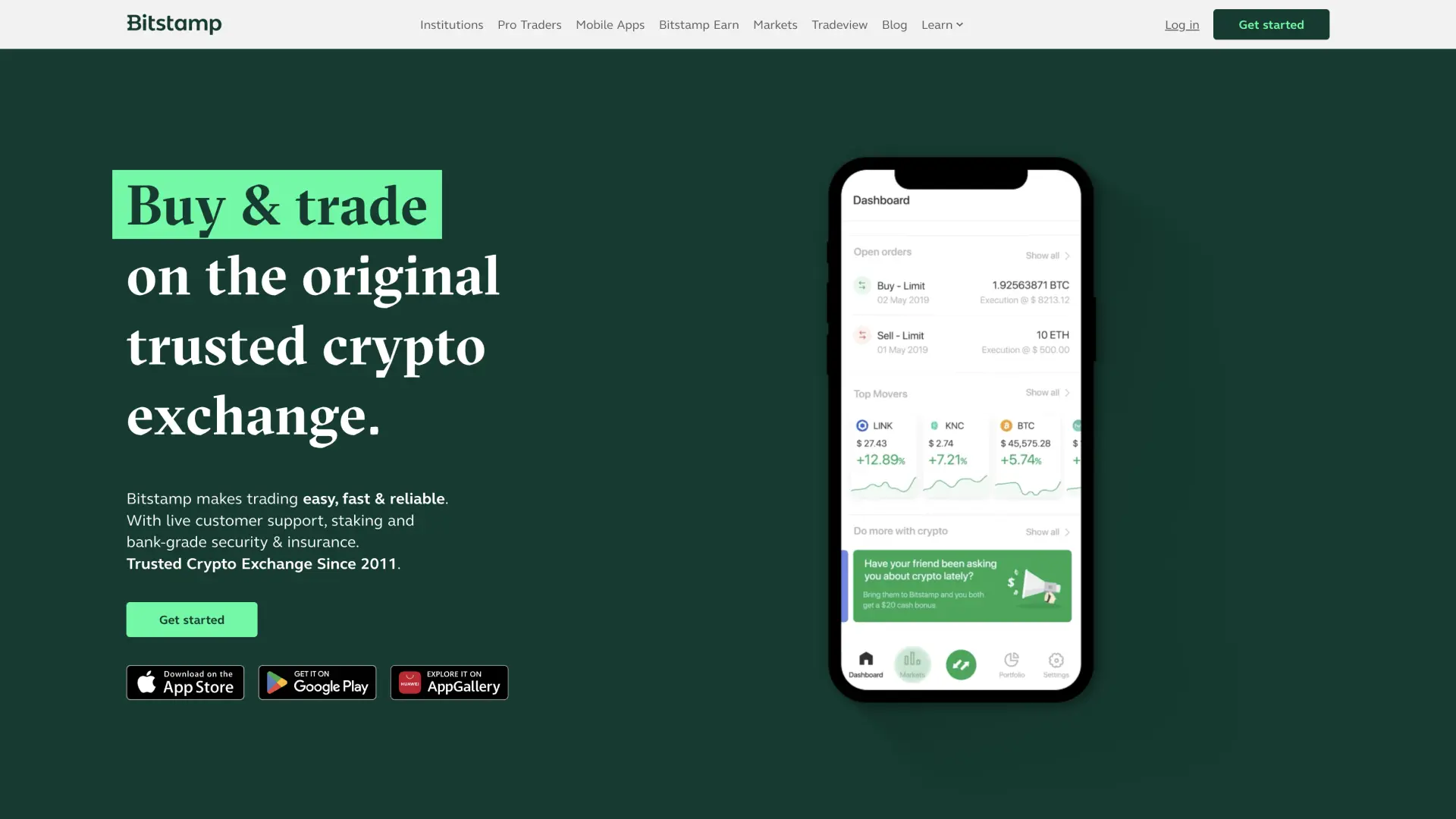
Bitstamp
- Bitcoin
- Ethereum
-
Tether
52
No result
- English
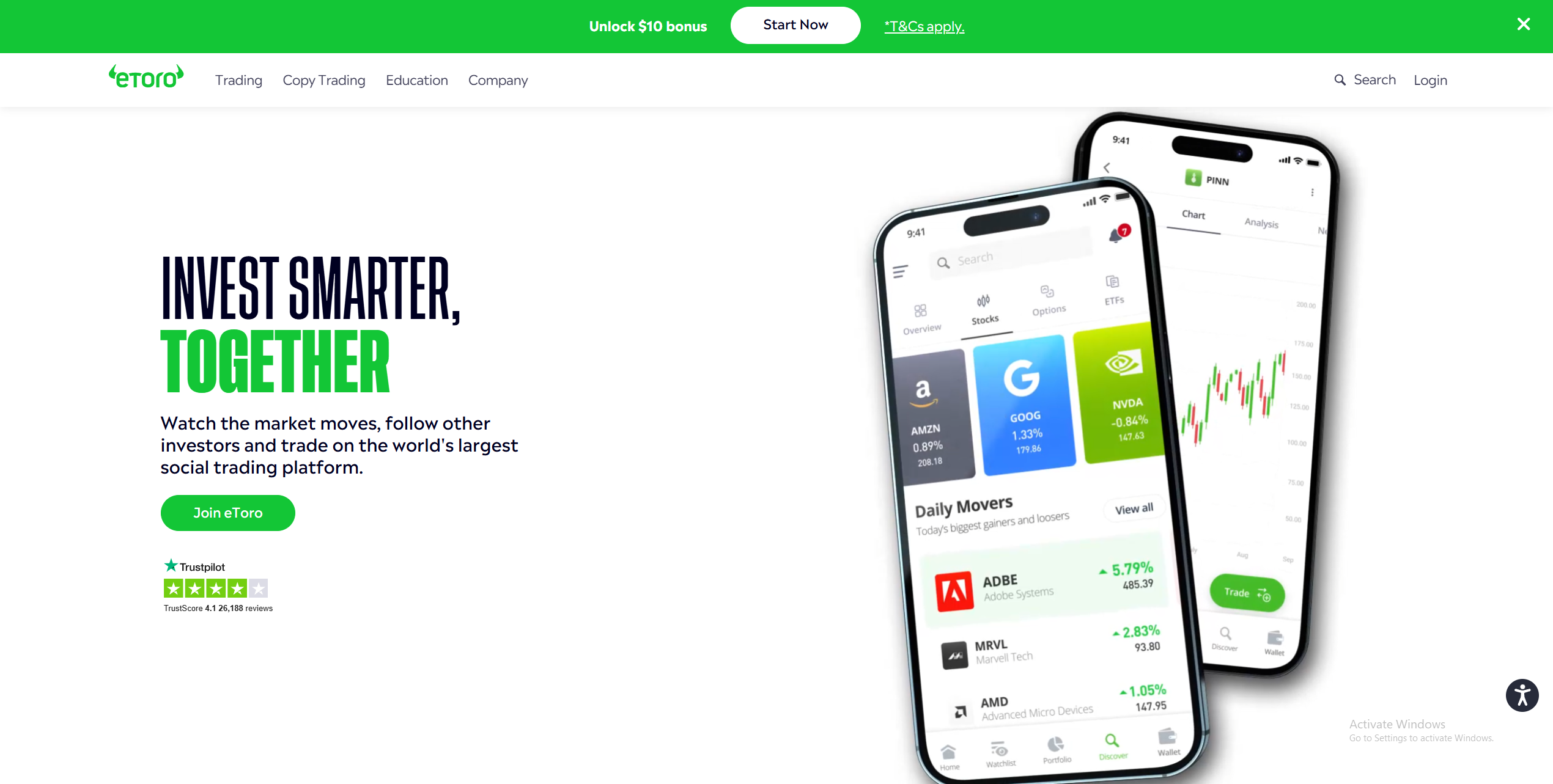
eToro US
- Bitcoin
- Ethereum
-
Solana
63
No result
- English

Uphold
Uphold Crypto Exchange, founded in the United States in 2014, is a global digital money platform that enables users to buy, sell, and trade various cryptocurrencies.
- Tether
- TrueUSD
-
USD Coin
144
No result
- English
CoinJar
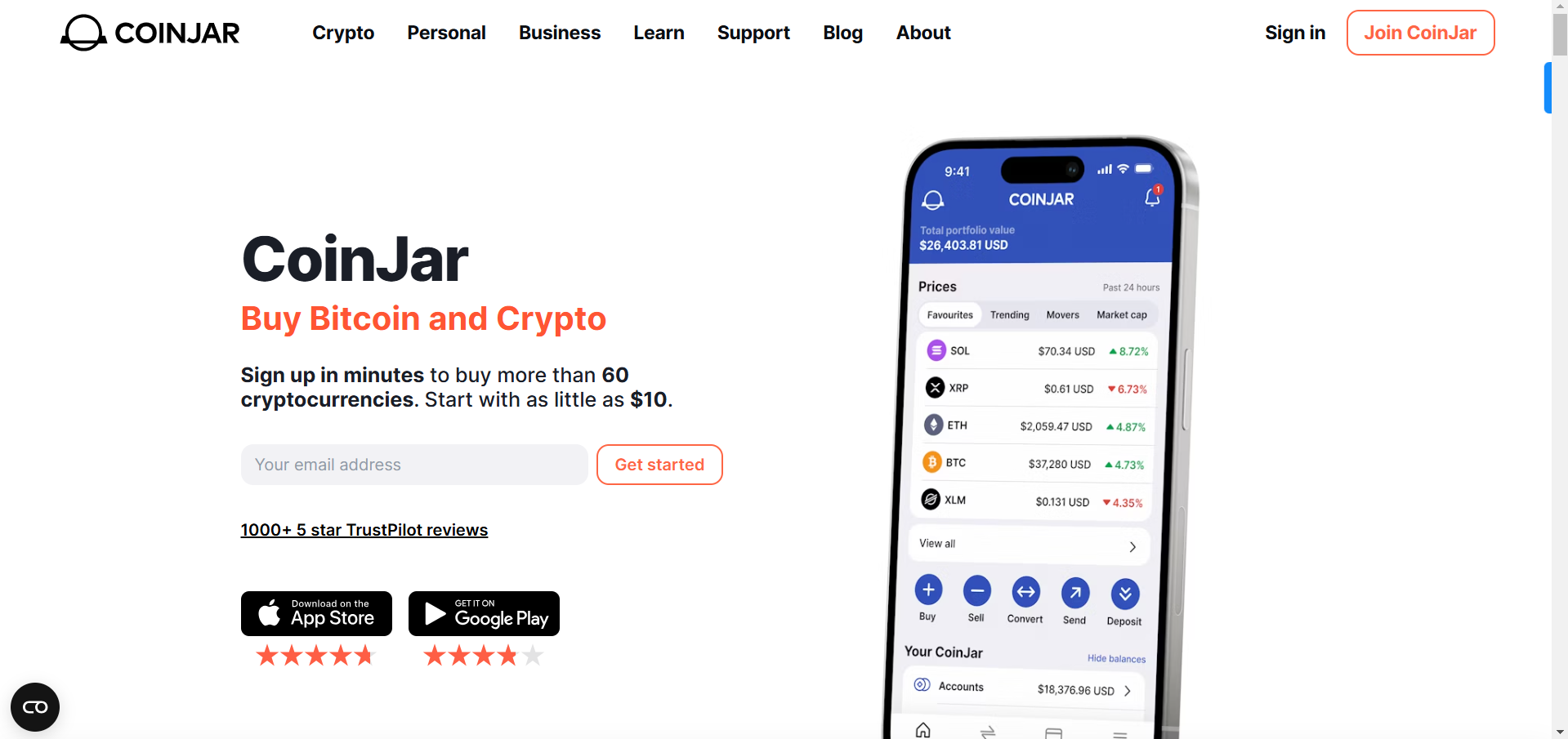
CoinJar is a user-friendly cryptocurrency exchange that offers a variety of digital assets for trading. It provides convenient features like instant buy and sell options, as well as a mobile app.
- Bitcoin
- Ethereum
-
Ripple
41
No result
- English

Intellectia AI

- Bitcoin
- Ethereum
-
Dogecoin
174
No result
- English
Why Consider Buying Crypto with Credit or Debit Cards?
Like some of the best crypto exchanges, some crypto wallets also allow the use of credit and debit card. Credit and debit cards are some of the simplest and fastest ways to buy crypto like Bitcoin, Ethereum, Solana, DOGE, or SHIBA INU. While many investors and traders prefer bank transfer deposits, credit/debit cards offer a few interesting advantages, including:
Speed and Convenience
If you’re wondering how to buy crypto with a credit card, you likely want to take advantage of its convenience. Most people already own a credit or debit card, and most exchanges support them as payment methods, so people can make purchases without much effort.
In addition to being widely used and convenient, credit/debit cards are fast. There is no lengthy processing time like when depositing via wire or SEPA. The transaction completes within a few seconds, and users can withdraw their crypto immediately.
Widely Accepted Payment Methods
Most people interested in buying cryptocurrency will be familiar with credit/debit cards and understand the process of using them to purchase goods online. Bank transfer deposits are less intuitive and have greater risk potential. As such, buying crypto with a credit card is ideal for beginners making their first foray into the digital asset market.
Almost every crypto exchange that supports fiat accepts credit/debit card payments, so users aren’t limited in choice when buying crypto with a bank card. Exchanges will even convert card payments made in a local currency to one that the platform supports, streamlining purchases/deposits for international users.
Instant Transactions
One of the most significant advantages of learning how to buy cryptocurrency with a credit card is its near-immediate execution of purchases. While bank transfers can take hours to days to clear, payments using a credit or debit card usually take between a few seconds and a couple of minutes.
When purchasing via a transfer, users may have to manually input details and send the payment, delaying the purchase and increasing the risk of human error. Card transactions can be processed in a fraction of the time of bank transfers, making them ideal for capitalizing on quick dips or the market’s reaction to news.
Buying Crypto with a Credit Card

While both kinds of bank cards are similar, there are a few key differences to be aware of when you learn how to buy cryptocurrency using a credit card.
Benefits of Using a Credit Card for Buying Crypto
The most significant benefits of using a credit card over a debit card include:
- Fraud Protection: Credit cards offer robust fraud protection and often afford users powerful chargeback rights. Therefore, if you’re scammed or accidentally give a bad actor your details, you’ll be more likely to get your money back.
- Buy on Credit: Although managing your spending when using credit cards is particularly important, they enable you to buy crypto on credit without having the funds in your bank. This feature is ideal for purchasing assets while waiting for payday or taking advantage of a substantial dip.
- Cashback Rewards: While only available on specific credit cards, some offer cashback rewards on spending. This can include cash or reward points that can be redeemed for various things, like hotels or flights. Rates are usually between 0.1% and 1%, but they can add up over time.
Fees and Charges to Watch Out For
When you use a credit card for a crypto purchase, you must be aware of a few extra fees your bank may charge. They include interest and cash advance fees, which are about 3% to 5% and often come with higher interest rates than regular borrowing. Additionally, transaction fees are high, usually around 2% to 5%.
Processing times
Credit and debit cards offer similar processing times. On average, they take around 30 seconds to a couple of minutes. Nevertheless, some exchanges or card providers may require additional processing or verification time for credit card crypto purchases as they’re considered high-risk.
Security Tips for Credit Card Crypto Purchases
Credit card purchases are generally safe, but we do have a few tips you can follow to enhance your security:
- Make sure you use a trusted exchange with a solid track record.
- Enable Two-Factor Authentication (2FA) and link it to an authenticator app like Authy instead of SMS or email to make your account harder to compromise.
- Keep track of your credit card statements to look for unknown or duplicate payments. It can also help to set up mobile banking so you can check transactions as they occur and while on the go.
- Avoid using your credit card details over public WiFi networks, as bad actors could maliciously intercept and use your data.
Buying Crypto with a Debit Card

Wondering how to buy crypto with debit cards? They offer some positives and negatives compared to credit cards, which include:
Benefits of Using a Debit Card for Buying Crypto
A few of the most notable benefits of using debit cards for purchases include:
- No Risk of Debt: Users can only spend funds in their bank accounts, so there’s no need to worry about late payment fees, interest charges, or accidentally spending beyond one’s means.
- Lower Fees: Debit cards typically incur fewer fees than credit cards because there is no cash advance or interest charge. Some exchanges offer lower transaction fees for debit cards, but it’s rare.
- Simple to Use: Because debit cards don’t impact credit ratings and don’t involve debt, they’re easier to manage and understand. They can also be effective for people who struggle with budgeting, as debit cards won’t allow them to spend money they don’t have.
Fees and Charges to Watch Out For
When buying crypto with a debit card, there are far fewer charges to watch out for. Users must consider transaction fees (usually the same as credit card fees, but sometimes marginally cheaper) and their bank’s foreign purchase or currency conversion fees (if using an exchange that doesn’t support their local currency).
Processing times
As we mentioned earlier, there aren’t many differences between debit and credit cards regarding processing times. Both are near-instant and usually finish in under two minutes. But debit cards can sometimes process faster, as banks are more wary of crypto purchases using credit cards.
Security Tips for Debit Card Crypto Purchases
Debit card transactions are relatively secure. Sensitive data is encrypted and cannot be accessed by the exchange directly. Still, we do have a few tips on protecting yourself when buying crypto with a debit card:
- Use a dedicated debit card for crypto purchases. This will limit your losses in the event a bad actor compromises your card.
- Make sure not to save your debit card details on exchanges to ensure you stay protected even if the platform suffers a security breach.
- Use regulated or trusted exchanges that utilize the HTTPS protocol for data transfers and comply with PCI security standards.
Using a Credit Card vs. a Debit Card for Buying Crypto
Fees and Transaction Costs
Purchasing crypto with a credit card can incur higher costs than with a debit card. Some exchanges charge more for credit card transactions, but the main costs come from your bank. You’ll be subject to charges for cash advances and interest when buying crypto with credit cards. Credit cards can also charge higher fees for non-local currency transactions.
Speed and Processing Times
The processing times for credit and debit cards are similar. Both support instant purchases and near-immediate crediting. Nevertheless, some top crypto exchanges have robust security measures, which can lead to additional verification steps for large debit card transactions. The above guide will teach you how to pick a good platform and explain how to register with an exchange.
Privacy and Security Considerations
A significant advantage of using credit cards to buy crypto is their fraud protection. Due to consumer chargeback rights, credit card providers are more likely to refund users for fraudulent transactions. They’re also more likely to trigger risk alerts leading to blocked transactions, which can be a positive or negative depending on whether you value convenience or security.
| Features | Credit Cards | Debit Cards |
|---|---|---|
| Fees and Transaction Costs | May incur higher fees, including cash advance and interest charges | Often expensive for deposits and purchases |
| Speed and Processing Times | Typically processed instantly | Usually instant, but may require extra verification for large or first-time transactions |
| Privacy and Security Considerations | Stronger fraud protection, but may block crypto-related transactions | Less fraud protection; higher risk if lost or stolen |
Conclusion
Credit and debit cards are a common choice when deciding on the best way to purchase crypto or deposit funds to an exchange. Most people already own a bank card, so the payment method is familiar, convenient, and straightforward. Nonetheless, you should know a few things before learning how to buy crypto with a credit card.
Typically, credit or debit card payments are more costly than bank transfers. They can incur additional charges for transactions, cash advances, and interest. Still, they offer unparalleled convenience and support for instant purchases/deposits, making them a good choice for people who value simplicity or need to take advantage of quick market movements.
The best websites to buy Bitcoin with credit cards will vary based on what you value most. For example, eToro is ideal for people prioritizing cost-effective funding as it charges no credit/debit card deposit fees, but it is important to note that Credit Cards and PayPal are not available for users under UK/FCA regulation. But, exchanges like Xapo Bank and Bitunix are good all-around choices as they offer a mix of reasonable costs, a good assortment of assets, and multiple ways to buy.
If you want to go into crypto mining, we have published a guide to help you choose the best crypto mining apps and join the best crypto mining pools.
FAQ
Are there limits on card crypto purchases?
The exact limits exchanges place on card-based crypto purchases vary between platforms, banks, and countries. Generally, limits on credit card purchases range from around $1,000 to $20,000 daily. That said, the disparity between platforms is significant. Gemini imposes a $1,000 daily limit, Kraken $5,000 over seven days, and Crypto.com $20,000 daily.
Which platforms offer the lowest fees?
Credit and debit cards are convenient, but are among the most costly deposit/purchase methods. Many exchanges charge upwards of 3%, which can put investors at an immediate disadvantage. However, eToro offers fee-free debit/credit card deposits and charges a 1% spread fee, making it one of the best websites to buy Bitcoin with a credit card cheaply.
Is it safe to use a credit card for crypto?
There are no inherent security risks when using a credit card to pay for crypto. They can offer some protection, as banks are more likely to refund credit card transactions than direct transfers. Reputable exchanges also encrypt card data using industry-standard techniques. However, bad actors could steal your card details if you accidentally use it on a phishing site.
Is it safe to use a debit card for crypto?
There is no direct risk to using a debit card to purchase cryptocurrency. However, debit cards typically offer weaker fraud protection than credit cards. Moreover, you risk losing your actual bank balance, not just credit, if your card is compromised due to phishing or another scam.


