Xapo Bank Review 2026

- When you click links on this page, we may earn an affiliate commission. By using this website you agree to our terms and conditions and privacy policy.
- Participation in online gambling may be illegal in your country and is subject to age restrictions (18, 19, or 21, depending on the jurisdiction). Verify legality and age requirements before participating. Learn more
Xapo Bank breaks down the barriers between crypto and traditional finance, while maintaining regulatory compliance and providing bank-grade security. Most of the top cryptocurrency exchanges specialize in digital asset services and sacrifice aspects like fiat support or security, but Xapo Bank operates uniquely.
Xapo Bank is committed to creating a seamless crypto-fiat experience. Users can access tools like a debit card and Bitcoin-backed loans, enabling straightforward spending while maximizing convenience. They can invest, save, store, and grow their wealth reliably, making Xapo Bank a versatile Bitcoin custody and exchange solution.
Throughout this Xapo Bank review, we'll examine the platform in detail, breaking down its features, fee structure, and performance compared to other popular exchanges. We also provide a guide on setting up a new Xapo Bank account and cover a few frequently asked questions.
Xapo Bank Review: Pros and Cons
Pros
- Licensed private bank and VASP regulated by the GFSC
- 0.1% spread and no direct trading fees
- Earn high APYs on Bitcoin and USD
- Crypto debit card for straightforward spending
- High-limit crypto-backed loans
- Industry-leading security measures
- Never been breached in a 12-year track record
- Crypto loans for temporary cash outs
Cons
- $1,000 annual subscription fee
- Limited to Bitcoin and stablecoins
- Crypto loans are unavailable in the UK
Background and Reputation

Company Overview
Xapo Bank is a private bank and Virtual Asset Service Provider (VASP) based in Gibraltar. It was launched in 2013 to provide a better way to hold, access, and grow Bitcoin wealth. Wences Casares, a serial entrepreneur who has served on the PayPal board, founded the company.
Regulation & Licensing
Our Xapo Bank crypto exchange review found that the Gibraltar Financial Services Commission (GFSC) fully licenses it as a private bank and VASP. As a result, it successfully passported its banking license into the UK, enabling access to investors in the country.
Because it's based in Gibraltar but has had its license passported into the UK market, Xapo Bank doesn't hold a Markets in Crypto Assets (MiCA) license. However, the UK's Financial Conduct Authority, as its services are passported into the UK.
Trust & History
Xapo Bank features excellent security. Safety is one of the company's core selling points, so it's no surprise that it's implemented leading protective measures. The company has never been hacked or lost user funds. It has operated reliably and consistently, mostly without controversy.
While it's not been breached, Xapo Bank has faced some legal troubles:
- A German crypto investor sued the company, claiming it held 19.99 BTC stolen from them. They claimed that Xapo was negligent in its holding of the stolen assets.
- LifeLock (a company that acquired Lemon, one of his previous projects) sued Xapo's CEO, alleging that Casares launched Xapo Bank using resources belonging to Lemon.
Xapo Bank is generally transparent. It documents its proof of reserves across several metrics, which show that Xapo is significantly overcollaterized. It's frequently audited, although these reports aren't public. Overall, Xapo Bank's history is positive. Its security is excellent, and it cares about users, even if it has faced a few issues.
User Reviews

Is Xapo Bank legit? User reviews can provide insight into how a platform operates and treats its customers. The thoughts of actual users are excellent representations of the trading experience and typical platform activity. Still, you should remember that people more often share negative experiences than positive ones.
On Trustpilot, Xapo Bank has achieved a 3.9/5 or 'Great' rating. It replies to 97% of negative reviews within one week. These scores are similar to Coinbase (4/5, replies to 97% within 2 weeks). Users appreciate its ease of use and features, not the $1,000 annual fee and customer support.
Some customers state they would like the option to buy Ethereum and use it for loans or spending on the Xapo card. Yet, the majority agree that Xapo Bank is a trustworthy and simple-to-use platform for storing or managing BTC and USD.
How to Sign Up for Xapo Bank
Learning how to use Xapo Bank doesn't have to be complicated. It has a simple registration process and trading interface, making it an excellent crypto exchange for beginners. Below, we detail how you can get started with Xapo Bank in an easy-to-follow format.
Step 1: Create an Account with Xapo Bank
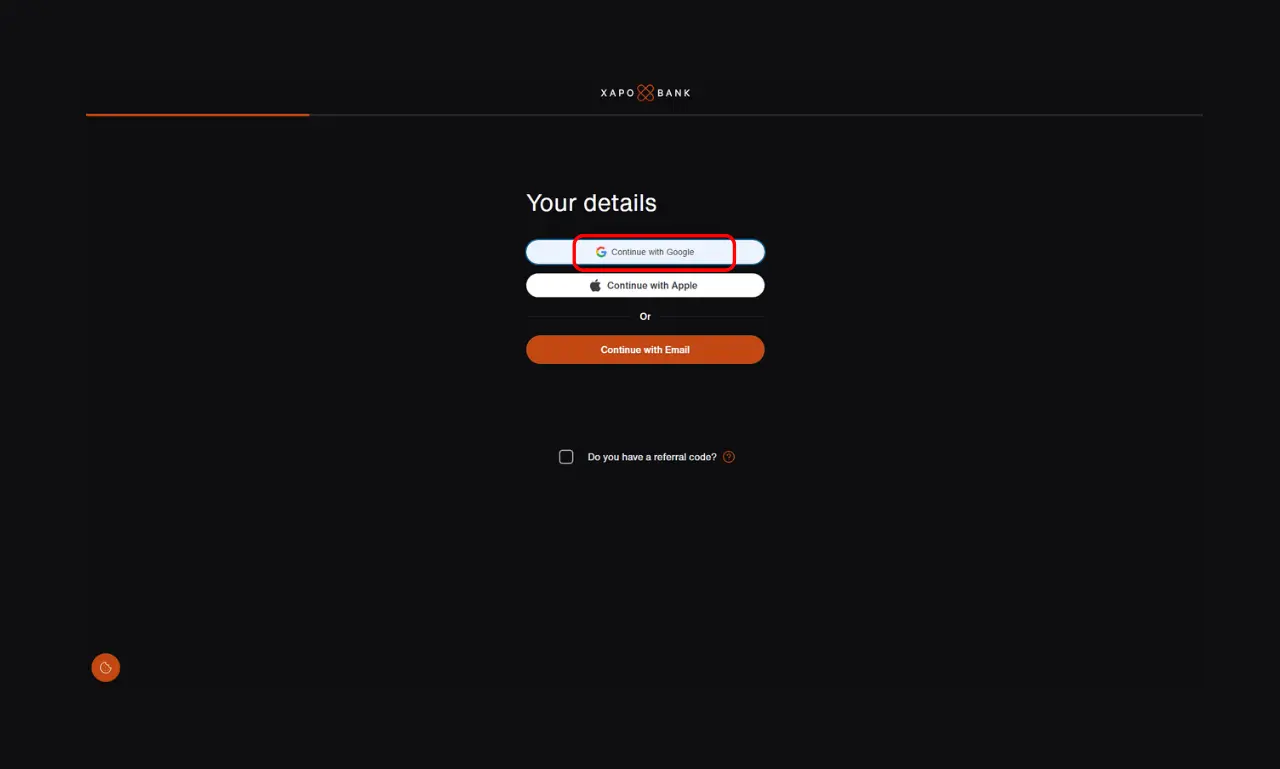
The Xapo Bank sign-up process is straightforward but relatively time-consuming. To get started, head to the Xapo Bank homepage, click the 'Join now' button, then click it once more after it redirects you to the membership page.
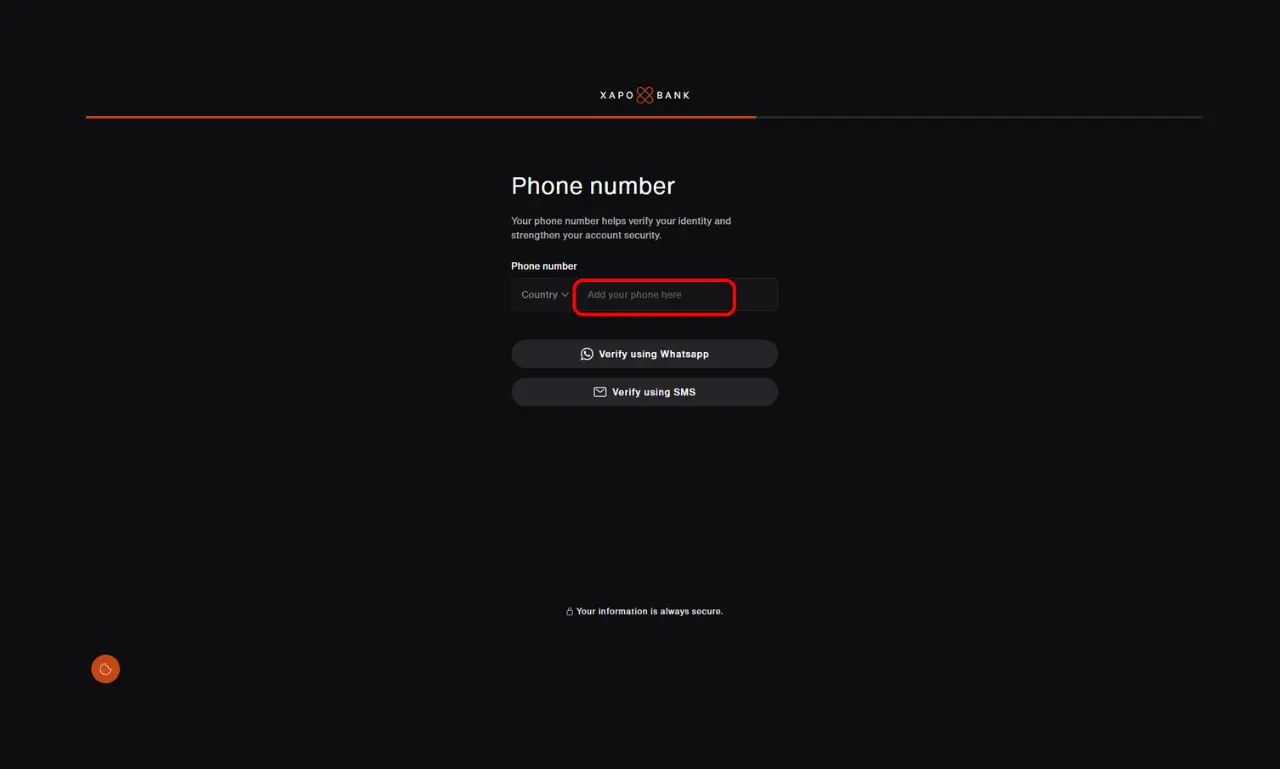
You can sign up to Xapo Bank with a Google/Apple account or an email address. Input your email and name, then click 'Create my account'. You'll have to enter a confirmation code that Xapo Bank sends to your email. Afterward, you have to enter and verify a phone number.
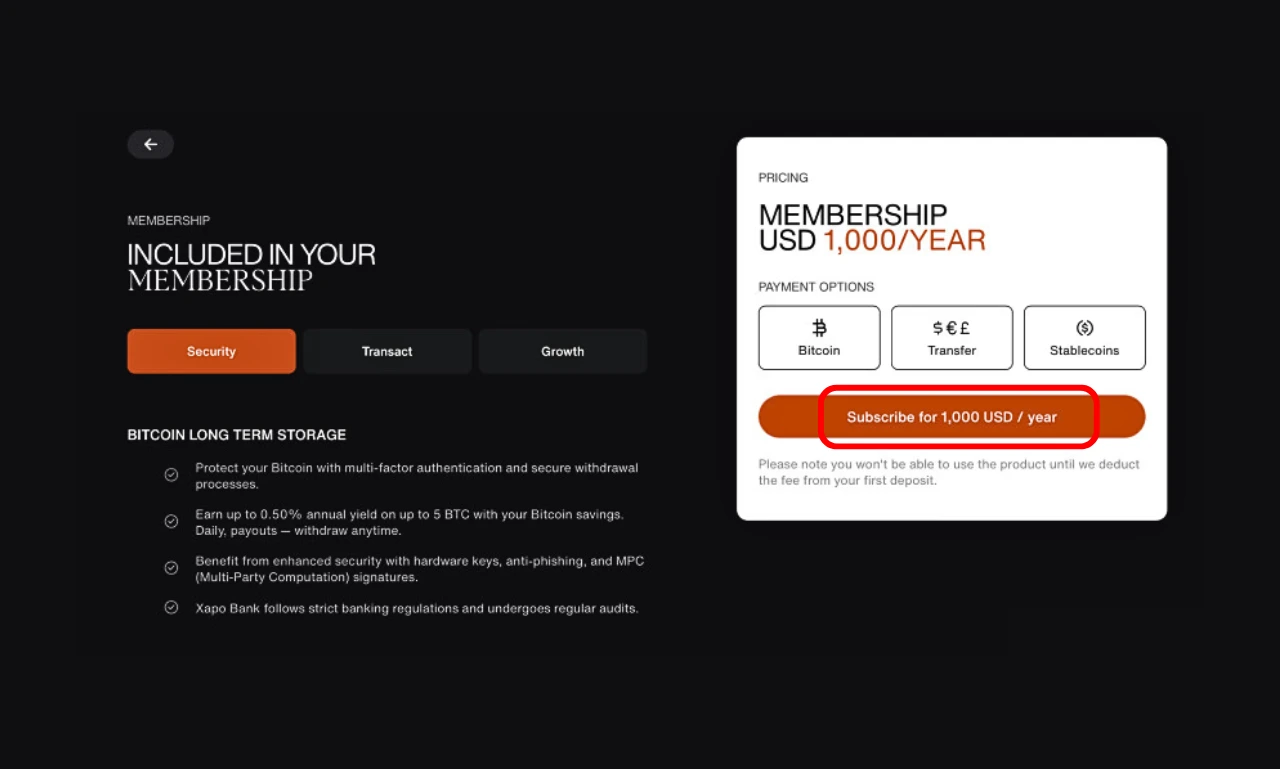
Once you've completed the basic account creation process, you will have to accept to pay the membership fee of $1000/year and scan the QR code present on the screen to complete the remaining registration within the Xapo Bank mobile app.
Step 2: Verify Your Xapo Bank Account
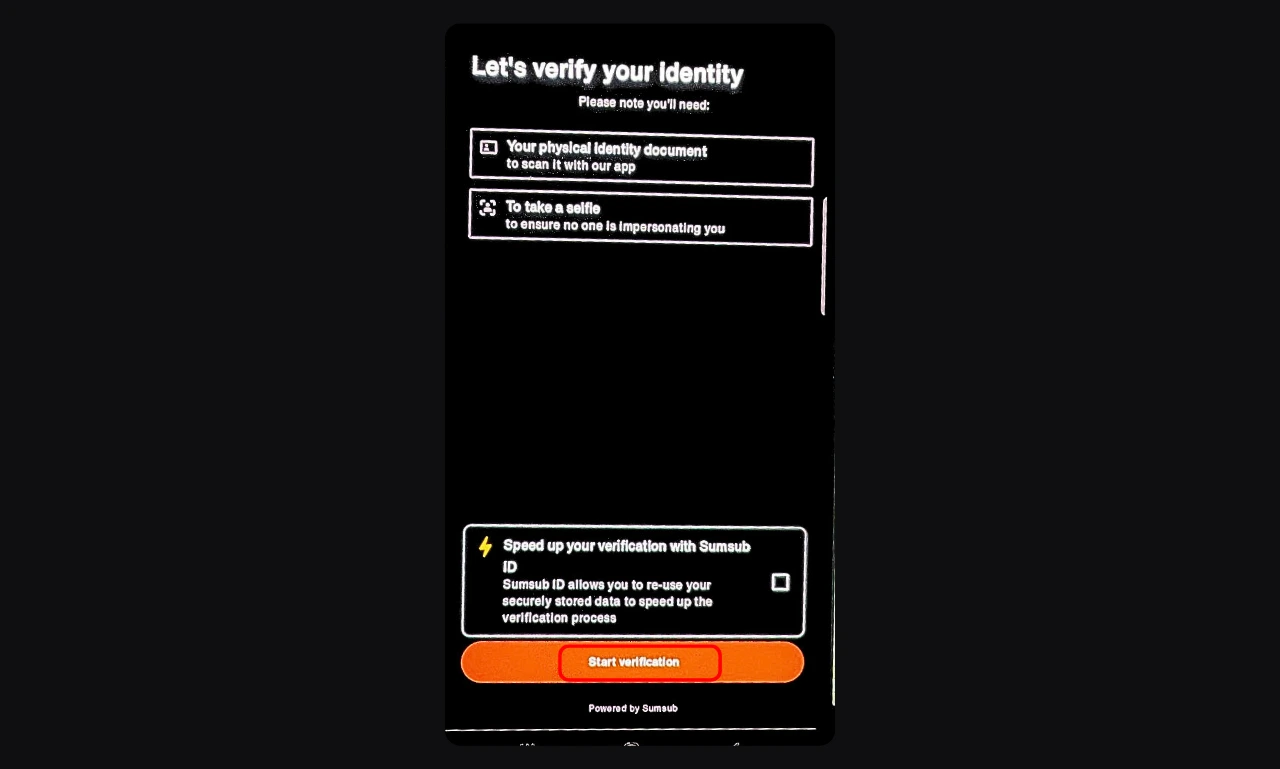
The Xapo Bank Know-Your-Customer (KYC) verification process is relatively straightforward, but approval can take up to three days (although it took me just a few minutes). Users must input their address, provide a photo ID (passport, driving license, ID card), and complete a facial recognition scan.
Verifying your ID is only half of the process. You must also provide details regarding your financials, including your employment status, annual income, net worth, monthly spending, and source of funds. You must also provide your tax number for reporting purposes.
Countries like the UK require customers to complete restricted investor and crypto knowledge assessments. The crypto knowledge assessment was roughly 15 questions long and required slightly more understanding than similar forms on other crypto investment platforms I've reviewed. Once completed, there's a 24-hour cooling-off period before your account is usable.
I found the address verification process slightly inconvenient. Users select their address by dropping a pin on a map. However, only a few addresses in my street were present. Even after typing my address, it gave the wrong result. I had to click 'address not found' and input it manually.
Step 3: Deposit Funds and Start Investing
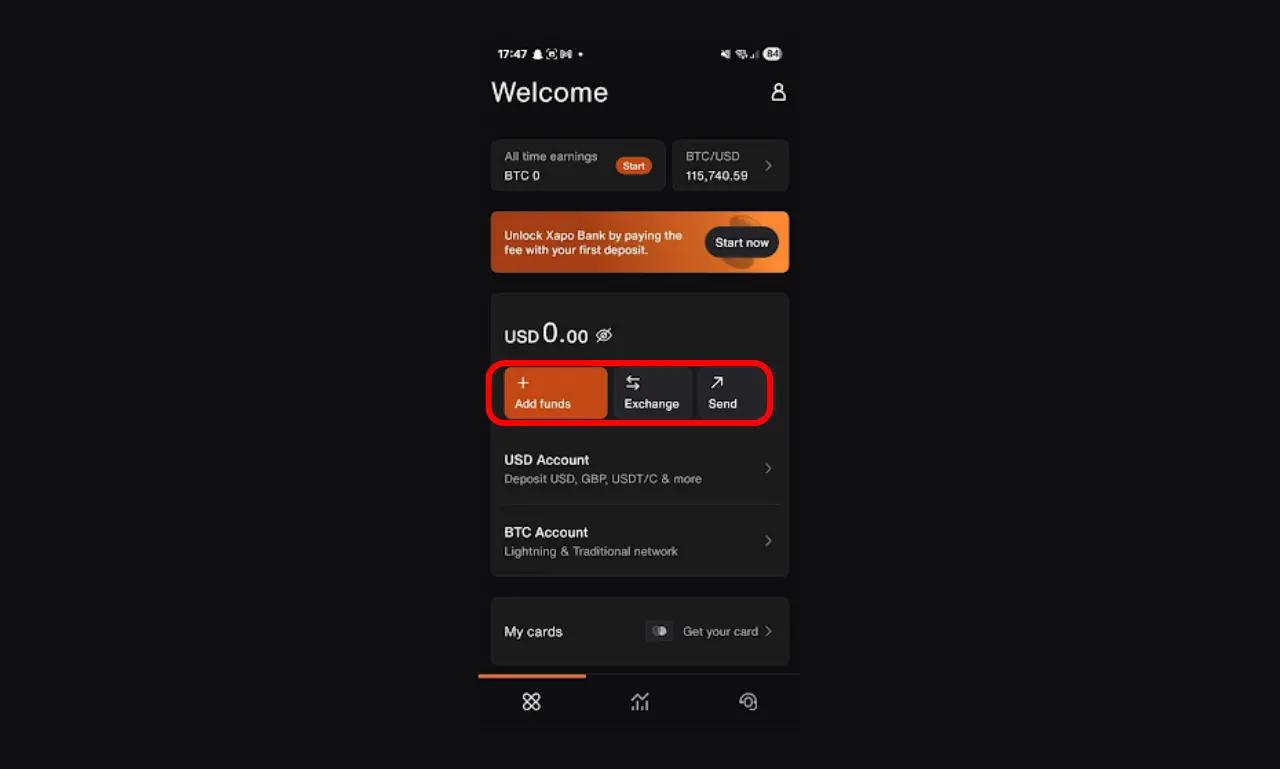
Once Xapo Bank has verified your account and the 24-hour cooling-off period has elapsed, you can fund your account and buy Bitcoin. From the app homepage, tap the orange 'Add funds' button, click 'Continue to payment instructions', consider the terms, select a payment method, and send a transfer to the details provided.
It's essential to consider the fees associated with Xapo Bank's deposit methods and its $1,000 annual membership fee. This charge is taken from your Xapo wallet once you've deposited at least $1,000. You can get a full refund within 14 days, but keep it in mind when funding your account. If you refuse to pay the membership fee, after 30 days, your account would be restricted.
Initial Setup & User Experience
Nobody wants to waste hours learning how to use a new platform. The best crypto exchanges are straightforward enough for novices to get to grips with in a few minutes. Here's how Xapo Bank performs:
Ease of Use
Xapo Bank differs from mainstream platforms like Bybit and Decentralized Exchanges (DEXs) such as PancakeSwap in many key areas, including simplicity. Xapo Bank eliminates complex order books in favour of a simple interface for fiat-to-crypto swaps, which is much more suitable for beginners but could be overly basic.
The Xapo Bank mobile app controls everything, including investing, loans, and wealth management. Users don't have to swap between the desktop and mobile platforms, which is highly convenient but restricts access if you don't own a smartphone.
Overall, Xapo Bank is exceptionally straightforward. All users are provided with an account manager who can answer questions and help people get started. You can contact them via chat or video call. Alternatively, users can book a meeting at the Xapo headquarters in Gibraltar, providing ample new user assistance.
Display & Buttons/Touchscreen
Xapo Bank’s interface is more streamlined than most exchanges we've examined. The Home, Wealth, and Help sections are accessible via a simple bottom navigation bar, which makes finding Xapo Bank's features easy. I prefer simple navigation systems like this, as they reduce onboarding stress and let users get started quickly.
The app loads quickly for the most part, but it takes a few seconds to unlock after entering the PIN, which can disrupt your flow. Switching between sections and features is fast and responsive, while prices update rapidly. Spread is clearly shown when making a purchase, which benefits new users.
Mobile App Review

The Xapo Bank mobile app handles every operation on the platform. It's available on Android and iOS devices, boasting an identical user experience on both operating systems. However, it's worth noting that you can only stay logged into one device at a time.
While you can start the registration and verification process on a desktop, you must complete it on mobile. You can't access your account or any Xapo Bank features without the app and a smartphone. Users can buy and sell Bitcoin, manage their Xapo debit card, and get loans without a computer.
While it's not as popular as platforms like OKX or KuCoin, Xapo Bank has excellent reviews. On the App Store, it's rated 4.6/5 based on nearly 200 reviews, while it commands a 4.7/5 score according to 3,000+ Play Store reviews.
Xapo Bank app reviews indicate that users find Xapo Bank highly reliable, extremely simple to use, and great for managing Bitcoin and USD financials. The number one complaint was related to the $1,000 annual fee, with users arguing its value didn't justify the price tag for their use cases.
Xapo Bank Key Features & Services

Making it easy to buy Cardano, Bitcoin, or any other cryptocurrency is one of the core roles of a crypto investment platform. Likewise, being able to securely store crypto and earn interest from it are two primary considerations for users. Here's how Xapo Bank performs:
Buying & Selling Crypto
A CoinTelegraph Research report states that around 50% of fiat-to-crypto transactions fail, even after the user completes KYC. As a result, having a streamlined onboarding process and purchasing system is crucial.
Xapo Bank is designed for Bitcoin investing. Users can only buy BTC using USD, USDT, or USDC. These stablecoins can be used for deposits and withdrawals, but can not be purchased or traded. Bitcoin Lightning Network transactions are supported for low-cost crypto transfers.
Multiple Xapo Bank deposit methods are available, enhancing convenience and accessibility. Funding is possible via three cryptos: BTC, USDC, and USDT. Fiat deposits use bank transfers, but the methods vary. They include:
| Fiat Currency | Deposit Method |
|---|---|
| USD | SWIFT, ACH, Wire, and other Xapo members |
| GBP | Faster Payments Service (FPS) |
| EUR | SEPA |
While users cannot buy Shiba Inu, other meme coins, or little-known projects, they can invest in two cryptocurrencies outside of Bitcoin: Cardano and Ethereum. However, these cryptocurrencies can only be bought or sold, not deposited or withdrawn externally. Xapo Bank also offers a selection of major US stocks.
While Xapo Bank's supported coins are limited, it's an excellent choice for high-net-worth individuals seeking a streamlined, secure Bitcoin investment avenue. Its system for swapping USD and BTC is simple: Users input the amount, verify details, and confirm the transaction. There's no messing around with charts, order types, or complex terminology.
Trading Platform
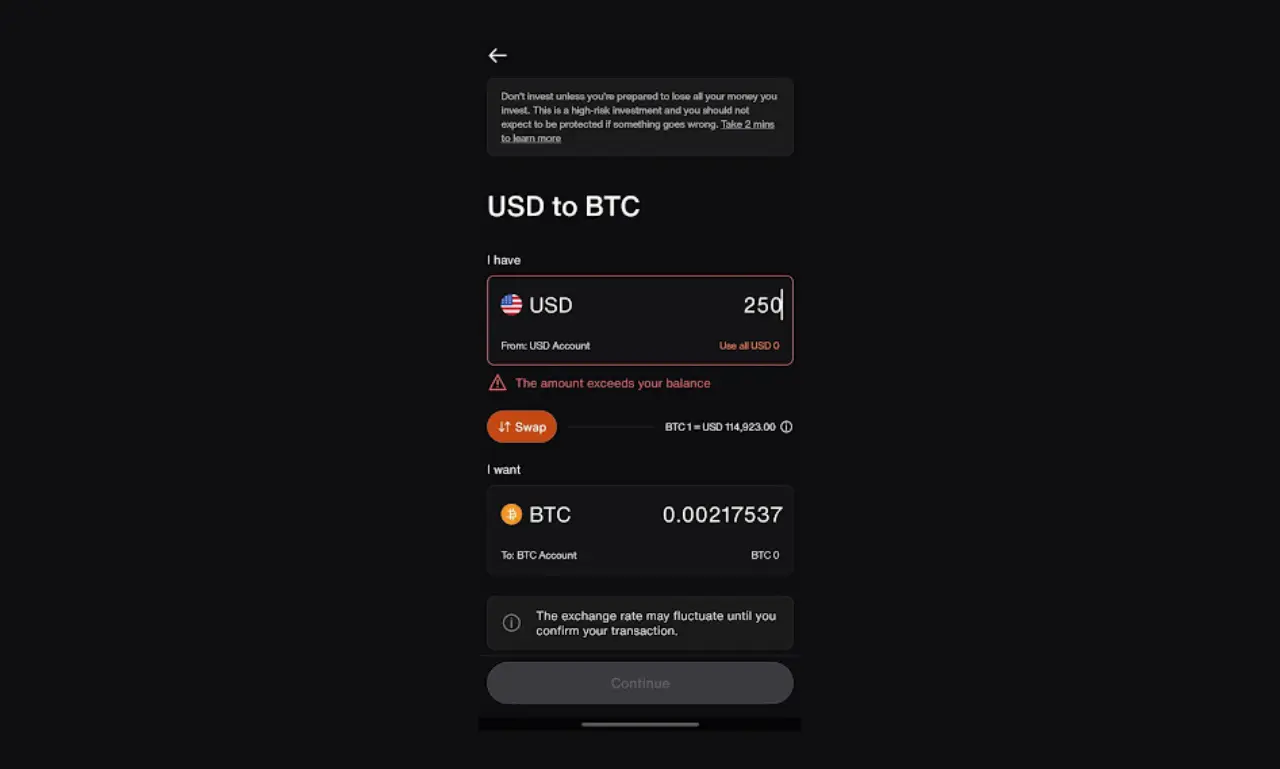
Xapo Bank's trading features are only available through the mobile app. It's been designed for clarity and ease of use. There's nothing that users can misinterpret, and only a single way to buy Bitcoin, no P2P marketplace or futures trading. It's ideal for beginners but overly basic for advanced users.
Our Xapo Bank review found that the app lacks an order book or charting system, as is typical on other exchanges. Users can't trade assets other than BTC, and there are no advanced crypto trading order types, making it exceptionally beginner-friendly and approachable to those without exchange experience.
If you're an experienced trader who regularly conducts your own analysis, you'll be disappointed by Xapo Bank's capabilities. It doesn't offer TradingView integration or even a basic line chart. Moreover, there's no access to technical indicators or drawing tools, highlighting Xapo Bank's position as an investment, not a trading platform.
Because Xapo Bank buys and sells crypto directly from users, without utilizing an order book, its liquidity and volume are unclear. However, a number of outlets report that Xapo Bank saw a 14.2% trading volume jump in the first quarter of 2025.
Supported Wallets & Custody
Our Xapo Bank crypto wallet review found that the platform uses Multi-Party Computation (MPC) wallet technology. This means that instead of a typical recovery phrase, Xapo Bank splits the wallet's private key into multiple 'shares' stored offline around the world.
MPC wallets enhance security while eliminating the need for recovery codes, a significant source of risk in crypto. In fact, Chainalysis found that 43.8% of stolen crypto was lost due to compromised private keys. By removing the key storage challenge, MPC wallets make top-tier security accessible to novices.
MPC wallets can be custodial or non-custodial. In Xapo Bank's case, it's the former. This means that the platform controls the assigned key shares and is responsible for safeguarding them. If it were non-custodial, the user would need to store the key shares independently, which is a substantial responsibility.
Xapo Bank lets users generate BTC and USD account statements to input to crypto tax software such as Koinly. Moreover, Xapo Bank supports hardware security keys for extra security. You can use a dedicated hardware security key device, any Ledger wallet, or the Trezor Safe 3 and Safe 3.
Earning & Lending
Xapo Bank doesn't support crypto staking, but it does provide a way of earning interest on crypto. The platform provides a stable 0.5% interest on Bitcoin holdings of up to 2 BTC.
Unlike other crypto exchanges, Xapo Bank's interest rates are 3.5% for USD, around 2x to 5x more than the average bank account pays. As such, storing your wealth on Xapo, with its enterprise-grade security and seamless fiat-to-crypto conversions, is a compelling alternative to traditional banking.
Despite focusing exclusively on BTC investing, Xapo Bank does not provide Bitcoin mining pools for people to contribute to and earn rewards. Cloud mining is also unavailable. If you want to earn mining rewards, Binance is one of the best crypto exchanges that offers this feature.
If you need to temporarily convert Bitcoin to cash to cover expenses or unplanned spending, the Xapo Bank loans system is the solution. It enables borrowing with crypto as collateral. Loan-to-Value (LTV) ratios range from 20% to 40%, and interest is around 10%, making it cheaper than Nexo.
Security Measures
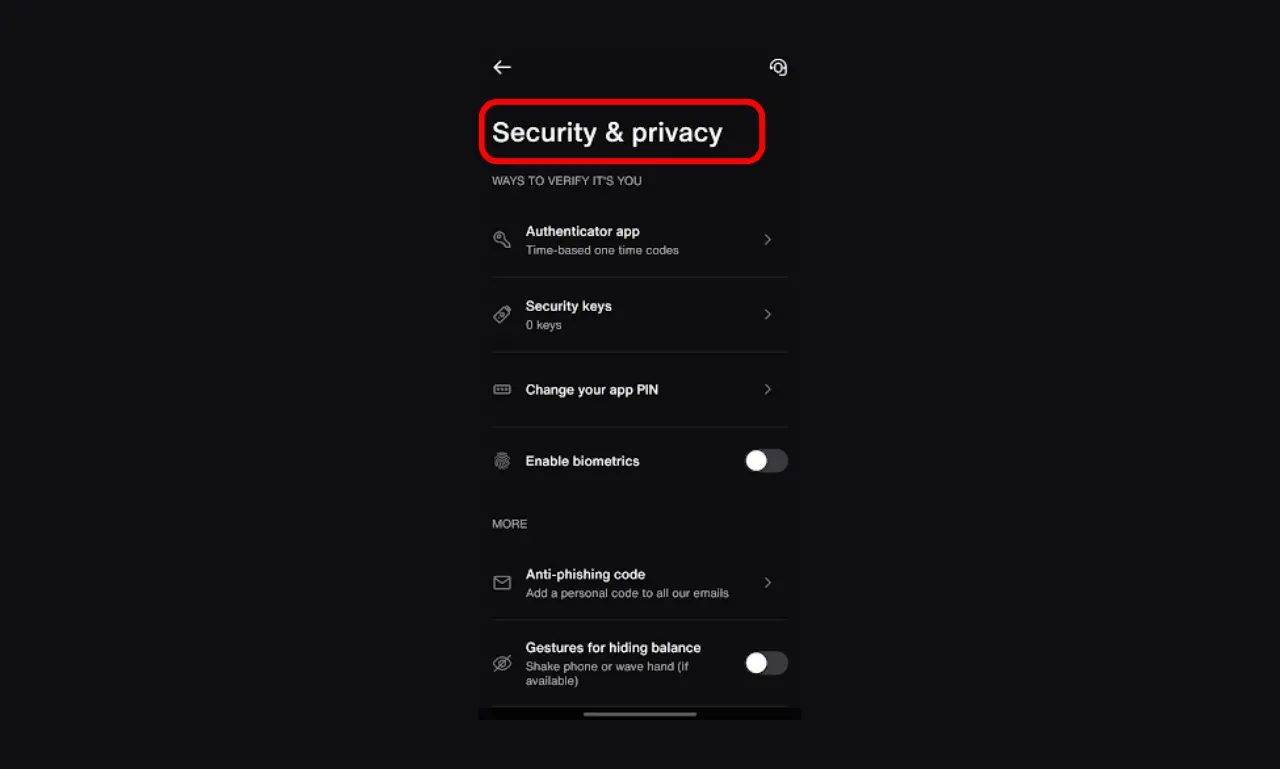
Xapo Bank's security is excellent. The company has integrated many industry-leading safety mechanisms to ensure security on both platform and account levels.
Users can set up Multi-Factor Authentication (MFA), which requires them to input a time-sensitive, one-use password and a code sent to an authenticator app like Authy. Xapo boasts hardware security key support, enhancing protection. It provides codes during setup to recover user accounts if MFA access is lost.
Although Xapo Bank previously utilized multi-signature cold storage to secure its members' crypto assets, the company has shifted to Multi-Party Computation (MPC).
This system splits the private key into multiple key shares, which are distributed globally and stored in bomb-proof structures with 24/7 armed surveillance. Multiple key shares are required for wallet access, eliminating any single point of failure and making compromising Xapo Bank's wallet extremely challenging.
Xapo Bank is a secure crypto exchange. It keeps user funds completely segregated from company assets, preventing mismanagement. Xapo doesn't lend out user assets; it generates yield from the safest possible sources, such as U.S. Treasury bonds.
Some top cryptocurrency platforms provide insurance to compensate users in case of insolvency issues. Xapo Bank also takes this approach. It covers fiat deposits up to €100,000 via the Gibraltar Deposit Guarantee Scheme. However, the policy does not cover Bitcoin.
XAPO utilizes AI monitoring to check for malware and suspicious activities to keep users safe. The platform is regularly audited by a Big Four accountancy firm, helping to maintain its code and safety. It also holds an SOC 2 certification, which ensures customer data is appropriately secured and managed.
Some Centralized Exchanges (CEXs), like Xapo Bank, enable users to set anti-phishing codes, a string of characters shown on official communications. If you receive an email from Xapo that doesn't contain your anti-phishing code, it's a scam email. Unfortunately, users cannot delegate specific addresses to be exclusively used when withdrawing.
While it doesn't use a verifiable Merkle Tree system, Xapo Bank has a proof of reserves page showing overcollaterized on every metric. It holds roughly 4x its capital requirements and has 3,237% of the liquidity required to cover 30 days of cash outflows, ensuring withdrawal reliability.
Payment Methods & Fees
Ready to have the cryptocurrency fees explained? My Xapo Bank review found a 0.0007 BTC deposit charge if you send a transfer to Xapo below this figure. There are no fees for larger deposits. However, there are a few charges to be aware of for fiat deposits.
| Receiving USD via SWIFT | 0.3% |
| FedACH Deposits | $0.50 + 0.1% of the transaction value |
| FedWire Deposits | $20+ 0.15% of the transaction value |
| Non-USD Currencies via SWIFT | 0.8% |
| Faster Payment System (FPS) | £0.15 |
| SEPA | €0.10 |
BTC transfers between Xapo Bank accounts are free, but withdrawals to external wallets incur a processing fee to cover network costs. Xapo Bank's fees for withdrawals vary depending on the currency and method used. They include:
| USD via SWIFT | 0.2% plus the USD equivalent of £25 (~$34) |
| FedACH Withdrawals | $30 + 0.15% of the transaction value |
| Faster Payment System (FPS) | £0.15 |
| SEPA | €0.15 |
| SEPA Instant | €0.20 |
| USDT or USDC | Variable blockchain (network) fee |
| Cash Withdrawals (ATM) over a $100 monthly limit | 2% |
Xapo Bank charges a spread fee (the difference between buy/sell prices) for BTC transactions. On its fee page, the rate is 0.1%. However, Xapo shows roughly $375 or 0.33% on the Bitcoin buy/sell price widget in the top left of the website.
If you wish to diversify your portfolio by purchasing stocks, Xapo Bank's fees are unclear. On the website, it indicates a 1% fee for each trade. However, the app shows 0.5%, and this disparity creates confusion. If you invest in ETH or ADA, a 1% charge applies.
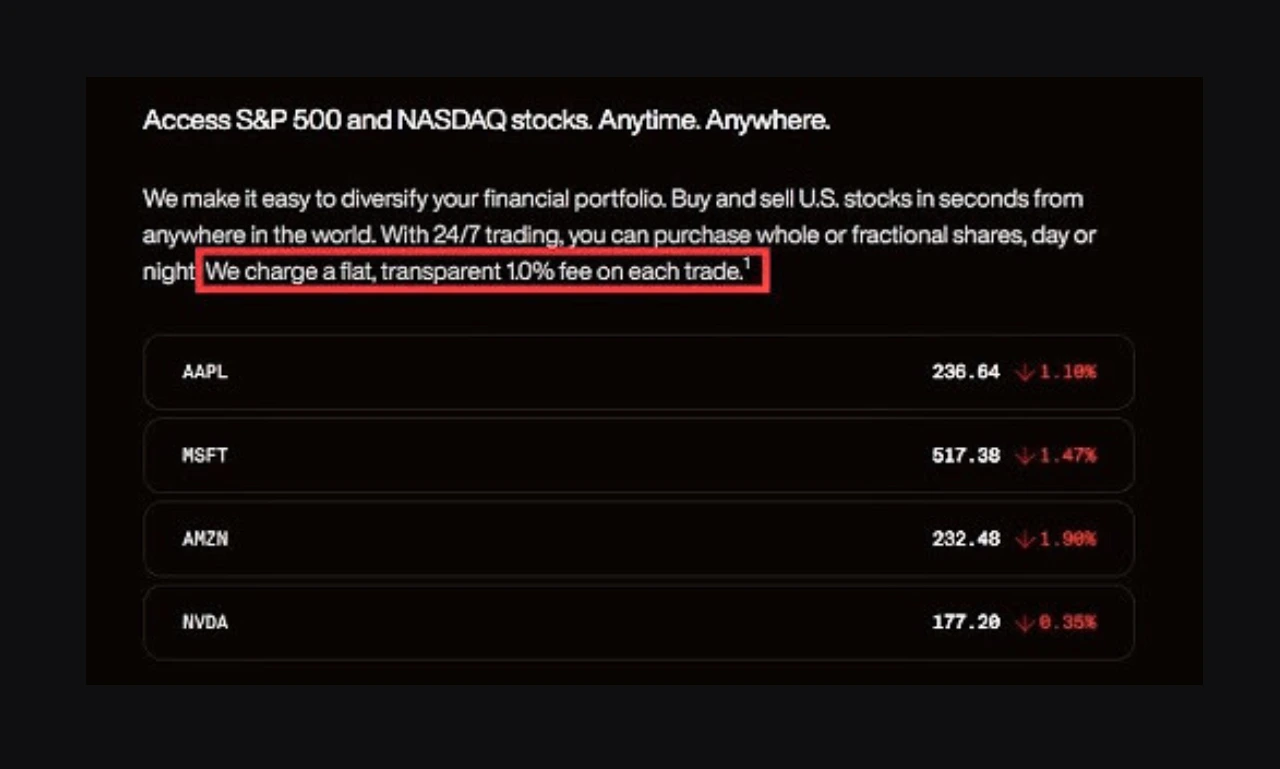
I spoke to customer support about this issue, and they let me know that 0.5% was the correct figure. I enquired about the spread and was told it is 0.1%, and the data on the widget was incorrect. While relatively minor, these inconsistencies are bound to confuse some.
Unlike typical crypto trading platforms, Xapo Bank requires users to pay an annual fee of $1,000 USD per year to use its features. This creates a significant barrier for smaller investors, but helps to enable Xapo's Bitcoin interest and cashback programs.
After researching the company's polices, I found that Xapo Bank prides itself on fee transparency. It states that there are no hidden costs. The only charges are the annual membership and trading fees.
When you deposit Bitcoin to your Xapo Bank wallet, the minimum deposit is 0.0007 BTC, which ensures the deposit covers network fees. Users must deposit enough to cover membership costs, or their account won't be credited. There is no minimum deposit or Xapo Bank withdrawal limit for fiat.
Customer Support

The best crypto exchange will provide multiple customer support avenues. Ideally, it will have a help center containing articles for self-assistance, a chatbot to help people find content relevant to their issues, and a way to contact a dedicated human support agent for complex problems where tailored help is required.
There are multiple ways to contact Xapo Bank customer support. Users can reach out via email and receive help. However, I found that one page shows 24/7 availability, while another states Monday to Friday. I asked support about this, and they informed me that 24/7 was correct.
Users can access a FAQ center or use the mobile app to contact the support (or Customer Success, as Xapo calls it) team. A live chat system is available, and users can set up a video call appointment with their account manager, ensuring easy access to assistance.
The team responded within 2 minutes and provided a clear answer to my questions. They had to check some details, which left me waiting a couple of minutes, but overall, they were helpful and kind.
Geographical Availability
Xapo Bank is available across most of the world, but there are a few notable restrictions. For example, it is prohibited in the United States, and Canadian or German investors cannot access stocks. Moreover, crypto loans are unavailable to customers in the UK and Australia.
The restrictions on who can access Xapo Bank's features are due to regulatory reasons, such as certain countries banning some tools or making it challenging to offer them and maintain compliance with financial service provider guidelines.
Although it doesn't hold a MiCA license, Xapo Bank closely adheres to Know-Your-Customer (KYC), Anti-Money Laundering (AML), and Countering Terrorist Financing (CFT) regulations within the countries it operates in.
Other Xapo Bank Products and Services

Xapo Bank does not let users buy Solana or other altcoins. However, it does offer some powerful features that enhance the overall user experience and break down the barrier between crypto and traditional finance. They include:
Xapo Bank Card

The Xapo Bank debit card allows members to spend BTC at everyday retailers like Nike, Costco, and Amazon. It automatically converts BTC to USD at the point of sale, enabling seamless transactions globally. It comes as a premium metal card, but users can create multiple virtual cards for online purchases.
The card offers many benefits compared to selling BTC and withdrawing the funds to a bank account for spending. It offers up to 1% cashback paid in BTC (uncapped) and free ATM withdrawals up to $100 monthly (2% fee above this figure).
With high spending limits, unlimited foreign currency exchange, and low fees (0.1% spread, no network costs), Xapo Bank's crypto debit card is among the most powerful on the market. It's ideal for people seeking secure storage and spending flexibility on a single platform.
Bitcoin-Backed Loans
While unavailable in the UK and Australia, Xapo Bank's crypto-backed loans system enables high-net-worth crypto enthusiasts to receive significant capital without selling their BTC and triggering a taxable event.
Members can instantly borrow up to $1 million with suitable collateral and withdraw it via USD, EUR, and GBP (bank transfer) or BTC, USDT, or USDC. Alternatively, UMA transfers and spending the funds on the Xapo debit card are supported.
At 10%, interest rates are cheaper than most platforms I've looked at. However, the Loan-to-Value ratio is between 20% and 40%, which is relatively low (albeit more common for large loans). There are no extra fees, and Xapo Bank never re-lends your collateral, making it a top crypto loan solution.
Beneficiaries
Xapo Bank is designed for customers with significant Bitcoin holdings who require a secure custody solution. This need doesn't disappear if you pass. In fact, it becomes more critical as assets must be distributed safely and according to your wishes.
Xapo Bank's Beneficiaries tool lets users delegate people to whom the company will distribute their funds if the worst happens. Users can assign multiple beneficiaries who will receive a predetermined portion of their wealth. Official certificates and documentation are required to access your assets, keeping them secure until necessary.
Xapo Bank vs Other Crypto Exchanges
Here is how Xapo Bank stacks against other top crypto exchanges in the market
| Crypto Exchange | Top Choice For | Price | Products and offerings | Standout Features |
|---|---|---|---|---|
| Xapo Bank | Seamless usage of crypto and fiat | 0.1% + $1,000 annual fee | Buy Bitcoin, invest in stocks or altcoins, crypto loans, MPC wallet, interest on BTC and USD holdings | Bank-grade security, earn interest for holding BTC and USD |
| Coinbase | New traders and investors | s0.60% / 1.20% | Staking, derivatives, TradingView integration, simple buy interface | Swap between standard/beginner and advanced platforms |
| Youhodler | Crypto loans | 0.02% hourly rollover fee | Crypto loans, leverage trading, crypto debit card, native token | Cascading loans that provide 70x leverage |
| OKX | Low-fee trading | 0.08% / 0.1% | Region-specific features, P2P marketplace, staking, crypto bots, futures | Many ways to trade (spot, futures, P2P, bots, copy) |
| ByBit | Experienced traders | 0.1% / 0.1% | Spot, derivatives, staking, trading bots, crypto loans, crypto debit card | Advanced structured earn and staking products |
Who is Xapo Bank Best Suited For?
Xapo Bank is a premium service created for high-net-worth individuals or people with significant Bitcoin holdings. It will not suit frequent traders or people who want to speculate on altcoins. However, it's ideal for people seeking a secure way to store and spend their BTC.
If you're a long-term investor, you'll appreciate Xapo Bank's beneficiary and crypto loan systems. They support investors throughout their whole journey, not just the purchase process. Moreover, the company is regulated, has an excellent track record, and utilizes MPC wallets, making it a strong choice for security-conscious Bitcoin enthusiasts.
Xapo Bank's high membership costs render it unsuitable as a low-fee crypto exchange and restrict investors with limited capital. However, the platform is difficult to beat for people looking to grow their USD/BTC wealth with interest and those seeking a way to use crypto and fiat interchangeably.
Conclusion & Final Verdict
Xapo Bank is a secure custodian for USD and Bitcoin. It provides tools for people to grow their wealth with crypto and stock investments, while enabling seamless spending and conversions between asset classes.
With 0.5% interest on Bitcoin and a debit card that offers 1% cashback on BTC spending, Xapo Bank gives users the tools they need to get more from their crypto holdings. However, the platform has a $1,000 membership fee and lacks charting and trading capabilities, limiting advanced usability.
My Xapo Bank review found it to be one of the best crypto platforms for dedicated Bitcoin investors. Its security, management tools, cashback system, and interest payouts help Xapo Bank eliminate the barrier between Bitcoin and traditional finance for anyone who can afford the hefty yearly subscription fee.
Xapo Bank FAQs
How does Xapo Bank make money?
In contrast to most advanced crypto trading platforms, Xapo Bank generates a substantial portion of its revenue from an annual membership fee. Users must pay $1,000 yearly to access Xapo Bank’s features. It also applies a 0.1% spread to all BTC trades, contributing significantly.
What are the tax implications of using Xapo Bank?
When you make money from cryptocurrency, whether through trading, investing, or interest payments, you’ll have to pay tax. The rates and thresholds, as well as the penalties and filing specifics, differ by country. As such, contacting a tax professional familiar with your local regulations is advisable to prevent issues.
What is KYC/AML, and why is it required on Xapo Bank?
Know-Your-Customer (KYC) and Anti-Money Laundering (AML) guidelines require financial platforms like Xapo Bank to gather and hand over user data, including names and financial information. These rules are designed to combat money laundering and criminal financing.
Can I Earn Passive Income on XAPO BANK
Although it doesn’t offer staking or Bitcoin mining, Xapo Bank pays interest on users’ Bitcoin (0.5%) upto 2 BTC and USD (3.5%) holdings. Additionally, the firm lets users invest in a selection of altcoins, stocks, and Exchange Traded Funds (ETFs), providing additional opportunities to grow wealth.


