- Cube Exchange Review: Pros and Cons
- Cube Exchange Background and Reputation
- How to Sign Up for Cube Exchange
- Initial Setup & User Experience
- Cube Exchange Key Features & Services
- Other Cube Exchange Products and Services
- Cube Exchange vs Other Crypto Exchanges
- Who is Cube Exchange Best Suited For?
- Conclusion & Final Verdict
- FAQs (Frequently Asked Questions)
Cube Exchange Review 2026

- When you click links on this page, we may earn an affiliate commission. By using this website you agree to our terms and conditions and privacy policy.
- Participation in online gambling may be illegal in your country and is subject to age restrictions (18, 19, or 21, depending on the jurisdiction). Verify legality and age requirements before participating. Learn more
Cube Exchange is a hybrid trading platform, making it an excellent choice for people concerned about security. It uses a special wallet custody system to ensure users have complete control over their assets, even after depositing them. While it lacks advanced features, Cube is highly secure.
Throughout this Cube Exchange review, we'll examine its features and security measures, discuss what it lacks, highlight what it does well, and provide a simple tutorial on creating an account and getting started with Cube. Let's get started.
Cube Exchange Review: Pros and Cons
Pros
- The hybrid exchange model enhances security
- MPC wallets ensure users always maintain asset custody
- Simple conversion tool
- Supports crypto and fiat deposits
- Transparent fee structure
Cons
- Doesn't offer many assets, and major altcoins are missing
- No staking or structured earn products
- Confusing verification process
Cube Exchange Background and Reputation
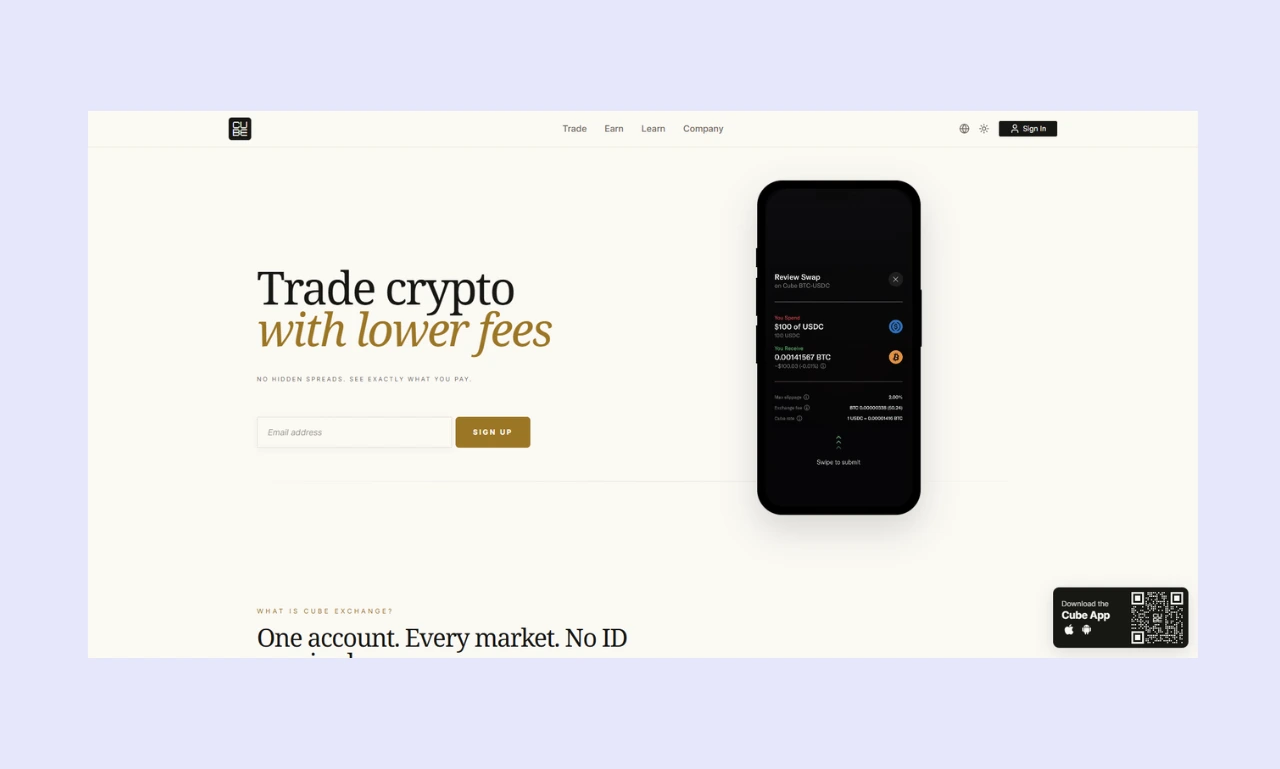
A crypto exchange's background and history are excellent ways to determine whether it's worth using. A platform with solid foundations and a positive customer reputation is likely a great exchange. Prospective users should avoid platforms with a poor history.
Company Overview
Cube Exchange was founded in 2023 by Bartosz Lipiński to create a hybrid crypto exchange that blends the best aspects of centralized and Decentralized Exchanges (DEXs), enhancing security and custody, while providing a more convenient and approachable user experience.
Cube Exchange is based in Chicago, USA. It's different from most exchanges in that it doesn't directly control user assets. Instead, it stores them in a special type of wallet distributed across multiple devices. Users can access crypto bundles, simple crypto-to-crypto swaps, and a TradingView-powered order-book exchange.
Regulation & Licensing
It's common for crypto exchanges to seek regulatory licenses from authorities like the UK's Financial Conduct Authority (FCA) and the USA's Financial Crimes Enforcement Network (FinCEN). In doing so, these platforms build trust, and users gain some recourse in the event of the platform becoming insolvent or experiencing other issues.
According to some sources, Cube Exchange has attained a Virtual Asset Service Provider (VASP) license in Poland and is registered as a Money Services Business (MSB) in Canada. However, I found no first-hand confirmation, and Cube lacks a page showing its licenses/registrations, which is odd for a supposedly regulated platform.
Trust & History
If an exchange has suffered multiple security breaches or hacks, in which user data or assets have been compromised, it should generally be avoided at all costs. This signals poor security practices and a lack of willingness to resolve critical vulnerabilities.
Based on my research, Cube Exchange has never been hacked. Moreover, it would make a lackluster target as it doesn't take custody of user assets in the same way as traditional Centralized Exchanges (CEXs).
Moreover, Cube Exchange has been publicly audited by Hacken, either accepting or resolving any findings (which were minor). It also runs a bug bounty program powered by HackenProof, which rewards people for finding and reporting vulnerabilities affecting the exchange, crowdsourcing security, and incentivizing positive action, instead of exploitation.
User Reviews
There are not many Cube Exchange reviews from users, likely because the platform is relatively new and lacks a user base comparable to titans like Bybit or KuCoin. There's only a single Cube Exchange TrustPilot review centered around unpaid/misleading airdrop rewards.
Comments on Reddit are almost equally sparse. Most users claimed to be unfamiliar with the exchange but expressed interest in its hybrid structure. A couple of others either praised it as a genuine exchange or raised concerns about using an exchange with such a short history.
In contrast, Cube Exchange users rate its iOS app highly. They praise it for being easy to use and enabling seamless interaction between multiple blockchains.
How to Sign Up for Cube Exchange
Figuring out the Cube Exchange sign-up process is made simpler by having an easy-to-follow tutorial. Below, we explain the process in full.
Step 1: Create a Cube Exchange Account
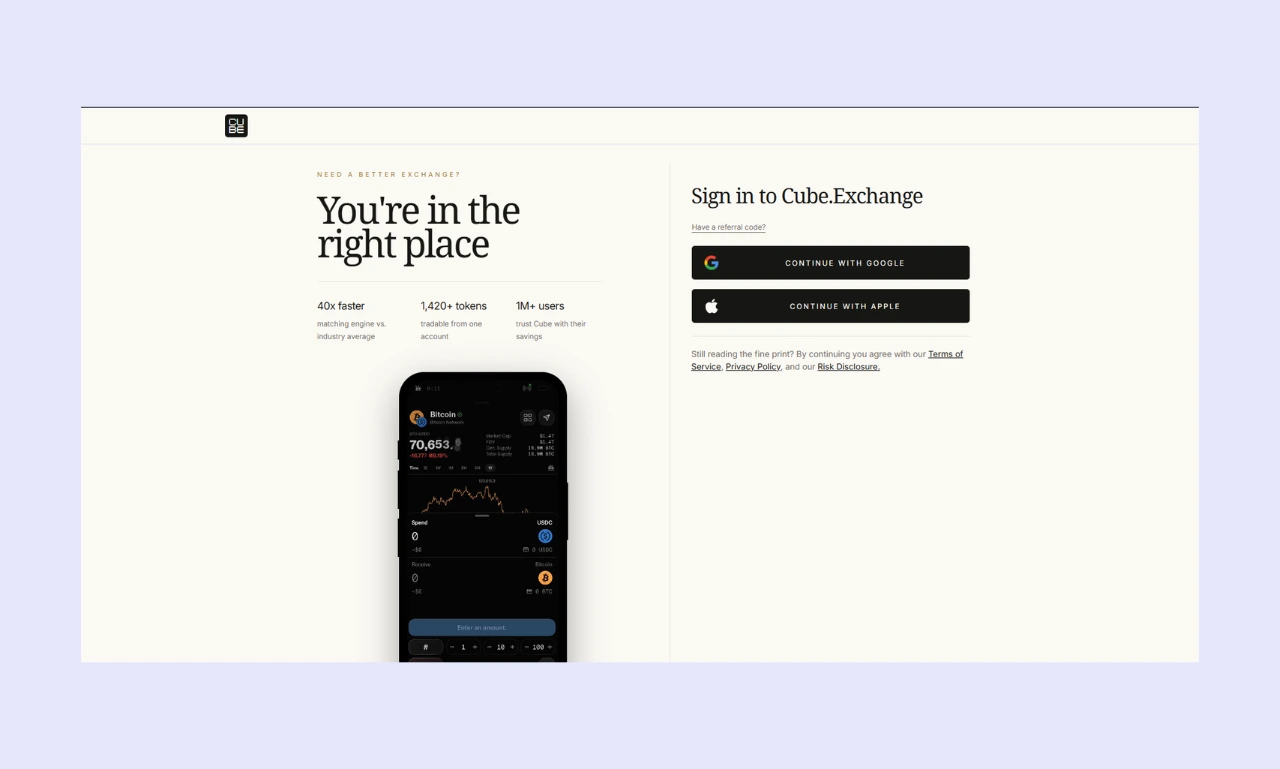
First, head to the Cube Exchange homepage. Then, click the black 'Sign-In' button in the top right corner. You must sign up using a Google or Apple account. You cannot manually enter an email address. Once you've chosen a Google account, you'll need to complete some basic safety protocols.
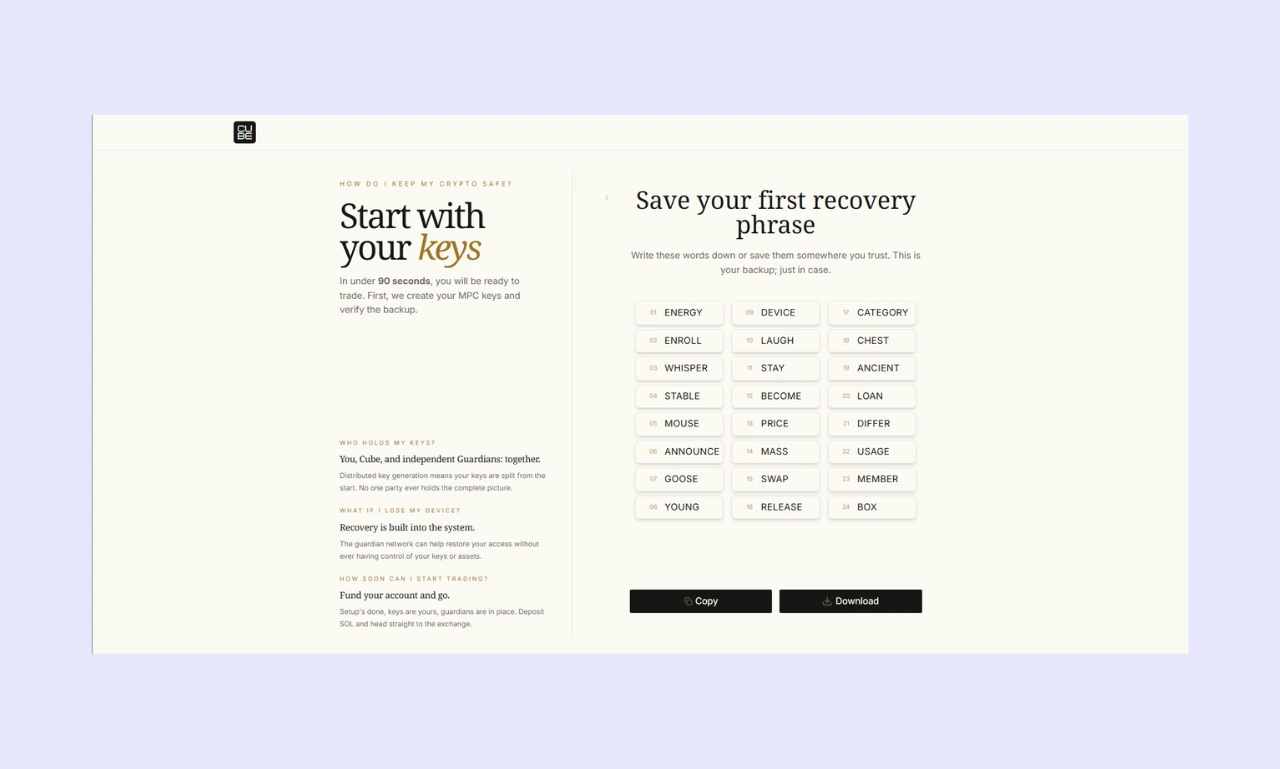
You must note down and verify the two recovery phrases Cube displays. You can copy the seed on your computer, but using a physical storage method like a pen and paper enhances security. Anyone can use the code to access your wallet, so keep it safe.
Step 2: Complete KYC Verification
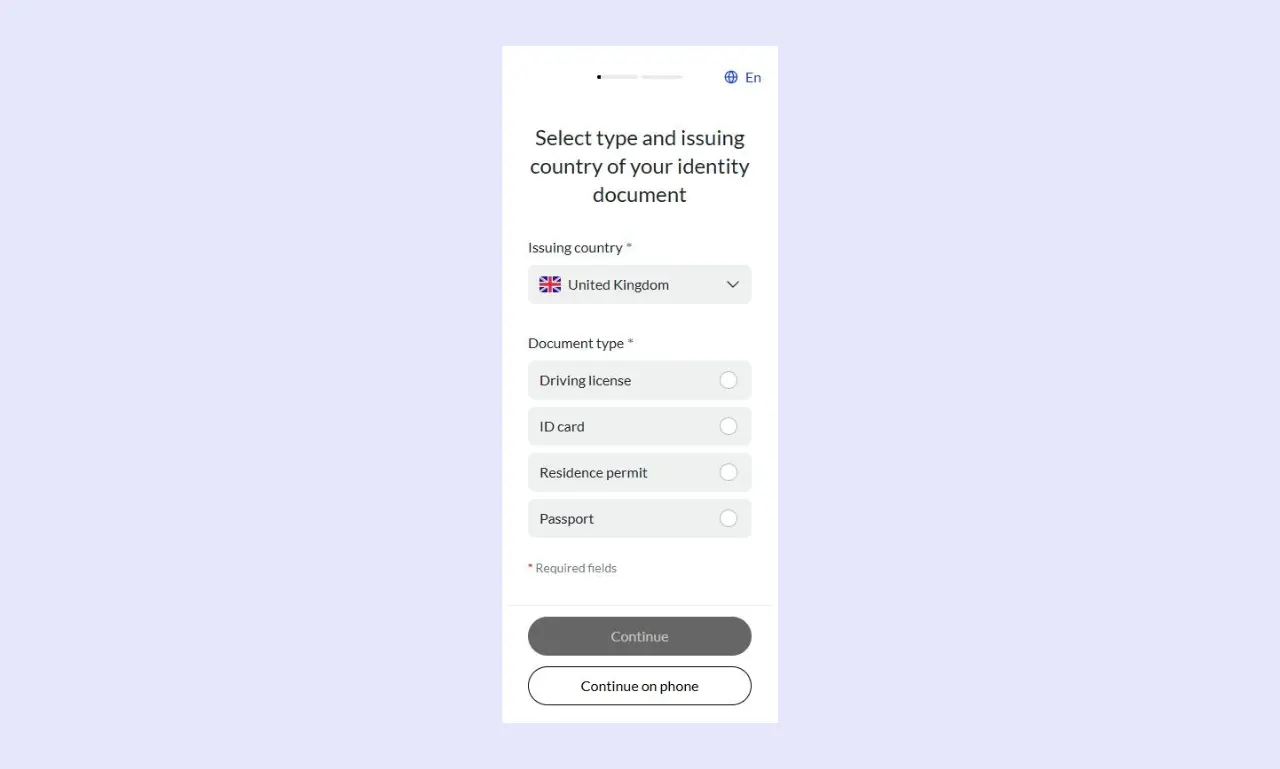
Although you can deposit crypto immediately without verifying your account, you must complete the Know-Your-Customer (KYC) process before trading on Cube Exchange. Click your profile icon, press 'Settings', then click 'Verify Account', and 'Continue'.
You must input whether you're based inside or outside the USA for data processing reasons. Afterward, you must provide a photo ID (passport, driving license, residence permit, ID card). Enter the country that issued your ID, choose a document type, and click 'Continue' (web-based) or 'Continue on phone'.
I went through the process on mobile. Unlike other exchanges, you must re-login if you opt for mobile verification. This can be annoying if, like me, you've got a new phone and don't have all your email addresses added.
Cube requires a proof of address document (utility bill, bank statement, etc.) and a photo ID. The platform denied my address verification despite providing a recent document. Cube has limited service in the UK, but the exchange provided no reason for rejecting me, and I couldn't re-attempt the process.
Step 3: Deposit Funds and Start Trading
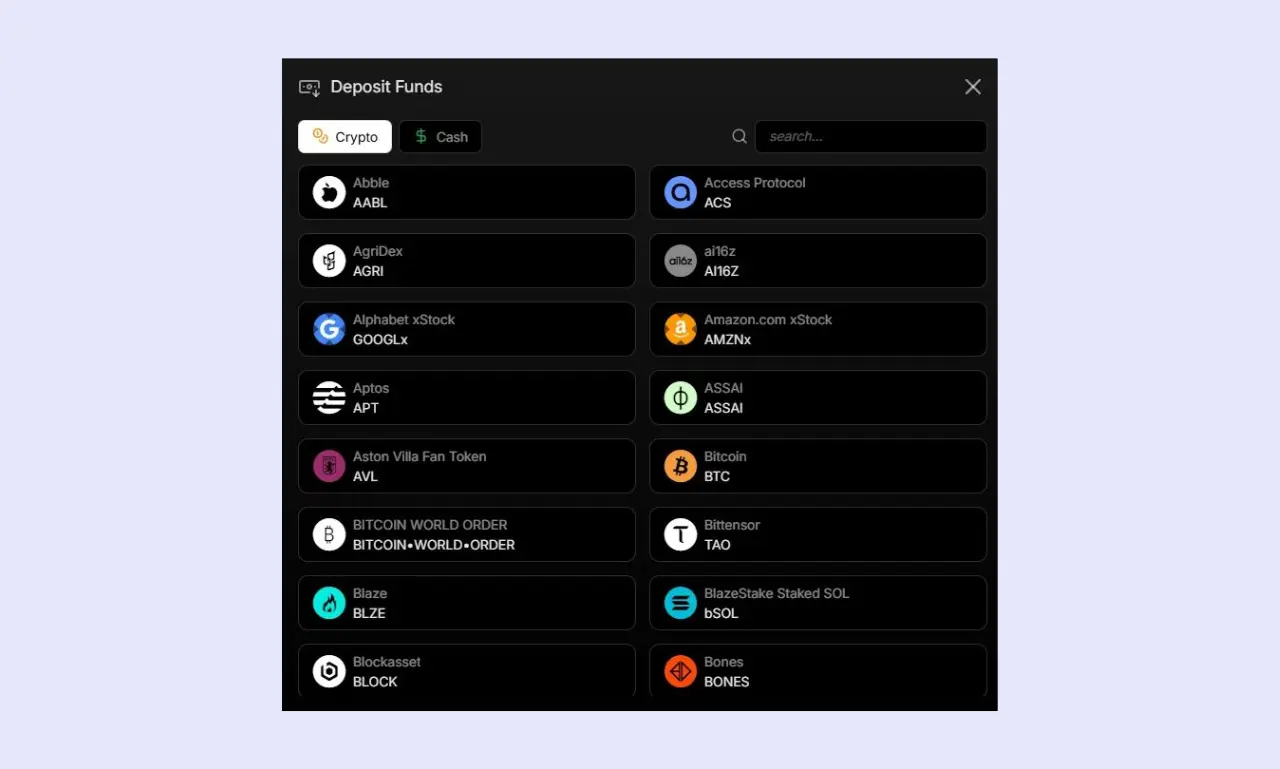
After completing verification (processing typically takes less than 30 minutes), you can deposit funds and start trading. Click the black 'Deposit' button at the top right, choose crypto or cash, and select a payment method. Ensure you send funds to the correct address so they can be credited.
After the funds land in your account, you can start trading. Head to the 'Swap' or 'Pro' interface, decide which asset you want and how much you'd like to purchase, then confirm the trade. The funds will arrive in your wallet as soon as Cube executes the order.
Initial Setup & User Experience
Ease of Use
Ease of use is one of the core aspects we considered when creating this Cube Exchange review. A platform with many advanced features, complex terminology, or lackluster feature documentation is unsuitable for novices.
Cube Exchange will be approachable for most users. Its interface is similar to other trading platforms, so if you have crypto experience, it should be easy to get the hang of. The swaps tool enables crypto-to-crypto trading in a beginner-friendly environment, although the advanced trading interface could be a little overwhelming.
Display & Buttons/Touchscreen
Finding key features is simple on Cube Exchange. They're located in a top navigation bar, in black text on a white background, enhancing contrast. However, the various menu options could be bolded or in a slightly larger font to differentiate them from other text.
Navigation is straightforward for the most part. However, when you click the 'Swap', 'Pro', or 'Portfolio' buttons, the menu bar becomes vertical and moves to the left side, which could cause some confusion. During my Cube Exchange review, key sections loaded and populated with data almost instantly, faster than other platforms.
Mobile App Review

Cube Exchange is available as a mobile application, but only on iOS devices. Although an Android app is in the works, it is currently unavailable.
The Cube Exchange mobile app is well-designed. Key features, like the trading interface, are easy to find and intuitive, resulting in a seamless experience when switching between the web platform and mobile app. Users can access all features available online from mobile, including Cube Exchange's Multi-Party Computation (MPC) wallet.
Only a handful of Cube Exchange app reviews are available, all of which were from 2025. Comments centered around Cube being a good crypto exchange for beginners, having an intuitive user interface, and supporting self-custody, which is accurate based on my experience.
Cube Exchange Key Features & Services
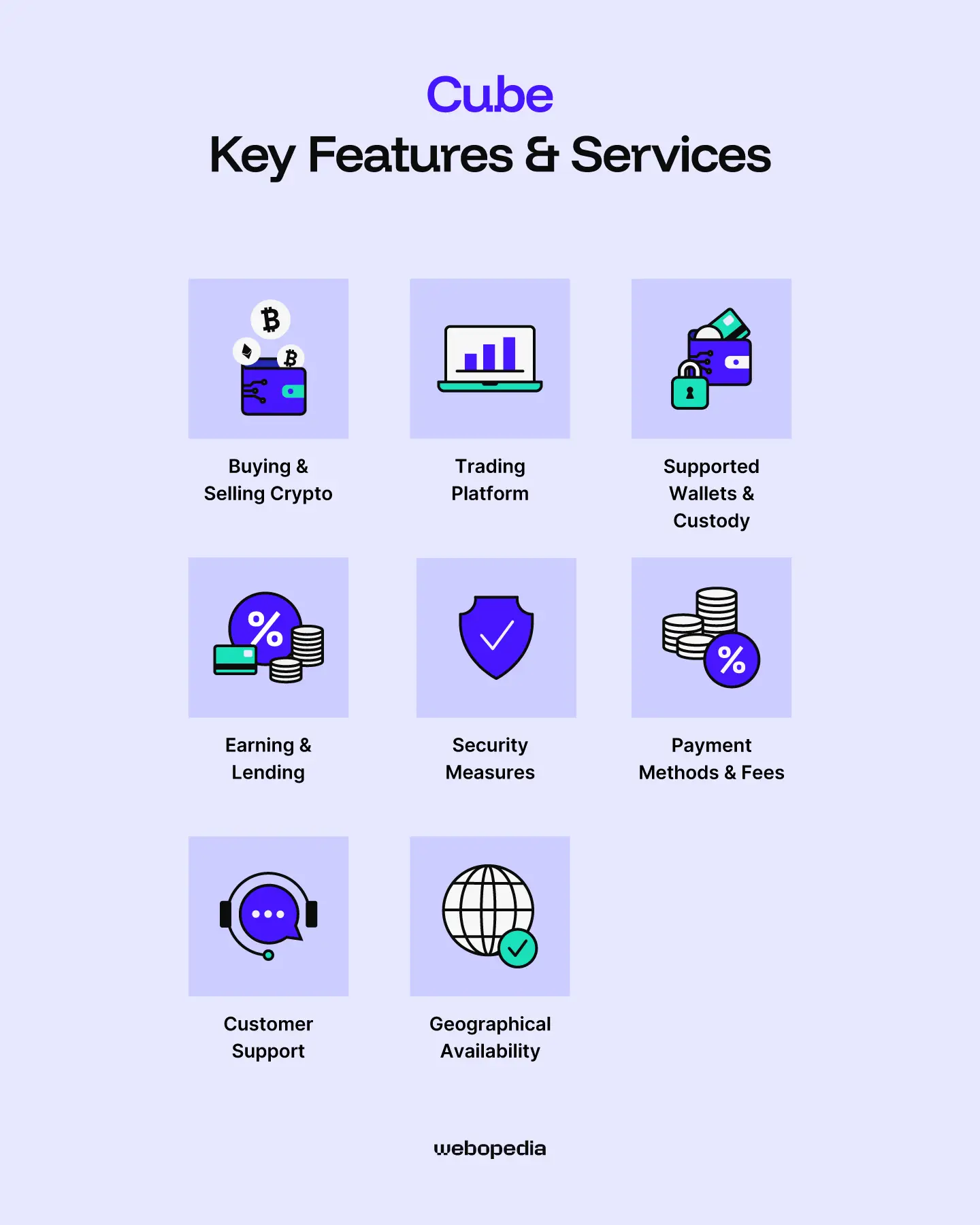
The best crypto exchanges share specific features, such as a good selection of assets, trading capabilities, and a way to store crypto, contributing to a positive user experience. Below, we've discussed how Cube Exchange handles these essential aspects.
Buying & Selling Crypto
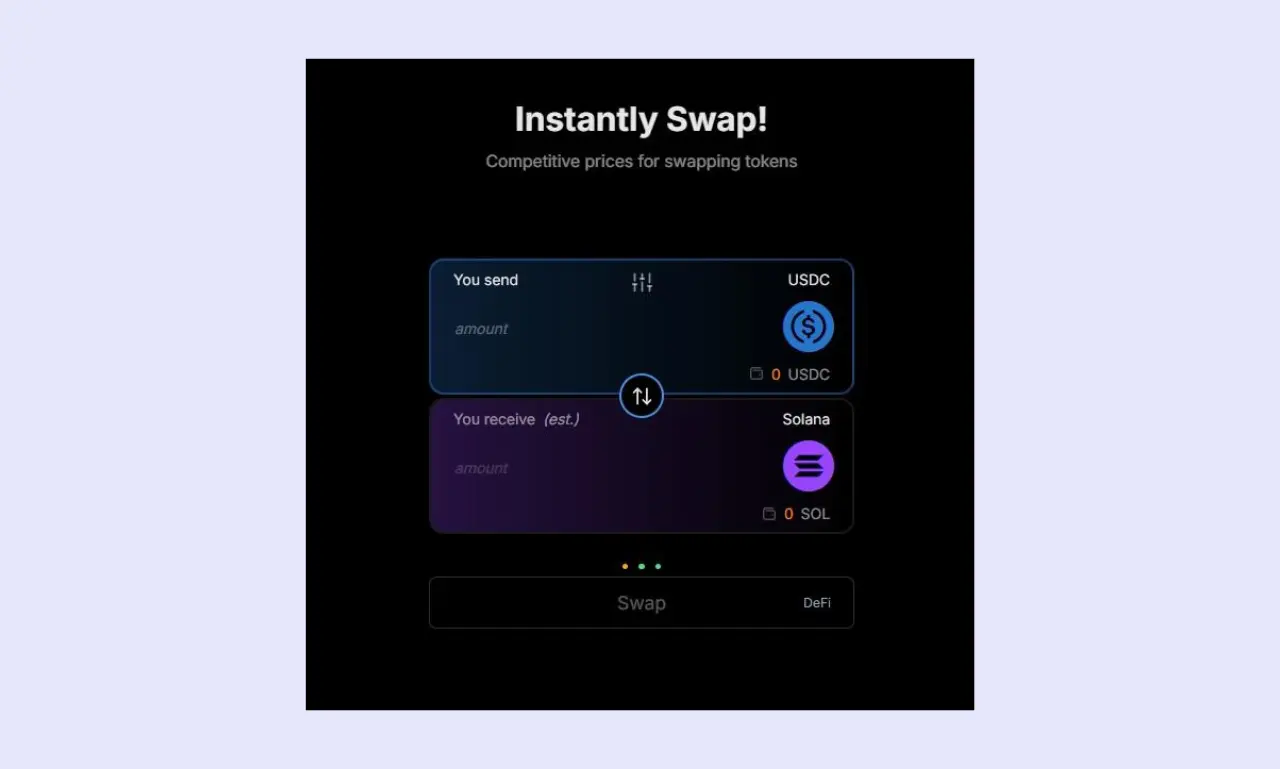
There are just 65 Cube Exchange-supported coins, a relatively small selection compared to exchanges like Bybit and KuCoin. However, Cube Exchange does at least offer a good variety of large/small cryptos and stablecoins.
If you're a new investor or trader, having access to a fiat on-ramp is a significant benefit. It enables you to deposit cash to buy Bitcoin or other assets. While 31 currencies are supported, only a few Cube Exchange deposit methods are available: Visa/Mastercard, Google Pay, and SEPA.
With support for cash and crypto deposits, an easy crypto-to-crypto swaps tool, bundles of assets for diversified investing, and an order-book system for experienced traders, Cube Exchange is relatively easy to use but powerful enough for advanced trading.
Trading Platform
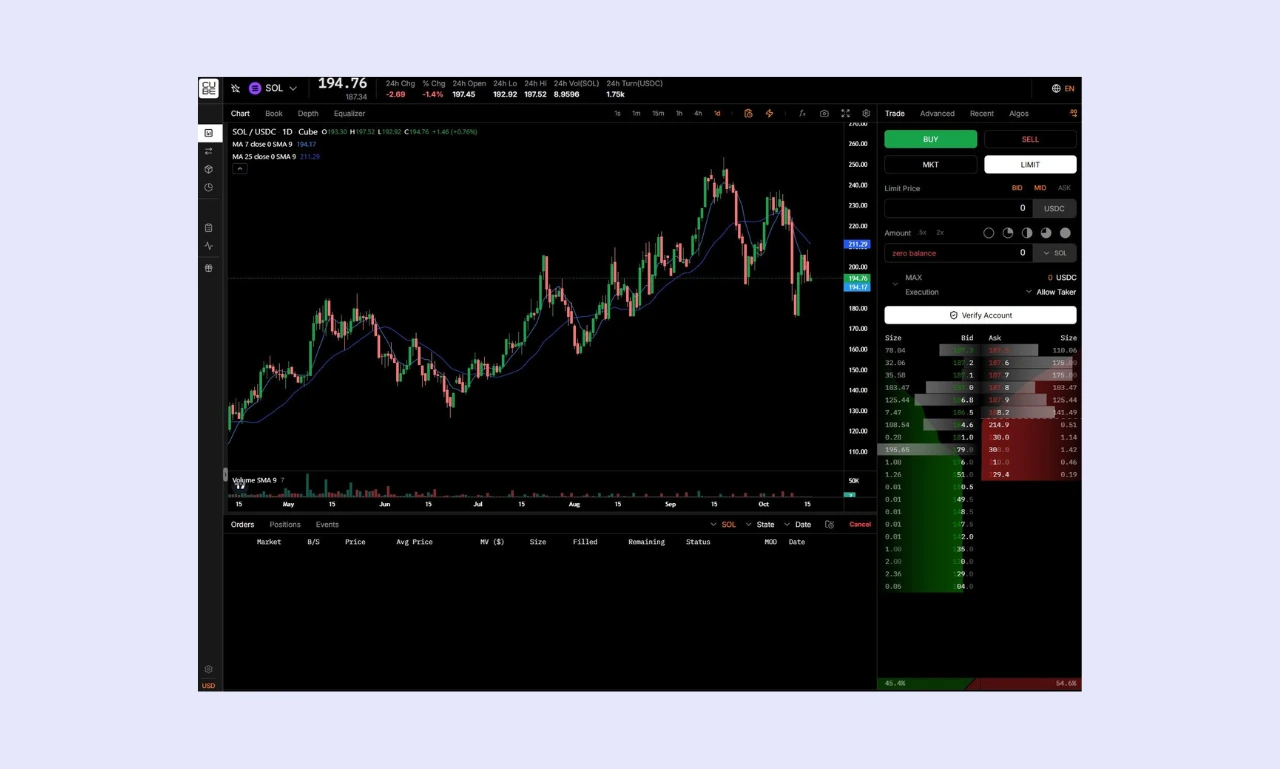
The user experience is one of the most important considerations when conducting a crypto exchange review. It affects everything, from learning how to use Cube Exchange to placing trades.
Cube has a relatively approachable interface and ensures key features are always easily accessible. The trading interface feels familiar to other platforms. However, some Cube Exchange features are easy to miss as they're only accessible via a small navigation bar, which blends in among the different sections/data.
Crypto trading order types help users enter and exit positions exactly as they desire, boosting profits and reducing losses when used effectively. Cube Exchange offers two order types and three time options for traders to utilize. These include:
| Order Type | Definition |
| Market | Executes at the current price |
| Limit | Executes at a specific price |
| Good Till Canceled (GTC) | Stays in the order book until filled |
| Immediate or Cancel (IOC) | Any portion of the order that cannot be immediately filled is canceled |
| Fill or Kill (FOK) | If the order isn't entirely filled immediately, it will be canceled |
Even if you're a beginner who doesn't need advanced features, having access to a robust trading system is a significant advantage. Cube Exchange offers excellent performance, integrating TradingView and boasting many technical indicators and analysis tools, making it suitable for experienced traders with complex strategies.
On Cube Exchange, users can access a list of recent trades, which helps them understand sentiment and demand. However, the list can be difficult to interpret, especially for beginners, as Cube doesn't display it in a user-friendly format.
As it's a relatively new and small exchange, Cube Exchange lacks volume and liquidity. This can result in liquidity gaps, which pose issues for traders. In the last 24 hours, Cube handled around $17,050 in volume on its BTC/USDC pair, which is extremely low compared to mainstream alternatives.
CoinMarketCap tracks exchange data, showing that Cube handles roughly $6.7 million daily, similar to CoinJar ($7.1 million). Binance processes as much as $31 billion. Cube has a low liquidity score of 203, meaning users may have difficulty buying Solana or other assets in large amounts without adversely affecting prices.
Supported Wallets & Custody
There are two main types of crypto wallets: custodial and non-custodial. When conducting a crypto wallet review, the best option will depend on your experience and preferences.
Custodial wallets are an excellent choice for beginners who prioritize convenience and simple asset storage over maximum control and privacy. The provider controls the private keys, and users typically access the wallet by logging into an account, such as their Cube Exchange account.
Non-custodial wallets are managed entirely by the user; they control the private key/seed phrase, and nobody else can access the wallet. While this approach offers security and privacy benefits, users must manage the seed phrase carefully or risk losing access to their funds, which isn't great for beginners.
Cube Exchange features an MPC Wallet instead of managing the seed phrase on behalf of its users or allowing them to manage it. By utilizing this method, Cube can enhance security. Users manage the seed phrase, which is divided into two parts. A special system verifies each before providing access.
Earning & Lending
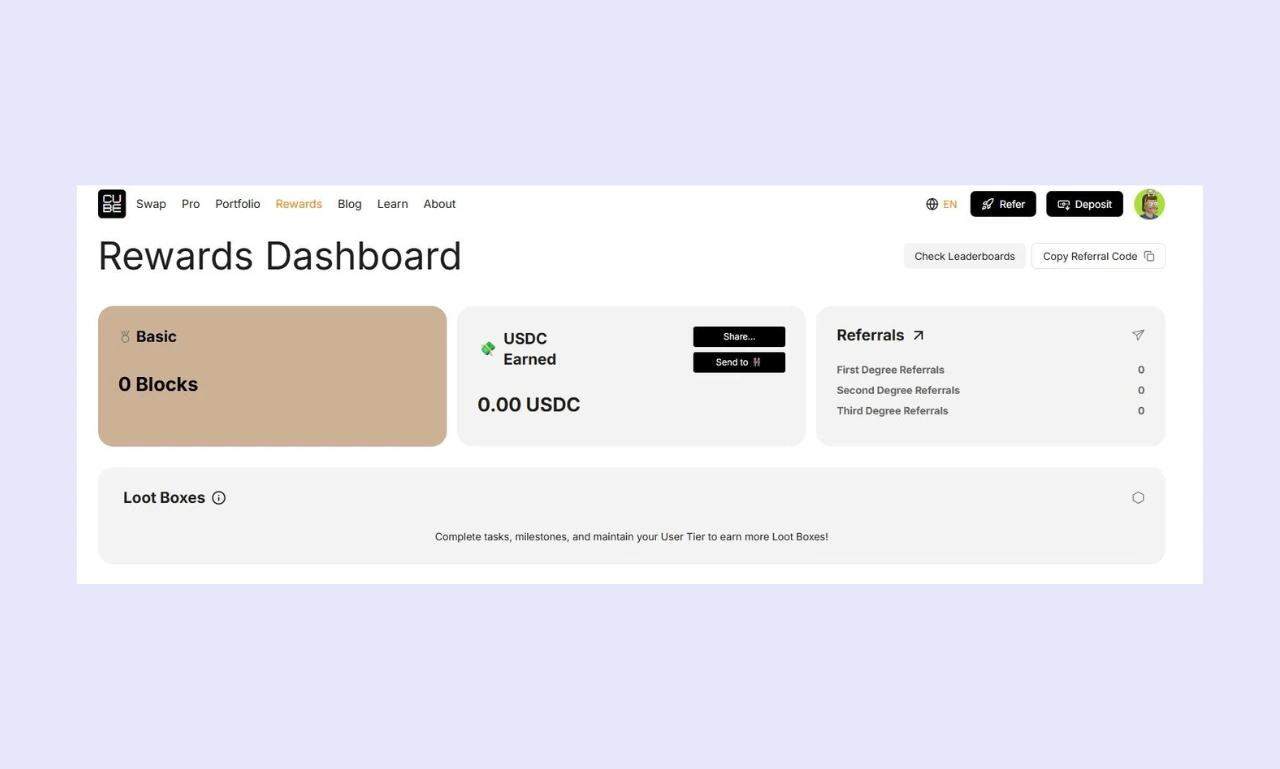
If you want to participate in crypto staking, avoid Cube Exchange. Unfortunately, the platform lacks tools for earning passive rewards. There's no Cube Exchange lending, staking, or liquidity mining tool for earning interest on crypto. However, there are a couple of similar features.
Users can earn rewards for referring their friends, family, or audience to Cube Exchange. Instead of earning a portion of your referee's fees, Cube Exchange lets people earn 'Blocks', which can be used to attain various benefits, perks, and bonuses. You also earn bonus weekly blocks based on your Cube balance.
While there are no Bitcoin mining pools for people to contribute to, Cube Exchange supports algorithmic trading, enabling people to make money from trading automatically. Two methods are available: 'Gorilla Jump' and 'King Maker'. The former is for executing large orders without volatility, while the latter aims to generate profit.
Security Measures
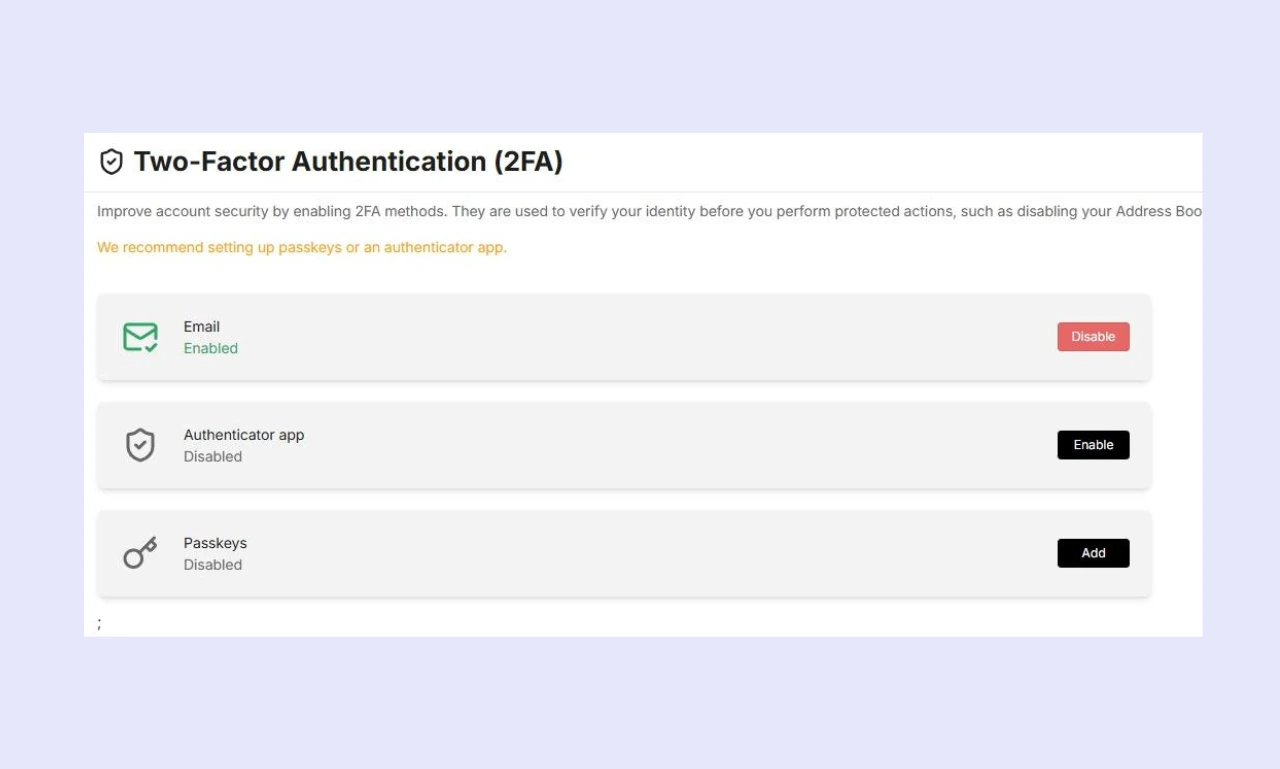
Security is one of the fundamental aspects impacting whether an exchange is worth using. If a platform doesn't take user safety seriously, it's likely cutting corners in other areas, too. The best crypto exchanges commonly implement a few measures, such as cold storage and mandatory Two-Factor Authentication (2FA).
Compared to other platforms, Cube Exchange's security features are relatively basic. Users can set up 2FA via email or a dedicated authenticator app like 2FAS or Authy. Cube also supports setting a passkey using biometrics, software, or a physical device, which adds a layer of security without impacting convenience.
In contrast to exchanges like Binance or Coinbase, Cube utilizes MPC wallets and does not take custody of user assets. Because the platform doesn't hold user assets, it does not need cold storage.
Hacken has audited Cube Exchange via a penetration test and passed it with only a few minor findings, which the Cube team accepted or fixed. Moreover, another firm, Sec3, has audited Cube, indicating that the platform is relatively transparent and secure.
Cube's wallets utilize Multi-Party Computation (MPC) technology, which splits private keys into multiple keyshares. A certain threshold is required to access the wallet and authorize transactions. Users control some keyshares, while the platform holds others, meaning Cube cannot access customer funds or their private keys.
Users can add approved withdrawal addresses to Cube Exchange to prevent accidental withdrawals to the wrong addresses and to make it harder for bad actors to steal funds if an account is compromised. However, no anti-phishing code system is present, which can make it easier for scams to be perpetrated.
Unlike other top cryptocurrency platforms, Cube does not have a verifiable proof of reserves system. It uses MPC technology, so users maintain custody of their assets. As a result, Cube does not need to prove that it backs client funds 1:1.
Payment Methods & Fees
You'll have to pay a few specific fees whenever you use a crypto exchange to buy Ethereum or trade any asset. The rates differ by platform. Cube's cryptocurrency fees are explained below:
While depositing crypto does not incur an extra charge, users pay gas or network fees. The rate will vary depending on the asset and network congestion. While exact figures are unavailable, there's a charge for depositing fiat. The cost ranges from 0% to 2% based on the currency and payment method.
There are a few Cube Exchange withdrawal limits to be aware of. Most crucially, fiat withdrawals are unavailable. If you want to easily fund your account with cash and withdraw it to a bank account, you'll need another exchange, such as Kraken.
Unlike almost every crypto investment platform, there are no Cube Exchange fees for withdrawing crypto. However, fee-free withdrawals are a promotional benefit available only during early access. Once Cube is fully released, expect it to add a charge, which will likely vary by asset.
Cube Exchange has a transparent trading fee structure. It charges 0.14% (maker) and 0.24% (taker). This means Cube charges less for adding liquidity to the order book (limit orders) and more for removing it (market orders).
There are no additional fees to be aware of. Cube is transparent about its cost structure and doesn't sneak in charges for opening or maintaining an account. Cube Exchange doesn't disclose its minimum deposit/withdrawal limits.
Customer Support
The best crypto exchange will offer multiple support avenues for issues of various severity levels. Usually, there is a help center for simple questions, a chatbot directing people to helpful articles, and a human support team for complex issues, such as live chat, email support, or a phone number.
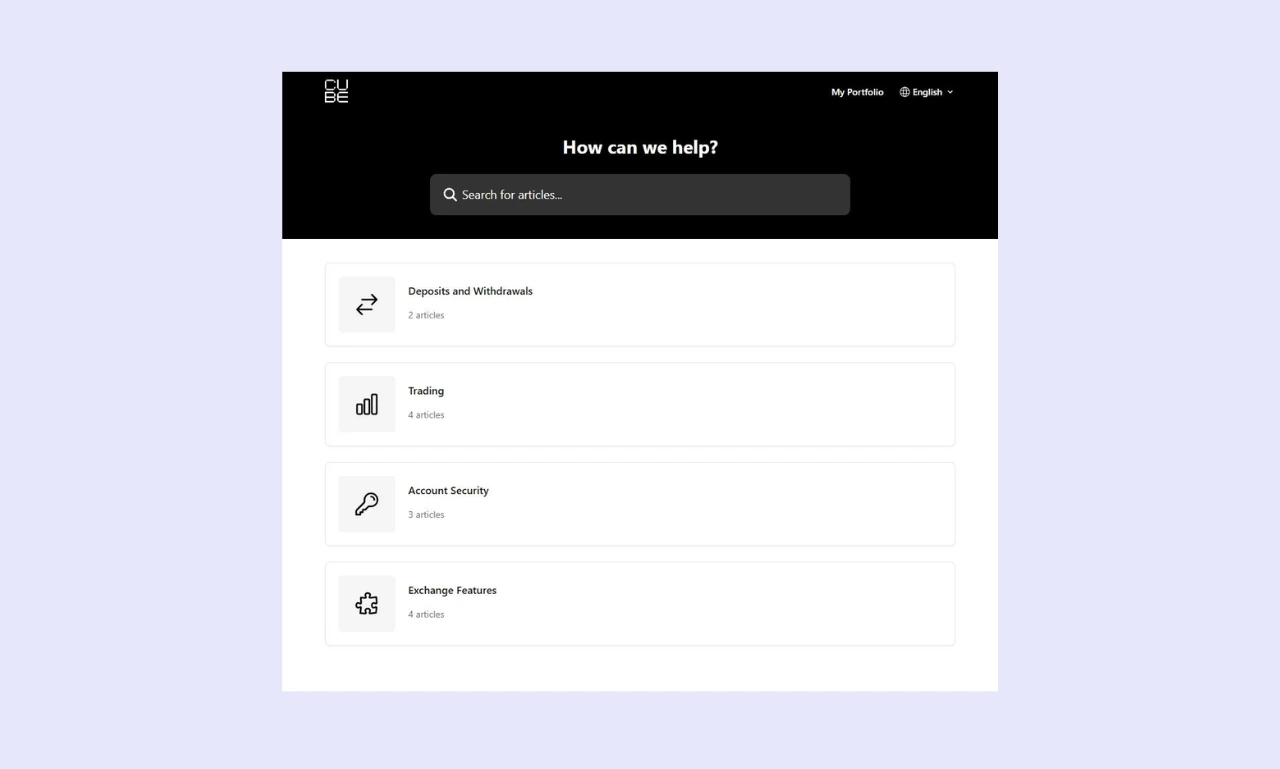
Unfortunately, the Cube Exchange customer support system is lackluster. The help center contains only 13 articles covering deposits/withdrawals, trading, security, and platform features. A chatbot is available, but it only takes your message and passes it on. It doesn't provide AI-generated answers or help users find relevant articles.
I contacted the human Cube Exchange support team to test its responsiveness. They're available 24/7. The platform estimates reply times to be a few hours. This is relatively accurate in my experience. I received a reply in roughly seven hours. The team was helpful and answered my questions courteously.
However, later in my testing, I could not access live chat. It didn't load when I attempted to contact support via the main website. Moreover, my messages and the chat box failed to load when I opened the support menu via the help center, drastically reducing accessibility.
Geographical Availability
Cube Exchange is available globally, but there are some restrictions to be aware of. Its services are limited in the UK and the USA. Moreover, it doesn't operate in sanctioned countries like Russia and Zimbabwe. However, for the most part, Cube is accessible globally.
If you're seeking a highly regulated exchange, there are better options than Cube. However, it complies with Know-Your-Customer (KYC) guidelines, which require verifying user identities before trading on the platform. It may also comply with authorities if they request user transaction data.
Other Cube Exchange Products and Services
Other than supporting basic trading, Cube Exchange lacks many additional features. There's no tax software integration or crypto loans system for temporary cashouts. However, there are a few valuable tools that traders and investors will find helpful.
Crypto Bundles
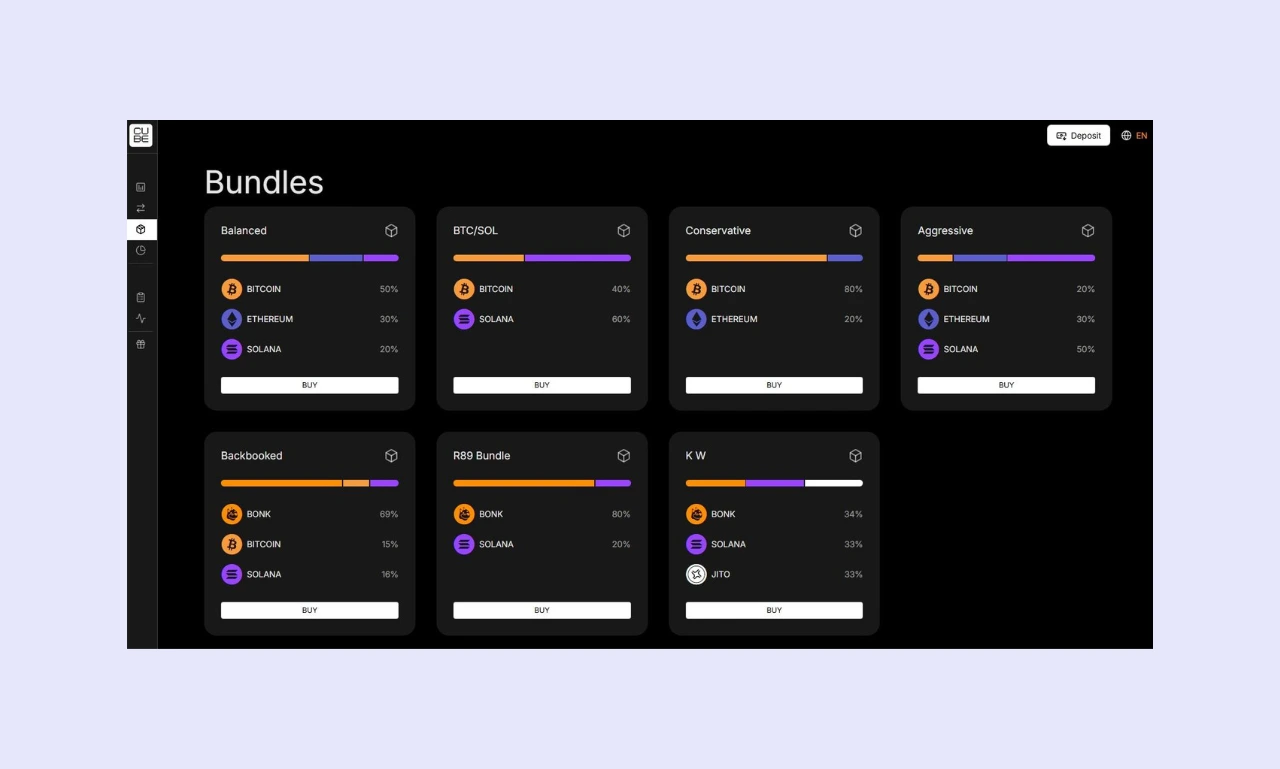
According to BitBo's Bitcoin volatility index, volatility is progressively dropping in the crypto industry, but it's still present and essential to consider. Diversification is a crucial concept in investing. It lets people reduce risk by holding multiple assets instead of concentrating on one, making their portfolio more resistant to downturns.
Cube Exchange's 'Bundles' tool makes diversification approachable and straightforward, regardless of users' experience levels. It consists of seven collections of assets grouped into specific categories. For example, the 'Conservative' bundle is 80% BTC and 20% ETH, while the 'Aggressive' bundle is 20% BTC, 30% ETH, and 50% SOL.
While you cannot buy Cardano on Cube, its bundles are helpful for people who are foraying into crypto and lack deep market knowledge. While only a few different assets are used in the bundles, they provide a simple way for people to invest while reducing volatility exposure.
Subaccounts
Cube Exchange's subaccount feature is valuable if you're an investor and a trader, or simply want more control over your portfolio. It lets people create multiple accounts under the same login details. Users can easily switch between accounts via a drop-down menu.
People can enter a custom name for their subaccounts, simplifying management. For example, you might create trading and investing accounts, allocating most of your capital to one while keeping a smaller amount to play with in the other.
Subaccounts come with unique wallet addresses, so you should take care to send your deposit to the appropriate address. Thankfully, transferring funds between subaccounts is relatively simple, so you can easily adjust how your capital is allocated.
Cube Exchange vs Other Crypto Exchanges
Here is how Cube Exchange stacks against other top crypto exchanges in the market
| Crypto Exchange | Top Choice For | Price | Products and Offerings | Standout Features |
|---|---|---|---|---|
| Cube Exchange | Maintaining asset custody while trading | 0.14% / 0.24% | Simple conversion tool, TradingView integration, subaccounts, crypto bundles, referral program | MPC wallet enhances security and convenience |
| Coinbase | People seeking a beginner-friendly crypto exchange | 0.60% / 1.20% | Staking, spot/derivatives trading, TradingView integration, fiat on-ramp | Toggle between beginner and advanced modes |
| Youhodler | Earning cashback from spending crypto | 0.02% hourly rollover fee | Crypto-backed loans, simple trading system, up to 70x leverage, cascading loans tool | Crypto debit card offering up to 2% cashback |
| OKX | Low-fee crypto exchange | 0.08% / 0.1% | P2P trading, staking, futures, crypto loans, trading bots, trading competitions | Features are tailored based on the users' region |
| Bybit | Advanced staking and structured earn products | 0.1% / 0.1% | Crypto debit card, P2P trading, spot/derivatives trading, crypto options, loans, demo account | Diverse staking products and structured earn tools offering over 100% APR |
Who is Cube Exchange Best Suited For?
While it offers a selection of mainstream assets and altcoins, people cannot buy Shiba Inu, Cardano, XRP, or many other major assets, which renders it ineffective for altcoin traders. Moreover, the lack of staking capabilities means better options are available for long-term investors.
Although certain people may prefer an alternative, Cube Exchange is great for people who want to enjoy the convenience of a centralized exchange while maintaining custody and ownership over the assets. As such, the exchange is ideal for security-conscious traders.
Conclusion & Final Verdict
Cube Exchange is a great choice if you're looking for a secure and convenient trading platform. It utilizes MPC wallet technology, which enables people to maintain asset custody even after depositing. However, it lacks leverage, staking, and some significant altcoins, making it difficult to recommend for active traders and long-term investors.
It's not perfect, but Cube Exchange's hybrid approach makes it an attractive option for people traders who don't want to trust a central party with their assets. To summarize our Cube Exchange review, there are better options if you're a trader seeking diverse assets, but it's excellent at blending security and convenience.
FAQs (Frequently Asked Questions)
How does Cube Exchange make money?
Cube Exchange earns revenue through trading fees. The platform takes a cut (0.14% / 0.24%) every time you place a trade or swap crypto assets. It may also charge projects a listing fee to have their tokens added to the platform, but there are no hidden fees.
Can I earn passive income on Cube Exchange?
Unlike most advanced crypto trading platforms, Cube Exchange doesn’t offer staking tools, liquidity mining, or lending systems. You cannot earn passive income by holding or delegating your crypto. However, Cube does run a referral program, where users can earn passive rewards for bringing people to the exchange.
What are the tax implications of using Cube Exchange?
You must pay taxes on your profits whenever you earn money through crypto, whether on a centralized exchange like Coinbase or a hybrid platform like Cube. You can be fined or face criminal proceedings for failing to pay the correct taxes, so consulting a professional is advisable.
What is KYC/AML, and why is it required on Cube Exchange?
Know-Your-Customer (KYC) and Anti-Money Laundering (AML) regulations are in place to prevent activities like money laundering or terror financing, which financial platforms, particularly crypto exchanges, can facilitate. Governments issue these regulations, so they must be followed for a platform to operate legally.