Best Web3 Wallets for Securing your Crypto and NFTs in 2026

- When you click links on this page, we may earn an affiliate commission. By using this website you agree to our terms and conditions and privacy policy.
- Participation in online gambling may be illegal in your country and is subject to age restrictions (18, 19, or 21, depending on the jurisdiction). Verify legality and age requirements before participating. Learn more
There are over 120 Web3 wallets to choose from, but you don’t need a prophet to tell you that not all can be used- especially if you are new to DeFi. Decentralized finance is an exciting financial ecosystem where users can find many opportunities to earn. But it can be an intimidating place for beginners. To get started in DeFi, you will need a Web3 wallet and a willingness to learn and adapt.
In the next few minutes, you will learn more about the best web3 wallets to choose from in 2026. In the end, you will be able to start exploring the many opportunities that decentralized finance has to offer. In addition, we will also tell you more about web3 wallets, how they work, how they differ from traditional wallets, and plenty of other insights that will make things more straightforward for you.
Best Web3 Wallet Summary
- The best Web3 Wallets in 2026 are Tangem, Bitget, Zengo, Binance, and Uphold.
- The most recommended Web3 wallets are self-custody solutions that store private keys locally, giving users full control over their crypto assets and enabling direct interaction with decentralized applications (dApps) and DeFi platforms. Unlike custodial wallets, where exchanges control the keys, self-custody wallets allow users to retain full control over their crypto assets.
- Private key management is critical because losing your recovery seed phrase (12-24 words) permanently denies you access to your funds, with no third-party recovery option, making secure storage of this phrase essential.
- Hot wallets vs. cold wallets offer different security trade-offs: hot wallets (browser extensions/mobile apps) provide convenient online access but face hacking risks, while cold wallets (hardware devices) store keys offline for maximum security but require integration with hot wallets for DeFi interactions.
- Key features to prioritize include strong security measures (encryption, multi-factor authentication), multi-chain support for managing assets across different blockchains, seamless dApp compatibility, hardware wallet integration, and cross-platform accessibility.
- Web3 wallets enable DeFi activities such as token swapping on DEXs, staking for rewards, providing liquidity, trading NFTs, and participating in lending/borrowing platforms, all without relying on centralized intermediaries.
Comparing the Best Web3 Wallets in 2026
| Brand Name | Wallet Type | Security Features | Supported Crypto | Backup and Recovery | Staking Support | Cost |
|---|---|---|---|---|---|---|
| Tangem | Cold | EAL6+ security chip, 25-year warranty, audited, no external connectivity, PIN system | 5,000+ | Cards come in multi-packs, providing redundancy, seedless | Yes | $54.90 to $160 |
| Bitget | Hot | Multi-Party Computation, $300 million protection fund, encryption | 1 million+ | Seed phrase | Yes | Free |
| SafePal S1 | Cold | EAL6+ chip, air-gapped, open-source, self-destruct mechanism, passphrase | Thousands of tokens on 200+ blockchains | Seed phrase | Yes | $49.99 |
| Uphold | Hot | Regulated, private key encryption, employee background checks, and regular audits | 325 | Username and password | Yes | Free |
| Zengo | Hot | MPC, seedless, create segregated wallets, Multi-Factor Authentication | 1000+ | Email authentication, recovery file, 3D FaceLock (optional) | Yes | Free ($9.99 monthly premium subscription) |
| Binance | Hot | MPC, self-custody, risk detection, technical audits | Thousands of assets on 34 networks | Quick Backup, recovery password | Yes | Free |
| eToro | Hot | Encryption, client/customer fund segregation, threat detection system, 2FA, multi-sig wallets | 39 | Username/password | Yes | Free |
Top Web3 Wallets for 2026
When compiling this list, we put a lot of things into consideration. The wallet’s security, ease of use, accessibility, crypto offerings, and customer care service. These are the web3 wallets that made it to our list;
Don’t invest unless you’re prepared to lose all the money you invest.
In-Depth Reviews of the Best Web3 Wallets
To fully understand more about the web3 wallets that made our list, with comprehensive background details about the parent company, you can check out the detailed reviews below.
Safepal
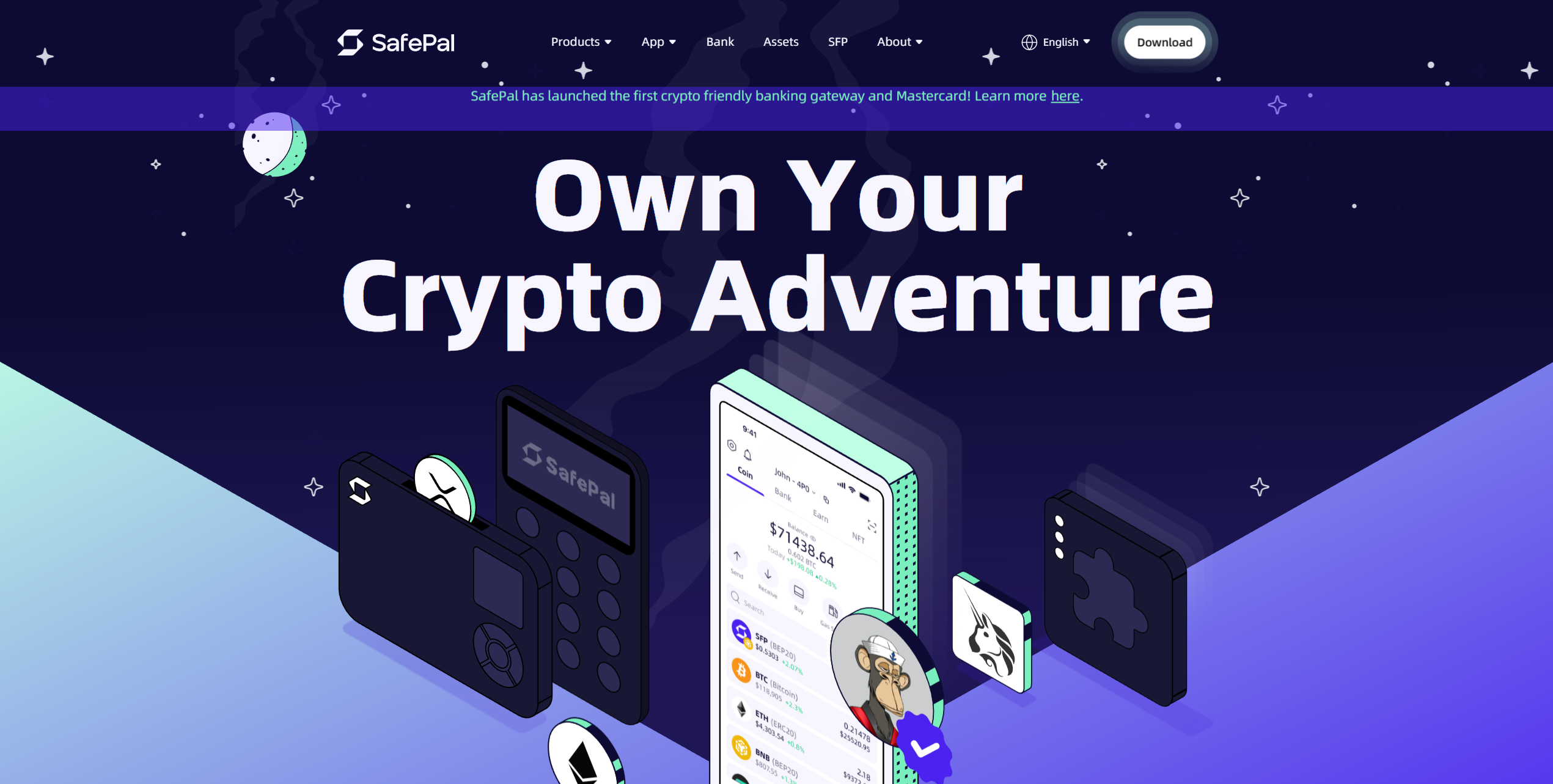
SafePal offers a unique dual approach by providing both hardware wallet devices and a mobile software wallet that work together seamlessly. You can store your cryptocurrencies offline on the hardware device while using the mobile app to interact with decentralized finance (DeFi) protocols and perform cross-chain transactions. The platform targets users who want maximum security without sacrificing convenience for daily crypto activities.
Key Features: The hardware wallet operates completely air-gapped with no USB, Bluetooth, or WiFi connections, communicating through QR codes. The software wallet supports over 100 blockchains and thousands of tokens with built-in decentralized exchange (DEX) access. Cross-chain swap functionality allows you to trade between different blockchain networks, and the native SFP token provides fee discounts.
Pros
-
Air-gapped hardware design eliminates connection vulnerabilities
-
Supports multiple blockchain networks and token standards
-
Built-in DeFi access through the mobile application
-
Cross-chain trading without using multiple platforms
-
Affordable hardware wallet pricing compared to competitors
Cons
-
QR code communication can feel slow for frequent transactions
-
Software wallet security depends on mobile device protection
-
Limited customer support channels for troubleshooting
-
Hardware wallet screen is smaller than premium alternatives
-
Learning curve for users unfamiliar with QR-based transactions
- Bitcoin
- Ethereum
-
Tether
89
No result
- English
- German
-
Spanish
12
No result
Tangem
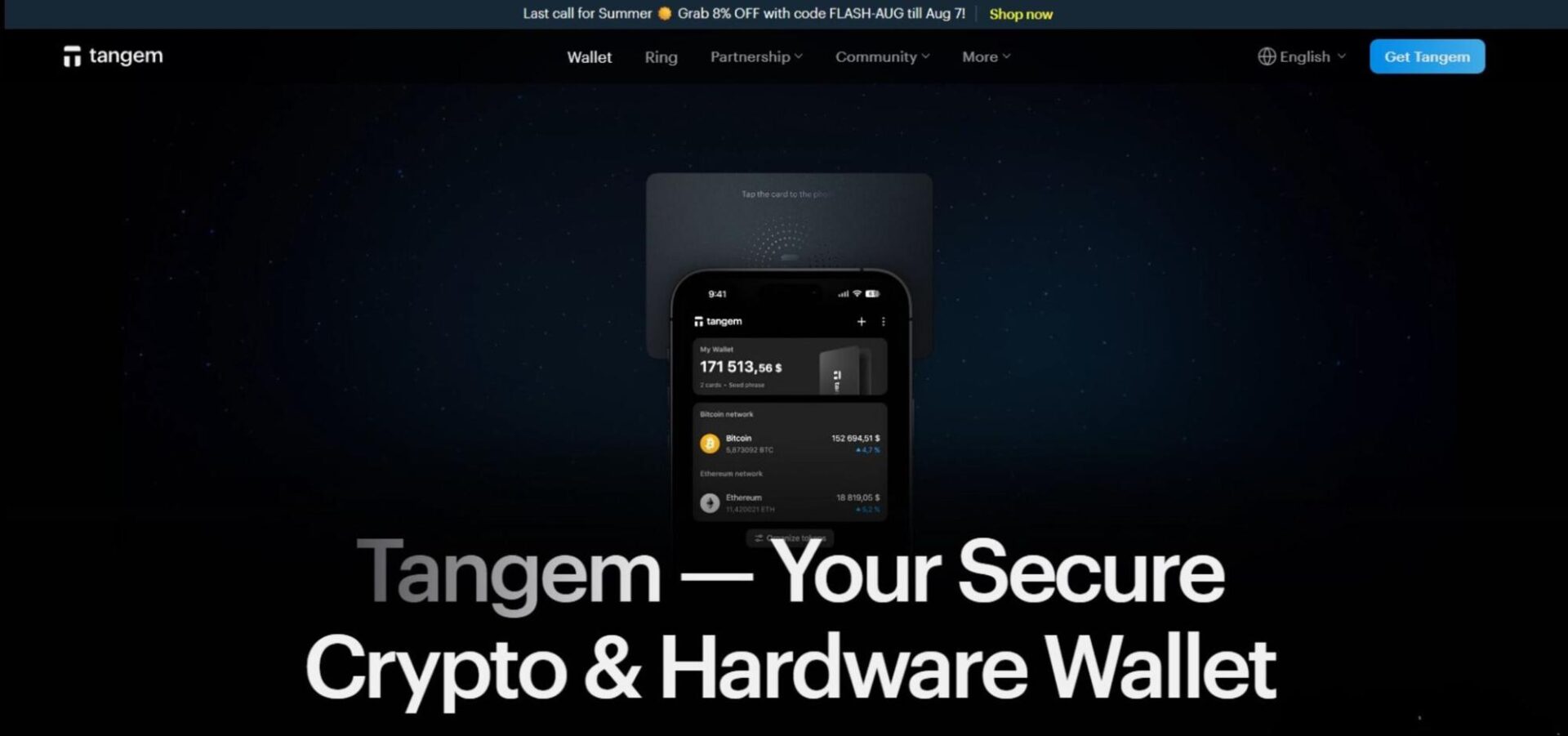
Tangem could be perfect as one of the best Web3 wallets for long-term investors. The credit card-style cold storage solution can easily fit into a wallet for transport, but it doesn’t sacrifice security. Tangem’s most significant advantage is using NFC, which enables a 25+ year lifespan with no battery, enhancing security and portability.
Key Features: Tangem’s core security is focused on the microcomputer chips embedded in each card. They’re EAL6+ rated, indicating top-level security and audited by two firms, including Kudelski Security. The chips generate a random private key entirely offline. As Tangem Wallets come in multi-packs, users have a backup even if they lose a card. The two-card set costs $54.80, while the three-card option is $69.90. Users can also purchase a bundle containing two cards and a ring for $150. With support for over 13,000 cryptocurrencies and zero hacks between 6+ million devices across seven years, Tangem Wallet offers phenomenal cryptocurrency security.
Pros
-
Support for 13,000+ cryptocurrencies
-
25+ year life span
-
No battery or recharging system
-
EAL6+ certification
-
Seed phrase (optional) and card-based recovery options
-
Audited by multiple third-party firms
Cons
-
Must be connected to a phone to manage the wallet
-
Each wallet stores the whole seed, not keyshares like MPC wallets.
- Bitcoin
- Ethereum
-
Tether
70
No result
- English
- German
-
French
3
No result

BitBox
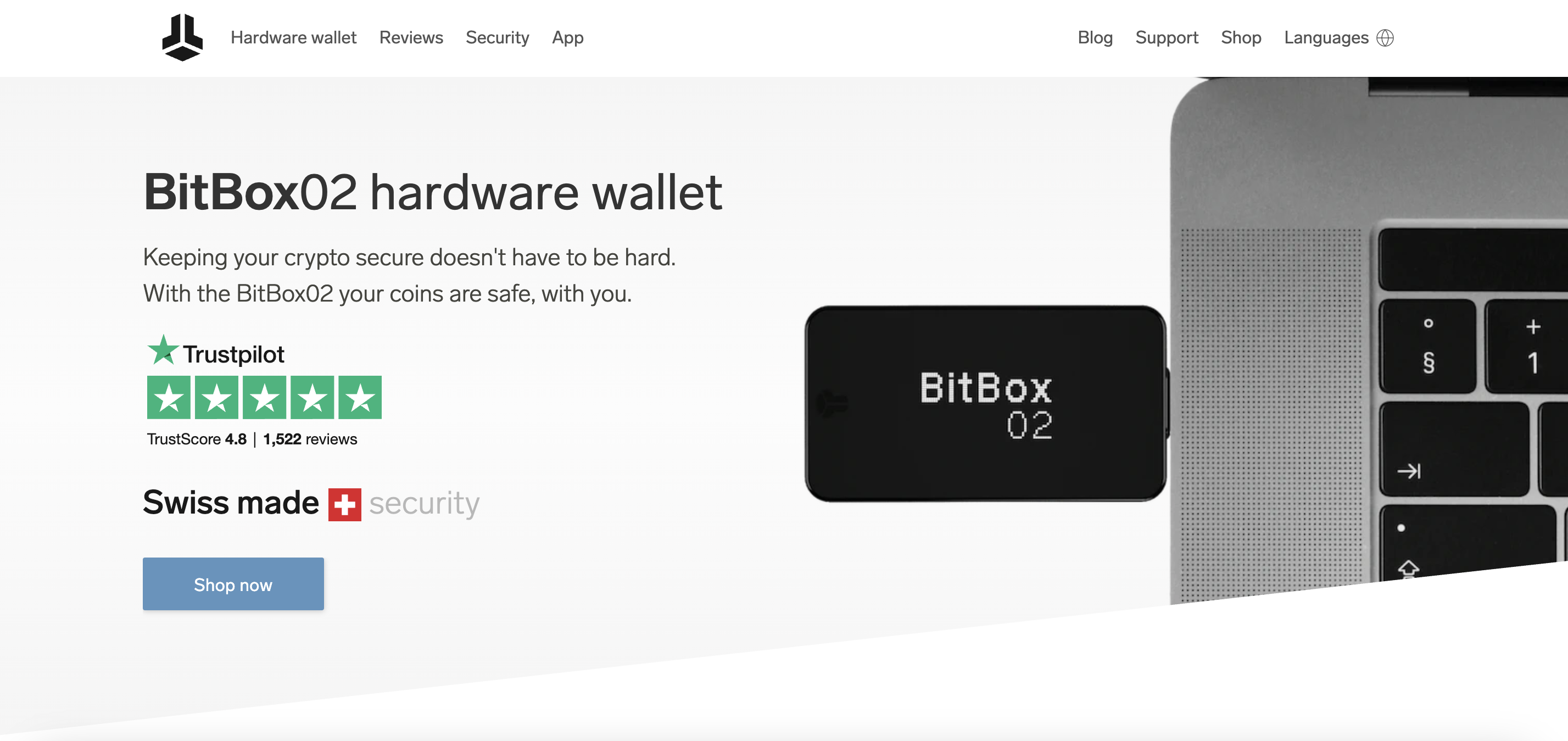
BitBox creates hardware wallets that emphasize transparency and privacy through completely open-source code. You can verify every aspect of the wallet's software and firmware, ensuring no hidden vulnerabilities or backdoors exist. The Swiss-made device focuses on essential security functions rather than bells and whistles, appealing to users who value substance over flashy features.
Key Features: The hardware wallet runs entirely open-source firmware that you can audit and compile yourself. A secure chip provides tamper resistance, while the companion app offers Bitcoin-only and multi-coin versions. Tor integration protects your privacy during transactions, and the device supports both single-signature and multi-signature wallet setups.
Pros
-
Fully open-source design allows complete transparency
-
Swiss manufacturing ensures high build quality standards
-
Privacy-focused features, including Tor network support
-
Simple interface reduces potential user errors
-
Multi-signature capability enhances security options
Cons
-
Limited cryptocurrency support compared to mainstream wallets
-
Higher price point than some hardware wallet alternatives
-
Minimal screen size restricts transaction information display
-
Fewer third-party integrations than popular competitors
-
Learning curve for users new to open-source concepts
Blockstream
Blockstream Green provides a Bitcoin-focused wallet solution developed by one of Bitcoin's most influential development companies. You get access to cutting-edge Bitcoin technologies, including Lightning Network payments and liquid sidechain transactions. The platform targets users who understand Bitcoin's technical aspects and want access to the latest protocol improvements before they reach mainstream adoption.
Key Features: The wallet implements 2FA security without requiring phone numbers, using hardware tokens or authenticator apps instead. Lightning Network integration enables instant, low-fee Bitcoin payments. Liquid Network support allows faster settlement times and confidential transactions. Hardware wallet compatibility is supported by most popular devices, including Ledger and Trezor.
Pros
-
Developed by Bitcoin protocol contributors with deep expertise
-
Lightning Network functionality for instant payments
-
Privacy-enhanced features through Liquid sidechain integration
-
Hardware wallet support across multiple device types
-
No phone number requirement for 2FA security
Cons
-
Bitcoin-only focus excludes other cryptocurrency options
-
Technical features may confuse less experienced users
-
Limited customer support compared to consumer-focused wallets
-
Interface design prioritizes function over user experience
-
Liquid Network adoption remains limited outside technical circles
Bitkey
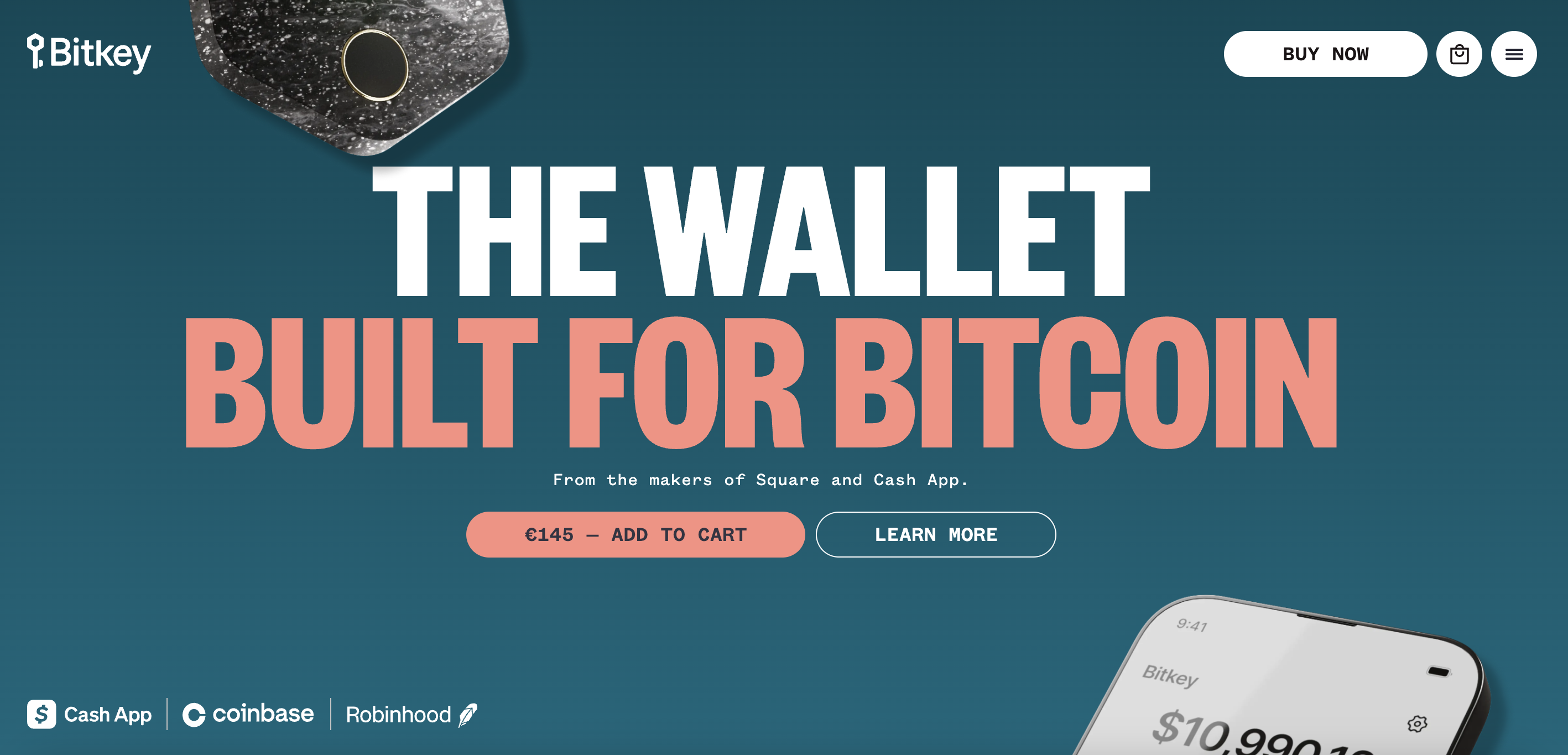
Bitkey represents Block's approach to making Bitcoin storage accessible to everyday users through a three-part system combining hardware, mobile app, and cloud-based recovery. You get the security of a hardware wallet without the complexity that often intimidates newcomers. The platform focuses exclusively on Bitcoin, streamlining the experience by avoiding the confusion of multiple crypto options.
Key Features: The system uses a 2-of-3 multi-signature setup with keys split between the hardware device, mobile app, and Block's servers. Social recovery allows trusted contacts to help restore access if you lose your device. The hardware wallet connects via Near Field Communication (NFC) to your smartphone, eliminating cables and complicated setup procedures. Inheritance planning features help transfer Bitcoin to beneficiaries.
Pros
-
Simplified setup process removes technical barriers
-
Social recovery system prevents permanent fund loss
-
NFC connectivity eliminates connection hassles
-
Inheritance features address long-term planning needs
-
Block's reputation provides user confidence
Cons
-
Bitcoin-only support limits cryptocurrency diversification
-
Requires ongoing trust in Block's infrastructure
-
Social recovery depends on reliable, trusted contacts
-
Higher cost than basic software wallet alternatives
-
Limited availability in international markets initially
- Bitcoin
- English
RockWallet
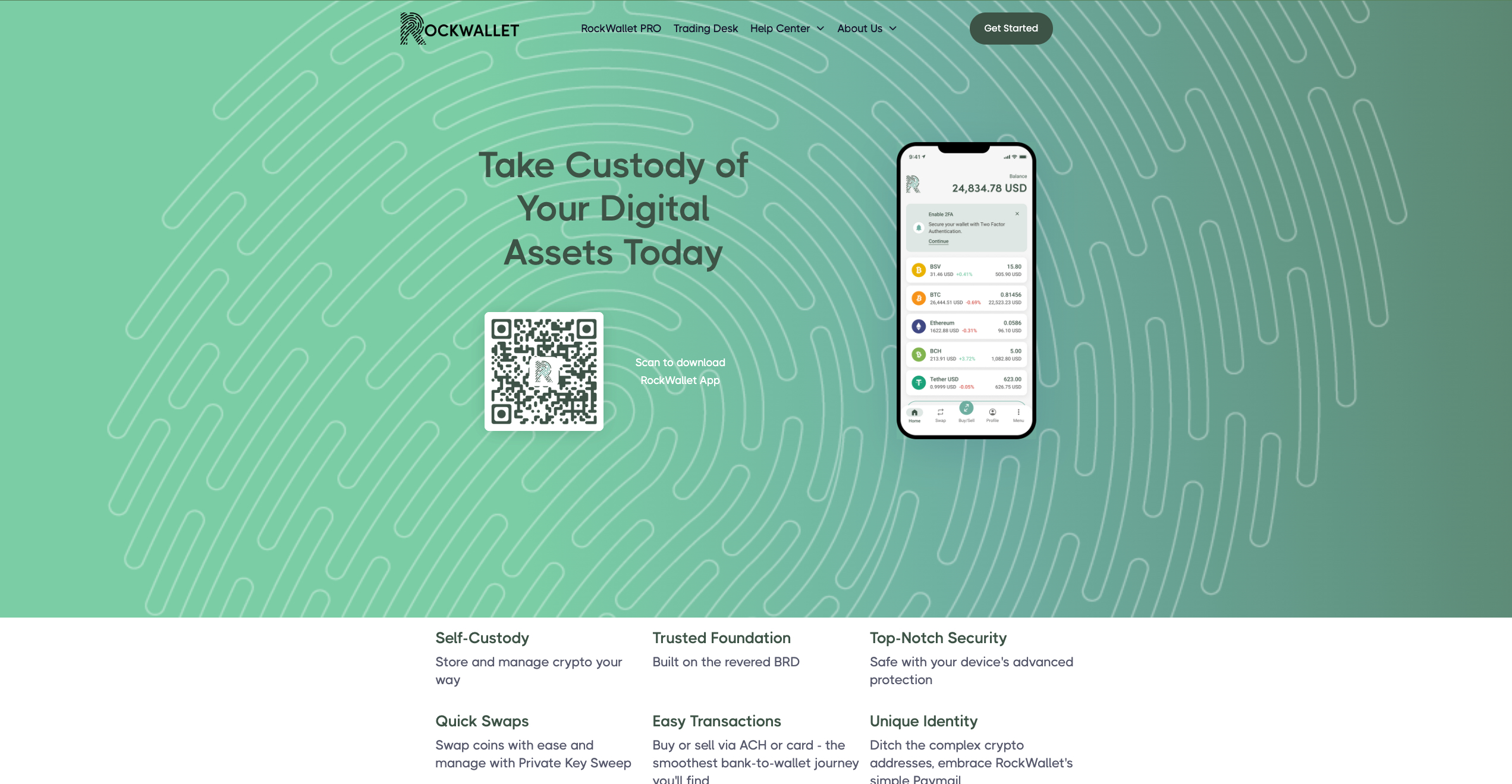
RockWallet focuses on providing straightforward crypto access for American users through a mobile-first platform with traditional banking integration. You can connect your bank account directly to buy, sell, and store popular cryptocurrencies without navigating complex exchange interfaces. The platform emphasizes regulatory compliance and user-friendly design over advanced trading features, making it suitable for people who want basic crypto functionality with familiar banking-style operations.
Key Features: The Web3 wallet supports major cryptocurrencies, including Bitcoin, Ethereum, and Litecoin, with direct bank account linking for purchases. ACH transfers allow fee-free deposits from connected bank accounts. Built-in price tracking helps monitor portfolio performance, while the mobile app provides core wallet functions, including sending, receiving, and storing coins.
Pros
-
Direct bank account integration simplifies funding
-
Fee-free ACH deposits reduce transaction costs
-
Regulated US operations provide legal compliance assurance
-
Simple interface suitable for crypto newcomers
-
Mobile-focused design offers convenient access
Cons
-
Limited crypto selection compared to major platforms
-
US-only availability restricts international users
-
Basic feature set may disappoint advanced traders
-
Higher spreads on crypto purchases than on exchanges
-
Limited customer support options for problem resolution
- Bitcoin
- Ethereum
-
Tether
10
No result
- English
Kraken
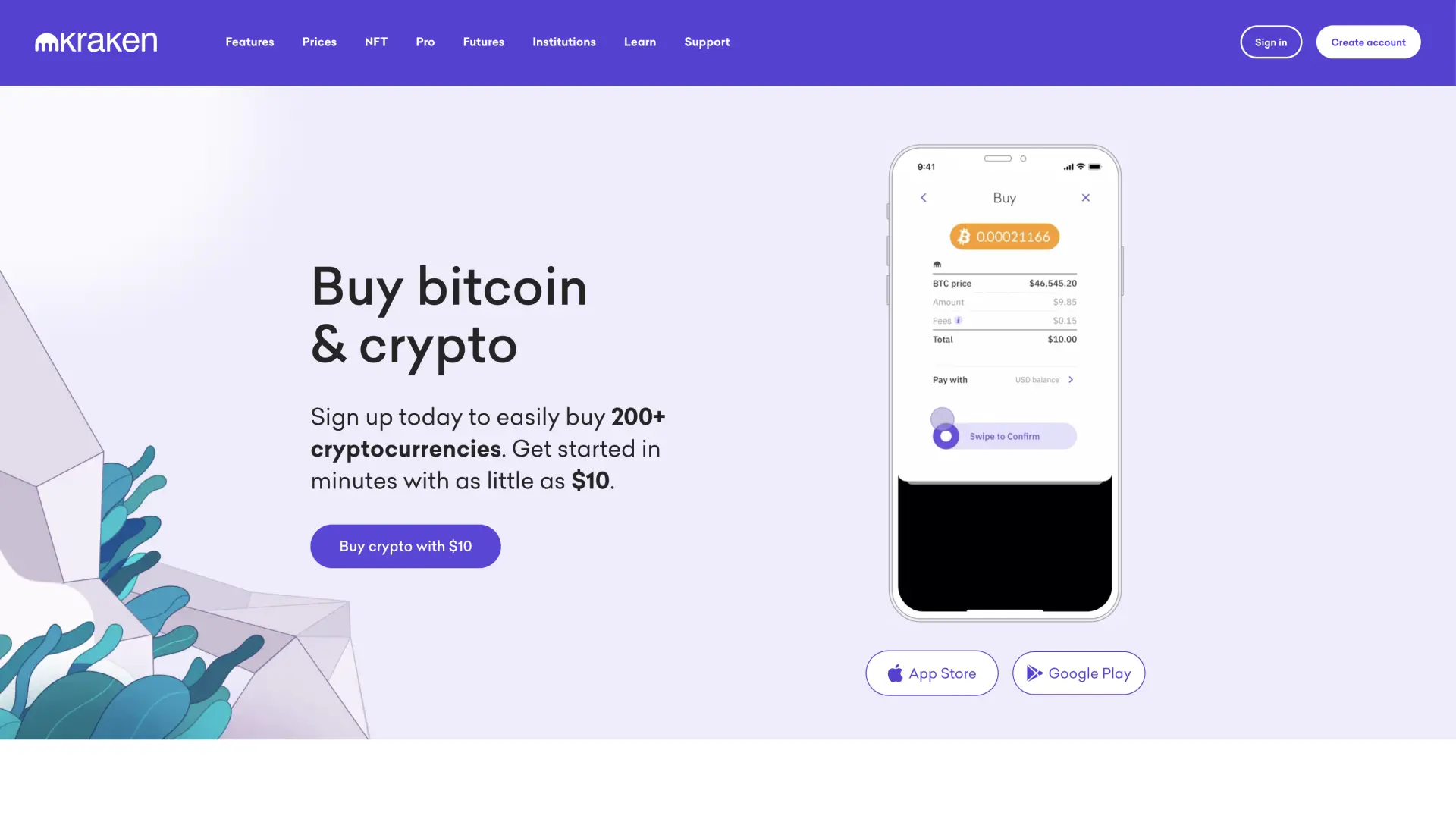
Kraken wallet is a non-custodial wallet for privacy-conscious users, a reputable exchange with strong security practices and DeFi integration.
Kraken Wallet operates as a self-custody solution separate from Kraken's main exchange platform, giving you complete control over your private keys while benefiting from the company's security expertise. You can interact with dApps and manage multiple cryptocurrencies without relying on centralized storage. The wallet targets users who understand the importance of self-custody but want the backing of an established crypto company.
It supports Bitcoin, Ethereum, and various ERC-20 tokens with full private key control. DeFi integration allows direct interaction with decentralized protocols for lending, borrowing, and yield farming. Multi-chain support includes popular networks beyond Ethereum, while hardware wallet compatibility works with Ledger and Trezor devices. Built-in portfolio tracking shows your holdings across different blockchains.
Pros
-
Self-custody design gives you complete fund control
-
Backed by Kraken's established security reputation
-
DeFi protocol integration for decentralized finance access
-
Multi-chain support covers popular blockchain networks
-
Hardware wallet compatibility enhances security options
Cons
-
Self-custody responsibility means no recovery assistance if keys are lost
-
Limited cryptocurrency selection compared to the main Kraken exchange
-
DeFi features may confuse users unfamiliar with decentralized protocols
-
No customer support for wallet recovery issues
-
Interface complexity exceeds basic storage needs
- Bitcoin
- Ethereum
-
Tether
83
No result
- Spanish
- English
-
French
4
No result
Zengo
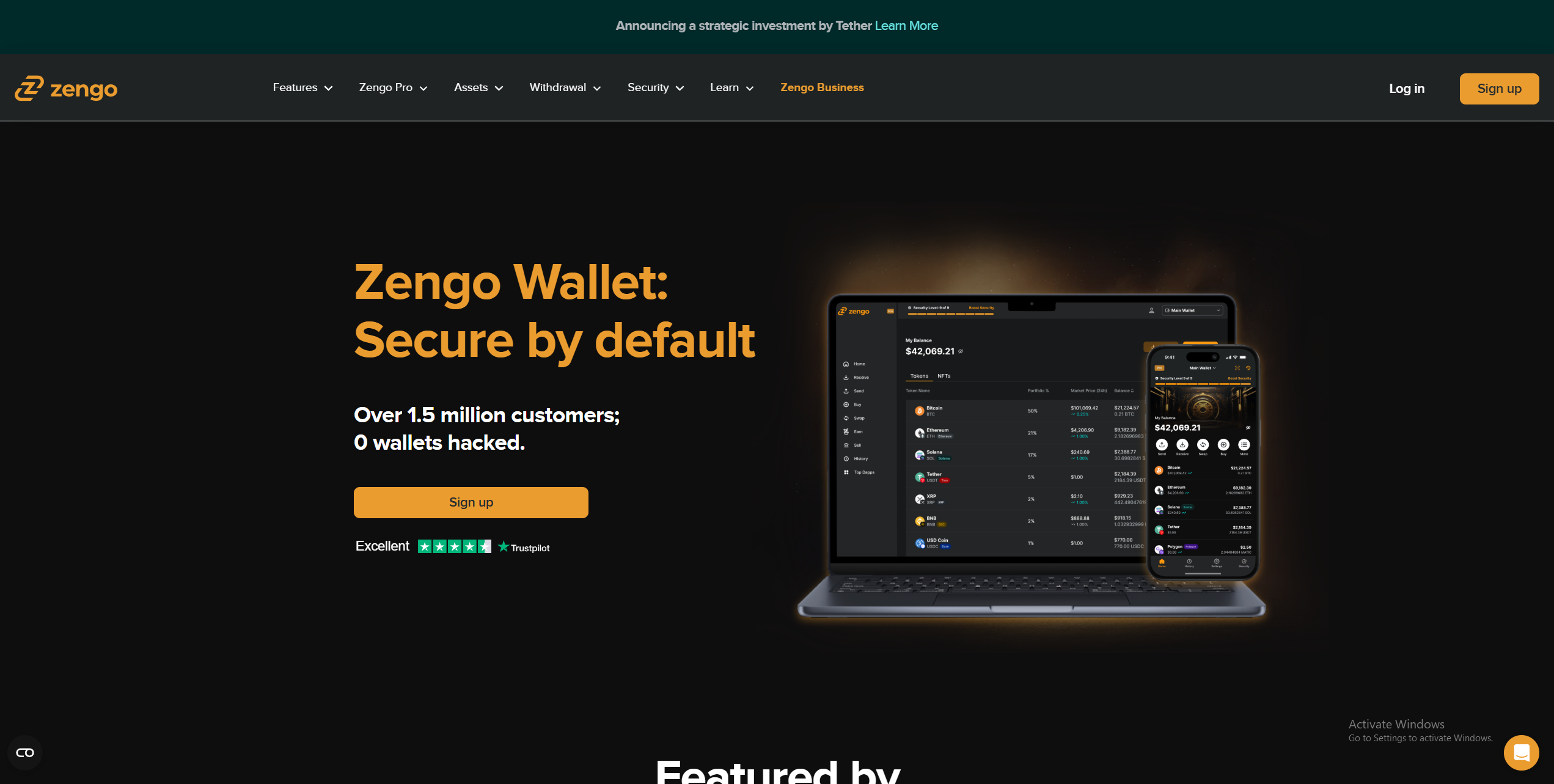
Zengo Wallet stands out as one of the best crypto wallets in 2025 by offering a unique keyless security model. Instead of relying on traditional seed phrases, Zengo uses Multi-Party Computation (MPC) combined with three-factor authentication, making it easier and safer to recover accounts without the risk of losing access.
Key Features: This mobile-first wallet supports over 320 cryptocurrencies on multiple blockchains, catering to users who want a seamless experience without sacrificing security. Zengo also offers built-in features like crypto buying, selling, swapping, and staking, all accessible through a sleek and intuitive app interface. Additionally, Zengo provides fiat on-ramp and off-ramp services, making it convenient for users to convert between crypto and traditional money. While it doesn’t support desktop or browser extensions, its mobile security features, including biometric authentication and a Web3 firewall, position it as an excellent choice for everyday crypto management.
Pros
-
Keyless security with MPC and 3FA for safer recovery
-
Supports a wide range of cryptocurrencies
-
Integrated fiat on/off ramps and swapping
-
Easy-to-use mobile app with biometric security
-
Access to staking and dApps
Cons
-
Exchange fees can be relatively high
-
Limited staking options compared to competitors
-
No desktop or browser extension support
-
Not fully open source
- Bitcoin
- Ethereum
-
Tether
68
No result
- English
Uphold
Uphold functions as a financial platform that lets you store and exchange cryptocurrencies along with traditional fiat currencies, precious metals, and other alternative investments. You can instantly convert between different asset types without going through multiple platforms or exchanges. The service targets users who want flexibility in managing diverse portfolios that span both traditional and cryptocurrency markets.
Key Features: The platform supports over 250 cryptocurrencies plus fiat currencies from multiple countries, allowing instant conversions between any supported assets. Real-time settlement means transactions complete immediately without waiting periods. The transparency dashboard shows exactly how your funds are held and backed. Social trading features allow you to copy successful traders' strategies automatically.
Pros
-
Instant conversion between crypto and fiat currencies
-
Wide selection of both traditional and cryptocurrency options
-
Transparent fund backing builds user confidence
-
Social trading capabilities for strategy copying
-
Real-time settlement eliminates transaction delays
Cons
-
Higher spreads on conversions reduce value compared to dedicated exchanges
-
Limited advanced trading tools for experienced traders
-
Customer support responsiveness varies by region
-
Platform complexity may overwhelm simple storage needs
-
Regulatory restrictions affect availability in certain jurisdictions
- Tether
- TrueUSD
-
USD Coin
144
No result
- English
Don’t invest unless you’re prepared to lose all the money you invest.
Coinbase
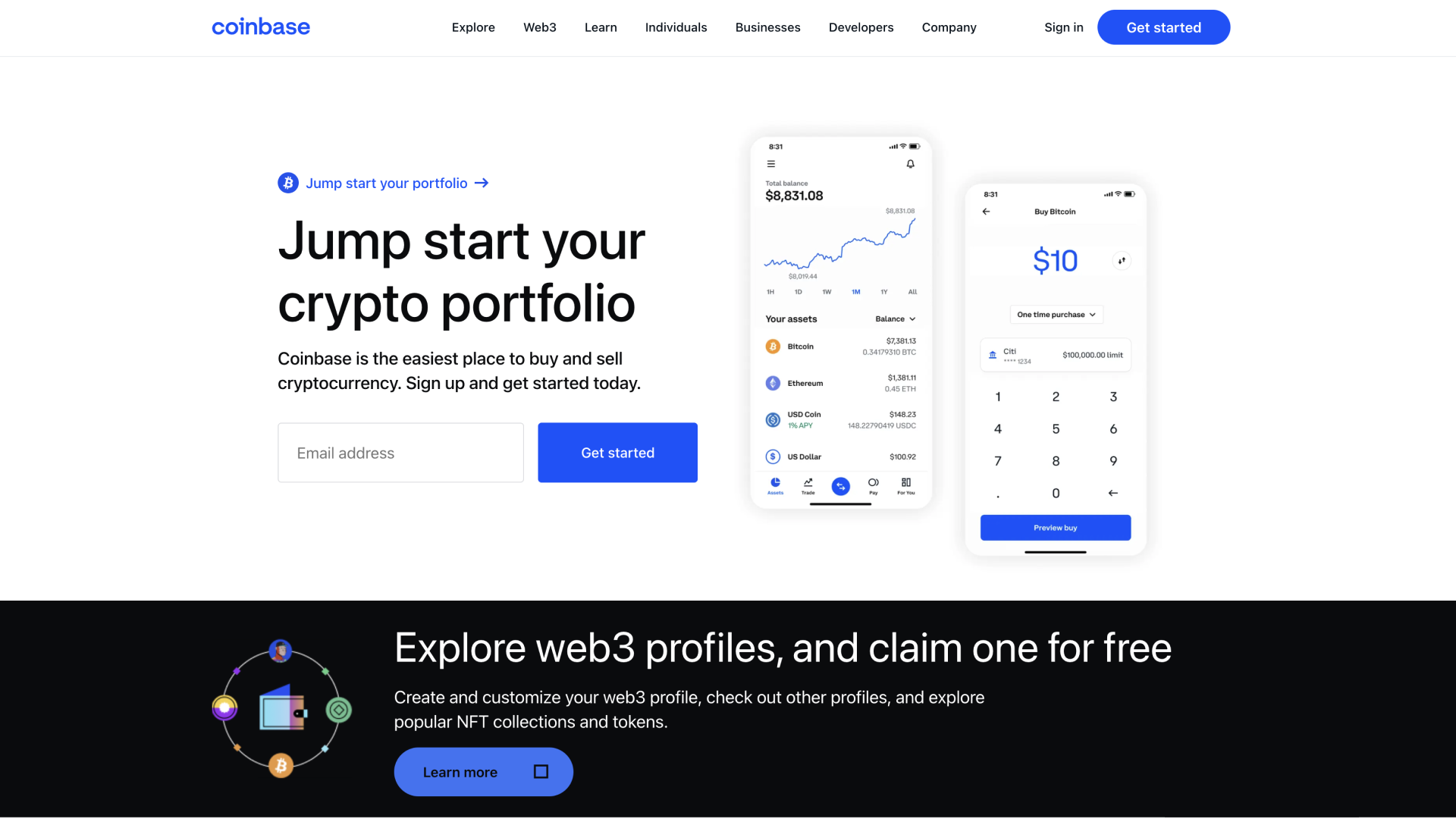
Base App represents Coinbase's evolution of its original wallet into an all-in-one platform that combines crypto storage with social networking features. You can manage your coins and collectibles while participating in a creative economy where content creation gets rewarded. The platform bridges traditional crypto wallet functions with modern social app experiences, targeting users who want both financial tools and community interaction in one application.
Key Features: The app stores cryptocurrencies, non-fungible tokens (NFTs), and DeFi positions across multiple blockchain networks including Bitcoin, Ethereum, and Solana. Built-in buying, swapping, staking, and minting capabilities eliminate the need for external services. USDC rewards provide passive income opportunities, while passkey backups simplify wallet recovery. Smart wallet technology offers sponsored transaction fees, and the platform supports millions of tokens across popular networks.
Pros
-
Integration with Coinbase's established ecosystem and reputation
-
Social features combine finance with community interaction
-
Supports extensive cryptocurrency and NFT collections
-
Multiple payment methods available in over 120 countries
-
Simplified backup process using modern passkey technology
Cons
-
Platform transition may confuse existing Coinbase Wallet users
-
Social networking focus might not appeal to privacy-conscious users
-
Dependency on Coinbase's infrastructure creates centralization concerns
-
New app format is still in beta development
-
Less suitable for users wanting pure wallet functionality
- Bitcoin
- Ethereum
-
Tether
68
No result
- English
What Is a Web3 Wallet?

A web3 wallet is a crypto storage solution that, in addition to its primary purpose of holding and managing crypto assets, allows users to interact with web3 services in decentralized finance.
Its ability to act as the bridge between the user and the decentralized applications in the DeFi space comes from the way the web3 wallet is designed to handle private key management.
Self-Custody vs Custodial Wallets
Before we can get into the different types of private key management, we first must understand what private keys are.
Private keys are long strings of characters that are used to prove ownership of crypto assets and authorize transactions on the blockchain. You can view them as your personal signature for validating transactions on a network. Crypto wallets are the blockchain solutions used to store these private keys.
Now, the concept of custody of crypto assets becomes clearer when we look at the two main types of crypto wallets that offer users a different approach to private key management.
- Custodial Wallets: Such as some wallets handed out by centralized exchanges, don’t require the user to manage their private keys. They give custody of the private keys to the exchange, which means it has full control over the assets, and users must trust the exchange to secure and manage their funds.
- Self-Custody Wallets: Owning a self-custody wallet puts the private keys in the hands of the users. This means the users who hold their crypto assets in a third-party, self-custody, web3 wallet have the ability to do as they please with their crypto assets, but are also responsible for securing them.
Choosing between custodial and self-custody (non-custodial) wallets comes down to your needs. Some users prefer the convenience and simplicity of custodial wallets and are happy to allow crypto platforms to manage their keys and assets. However, these users may find it harder to engage with DeFi platforms, as these activities often require users to have direct control over their private keys.
How Do Web3 Wallets Work?

Now that we have a better understanding of the concepts of custody and private key management, we can move on to explain exactly how Web3 wallets work.
Connecting to Decentralized Apps (dApps) with Web3 Wallets
While custodial wallets allow you to interact with the features and services available on the very platform they came from, web3 wallets allow you to choose which DeFi platforms and dApps you’d like to interact with. This gives users more freedom and flexibility to choose which activities they like to use their coins with.
The DeFi space is home to numerous dApps that offer all kinds of financial services, including trading, swapping coins, and staking, but also fun activities, like gaming and decentralized social platforms. With a web3 wallet, you can easily access these services.
Simply go to the dApp’s website and click on the “Connect Wallet” button. Because the web3 wallet gives you custody of your private keys, you will be able to sign the connection request and authorize the dApp to interact with your public wallet address.
Signing Transactions & Smart Contracts
Smart contracts are an integral part of dApps and the wider DeFi space. These pieces of code are self-executing contracts that only trigger actions when all the parties involved meet the predefined conditions of the agreement and keep transactions honest.
By using a self-custody wallet that holds private keys, Web3 wallet users can interact with smart contracts. This is because the private keys are necessary to sign and authorize the transactions that these smart contracts execute.
This combined approach of relying on smart contract technology and transaction signing is how decentralized finance keeps things secure, even though the private key is frequently used to sign transactions.
Managing Private Keys & Security Risks with a Web3 Wallet
While relying on a web3 wallet and managing private keys by yourself can eliminate the custodial risks, and smart contract technology can partially reduce the counterparty risk, there are also notable challenges with this approach.
One of the biggest advantages of using a custodial wallet is the support you get from the central entity in case you lose your password. Since the platform stores and manages your private keys and recovery phrase, you can request a password reset or account recovery. With web3 wallets, you don’t get this safety net.
For this reason, taking great care of your recovery seed phrase is a critical responsibility that falls onto yourself when using a web3 wallet. If you lose the seed phrase, you lose all possibilities of recovering your private keys in case you forget your password or lose your cold storage device.
Multi-Chain & Cross-Chain Capabilities
Speaking of how web3 wallets work, there is one important feature we must mention in this context, and that is multi-chain and cross-chain functionality.
The best web3 wallets have both multi-chain and cross-chain capabilities, which means that not only are they able to support and interact with multiple blockchain networks, but also facilitate asset transfers between them without the need for a centralized exchange.
Because web3 wallets store private keys that give users control over their assets, they allow access to multiple blockchain networks from a single wallet. Instead of using multiple wallets for accessing different blockchains, a web3 wallet gives users the ability to manage assets across Ethereum, Binance Smart Chain, Solana, and other networks, all with the same private key.
Hot vs Cold Web3 Wallets

In addition to understanding how they work, differentiating between the different types of web3 wallets can also help you make the right choice when choosing a web3 wallet for your needs.
Based on how they store private keys, there are two main types of Web3 wallets: hot wallets that stay connected online and cold wallets that store keys offline.
Browser-Based & Mobile Web3 Wallets
There is a variety of hot, online web3 wallets available online, but the most popular ones come in two familiar formats: browser-based wallets, which are installed as extensions for your browser, or mobile wallets, which are downloaded as apps for your mobile device.
Both of these types of wallets operate very similarly and remain connected online at all times. Their connectivity makes them highly accessible, convenient, and practical. They can be used from multiple types of devices, allowing users to access their crypto assets at any time, from anywhere, and facilitating quick and easy interactions with dApps and DeFi platforms.
However, because this type of Web3 wallet stores private keys online, they carry an inherent risk of being breached by unauthorized parties. Even though most of these wallets are secured with advanced security features, skillful hackers can still find ways to exploit online vulnerabilities and breach them.
Hardware Web3 Wallets
Cold wallets, on the other hand, and web3 wallets store private keys offline. Unlike hot wallets, which are essentially software programs, cold wallets are hardware and tangible. Most commonly, they take the form of a physical device, such as a USB flash drive.
Unless they are connected to another device that is capable of browsing the internet, hardware wallets have almost no connectivity capabilities. When left alone, these wallets remain offline and out of the reach of hackers. This is why they are widely considered the best protection for crypto assets.
However, interacting with cryptocurrency requires users to go online, which is why relying solely on a hardware wallet is not an option. Most users take a combined approach and integrate a hot wallet with their cold wallet to get the best security while remaining capable of trading, staking, and taking part in other DeFi activities.
Key Features to Look for in Web3 Wallets

After presenting our recommendations on the best web3 wallets, explaining what they are and how they work, we can shift our focus to choosing the right wallet. Let’s have a look at the most important features that make a web3 wallet reliable, secure, and efficient.
Security & Private Key Management
Considering that a crypto wallet is a storage solution for your crypto funds, it obviously has to be very secure. However, for web3 wallets, security may be an even greater concern.
This is because web3 wallets are typically non-custodial, which means their private keys are under the control of their owners. In the unfortunate event of losing their private keys, users have no third party to rely on that can help recover the funds.
For this reason, you should try to find the most secure Web3 wallet that will provide you with effective security measures that will protect your private keys and prevent unauthorized access. Look for wallets with strong encryption, multi-factor authentication, biometric security, and secure backup options to ensure the highest level of protection for your funds.
Multi-Chain Support
If you are on the lookout for a web3 crypto wallet, you are probably planning on interacting with multiple different blockchain networks. Today, there are several major networks that provide access to unique functionalities and services, making multi-chain support an important feature when choosing a web3 wallet.
Multi-chain wallets are capable of connecting with multiple blockchains, which allows users to manage assets across different networks from a single wallet. This makes activities like swapping cross-chain coins, staking in various ecosystems, and interacting with different types of dApps more convenient and efficient.
This is why you want to make sure you check the range of supported blockchains when choosing a web3 wallet, and choose one that offers seamless interoperability and reliable cross-chain functionality.
User Experience & dApp Compatibility
User experience is another important aspect you should not overlook when choosing a web3 wallet for your needs. Blockchain technology, DEXs, dApps, and other DeFi services are known for being intimidating for newcomers, and if you add a complex web3 wallet to the mix, the process can become even more confusing and overwhelming.
Look for a simplistic crypto wallet with a clear, user-friendly interface that allows easy and straightforward navigation, asset management, and dApp interactions. Additionally, try to find a wallet natively compatible with the dApps you want to use to avoid configuring things manually.
This will allow you to focus on developing profitable strategies for maximizing your return instead of struggling with wallet connection errors and figuring out complex network settings or contract approvals.
Hardware Wallet Integration
Earlier, we addressed the importance of security and the need for advanced security measures support when choosing the ideal web3 wallet. However, according to most crypto enthusiasts, storing your private keys in a hardware wallet is the most effective way to protect your assets.
Unlike software wallets that operate online, hardware wallets store your sensitive data offline, where hackers can’t reach them using their malware, phishing attempts, and other exploits. But, because these wallets are not capable of interacting with dApps directly, you will need to pair your hardware wallet with a web3 wallet to get the best of both worlds.
To ensure that this combined approach works seamlessly, you will need to consider hardware wallet integration capabilities when choosing a Web3 wallet. A well-supported wallet can easily integrate with a hardware wallet and allow you to explore DeFi safely and conveniently.
NFT & DeFi Support
While multi-chain support is an important feature that can expand the range of assets your wallet can hold, merely supporting multiple networks doesn’t guarantee a straightforward and hassle-free DeFi experience.
The best web3 wallets are capable of seamlessly integrating with different NFT marketplaces and DeFi protocols. These wallets allow their users to easily trade, stake, lend, and manage cryptocurrencies without relying on third-party platforms.
To ensure you get a versatile wallet, you will need to check the wallets’ NFT and DeFi functionalities during your research. Features like built-in NFT galleries, direct access to DeFi staking, lending integrations, and gas fee optimization can be great indicators of a capable wallet that can offer a smooth and seamless experience.
Mobile vs Desktop Accessibility
As we previously mentioned, web3 wallets can take multiple forms, including mobile apps for mobile devices and browser extensions for desktops. But the very best web3 wallets offer cross-platform compatibility and synchronization.
If you want to be able to access your web3 wallet from multiple devices, you should definitely keep this feature in mind when making your choice. A cross-platform web3 wallet will allow you to access your crypto funds on your mobile device and your PC, and sync the account data and transaction history.
If you keep all these features in mind, we are positive that you will successfully choose the right Web3.0 wallet that will allow you to manage your assets and interact with dApps safely, conveniently, and with confidence.
How to Set Up & Use a Web3 Crypto Wallet
Now that we understand what web3 wallets are, how they work, and which features to look for when choosing a web3 wallet for your needs, all that is left is to explain how to get one and how to start using it. Here’s a detailed step-by-step guide that can help you do this.
Choose Which Web3 Wallet You Want to Use
As you already know, there are many web3 wallets to choose from, and each of them comes with its own features, strengths, and limitations. If you read the above section on how to choose the ideal wallet for your needs, you already know which are the primary factors to focus on.
Consider your goals and preferences, do your research, and select the web3 wallet that will best suit your usage and experience level. Once you have an option in mind, go to the next step.
Download and Install It on Your Device
If you already have a preferred web3 crypto wallet you’d like to use, it’s time you download and install it on your device. Be sure to only use safe and trusted sources when downloading web3 wallets to avoid scams, malware, and phishing attempts.
The wallet’s official website is always a safe bet. Additionally, if you are installing it on a desktop, your browser’s extension store is also a reliable source. If you are using a mobile device, you can also safely download web3 wallets from the official app marketplaces, Apple’s App Store, and Android’s Google Play.
The installation process is usually straightforward and quick, and can be easily completed with a few taps or clicks.
Create a New Wallet and Secure It
Once you have installed the wallet’s app on your device, you can open it, and it should automatically prompt you to create a new web3 wallet. Follow the onscreen instructions to complete the initial setup and configure your wallet according to your preferences.
During the initial setup, the wallet’s software will provide you with your recovery seed phrase. This is a 12- or 24-word phrase, which is the only recovery option to restore your wallet in unfortunate scenarios. Losing it means that you lose any hopes for recovery in case you forget your password or lose access to your device.
Write your seed phrase down on a piece of paper and do your best to keep it safe and protected from damage or theft. Never share your seed phrase with anyone, and avoid storing it digitally to keep it out of the reach of hackers.
Deposit Funds to Your New Web3 Wallet
Now that your new web3 crypto wallet is set up and your seed phrase is secured, you are ready to start exploring the DeFi space. However, to interact with any meaningful DeFi activities, you will need to keep some funds in your wallet.
There are several ways you can deposit funds to a web3 wallet, including:
- Transfer them from an exchange: If you already have some crypto holdings stored in a custodial wallet, you can initiate a withdrawal on the exchange and use your web3 wallet’s public address to receive the funds. If not, you can use a crypto exchange to buy cryptocurrency using fiat and then move it to your web3 wallet.
- Transfer them from another wallet: You might also have crypto holdings stored in another wallet, or someone else can send you some coins to help you get started. Share your web3 wallet’s public address with the other wallet and complete the transaction to receive the funds.
- Buy cryptocurrency directly from your web3 wallet: Some web3 wallets come with a built-in exchange feature that allows users to buy crypto directly from the wallet’s interface. If your wallet supports this feature, that’s another way you can add funds to your new web3 wallet.
Once you have successfully added funds to your wallet, you can start exploring its features and connecting to dApps and other decentralized platforms to trade, invest, or participate in DeFi activities.
Explore Your Web3 Wallet’s Capabilities
With funds in your web3 wallet, there are countless ways to engage with the web3 ecosystem that you can take advantage of. Some of the most popular DeFi activities you can explore include:
- Swapping Tokens: Link your web3 wallet to a DEX and start trading your crypto holdings for other coins.
- Staking Crypto: Using your web3 wallet, connect to a DeFi staking platform and stake your crypto holdings to earn crypto rewards.
- Provide Liquidity: Many DeFi platforms offer crypto rewards for supplying liquidity. With your web3 wallet, you can participate and earn too.
- Dealing With NFTs: Connect your web3 wallet to an NFT marketplace and invest in, collect, trade, mint, and sell NFTs.
- Loaning and Borowing: There are DeFi lending platforms that allow you to lend your holdings to other users for interest or borrow funds and use your holdings for collateral. With a web3 wallet, you can access those too.
Furthermore, there are also activities like yield farming, interacting with DAOs, joining play-to-earn platforms, and numerous other DeFi services your wallet grants you access to. Explore them at your own pace and take advantage of these opportunities.
Conclusion
In summary, web3 wallets are self-custody storage solutions that give users the ability and responsibility to manage their private keys. With the help of these wallets, users can interact with numerous dApps and DeFi platforms that offer various services.
To choose the right web3 wallet, it is important to consider several essential factors like ease of use, security, supported blockchains, range of features, etc. Once you get your web3 wallet, be sure to find a safe place for your recovery seed phrase and never share it with anyone, as it is the only thing that can help you in the unfortunate event of losing your wallet or forgetting your password.
FAQ
Are web3 wallets safe?
By giving control and custody over the crypto assets into the hands of the user, web3 wallets eliminate the custodial risk that traditional, custodial crypto wallets carry. When properly used, they can be a very safe crypto storage solution.
However, the drawback of self-custody is the increased responsibility. Web3 wallet owners have to take care of their private keys and seed phrases by themselves, and if they lose them, they risk permanently losing access to their crypto holdings.
What is the best web3 wallet for beginners?
According to our research, WALLET is the best option for beginners who are new to crypto and decentralized applications. It is an easy-to-use wallet with plenty of features and a simple, intuitive interface.
Alternatively, many users also point to WALLET as a great choice for inexperienced traders, as the wallet offers seamless integration with exchanges and supports a wide range of assets. Either one of these options can be a good choice.
Can I use a web3 wallet on mobile?
Most of the popular web3 wallet options, including the wallets we covered in the article above, are mobile-friendly and come with a dedicated mobile app that allows users to manage their crypto assets and interact with DeFi platforms directly from their mobile device.
Do web3 wallets support Bitcoin?
While there are many that do, it is important to note that not every Web3 wallet supports Bitcoin. The primary function of Web3 wallets is to facilitate interactions with decentralized applications and manage smart contracts, which are primarily built on Ethereum.
Bitcoin is not a smart contract-compatible asset. If you want to use Bitcoin within the DeFi space, we suggest you look into wrapped Bitcoin, or WBTC, which is compatible with Ethereum-based dApps and DeFi protocols.
What happens if I lose my web3 wallet’s seed phrase?
Your web3 wallet’s seed phrase is the only way to recover your wallet in unfortunate situations. Since these wallets are non-custodial, they offer no “forgot password” options and can’t be restored to a new device without the seed phrase.
Essentially, if you only lose your seed phrase but still keep your device and remember your password, you can still transfer your funds to a different wallet and salvage the situation.
However, if you lose both your seed phrase and your device, or lose your seed phrase and forget your password, then your wallet and its funds will be permanently inaccessible, with no way to recover them.