- Key Takeaways
- Best Crypto Exchanges Singapore 2026 Are…
- Why Trust Webopedia?
- How to Choose a Good Crypto Trading Platform in Singapore?
- Crypto Apps in Singapore – Why Are They Important?
- How To Register on a Singaporean Crypto Exchange
- Crypto Taxes in Singapore – What You Need to Know
- Final Tips
- Frequently Asked Questions
- You May Also Like
10 Best Singapore Crypto Exchanges in 2026

- When you click links on this page, we may earn an affiliate commission. By using this website you agree to our terms and conditions and privacy policy.
- Participation in online gambling may be illegal in your country and is subject to age restrictions (18, 19, or 21, depending on the jurisdiction). Verify legality and age requirements before participating. Learn more
After researching all of the leading crypto exchanges in Singapore, we are happy to announce that we have finalized our top picks. We evaluated the platforms on a range of qualitative factors and metrics, gathered community feedback, and personally tested each of the exchanges to make sure they delivered on their promises.
In this article, we will present you with our recommendations for the best crypto exchange in Singapore for all kinds of trading styles and experience levels. We will also highlight the key qualities you should take into account when choosing an exchange, show you how to start trading, and tell you all you need to know about crypto taxes in Singapore.
Key Takeaways
- The best Singapore crypto exchanges in 2026 are Kraken, Bitunix, and Bitget.
- Choosing a crypto exchange is a key decision that can affect almost every aspect of your crypto trading experience.
- The best way to ensure that the exchange you trade on is trustworthy and reliable is to choose a platform licensed for operation in Singapore.
- Considering that most crypto exchanges offer little to no insurance, you want to trade on a platform that offers advanced security measures.
- You also want to make sure that the exchange you trade on is highly liquid, supports SGD, and charges minimal trading fees.
- While Singapore does not impose capital gains taxes, certain crypto-related activities are still subject to taxation.
Best Crypto Exchanges Singapore 2026 Are…

Kraken
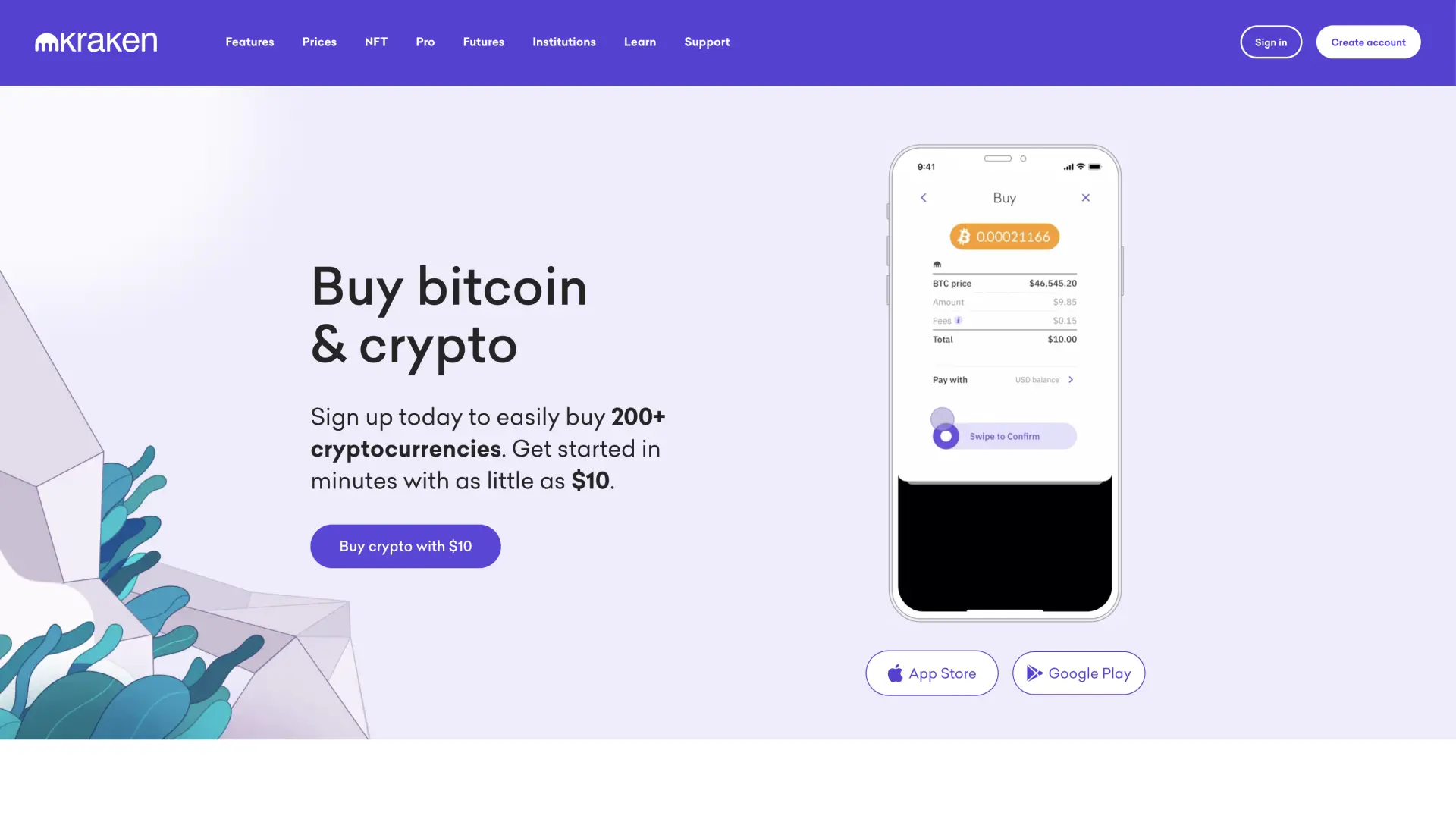
Kraken is massively popular worldwide, and traders in Singapore frequently use it. It's an all-in-one exchange with 425 assets that competes with Binance and Coinbase. However, Kraken has not obtained approval from MAS and doesn't offer SGD as an account currency. Instead, users will have to deposit/buy using USD or crypto.
Although Kraken lacks widespread fiat currency support, it caters to most Singaporean crypto enthusiasts. It offers a simple interface for managing your portfolio, buying or swapping crypto, and an advanced order-book exchange with multiple order types and TradingView integration. As it's not MAS-regulated, Kraken offers margin, futures, and staking.
Kraken charges spot trading fees of 0.25% / 0.40%, making it moderately expensive compared to other platforms in Singapore. Futures fees are 0.02% / 0.05%, which is about average. Kraken could be the top choice if you're looking for a well-respected international exchange that provides access to multiple markets and a wide range of assets in Singapore.
Pros
-
Users can fund Kraken with fiat currency
-
No restrictions on Singaporean users
-
Provides traders in Singapore with spot and futures access
-
Suitable for crypto novices and experienced traders
-
Feature-rich crypto exchange for users in Singapore
Cons
-
Not MAS-licensed
-
Doesn't support SGD deposits, withdrawals, or purchases
- Bitcoin
- Ethereum
-
Tether
83
No result
- Spanish
- English
-
French
4
No result
BTCC
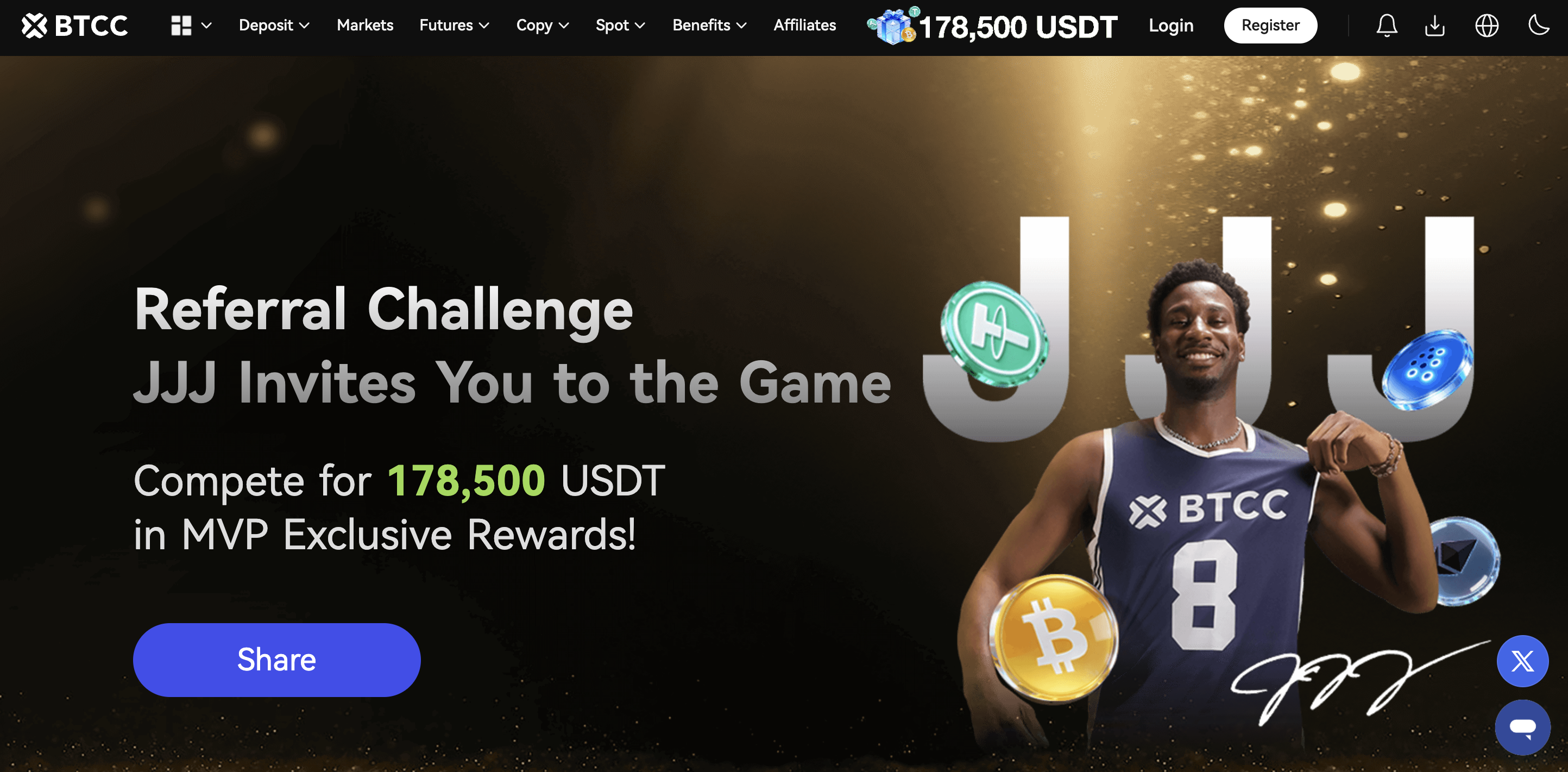
BTCC is a cryptocurrency futures trading platform founded in 2011 with offices worldwide. It’s a comprehensive platform covering both trading and investing. Users can purchase 395 assets on the spot market (BTC, major altcoins, and meme coins) and 376 USDT-denominated futures contracts, making BTCC versatile for traders.
Users can deposit funds via credit/debit card, Skrill, or Simple/MoonPay (third-party services that cover a wide range of payment methods and currencies). Alternatively, users can buy/sell USDT, BTC, SOL, or ETH directly with other users via the Peer-to-Peer (P2P) marketplace. Demo and copy trading cater to novices.
While BTCC is a fairly feature-rich trading platform, spot fees are high, starting at 0.3% (taker) / 0.2% (maker). Futures trading is much more competitively priced at 0.06% / 0.03%. With up to 500x leverage, BTCC is a solid choice for futures traders, but not investors.
Pros
-
Supports a reasonable selection of assets
-
Multiple options for buying/selling crypto
-
Demo and copy trading assist beginners
-
Supports a broad range of payment methods
-
High leverage limits
Cons
-
High trading fees
-
Unavailable in select regions
- Ethereum
- Tether
-
USD Coin
164
No result
- English
BuyUcoin
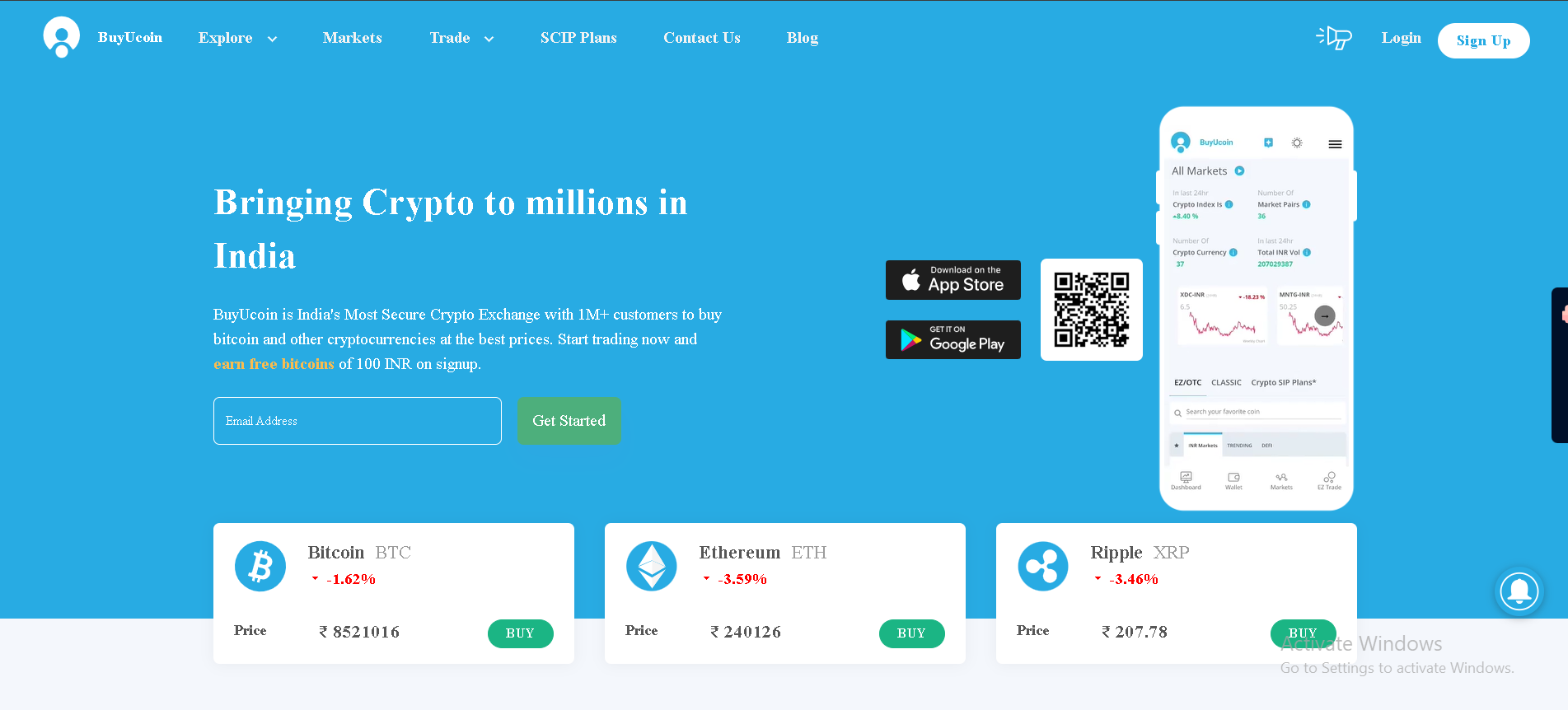
BuyUcoin is a leading Indian crypto exchange operating since 2016, serving over 1 million users. It was founded by Atulya Bhatt, Devesh Aggrawal, and Shivam Thakral to provide a convenient way for Indians to invest and trade crypto. It’s registered with the Financial Intelligence Unit - India (FIU-IND) and is based in Delhi.
While users may find BuyUcoin somewhat basic, as it lacks tools like futures trading, crypto loans, or bots, it offers a solid selection of 239 cryptocurrencies. However, some are not available to purchase on BuyUcoin. The exchange offers a basic line chart and a TradingView integration for advanced users. It offers an easy-trade tool and a spot exchange.
Outside of typical exchange features, BuyUcoin provides Systematic Crypto Investment Plans (SCIP) that involve buying regularly over extended periods. It also offers an NFT marketplace and Bitcoin rebates for trading.
BuyUcoin is a strong choice for Indian crypto investors as it’s registered with FIU-IND. Trading fees are reasonable at 0.24%, so it’s a top crypto exchange for local enthusiasts, but international investors can find more feature-rich exchanges.
Pros
-
Reasonable trading fees
-
Registered with FIU-IND
-
Good selection of assets
-
TradingView for advanced charting
-
Built-in NFT marketplace
Cons
-
Doesn’t have advanced features
-
Can only trade spot, not derivatives
- Bitcoin
- Ethereum
-
Tether
77
No result
- English

Zoomex
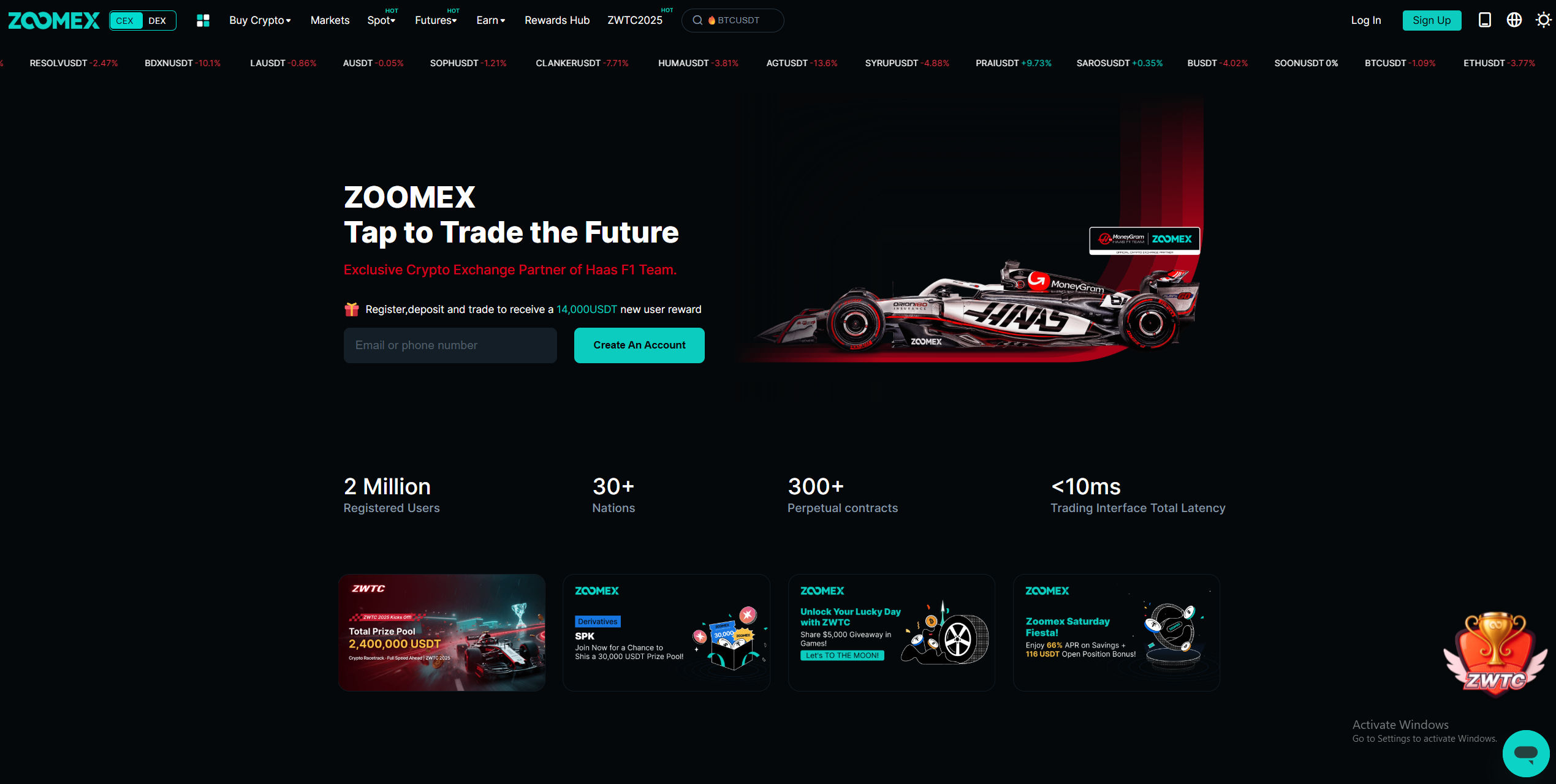
Zoomex is an all-in-one cryptocurrency exchange with 3 million users globally. It was founded in 2021 to create a platform that blends simplicity, ease of use, and speed. A specific headquarters is not listed, but Zoomex has partnered with the MoneyGram Haas F1 Team.
If you’re looking for the best crypto exchange for trading and want an alternative to mainstream platforms, Zoomex is an attractive option. Users can fund their accounts with fiat or crypto, trade 532 assets on the spot market, and access up to 1000x futures leverage.
A significant Zoomex benefit is having multiple ways to trade. The platform features a typical centralized trading experience, a Decentralized Exchange (DEX) for trading directly from your wallet, and a Peer-to-Peer (P2P) marketplace for trading directly with other users (although only one offer was available).
Zoomex is a top cryptocurrency platform. It handles sizable volume, boasts competitive fees (spot: 0.1%, futures: 0.02% / 0.06%), and offers a comprehensive feature set. It’s also registered as a Money Services Business (MSB) in the USA and Canada, making it a versatile and secure crypto exchange.
Pros
-
Registered as an MSB
-
Multiple ways to trade crypto
-
Access up to 1000x leverage
-
Good selection of assets
-
Support for fiat and crypto deposits
Cons
-
Mixed Trustpilot and Play Store reviews
-
Inactive P2P marketplace
- Bitcoin
- Ethereum
-
Tether
42
No result
- English
- Korean
- Japanese
Phemex
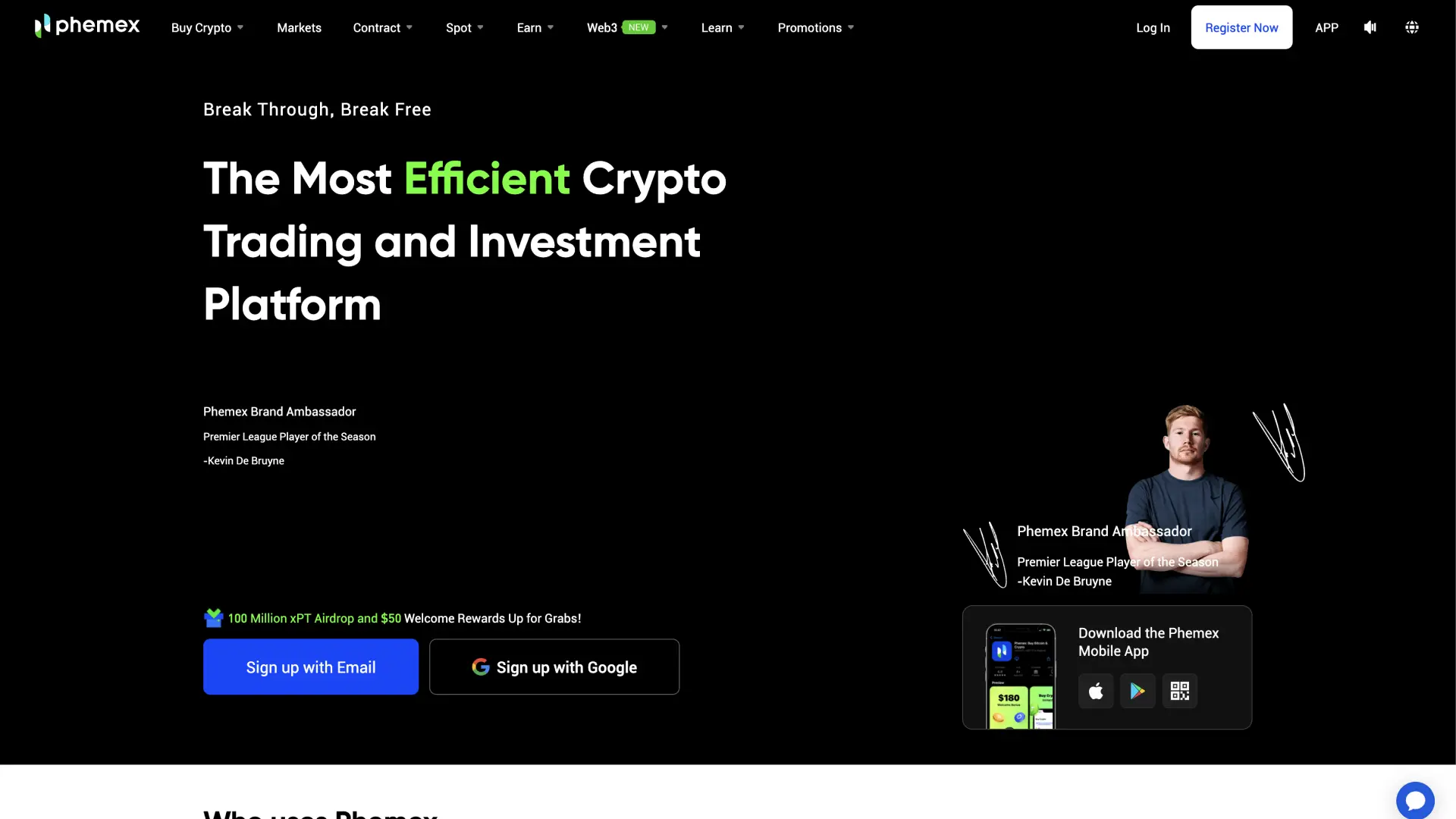
Phemex is a Singapore-based cryptocurrency exchange that launched in 2019. Known for its comprehensive offerings, it serves traders globally but excludes the US due to regulatory restrictions.
The platform supports 250+ cryptocurrencies and provides services like spot trading, futures with leverage up to x100, and staking. Fiat deposits are available through various methods, including credit cards.
Pros
-
Good variety of cryptocurrencies
-
Competitive trading fees
-
Registered as an MSB in the USA
-
Regularly discloses its proof-of-reserves
-
Many ways to trade (spot, futures, copy, P2P, etc)
Cons
-
Prohibited in some countries, including the UK and USA
-
Operates in a regulatory grey area
- Bitcoin
- Ethereum
-
Tether
79
No result
- English
- Japanese
-
German
2
No result

EXMO
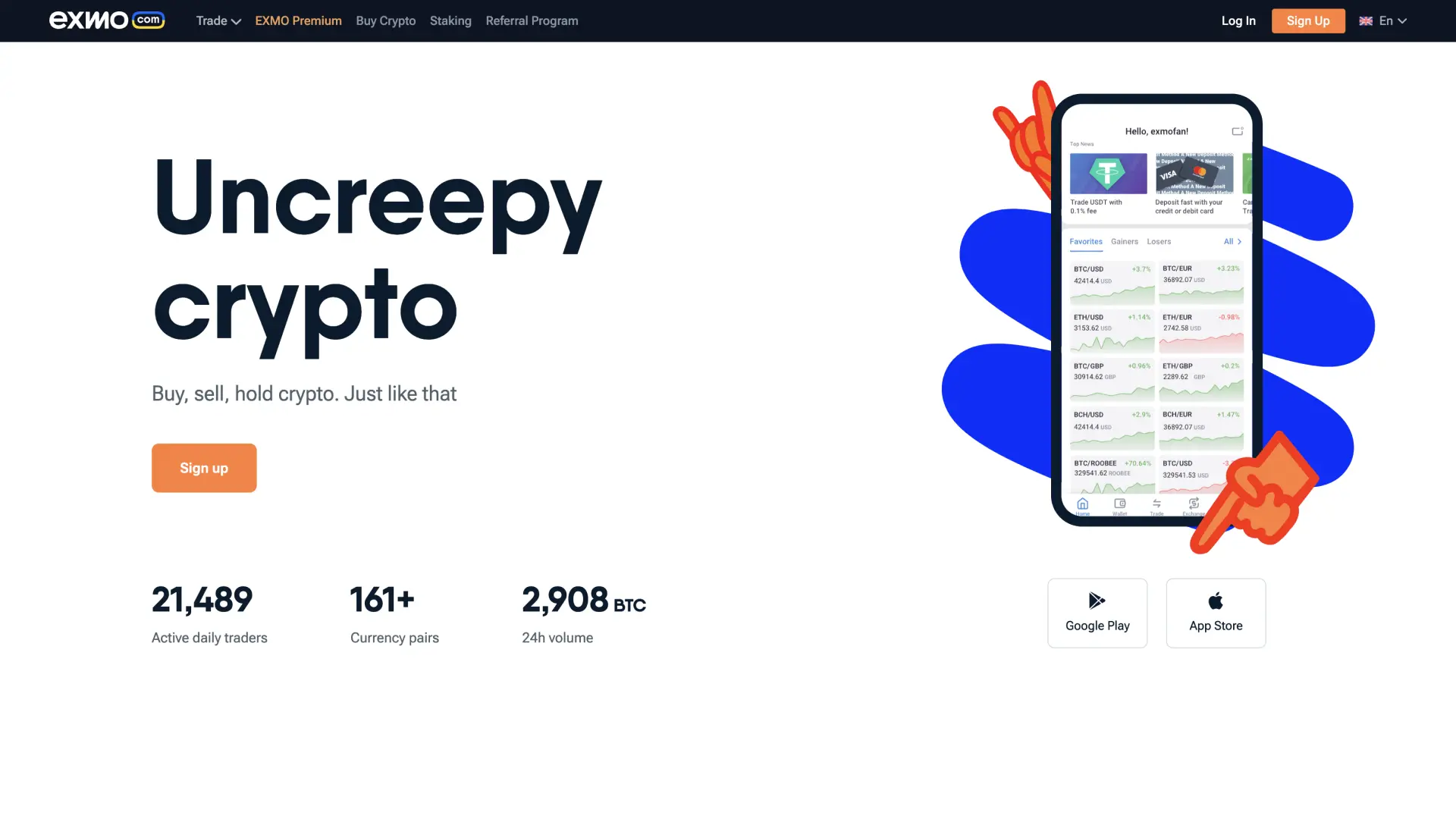
If you're seeking an alternative to the well-known brands we've listed, EXMO is a solid choice. It's a lesser-known crypto exchange, but it offers 95 cryptos and a varied feature set likely to appeal to traders in Singapore. Unfortunately, it doesn't provide SGD support. However, users can buy crypto with USD via bank transfer or AdvCash, but many face extra fees.
EXMO does not apply restrictions to people who reside in Singapore. They can access the simple trade tool to buy or sell dozens of assets with a single click. Singaporeans can also use EXMO's advanced trade interface to access an order book exchange with TradingView integration. A staking program is available, enabling users to earn rewards passively.
While it offers a solid suite of features, EXMO's trading fees are 0.1% (crypto-to-crypto), 0.2% (crypto-to-USDT), and 0.3% (crypto-to-fiat). Combined with its lack of SGD support, EXMO is best suited to people seeking a crypto trading platform who do not require a fiat on or off-ramp.
Pros
-
Simple interface and advanced trading modes
-
Competitive fees for crypto-to-crypto trades
-
Accepts Singaporean users
-
No restrictions on users in Singapore
-
Enables Singaporeans to buy crypto with USD
Cons
-
Doesn't support SGD
-
Not tailored to the Singaporean market
- Bitcoin
- Ethereum
-
Solana
39
No result
- English

Uniswap V2
Uniswap V2 is a decentralized exchange (DEX) operating on the Ethereum blockchain, launched in May 2020. It introduced significant improvements over its predecessor, such as direct ERC-20 to ERC-20 trading pairs, automated market maker (AMM) functionality, and flash swaps. Uniswap V2 allows anyone to provide liquidity to trading pools and earn a share of transaction fees, making it a popular choice for DeFi users.
The platform stands out for its security, transparency, and the ability to handle a vast number of trading pairs without relying on order books. But Uniswap V2 is subject to high Ethereum gas fees, especially during periods of network congestion, which can make trading expensive for smaller transactions. Some users also experience failed swaps due to low liquidity in certain pools, and the interface may be daunting for complete beginners.
Pros
-
Decentralized, non-custodial trading with no registration required
-
Supports a wide variety of ERC-20 tokens and pairs
-
Transparent and secure, with funds managed by smart contracts
-
Anyone can provide liquidity and earn fees
Cons
-
High gas fees on the Ethereum network, especially during peak times
-
Failed swaps are possible due to low liquidity in some pools
-
No customer support or recourse for failed transactions
-
May be complex for beginners unfamiliar with DeFi and self-custody
- Ethereum
- Tether
-
Build'N'Build
90
No result
- English
Deepcoin
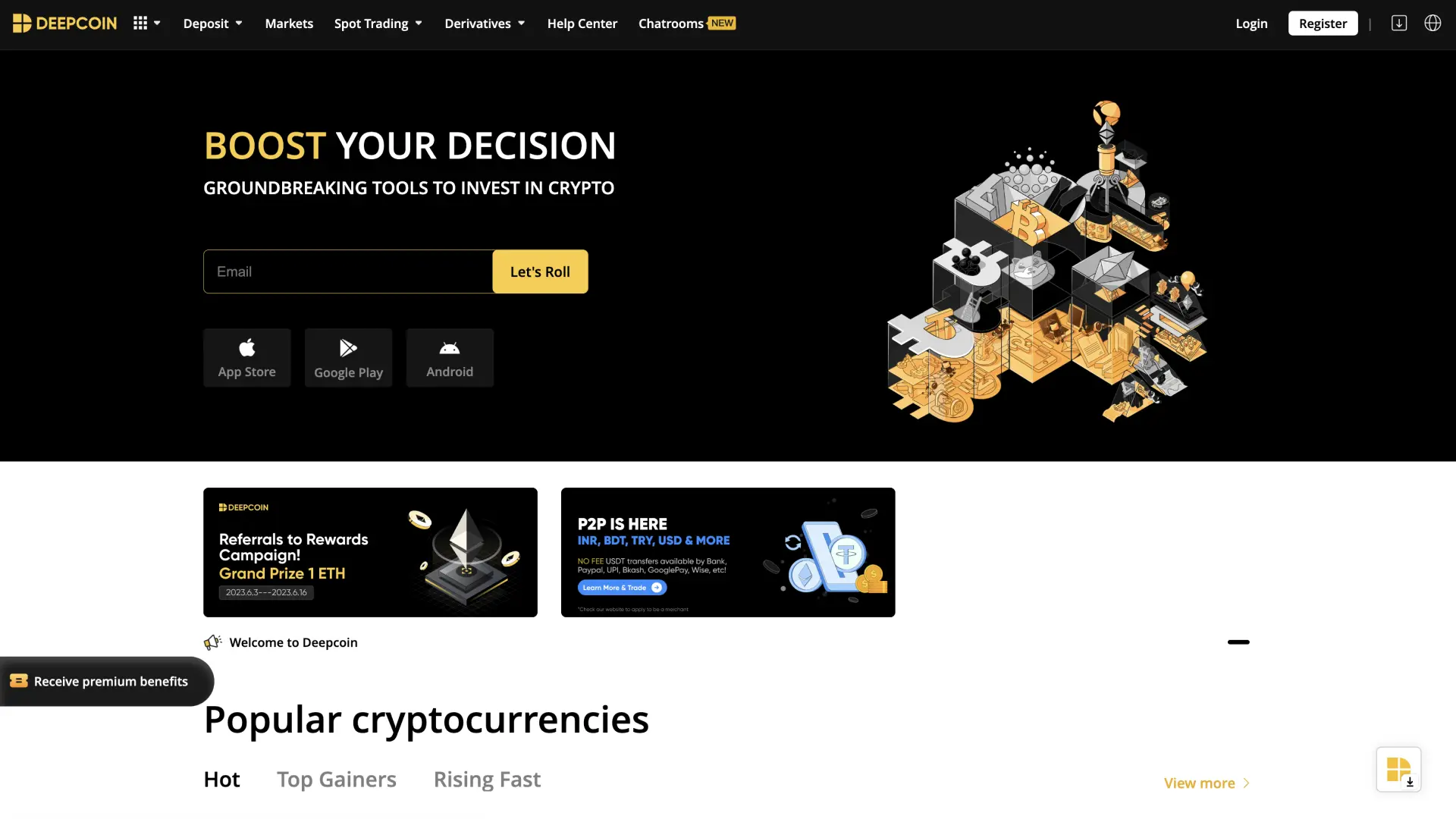
Deepcoin is a centralized cryptocurrency exchange established in Singapore in 2018. It has gained traction primarily in Asia but is accessible in over 20 countries, including the US, UK, Australia, and Canada. Deepcoin is particularly known for its derivatives trading, offering up to 125x leverage and supporting more than 100 cryptocurrencies. The platform is attractive to both new and experienced traders due to its advanced trading tools, such as split/merge positions and customizable take-profit and stop-loss options.
One of Deepcoin’s standout features is its flexible KYC policy: users can trade crypto-to-crypto without mandatory identity verification, though KYC is required for fiat transactions. The platform also provides its own wallet and mining pool, enhancing its ecosystem.
Pros
-
Wide range of supported cryptocurrencies
-
High leverage (up to 125x) for derivatives trading
-
No mandatory KYC for crypto-to-crypto trades
-
Advanced trading tools and a user-friendly interface
-
Proprietary wallet and mining pool
Cons
-
Mixed user reviews regarding withdrawals and support
-
Not regulated by major financial authorities
-
Some security and reliability concerns
- Bitcoin
- Ethereum
-
Tether
48
No result
- Chinese (Mandarin)
- Japanese
-
English
6
No result
LBank
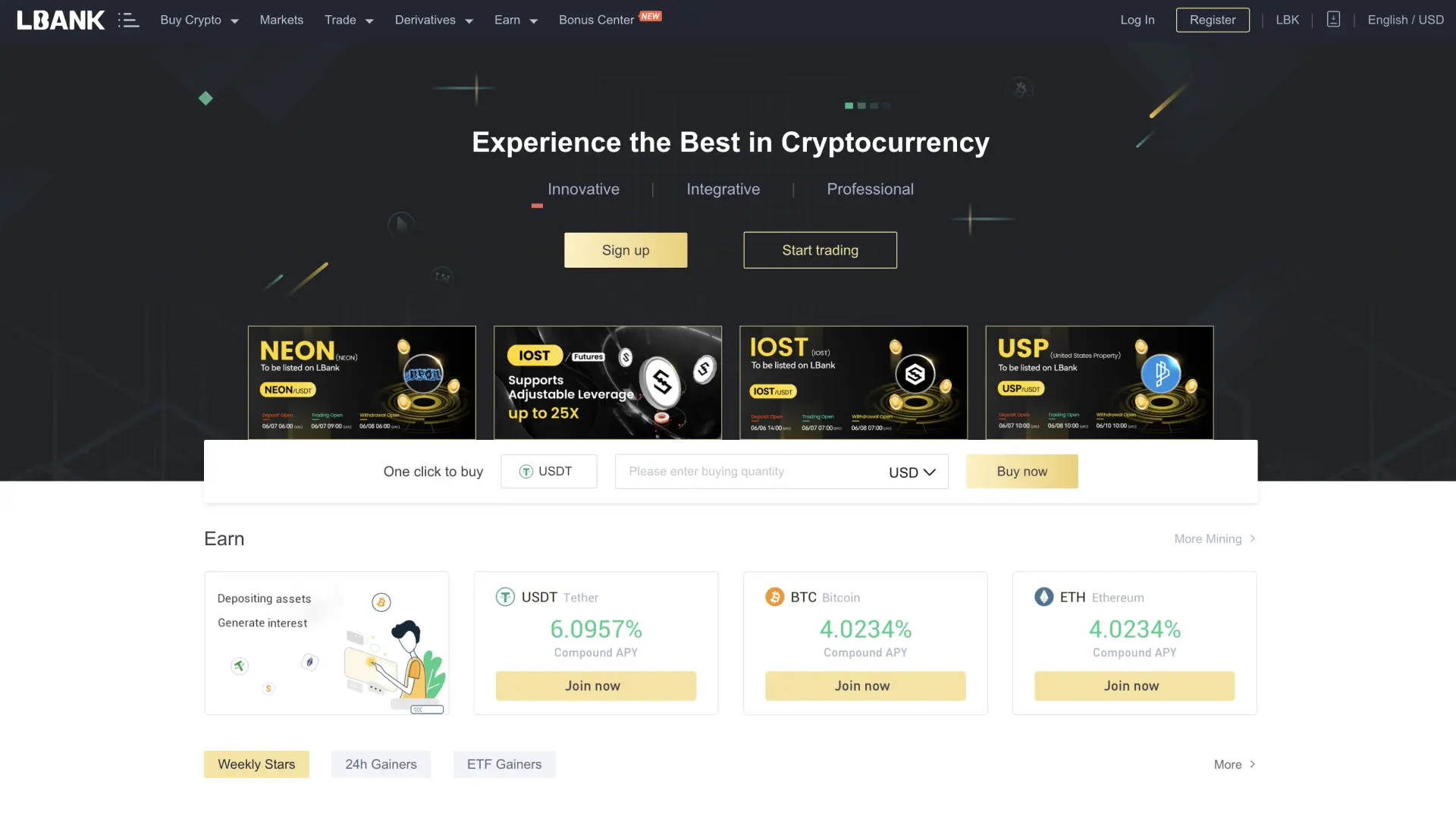
LBank is ideal for altcoin traders in Singapore. It offers an extensive range of 1,492 cryptocurrencies and holds licenses in multiple jurisdictions (albeit not Singapore). The all-in-one exchange offers an SGD-to-crypto on-ramp that supports credit/debit cards, Apple/Google Pay, and Revolut. Moreover, it uses the actual SGD exchange rate.
Singaporeans can access any of LBank's features without limits. The exchange lets users access the spot market, leveraged tokens, and futures contracts, giving traders in Singapore up to 200x leverage. LBank also offers copy trading and fixed/flexible staking products. It has integrated TradingView to ensure users have ample charting and analysis tools.
Users can trade crypto on LBank from 0% to 0.2%, while futures positions incur fees of 0.02% / 0.06%, which is cheaper compared to other Singapore exchanges we've looked at. As such, LBank is a well-rounded trading platform that caters to traders in Singapore seeking an SGD on-ramp and high leverage limits.
Pros
-
SGD on-ramp
-
Provides traders in Singapore with futures access
-
Higher leverage than other SG exchanges
-
Competitive fees for spot and futures trading
-
Multiple ways to pay with SGD
Cons
-
Only one tool for buying with SGD
-
Not MAS-approved
- Bitcoin
- Stellar
-
Cosmos
55
No result
- English
- Turkish
-
Polish
28
No result
Margex
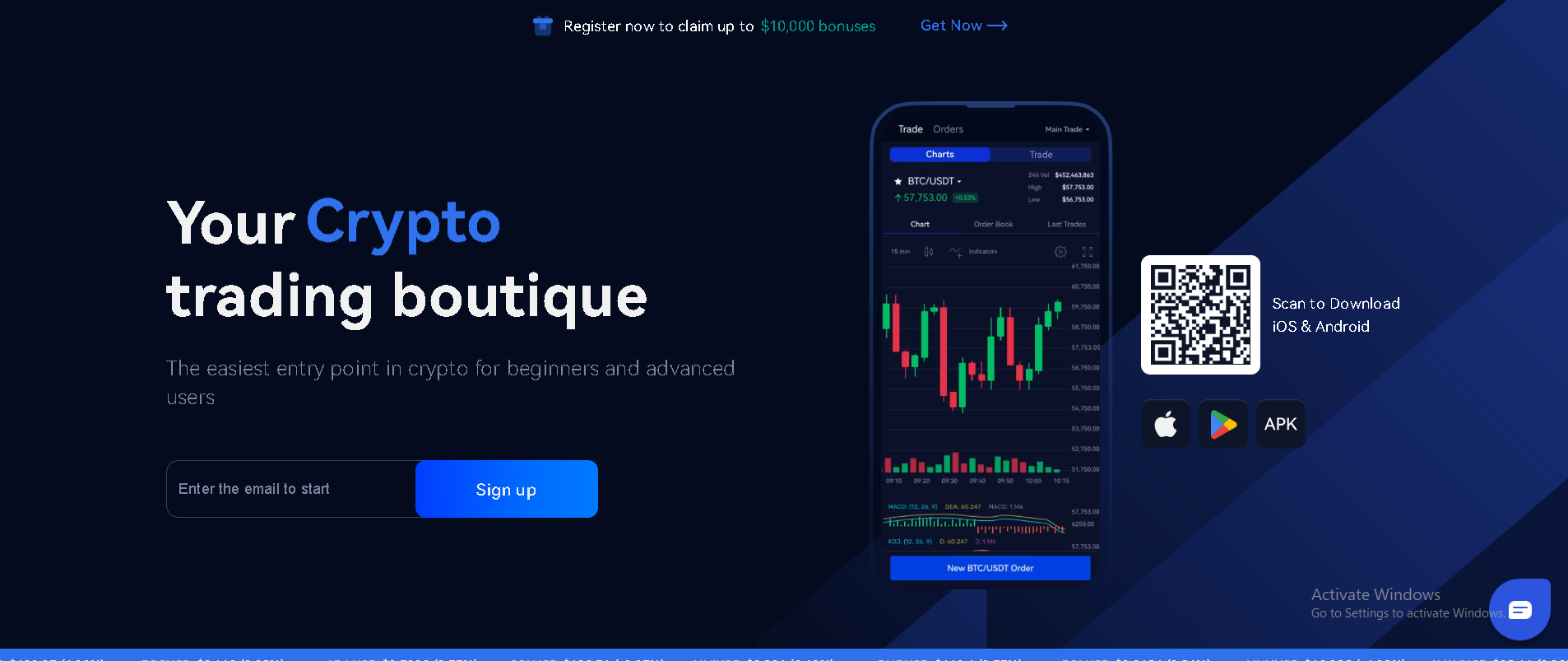
Margex is a cryptocurrency derivatives exchange established in 2019 and registered in Seychelles. It is designed for both novice and experienced traders who want access to leveraged trading on major cryptocurrencies.
The platform stands out for its intuitive interface, which makes it easy to navigate for beginners, while also providing advanced features like copy trading and staking pools with competitive yields. Margex allows users to trade perpetual contracts with up to 100x leverage and does not require mandatory KYC for basic account use, appealing to privacy-conscious individuals.
The platform is not available to U.S. residents and supports a more limited range of cryptocurrencies compared to larger exchanges. User feedback is generally positive regarding the platform’s ease of use and security, but there are occasional reports of withdrawal delays and concerns about the unregulated status.
Pros
-
Up to 100x leverage on major cryptocurrencies
-
No mandatory KYC for account creation
-
User-friendly and intuitive interface
-
Copy trading and staking features are available
-
Strong security measures: cold storage, 2FA, withdrawal whitelisting
-
Transparent and competitive trading fees
Cons
-
Not regulated; registered in Seychelles
-
Not available to U.S. residents
-
Limited selection of supported coins and no spot trading
-
Occasional withdrawal delays due to security checks
-
Some features may be too basic for advanced traders
- Bitcoin
- Ethereum
-
Build'N'Build
42
No result
- English
Why Trust Webopedia?
Each of the platforms that we recommend has been thoroughly researched, evaluated, compared, and tested firsthand. We base our evaluations on user experience and performance in several key areas, including ease of use, security, liquidity, affordability, and others.
How to Choose a Good Crypto Trading Platform in Singapore?

Finding a reliable Singapore crypto exchange is one of the most important steps and a strategic choice for your success as a crypto trader. With the right exchange, you can identify emerging trends before anyone else, trade quickly, smoothly, and efficiently, and maximize your returns.
A bad exchange, on the other hand, can scam you, steal your funds, or even shut down without giving you any prior notice.
While assessing the overall quality of a crypto exchange takes quite a bit of research, as a user, you can narrow your options down by evaluating platforms on several basic criteria, including:
- License & Regulation Compliance
- SGD Payments
- High Standard Security
- Minimal Trading Fees
- High Liquidity
- Modern Trading Software
- 24/7 Customer Support
- Large Choice of Crypto Assets
- Any Kind of Insurance
- Reputation and History
In the sections that follow, we will break down each of these factors and explain why they matter to help you understand what you need to look for when choosing the best SG crypto exchange for your trading needs.
License & Regulation Compliance
One of the most important things you should be looking into when researching crypto exchanges in Singapore is their licensing and registration. Given that Singapore is a country where crypto is regulated, all platforms that want to offer crypto trading services must hold the appropriate licenses and approvals for legitimate operation.
Crypto exchange licenses are stamps of approval granted by the financial authorities only to those platforms that exhibit adequate security, transparency, and financial stability in their operations. In other words, trading on a licensed exchange is not just about staying compliant, but a proactive way to keep your funds and personal information safe and secure.
SGD Payments
Another defining feature of a top Singapore crypto exchange is native support for the Singapore dollar (SGD). Considering that the SGD is not the most widely used currency in the world, the mere presence of direct support for it on the exchange should indicate the platform’s dedication to serving the Singaporean market.
Such localization often grants unique benefits to local traders, such as support for region-specific payment methods and e-wallets commonly used by Singaporean users. It also means the exchange allows users to deposit fiat directly in SGD and avoid those pesky conversion steps and the extra fees that come with them.
High Standard Security
When joining a crypto exchange, users agree to share certain sensitive information and hand over custody of their funds to the platform. As such, security should be a natural concern when choosing which SG crypto exchange you want to join.
To ensure that the platform you are joining takes security seriously and does well to create a safe environment for its traders, you should look for an exchange that offers the following security measures:
- Two-factor authentication
- Biometric verification
- End-to-end encryption
- Security key integration
- Options for cold storage
- Suspicious activity alerts
- Anti-phishing mechanisms
- Withdrawals whitelisting
These security features can help you protect your data from breach attempts and keep your funds as safe as possible.
Minimal Trading Fees
Beyond the fundamental concerns like trustworthiness and security, you also need to think about your profitability when looking for the best crypto exchange in Singapore. In addition to making the wrong trading decisions, trading fees are the second biggest adversary that can diminish your returns when trading cryptocurrencies.
This is why you want to try your best to minimize their effect by carefully choosing a crypto exchange that charges reasonable trading fees. Furthermore, you also want to find an exchange that uses a fee structure that works best for your trading style, whether it is a flat fee, taker/maker, or a tiered trading fee model.
High Liquidity
Liquidity is the ease, or difficulty, with which exchanges can execute trades in real-time at the expected market price. This is because centralized crypto exchanges rely on a matchmaking system to pair buy orders with matching sell orders. To be able to match everyone’s orders, exchanges need an active user base that consistently generates large trading volumes.
- Highly liquid exchanges can easily fill your order and execute your trade quickly at the current market price.
- Exchanges with low liquidity may not have the necessary trading volume to fill your order immediately, so they may postpone the trade execution until a match is found. Alternatively, they may also adjust the execution price to match what’s available in the market and execute your trade at a less favorable rate.
To avoid having your trades delayed or paying more than expected, you should try to find a Singapore crypto exchange with deep liquidity.
Modern Trading Software
In addition to reliability and cost-effectiveness, the best crypto exchanges in Singapore would also provide you with top-tier usability and functionality to support your trading. This involves a neatly designed, user-friendly trading interface that offers all the necessary features to analyze the market, manage orders, and execute trades efficiently, including:
- An easy-to-use platform, compatible with both PCs and mobile devices
- Access to market data in real-time, with indicators and charting tools
- Support for multiple order types, including stop-loss, trailing stop, and take-profit orders
- Tools for portfolio tracking and management, including performance, history, etc
- Options for customization and personalization
Having access to a well-rounded set of features will not only make things easier and more convenient for you but also give you the necessary insights to understand market trends and support your decision-making when trading.
24/7 Customer Support
Another important but often overlooked consideration when choosing the right SG crypto exchange for your needs is having access to a responsive and reliable customer support team. Errors, bugs, and glitches are unavoidable on any digital platform, and having no one to help you when encountering one can be extremely frustrating.
Especially when running into an issue associated with payments, withdrawals, or anything related to their funds, users can instantly go into panic mode. For this reason, it is important that the exchange you trade on has the means to quickly respond to your problem and come up with an effective solution that will get you back on track.
Large Choice of Crypto Assets
While as a beginner, you may be only interested in trading one or two popular coins, over time, as you gain experience, your interest may broaden, and your strategy may evolve.
To support your growth and give you room to adapt, the best crypto exchange in Singapore must list a diverse variety of coins, including:
- Major cryptocurrencies like BTC and ETH
- Popular altcoins like XRP, SOL, MATIC, BNB, and ADA
- Widely used stablecoins like USDT and USDC
- Trending memecoins like DOGE, PEPE, and SHIB
- DeFi tokens like LINK, DAI, AAVE, and UNI
- Utility coins like DOT, ATOM, and XMR
Additionally, the exchange should constantly add new coins to its listing catalog to reflect the emerging trends and shifts in market demand.
A large part of growing as a trader is discovering new investment opportunities and hedging your positions in times of market volatility, so having access to a wide range of coins can be a key advantage.
Any Kind of Insurance
For crypto exchanges, insurance is a luxury, rather than the standard. Unlike traditional financial institutions, crypto trading platforms are not legally required to provide any kind of insurance coverage to their users. Most platforms simply disclose the risks and advise their users to activate all the security measures to protect their accounts from theft.
Only the very best crypto exchanges in Singapore maintain emergency funds that can provide any sort of recourse to users in worst-case scenarios. However, we must point out that not even these platforms cover individual hacks or breaches due to credential mismanagement, so be sure to understand their policies and protect your account.
Reputation and History
At last, but certainly not least, checking the background and history of the platforms is another essential step when evaluating crypto exchanges in Singapore.
- When was it launched?
- How long has it been in operation?
- Who are its founders?
- Has it dealt with security breaches in the past?
- If it has, how did it respond and recover?
- What do its users say about it?
These are just some of the most important questions you might want to ask around and conduct research on before you decide to trust a crypto exchange with your money.
Crypto Apps in Singapore – Why Are They Important?
In addition to all the features we mentioned earlier, how well the platform does on mobile is also an important factor you need to consider when choosing a crypto exchange.
Even though most platforms nowadays are available on mobile, only the top crypto exchanges in Singapore offer fully optimized, dedicated mobile apps that replicate the full desktop functionality and deliver a smooth, intuitive trading experience on mobile devices.
By using these mobile crypto apps, users can:
- Enhance their account’s security with biometric verification (face scan, fingerprint ID)
- Securely and conveniently sign transactions by scanning QR codes with their cameras
- Monitor market trends on the go and react quickly to shifts using one-tap trading
- Set custom alerts on important events like price movements and order executions
In other words, the mobile apps of the best exchanges not only allow traders to trade remotely, but also bring additional value to their trading. They introduce features that are not available or not as practical on the desktop, and are a core part of any successful trader’s setup.
How To Register on a Singaporean Crypto Exchange

If you’ve already looked into the best crypto exchanges in Singapore and found one that you’d like to join, all that is left is to register, log in, and start trading. If you need help getting started, you can find detailed instructions below on how to sign up with any exchange and add funds to your balance.
Step 1 – Signing Up
- Go to the exchange’s official website or download its official app
- Click or tap on the “Sign Up” or the “Register” button
- Follow the onscreen instructions and enter the necessary information to create your account
Step 2 – Activating Your Account
- In most cases, the exchange will require you to activate your account before it becomes usable
- Check the inbox of your email for a confirmation email sent by the exchange
- Click or tap on the link in the confirmation email to activate your account
- Go back to the exchange’s homepage and log in
Step 3 – Verifying Your Identity (KYC)
- In addition to activating your account, most exchanges will also like to verify your identity before they allow you to use all of their features
- Initiate the KYC verification process from the exchange’s platform
- Submit the necessary information for confirmation and await your approval
Step 4 – Protecting Your Account
- Before you start making transactions, it is a good idea to maximize the security of your account
- Go to the security settings and enable two-factor authentication
- Go to the login preferences and enable biometric verification
Step 5 – Funding Your Account
- Deposit either cryptocurrencies or fiat currencies into your account to start trading.
After depositing funds to your account’s balance, you’ve completed the initial setup, and now you’re finally ready to make your first crypto trade.
Crypto Taxes in Singapore – What You Need to Know

Singapore is widely recognized for its efficient and business-friendly tax laws, applicable to both individuals and corporations. The same pragmatism and business-mindedness also apply to Singapore’s crypto tax laws. While crypto activities in Singapore are not completely tax-free, they are still very lenient compared to many other countries.
To help you understand the taxable events, tax rates, and standard exceptions in Singapore’s crypto taxation, we created this table that breaks down all the essential information at a glance.
| Crypto Activity | Type of Tax | Tax Rate | Additional Notes |
|---|---|---|---|
| Long-Term Holding (Investing) | CGT | 0% | There is no capital gains tax in Singapore |
| Short-Term Trading/frequent trading | Personal/Business Income Tax | 0%–24% (progressive) | Taxed if your trading resembles business activity (frequency and volume) |
| Receiving Crypto as Payment for goods and services | Personal/Business Income Tax | 0%–24% (progressive) | Taxed if you receive a crypto payment for selling goods or services |
| Earning Staking/Lending Rewards | Personal/Business Income Tax | 0%–24% (progressive) | Taxed if the rewards become a consistent source of income |
| Earning Mining Rewards | Personal/Business Income Tax | 0%–24% (progressive) | Taxed if the rewards become a consistent source of income |
| Using Crypto for Purchases | GST | 9% on goods/services | Purchases with digital payment tokens are exempt from GST |
| NFTs/non-DPT tokens | Income tax/GST (case-by-case) | Standard income tax & 9% on goods/services | Many NFTs do not qualify as DPTs, so their supply can be fully subject to GST. |
In simple terms, engaging with crypto out of curiosity, investing in a single coin, or setting up a small mining operation at home is not taxable in Singapore. However, trading professionally, selling goods and services for crypto, or launching a mining farm is taxable.
Depending on the scale of your operation, you may be subject to personal or business income tax on your crypto activities.
For the most accurate information, we strongly recommend consulting a professional tax advisor familiar with Singapore’s cryptocurrency tax regulations.
How to File Taxes on Crypto in Singapore

As we just established, Singapore does not impose capital gains tax on its taxpayers, but there are still taxable events related to crypto that may subject you to taxation. If you need to file crypto taxes, you may find the simple step-by-step guide below helpful:
Step 1 – Determine if Your Crypto Activity Is Taxable
Taxable events may include:
- Trading frequently and generating large volumes
- Earning a steady and consistent income
- Running professional-level operations
Step 2 – Record All Your Crypto Transactions
Keep detailed records of information like:
- Transaction dates
- Type and quantity of crypto involved in the transaction
- Value of the transaction in SGD
- Purpose of your transaction
Step 3 – Calculate Your Taxable Income
Using a fair market value, add up your earnings from:
- Profits from trading
- Payments received in crypto
- Staking, lending, and mining rewards
Step 4 – Report Income on Your Tax Return
Log in to myTax Portal using SingPass. Declare your crypto-related income under the correct category
- Other Income in Form B or B1 for individuals
- Trade income in Form B, B1, or Form C for businesses
Step 5 – Submit Your Tax Return by the Deadline
- Check out the official IRAS website for the latest tax filing deadlines
- File on time to avoid penalties and ensure compliance
Once again, if you think you need some help with questions about taxation or your reporting obligations, be sure to consult a professional tax advisor.
Final Tips
Finding the best crypto exchange in Singapore is not about discovering the most popular option, but rather, matching the platform’s qualities with your personal needs. While essentials like reliability, transparency, security, and affordability should always be prioritized, ultimately, you will make the final choice based on your own taste and preferences.
Frequently Asked Questions
Which crypto is legal in Singapore?
All of the cryptocurrencies listed on crypto exchanges licensed for operation in Singapore are legal to buy and own. Unlike in some other countries, the MAS, which is the official crypto authority in Singapore, does not publish a list of legal cryptocurrencies but rather regulates the platforms that offer crypto trading services.
Is Binance legal in Singapore?
No, as of April 2025, Binance is not licensed for operation under the Singaporean jurisdiction. What’s more, the exchange has not even announced any plans to apply for a license and make its presence felt in the Singaporean crypto market.
Which bank is best for crypto in Singapore?
According to many crypto traders, DBS Bank is the most crypto-friendly bank in Singapore. The bank operates the DBS Digital Exchange and offers services like crypto trading, custody, and tokenized asset management. Additionally, DBS supports instant SGD deposits and withdrawals for crypto exchanges through its PayNow and FAST payment systems.
Which crypto platform is best in Singapore?
There are a number of top-tier crypto exchanges in Singapore that hold the necessary licenses and permits for a legitimate operation, including Coinbase Singapore, OKX, Gemini, Crypto.com, Independent Reserve, and Coinhako. Your best option is the exchange that best suits your trading style, experience level, and investing goals.


