- Key Takeaways
- The Best Crypto Exchanges In Nigeria Are
- Why Trust Us?
- How to Choose a Good Crypto Trading Platform in Nigeria?
- The Importance of an App for Nigerian Crypto Exchanges
- How To Register on a Crypto Exchange in Nigeria
- Crypto Taxes in Nigeria – What You Need to Know
- Final Tips
- Frequently Asked Questions
- You May Also Like
20 Best Crypto Exchanges & Apps in Nigeria 2026

- When you click links on this page, we may earn an affiliate commission. By using this website you agree to our terms and conditions and privacy policy.
- Participation in online gambling may be illegal in your country and is subject to age restrictions (18, 19, or 21, depending on the jurisdiction). Verify legality and age requirements before participating. Learn more
The best crypto exchanges in Nigeria mostly suitable for your trading style and experience level are truly well-known, but do you know that there are hidden gems that are better and offer more perks to first-time users?
We have done the research, so you don’t have to. We have asked around and personally tested dozens of platforms, and our expert reviewers have finalized their shortlist.
In this article, we’ll present you with our picks for the top crypto exchanges in Nigeria and examine their offerings, features, and strengths.
We’ll also highlight the key considerations and factors you want to look out for when choosing a crypto exchange, show you how to join an exchange once you find it, and even discuss crypto taxation in Nigeria.
Key Takeaways
- The best crypto exchanges in Nigeria are Kraken, Bitunix and Deepcoin.
- Choosing the right crypto exchange is an important decision that can greatly impact your overall trading activities.
- One of the best ways to focus your search on great exchanges is to only look at licensed crypto trading platforms (Internationally or locally).
- Exchanges that support NGN deposits are more likely to offer services tailored to the local needs of Nigerian traders.
- To reduce the risk of hacking, consider trading on an exchange that provides a variety of advanced security measures.
- To trade at the best possible prices and execute your orders quickly, be sure to trade on a highly liquid exchange.
- A truly great crypto exchange will provide you with modern trading software that is easy to use and offers many tools and features.
The Best Crypto Exchanges In Nigeria Are



MEXC
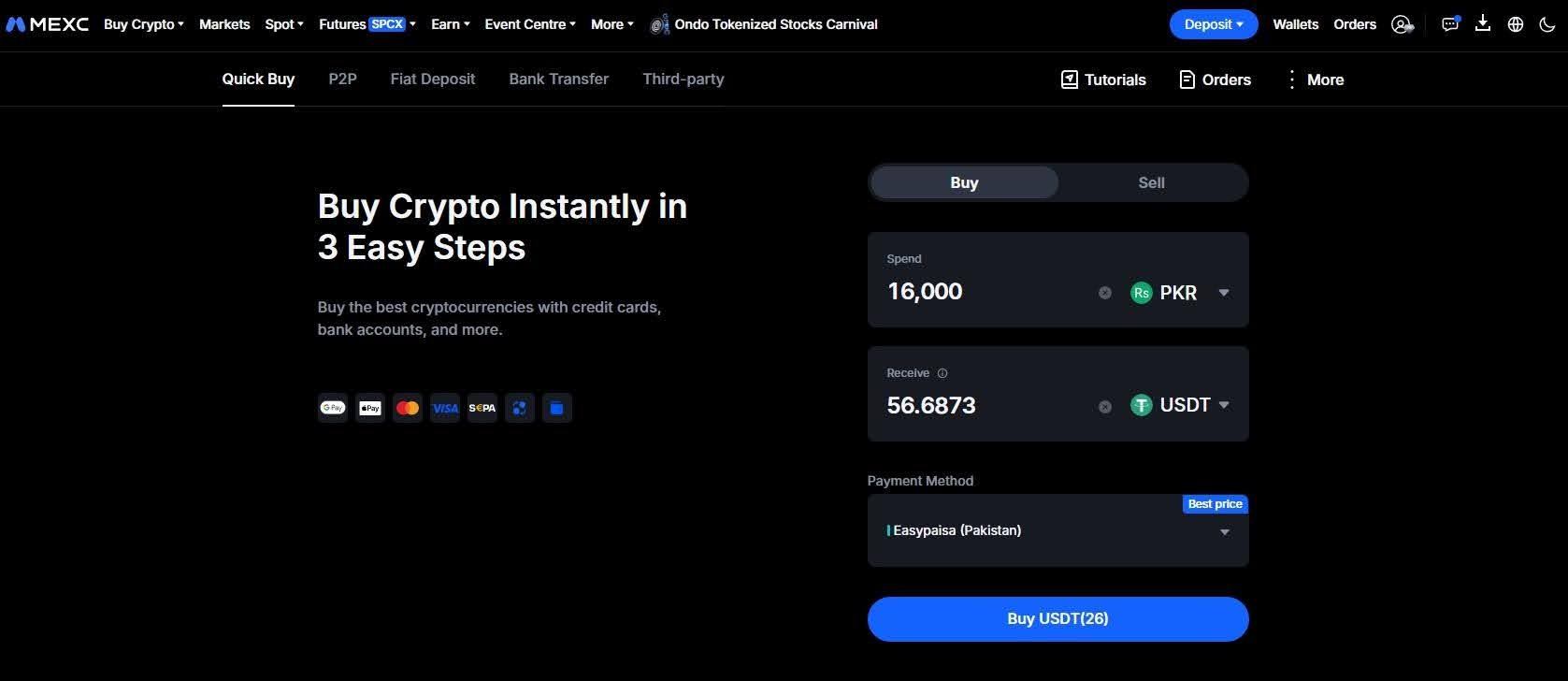
MEXC is tailored for the Nigerian market, with users in the region having full access to the platform’s features. There are also options for Nigerian English, and users can set NGN as their account currency, simplifying portfolio management by eliminating the need to check exchange rates.While NGN deposits are unsupported, MEXC lets users buy crypto with Nigerian Naira via the beginner-friendly 'Quick Buy' tool. Alternatively, MEXC's Peer-to-Peer (P2P) lets people buy and sell crypto from others in a decentralized manner. It supports NGN and local payment methods, including PalmPay and Kuda Bank, which are regionally popular.
Users can trade 2,700+ spot pairs and 800+ futures pairs with up to 500x leverage. On-chain trading is popular among younger Nigerians and is fully available on MEXC's DEX+, while MEXC's yield-generation products include on-chain staking and offer up to 600% APR.
Users can also access copy trading, tokenized US stocks, and trading bots, expanding their trading options. MEXC’s Zero Trading Fee Fest offers 0% maker and taker fees on selected spot and futures pairs. Standard fees are typically 0% maker and 0.05% spot taker, or 0.02% futures taker, though rates may vary by region, VIP level, pair, or promotion.
MEXC is the best crypto exchange in Nigeria. While the fee structure is slightly confusing, it's cheaper than other Nigerian exchanges we've reviewed. It provides access to diverse funding options, a wide range of assets, and US financial markets, making it a strong choice for Nigerian traders.
Pros
-
Lowest trading fees
-
Users can access significant leverage
-
Many NGN-native funding methods
-
Provides access to a wide range of assets
-
Lots of ways to trade
Cons
-
Fees vary by asset
-
Cannot deposit NGN
- Shiba Inu
- Bitcoin
-
PAX Gold
72
No result
- English
- Turkish
-
Vietnamese
5
No result
Bitunix
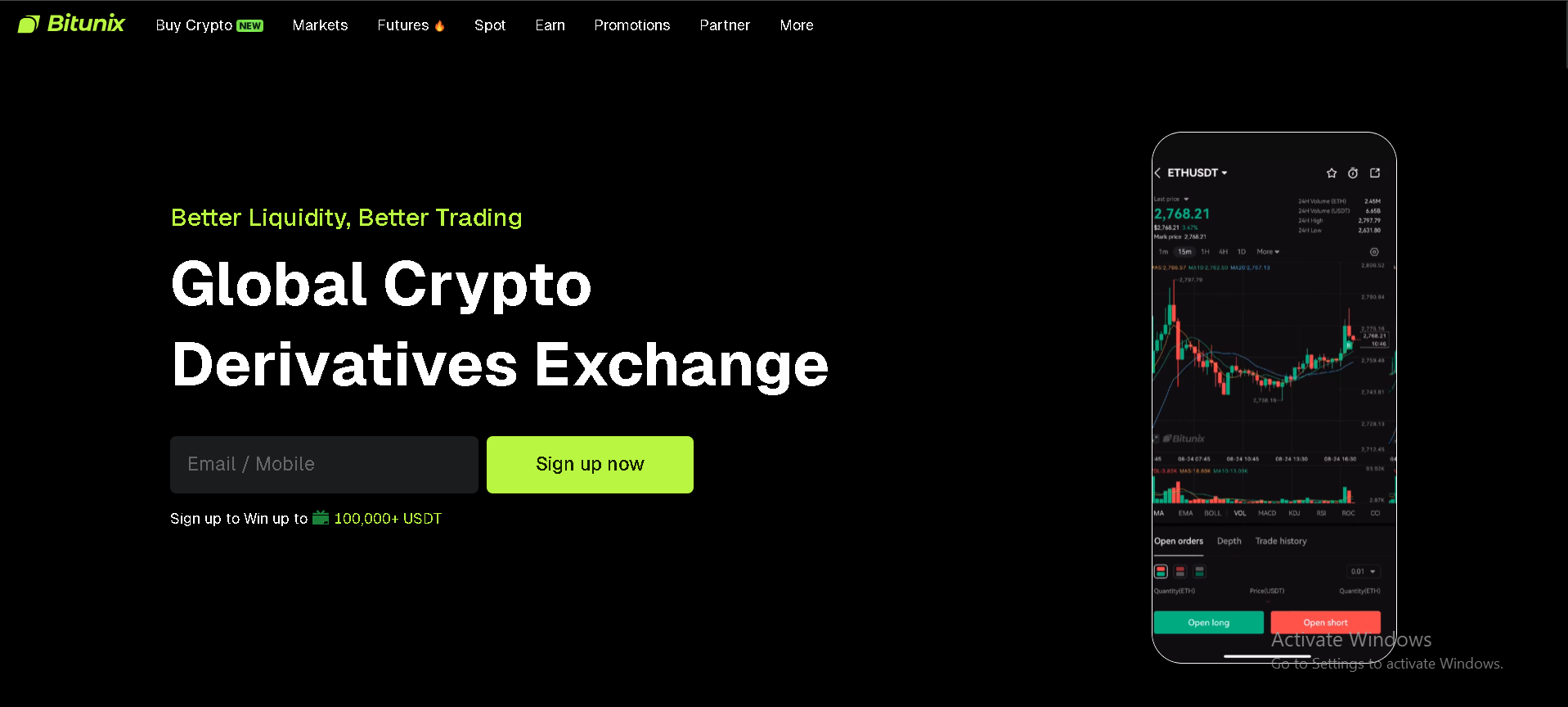
Bitunix is a crypto exchange specializing in derivatives trading. It was founded in 2022 by Aaron Lee with the goal of building a secure futures trading-focused platform suitable for novices and experienced traders. Headquartered in Saint Vincent, Bitunix is a regulated exchange with a Money Services Business (MSB) license with the US Financial Crimes Enforcement Network (FinCEN).
Users can purchase crypto directly with seven fiat currencies using a debit or credit card. Alternatively, Bitunix has integrated third-party service providers that support buys with more currencies and payment methods, such as bank transfer and Revolut. Users also have access to a Peer-to-Peer marketplace for decentralized trading.
Bitunix offers 414 futures contracts with up to 125x leverage and 501 spot assets. It provides flexible crypto staking, dual-investment products, and copy trading. It also offers a crypto conversion tool and a recurring buy system. Fees are 0.08% / 0.1% (spot) and 0.02% / 0.06% (futures), which is reasonable compared to other crypto exchanges.
Bitunix is a reasonably well-equipped exchange catering to derivatives and spot traders. It boasts competitive fees and a good range of assets, but it lacks certain advanced features like trading bots and crypto loans. Thus, it’s best suited to spot and derivatives traders seeking a cheap platform, while those seeking a general feature set will likely prefer an alternative.
Pros
-
Regulated exchange
-
Offers a good selection of assets
-
Spot and futures trading with high leverage
-
Competitive trading fees
Cons
-
Lacks specific advanced features
-
The fiat on-ramp is restricted in countries like the UK
- Bitcoin
- Ethereum
-
Tether
78
No result
- English
- Spanish
-
Farsi
3
No result
BTCC

BTCC is a cryptocurrency futures trading platform founded in 2011 with offices worldwide. It’s a comprehensive platform covering both trading and investing. Users can purchase 395 assets on the spot market (BTC, major altcoins, and meme coins) and 376 USDT-denominated futures contracts, making BTCC versatile for traders.
Users can deposit funds via credit/debit card, Skrill, or Simple/MoonPay (third-party services that cover a wide range of payment methods and currencies). Alternatively, users can buy/sell USDT, BTC, SOL, or ETH directly with other users via the Peer-to-Peer (P2P) marketplace. Demo and copy trading cater to novices.
While BTCC is a fairly feature-rich trading platform, spot fees are high, starting at 0.3% (taker) / 0.2% (maker). Futures trading is much more competitively priced at 0.06% / 0.03%. With up to 500x leverage, BTCC is a solid choice for futures traders, but not investors.
Pros
-
Supports a reasonable selection of assets
-
Multiple options for buying/selling crypto
-
Demo and copy trading assist beginners
-
Supports a broad range of payment methods
-
High leverage limits
Cons
-
High trading fees
-
Unavailable in select regions
- Ethereum
- Tether
-
USD Coin
164
No result
- English
WEEX
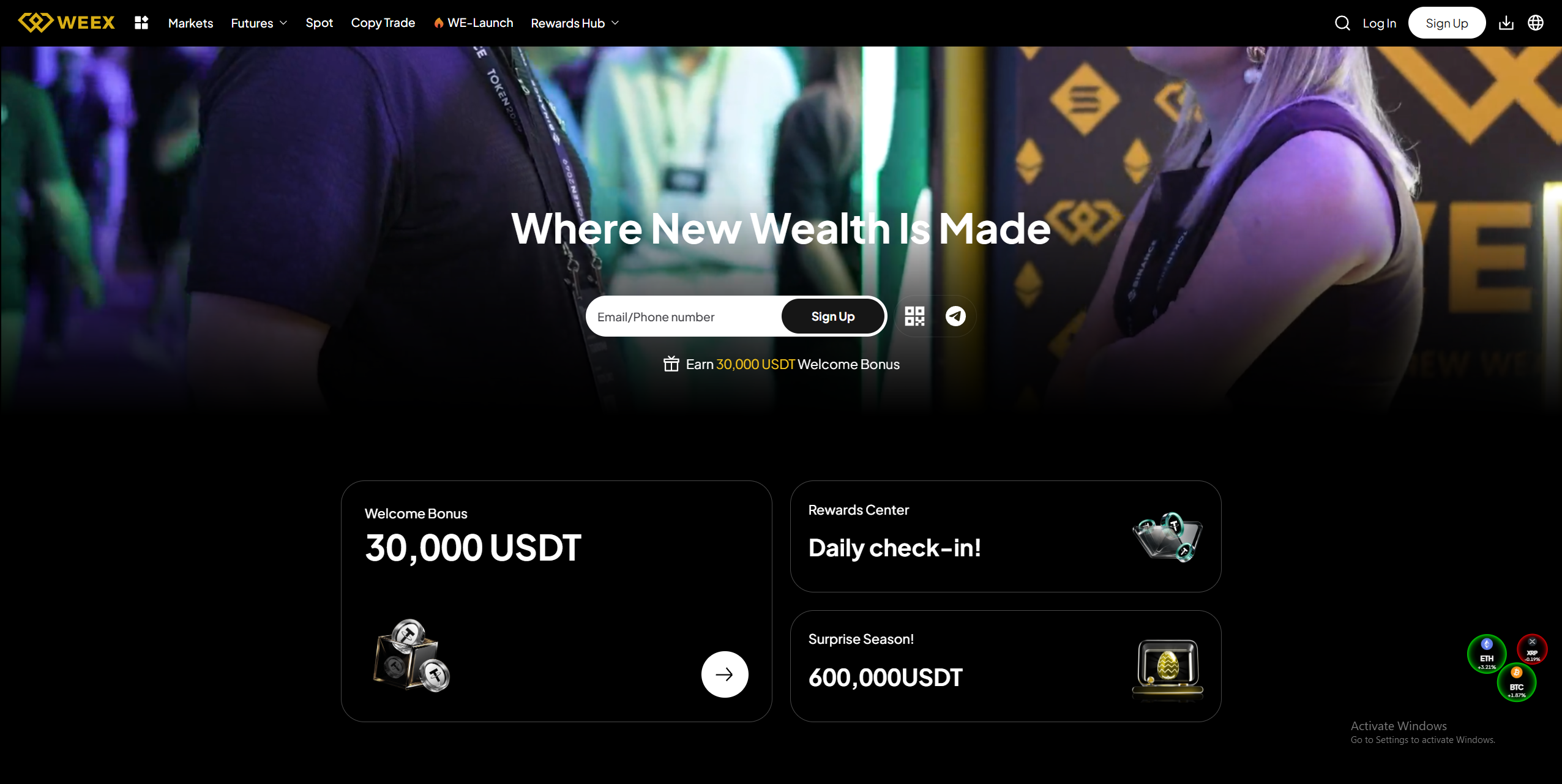
WEEX is a global crypto exchange founded in 2018 that serves more than 2 million users. It offers multiple trading options, including spot and futures markets. However, users are restricted to using crypto for payments and withdrawals, as they cannot buy with or deposit fiat currency. The exchange is registered as a Money Service Business in Canada and the US.
While WEEX is a relatively bare-bones exchange in terms of features, it hosts 971 cryptocurrencies and offers copy and demo trading functionality. It also has a rewards hub offering various trading and airdrop promotions. WEEX offers zero maker fees and 0.1% taker fees on most trading pairs. However, some are subject to a 0.1% maker order fee.
Pros
-
WEEX users can access up to 200x leverage on certain assets
-
Easy-to-navigate platform makes onboarding simpler
-
Free maker fees on many pairs (competitive fees otherwise)
-
Registered as a money service business
-
Copy and demo trading make WEEX suitable for beginners
Cons
-
No fiat currency support
-
Not many additional features outside of trading
- Bitcoin
- Ethereum
-
Tether
96
No result
- English
BuyUcoin
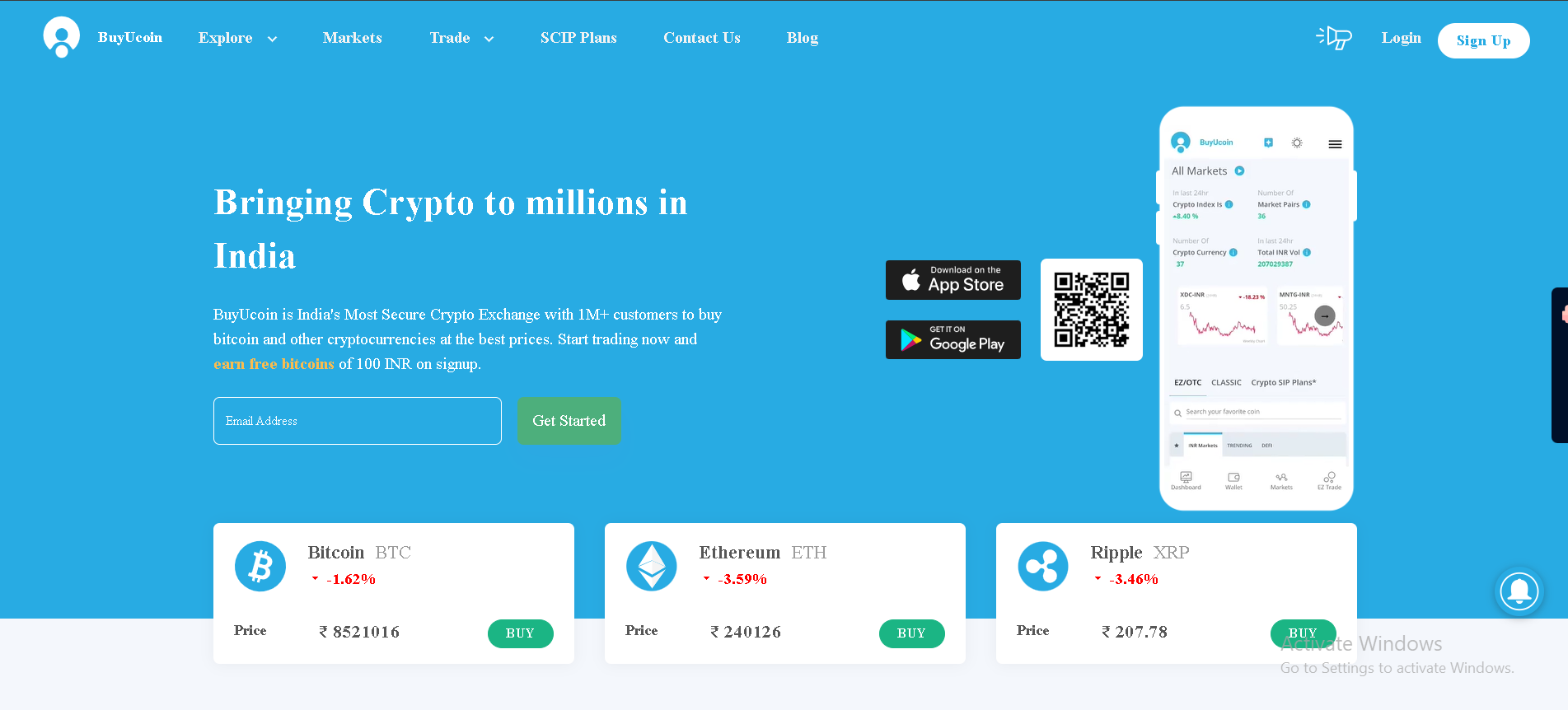
BuyUcoin is a leading Indian crypto exchange operating since 2016, serving over 1 million users. It was founded by Atulya Bhatt, Devesh Aggrawal, and Shivam Thakral to provide a convenient way for Indians to invest and trade crypto. It’s registered with the Financial Intelligence Unit - India (FIU-IND) and is based in Delhi.
While users may find BuyUcoin somewhat basic, as it lacks tools like futures trading, crypto loans, or bots, it offers a solid selection of 239 cryptocurrencies. However, some are not available to purchase on BuyUcoin. The exchange offers a basic line chart and a TradingView integration for advanced users. It offers an easy-trade tool and a spot exchange.
Outside of typical exchange features, BuyUcoin provides Systematic Crypto Investment Plans (SCIP) that involve buying regularly over extended periods. It also offers an NFT marketplace and Bitcoin rebates for trading.
BuyUcoin is a strong choice for Indian crypto investors as it’s registered with FIU-IND. Trading fees are reasonable at 0.24%, so it’s a top crypto exchange for local enthusiasts, but international investors can find more feature-rich exchanges.
Pros
-
Reasonable trading fees
-
Registered with FIU-IND
-
Good selection of assets
-
TradingView for advanced charting
-
Built-in NFT marketplace
Cons
-
Doesn’t have advanced features
-
Can only trade spot, not derivatives
- Bitcoin
- Ethereum
-
Tether
77
No result
- English

Youhodler
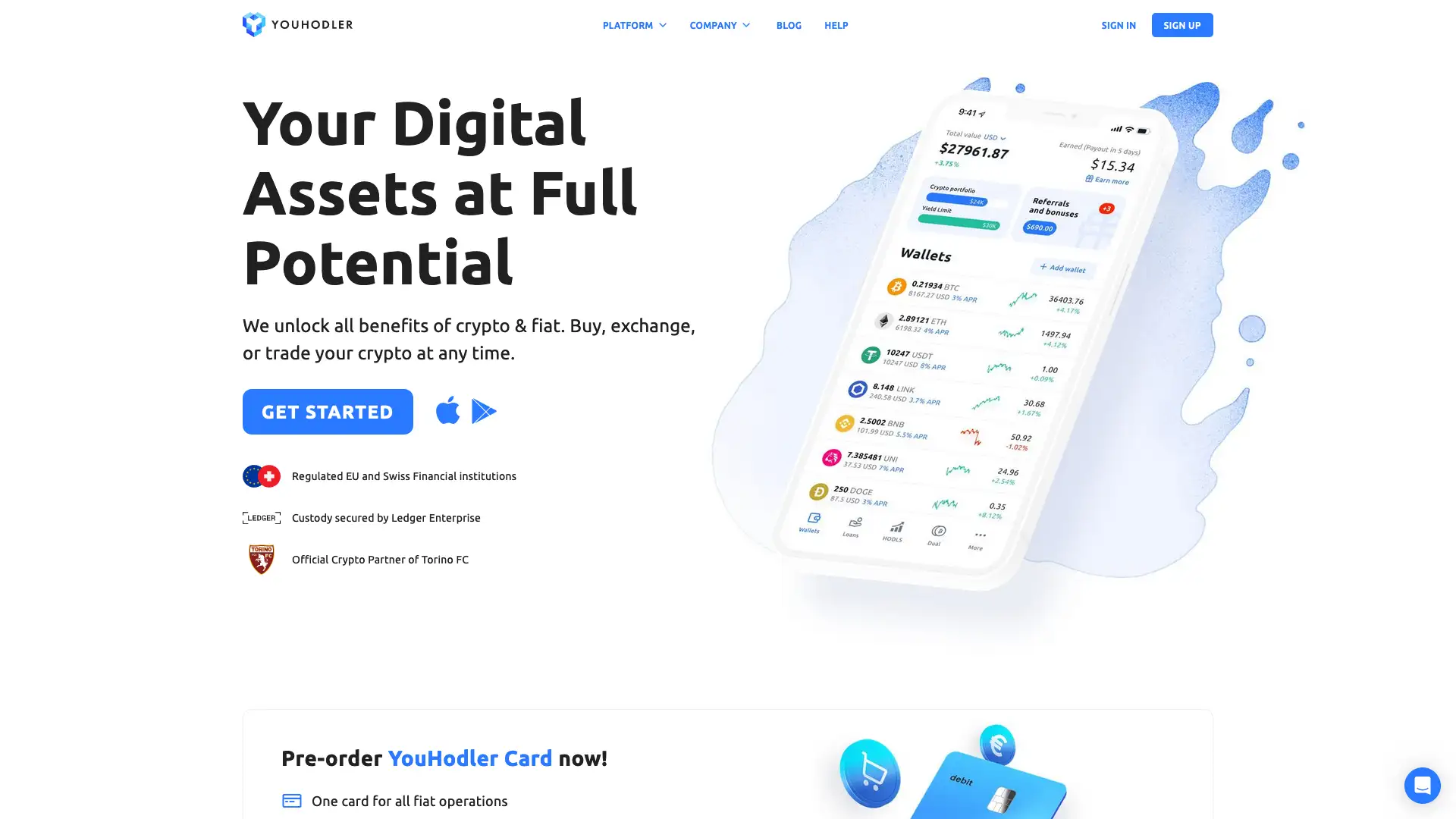
Launched in 2018, YouHolder is a crypto exchange and loans platform available worldwide, except in a few countries, such as the USA and Canada. The exchange lets people trade 110 cryptocurrencies after depositing via crypto or fiat (credit/debit card, wire, bank transfer, SEPA). It also supports many fiat currencies, including EUR, USD, GBP, and CHF.
While the exchange already offers up to 70x leverage, YouHolder’s Turbocharge tool lets people buy crypto with funds borrowed using their holdings as collateral. It also provides a crypto-loans feature, enabling users to borrow funds using their crypto without triggering a taxable event. MultiHODL trades charge an hourly rollover fee of 0.02%. No fee is listed for conversions.
Pros
-
Provides access to a reasonable amount of leverage
-
Users can borrow based on their crypto holdings
-
MultiHODL lets people boost profits and losses through a series of crypto loans
-
Available in many countries with local currency support
-
A good variety of large and small cryptocurrencies
Cons
-
Confusing fee structure, no listed costs for regular trades
-
Unavailable in the USA and Canada
- Bitcoin
- Ethereum
-
Tether
57
No result
- English
Kraken
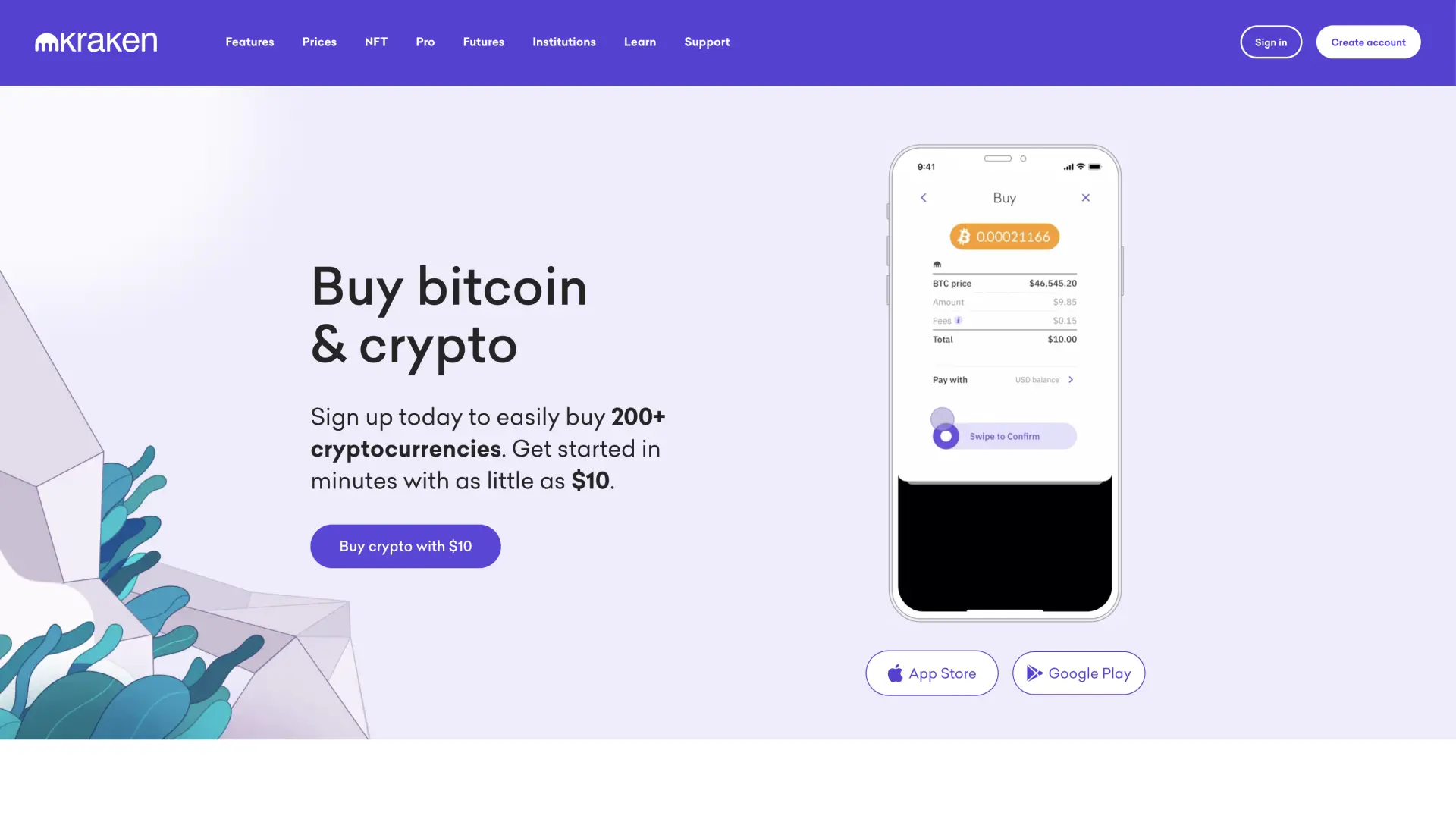
Nigerian traders and investors seeking a security-first exchange should consider Kraken. The exchange offers 425 assets and does not restrict Nigerian residents. Unfortunately, Kraken is not regulated by the Securities and Exchange Commission of Nigeria and does not support deposits or withdrawals using the Nigerian Naira.
Users can access every Kraken feature, including the margin and futures markets, so they have plenty of trading options. Nigerian investors can buy crypto with fiat, but they must transact in a non-local currency, which can incur additional fees. Kraken also offers staking support and detailed asset and portfolio information.
Kraken offers a beginner-friendly exchange and an advanced platform with TradingView integration that can handle in-depth analysis. It charges spot trading fees of 0.25% (maker) and 0.40% (taker), while it charges 0.02% / 0.05% for futures. While it lacks NGN support, Kraken is a solid all-in-one exchange catering to beginners and advanced traders in Nigeria.
Pros
-
Provides multiple ways for Nigerians to trade
-
Enables people to buy crypto with fiat currency
-
No restrictions on which features Nigerians can access
-
Kraken accepts crypto deposits across hundreds of assets
-
Caters to new and experienced traders in Nigeria
Cons
-
No NGN deposit or withdrawal support
-
Instant purchases will incur currency conversion fees
- Bitcoin
- Ethereum
-
Tether
83
No result
- Spanish
- English
-
French
4
No result
CEX.IO
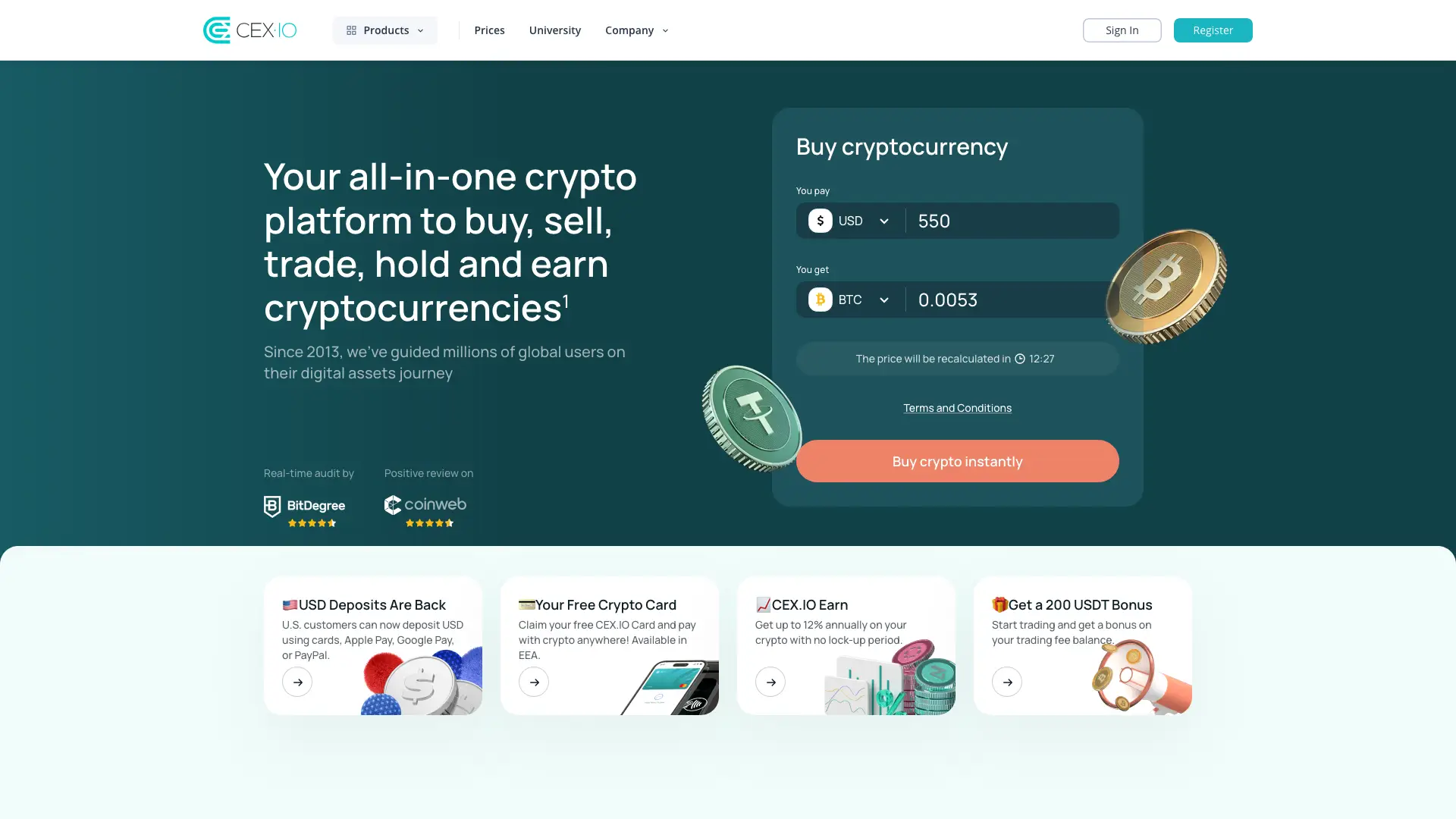
CEX.IO is a crypto exchange platform that aims to simplify buying, selling, and trading 230 digital assets. It’s an internationally licensed platform available in Nigeria, catering to both new users and crypto enthusiasts. Unfortunately, CEX.IO has limited fiat currency support, accepting only USD, GBP, and EUR.
While CEX.IO doesn’t offer Naira support, it will automatically convert your NGN purchase into USD. However, fiat on-ramps using a non-local currency can incur additional conversion charges. Nigerian traders can access the simple buy tool or the CEX.IO margin (up to 10x leverage) exchange and spot trading platforms, which boast TradingView charts.
Along with its swaps and trading capabilities, CEX.IO offers a custodial crypto wallet and a range of staking/savings products that pay rewards on crypto holdings. The exchange boasts fees of 0.25% (spot) and 0.1% (margin), making it a reasonable choice for people who want access to moderate leverage and prefer margin over derivatives trading.
Pros
-
Licensed in multiple countries
-
Available without restrictions in Nigeria
-
Gives Nigerian traders up to 10x margin
-
Caters to new and experienced traders in Nigeria
-
Automatically converts NGN to a supported currency
Cons
-
Cannot deposit or withdraw NGN
-
No Nigerian Naira purchase support for
- Bitcoin
- Ethereum
-
Tether
81
No result
- English

Uniswap V2
Uniswap V2 is a decentralized exchange (DEX) operating on the Ethereum blockchain, launched in May 2020. It introduced significant improvements over its predecessor, such as direct ERC-20 to ERC-20 trading pairs, automated market maker (AMM) functionality, and flash swaps. Uniswap V2 allows anyone to provide liquidity to trading pools and earn a share of transaction fees, making it a popular choice for DeFi users.
The platform stands out for its security, transparency, and the ability to handle a vast number of trading pairs without relying on order books. But Uniswap V2 is subject to high Ethereum gas fees, especially during periods of network congestion, which can make trading expensive for smaller transactions. Some users also experience failed swaps due to low liquidity in certain pools, and the interface may be daunting for complete beginners.
Pros
-
Decentralized, non-custodial trading with no registration required
-
Supports a wide variety of ERC-20 tokens and pairs
-
Transparent and secure, with funds managed by smart contracts
-
Anyone can provide liquidity and earn fees
Cons
-
High gas fees on the Ethereum network, especially during peak times
-
Failed swaps are possible due to low liquidity in some pools
-
No customer support or recourse for failed transactions
-
May be complex for beginners unfamiliar with DeFi and self-custody
- Ethereum
- Tether
-
Build'N'Build
90
No result
- English
Crypto.com

- Bitcoin
- Holo
-
Litecoin
157
No result
- English
- Italian
-
French
5
No result
Coinone
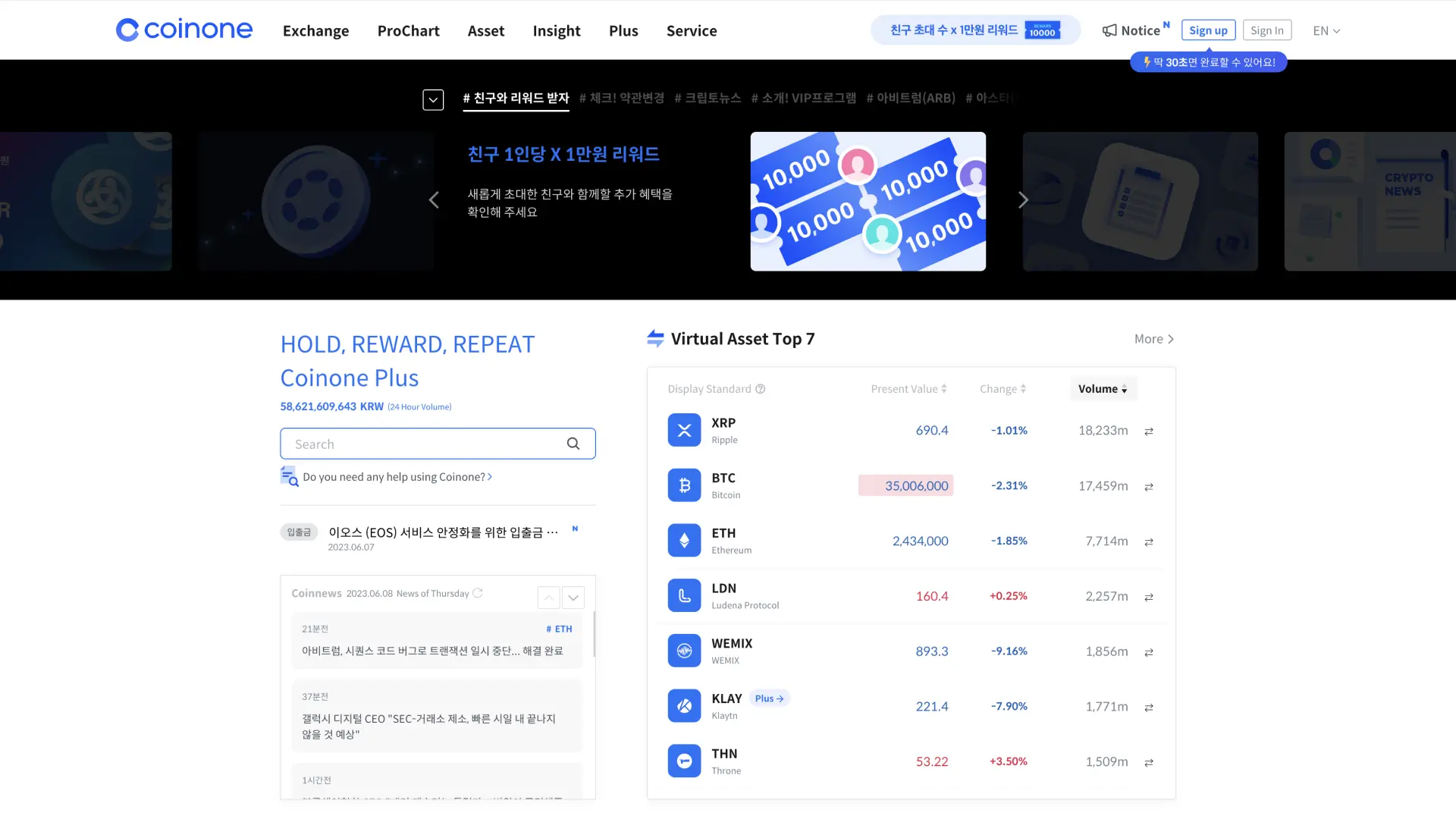
Coinone, founded in 2014, is one of South Korea’s leading cryptocurrency exchanges. It is praised for its intuitive interface, robust security (with no major hacks reported), and diverse offerings, including spot and margin trading, staking (Coinone Plus), and an advanced trading platform (Coinone Pro). Coinone charges a flat 0.20% trading fee and offers lower fees for new listings. Deposits are free, while withdrawal fees vary by coin.
Security is a notable strength, with the platform founded by a “white-hacker.” Yet, Coinone has faced some controversies, including legal issues involving executives accused of accepting bribes for coin listings. Some users also report dissatisfaction with customer service and fund management. Coinone is not regulated by a major international financial authority, which may be a concern for non-Korean users.
Pros
-
User-friendly interface and advanced trading features
-
Strong security record; no major hacks reported
-
Wide range of supported cryptocurrencies
-
Staking and margin trading are available
Cons
-
Past legal controversies involving management
-
Not regulated by strict international authorities
-
Some negative feedback on customer support
-
Primarily focused on the Korean market
- Bitcoin
- Ethereum
-
Tether
70
No result
- Korean
Coinrule
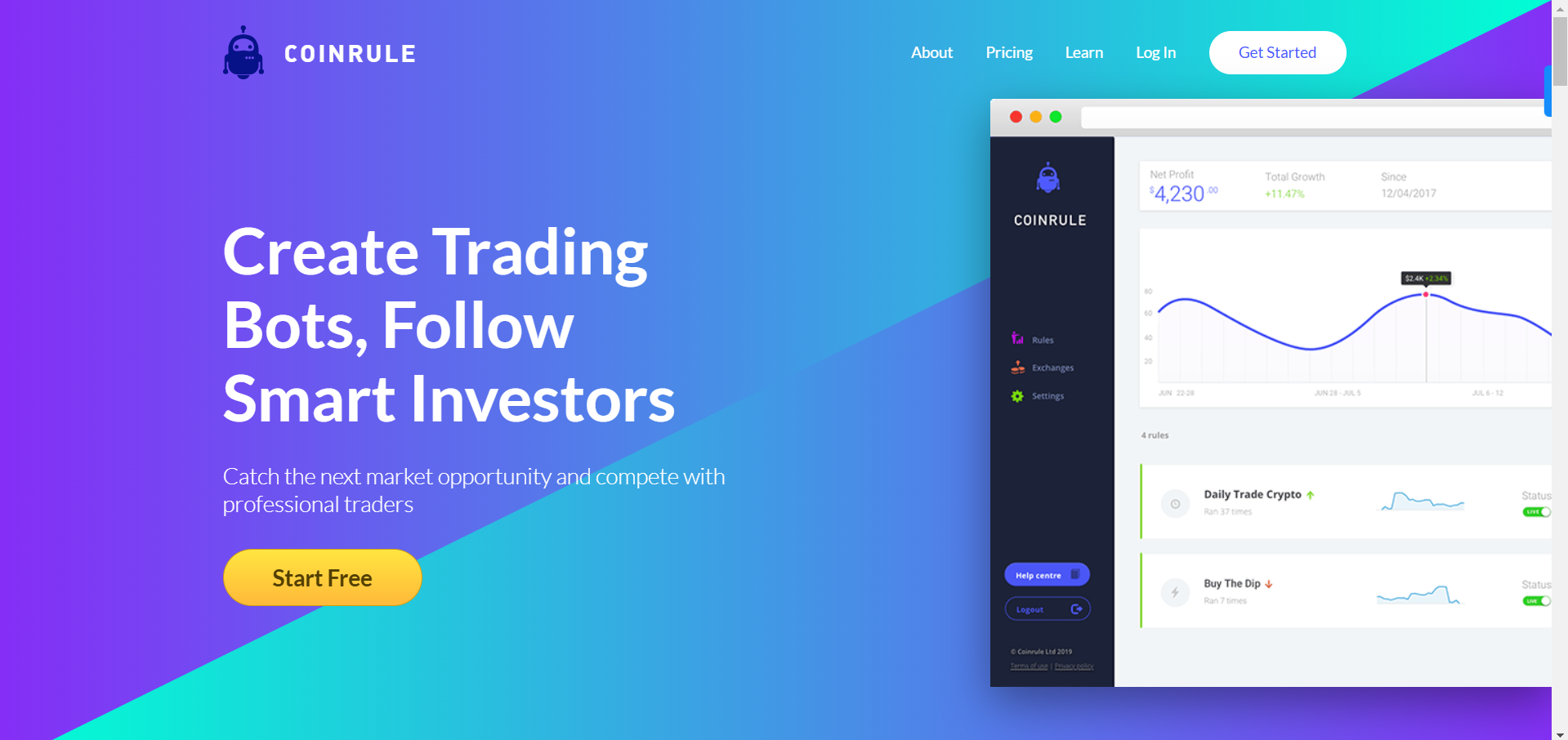
Coinrule, established in 2018, is an automated cryptocurrency trading platform designed to simplify trading for users without coding expertise. It operates on an "If-This-Then-That" framework, allowing traders to set up strategies based on specific market conditions. The platform integrates with major exchanges like Binance, Kraken, and Coinbase, offering tools such as backtesting, customizable trading rules, and pre-built templates.
While its user-friendly interface makes it ideal for beginners, Coinrule has some limitations, including restricted exchange support and higher pricing tiers. Users can experiment with strategies risk-free using its demo account feature.
Pros
-
Automated trading strategy platform rather than traditional exchange
-
Templates for different trading strategies
-
No coding knowledge is required
-
Connects to major exchanges via API
-
Demo mode for testing strategies
-
Regular strategy performance updates
Cons
-
Not an actual exchange (requires another exchange account)
-
Monthly subscription fees for advanced features
-
Learning curve for effective rule creation
-
Limited to exchanges with API support
-
Potential latency in trade execution
-
Relies on third-party exchange security
- Bitcoin
- Litecoin
-
1inch Network
1
No result
- English
BitMEX
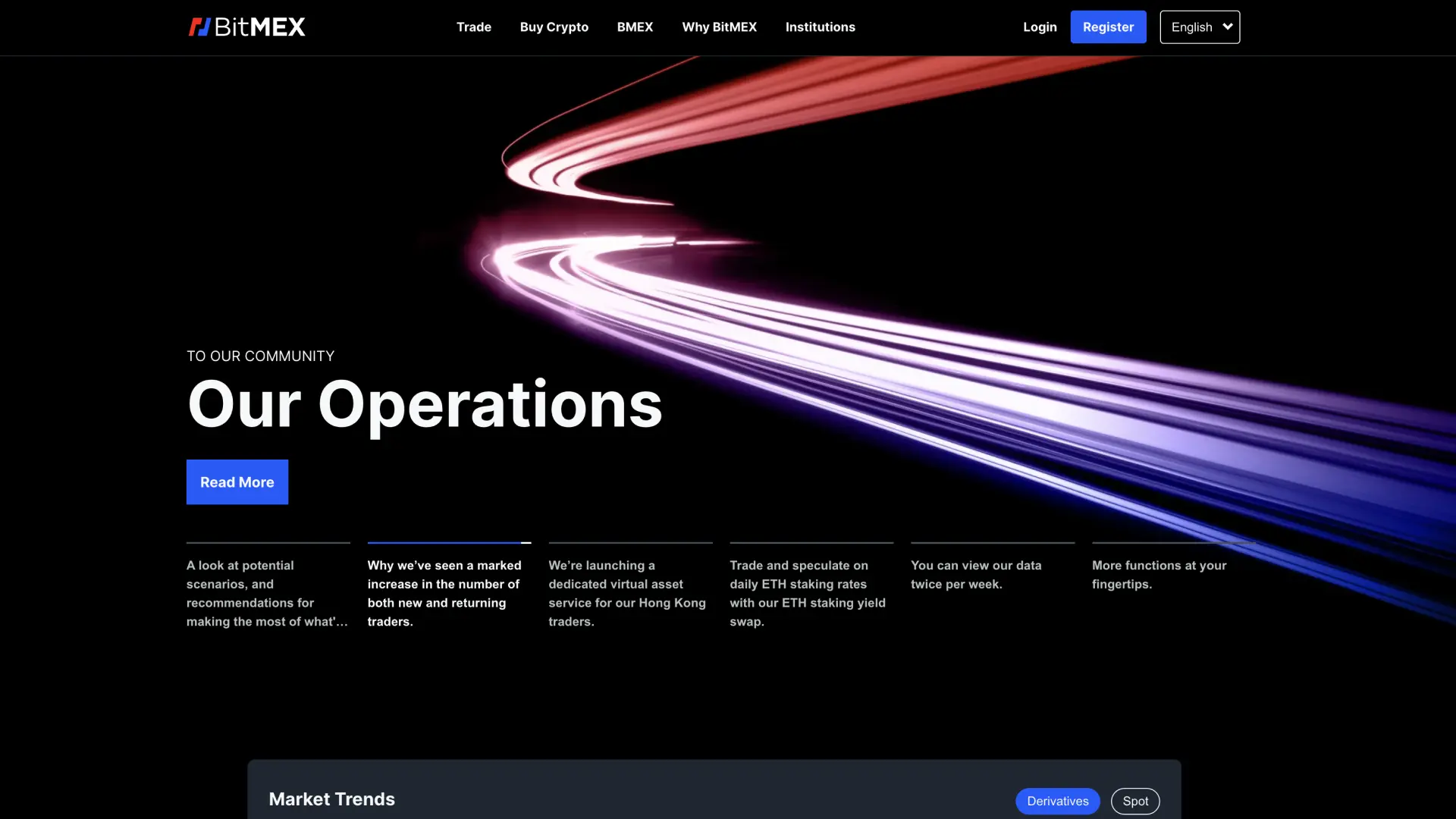
BitMEX is a well-known crypto exchange specializing in derivatives trading, offering high leverage and advanced trading features. The platform is popular among experienced traders seeking sophisticated tools and deep liquidity. But, BitMEX does not support direct fiat deposits or withdrawals, meaning users cannot buy crypto with a credit card directly on the exchange.
To use BitMEX, traders must first purchase crypto elsewhere and transfer it to their BitMEX account. This extra step makes BitMEX less suitable for beginners or those looking for a simple way to buy crypto with a credit card. The platform’s interface is designed for advanced users, with complex order types and risk management tools.
Security is a strong point for BitMEX, with robust measures in place to protect user funds. The exchange also offers low trading fees and a wide range of derivatives products. However, its lack of fiat support and complex interface may deter casual investors.
Pros
-
Advanced trading features and high leverage
-
Deep liquidity and low trading fees
-
Strong security measures
Cons
-
No direct fiat deposits or credit card purchases
-
Complex interface, not beginner-friendly
-
Not suitable for simple crypto purchases
- Bitcoin
- Ethereum
-
Tether
30
No result
- Chinese (Mandarin)
- Russian
- English
Coinmama
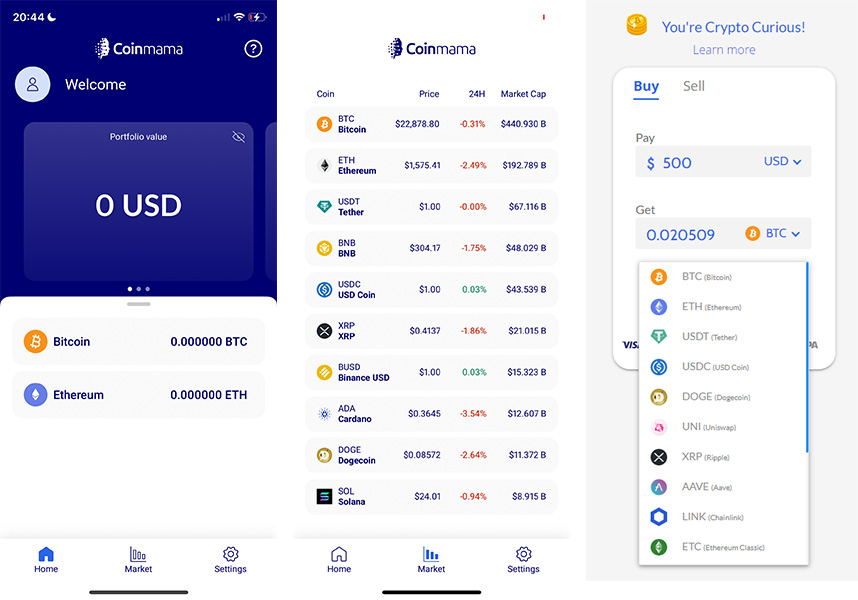
Coinmama has been operating since 2013 to simplify the acquisition of cryptocurrencies. It’s a no-frills exchange that offers only a beginner-friendly way to purchase crypto with fiat currency. The exchange is available globally, except in a few restricted regions, including New York, Louisiana, Iran, and Afghanistan.
Coinmama focuses exclusively on simplicity. Users have access to a simple order interface, a crypto-to-crypto conversion tool that connects to your wallet, and a basic staking program. Coinmama plans to release advanced trading features in the future (Written 05/12/25). The platform supports various fiat currencies, including GBP, USD, EUR, AED, IDR, INR, THB, CHF, and JPY.
Unfortunately, Coinmma suffered a breach in 2019, which led to around 450,000 email addresses and hashed passwords being released online.
Pros
-
Available across most of the world
-
Support for the most significant fiat currencies
-
Makes buying and selling crypto as easy as possible
-
Unveiling new features like the conversion tool and advanced exchange
-
Offers the most popular cryptos
Cons
-
High commission fees
-
No analysis tools at present
-
Does not support crypto trading
-
Suffered a data breach in the past
- Bitcoin
- Ethereum
-
Tether
29
No result
- English
Symlix
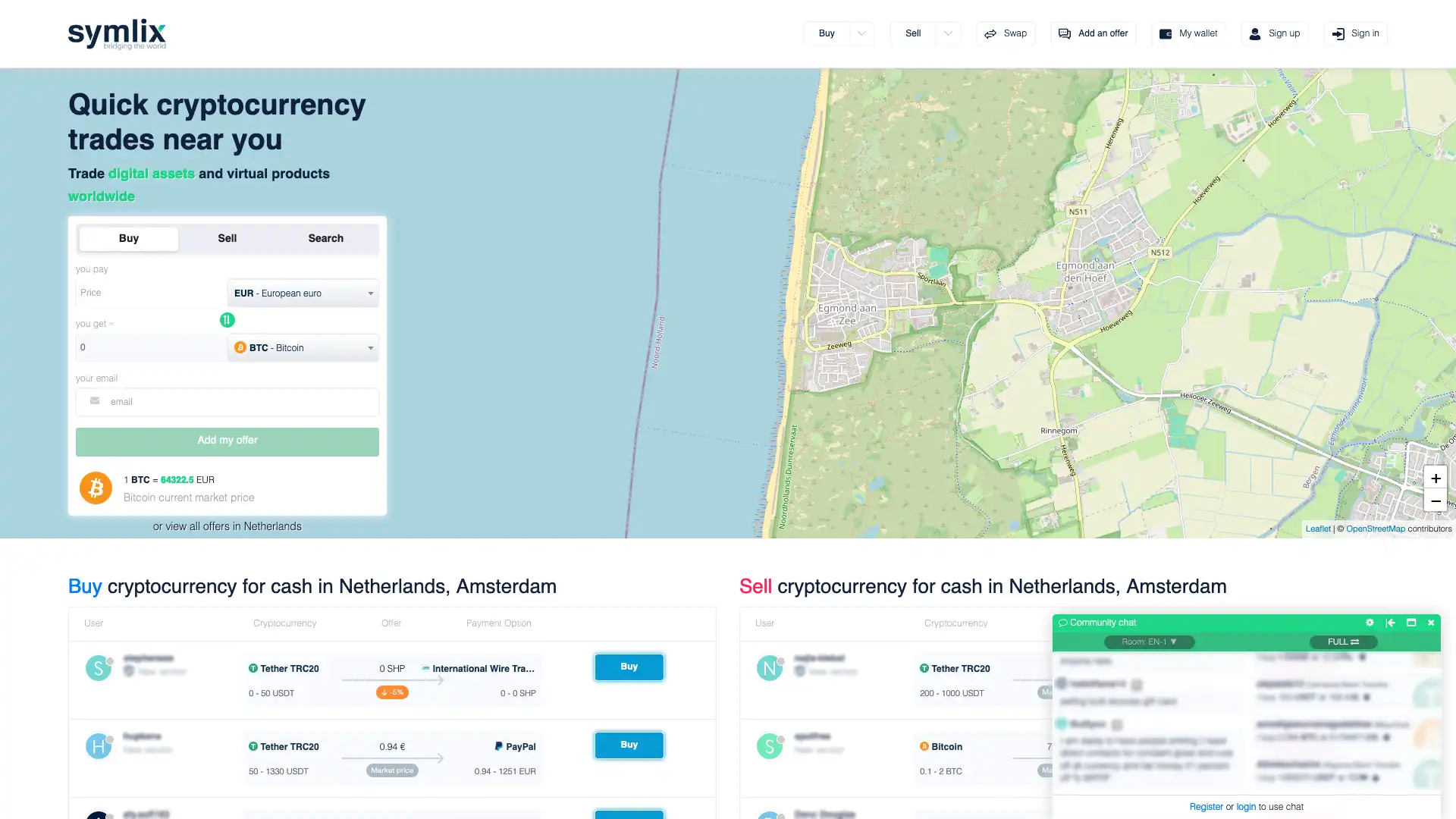
Symlix emerged as a non-custodial cryptocurrency exchange focused on providing anonymous crypto swaps without requiring user registration or Know Your Customer (KYC) verification. The platform positions itself as a privacy-centered solution in the crypto exchange market, allowing you to exchange various cryptocurrencies directly from your wallet to another without creating accounts or storing personal information.
Symlix operates by connecting users with liquidity providers to facilitate instant swaps at current market rates. The exchange has built its reputation around speed and discretion, appealing to users who prioritize privacy and want to avoid the lengthy verification processes that traditional exchanges require. Its streamlined approach makes it particularly attractive for quick cryptocurrency conversions.
Pros
-
No registration or KYC requirements, so you can start swapping immediately without providing personal details
-
Anonymous transactions that don't track or store your trading history or personal information
-
Fast processing times with most swaps completed within minutes of confirmation
-
Wide range of supported cryptocurrencies covering popular coins and various altcoins
-
Transparent pricing with exchange rates and fees displayed before you confirm transactions
-
Simple interface that makes crypto swapping straightforward for users at any experience level
Cons
-
Limited customer support compared to traditional exchanges with account-based systems
-
Higher transaction fees than some competitors due to the privacy and convenience premium
-
No advanced trading features like limit orders or technical analysis tools
-
Potential for rate fluctuations between quote and execution during volatile periods
-
Lack of educational resources for users who are new to crypto
- Bitcoin
- Ethereum
-
Tether
8
No result
- Welsh
Emirex
Emirex launched as a crypto exchange based in the UAE, aiming to serve the Middle Eastern market with a focus on regulatory compliance and institutional-grade trading infrastructure. The platform was designed to bridge traditional finance with crypto trading, offering both retail and institutional services in a region where crypto adoption has been growing steadily.
Emirex positioned itself as a regulated exchange that follows strict compliance standards, which was important for gaining trust in markets where regulatory clarity matters a lot. The exchange offers spot trading, futures, and various other services while emphasizing security and transparency. It's built its reputation around serving both individual traders and larger institutional clients who need reliable execution and proper regulatory oversight.
Pros
-
Regulatory compliance in multiple jurisdictions provides extra security and legitimacy for your trades
-
Institutional-grade infrastructure designed to handle large trading volumes and professional requirements
-
Multiple trading options, including spot, futures, and margin trading, for different strategies
-
Strong security protocols with cold storage and multi-signature wallet protection
-
Professional trading interface with advanced charting tools and order types
-
Dedicated support for institutional clients with personalized service options
Cons
-
Limited geographic availability compared to global crypto exchange platforms
-
Higher minimum deposit requirements that might not suit smaller traders
-
Verification process can be lengthy due to strict compliance requirements
-
Fewer altcoin options compared to larger international exchanges
-
Trading fees may be higher than some competitors, especially for smaller volume traders
- Ripple
- Stellar
-
USD Coin
12
No result
- English
- Russian

Paymium
Paymium started back in 2011 as one of Europe's earliest Bitcoin exchanges, originally operating under the name Bitcoin-Central before rebranding. It has built its reputation around regulatory compliance, being registered with the French Financial Markets Authority (AMF). The French-based platform holds the distinction of being the first Bitcoin exchange to obtain proper banking licenses in Europe.
Paymium has always focused on the European market, particularly France, and built its reputation around regulatory compliance and traditional banking integration. The exchange primarily deals with Bitcoin trading against the Euro, keeping things simple rather than trying to support hundreds of different cryptocurrencies.
Over the years, it's maintained its position as a reliable, regulation-focused cryptocurrency exchange that appeals to users who want a straightforward Bitcoin trading experience with proper legal backing.
Pros
-
Regulated and licensed exchange with proper European banking credentials for added security
-
Strong focus on Euro trading pairs, making it convenient for European Bitcoin buyers
-
Long operational history since 2011 demonstrates stability and reliability in the market
-
Bank-level security standards with segregated customer funds and insurance coverage
-
Simple, clean interface that's easy to navigate without overwhelming features
-
Direct SEPA bank transfers for convenient Euro deposits and withdrawals
Cons
-
Limited to primarily Bitcoin trading with very few other cryptocurrency options
-
Higher fees compared to some modern exchanges due to the traditional banking approach
-
Lower trading volumes than major international platforms, which can affect liquidity
-
Geographic focus mainly on Europe limits accessibility for users in other regions
-
Fewer advanced trading features compared to more modern exchange platforms
- Bitcoin
- Bitcoin Cash
-
Ethereum
4
No result
- English
- French
Cryptonex
Cryptonex launched back in 2017 as a blockchain-based cryptocurrency exchange that aimed to bridge traditional banking with crypto trading. The platform built its own blockchain and native CNX token while offering exchange services for various cryptocurrencies.
What makes Cryptonex different is its focus on creating a full ecosystem that includes mining, mobile apps, and payment cards, trying to make crypto more accessible for everyday use. The exchange has positioned itself as a solution for both regular trading and broader crypto adoption, though it's faced some regulatory challenges in certain regions over the years.
You'll find it offers a mix of spot trading and additional services that go beyond just basic crypto swapping.
Pros
-
Native CNX token provides trading fee discounts and staking rewards for holders
-
Mobile app available for both iOS and Android with full trading functionality
-
Multiple deposit methods, including bank transfers and credit card purchases
-
Built-in mining features allow you to earn cryptocurrencies directly through the platform
-
Referral program offers commission sharing for bringing in new users
-
Payment card integration allows you to spend crypto in real-world transactions
Cons
-
Limited availability in some countries due to regulatory restrictions
-
Lower trading volumes compared to major crypto exchange platforms
-
Support team may struggle to keep up during busy trading times
-
Fewer trading pairs are available than in larger competitors
-
CNX token value fluctuations can affect the benefits of holding it
- Bitcoin
- Ethereum
-
Tether
12
No result
- English

OKX
OKX, a leading name in cryptocurrency trading, was established in 2013. Known for its versatility, the platform offers access to over 350 cryptocurrencies and numerous trading features, although it is not available to US users.
Users can trade spot, futures, and options with leverage or engage in staking and bot trading. Fiat deposits are supported in various currencies through several payment options. OKX’s tiered fee structure provides discounts to high-volume traders.
Pros
-
Extensive product offering beyond spot trading (futures, options, DeFi)
-
Competitive fee structure (0.08% maker/0.1% taker for spot)
-
High liquidity for most trading pairs
-
Advanced trading features, including copy trading
-
Over 350 cryptocurrencies available
-
Strong mobile app functionality
Cons
-
Not available to US customers
-
Complex interface that can intimidate newcomers
-
Mixed reputation for customer service
-
Regulatory concerns in some jurisdictions
-
Withdrawal limits without full verification
- Bitcoin
- Ethereum
-
Tether
90
No result
- English
Why Trust Us?
Our reviews are curated by seasoned industry experts with years of experience in finance, blockchain technology, cybersecurity, and other relevant fields. We base our recommendations on research, user feedback, and thorough hands-on testing of key features and user experience, in real-world trading conditions.
How to Choose a Good Crypto Trading Platform in Nigeria?

Choosing the right exchange for your trading style and experience level is an important decision that can make a big difference in your overall experience.
A good exchange will make you feel comfortable and safe, give you access to a wide range of coins, charge you minimal fees, and provide you with round-the-clock support. A bad exchange, on the other hand, can expose you to security risks, scam you, or even steal your money and disappear overnight.
For this reason, you want to pay special attention to several critical qualities and features when researching for the best crypto trading platform in Nigeria, including:
- License & Regulation Compliance
- NGN Payments
- High Standard Security
- Minimal Trading Fees
- High Liquidity
- Modern Trading Software
- 24/7 Customer Support
- Large Choice of Crypto Assets
- Any Kind of Insurance
- Reputation and History
Each of these considerations is important and should play a role in your choice. Let’s get into more detail on why they matter and how they can affect your day-to-day trading.
License & Regulation Compliance
One of the quickest and most effective ways to separate the trustworthy from the ambiguous platforms is to focus your attention solely to licensed crypto exchanges.
The Nigerian SEC started to actively enforce its crypto regulation framework in August 2024, and since then, it has granted the necessary permits for operation to multiple exchanges. These platforms met their requirements and demonstrated a clear commitment to compliance with the local laws and regulations.
One important note to make, that you may find when doing your research is that technically, the Central Bank of Nigeria (CBN) does not recognize crypto as legal tender. However, they don’t block banks from giving bank accounts to crypto businesses (as long as they’re licensed). The reason we wanted to highlight this is if you’re planning on using crypto for payments instead of trading, a bank is still likely to offer you services.
By using a licensed exchange, you can make sure that you are trading on a legitimate platform that will grant you adequate consumer protection rights and protect your funds in the best way possible. It is worth noting that each of the top crypto exchanges in Nigeria that we recommend is licensed and reliable.
NGN Payments
Another good way to narrow your options down is to focus on finding exchanges that accept direct deposits made with the Nigerian naira. Support for a regional fiat currency indicates that the platform is committed to serving the local market and catering to the needs and preferences of the local traders.
It’s an even greener flag if the exchange has integrated PalmPay or Kuda bank transfers. This signals they are indeed well optimized for the local market and understand what Nigerians tend to use when making payments online. In addition, by being able to deposit NGN, you won’t need to exchange your money to another fiat currency at an unfavorable rate, and avoid paying the currency conversion fees.
High Standard Security

Security is another critical factor, important when choosing any type of financial service, including crypto exchanges in Nigeria. Unfortunately, crypto exchange accounts are a common target for hackers, so you’d want the best security features possible to help you maximize the protection of your funds.
Some of the key features to look out for include:
- End-to-end encryption
- Two-factor authentication
- Biometric verification
- Security key integration
- Suspicious behavior alerts
- Anti-phishing mechanisms
- Withdrawal whitelisting
The best crypto exchange in Nigeria will provide you with most of these, if not all of these, security measures, and allow you to reduce the risk of unauthorized access breach.
Minimal Trading Fees
In addition to security and reliability, another key quality that defines the top crypto exchanges in Nigeria is cost-effectiveness. While every trading platform charges fees for its services, some crypto exchanges offer considerably lower trading fees and discounted rates to their users.
However, we must point out that different platforms utilize different price models and fee structures to fund their operations. Some exchanges may offer lower trading fees but make up for them with higher withdrawal fees, so be sure to evaluate their fee structures as a whole.
Instead of blindly comparing fee percentages, try to match your particular trading style against the platform’s full fee schedule. This should give you a good insight into which exchange is the best and cheapest option for your needs.
High Liquidity
Liquidity is another crucial factor that can have an effect on both your profitability and overall trading experience. In simple terms, liquidity is the difficulty, or ease, with which a platform can fill orders at the market price.
It works like this. Every time a buy order is placed on an exchange, its system tries to match it with a sell order at a similar price to execute the trade. If the exchange handles a large volume of orders, it would be easier for it to match the buy order with a corresponding sell order. This is what is referred to as a highly liquid exchange.
On the other hand, if the exchange doesn’t handle a large volume of orders or has low liquidity, it may struggle to find matching orders. If you place an order on such an exchange, you might have to wait for a longer time until a match is found to execute your trade.
Alternatively, you can also place your order at a price worse than the market to get a better chance of getting it filled quickly. This is what is known as price slippage.
To avoid delays in your trading and be able to buy and sell coins at the best prices, you want to make sure you join a highly liquid exchange.
Modern Trading Software
The top crypto exchanges in Nigeria provide a great user experience and offer a wide range of features that support all kinds of trading strategies. Their trading software ticks all the boxes necessary to make trading easy, convenient, informed, and efficient, including:
- Professional and clear design that allows for intuitive navigation
- User-friendly interface that makes key functions easy to access and operate
- Full-view dashboard that can be customized to user’s preference
- Real-time tracking with built-in indicators and charting tools
- Support for advanced order types like stop-loss, limit, and take-profit orders
- Portfolio management and monitoring capabilities
- Compatibility with both PCs and mobile devices
Put simply, great trading software should be both easy to use and highly functional. It should provide you with all the tools you need to make informed decisions without feeling overly complex or intimidating.
24/7 Customer Support
Customer support is another important, yet often overlooked, consideration when looking for the best crypto trading platform in Nigeria. Technical issues, bugs, and hangups are practically unavoidable when dealing with any digital platform, rendering access to someone who can help you with stuck payments or delayed withdrawals more necessary than ever.
We recommend you look for a platform that offers 24/7 customer support available through multiple channels, including live chat, email, and a dedicated help center. Save yourself the headache and opt to trade on a platform with a responsive customer support team with helpful and knowledgeable agents available to help you at any time.
Large Choice of Crypto Assets
The variety of cryptocurrencies available for trading is another important factor that can impact your choice of crypto exchange. While the most popular coins like BTC and ETH are available on practically all exchanges, only the top crypto exchanges in Nigeria support a wide range of cryptocurrencies from all kinds of market segments, including:
- Popular altcoins like ADA, SOL, DOT, and BNB
- Stablecoins like USDT and USDC
- Coins with utility value like MATIC, ATOM, and XRP
- DeFi coins like AAVE and UNI
- Meme coins like DOGE, SHIB, and PEPE
Having access to all kinds of coins can help you build a well-rounded and diversified portfolio that can expose you to varying growth potentials and utility. It can also open the doors to all kinds of opportunities to earn and take part in different activities in the DeFi space.
Any Kind of Insurance
Crypto exchanges do not fall under the category of traditional banking institutions, so they are not legally required to provide insurance to their users. While the regulations require them to clearly disclose the risks of crypto trading and provide their users with adequate security features, they don’t say anything about insurance policies and coverage.
For this reason, only the very best, top-shelf international crypto exchanges voluntarily offer insurance coverage to their users. However, even in these cases, the policies typically only cover losses that are the result of a platform-wide breach that the exchange itself is responsible for, and don’t reimburse losses resulting from individual account hacks.
Reputation and History
Finally, beyond evaluating performance-based factors, be sure to also conduct enough research on the exchanges’ backgrounds and track records. Try to find out more about their owners, the legitimacy of their operations, whether or not they were involved in any lawsuits, security breaches, or other controversies.
Additionally, it is also a good idea to gather some feedback from other users and check out the exchanges’ reputation on platform review sites, social media threads, and crypto-focused forums. While they can be a bit subjective, these discussions can be very revealing and provide additional insights that you can’t get to by merely comparing numbers and percentages.
The Importance of an App for Nigerian Crypto Exchanges
In addition to all the qualities and features we highlighted already, a great crypto exchange must also come with a user-friendly and highly functional, dedicated mobile app. Being able to trade on the go can allow you to quickly react to market shifts and capitalize on sudden price movements, at any time, from anywhere.
By using the best crypto apps in Nigeria, you will not only avoid missing key opportunities, but also be able to benefit from a number of features available only on mobile devices, such as:
- Biometric security features for logging in (face scans or fingerprint ID)
- Push notifications for price movements or order execution
- Signing transactions by scanning QR codes with the device’s camera
- Integration with mobile payment apps, for more convenient and secure deposits
Much more than just a simplified version of the desktop platform, an exchange’s mobile app can deliver additional value, and it is a must-have tool for any crypto trader.
How To Register on a Crypto Exchange in Nigeria
After conducting your research and making an educated choice, you will need to sign up for an account with the best crypto exchange in Nigeria to start trading. The complete registration process varies slightly from platform to platform, though generally, these are the steps you need to take to get started:
Step 1 – Create an Account
- Go to the exchange’s official website or download its official mobile app
- Click or tap the “Sign Up” or “Register” button
- Enter the necessary information and follow the onscreen instructions to finalize the process
Step 2 – Activate Your Account
- On most exchanges, you will need to activate your account before you can log in
- Check your email inbox for an activation email from the exchange
- Click or tap on the confirmation link in the activation email to activate your account
- Log in to your account using your credentials
Step 3 – Complete KYC Verification
- In addition to activating your account, most exchanges will also require you to verify your identity before you can start trading
- Initiate the KYC verification process on the exchange and submit the documentation necessary for identity confirmation
- Await your approval
Step 4 – Increase the Security of Your Account
- Before you make your first deposit, it is a good idea to strengthen the security of your account
- Go to the security settings and enable two-factor authentication
- Go to the login settings and enable biometric verification
Step 5 – Fund your Account
- Deposit either cryptocurrencies or fiat currencies on your account to start trading. If you don’t know how to:
- Here’s a guide on how to send crypto from wallet to wallet
- Here’s a guide on how to buy crypto with a credit card
After completing these steps, your identity will be confirmed, your account will be activated, secured, and funded, and you will be ready to make your first trade.
Crypto Taxes in Nigeria – What You Need to Know
Starting in January 2026, crypto taxes in Nigeria have risen from 10% to 15%-25% based on income. Crypto is taxed as personal income rather than capital gains. While tax rates have risen, the personal allowance threshold has also increased to ₦800,000, so people can earn more before paying tax. Basically, what this means is that the first ₦800,000 is tax free, and anything above that up to ₦3,000,000 is 15%, anything above ₦3,000,000 up to ₦12,000,000 is 18%, anything above ₦12,000,000 up to ₦25,000,000 is 21%, anything above ₦25,000,000 up to ₦50,000,000 is 23% and anything above that is 25%. If you’re a business though, it’s a flat 30% regardless of the volume.
So, let’s now give some examples, how much tax would you need to pay in each scenario?
- 15% – If your annual gains are up to ₦3,000,000 your taxes are 15% of (₦3,000,000 – ₦800,000). Which is 15% of ₦2,200,000, so ₦330,000
- 18% – If your annual gains are up to ₦12,000,000 your taxes are 18% of (₦12,000,000 – ₦800,000). Which is 18% of ₦11,200,000, so ₦2,016,000
- 21% – If your annual gains are up to ₦25,000,000 your taxes are 21% of (₦25,000,000 – ₦800,000). Which is 21% of ₦24,200,000, so ₦5,082,000
- 23% – if your annual gains are up to ₦50,000,000 your taxes are 23% of (₦50,000,000 – ₦800,000). Which is 23% of ₦49,200,000, so ₦11,360,000
- 25% – if your annual gains are anything above ₦50,000,000 (let’s say ₦60,000,000) your taxes are 25% of (₦60,000,000 – ₦800,000).
Other taxes or fees more like include a 1% withholding tax (more of like an advance payment than an added tax), a 1.5% stamp duty on buying virtual assets and stablecoins which is deducted from the asset itself.
Keep in mind that crypto tax laws in Nigeria are still evolving and subject to change. For accurate and up-to-date information, we strongly recommend you check the official website of the Federal Inland Revenue Service at firs.gov.ng, or consult with a tax advisor who specializes in Nigerian digital asset taxation.
How to Pay Crypto Taxes in Nigeria

Now that we understand the crypto taxation rules in Nigeria a little bit better, let’s see the steps you need to take to file your crypto taxes in the country.
Step 1 – Collect your complete crypto transaction history
- Go to every crypto exchange, wallet, or platform you used to make crypto transactions this tax year.
- Generate your transaction history and download it as CSV.
Step 2 – Separate the taxable transactions
- Whether by using a tax tool or manually using a spreadsheet, separate the transactions you need to report. Refer to the table in the section above to see which transactions are taxable.
Step 3 – Convert the crypto values in NGN
- Remember, you need to use the NGN equivalent of each transaction at the time it happened, not today’s value.
Step 4 – Classify the transactions by tax type
- Using a tax tool, or manually using the table above, separate the taxable transactions based on what type of tax they are subject to, income tax or CGT.
Step 5 – Add up the totals
- Now that your taxable transactions are neatly classified in two piles, you can add up the totals of your taxable gains.
Step 6 – Calculate the taxes
- For CGT: Remember, 10% tax is applied on the profit, not the transactions themselves.
- For income tax: Add the transaction value to your total personal income this year and see which tax bracket you fall into.
Step 7 – Generate a tax report
- Once you have the final tax amounts, you can generate an appropriate tax report, whether by using a tax tool or manually.
Step 8 – File your taxes
- Go to the official SIRS website of the state you live in and log in.
- Submit your tax report.
After filing your taxes, you can generate your payment reference number and pay them through an authorized bank or online using the payment details provided by the portal.
Final Tips
In summary, finding the best crypto exchange in Nigeria requires plenty of research and careful consideration of many factors. However, by focusing on the key areas, like licensing, security, ease of use, cost-effectiveness, and support, you can make it more manageable.
One thing we’d like to highlight here is P2P trading. It is very common in Nigeria, and is also riddled with scams and bad actors. So we wanted to use this opportunity to give you some tips to protect yourself.
- Always use the exchange’s native escrow feature to conduct P2P trades. Avoid outside platforms like Whatsapp and Facebook. The escrow feature gives you at least some options for support if things do indeed go wrong.
- Never release the crypto until you can clearly see the funds have been cleared on your account. Once you see everything’s processed on your side, only then you can release the coins. Don’t trust screenshots, trust the bank statement.
- If you ever feel like a peer is creating a sense of urgency for the trade, reconsider making it. A sense of urgency is used to dampen your critical thinking, making you more likely to overlook a red flag.
- Keep screenshots of chat, transaction IDs and any bank statements of the P2P trades you make. Should a dispute arise, you’ll be better prepared to make a statement and have the exchange rule in your favor.
As a final thought, we’d like to remind you that crypto regulation in Nigeria is still evolving, and more policy changes may be on the way. To avoid breaking the law, you should do your best to keep updated with the latest official announcements and regulatory guidelines. If you feel like you could use professional help, don’t hesitate to consult a legal advisor.
Frequently Asked Questions
Where to exchange crypto for Naira?
There are many platforms on which you can exchange your crypto to NGN, including Quidax, Busha, Remitano, Yellow Card, and NairaEx.
Can I use Coinbase in Nigeria?
As of right now, Coinbase is not yet licensed with the Nigerian financial authorities. While Nigerian traders may be able to access it and create an account with it, the exchange has every right to delete their accounts if it wants to. So, take that into account before deciding whether or not to trade on Coinbase from Nigeria.
Is crypto legal in Nigeria?
Yes, Nigeria has established a clear crypto regulatory framework, and under it, owning, using, buying, selling, and trading cryptocurrencies is legal and regulated.
Is Binance available in Nigeria?
At the moment of writing, Binance does not hold a license for operation in Nigeria. Even though Nigerian traders may be able to create an account with it, and trade on it, this is ill-advised, as the exchange has the right to delete their accounts.


