
Bitcoin remains trapped between major liquidation zones at $62,000 and $64,100, keeping the short-term outlook neutral.
Strategy’s openness to selling BTC and weaker momentum have added pressure, but Bitcoin continues to resist a deeper breakdown.
Short-term holders moved roughly 32,000 BTC to exchanges at a loss, raising the risk of another test of $62,000.
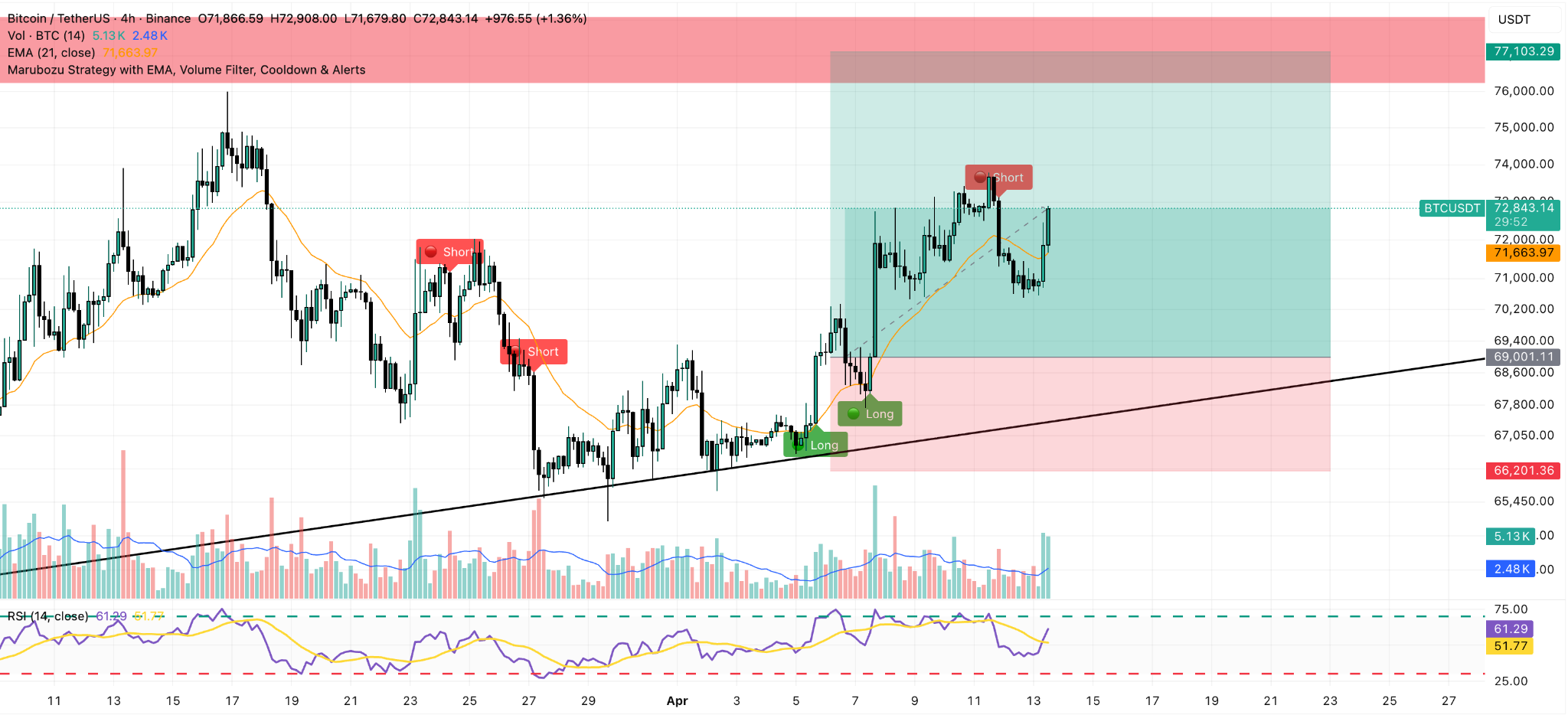
Bitcoin continues to trade sideways near $64,000 despite absorbing a steady stream of negative news, including Strategy’s potential BTC sales, weakness across AI-linked assets and fading momentum behind US crypto legislation.
BTC recovered toward $63,900 after briefly falling to $62,300, but the rebound has not resolved its broader consolidation. Price remains trapped between liquidation clusters near $62,000 and $64,100, leaving both leveraged longs and shorts vulnerable.
Although the market currently lacks the momentum required for an immediate run toward $80,000, Bitcoin’s refusal to establish new lows suggests that traders may have already priced in much of the bearish news.
Bitcoin Absorbs Strategy Concerns and Macro Pressure
The Federal Reserve voted 9-3 to hold interest rates at 3.50%-3.75%, with three officials favoring an increase. Treasury yields initially climbed after Chair Kevin Warsh’s press conference, with the 30-year yield reaching 5.2% and the 10-year yield hitting 4.6%.
Cooler core personal consumption expenditures data and weaker-than-expected second-quarter economic growth subsequently reduced expectations of another hike.
Strategy increased its USD Reserve by $250M and repurchased $81M of $STRC. This increased USD Duration by 57 days to 2.3 years and tightened STRC’s BTC Credit by 5 bps. As of 8/2/26, we hold ₿842,138 in our BTC Reserve and $4.0B in our USD Reserve. $MSTRhttps://t.co/zzra7RL5Zg
Executive Chairman Michael Saylor also acknowledged that the company could sell Bitcoin to strengthen its dollar reserves.
The company recently purchased $25 million of its STRC preferred stock and said it could fund future repurchases through sales of MSTR or BTC. That shift suggests the market can no longer assume that its largest corporate Bitcoin holder will provide a consistent source of buying demand.
Short-Term Sellers Put $62,000 Support at Risk
On-chain data points to growing pressure from newer investors. Approximately 32,000 BTC reportedly moved to exchanges at a loss within 24 hours, marking the largest short-term-holder capitulation event in about a month.
Transfers to exchanges do not prove that owners sold every coin. However, loss-taking near support often signals defensive positioning and can increase downside pressure.
Technical momentum also remains subdued. Bitcoin’s daily Relative Strength Index (RSI) stood near 49, reflecting a broadly neutral market, while the MACD histogram turned negative.
BTC must hold the 78.6% Fibonacci retracement level around $63,183 to preserve its immediate recovery structure.
A close below that level could trigger another test of $62,000. Losing that support would expose $60,000 and potentially the broader June–July floor near $57,820.
What Would Bitcoin Need to Reach $80,000?
Bitcoin must first break through the dense short-liquidation cluster around $63,800-$64,100. Clearing it could accelerate the recovery toward $65,000, but stronger spot demand would need to accompany the move.
The more meaningful resistance zone sits between $66,000 and $67,394. A decisive breakout there would improve the broader structure and bring subsequent targets around $70,352 and $73,309 into view.
🐋 WHALE WATCH : 32000 $BTC hit exchanges at a loss in a single day. Short term holders largest capitulation in 30 days.
Someone bought high held through the dip and sold the local bottom to fund your spot bag.
Institutional demand offers limited encouragement. Spot Bitcoin ETFs attracted approximately $204 million across four trading days and have maintained a modestly positive trend over the past two weeks. Bitcoin also registered about $754 million in net aggressive buying volume on July 30.
An eventual move toward $78,000–$80,000 remains technically possible, but it would require BTC to reclaim its higher resistance levels, attract stronger spot inflows, and benefit from improving risk sentiment.
Until then, $62,000 and $64,100 remain the boundaries most likely to determine Bitcoin’s next major move.