
Key Takeaways
- Bitcoin stabilized near $64,000 after the Federal Reserve kept interest rates at 3.50%-3.75%, although three policymakers voted for a hike.
- Spot Bitcoin ETFs attracted $32.11 million on July 29, ending four consecutive sessions of net outflows.
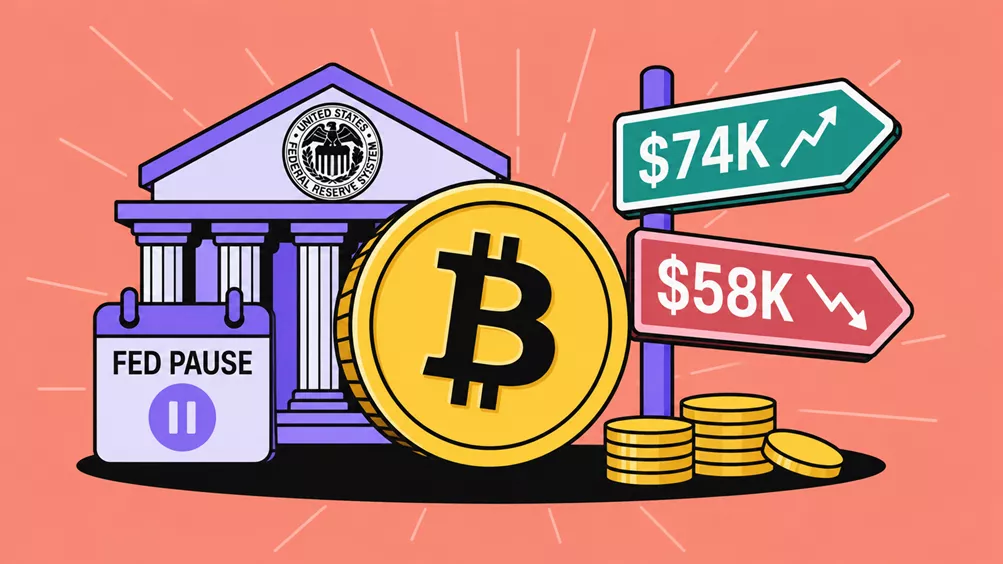
- BTC must break above $66,500 to unlock a potential move toward $74,000, while renewed selling could expose $60,000 and $58,000.
Bitcoin remained near $64,000 after the Federal Reserve left interest rates unchanged, as traders weighed improving institutional demand against rising Treasury yields and signs of mounting stress in the cryptocurrency industry.
The world’s largest cryptocurrency initially climbed from approximately $63,700 to $64,700 following the decision before surrendering part of the advance. The muted reaction reflected the mixed message from policymakers: borrowing costs did not rise, but the unusually divided vote suggested that another increase remains possible.
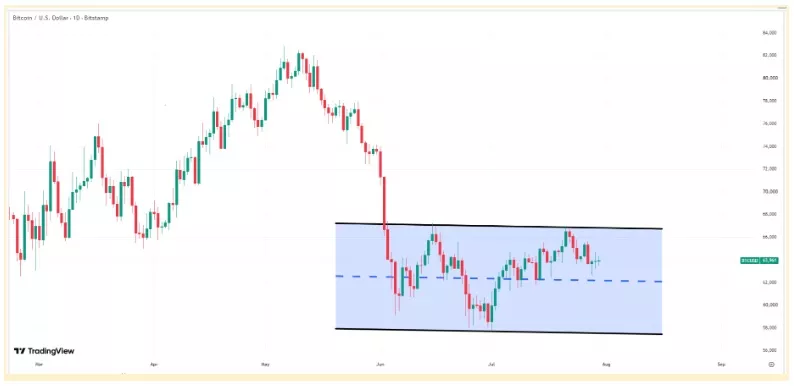
Bitcoin is consequently trapped between two competing scenarios. A recovery above $66,500 could complete a bullish technical formation targeting $74,000. Failure to preserve current support, however, could send BTC toward $60,000 or even the lower end of its recent range near $58,000.
Fed Pause Removes One Risk but Introduces Another
The Federal Open Market Committee voted 9-3 to maintain the federal funds rate at 3.50%-3.75% for a fifth consecutive meeting. Beth Hammack, Neel Kashkari, and Lorie Logan dissented in favor of a quarter-point increase, representing the strongest same-direction opposition to an FOMC decision since 2016.
The pause prevented an immediate tightening of financial conditions, giving Bitcoin some support around $64,000. However, it did little to establish a clear bullish catalyst.
Inflation remains above the Fed’s 2% target, while higher energy prices and tariff-related pressures have complicated the policy outlook. The Federal Reserve’s July statement acknowledged continued inflation risks even as officials described economic activity as expanding at a solid pace.
Long-term Treasury yields are particularly important for Bitcoin. When government bonds offer higher returns, investors have less incentive to hold volatile assets that generate no income. Rising yields also increase financing costs and can reduce the leverage available across speculative markets.
The Fed therefore delivered a pause without the dovish signal crypto traders had hoped for. Markets priced in a just-over-50 % probability of a September increase after the announcement, leaving BTC exposed to every significant inflation and employment release before the next meeting.
ETF Inflows Offer Bitcoin an Institutional Floor
Institutional demand provided a more constructive signal. US spot Bitcoin ETFs recorded net inflows of $32.11 million on July 29, reversing four consecutive trading sessions of withdrawals.
BlackRock’s IBIT led the group with $89.83 million in new capital, although redemptions from competing funds reduced the industry-wide total. Spot Ethereum ETFs moved in the opposite direction, recording $18.65 million in net outflows.
The return of demand for Bitcoin ETFs suggests that some investors continue to accumulate BTC despite elevated interest rates. It may also explain why Bitcoin has remained comparatively resilient while equities and several major cryptocurrencies have struggled.
Derivatives data nevertheless indicates growing risk. Bitcoin open interest increased as traders added leveraged exposure, while market-wide liquidations reached hundreds of millions of dollars. A heavily leveraged market can amplify the eventual move in either direction because falling prices force longs to sell and rising prices force shorts to buy.
Reports of operational problems and exchange closures have added another source of uncertainty. Claims involving withdrawal restrictions at BitMart cannot yet be independently established from primary documentation, and therefore should not be treated as confirmation of insolvency. Even so, the rumors illustrate how quickly counterparty concerns can undermine confidence after failures like FTX.
$66,500 Breakout Could Put $74,000 in Play
Bitcoin’s immediate technical structure remains undecided. Momentum indicators have improved, with the four-hour Relative Strength Index moving above the neutral 50 level and the MACD producing a bullish crossover.
However, BTC has yet to overcome the resistance that would confirm a more durable recovery.
Analyst Ali Martinez identified a possible inverse head-and-shoulders pattern on the 12-hour chart. Under that scenario, a retreat toward $60,000 could form the pattern’s final shoulder before another breakout attempt.
https://twitter.com/alicharts/status/2082741509242135015
The neckline sits around $66,500. A decisive close above that level would complete the formation and produce a measured target near $74,000, approximately 15% above the current price.
The bullish case would weaken if BTC loses $60,000. That would expose the lower boundary of its broader trading range around $58,000, where buyers would need to intervene to prevent a deeper correction.
For now, $64,000 represents an equilibrium rather than a confirmed floor. ETF inflows and improving momentum support the upside, but rising yields, leveraged positioning, and industry uncertainty continue to favor caution. Bitcoin’s next decisive signal will come from whichever boundary breaks first: $66,500 above or $60,000 below.


