- Key Takeaways
- What Is Litecoin and How Does It Relate to Bitcoin?
- The Core Technical Differences Between Litecoin and Bitcoin
- How Litecoin and Bitcoin Perform at the Casino Cashier
- Fee Comparison: What You Pay Per Transaction
- Volatility, Security, and What Casino Players Should Know
- The Deposit-Only Trap: Check Before You Send
- Best Litecoin Casino Games You Can Play
- Litecoin or Bitcoin? Which One Fits Your Casino Style
- Final Thoughts on Litecoin vs Bitcoin for Casino Players
- FAQ

Key Takeaways
- The Litecoin vs Bitcoin difference starts at the cashier, where LTC’s 2.5-minute block time and sub-$0.15 fees outperform Bitcoin’s 10-minute confirmations and $2 to $8 costs.
- Transaction fees separate the two coins most clearly, with Litecoin typically costing under $0.15 per transfer while Bitcoin regularly reaches $2 to $8 during busy periods.
- Bitcoin suits larger, infrequent transfers where stronger network security and universal casino acceptance matter more than speed or cost efficiency.
- Casino approval time and blockchain confirmation time are separate processes, so even fast Litecoin transactions can feel slow if the operator manually reviews withdrawals.
- Always confirm that a casino supports native Litecoin withdrawals before depositing, as some platforms accept LTC deposits but pay out in a different asset entirely.
It takes 2.5 minutes for a new Litecoin block to be confirmed, while Bitcoin takes about 10 minutes. This difference alone can change how fast a deposit lands and how much it costs to move funds.
In the Litecoin vs Bitcoin for casino debate, both coins are widely accepted. The real difference is how they behave once a player reaches the cashier.
When real money is on the line, faster confirmations, lower fees, and withdrawal timing matter most. This guide breaks down exactly where Litecoin and Bitcoin differ for casino players.
What Is Litecoin and How Does It Relate to Bitcoin?
Bitcoin is the original cryptocurrency, and all the cryptocurrencies other than BTC are alternative coins or altcoins that improve upon Bitcoin.
So, what is Litecoin? It’s an altcoin launched in October 2011 by Charlie Lee, a former Google engineer, as a “lite” version of Bitcoin. Often described as the “silver to Bitcoin’s gold,” the focus of Litecoin is on everyday payments while Bitcoin serves as a store of value.
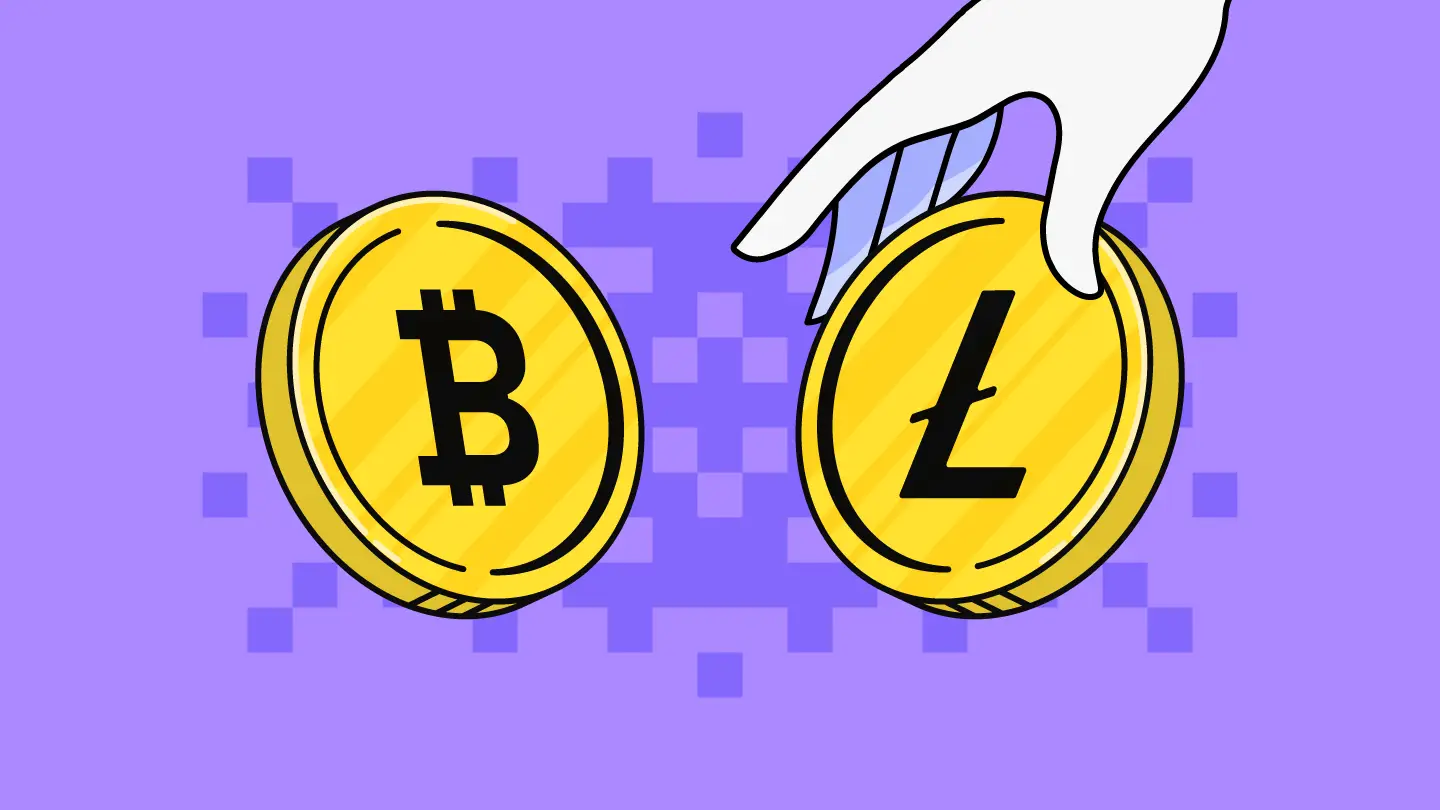
In the Litecoin vs Bitcoin comparison, both are decentralized and among the most recognized cryptocurrencies accepted by online crypto casinos. The main difference is that Litecoin, as a Bitcoin fork, was purpose-built to move faster and cost less as a payment rail.
The Core Technical Differences Between Litecoin and Bitcoin
For a casino player, the key differences between Litecoin and Bitcoin revolve around block time, transaction throughput, fees, and total supply.
| Feature | Litecoin (LTC) | Bitcoin (BTC) |
|---|---|---|
| Block time | ~2.5 minutes | ~10 minutes |
| Avg transaction fee | $0.02–$0.15 | $2–$8 (higher during congestion) |
| Typical casino deposit time | 5–15 minutes | 20–40 minutes |
| Lightning Network support | No | Yes (select casinos) |
| Best suited for | Frequent deposits, smaller bankrolls | Large, infrequent transfers |
Bitcoin produces a new block roughly every 10 minutes, while Litecoin averages about 2.5 minutes. This faster block time also means higher throughput: Bitcoin handles 5-7 transactions per second (TPS), while Litecoin can process over 50 TPS.
Fees differ significantly, too. Litecoin transaction fees usually cost less than a cent, while Bitcoin’s range from a few cents to a few dollars, depending on network congestion.
On supply, Bitcoin has a hard cap of 21 million, while Litecoin caps at 84 million. This difference, along with Bitcoin’s stronger demand, explains the gap in Litecoin price versus BTC.
Scrypt Vs. SHA-256 Mining Algorithms
A less visible but important difference between the two cryptocurrencies is their mining algorithms.
Bitcoin uses SHA-256, which is highly compute-intensive and heavily dominated by specialized ASIC mining hardware. In contrast, Litecoin uses Scrypt, which was designed to be more memory-intensive. Originally, this made LTC mining more accessible to regular users, but over time, Litecoin also became dominated by ASIC miners.
For casino players, this difference mostly stays in the background as it doesn’t change how fund transfers work.
How Litecoin and Bitcoin Perform at the Casino Cashier
In the Litecoin vs Bitcoin at the casino comparison, the experience starts from the moment a player clicks “deposit” and sends funds to the casino wallet address.
With Litecoin, a transaction is picked up quickly because of the 2.5 minute window. Even if a casino requires more than one confirmation, the balance typically appears in about 5 to 15 minutes, depending on network conditions. With Bitcoin, deposits can take 20 to 40 minutes or longer if the network is busy.
Similarly, when making withdrawals, Litecoin clears faster while Bitcoin takes more time. But the key here is that even if the transaction is confirmed on-chain, the casino may still extend the wait by reviewing payouts internally.
Casino approval time and blockchain confirmation time are separate. A Litecoin casino withdrawal may still feel slow if the operator manually reviews withdrawals, even if the network itself is quick.
A Real-World Breakdown of Deposits and Withdrawal Speeds
The practical difference between Litecoin and Bitcoin shows up in the confirmation-to-credit process. Most casinos do not credit a deposit the moment it’s sent; they wait for a certain number of blockchain confirmations.
For Litecoin, casinos typically require 2–6 confirmations depending on their risk policy, so deposits usually clear within 5–15 minutes. Bitcoin, by comparison, often requires 1–3 confirmations, which can take 20–30 minutes.
The same goes for withdrawals. The casino first approves the request, then broadcasts it to the network, and once confirmations are received, the funds are processed.
All of this applies to normal conditions. During high-traffic periods, Bitcoin is more affected, as its slower block time and limited block space create greater competition. Litecoin’s network, by contrast, tends to remain cheaper and less congested, helping keep payment timing more predictable.
Fee Comparison: What You Pay Per Transaction
Fees are often the deciding factor for regular players. A standard LTC transaction usually costs between $0.02 and $0.15, while BTC transaction fees commonly sit in the $2 to $8 range. During busy periods, LTC fees generally remain low, but BTC fees can increase considerably.
While this difference won’t matter to someone who makes one monthly withdrawal, for players who deposit three or four times per week and withdraw regularly, Bitcoin network fees can eat into a meaningful amount of value.
This is why Litecoin is an ideal choice for smaller deposits, frequent bankroll top-ups, and repeated cashouts.
Volatility, Security, and What Casino Players Should Know
When comparing Bitcoin to Litecoin, both assets are equally exposed to sharp price swings over small periods. So, the time between making a deposit or withdrawal and the funds arriving can cause a crypto balance to shift significantly.
But Bitcoin’s higher price per coin means larger absolute value swings per unit, while Litecoin’s lower per-coin price can reduce exposure for smaller bankrolls.
From a network security perspective, though, Bitcoin has a stronger security profile. Its significantly higher hash rate (1.028 ZH/s compared to LTC’s 2.58 PH/s) makes the chain more resistant to attacks. But Litecoin has also maintained a strong operational track record over the years and remains one of the longest-running cryptocurrencies used for payments.
Setting Up a Litecoin Wallet for Casino Play
To take advantage of LTC, players need a Litecoin wallet to send, receive, and store funds.
For casino play, a private wallet works better than sending directly from an exchange account. Exchanges often impose withdrawal limits and internal compliance checks that can delay or restrict transactions, whereas a private Litecoin wallet offers greater control over funds and withdrawal speed.
Before sending LTC to a casino, confirm that the platform supports native Litecoin deposits and withdrawals. Always double-check the wallet address, as crypto transactions are irreversible. Sending a small test transaction first is a smart way to verify everything works before transferring a larger amount.
The Deposit-Only Trap: Check Before You Send
A common mistake in crypto gambling is assuming that if a casino accepts Litecoin deposits, it also supports Litecoin withdrawals. That’s not always the case.
Some platforms allow LTC deposits but process withdrawals in another asset, such as Bitcoin, stablecoins, or a fiat equivalent, which can incur extra fees and unnecessary friction.
So, before depositing funds, check the withdrawal list and confirm that native LTC withdrawals are actually available. Look into minimum withdrawal limits as well, and whether the casino charges an internal withdrawal fee on top of network fees.
Best Litecoin Casino Games You Can Play
Stake, BitStarz, Rollbit, and Thunderpick are among the better-known Litecoin casinos where players can capitalize on LTC’s benefits. These casinos combine strong crypto cashier support with large game libraries and fast withdrawal processing.
Across these platforms, high-volatility slots and progressive jackpot games are popular choices, as they work well with quick deposit cycles and smaller, repeat bankrolls that Litecoin’s low fees make practical.
Table games also appeal to Litecoin users, as tighter bankroll management and low transaction costs make it easier to move funds in and out regularly. Fast-paced crash games are another major part of the ecosystem, attracting players who rely on frequent deposits.
The best Litecoin casino isn’t necessarily the one with the most games. What matters more is fast deposits, reliable withdrawals, and a cashier that works smoothly.
Litecoin or Bitcoin? Which One Fits Your Casino Style
In the Litecoin vs Bitcoin debate, Litecoin is the better choice for players who move money often. For players who deposit regularly, withdraw smaller amounts, and want to keep transaction costs low, Litecoin is a better fit.
But for those making larger deposits only occasionally and who are comfortable paying higher fees for stronger security and wider acceptance, BTC works better.
Final Thoughts on Litecoin vs Bitcoin for Casino Players
Litecoin (LTC) wins where casino players feel it most: faster confirmations, lower fees, and smoother day-to-day deposits and withdrawals. Bitcoin dominates in trust, security, and universal acceptance, but comes at the cost of higher fees and slower transaction times.
Before choosing either, browse the latest casino deals and check whether the casino supports native LTC withdrawals, not just deposits. This detail often matters more than the coin itself, because the best crypto payment method is the one that works cleanly from deposit to cashout.
FAQ
Can Litecoin make you a millionaire?
Possibly, but Litecoin is highly volatile and primarily designed as a payment-focused cryptocurrency, not a store of value.
How long does a Litecoin casino deposit take?
Most Litecoin casino deposits clear in about 5 to 15 minutes, depending on confirmations required and network conditions.
Is Litecoin mining still profitable?
It can be, but profitability depends heavily on electricity costs, ASIC efficiency, and LTC price.