- Best Hot Wallets for Users in India (Daily Use & dApps)
- Best Cold Wallets for Users in India (Long-Term Security)
- Top Crypto Wallets for Indian Users in 2026
- Key Crypto Wallet Features Crucial for Indian Users in 2026
- Crypto Wallet Security Best Practices for India Users in 2026
- Conclusion & Final Recommendation
- Frequently Asked Questions (FAQs)
Best Crypto Wallets In India 2026

- When you click links on this page, we may earn an affiliate commission. By using this website you agree to our terms and conditions and privacy policy.
- Participation in online gambling may be illegal in your country and is subject to age restrictions (18, 19, or 21, depending on the jurisdiction). Verify legality and age requirements before participating. Learn more
Owning crypto wallets in India is a necessity. According to cryptocurrency ownership data from Triple-A, approximately 8.2% of Indians own cryptocurrency, which translates to over 120 million people, underscoring the nation’s demand for secure self-custody crypto wallets, local payment gateways, and Peer-to-Peer (P2P) trading, particularly amid uncertainty regarding India’s regulations for crypto assets.
To help users find the best crypto wallets for India in 2026, we’ll review some of the most popular and intriguing options, comparing their security mechanisms, local payment support, and ease of use to make unbiased recommendations that help readers decide which is right for them. Let’s get started.
Best Hot Wallets for Users in India (Daily Use & dApps)
We’ve highlighted some of the best crypto wallets for India, but now it’s time we delve into more detail and showcase our top picks across several categories:
- Zengo Wallet – Best Hot Wallet with MPC Technology
- Binance Wallet – Best Hot Wallet with High Security
- Bitget Wallet – Best Hot wallets with over 500 Cryptocurrencies
- Uphold Wallet – Best Hot Wallet with Diverse Assets
Best Cold Wallets for Users in India (Long-Term Security)
For long-term investors, nothing is better than a hardware wallet. They offer unrivalled security and add protection by requiring access to a physical device to use the wallet.
- Tangem Wallet – Best Ring Cold Wallet
- Bitkey Wallet – Best Cold Wallet For Bitcoin
- Safepal Wallet – Best Cold wallet for NFT Management
- BitBox Wallet – Best Open-Source Cold Wallet
- Blockstream Wallet – Best Fully Air-Gapped Cold Wallet
Top Crypto Wallets for Indian Users in 2026
There are dozens of popular crypto wallets in India in 2026. However, they’re not all built equal. Below, we’ll take a look at some of the top options, highlighting their benefits and drawbacks.

Tangem
Tangem is an air-gapped hardware wallet roughly the size and shape of a credit card. They're highly portable, fitting easily into a wallet or pocket, and convenient to store secretly, making it more secure. They feature no external connectivity other than NFC, so a mobile device is required for use.
Tangem wallets come in three core bundles. For $69.90, users can purchase a three-card set, which provides redundancy if one card is lost. A two-card version costs $54.90 and provides a single backup at a budget-friendly price. Alternatively, $150 bundle includes a Tangem Ring and two backup cards.
With support for thousands of assets, an EAL6+ security chip, and a 25-year warranty, Tangem wallets are excellent options for long-term investors. Moreover, it can connect to Decentralized Applications (dApps) and Decentralized Finance (DeFi) protocols via WalletConnect, making it one of the top hardware crypto wallets in India for traders.
Pros
-
Options at various price points
-
Minimal external connecivty
-
No battery or charging required
-
Extremely portable and easy to store
-
EAL6+ security chip
-
WalletConnect for connecting to dApp and Defi platforms
Cons
-
A mobile device is needed for use
-
Delivery to India takes roughly 7 to 13 business days
- Bitcoin
- Ethereum
-
Tether
70
No result
- English
- German
-
French
3
No result
Kraken
Established in 2011, Kraken is a trusted cryptocurrency exchange renowned for its longevity and diverse trading interfaces, catering to a broad user base.
- Bitcoin
- Ethereum
-
Tether
83
No result
- Spanish
- English
-
French
4
No result
Zengo
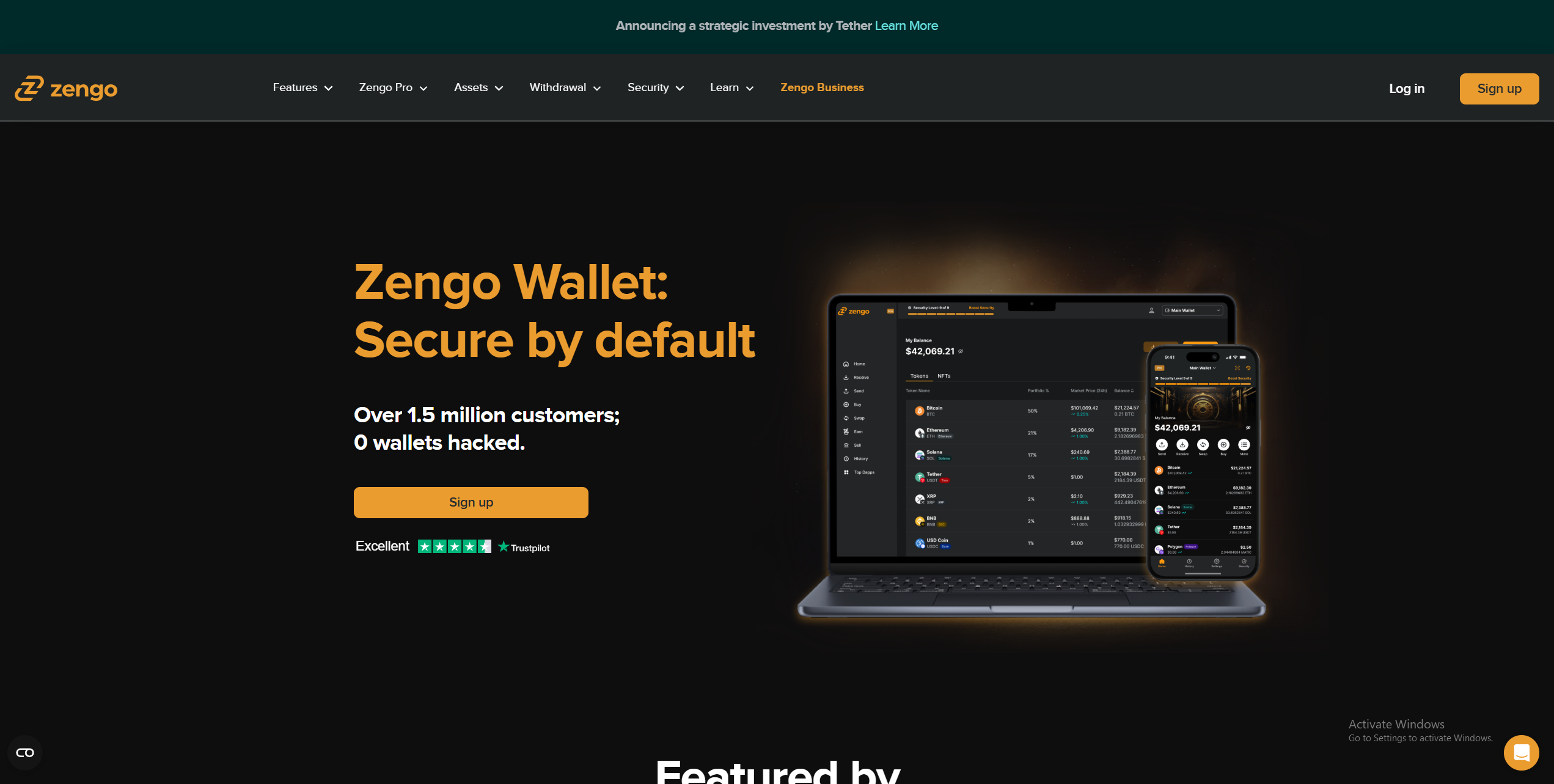
Zengo is one of the best crypto wallets for India in terms of mobile performance. It utilizes Multi-Party Computation (MPC) technology, removing the need for seed phrases by splitting private keys into shares that are stored on multiple devices without exposing each other, enhancing both security and convenience.
While Zengo is an excellent option for mobile users in terms of security, it supports thousands of assets, rendering it a strong choice for handling diverse portfolios. There are also some interesting features outside of crypto storage. Zengo has an inheritance tool and enables connections with dApps, expanding its use cases.
The Zengo recovery system comprises email authentication, a recovery file, and an optional 3D FaceLock (facial scan), providing redundancy. Moreover, it supports purchasing crypto directly in-app using INR (cashing out to INR is currently unavailable). With advanced security features and an INR on-ramp, Zengo is a top non-custodial wallet for India.
Pros
-
Utilizes MPC technology to eliminate seed phrases
-
Available on Android and iOS
-
Offers dApp connectivity
-
A free version of Zengo is available
-
Has an INR on-ramp
Cons
-
Certain features are locked behind a $19.99 monthly subscription
-
Only supports a handful of assets
- Bitcoin
- Ethereum
-
Tether
68
No result
- English

Blockstream
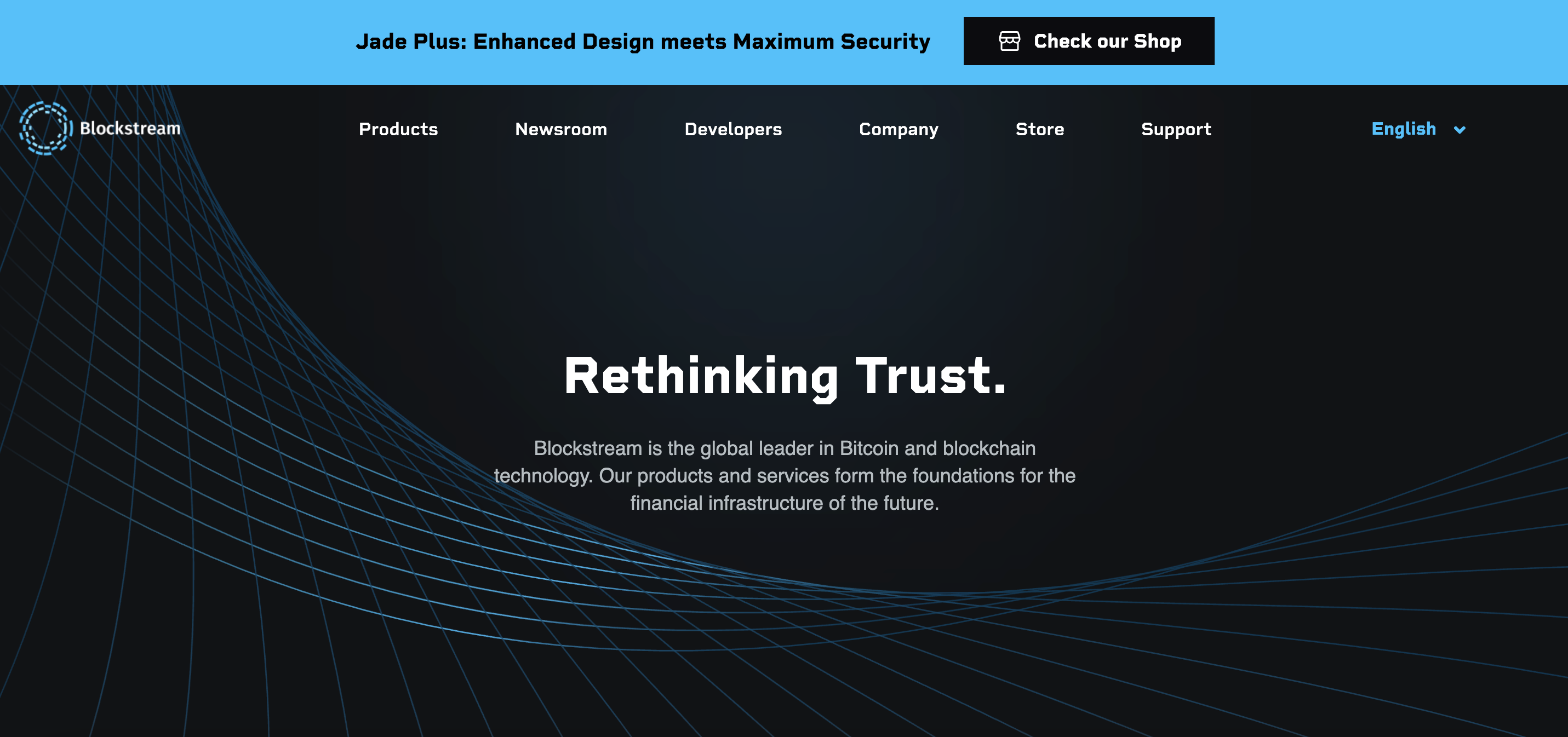
Blockstream is a versatile Bitcoin wallet app. It supports on-chain transactions, the Lightning Network for fast, low-cost transfers, and the Liquid Network - a Bitcoin sidechain that supports Tether and tokenization. Blockstream is free to use, but people can add security by purchasing the $169 Blockstream Jade hardware wallet.
Blockstream's setup process is straightforward and fast. Users enter a PIN or use their biometrics, and a wallet is created. They can access the seed phrase, providing a reliable method for recovery. A system for buying Bitcoin is available, but it only supports USD, so expect to pay currency conversion fees.
With support for over a dozen languages, support for desktop/mobile devices, and a streamlined user experience, Blockstream is a solid Bitcoin wallet. It encompasses the entire Bitcoin ecosystem and provides an optional hardware wallet upgrade, making it one of the best crypto wallets for Indians who own Bitcoin.
Pros
-
Free and paid options
-
Supports on-chain, Lightning, and Liquid Bitcoin transactions
-
Integrates with the Blockstream Jade Hardware wallet
-
Easy initial setup process
-
A fiat on-ramp is available
Cons
-
No INR support
-
Limited to Bitcoin only

Bitkey
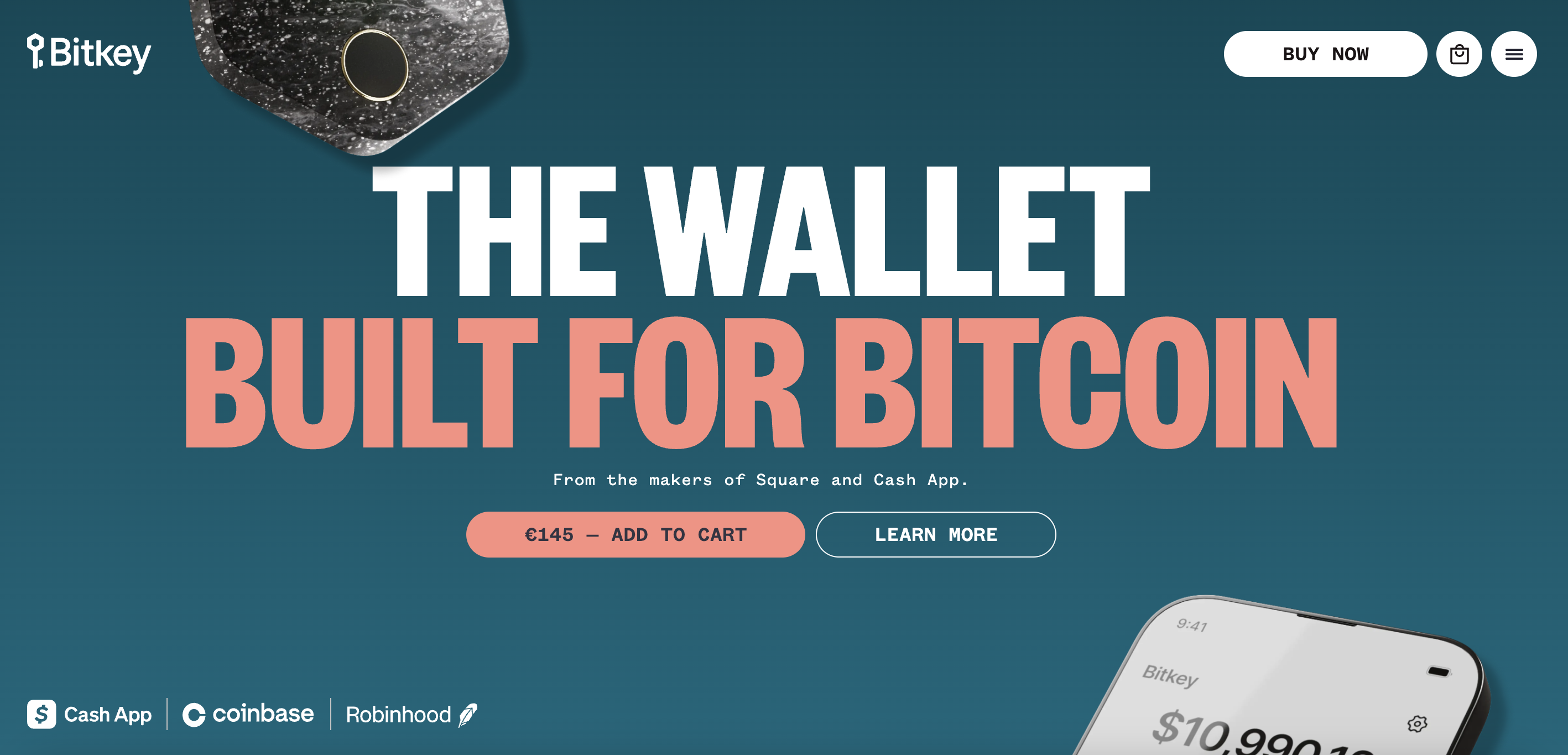
If you invest solely in Bitcoin, there's little reason to select a wallet based on the number of assets it supports. Instead, prioritize aspects such as security and ease of use. Bitkey is a Bitcoin-only hardware wallet that costs $150 and takes the form of a pocket-sized hexagonal device.
Built by the creators of Square and Cash App, the Bitkey eliminates seed phrases in favor of a multi-signature model that requires approval from two out of three signees. The private key is split between the hardware wallet device, the mobile app (stored in the cloud), and Bitkey's server.
With Bitkey ensuring your crypto is recoverable even if one backup method is lost, it's a solid choice for Bitcoin investors who have no intention of buying altcoins. However, it's one of the more expensive hardware wallets we'll review and lacks an EAL-rated security chip, which limits its value.
Pros
-
Creators have an excellent track record
-
Multi-signature approach enhances security
-
Modern and stylish design
-
Eliminates seed phrases
-
Recoverable even if one device is lost
Cons
-
Expensive for its features
-
Only supports Bitcoin
- Bitcoin
- English
Safepal
The SafePal S1 is an affordable, open-source, and air-gapped hardware wallet that combines security, convenience, and portability to create a highly versatile wallet. Available for just $49.99, the SafePal S1 is among the cheapest crypto wallets for India in terms of cold storage.
With support for over 200 blockchains, an EAL6+ security chip, and more than 10,000 assets, the SafePal S1 is an excellent choice for individuals who invest in a diverse range of assets. The SafePal S1 connects to an Android/iOS mobile app, which it uses to scan QR codes and sign transactions.
SafePal also offers the S1 Pro for $89.99 (with a larger battery and more premium construction) and the X1 for $69.99 (featuring a smaller battery, keypad, and Bluetooth). With an in-built yield aggregator, NFT support, and dApp connectivity, the SafePal S1 is among the best crypto wallets for India.
Pros
-
EAL6+ security chip
-
Available at multiple price points
-
Supports 10,000+ cryptocurrencies
-
Offers dApp connectivity
-
Budget-friendly
-
In-built yield aggregation
Cons
-
The S1 Pro's extra features do not justify its price tag
-
Requires a mobile phone
- Bitcoin
- Ethereum
-
Tether
89
No result
- English
- German
-
Spanish
12
No result
Key Crypto Wallet Features Crucial for Indian Users in 2026

Certain features are particularly critical for Indian users due to the national investing landscape and Indian crypto regulations in 2025.
1. Local Payment/P2P Functionality
Unless you already own cryptocurrency and don’t want any more, you’ll need a way to convert cash into digital assets. Most platforms offer a tool for buying cryptocurrency, but they typically support a handful of major currencies, most commonly USD, EUR, and GBP.
Using non-local currencies and payment methods will incur currency conversion charges, which can significantly impact how much value you receive from your money. Instead, you should opt for Rupee fiat gateways. They allow you to fund your account using familiar payment methods, saving you time, confusion, and money.
Local crypto exchanges in India can be a viable option, but they often have limited functionality. Instead, global platforms like Bitget and Coinbase blend convenience and performance. Bitget offers a Rupee P2P marketplace while Coinbase offers INR as a display currency.
2. Regulatory Compliance and Custody
Understanding the benefits and drawbacks of custodial vs non-custodial wallets is essential for selecting the best crypto wallets for India.
Custodial wallets are great for beginners. Most custodial exchange wallets fall into this category. The issuer controls the private key, while the user typically logs in via a username and password. This eliminates seed phrase storage, which is the most common method by which wallets are compromised.
Non-custodial wallets maximize security for experienced users, but could leave beginners vulnerable as they must manage the seed phrase and take responsibility for its storage. Seed phrases can recover a wallet without needing additional information, so storing them securely is essential. When properly stored, non-custodial wallets are highly secure.
Some of the best crypto wallets are non-custodial wallets. It’s advisable to select a non-custodial wallet or an exchange that also offers a non-custodial wallet, given the uncertainty surrounding India’s crypto regulations.
3. Biometric and Multi-Factor Authentication
Up to 0.14% of crypto transactions in 2024 were associated with illicit activity, according to a Chainalysis crypto crime report, highlighting the importance of crypto security.
Crypto wallets require a strong level of protection to keep users’ funds safe. MPC wallets are among the best options (outside of hardware wallets) as they offer security and convenience, while removing the risk of seed phrases, which can be used to recover a wallet from anywhere in the world.
Two-Factor Authentication (2FA) or Multi-Factor Authentication (MFA) is a standard measure that requires users to enter a special code before completing sensitive actions. Biometric authentication (facial scan, fingerprint) adds an extra layer of protection to your login process, making it significantly less likely for a wallet app to be compromised.
Crypto Wallet Security Best Practices for India Users in 2026

To keep your wallet secure, consider implementing a few key measures. They don’t require much effort, but they significantly enhance your safety.
Protecting Your Seed Phrase
The most crucial aspect of managing your wallet is keeping your seed phrase safe. You should avoid storing your seed phrase digitally, in a text file, or in a screenshot. Doing so exposes you to digital attacks or leaves you vulnerable if you accidentally install a virus.
Instead, you should opt for analog storage. Metal seed storage solutions are fire-resistant and permanent, making them perfect for significant, long-term holdings. Alternatively, writing it manually with a pen and paper is suitable. Making a backup of your seed phrase and storing it off-site is a good idea.
Avoiding Common Scams
Scams are prevalent in financial markets, particularly in the cryptocurrency sector. However, many are perpetrated using the same basic structures, so understanding how they work can help you avoid them. Key scams to watch for include:
Phishing attacks
Often, bad actors will attempt to mimic legitimate communications from a wallet or exchange. They will message you posing as if they’re a support team or an automated message, trying to get you to provide login details or seed phrases.
To prevent it, always set up anti-phishing codes where available. They’re special codes shown only on legitimate communications. You should also verify that the sender is genuine and actually represents the wallet or exchange. Typically, you’ll never be asked for sensitive information by real representatives.
Fake wallets
Fraudsters often attempt to exploit gaps left by genuine wallets. For example, creating a free or ‘cracked’ version of a paid wallet or releasing a wallet on an operating system on which it’s unavailable.
To avoid fake wallets, download them only from legitimate, verified sources. Double-check that the wallet is available on your chosen platform before downloading, and check user reviews to ensure the wallet is genuine and functions correctly.
Social engineering
Another common method by which people gain malicious access to users’ wallets is through social engineering. It’s a more complex and personal attack compared to the alternatives.
People will pretend to be friends, family, or popular figures in the crypto and business world, such as Elon Musk or Adam Beck, and attempt to convince you to hand over money or sensitive information, often including seed phrases.
These scams can be challenging to avoid, but a good method is remembering that if something seems too good to be true, it probably is. You should also keep in mind that influencers will never message you first, and especially will not ask you to hand over money.
Utilize Security Tools
A wallet or exchange should be inherently secure. However, most offer additional tools that users can enable for extra protection. For example, Two-Factor Authentication (2FA) or Multi-Factor Authentication (MFA), anti-phishing codes, withdrawal whitelists (delegating safe withdrawal addresses), passkey systems, and tools for managing which devices are logged in.
Always check your wallet’s security settings to see which safety measures are available to you. Any tools that add an extra layer of security are worth utilizing. They’ll make it harder to compromise your account. Tools like withdrawal whitelists are beneficial for managing and maintaining control over your assets.
Conclusion & Final Recommendation
Throughout this guide, we’ve examined some of the most popular and highly rated crypto wallets in India. While every brand we’ve mentioned has its merits, a few stand out above the others.
If you trade and invest primarily on mobile, Coinbase could be perfect. With a sleek mobile app, exchange/non-custodial wallets, a fiat on-ramp, and INR as a display currency, it’s difficult to beat. Moreover, the dedicated Coinbase Wallet app enhances asset support and dApp connectivity, making Coinbase a particularly versatile platform.
For traders and people holding many assets, Bitget is worth considering. It features broad asset support (676 on the exchange and 10,000 on the Web3 Wallet), support for INR purchases, and a P2P trading system. Moreover, users can connect to DeFi products and decentralized exchanges, providing strong trading functionality.
Long-term investors and people with significant holdings may prefer a hardware wallet. The Tangem Wallet and BitBox are the best options. Both are affordable, support over 10,000 assets, and feature an EAL6+ security chip. Your individual top choice comes down to personal preference.
Frequently Asked Questions (FAQs)
What is the best wallet for P2P/local trading in India?
Prioritize non-custodial wallets that can connect to P2P platforms, such as Paxful, as they’re highly versatile and support many local payment methods. However, global platforms like Bitget and Coinbase, which support INR purchases via various payment methods, are also choices as they strike a balance between convenience and performance.
Should I choose a hot wallet or a cold wallet?
Instead of restricting yourself to either a hot or a cold wallet, utilizing both is the best strategy. Keep a hot wallet with some funds for trading and interacting with dApps, and hold the majority of your long-term holdings in cold storage to effectively merge safety and flexibility.
What happens if I lose my phone with my mobile wallet on it?
If you lose your phone with a non-custodial wallet, you will need to use the seed phrase to recover it. Therefore, storing your seed phrase in a secure and accessible location is essential. Exchange wallets can be logged into anywhere as long as you have the username and password.
Can I use a hardware wallet with my mobile phone in India?
Most modern hardware wallets can be used with a mobile device in India, enabling safe and portable transaction signing. However, ensure your wallet and mobile connectivity are compatible.


