- Key Takeaways
- What Do Slot Machine Symbols Mean?
- Where Slot Machine Symbols Come From
- Types of Slot Machine Symbols
- The Classic Slot Machine Symbols You Still See Everywhere
- High-Paying Symbols and How to Identify Them
- Modern Slot Icons: What The New Symbols Do
- How Symbols On A Slot Machine Decide Your Payout
- What Symbol Frequency Tells You About a Slot’s Volatility
- Classic Vs Video Slots: Two Different Symbol Languages
- Closing Thoughts
- FAQ

Key Takeaways
- Slot machine symbols are the icons on the reels that determine wins, trigger features, and define how payouts are formed.
- Check the pay table before playing to see which symbols pay most, appear often, and trigger key bonus features.
- Focus on symbol frequency, since low value icons appear more often while high value symbols land less frequently but pay more.
- Use wilds to your advantage, as they help complete winning combinations and increase the chances of forming payouts.
- Track scatter and bonus symbols closely, because they unlock free spins, features, and the highest payout opportunities.
A modern five reel slot with 20 symbols can create over 3.2 million combinations on a single spin. Early machines used just a handful of icons like bells, cherries, and sevens. That shift changed everything. Today, slot machine symbols do far more than fill space on spinning reels. They trigger bonuses, unlock jackpots, and shape how often you win.
When you understand slot machine symbols, you stop guessing and start reading games properly. You can quickly spot high paying icons, recognize bonus triggers, and understand why some slots feel tighter than others.
This guide breaks down classic slot machine symbols, modern slot machine icons, and how each one connects directly to payouts.
What Do Slot Machine Symbols Mean?
Slot machine symbols are the visual heartbeat of the game, blending history with high-stakes math. The iconic cherries and lemons date back to early 1900s trade simulators that paid out fruit-flavored gum to bypass gambling bans. Today, Wilds act as jokers to complete winning lines, while Scatters trigger elusive bonus rounds. Each icon is a digital key, unlocking specific payout multipliers determined by a complex random number generator.
Where Slot Machine Symbols Come From
Slot machines started with simple imagery because early players needed instant recognition. In 1895, Charles Fey introduced the Liberty Bell machine using a handful of icons, including horseshoes, playing card suits, stars, and a bell. These early classic slot machine symbols worked because they felt familiar. A horseshoe suggested luck, card suits reflected popular games, and the bell stood out as the top prize.
As slot machines spread into bars and cigar shops, manufacturers looked for ways to keep machines legal in stricter regions. That shift led to fruit symbols. Instead of cash, machines dispensed chewing gum, and each flavor matched an image. Slot machine cherries, lemons, and plums represented gum flavors rather than direct payouts. Players still treated the results like gambling wins, so fruit symbols quickly became standard.
Cherries gained popularity in the early 1990s because manufacturers could place them at the lower end of the pay table. They appeared often, kept gameplay active, and encouraged longer play sessions. This balance helped make cherries a staple of classic slot machine symbols.
The slot machine bar symbol came from the Bell Fruit Gum Company logo. Designers adapted the stacked bar image and introduced variations. Single BAR symbols paid modest amounts, while double and triple BAR icons increased value. This tiered structure gave developers flexibility without adding new symbols.
Sevens arrived later in the mid-20th century but quickly became premium icons. The number already carried a reputation for luck, so casinos leaned into that perception. Bells remained from the original Liberty Bell machine, while diamonds joined as visually strong, high value symbols. Over time, these images formed the foundation of classic slot machine symbols that still appear across both traditional and modern games.
Types of Slot Machine Symbols
Modern slot machines are masterpieces of visual storytelling and complex mathematics. While early machines relied on simple mechanical reels, today’s digital titles use a diverse array of symbols to dictate gameplay, volatility, and your potential for a massive jackpot.
- Standard Low-Value Symbols: Often represented by playing card ranks (10, J, Q, K, A) or classic fruits, these appear most frequently on the reels. They offer smaller, consistent payouts to keep your bankroll moving during the base game.
- High-Value (Premium) Symbols: These are the stars of the paytable, usually depicted as thematic characters, artifacts, or treasure. Landing a full line of these can result in significant multipliers, often ranging from 10x to 50x your stake or more.
- Wild Symbols: Functioning like a joker in a deck of cards, Wilds substitute for standard symbols to complete a winning combination. Modern variations include Sticky Wilds, which stay in place for multiple spins, and Expanding Wilds, which grow to cover entire reels.
- Scatter Symbols: These are unique because they don’t need to land on a specific payline to trigger a win. Traditionally, hitting three or more Scatters anywhere on the screen unlocks the game’s primary bonus feature or a “Free Spins” mode.
- Multiplier Symbols: These icons do exactly what their name suggests – they multiply the payout of any winning line they are part of. In some high-volatility games, multipliers can stack, turning a modest win into a massive windfall.
- Bonus Symbols: Distinct from Scatters, these specifically trigger interactive mini-games. These might include “Pick-and-Win” screens or “Wheel of Fortune” style spins that exist outside the standard 5×3 or 5×4 reel grid.
- Stacked Symbols: These appear in clusters of two or more on a single reel. When they land, they increase the probability of hitting multiple paylines simultaneously, often leading to “Big Win” animations and higher total payouts.
- Mystery Symbols: A favorite in modern video slots, these land as a generic icon (like a question mark or a closed door) and then transform into a random matching symbol, creating suspense and unexpected winning clusters.
- Collector Symbols: Frequently seen in “Hold and Win” or “Money” style games, these symbols display cash values. They usually require a specific “Collect” icon to land on the final reel to harvest all the visible prizes on the screen.
The Classic Slot Machine Symbols You Still See Everywhere
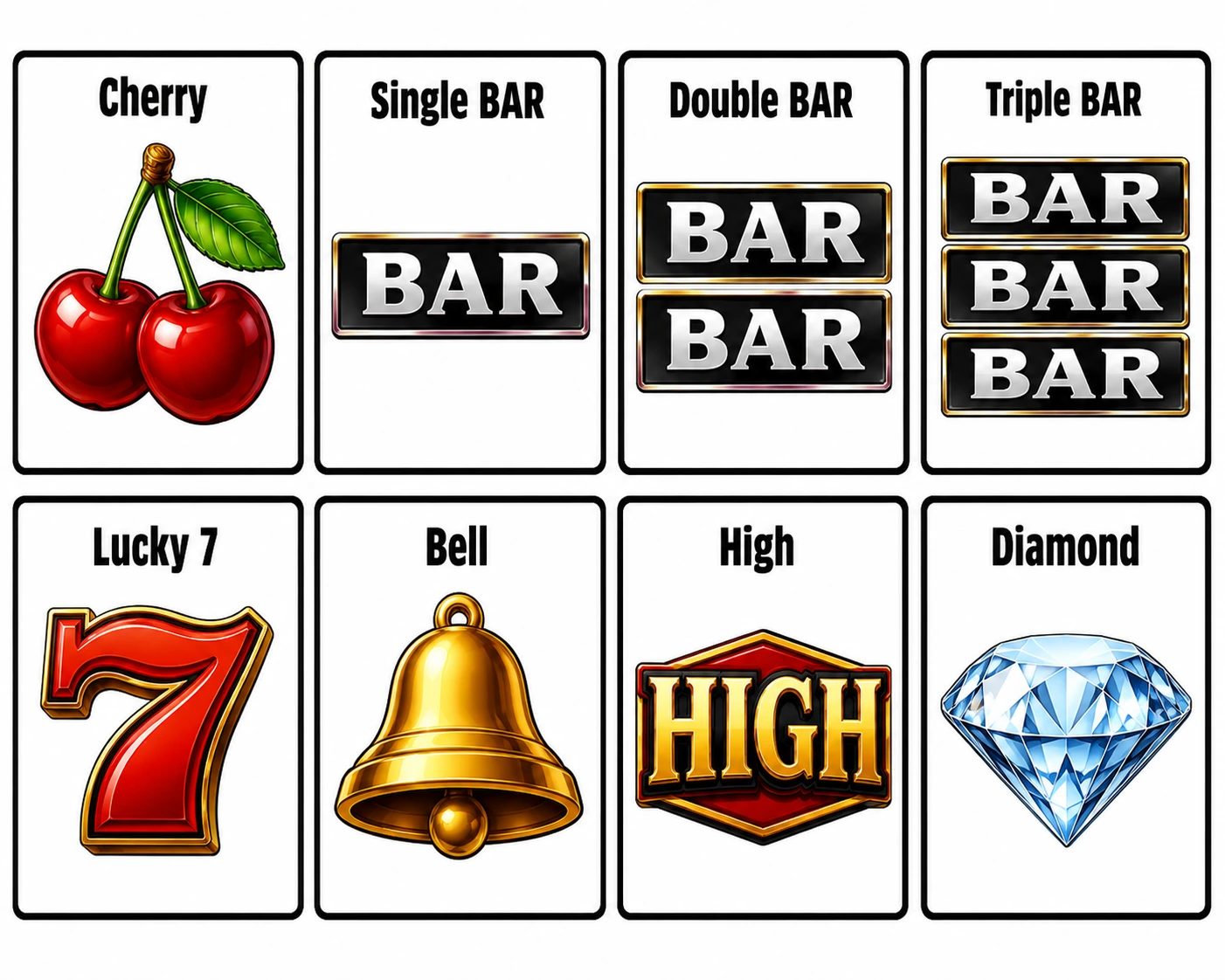
Most slot machines still use familiar images that players recognize instantly. These common slot machine symbols stayed popular because they make games easier to understand without reading long instructions. When you see cherries, bars, or sevens, you already have a rough idea of how the pay table works.
Cherries usually sit near the bottom of the pay table. They often pay small amounts and sometimes reward partial matches, depending on the game. Because cherries appear more often than premium icons, they help keep wins ticking over during longer sessions.
The slot machine bar appears in three versions:
- A single BAR normally pays modest amounts.
- Double BAR symbols increase the payout, while triple BAR icons usually sit higher on the pay table.
- Some machines also allow mixed BAR combinations, which can still produce a payout.
Lucky sevens usually rank among the highest paying slot machine icons in classic games. Three sevens across the reels often deliver one of the biggest standard payouts, which explains why many players still look for them.
Bells often sit just below sevens in payout rankings. Many traditional three reel machines still treat bells as premium symbols.
Diamonds vary depending on the game. Some slots treat diamonds as high value symbols, while others connect them to bonus features or multipliers. They usually appear less often, which helps keep payouts higher.
Symbol Value Reference Table
| Symbol | Typical Payout Tier | Notes |
|---|---|---|
| Cherry | Low | Frequent small wins |
| Single BAR | Low to Mid | Basic payout |
| Double BAR | Mid | Higher value BAR |
| Triple BAR | Mid to High | Strong classic symbol |
| Lucky 7 | High | Top classic payer |
| Bell | High | Premium legacy icon |
| Diamond | Varies | Bonus or premium symbol |
High-Paying Symbols and How to Identify Them
The paytable is the fastest way to separate premium symbols from filler. Every slot machine carries one, and it lists every icon ranked by payout value. Open it before you spin a single credit.
High-value symbols follow a few consistent patterns across most games. They appear less frequently on the reels than low-value card rank icons, which is how developers keep the math balanced. In video slots, the premium symbols almost always match the game’s theme. A mythology slot uses gods and artifacts. A treasure-hunt slot uses gold coins and maps. These themed icons sit at the top of the pay table and typically pay between 10x and 50x your stake for a five-of-a-kind line.
Two quick checks work for any game.
- Find the symbol with the highest listed multiplier and note how many positions it occupies across all five reels.
- Symbols that appear in fewer positions pay more because they land less often.
The payout against frequency ratio is the crucial number when you are comparing two games at the same stake.
Modern Slot Icons: What The New Symbols Do
Modern slots use a wider range of slot symbols, including themed icons and standard card values from A to 10. These slot machine icons shape both the game’s visual style and how it pays. Lower value symbols appear more often, while premium icons appear less frequently but offer larger rewards.
Unlike classic symbols, modern slot symbols are function-driven, not just decorative.
- Wilds help complete winning combinations when a matching symbol is missing.
- Scatter symbols unlock free spins or bonus rounds without needing to land on a payline.
- Multipliers increase payouts during winning combinations, while bonus symbols trigger extra features such as pick games or wheel spins.
These added functions make modern slot machine icons more interactive, directly influencing how wins are formed and how gameplay unfolds.
Wild Symbols Do More Than Fill Gaps
Wild symbols substitute for other icons to complete winning combinations when a matching symbol is missing. They increase the chances of forming payouts by filling gaps across the reels.
Different types of wilds change how often and how easily wins form. Standard wilds replace most regular symbols. Expanding wilds can cover an entire reel, boosting the number of possible matches. Sticky wilds stay in place for multiple spins, giving repeated chances to build wins. Stacked wilds appear in vertical groups, increasing the likelihood of landing matching symbols.
For players, wilds mainly improve hit frequency and make it easier to complete winning lines.
Scatter Symbols Trigger The Rounds Worth Waiting For
Scatter symbols work differently from traditional icons. They activate bonuses regardless of position on the reels. You usually need three scatter symbols to trigger free spins.
Free spin rounds often include additional features such as multipliers or extra wilds. Because scatters appear less frequently, they often connect to larger potential payouts.
Players often track scatter symbols because they signal when bonus rounds might arrive.
Bonus Symbols And The Jackpot Icons
Bonus symbols activate special features such as pick games, wheels, or additional mini rounds. These features often appear outside the main reels.
Multiplier symbols increase winnings by specific amounts. A 2x symbol doubles payouts, while higher multipliers increase returns further.
Jackpot symbols appear in progressive slots or fixed jackpot games. These icons often unlock larger prize pools depending on the game structure.
RNG based slots determine outcomes instantly, while video slots layer bonus features and animations on top of those outcomes. In both cases, symbols still determine how payouts form.
How Symbols On A Slot Machine Decide Your Payout
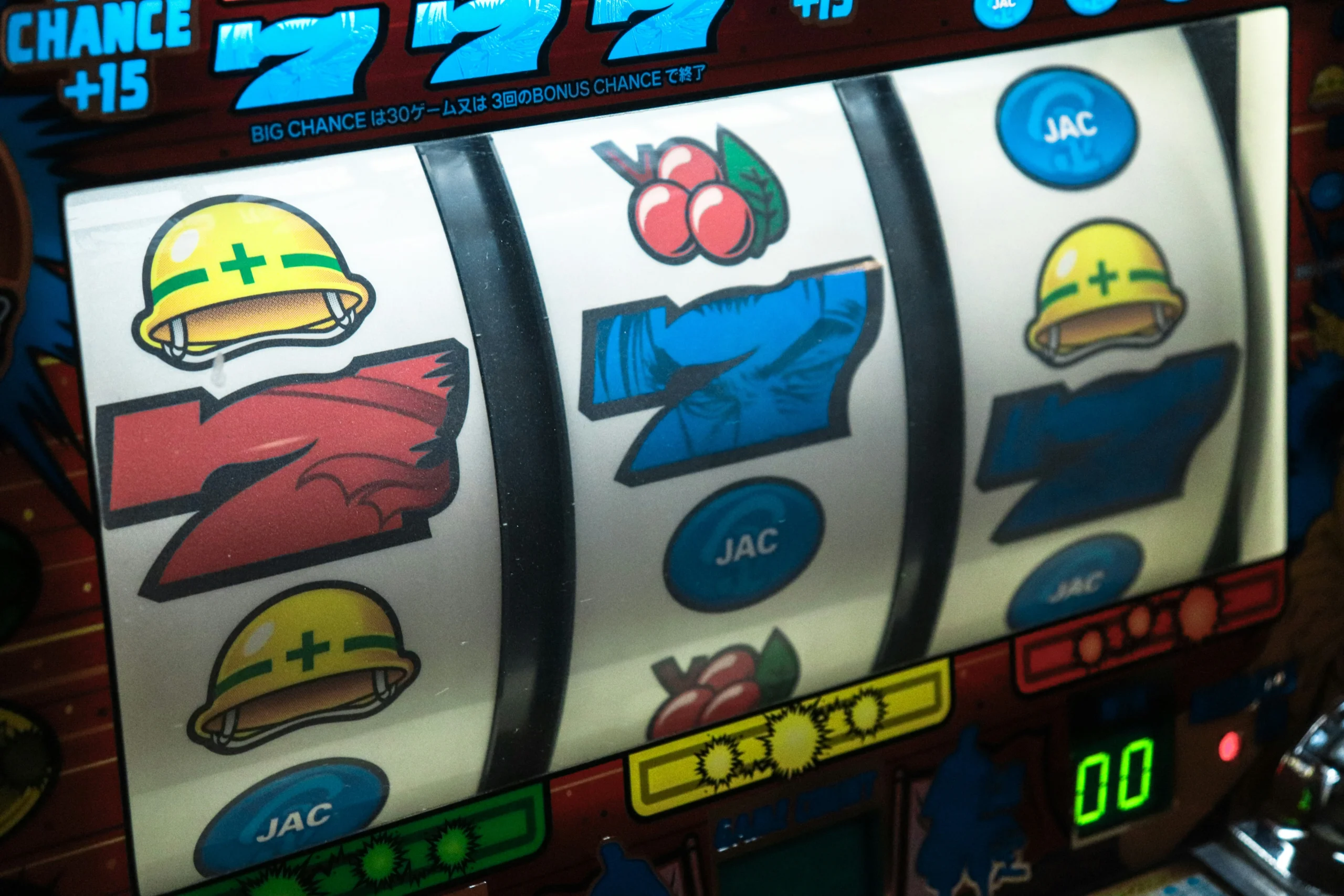
Symbols on a slot machine connect directly to paylines or ways to win formats. Paylines require matching icons across fixed lines from left to right.
Ways to win formats remove fixed lines. Instead, matching symbols across adjacent reels create payouts. This increases the number of possible combinations and changes how wins occur.
Game designers control symbol frequency using weighted reels. High value symbols appear less often, while lower value icons appear more frequently. This balance affects how often wins happen and how large those wins can be.
Payline Vs Ways To Win
| Payline Slots | Ways-to-Win | Key Difference |
|---|---|---|
| Fixed Paths: Symbols must land on specific pre-defined lines (horizontal, diagonal, or zigzag). | Adjacent Reels: Matching symbols only need to appear on consecutive reels, regardless of position. | Paylines require exact alignment on purchased lines. |
| Strict Alignment: Must start on the leftmost reel and follow the exact payline path. | Flexible Placement: Symbols just need to touch from left to right across reels. | Ways-to-Win activate every possible adjacent combination. |
| Limited Hits: Capped by the number of paylines purchased (10, 20, 50, etc.). | Exponential Math: Offers hundreds to thousands of winning combinations (e.g. 243+ ways). | Paylines limit wins; Ways-to-Win multiply them dramatically. |
| Visual Precision: Symbol slightly off the line usually results in a loss. | Board Coverage: Any correct symbol on the next reel continues the chain. | Near misses are far more common on paylines. |
What Symbol Frequency Tells You About a Slot’s Volatility
Symbol distribution is one of the clearest signals a slot gives you before you commit real money. When a game loads its reels with low-value card symbols and places premium icons sparingly across five reels, the math pushes toward infrequent wins with larger payouts. That is a high-volatility game. Wins arrive less often, but the gap between your stake and a top payout is wider.
Low-volatility slots work the opposite way. Premium symbols appear in more positions, base-game wins land more regularly, and the payout ceiling tends to be lower. The trade-off is a steadier session with less variance between spins.
You can test this without spinning a cent. Count how many times the top-paying symbol appears across all reels in the paytable preview or demo mode. Fewer appearances mean fewer winning opportunities, which is the mechanical definition of high volatility. Matching that profile to your session budget tells you more than any promotional description will.
Classic Vs Video Slots: Two Different Symbol Languages
Classic slot machine symbols typically appear on three reel machines. These games usually include cherries, BAR symbols, bells, and sevens, as explained above. Gameplay remains simple and focused on straightforward payouts.
Video slots typically use five reels and a much larger symbol set. Alongside common slot machine symbols, they include themed icons, card values, and feature symbols such as wilds, scatters, and multipliers. These symbols do more than form matches, they trigger bonuses, expand winning potential, and add layers to gameplay.
For players, the difference comes down to preference. Classic machines often appeal to players who prefer simplicity. Video slots appeal to players who enjoy bonus features and varied gameplay. Both formats rely on symbols to shape payouts and player experience.
You May Also Like
- Best Crypto & BTC Slots Sites 2026
- What Are the Best Slots to Play in 2026? Our 10 Top Picks
- Bonus Buy Slots Explained: What You’re Really Paying For
Closing Thoughts
Every slot tells you how it works before you spin. The symbols reveal that story. A quick look at the pay table shows which icons pay often, which ones unlock bonus rounds, and which symbols rarely appear but carry bigger rewards.
Classic slot machine symbols keep things straightforward. Cherries usually land more often, while sevens and bells tend to sit higher on the pay table. Modern slot machine icons add more moving parts. Wilds help complete wins, scatters unlock free spins, and bonus symbols often lead to the most memorable moments in a session.
So before you start playing, take a minute to scan the symbols on a slot machine. Check what triggers free spins, see how wilds behave, and note which icons carry the highest payouts. Such a small habit makes it easier to pick games that suit your style and avoid surprises once the reels start spinning.
FAQ
How Many Symbols Are On A Slot Machine Reel?
Classic slots usually contain fewer than ten symbols. Modern video slots often include twenty or more icons depending on game design.
What Does The BAR Symbol On A Slot Machine Mean?
The slot machine bar symbol originated from chewing gum branding. Single, double, and triple BAR symbols represent increasing payout tiers.
Which Slot Machine Symbol Pays The Most?
Premium symbols such as lucky sevens, jackpot icons, or top themed symbols usually offer the highest payouts, depending on the game.
Why Do Slot Machines Use Fruit Symbols?
Fruit symbols like cherries and lemons are a nod to gambling history. In the early 1900s, machines often dispensed fruit-flavored gum instead of cash to bypass strict anti-gambling laws. Today, these iconic visuals remain a staple of both retro one-armed bandits and modern digital slots.
Is There a Maximum Number of Symbols For Each Slot Machine?
There is no hard limit, but the sweet spot is usually 10 to 12 symbols. In the mechanical era, physical reel space capped symbol counts. Today, virtual reels governed by Random Number Generators (RNG) allow for infinite possibilities. However, developers balance variety with volatility; too many symbols dilute the odds of matching a winning line, while too few make the game predictably dull.