

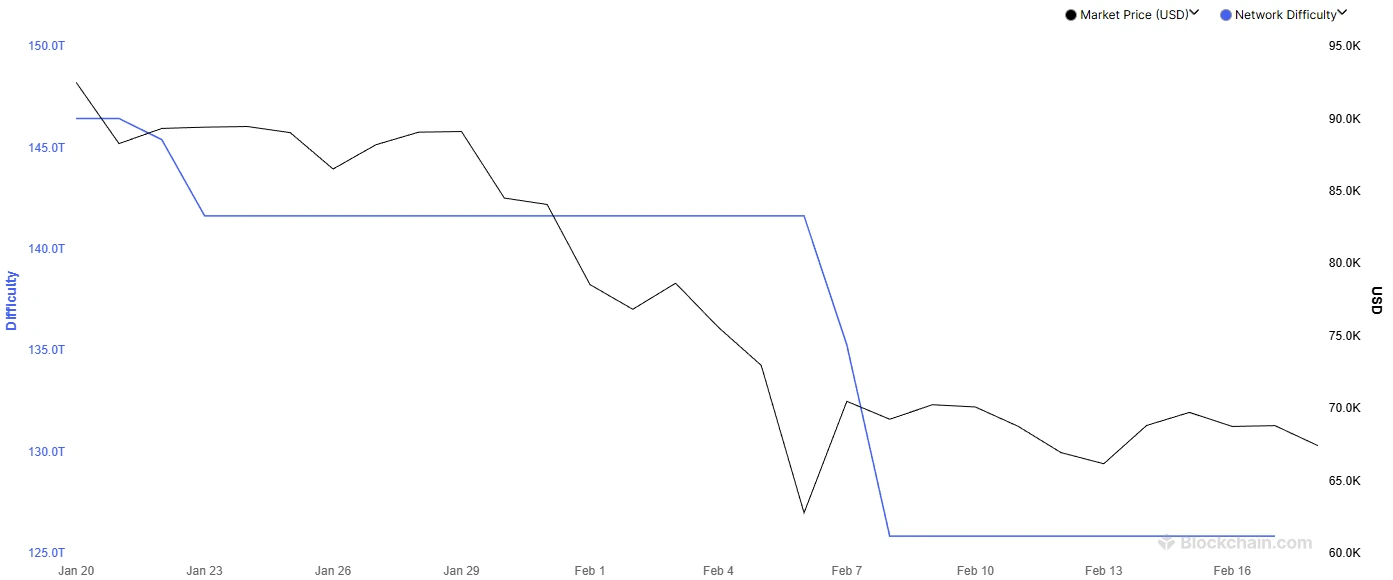
On-chain data suggests Bitcoin miners may have reached a turning point after a period of capitulation that saw weaker mining operations flushed out of the market. According to CryptoQuant, miners withdrew more than 36,000 BTC from exchanges since early February, with a single-day peak of over 6,000 BTC – the highest recorded since last November. Around the same time, Bitcoin’s mining difficulty adjusted in response to the reccent purge in the Bitcoin mining network. Put those numbers together, and a clear picture forms: miners absorbed a serious hit – but now appear to be stable, and setting up for the next phase. Analysts are speculating that this could signal an uptick in the value of BTC.
Daily withdrawal activity surged well above January’s levels, with more than 12,000 BTC pulled from Binance alone and 24,000+ BTC distributed across multiple other exchanges. Miners appear to be moving assets into cold storage, a behavior analysts typically associate with growing confidence in future price appreciation and a reduced appetite to sell into spot markets.
Why the End of the Miner Purge Might Signal a BTC Rebound
When Bitcoin’s price drops sharply, miners feel pressure first. Revenue paid out in BTC loses value while operational costs, primarily electricity and hardware, remain fixed in fiat. Survival requires more precarious miners to begin liquidating holdings to stay afloat. Waves of selling add fresh supply to an already pressured market, pushing prices lower, which then squeezes miner margins even further.
What comes out the other side, though, tends to be a tighter and more capable network. Miners running older hardware or paying premium energy rates get pushed out first, and those remaining operate with better efficiency and stronger economics. With mining difficulty now sitting at 130T, competition for block rewards has recalibrated meaningfully. Fewer miners chase the same rewards, so active participants pocket comparatively better returns, and the pressure to sell starts easing.
Once profitability stabilizes, miner behavior at the market level shifts. Miners no longer feel compelled to dump holdings just to stay liquid. BTC flows from miners onto exchanges slow down, which steadily removes one of crypto’s most persistent sources of sell-side pressure during downturns. On top of that, Bitcoin’s network security strengthens, as hash rate concentrates among strong, well-capitalized operators. Confidence in network robustness tends to build from there, and markets take notice.
Why It Matters: How Miner Capitulation and BTC Price Interact
Miner selling and Bitcoin’s price share one of crypto’s most consequential feedback loops, as highlighted on CryptoQuant. Selling BTC reduces scarcity, applying downward pressure on price, shrinking the block reward values miners receive. Left unchecked, such cycles deepen corrections well beyond what broader market sentiment alone would justify.
Miner stability breaks such cycles. Pulling back from exchanges and shifting toward holding tightens available supply. Reduced sell-side flow, combined with steady or growing demand, creates conditions where price recovery becomes far more likely. Last week’s analysis outlined demand-side factors already building beneath Bitcoin’s surface, and fresh miner data adds a compelling supply-side counterpart to consider.