

The debut of the first spot DOGE ETF arrived with early curiosity, yet its opening act carried lighter activity than the crypto market expected. GDOG posted $1.4 million in first-day volume, a level that placed it in line with average ETF debuts while still trailing the elevated expectations built around a famous meme asset.
Despite months of anticipation, the debut exposed the limits of Dogecoin’s appeal to institutional investors. What looked like the ultimate coronation for the original memecoin has turned into a surprisingly quiet chapter.
1. Meme Coin Exhaustion? Total Meme Coins Marketcap Declining
DOGE’s ETF arrival did not spark the type of online surge seen in earlier memecoin cycles as crypto enthusiasts expressed reduced interest in memecoins. A steady decline in memecoin market value over the past two months highlights a clear shift, as crypto traders concentrate on data, yield, and infrastructure instead of trend-driven tokens.
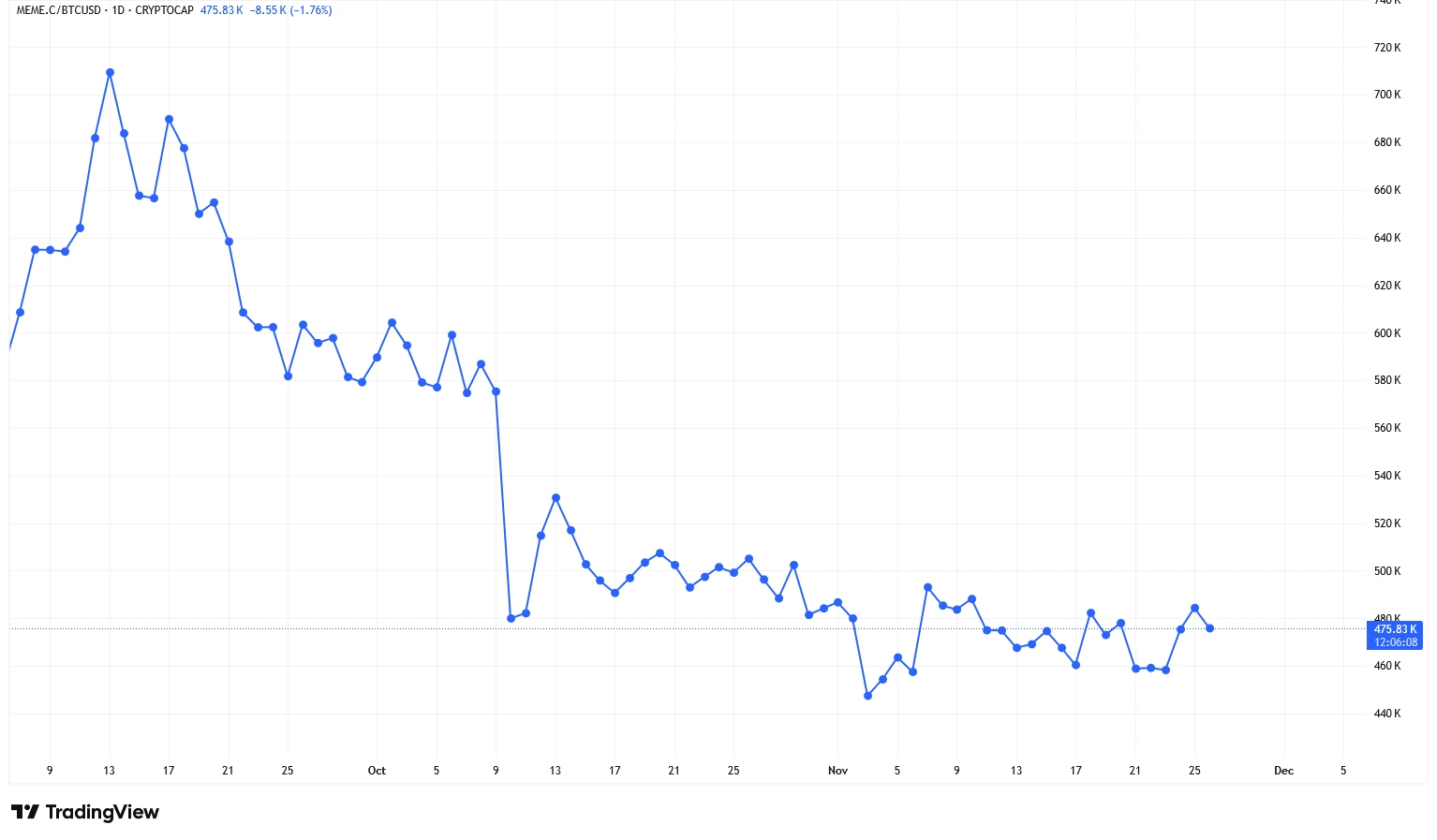
Retail crypto traders who once drove exponential price moves appear cautious, choosing assets with clearer fundamentals instead. For Dogecoin, this trend means ETF inflows are modest rather than monumental. Crypto enthusiasts who chased DOGE in 2021 are no longer a reliable source of momentum, leaving $GDOG to rely on institutional investors who have so far stayed on the sidelines.
2. Institutional Buyers Stay on the Sidelines
Institutional investors have mostly passed on $GDOG so far, and their absence shapes the entire launch story. Large asset managers often monitor liquidity, fee levels, and the long-term purpose of a product, which means novel funds need a clear reason to sit beside Bitcoin or Ethereum strategies on a portfolio desk. DOGE lacks yield, infrastructure ties, and obvious economic links to broader markets, so institutions see limited motivation to allocate.
Trading desks that normally move early during a new ETF launch kept volume light, reading DOGE as a momentum asset that thrives on retail activity rather than structured portfolio flows. Without these heavier buyers providing steady activity, early volume settled far below launches tied to assets with established institutional frameworks.
3. A Brutal Market Backdrop
Bitcoin and Ethereum moved through important technical transitions during the $GDOG debut, prompting trading desks to carefully position their crypto assets. Large holders used the added liquidity around launch day to adjust portfolios, which added pressure to DOGE at a time when the broader market was steady but searching for direction.
DOGE has been on a general decline for the better part of 2025, and the trend continued as $GDOG entered trading. The soft macro backdrop encouraged selective buying across crypto assets, giving DOGE limited support. The result was a debut shaped more by broader market conditions than any issue within the ETF itself.
Lessons From the DOGE ETF: Demand, Cost, and Market Trends
$GDOG’s debut is a reminder that institutional-grade wrappers cannot manufacture demand where fundamentals are limited. Memecoins have transitioned from speculative excitement to a more measured role in portfolios.
For ETFs, the lesson is clear: structural accessibility and cost efficiency matter as much as novelty, particularly for assets without clear revenue or staking potential. For investors watching the memecoin space, the $GDOG launch offers a grounded view of what to expect from the memecoin market.