

Key Takeaways
- The Crypto Founders Gallery highlights the pioneers who built the most valuable cryptocurrencies through vision, technical mastery, and persistence.
- Bitcoin’s anonymous creator, Ethereum’s innovators, and stablecoin founders each built tools that changed digital finance forever.
- Leaders like Changpeng Zhao, Charles Hoskinson, and Anatoly Yakovenko continue shaping systems driving billions in daily transactions.
- Their influence extends beyond price charts, defining how digital ownership, transparency, and global money systems operate today.
Every movement begins with a handful of people who see the world a little differently. In crypto, those people turned lines of code into systems that move billions, and into ideas that redefined what money could mean. Some are engineers, some are dreamers, and one remains a mystery no one has solved. Yet each changed how value flows across the planet. You may not know their names, but their work touches nearly every crypto exchange, wallet, and transaction taking place today. These are the minds that built the digital economies shaping our future.
In this article, we discuss founders whose ideas and work anchor the most valuable cryptos by market cap, and explore their lives, missions, challenges, and standing today.
10 Biggest Crypto Founders
These founders (or founding teams) stand behind the projects that today map much of the market’s activity. Their vision shaped protocols, communities, and value systems.
Satoshi Nakamoto | Bitcoin (BTC)

Bitcoin launched in 2009, with the release of a white paper titled Bitcoin: A Peer-to-Peer Electronic Cash System. The name Satoshi Nakamoto refers to an anonymous individual or group that designed Bitcoin’s protocol and mined the first block (the genesis block). To this day, Nakamoto’s identity remains unknown.
Bitcoin’s mission was to offer a decentralized digital currency outside centralized control. Its rules fix the supply at 21 million BTC and secure transactions via proof of work consensus. Over time, it came to be viewed as digital gold, a store of value whose dominance endures. As of October 2025, Bitcoin sits at the top of the crypto market by far, with a market capitalization above $2 trillion.
Estimates place Nakamoto’s holdings at roughly 1 million BTC, untouched since early days. Based on current price levels, that stake would be worth over $100 billion. Because the identity stays hidden, there is no public record of personal ventures, scandals, or side projects. The mystique around Nakamoto adds symbolic weight to Bitcoin’s narrative.
Vitalik Buterin | Ethereum (ETH)

Ethereum was co-created by Vitalik Buterin, who launched its white paper in 2013 and coordinated its first live network in 2015. He proposed a platform that extends from currency to programmable contracts. Other early co-founders included Gavin Wood, Charles Hoskinson, Joseph Lubin, and Anthony Di Iorio, each contributing various technical and organizational components.
Ethereum shifted the focus from mere token transfer to a blockchain that supports smart contracts, decentralized apps, and composable financial primitives. Its role as the main platform for DeFi, NFTs, and decentralized governance cements its influence. ETH regularly ranks second in market capitalization, often in the $400–500 billion range.
Vitalik remains active in development and philanthropy. He has donated significant amounts of crypto assets to medical research and pandemic relief efforts.
Brock Pierce | Tether (USDT)
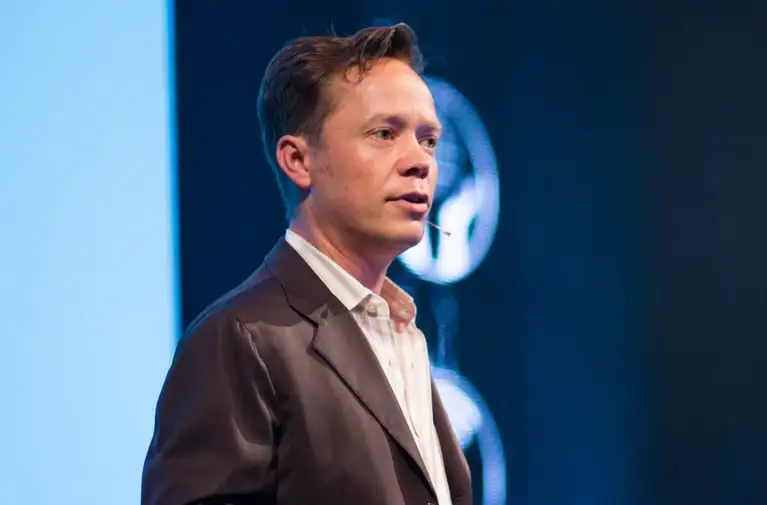
Tether debuted in 2014 as the first widely used stablecoin, pegged to the US dollar. Brock Pierce, Reeve Collins, and Craig Sellars spearheaded the project to provide a cryptocurrency with minimal volatility, bridging traditional finance and crypto markets.
Tether issues tokens backed by reserves, intended to maintain a 1:1 USD peg. USDT plays a role in liquidity, exchange pairings, and trading operations across exchanges. It often ranks among the top cryptos by market cap, as traders use it to move capital without leaving the crypto ecosystem.
The stablecoin has faced scrutiny over reserve transparency and legal challenges. Yet it remains among the most essential rails in crypto markets.
Changpeng Zhao (CZ) — Binance / BNB (BNB)
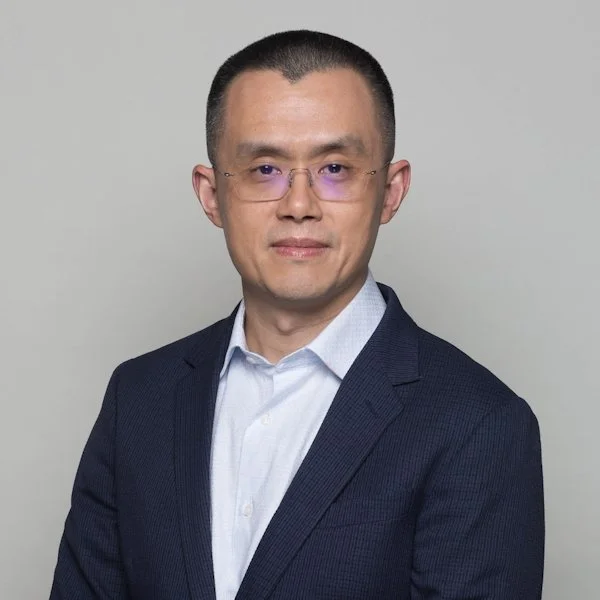
Changpeng Zhao founded Binance in 2017 and launched Binance Coin (BNB) as the native token of the Binance ecosystem. The token soon evolved to power Binance Smart Chain (now BNB Chain), offering utility beyond trading fees.
BNB supports governance, staking, transaction fees, and ecosystem incentives. Its dual role as the exchange backbone and blockchain utility helps it maintain a high market cap, often within the top five.
As of recent estimates, CZ holds one of the largest crypto-related fortunes. Forbes places his net worth at $62.9 billion. He has navigated regulatory pressure in multiple jurisdictions, and his leadership style often draws public attention, sometimes controversial, sometimes applauded.
David Schwartz — Ripple / XRP (XRP)
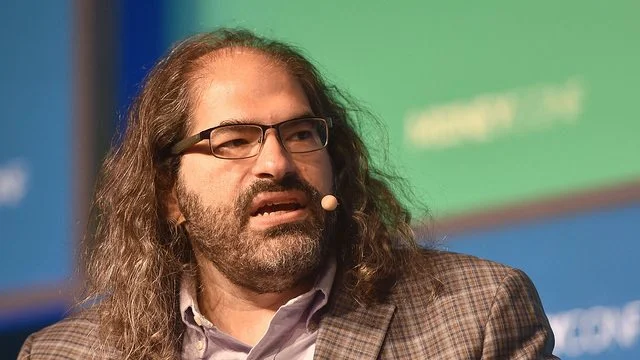
XRP originated through a collaboration of David Schwartz, Jed McCaleb, and Arthur Britto. They created the XRP Ledger (XRPL) to facilitate speedy, cross-border settlement among financial institutions. Ripple Labs, the organization backing adoption, aligns with that mission.
XRP distinguishes itself by having a high transaction throughput and relatively low cost. Financial players use it as a bridge currency or settlement tool. Its market cap typically places it among the top cryptos, often around $100–200 billion.
Jed McCaleb later departed to found Stellar (XLM). Ripple and XRP have faced regulatory scrutiny, especially from US regulators, over whether XRP is a security. That legal uncertainty forms a defining tension in the asset’s narrative. Schwartz continues as lead technical architect at Ripple.
Anatoly Yakovenko — Solana (SOL)
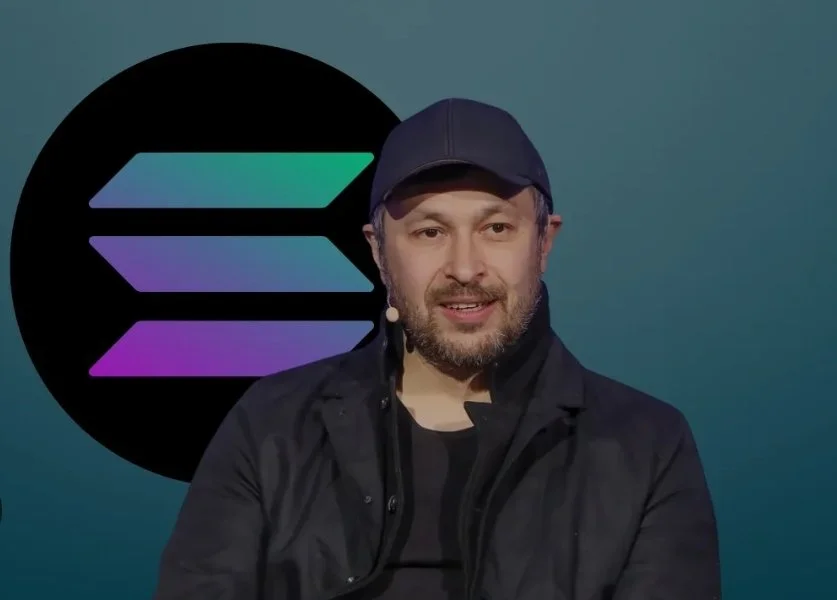
Yakovenko released the Solana whitepaper in 2017 after years of systems engineering, particularly at Qualcomm. He envisioned a blockchain that serves high-throughput applications and handles thousands of transactions per second.
Solana combines a proof of history timing mechanism with proof of stake consensus to boost speed without sacrificing decentralization too much. Developers build high-performance apps, games, and finance protocols atop Solana. Its market capitalization often ranks it among the top seven.
Several public sources list Yakovenko’s net worth in the low hundreds of millions (between $200 and $500 million). Solana has endured outages and performance debates, but remains one of the most active developer ecosystems in crypto today.
Jeremy Allaire — USDC (USDC)

USDC launched in 2018 under the Centre Consortium, a partnership between Circle and Coinbase. Jeremy Allaire leads Circle; Sean Neville played a key founding technical role. They created USDC to be a transparent, regulated stablecoin alternative to earlier designs.
USDC relies on reserves held in cash and short-term US Treasury instruments, audited to maintain trust in its backing. It sees heavy usage in DeFi, exchanges, and payment infrastructure. Its market cap typically places it in the top 10 stablecoins.
Justin Sun — TRON (TRX)
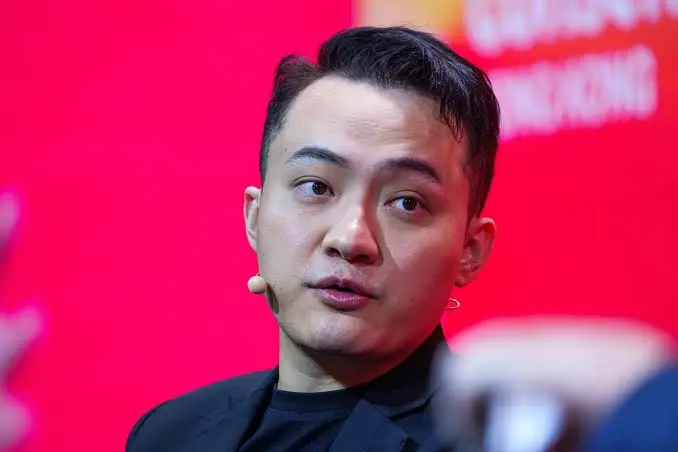
In mid-2017, Justin Sun founded TRON with a vision of decentralizing entertainment and content. He quickly gained attention with bold marketing and investment moves.
TRON began as an ERC-20 token before transitioning to its own chain. It incorporates staking, governance, and content incentivization. Sun also led the acquisition of BitTorrent to fold peer-to-peer protocol into the ecosystem.
Bloomberg estimates place Sun’s net worth at $13.5 billion, largely in crypto holdings. He has faced criticism over marketing tactics and governance centralization, yet he remains visible and influential across crypto media and diplomacy roles (e.g., as Grenada’s representative to the WTO).
Billy Markus & Jackson Palmer — Dogecoin (DOGE)

Jackson Palmer and Billy Markus co-created Dogecoin in December 2013, inspired by the then-popular “doge” meme. They intended it to be fun, accessible, and community-focused.
Dogecoin operates as a proof of work coin (based on Litecoin structure) but without a capped supply. Its cultural identity, memes, tipping, and fandom became as important as its technical identity. Over time, it attracted celebrity attention (e.g., Elon Musk) and a devoted community. Its market cap has occasionally ranked it in the top ten.
Neither Markus nor Palmer pursued major cloud or institutional ambitions thereafter. Markus distanced himself from the project’s high-profile narratives. No reliable public estimate places their net worth in more than modest crypto gains. The phenomenon of Dogecoin shows how social energy can drive real value.
Charles Hoskinson — Cardano (ADA)

Hoskinson cofounded Ethereum but later departed and launched IOHK, the research firm behind Cardano. Development began around 2015, and the Cardano mainnet launched in 2017.
Cardano emphasizes rigorous peer-reviewed research, layered architecture, and long-term upgradeability. It aims for scalability, security, and sustainability in decentralized systems. ADA often sits among top 10 by market cap, around $20-30 billion.
Hoskinson’s net worth is estimated at $600 million, though such estimates vary given opaque asset holdings. He remains vocal, often engaging policy and protocol debates, occasionally clashing with other leaders on direction and philosophy.
Closing Thoughts
Every name on this list represents more than an idea. Each founder built something that changed how people think about trust, value, and technology. A few wrote code in quiet rooms, while others built companies that reached millions. Their stories show that innovation often begins with a single decision made under uncertainty.
The digital asset market moves through cycles of growth, correction, and renewal. Yet these founders set its direction long before most people paid attention. Their choices still echo through every transaction today. And while new builders will rise, these ten remain the ones who turned concepts into systems that reshaped how the modern economy runs.