

Key Takeaways
- The UEFA Champions League attracts massive global betting activity, with stablecoins making crypto wagering faster and easier.
- Stablecoins provide dollar-pegged price stability, protecting winnings from crypto volatility and acting as digital cash for bettors.
- Networks like Tron, Base, and Polygon enable low-cost, instant stablecoin transfers ideal for UCL betting.
- USDT on TRC-20 offers speed and affordability, while USDC on Polygon provides transparency and regulatory trust.
- Choosing a stablecoin-friendly sportsbook ensures fast payouts, low fees, and full control over your betting bankroll.
The UEFA Champions League (UCL) remains Europe’s most prestigious club football competition, featuring top teams from leagues such as the Premier League, La Liga, Bundesliga, and Serie A. Every season, hundreds of millions of fans tune in across the world. The tournament also supports a huge sports betting market, with volume peaking around the knockout phases and final. To illustrate the scale of interest in UCL betting, a UK-based study found that six in ten monthly sports bettors placed a wager on the 2022 Champions League final.
Meanwhile, the options available to sports bettors are expanding, with the rise of crypto casinos. Cryptocurrencies, especially stablecoins, have made it faster and easier than ever to place UCL bets. Stablecoins offer bettors a digital-cash alternative that avoids many of the frictions of traditional banking, while also insulating fans from the volatility of crypto.
Bettors weighing their options will also want to compare Bitcoin vs. credit cards for UCL betting to understand where stablecoins fit on the broader payment-method spectrum.
In this article, we’ll dive into stablecoins and what makes them a compelling payment and payout option for UCL bets.
Why are Stablecoins the Digital Cash of Sports Betting?
Let’s start by defining what stablecoins actually are. Stablecoins are cryptocurrencies pegged to a stable asset, typically the US Dollar, and they function like digital cash in many respects. Additionally, unlike fiat bank transfers that may be subject to delays or banking hours, stablecoins enable near-instant transactions via blockchain’s always-on infrastructure.
The Volatility Problem Solved: Securing Winnings
The major benefit of stablecoins is their price stability. This is in contrast to crypto, which is still a high-risk, volatile asset. For example, if you place a bet in Bitcoin or Ethereum and win, you might find the value of your winnings has shifted dramatically before you withdraw (because the price of these assets has dropped in the meantime). With stablecoins, you know the value of your winnings remains essentially fixed in USD terms, acting as a volatility hedge and enabling you to secure your crypto winnings.
This makes stablecoins especially suited for betting. Once the result is confirmed, your winnings remain predictable. Consequently, this removes the risk of surprise losses due to market moves and allows you to treat your balance almost like cash rather than a speculative asset.
Bypassing the Bank: 24/7 Global Liquidity
Traditional banking systems can impose delays. Time zones, bank working hours, cross-border transfer protocols (like SWIFT), and account verification can slow down deposits and withdrawals. In contrast, stablecoins leverage blockchain networks that operate 24/7, providing instant settlement and global liquidity.
For UCL bets, timing often matters (pre-match, live-bet markets, late withdrawals). Using a stablecoin means you’re not held hostage by banking cut-offs. In other words, users can deposit quickly before a match, then withdraw winnings almost immediately when they’re done, giving far greater flexibility.
Speed and Cost: Why the Right Network is Your Winning Edge
But it’s not just the type of stablecoin (USDT, USDC, or others) that matters, it’s the blockchain network carrying the token. Transaction speeds and costs can vary significantly from blockchain to blockchain. Network congestion, gas fees, and the underlying technology all play a role. That’s why choosing the right network can give you a genuine edge in stablecoin sports betting. Let’s take a look at some of the most popular options.
USDT (Tether) on TRC-20 (Tron): The Low-Cost, Rapid Option
USDT (Tether) is a stablecoin pegged to the US dollar, issued by Tether Limited. It’s the most popular stablecoin with a market cap of more than $180 billion (at the time of writing). USDT issued on the Tron network (TRC-20) is often among the fastest and cheapest options for betting platforms. Network fees on the Tron blockchain are usually less than $1, blockchain confirmations are quick, and many sportsbooks accept USDT on TRC-20 as a default.
If you’re placing UCL bets and want minimal friction, using USDT on TRC-20 makes a lot of sense. It helps you avoid high fees, speeds up deposits and withdrawals, and reduces the chance of network delays.
USDC (Circle) on Layer 2s (Polygon/Base): The Regulated, Fast Alternative
USDC is a fiat-backed stablecoin issued by Circle Internet Financial with strong transparency and auditing. It takes second place in popularity, right after USDT, with a market cap of more than $76 billion. USDC is available on many newer, faster Layer-2 networks like Polygon or Base. These chains offer lower fees and higher throughput compared with the original Ethereum mainnet. Moreover, transaction costs on Layer 2 networks are even tens of times lower than on Tron.
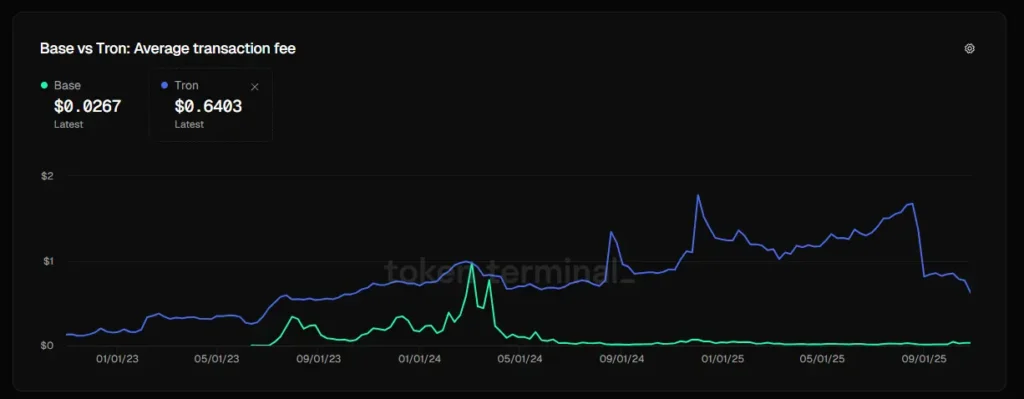
Using a Layer 2 stablecoin gives you the twin benefits of regulatory pedigree and near-instant transfers. For bettors who prioritize compliance or want a coin with stronger institutional backing, USDC on Polygon or Base is an excellent choice.
The High-Cost Caveat: Avoiding ERC-20
Last but not least, it’s worth mentioning that stablecoins are available on multiple blockchains. Many stablecoins on the Ethereum network mainnet and other older networks can suffer from high gas fees, network congestion, and slower confirmations. For small or frequent betting deposits/withdrawals, these costs can significantly erode value and introduce delays. In effect, the network choice can trump the stablecoin choice.
If your sportsbook supports USDT/USDC only on ERC-20, consider that you may face unintended costs or delays, thereby reducing your effective payout.
Actionable Guide: Choosing a Stablecoin-Friendly Sportsbook
To fully benefit from stablecoins for UCL betting, you need more than just the coin and network. You need a sportsbook that supports fast stablecoin deposits/withdrawals and prioritizes minimal fees and a smooth user experience.
Criteria for a Trustworthy Crypto Sportsbook
When evaluating a potential sportsbook, you should look out for:
- Support for stablecoins and networks: Make sure that the sportsbook offers support for different stablecoins and multiple networks (Tron, Base, Polygon, etc).
- Withdrawal policies: Check minimums, processing times, and whether stablecoin withdrawals are offered rather than only crypto to fiat conversions.
- Verify network fee transparency: Some sites may charge “network fee” mark-ups or have slow internal processing.
- Strong security practices: Check if the sportsbook uses cold wallets, has audited reserves, and clear KYC/AML policies.
- Platform reputation and payout record: Look for user reviews around speed of withdrawals, especially around big events (like the UCL finals).
Check our reviews of the most popular sportsbooks on the market.
The Seamless Flow: Deposit, Bet, and Instant Withdrawal
The process of depositing crypto to your crypto sportsbook wallet, betting with it, and then withdrawing is straightforward. Here’s how you can do it:
- Buy stablecoins on a centralized exchange: Start by purchasing a stablecoin (USDT or USDC) on a trusted exchange such as Binance, Coinbase, or Kraken. These platforms let you buy crypto using your credit card, bank transfer, or other fiat options. Aside from the stablecoin, you’ll also have to purchase a small amount of the native token (TRX for Tron, ETH for Base, POL for Polygon, etc.) to pay for gas fees.
- Transfer to your self-custody wallet: Once purchased, withdraw the stablecoins and native token to your personal crypto wallet (like MetaMask) on the correct network. This gives you full control of your funds. Don’t have a crypto wallet? Learn how to create one with our guide.
- Deposit into the sportsbook wallet: Copy the sportsbook’s wallet address, double-check the network, and send your stablecoins. Deposits usually confirm within minutes.
- Place your UCL bet: Use your deposited balance to wager on pre-match or live-bet markets during the Champions League.
- Withdraw winnings instantly: After the result settles, request a withdrawal back to your personal wallet. The sportsbook processes the transaction quickly, and blockchain confirmations finalize it within seconds.
- Manage your winnings: Keep your funds in stablecoin form to preserve value, or convert them back to fiat or another digital currency according to your strategy.
Your Stablecoin Betting Checklist for UCL
Before you commit to a UCL bet using stablecoins, make sure you tick off the following:
- Network matters: Speed and cost derive from the blockchain network, not the coin. Prefer Tron or Layer 2s like Base rather than older ERC-20 options.
- Stablecoins eliminate market risk: With stablecoins, you know exactly what your bankroll is worth at all times, allowing you to avoid value erosion from crypto volatility.
- Use a non-custodial wallet: After withdrawal, keep your winnings in a non-custodial wallet you control, not locked up on the sportsbook. That gives you control over your private keys, and avoids platform risk.
- Validate the network: Before depositing, check the sportsbook supports the specific network, for example, USDT TRC-20. Sending to an unsupported network can mean lost funds or higher fees.
- Evaluate the fee structure: Some sportsbooks may still charge internal fees or use slow withdrawal windows. A transparent policy is key.
- Match event timing: For UCL knockout games, you may want faster processing, so ensure the platform can handle high-volume traffic around key matches.
Closing Thoughts
Stablecoins offer sports bettors a practical and powerful tool when wagering on high-profile tournaments like the UCL. They combine the stability of dollar-pegged value with the speed, global reach, and low cost of blockchain transactions. By carefully choosing the right stablecoin and network and using a trusted sportsbook, players can get a smoother, more efficient betting experience.
2. Which stablecoin is better for betting: USDT or USDC?
Both are excellent. USDT often wins on transactional cost/speed when used on the Tron network (TRC-20). USDC is often preferred for its regulatory transparency and auditing standards. The better choice depends on the user’s priority: cost or compliance.
3. What is the difference between TRC-20 and ERC-20?
TRC-20 is a token standard on the Tron network, known for low fees ($0.50-$2) and high speed. ERC-20 is on the Ethereum network, which has higher, more variable fees and can be slower during congestion. Always confirm the network before sending.
4. Do I have to pay gas fees when using a stablecoin?
Yes, a small transaction fee (gas) is required to pay the network validators. The amount is very small on efficient chains like Tron or Polygon, but can be expensive on Ethereum (ERC-20).