

Key Takeaways
Football and crypto might seem a world apart, but they have some important common ground: the first is sports betting. Football remains one of the largest global markets for sports wagering, and crypto increasingly provides the rails for deposits and withdrawals, especially when it comes to international events like the Champions League.
But betting markets aren’t the only nexus between football and crypto anymore. In 2025, crypto football sponsorships have become a major on-ramp for new users, thanks to the mainstream visibility they provide. These partnerships might put exchange logos on sleeves, promote fan tokens on shirts, and even position blockchain networks as “official technology partners.”
That visibility matters because football gives sponsors something few advertising channels can match: repeated, global exposure that lives on through broadcast clips, highlight reels, press photos, and more. It also comes with sharper scrutiny than a typical digital ad campaign: if supporters believe a club’s sponsor pushes risky products, the reputation of the club is also at risk. The point is, clubs need to be careful.
This article breaks down some of the most notable crypto-based football sponsorships, so you can see how the space evolves and which brands capture the most eyeballs.
10 Major Crypto Football Sponsorships Worth Knowing
1. OKX and Manchester City
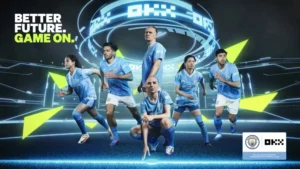
When it started: Manchester City and OKX initially announced a partnership in March 2022, becoming the team’s Official Training Kit Partner for the 2022/23 season.
How long it runs: City described it as a multi-year deal at launch, though it was later revealed that the deal is a three-year agreement.
What changed over time: OKX began as City’s official cryptocurrency exchange partner and then expanded its presence. In June 2023, City announced OKX as the club’s official sleeve partner.
Who it replaced: City’s sleeve previously featured Nexen Tire, which City had partnered with for years.
Where you’ll see it:
- You’ll see the OKX logo on City’s sleeves, giving it high visibility for TV watchers.
- Training/club activations tied to OKX campaigns.
2. Kraken & Atlético de Madrid
When it started: Atlético announced Kraken as a partner in July 2024.
How long it runs: Atlético positioned the announcement around the 2024/2025 season, and the public deal length seems limited in the announcement language.
Who it replaced: Atlético’s sleeves previously carried Hyundai, and the Kraken deal explicitly marked a change in sleeve branding.
Where you’ll see it:
- Atlético’s men’s and women’s players, on their sleeves.
- During fan experiences and club content activations.
3. Kraken & Tottenham Hotspur
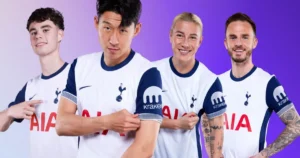
When it started: Tottenham announced Kraken as a global brand partner in July 2024, ahead of the 2024/25 season.
How long it runs: Tottenham and Kraken didn’t clearly publish a fixed term in the main announcement language.
What changed over time: This deal mattered because the team framed Kraken as the club’s first-ever Official Crypto and Web3 Partner and as the Official Sleeve Partner for men’s and women’s teams.
Who it replaced: Kraken replaced Cinch as the Spurs’ sleeve sponsor.
Where you’ll see it:
- Sleeve branding on Tottenham kits (men’s and women’s).
- Club activations are positioned around education and fan experiences.
4. Gate.io & Inter Milan
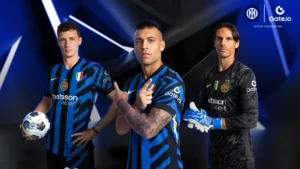
When it started: Inter announced Gate.io as its Official Sleeve Partner starting from the 2024/2025 season.
How long it runs: Inter’s announcement doesn’t clearly publish the contract duration.
What changed over time: This deal signals Inter’s continued willingness to sell prime kit space to crypto brands, even after earlier crypto-adjacent experiments across the industry.
Who it replaced: Gate replaced eBay on Inter’s sleeve, which ran until the end of the 2023/2024 season.
Where you’ll see it:
- Sleeve branding across Inter’s men’s, women’s, and U20 kits.
5. Bitpanda and Paris Saint-Germain (PSG)
When it started: Bitpanda announced a partnership with PSG in January 2025, naming Bitpanda a Premium Partner and PSG’s Official Crypto Trading Partner.
How long it runs: The announcement’s wording appears to suggest a multi-year partnership.
What changed over time: This is the key “current partnership” update for PSG: Bitpanda now owns the official crypto trading lane in PSG’s partner stack, which makes older PSG crypto sponsorships less relevant.
Who it replaced: PSG didn’t present this as a direct replacement of a single named sponsor slot, but it clearly establishes Bitpanda as the club’s crypto trading partner category.
Where you’ll see it:
- In-stadium branding at Parc des Princes (LED and static signs, for example)
- Digital activations and fan engagement campaigns.
6. Bitpanda and Arsenal
When it started: Arsenal announced a multi-year partnership with Bitpanda in August 2025, making it the club’s Official Crypto Trading Partner.
How long it runs: Arsenal explicitly details the partnership as a multi-year one.
What changed over time: This deal shows a big theme in 2025: crypto brands increasingly pitch themselves as platforms or trading partners, and focus on providing education/a good trading experience, rather than “use us to buy this coin!”
Who it replaced: Arsenal appears to be cooling on its Socios sponsor, and it appears that the club is working hard at refining its crypto-related approach through Bitpanda.
Where you’ll see it:
- Club digital channels and content.
- “Immersive” digital activations, player involvement, and supporter experiences.
7. Bitpanda and FC Bayern Munich
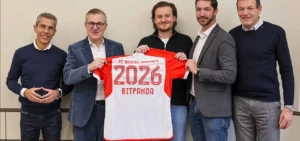
When it started: Bayern announced Bitpanda as a multi-year partner in January 2024, naming it a Platinum Partner and “official crypto trading partner.”
How long it runs: The contract currently reads as “multi-year,” though some media outlets assume it will run until next season’s ending.
What changed over time: Bayern framed Bitpanda as its first official crypto trading partner, which signals how top clubs now treat “crypto trading partner” as a defined sponsorship category similar to tires, airlines, or beer.
Who it replaced: Bayern’s announcement frames this as a new “Platinum Partner” category integration rather than a simple replacement of a prior crypto sponsor.
Where you’ll see it:
- Visibility at Bayern home matches.
- Club marketing channels and partnership activations.
8. Coinbase and Borussia Dortmund
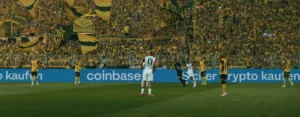
When it started: Coinbase partnered with Borussia Dortmund back in August 2022, and the relationship expanded over time.
How long it runs: There isn’t a fixed date that the public is aware of.
What changed over time: Dortmund and Coinbase officially extended their partnership in August 2024, moving it beyond Germany to Europe and Singapore.
Who it replaced: Dortmund didn’t necessarily replace a previous partnership with Coinbase.
Where you’ll see it:
- Dortmund’s partner ecosystem, where it lists Coinbase as a “Premium Partner.”
- Brand/media usage and international event activations.
9. Zero-Knowledge Proof (ZKP) and FC Barcelona
When it started: Barcelona announced a global partnership with Zero-Knowledge Proof (ZKP) in November 2025.
How long it runs: Barcelona states the agreement runs through to 2028.
What changed over time: This partnership stands out because Barcelona framed ZKP as an “Official Cryptographic Protocol Partner,” which is quite a different tone than the “trade here” that many other partnerships seem to indicate. That said, it also triggered some controversy and forced Barcelona to publish an official clarification regarding token issuance, which highlights the other, more sensitive side of crypto partnership optics.
Who it replaced: Barcelona didn’t present this as a replacement of a specific sponsor slot. The club framed it as a new “official partner” relationship.
Where you’ll see it:
- Partner positioning across Barcelona’s messaging and club channels.
10. Kraken & RB Leipzig
When it started: RB Leipzig announced a partnership with Kraken ahead of the 2024/2025 season.
How long it runs: RB Leipzig focuses more on the partnership’s public reveal than it does on the length, as there is no fixed term on the club’s page.
What changed over time: As evident from this list, Kraken has built a multi-club strategy across Europe, which suggests that Kraken values repeatable, high-visibility inventory that appears in as many matches as possible.
Who it replaced: RB Leipzig frames Kraken as an exclusive/official crypto partner relationship rather than explicitly replacing a prior sleeve.
Where you’ll see it:
- Club partnership channels and fan engagement campaigns.
Why are Football Sponsorships so Important for Crypto Brands?
Crypto brands buy football sponsorships for one reason: football prints attention.
A sleeve logo can reach far more than a single billboard can. It places the logo everywhere. Match broadcasts, highlight clips, press photos, social media posts. Anywhere the team is, that logo follows. This repetition helps normalize crypto as an investment avenue, as seeing it next to long-time brands like Nike and Adidas brings an air of legitimacy to it.
Also, top football clubs typically won’t associate with just any brand. When a club sells its sleeve to a crypto sportsbook, it sends a message, fair or not, that the partner passed some basic level of diligence.
At the same time, crypto sponsorships help clubs solve a modern problem: filling high-value inventory in a crowded sponsor market. Tottenham explicitly replaced Cinch with Kraken. Manchester City moved its sleeve from Nexen to OKX. Inter moved its sleeve from eBay to Gate.io. These movements show how quickly crypto firms can take a premium spot.
But clubs take on risk when they associate with crypto. First, the products can be volatile, complex, or misunderstood. Second, regulators increasingly scrutinize crypto marketing, especially in football-heavy markets like the UK and the EU. In the UK, the FCA’s financial promotions rules for crypto require marketing to be “clear, fair and not misleading,” with prominent risk warnings and restrictions on incentives.
In the EU, MiCA also includes marketing communication expectations around being fair, clear, and not misleading.
That’s why modern sponsorship language often sounds more careful. You’ll see “official crypto trading partner” and “education” phrasing more than you’ll see aggressive token pushes. And when controversy does break out, clubs move quickly to protect public trust, like Barcelona issuing a formal statement to distance itself from a token launch tied to its new sponsor relationship
Closing Thoughts
Crypto and football will continue to collide, even if betting doesn’t grow at all, because sponsorships give crypto brands the one thing they can’t mind on-chain: mainstream attention at a global scale.
But don’t view this trend as “crypto is everywhere, so it must be safe.” Instead, understand that sponsorships show where marketing money goes and where clubs think they can make money from a sponsorship. They’re not about whether a platform fits your risk tolerance.
If you’re using this article to understand the landscape better, take away the following:
- Verify “current” status on official pages: A club announcement or partners directory is the best way to verify a sponsorship’s current status.
- Watch the placement: Sleeves and kits signal mass visibility: LED boards and “premium partner” moniker signals brand-building and reach, while “official protocol” deals are more focused on the tech side of things.
- Assume rules tighten over time: Crypto marketing standards have moved toward clearer risk warnings and fewer investment incentives. They focus on education over “get rich quick.”
In 2026, expect more of the same: fewer “get rich” vibes, more regulated language, and more competition for the most visible sponsorship slots, as these slots are the fastest way toward mainstream regulation.