
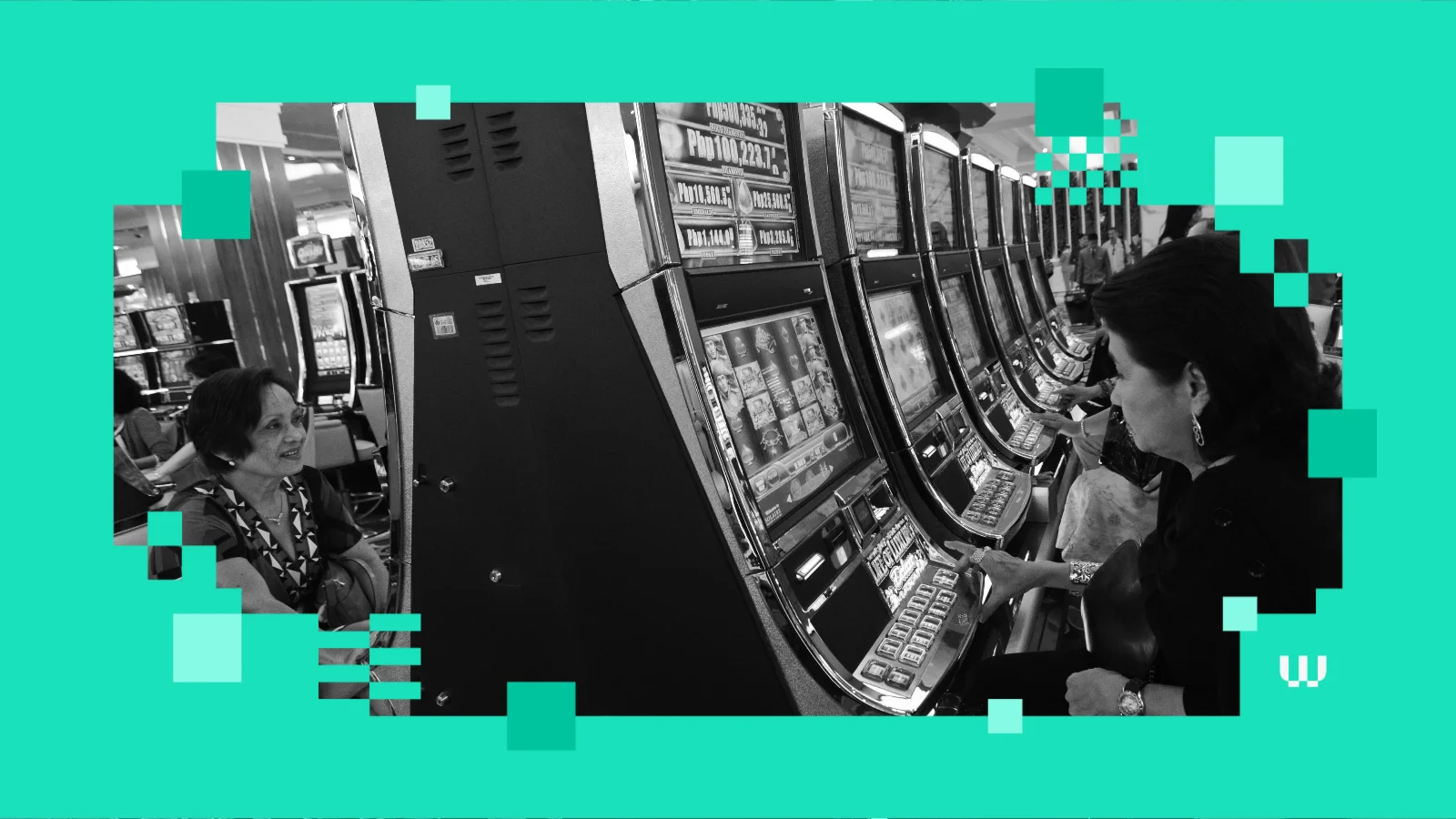
For the first time in any regulated Asian gaming market, online gambling in the Philippines now generates more revenue than physical casinos. Digital demand outpaced the frameworks built to manage online gambling.
Consumer appetite for iGaming grew faster than existing governance structures had anticipated, pushing digital revenues past those of the traditional casino floor without a government directive guiding the shift.
Online Gaming Just Crossed 50% of the Philippines GGR for the First Time
The latest figures from the Philippine Amusement and Gaming Corporation (PAGCOR) show just how sharp the pivot to online gambling has been. In 2025, the country’s total gross gaming revenue (GGR) reached an estimated $6.9 billion, with online gambling accounting for just over half of that total for the first time.
Online gaming generated about $3.5 billion, representing a year-on-year increase of just over 30%. By contrast, licensed casino revenues fell 9.58% to about $3.2 billion, and PAGCOR-operated casinos declined 20.95%.
For regulators and operators watching from other Asian markets, the statistics from PAGCOR carry a clear message. Digital adoption can outpace physical infrastructure faster than most projections suggest. Online platforms have taken over the growth story in the Philippines online gaming market, and investment strategies across the region are starting to reflect that reality.
Q3 Speed Bump That Didn’t Slow the Full-Year Numbers
During Q3 2025, PAGCOR directed electronic gaming operators to de-link many e-wallets from their platforms, disrupting the ease and access of payments. This led to an immediate dip in online revenue and, overall, a temporary decline in quarterly gross gaming revenues, which came in at about $1.6 billion.
PAGCOR framed the e-wallet de-linking policy as a compliance and player-protection move, not an anti-growth measure. By forcing more transparent and traceable payment flows, the regulator aimed to reduce money-laundering risks and improve oversight of both the Philippines’ online gaming market and land-based operators.
Online Is No Longer Supplementary, and Operators Globally Are Adjusting
For a while now, operators in the Philippines have treated digital channels as an add-on to physical casinos. Still, the online gaming revenue mix shows that digital growth can outpace physical infrastructures. Rather than waiting for investment from legacy casinos, players in the Philippines’ online gaming market shifted to mobile-first products, reflecting broader smartphone adoption and easier internet access.
Other countries have tracked a similar arc. Sweden’s online casinos overtook land-based venues so decisively that the Swedish government voted to abolish physical casinos altogether. Brazil has grown into one of the most prominent online gambling markets, driven by mobile penetration and growth in digital platforms. Denmark, Italy and the United Kingdom each have well-established online sectors that now generate the bulk of national gaming revenue.
Building the Policy Blueprint as the Market Moves
Regulators across Asia and beyond are tracking how the Philippines handles this period. The country’s experience points to one practical conclusion. Frameworks built to support digital platforms, treating them as the primary channel rather than a secondary one, produce steadier outcomes for consumer protection, taxation and revenue growth.
The Philippines has reached the point where online gaming leads the regulated sector, physical casinos are losing market share, and digital policy decisions directly affect the pace of growth. Other markets watching Manila’s next few moves may find those decisions shape their own industries more than anything unfolding closer to home.