
Investors are watching closely for Nvidia’s fiscal Q3 earnings for 2025 – set for release after market close today, 19 November. The stakes are high for the chipmaking-giant, with Nvidia’s performance widely regarded as a barometer for tech sentiment – influencing markets from Nasdaq indices to AI-linked cryptocurrencies.
In parallel, BlackRock’s iShares Bitcoin Trust (IBIT) has experienced record outflows, with $523million redeemed on 18 November alone, marking the largest single-day outflow since its January 2024 launch.
Monthly outflows now total roughly $2.5-$3billion across spot Bitcoin ETFs, signaling an institutional pause after months of inflows. These moves coincide with Bitcoin dominance slipping to 58.8%–59.9%, down from early-November peaks above 61%. These trends suggest a market positioned cautiously ahead of Nvidia’s report.
Pre-Earnings De-Risking Highlights Market Nervousness
Investors often reduce exposure ahead of high-impact events like Nvidia’s earnings. The current outflows from Bitcoin ETFs exemplify this behavior. Nvidia acts as a proxy for growth and tech sentiment. Any miss or cautious guidance could trigger a broad sell-off in Nasdaq indices and other risk assets. The $523m single-day outflow from IBIT, based on SoSoValue’s records, reflects managers trimming exposure in anticipation, rather than panic-driven liquidation.
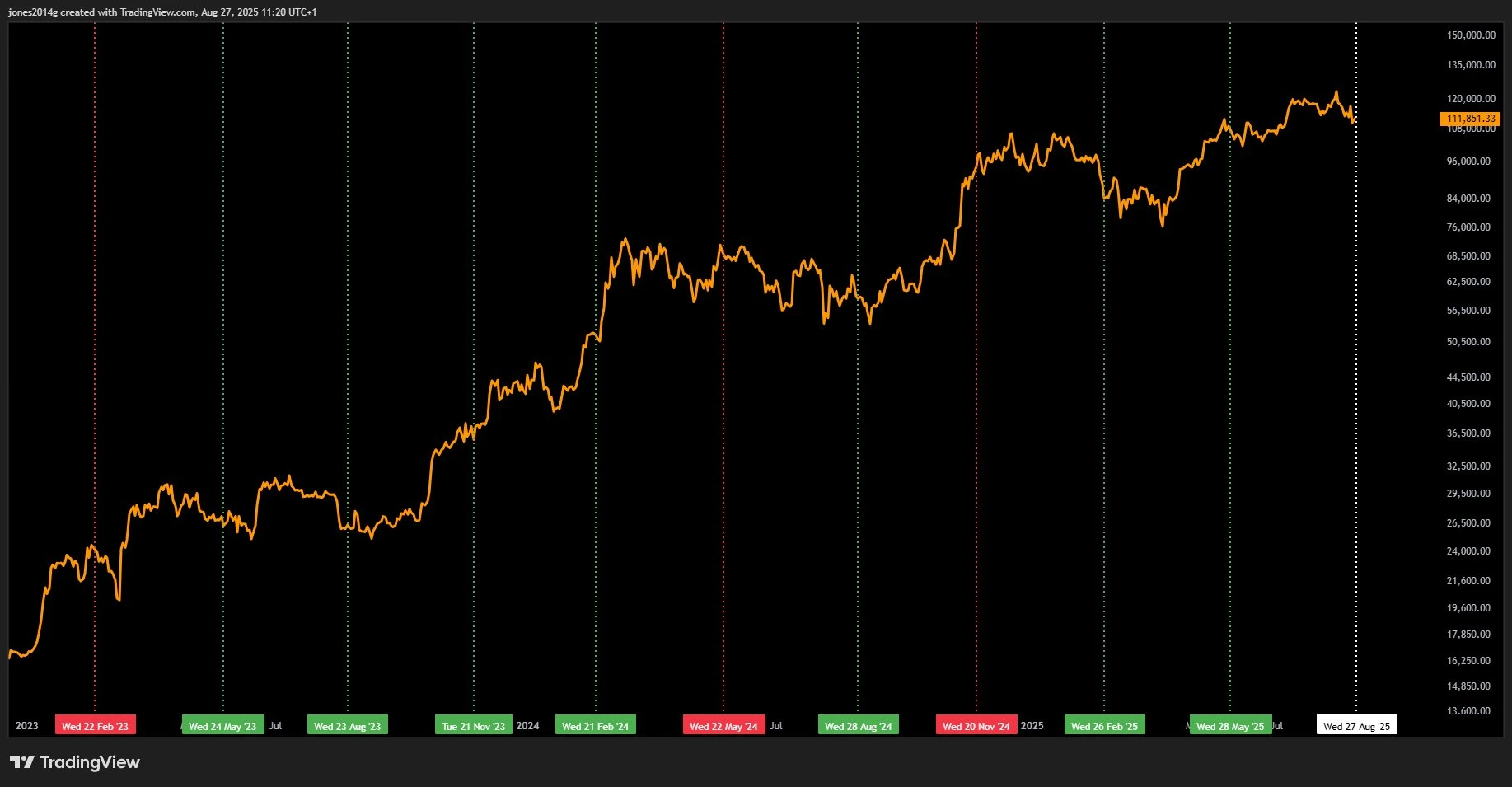
Nvidia’s performance has historically influenced Bitcoin. In seven of the last 10 quarters where Nvidia beat investor estimates, Bitcoin posted positive returns in the days following the report. That correlation shows that you cannot fully isolate crypto from major tech catalysts.
Record ETF Outflows Reflect Profit-Taking, Not Capitulation
Institutional profit-taking and portfolio de-risking ahead of major events are not unusual, and BlackRock’s record outflows could be a textbook example. Many managers may have locked in gains after seven months of inflows, while macro uncertainties – sticky inflation, tariff considerations, and the probability of lower interest rate cuts in December – encouraged cautious positioning.
ETF outflows tend to lag price movements by one to two days, meaning recent redemptions likely respond to Bitcoin’s decline. While headline numbers may appear dramatic, the outflows represent less than 1% of total IBIT assets under management.
Bitcoin Dominance And The AI-Crypto Connection
Bitcoin dominance has slipped under 60%, stirring discussion of a potential altcoin rotation. In theory, a strong Nvidia report would reinforce the AI narrative, attracting capital to these high-beta coins and temporarily lowering Bitcoin’s market share. A disappointing report would reverse this dynamic, potentially stabilizing or even increasing dominance as broader risk-off sentiment persists..
Historical patterns support this interpretation. Periods where Bitcoin dominance fell sharply during overall market weakness often preceded altcoin rebounds once BTC stabilized.
Investors Positioning Ahead of Several Catalysts
Investors appear cautious ahead of the Q3 earnings release. A strong report could reverse ETF outflows and stimulate rotation into altcoins. Conversely, a weak result would validate risk-off behavior, likely pressuring Bitcoin below $90,000 and prolonging ETF withdrawals.
In sum, the market currently balances anticipation, caution, and selective opportunity. Nvidia’s report will act as a directional catalyst, but the broader picture shows risk assets, including crypto, remain highly sensitive to concentrated tech narratives and institutional positioning. For investors, the upcoming days highlight the need for disciplined observation rather than reactionary moves.