

Bitcoin (BTC) plunged as low as $81,650 today in a brutal sell-off that wiped out over $120billion from the total crypto market cap in hours, pushing the price to around $82,500 at press time. Over $2.02bn in futures positions were liquidated across exchanges, with longs bearing the brunt at nearly $1.8bn – the largest single-day deleveraging since the infamous 10 October event.
CoinGlass data shows over 400,000 traders rekt, including a single $36.7million BTC position on Hyperliquid. While macro pressures – fading Fed rate-cut hopes and tariff fears – are cited as catalysts, a growing chorus of analysts point to a far more specific culprit: a major institutional player (likely a market maker, hedge fund, or exchange-affiliated desk) that suffered huge losses on 10 October is now being forced to liquidate Bitcoin holdings to raise cash and repair their balance sheet.
What Exactly Happened on 10 October 2025? – The “10/10” Flash Crash
On 10 October, US President Donald Trump unexpectedly announced a 100% additional tariff on Chinese imports, catching markets off-guard during thin weekend liquidity The announcement triggered an immediate risk-off panic, but what followed was unprecedented: Bitcoin crashed from ~$126,000 to as low as $102,000 in hours, Ethereum plunged below $4,000, and altcoins flashed to near-zero on certain venues.
Total liquidations topped $19–20bn, the largest single-day wipeout in crypto history, dwarfing even the COVID crash or FTX collapse. The crash liquidated over 1.6 million accounts. Market makers pulled liquidity and caused order books to vanish. Binance’s margin system worsened the drop when assets like USDe de-pegged on the platform. Firms like Wintermute withdrew bids and turned the sell-off into a bloodbath.
Wintermute reportedly transferred $700m (including $200m+ BTC) to Binance hours before the drop, fueling speculation they either front-ran the chaos or were hedging massive exposure. Wintermute CEO Evgeny Gaevoy later denied intent to sue Binance. The event exposed systemic vulnerabilities: extreme leverage, thin order books, and concentrated liquidity provision by a handful of market makers.
The Lingering Fallout: A Wounded Giant Being Forced to Sell?
Six weeks later, the 10 October scars haven’t healed – they’re bleeding into today’s market. Multiple crypto participants and on-chain sleuths now argue that one or more major entities crippled on 10/10 are still de-risking, dumping BTC mechanically and without regard for price to meet margin calls, regulatory demands, or simply rebuild cash reserves. This “distressed seller” thesis explains the relentless downside pressure despite positive fundamentals (record ETF inflows earlier in the year, institutional accumulation, and encouraging policy shifts).
Key evidence circulating on X include:
- Persistent sell walls appearing at exactly 9:30 AM EST(US market open) without fail, as highlighted by user Front Runners.
- Market makers like Wintermute and Binance-linked desks rumored to be patching nine-figure holes from 10/10, with ongoing transfers and dumps tied directly to that event.
- Binance and Coinbase showing consistent heavy selling, far exceeding normal distribution patterns. Once the whales stopped selling, Bitcoin’s price recovered, as noted by Kriptoholder.
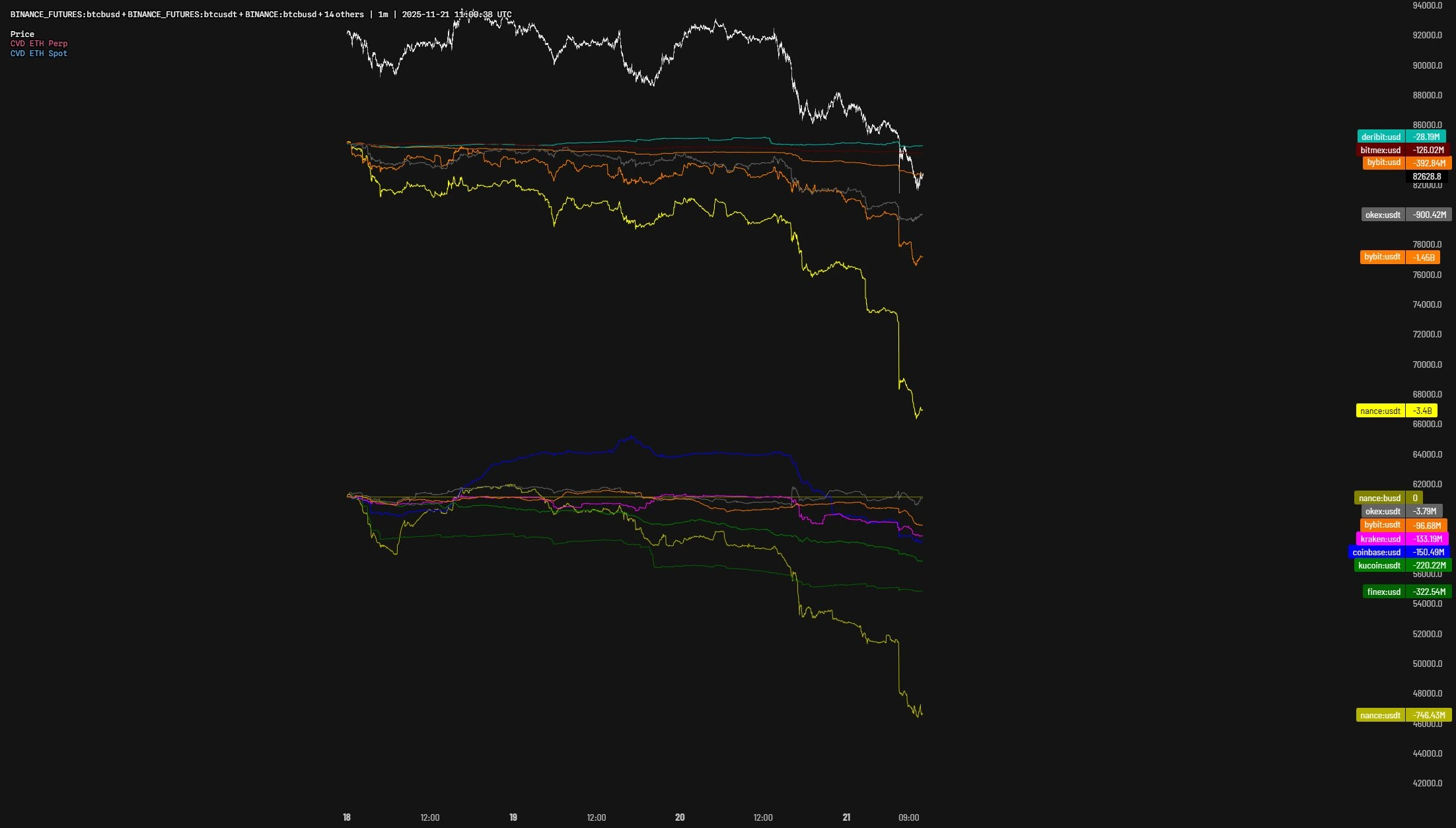
Today’s $2bn liquidation wave, while painful, might finally wipe out the hidden debt. Once the distressed entity finishes its supply, shorts covering clustered above $90,000 could ignite a violent squeeze.
Painful Reset or Buying Opportunity?
Bitcoin is now down over 35% from its October all-time high near $126,000, trading at levels last seen in April 2025. Sentiment is in “extreme fear” (Fear & Greed Index ~14), RSI at multi-year lows, and realized losses rival FTX-era capitulation. Yet on-chain health remains robust: long-term holders added supply during the dip, miner capitulation is absent, and ETF inflows (outside recent redemptions) show institutional conviction.
If the “distressed 10/10 survivor” theory holds, the indiscriminate selling should soon exhaust – potentially setting up the mother of all short squeezes. Big rallies often follow major sell-offs. The market surged after the COVID crash in 2020 and the FTX collapse in 2022. For now, the market remains hostage to October’s ghost. Volatility will likely continue until that seller finishes, but the long-term case for growth still looks intact to many.