
The internet is an essential tool for billions of people, with the importance of staying connected growing by the day. A study on wireless networks by Statista revealed a staggering 22 billion devices were connected to wirless networks in 2021, with the number set to grow over time.
Most of us use a wireless local area network at least once a day. Yet, despite this, the basic hardware involved in networking remains a mystery to the majority of users. One of the most poorly understood concepts is the humble SSID number, a key piece of data relating to your wireless router. In this article, we’ll get familiar with this critical terminology, so you can stay on top of your internet connection.
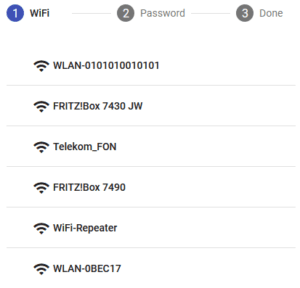
SSID stands for “service set identifier”, which is another word for a Wi Fi network name. The purpose of an SSID is to distinguish between different wireless networks within range of your device. This allows you to identify your desired network, and connect to it.
An SSID number can be up to 32 alphanumeric characters long, and is case-sensitive. For example, the name “HOME” would be a distinct wireless network from “home.”
Router manufacturers set up their devices with a default SSID which you can use to find the network the first time you connect to it. This might look something like ConnectWifi_245. However, this default SSID can be easily changed in your network settings once you’re set up. We’ll come back to that below.
An SSID enables you to differentiate between different WiFi networks withing range.
For example, if you attempt to connect to the wireless network at your local cafe, your screen will display a list of different SSIDs. These are the names of all the nearby devices offering a wireless network. To connect to the cafe’s network, you’ll select the correct one and then enter the wifi password (if necessary).
Each Wi Fi network name actually starts out as a number or alphanumeric sequence. However, you can change your own SSID number to a personalized name by using your Wi Fi settings. This will cause it to appear as the name set by you.
Image Description: SSID is the name for a Wi-Fi network. Mobile devices will look for all networks in range when you attempt to connect to local Wi-Fi.
You might be wondering how to find your own service set identifier. Here’s a quick explainer:
The service set identifier number is typically printed on a sticker located at the bottom or side of your router. The number can also be found in the WiFi modem or router’s owner’s manual.
However, if someone has changed the router’s SSID, this printed information will be outdated and therefore not work. You can find the updated SSID on your operating system—the steps are listed below.
Click on the WiFi icon located on the bottom right corner. A list of available networks (SSIDs) will open.
Find your current network’s name. The network you are connected to will appear at the top of the pop-up window with Connected underneath. This is your SSID.
Click on the WiFi icon located at the upper right corner. This will open a list of available SSIDs.
The network you are connected to will have a colored WiFi icon next to it. This is your SSID.
Go to Settings > Wi-Fi
The network you’re connected to will be shown at the top with Connected underneath. This is your SSID.
Go to Settings > Wi-Fi
The network name you are connected to will have a check mark to the left of it. This is your SSID.
Router manufacturers often give all of their devices the same default SSID. However, even if you see two identical service set identifiers, they will not relate to the same network. It’s more likely that they represent two nearby devices from the same router company.
This can make it confusing to identify the one your looking for, since there’s a chance that another router within range shares a default SSID.
This can also be a security issue. If your device encounters two identical SSIDs, and neither is secured by a password, it will automatically connect to whichever one has the stronger signal. If the network you’re connected to happens to be unsecured, a third party can monitor your internet activity, collecting your sensitive data.
This is why many people prefer to change their SSID to something unique and easily distinguished.
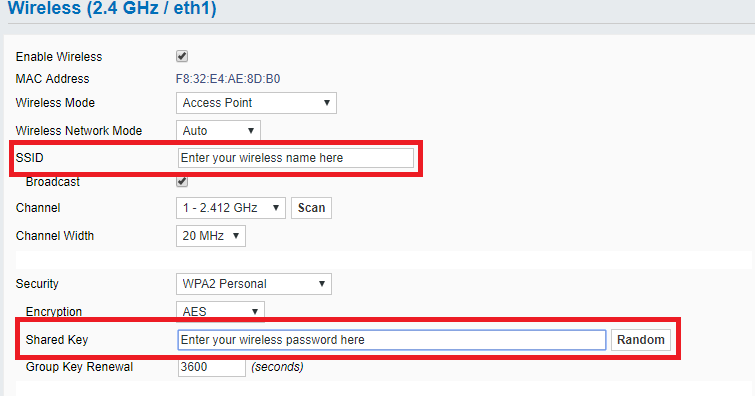
You can change your SSID in your router’s configuration panel. You can access this by typing your router’s IP address (provided by the router manufacturer) into the address bar at the top of your browser.
From there, you can access your Wi Fi settings, using your router login credentials. This enables you to change your network name and its security settings, such as the password. You can even have some fun with it. Your local bar might rename their network “Gimme a Beer” or “Let’s Get Shakin” – which is a bit better than generic ConnectWifi_245.
Image Description: SSID is the name for a Wi-Fi network. Mobile devices will look for all networks in range when you attempt to connect to local Wi-Fi.
A service set identifier is designed to be displayed. Like an address on a letter, it doesn’t give away any sensitive data by itself.
Nonetheless, you have the option to turn off your SSID broadcast so that it can’t be seen publicly.
To hide your SSID:
While nobody will be able to see your SSID if you hide it, your wi fi network traffic can still be tracked with an 802.11 analysis tool. Doing this also won’t conceal your IP address
Securing your network means making sure nobody else is using your data via your connection.
The best way to do this is by protecting your connection with a unique password – and changing that password regularly. This means you control who can access your connection.
Recommended Reading: Why it’s essential to secure your wireless network
No matter how secure your own wi fi network is, it pays to understand networking risks.
As you know, if your device detects two wireless networks with the same SSID, it will automatically connect to whichever WiFi network has the closer signal. But this can leave you vulnerable to a fairly common cyber attack.
A Fake WAP Attack is when a bad actor sets up a fake network containing spyware. By changing the network identifier, the hacker can make the network seem like your normal connection. You, the victim, connect to the network, enabling the hacker to collect your sensitive data.
It is incredibly important to understand which network you’re connecting to. And when a public SSID has no password, your first question should always be “why?”
The best solution to protect yourself against this type of attack is to ensure your device settings do not connect automatically to any wi fi networks. Furthermore, whenever you are prompted for login data to access a network, think twice before entering the information, and make sure there are no identical SSIDs an attacker may be imitating.
Users can assign more than one SSID to the same device. Using multiple SSIDs allows users to access different networks, each with different policies and functions. This increases the flexibility and efficiency of the network infrastructure.
For example, a hotel owner may set up one network for guests and one network for employees. The two networks might use the same physical infrastructure, but they would have two different SSIDs, which would help prevent guests from being able to access sensitive information contained on the hotel servers.
Related Terms

Check your email to confirm
We sent a confirmation link to . Confirm it to activate your Kyroo cashback — you can do this anytime.
You're in! Taking you to {partner} in ...